Home Blog Page 781

All eyes on GNAC Player of the Year Adam Jones

1
Jones led the GNAC in both points and assists, and was also named to the conference First Team All-GNAC.

Describing an athlete as a “superstar” can often be overused, but it is hard not to immediately think of the word while looking at junior Adam Jones’ achievements. For Jones, soccer was already running in his genes.

“I grew up in Port Coquitlam. My father played football for the Vancouver Eighty-Sixers. I’m a big Manchester United fan because my great-grandfather played for the club. Paul Scholes was a model for me when he was still playing.

“Football was never forced upon me. I just fell in love with it.”

The Port Coquitlam resident travelled a long way playing soccer before returning home. Jones modestly recalled his achievement overseas.

“I was part of an academy in Burnaby, and every year they took a group to Europe to play. There was a cup in Denmark and another one in Sweden. I went to both. It was unbelievable. It was an experience that affected me in so many ways. You don’t realize it at 12, but as you [get] older, you realize the magnitude of this achievement. Around that time, I started thinking I want to become a pro. It gives you a little bit more hope.”

A few years following his journey overseas, Jones felt that it was necessary to go back to his roots.

“I can still live at home here and my family can come and watch my games. The NCAA [National Collegiate Athletic Association] aspect of SFU was also the big reason. I liked the thought of playing in the NCAA; I think it’s pretty prestigious. SFU [is a] good school soccer-wise and it fits me very well. Again, if you look at the financial side, it costs so much more in the [United] States. I spent one year in England during my academic year residence. I went there on trials and I was able to learn self-confidence. When you go over there on your own, you have to be confident.”

With a brilliant regular season performance from the Clan, Jones took home the award for GNAC Player of the Year. The midfielder scored 10 goals and had nine assists. “I think I was in the library writing a paper,” he laughed about how he found out. “It was exciting and it was actually beside Mamadi [Camara] in the ranking.

“Football was never forced upon me. I just fell in love with it.”

“Among all these achievements, I think the message that no one really had to say was the fact that in 20 years it will be great to look back on this. As of right now, none of this will matter to us right now unless we do well in the tournament.”

One could learn a few lessons on how to boss the midfield from Jones. He revealed how his own identity fits into his role.

“My skills are more applicable to a midfield role. I like to set the tempo. I like to pass and create occasions and when someone gets the ball and dribble right away, I don’t have breakaway speed. Midfield is somewhere where I can play my role within the game.”

Jones’ ally in the midfield is none other than his brother Kyle Jones. The Jones pair has been shining on the pitch this season. With his little brother on the team, one might think there is an ongoing competition between the two. The storyline is different from Adam Jones’ perspective, though.

“It’s really fun, to be honest with you. Being two years apart, if he ever wanted to come and train with my team, he would. If I had some spare time, I would hang out with his team. We’re very close that way. There’s no real competition. We understand that we have different attributes that will help the team. We know how to push each other’s buttons the right way.”

While Canadian athletes often get less exposure to Major League Soccer (MLS) drafts due to the absence of a local league, the future is set to be bright for Jones, who ends the interview on an optimistic note.

“I would love to get drafted in the MLS. Being Canadian, I don’t know how much opportunities I would have. If an American team invited me for a preseason trial, for example, I would definitely be open to that option.”

Fun fact:
Which professional team would you want to play for?

“I would play in the Premier League for Manchester United.”

Interview with Larissa Chen

3
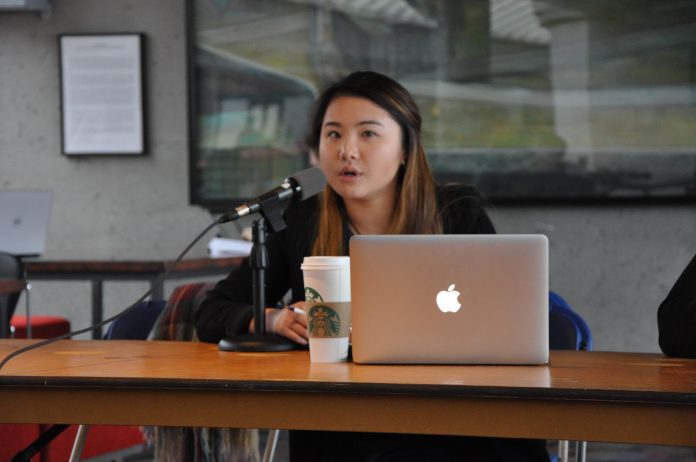
Larissa Chen speaks at Wednesday's debate on Burnaby campus. Chen's campaign is focused on continuing her tenure as interim president.

With the SFSS byelection this week, The Peak sat down with all the presidential candidates for a more in-depth chat than the timed responses at the debates. To find the other interviews, click here for Darien Lechner and here for Deepak Sharma. 

Nathan Ross: You mentioned on Surrey that one of the reasons you were running was so that students weren’t faced with the same option as they had in the general election. Can you elaborate on why you feel that way?

Larissa Chen: During the spring election, students had two options for president. I am currently running alongside those same individuals during this byelection. Given that I have been serving in the role of interim president from May to October 2016, I have the experience that neither of them possess and that is six months of direct experience in the presidential position. Additionally, I have established strong and respectful relationships with the current board and SFSS staff, that will ensure collaborative and successful outcomes for students.

NR: This was asked at the debate, and has been touched on a lot by Darien, but I’d like to give you the chance to answer it without a time limit or anyone in your face. How come you chose to step down as president of the SFSS after the nominations were announced? Follow-up question: If you had stepped down earlier, could VP student services have been a position on the byelection ballot?

LC: It was a difficult decision to step down as VP student services. The bylaws do not indicate it to be mandatory, but I felt it would be an unfair advantage to run a campaign for the role I have direct resources for. Originally, I was hopeful a diverse range of individuals would put themselves forward for the presidential role. Since this was not the case, I decided not to withdraw my name and handed my resignation after the nominations were announced. I was also unsure of my own readiness to run until the second week of nomination period.

For the VP student services role to be added onto this by-election ballot, the position must undergo transition, be vacated and announced “at least two weeks before the opening of the nomination period” (Bylaw 15). It would be challenging for anyone to vacate their role early October, as this remains amongst the busiest times for the SFSS. I focused on fulfilling my VP student services and interim president duties and I welcome everyone to view our board minutes and my individual work reports for that duration (available on the SFSS website).

NR: How would you convince voters that haven’t been happy with the SFSS in the past few months to elect you as president if they didn’t enjoy the board when you were the interim president?

LC: Contrary to popular belief, the president isn’t the sole individual who decides on the direction of the SFSS. The president is the support for other board members and staff who represent and receive feedback from the students. A leader is only as strong as their team and respectively, I know the strengths of this board better than my fellow candidates. The SFSS Board operates as a whole and sometimes, as an individual voice, I didn’t agree with the direction set by the board. But given my transition, experience, and knowledge built over the past six months, I am ready to lead. I understand the concerns expressed and I am the ideal person to listen and address them.

I was faced with an unprecedented situation: transition into an executive role, as well as demands of the president role. This is not easy for anyone. Simply put, it is professional development and SFSS commitment on acceleration mode. But as I have been faced with obstacles, concerns, and support, I’ve realized the value of maintaining such a challenging role as you support your colleagues amd act as the comprehensive knowledge broker for everyone. I’m hopeful students will vote #Lari4President due to my experience, but also recognize that I can be the strong and empathetic voice for my fellow undergraduates.

NR: You’ve been in the role of president now since June. What are you proudest of what you have accomplished in this time?

LC: Assuming the role of president was definitely unexpected. As I ease into being the most interpersonal VP student services students have ever seen, I suddenly assumed the added responsibilities of president. A lot of my summer days were spent in meetings, reviewing files and researching. The transition period into president is a daunting, complex, and difficult process, especially when one does not see themselves worthy of the role; it’s a very vulnerable and insecure place to be in. Gradually, I shifted my focus from perfection to my very best and good intentions and grew confident and began to speak up, concisely and honestly. I began to set expectations before all else, resulting in constructive conversations and effective problem-solving. I shifted my focus towards the intent, rationale, and outcome of anything I did. Much of this can be seen behind the scenes, but the realization of representing my team, students, and the SFSS, my voice became bolder and stronger than ever.

I’m also proud that I was able to maintain the dual responsibility of VP student services and interim president. I continued to actively participate in meetings about U-Pass, Health and Dental Plan, Food and Beverage Services, Ombuds office, sexual violence policy and support services, mental well-being, accessibility, communications, strategic engagement, governance, bylaws, etc. I didn’t lose sight of my campaign platform and personal values. For this, I am glad.

NR: On that subject: if you could have a do-over on anything, would you take it? Which instance and how come?

LC: This is an interesting question as I’m highly critical of myself and tend to identify areas of improvement all the time. If I had an opportunity to “do-over” anything, it would be to have a stronger voice in the Build SFU stadium outcome. The process, communication, and interactions with students would’ve gone much more smoothly had we done the subsequent first. If elected president, I would have a greater say in Build SFU process than I did as interim president. This comes from the discussions and gradual knowledge gained about the logistics and details, but more importantly, the structural process [and] limitations and interpersonal respect established between SFU and SFSS. As my platform emphasizes, I will be the continuity piece for the SFSS, if elected.

NR: Your platform points to a lot of great work that you have done and will continue to do. But if you had to sum it up without telling people to check out your platform for more information, why should students vote for you over Darien and Deepak?

LC: My platform aims to highlight the continuity role I will play as SFSS president, if elected. However, if I were to summarize the value I can bring to the role and society, it would be that I am ready. I have the experience, relationships, and personality to make an immediate impact on the SFSS and its students. I’ve witnessed the process firsthand and have openly received criticisms as areas for improvement. Furthermore, I want students to realize that the SFSS is theirs and I aim to ensure the organization remains approachable, informed, and receptive to student feedback. I feel I will be successful in promoting this as these align with my own personal characteristics and values.

NR: What is your favourite memory from your time at SFU?

LC: I’m currently in my fourth year at SFU, as a health science student, and that in itself still boggles me. I feel I’ve had quite a diverse range of experiences by spending my entire first year at SFU Surrey, living on Burnaby campus, and hanging out at Harbour Centre for my gerontology courses. However, my favourite memories are always those times when you reach a point in life when you can say “Wow. Good job, past Lari. That was a doozy.” These only happen after the inevitable breaking points in university and the only way through is to pause, look at the bigger picture, reassess priorities, and work towards improvement. It’s OK to not be OK! Life will be overwhelming, but if you have a supportive network (and an occasional beer), facing your challenges will always be the best choice.

$5 a Day Challenge: Life skills are actually worth something . . . who would have thought

0

This is the third post in a week-long web series that documents Kevin Rey’s experiences living off of $5 worth of food a day. Check back daily for another post.

I haven’t been completely honest with you guys.

I’ve been cheating.

Well, not really cheating since I really did only spend $35 on food for the whole week. But I am bringing a tool into the challenge that the average student might not have access to.

I have a pasta machine. And I use it to make my own pasta from scratch.

Let me explain.

Over the past few years, I’ve started to understand just how much I like food. Like, I really enjoy food. I’m not the best cook, but I’m always looking for different ways I can make better quality food for my wife and I, and anybody else staying for dinner. My YouTube history is a cornucopia of cooking videos, and I mark up my cookbooks with notes.

There’s just something meaningful to me about taking some ingredients and combining them with nuance and patience to yield something nourishing for myself and others. It’s also a great way to make friends, and it makes me feel a little more like a real adult.

I think this has been a thread in my life for a long time, but it’s only now that I’ve had the means to explore it.

I’ve been deathly allergic to peanuts my whole life. I can be in the same room as them, but the smell really bothers my nose and if I eat anything with peanuts in it, I have to go to the hospital. That hasn’t happened too often, although my friends will gladly tell you that the majority of times I’ve had an allergic reaction, it’s been my own damn fault.

The biggest problem has been factory-made desserts and candy, although that’s been getting easier with peanut-free versions coming onto the scene. My family’s solution was to make everything at home, and when I was old enough, my mom taught me how to bake a few things for myself.

So I’ve had a lot of experience sharing food with others, and deriving incredible satisfaction when people have enjoyed it. But it’s only recently occurred to me that whatever time I invest in learning to cook will literally feed me for the rest of my life. I feel like an idiot for not realizing this sooner, but cooking really is a life skill.

Think about it: there’s no downside. You get to learn something new, build confidence, make great tasting food, and usually make things much more cheaply than buying them pre-cooked.

Sure, it usually takes more time than boiling some ramen, but all of us definitely have the half hour-ish to spare. We can shave off a bit of Facebook time, or even put off that little bit of studying so we eat a proper meal.

The obvious challenge that I can see is occasionally, you totally mess up. Like for this challenge, I thought I would make alfredo sauce to go with the pasta. But I used milk instead of cream since it was cheaper, and man did that not turn out how it was supposed to. The result tasted pretty bland, and the consistency was really thin, like I was pouring, well, milk onto my pasta.

But that’s OK since I didn’t die of food poisoning, and I learned that sometimes replacing cream with milk is an awful, awful idea.

So I invite you to take a look at what your relationship with cooking is, and to learn just a little bit more about it over the next week. Maybe it’s learning how to use a knife properly or learning a new sauce base, but any experience you gain now is so valuable.

Satellite Signals

0

Harbour Centre

Harbour Centre hosts the book launch of of A Propaganda System: How Canada’s Government, Corporations, Media and Academia Sell War and Exploitation. The book seeks to enlighten, where so many Canadians believe their country is a positive force despite a problematic history. The event kicks off at 6 p.m. with talks by the author Yves Engler, who some consider Canada’s version of Noam Chomsky.

Woodward’s

Running all the way up to Christmas, Bah! Humbug! returns for its seventh year at Woodward’s. This festive tradition is director Max Reimer’s modern adaption of Dickens’ classic A Christmas Carol. It imagines Ebenezer Scrooge as a pawn shop owner on Hasting Street.  

SFU Surrey

An information session is happening at SFU Surrey, presented by the career and professional programs, continuing studies department. Rehabilitation and disability management diploma info session starts at 5:30 p.m. on November 16. Students looking for a career in healthcare, human resources, or counselling are welcome. The event is free, but attendees are asked to register online before attending.

Interview with Darien Lechner

1
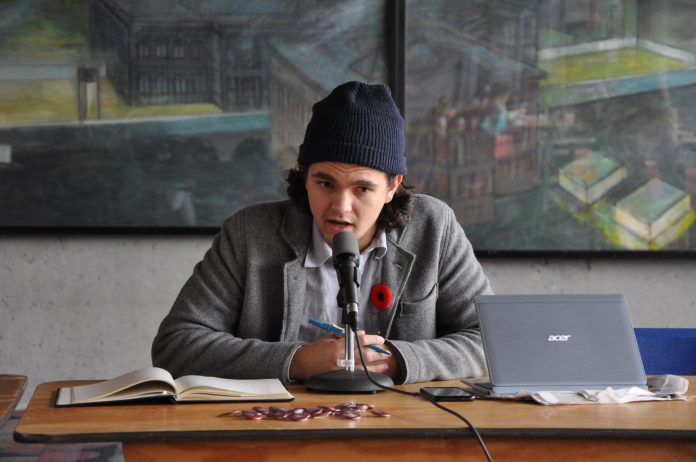
Darien Lechner speaking at the debate on Wednesday at the Burnaby campus. Lechner's campaign has been focused on transparency and breathing new life into the SFSS.

With the SFSS byelection this week, The Peak sat down with all the presidential candidates for a more in-depth chat than the timed responses at the debates. To find the other interviews, click here for Larissa Chen and here for Deepak Sharma. 

Nathan Ross: Why did you decide to run again in the byelection?

Darien Lechner: I decided to run again because given the reasons for the byelection, I felt it was appropriate at the time. I kind of felt I made a lot of progress in the previous election in communicating with students and getting a message across that I didn’t actually know was going to be there when I ran, because I ran the first time based on principle. I didn’t see anyone else representing the values that I wanted to see in a candidate, and then it turned out it was just me and Deepak [Sharma]. And then I lost that election but I had quite a bit of support and a lot of people coming to me and saying “What you’re saying, we agree with and we know you’re up against a slate and you’re the long shot but don’t stop,” and so then the opportunity came to pick it up again and continue where we left off.

NR: What are the values that you’re looking for in a candidate?

DL: I really feel that transparency has got to be number one, and accountability. This previous new board has faced something that has never really existed in its history where we had 70 athletes actually storm a meeting and demanding answers. We’ve seen more efforts to move things into in camera and to be more secretive and to operate separate from the membership. And so to me, I think that’s what I wanted to see. I was tired of seeing faces on posters and in slogans and buzzwords and so what I tried to do was to have a campaign that seemed more like a conversation based on the facts and try to say “I don’t feel this is right and I’m wondering if you do too and maybe together we can change this so it’s something we all agree with.” And so the other value that I want to see in a candidate is someone who can be responsible to make sure that the commitment they’re asking people to vote them in for, they can actually stick to. That was a big disappointment for a lot of people. The other thing I think is kind of like transparency, but honesty and just good intentions. We don’t want to be suspicious of the people that are taking our money and saying “We’re spending this with your interest” and not really having a conversation with us to make sure that they’re on track. And so that’s why after I lost the election, I wanted to join a committee cause it felt at the time . . . I didn’t know anything about anything byelection at that point and I wanted to be in a position where I could try and take the stuff I’d built with at that point from the campaign and actually put it into action so that’s why I targeted the advocacy committee and I said “I want to try and sit on that. I want to try and work with some of people I met on the campaign with the slate and try to build a relationship and try and get something productive done.” So we had the survey throughout the summer and that was a big priority, and I felt that was kind of important to give people an option to voice their displeasure. Or what they think is being done right, I think that’s getting lost in the drama that’s going around right now, is the society isn’t all bad. There are huge problems with it but there is also good work that people are doing and it’s also important to acknowledge that but given the nature of the byelection a lot of that will be taking second place to the bigger stories and narratives.

NR: If you had to say just one good thing that the society has done since taking office in May, what would you point to?

DL: I think a lot of good work is being done on the sexual assault and prevention policy. I think even though the turnout to the consultation sessions isn’t enormous and everyone is championing this, there have been some really good ideas and conversations. There’s good points now to build off of and move forward so I think that was a big plus. The kickoff is something the society does too, and I think this year was a pretty good success compared to years previous. The weather didn’t turn out, but as far as providing something for students with their money, I think that was actually fairly well-done and responsible. So those are two big ones. I don’t know all the information about the stadium and the SUB contracts, cause a lot of that is private, so I think that’s an area though where they haven’t done enough. It was actually kind of a surprise to everyone when the stadium was cancelled but the biggest thing was that it was so over budget and it seemed at no steps along the way did anyone have the foresight to kind of check like “Maybe we should check in on this and be treating them equally,” so I think in that regard the board is really missing foresight and leadership in that regard. In looking ahead, we’re thinking “We’re doing this well now, but we need to think about who is coming in next year and making sure they’re just as informed and they’re picking up the ball and rolling.” I think that was a big part of Deepak’s platform at the time, saying “We know what we’re doing, we’re the experts, we’re gonna hit the ground running,” and that fell apart right away.

NR: In your spring campaign, you made a lot of noise about the Build SFU levy. This time, it’s modified what you’d like to do with the levy. Instead of scrapping it overall, you’d like to rework how the levy is taken. Do you want to talk about why you made this change?

DL: Basically it’s changed because I’ve got a time constraint now. I don’t have a year to try and change things. I’ve got realistically four months. I need to also account for the fact that I have to learn a lot on the fly, so there’s that. Also, I want to look over the actual agreement so that we can make real changes. I don’t want to promise too much, and then have what’s changed between now and then actually bite me, so I want to be honest with people about what’s a feasible goal. I want to modify it because that seems like something we can do within the organization itself. I also want to, and I didn’t really touch on this in the last debate, is that I also too still touch the bylaws to make sure that when the society is going to ask for levies like this that they need five percent [response from all students]. It’s unacceptable to do what they did before with hiding this in the AGM and then pushing for it in that way.

NR: I think it’s fair to say you are a headstrong individual. You see something you want done, it seems that you believe if you don’t do it that no one else will. How do you envision working with a team where you have to be able to convince a vote for a board instead of just passing an idea through?

DL: That’s a really good point. I think some things I’d like to say to that is I have worked with a few board members on the advocacy committee so I think that there is a sentiment there now that they understand that I’m not someone . . . before I made it seem like I wanted to come in and tear everything down and I didn’t know what I was talking about and I was aggressive and I can understand that view of me. Now they understand where I’m coming from, they understand that they’ve worked with me in the past and I think that since that relationship has been established, I can build off of that. As far as moving the vote, I also find it really hard to see why anyone wouldn’t want to — in a situation where I was elected — why they would vote against that. It seems like it would be against their own interests, and I really would be open to hearing the problems they have with the policies I’d be bringing forward. Then I’d like to take that into consideration and see where I’m maybe not fully understanding an issue or two. So that’s kind of the mentality I want to take into the board, but I also want to try and direct them. It seems that transparency and accountability have been buzzwords, but they haven’t been a focus given the track record and I want to steer them in the direction that was promised. And part of that may have been because of the drama that happened, because it’s kind of reasonable to see that naturally a power vacuum would have happened in any scenario. That’s what I’m going into it with my mentality and why I think I can get it done.

NR: Should you be elected, you basically have four months as you made clear. You are the only one who should they be elected from this byelection has not already served as president in some capacity or another. Why wouldn’t this hinder you?

DL: I don’t think it’s set anyone at a disadvantage in the past. I don’t want to misrepresent, but I believe that [former SFSS president] Enoch [Weng] didn’t serve on the board previously too, so he was a sort of like an outsider candidate in the same vein as myself in as far as having that direct experience. That didn’t seem to set him back or really set back his supporters, so I think there’s that mentality that this is a student organization, there are the frameworks in place to guide someone along once they’ve come into it. There’s a team there that is going to be willing to help the person along, and I think all of those put together make it less of a concern. Other than it being an enormous amount of work, I haven’t had anyone come and say “I don’t think you’re ready for this because of this,” and that’s been something I’ve been open to hearing and it hasn’t been there so I don’t think it is a valid concern at this point.

NR: What is your favourite SFU memory?

DL: You caught me out of left field with that one! It’s going to sound really corny but nothing really beats coming up here on your first day. I moved into residence for my first year and all the excitement in just seeing all these people . . . I’m from a small town too, and I’d never lived away from home for anything more than a week on like a band trip so being in the middle of that, seeing all these people, and kind of being overwhelmed and scared is actually a really good memory. It’s kind of humbling to think about and it’s nice too because you can sort of see as you get older and older and older and you realize you’re coming to the end of your degree that it doesn’t stop. They keep coming in and I feel that really humbling and exciting.   


World News Beat

0

Turkey – HDP deputies boycott Parliament after leaders were arrested

Two leaders of the People’s Democratic Party (HDP), a pro-Kurdish political party, were arrested by the Turkish authorities, who accused them of helping the Kurdistan Workers’ Party (PKK). The PKK has been struggling with the government since 1984 for the self-determination of Kurdish people, the biggest ethnic minority in Turkey. The HDP denied any links with the PKK and decided to boycott the Parliament. These arrests are part of the purge led by President Erdogan since a failed coup in July. He responded to Europe’s criticism, saying that it was “abetting terrorism” by supporting the PKK.

With files from BBC News

China bans Hong Kong pro-democracy lawmakers

Two pro-democracy politicians have been banned from Chinese Parliament. This decision follows a controversial oath ceremony, during which the newly elected Yau Wai-ching and Sixtus Leung refused to pledge allegiance to China and carried blue flags which read “Hong Kong is not China.” China claimed that their oaths are therefore invalid and refused to let them take office. This decision brought 13,000 people to the streets on November 6, and ended with confrontations with the police. These protests harken to the umbrella movement that took place two years ago in Hong Kong.

With files from The Guardian

Australia – Tinder death interview angers Australian people

The TV interview of a man accused of killing his Tinder date has angered Australian citizens. Gable Tostee was charged after Warriena Wright fell to her death in 2014 from his 14th floor balcony. Although there are audio records of Wright pleading to get out of his apartment and screaming “no” 33 times, Tostee was found not guilty. He said that he was trying to defend himself while she was attacking him. Tostee was reportedly paid a six-figure amount for the interview. The preview for the interview outraged many viewers and raised questions about journalistic ethics and respect for the victim.

With files from BBC News

The drug problem Vancouver isn’t dealing with

1

The growing problem

When you think of frequent drug users, you don’t think of students, friends, family — but the reality is, assumptions about drug users in Vancouver is causing the fentanyl crisis to reach its high. In June, drug overdose took over as the leading cause of unnatural death in BC, ahead of motor vehicle accidents. This has been in part attributed to a powerful opioid taking over the drug supply for the last few years: fentanyl.

Unlike heroin, fentanyl is synthetic. It is also around 100 times more potent. Most disturbingly, it’s recently been found cut into a wide range of different drugs. For years, fentanyl has slowly been edging out less available opioids like heroin and OxyContin. Now, it seems to have completely transformed the illicit drug market.

A four-week test at Insite, Vancouver’s safe injection site, found that 90 percent of all heroin brought into the facility contained fentanyl. It’s been showing up in more unexpected places, by some reports even being found in marijuana. As of August, there had been 488 drug overdose deaths in BC, set to be the highest number of overdoses on record in the province.

This is not just a local problem. The US has been facing similar numbers, with overdose deaths climbing higher than gun deaths. While the conversation has been cropping up in surprising places even Donald Trump has chimed in about the fentanyl scare  it seems to be too little, too late. The situation isn’t caused by fentanyl, it’s caused by our flawed relationships and failed drug policies. It’s just taken a crisis to bring the conversation mainstream.

A community response

The headquarters of the Vancouver Area Network of Drug Users (VANDU), proudly displays a Vice article in its window that details how the organization has hosted training sessions teaching people how to respond to an overdose. Part of this training involves teaching people how to use naloxone, otherwise known as Narcan, a drug that can temporarily reverse the effect of an opioid on the brain.

“Our goals are to educate the public about the fact-based realities about drug use and advocate for the rights of users, and of course for their health and well-being,” said Karen Ward, a VANDU board member. The organization is rooted in the experience of people who use drugs, and therefore has tackled the crisis head on. “It’s obviously not acceptable in the community that we wait eight months for more safe injection sites; people have set one up in the alley down the street, an unsanctioned one. And that’s because people are not going to stand around while people are dying in the alleyways.”

In spite of the community-organized responses, deaths from drug overdoses are still a regular, tragic occurrence. Part of what puts people at risk is the secrecy that surrounds drug use. “We always say ‘Don’t use alone,’ but because of the stigma, people are isolated and they do,” Ward said.

In one incident, a young North Vancouver couple died in their home, leaving behind their two-year-old child, from an unspecified substance cut with fentanyl.

“It’s like playing whack-a-mole [. . .] fentanyl wasn’t a huge issue in Ontario until they removed OxyContin, and then you just opened up a market for 12 million people.” Jordan Westfall, SFU graduate student

Then there’s another surprising risk factor: many people who have overdosed didn’t realize they were taking an opioid at all. It was recently stated that cocaine has become the drug most commonly implicated in fentanyl overdose deaths. In the beginning of September, nine people overdosed from cocaine cut with fentanyl at four different house parties in Delta. Later that month, a man died from a fentanyl overdose at a wedding, after taking what he thought to be coke.

This may have something to do with the different attitudes towards types of drug use. Ward explained that VANDU has worked on raising awareness outside of the Downtown Eastside (DTES) because of the reluctance to discuss the occurrence of drug use in the broader community. “If it was another kind of epidemic or health crisis you wouldn’t pretend it only happened to other people. I think the result of this discrimination and stigmatization is the impulse to say, ‘Well I don’t see it’ or ‘It’s not happening to me so it’s not happening to anyone like me.’ But that’s not the case,” she said.

In spite of this, there is still a tendency to view casual users and regular opioid users in very different lights. “It’s almost a double standard in how people view drug use [. . .] recreational users are seen as somehow more innocent and less deserving of an overdose death,“ said Jordan Westfall. Westfall is a former SFU masters of public policy student who wrote his thesis on overdose prevention.

The topic is personal: Westfall experienced opioid addiction during his undergrad in Windsor, Ontario and has seen firsthand the effects of the crisis both at home and in Vancouver. He is now president of the Canadian Association of People who Use Drugs (CAPUD), an organization which is currently working on a campaign around the drug war in the Philippines.

He said while he previously kept personal details out of his work, his experiences have led him to speak about his own history. “The silence is deadly and it’s so needless,” he said. “When I was in grad school I was closed, I didn’t tell anyone that I was a former opioid user and somebody else in my program at some point passed away of an overdose and I just wanted to scream because it was dead silent. After that I decided, I’m going to be open about this.”

How did BC get hooked on fentanyl?

Considering the loss of life fentanyl has caused, many people are left asking how to solve the problem. SFU criminology professor Neil Boyd puts it down to lack of foresight.

“The drug trade has a logic of profit, like many other industries,” he explained. “Yes, killing off your consumers is self-defeating, but many dealers are greedy and stupid, and believe that they can cut their product and increase their profits.”

Fentanyl’s popularity as an ingredient with which to cut drugs is often attributed to its accessibility and price point. Most importantly, it is much more highly concentrated than heroin. For this reason, it tends to be unpredictable when cut with other substances. “Getting the right dose of fentanyl — strong but not lethal — is very tricky,” Boyd said. Its proliferation is also a symptom of the growing online drug trade.

A Globe and Mail investigation featured one online exchange where a seller in China explained that he would send the drugs as silica desiccant — the packages with the “Do not eat” label — along with other goods to in order disguise the product. Because fentanyl is much stronger than heroin, it can be sold in small amounts that are easier to get through the border.

There is perhaps no better illustration of our flawed drug policy than cases like this, where a more dangerous drug crops up on the market to fill a void. Westfall has seen how the changes in pharmaceutical drug distribution influenced the illicit drug trade back in Windsor.

“It’s like playing whack-a-mole,” he said. “Fentanyl wasn’t a huge issue in Ontario until they removed OxyContin, and then you just opened up a market for 12 million people.” OxyContin is a pharmaceutical painkiller that was placed under increased restrictions in Canada in 2012 due to its addictive potential.

Westfall said that this trend continues to be an issue. “Overdose deaths are used to enact policy which could increase overdose deaths,” he pointed out. “We see our federal government wanting to put into place prescription monitoring programs, which basically means that prescribers are going to tighten restrictions on drugs that are safer, so people get kicked off and go on the streets.”

Reports have indicated that many who begin to take prescribed painkillers for medical purposes end up taking illicit drugs.

Stemming the crisis

Some important steps forward have happened this year. In March, BC made naloxone available over the counter, meaning that it could potentially be sold at places as varied as a 7-Eleven, or a community centre, Westfall explained. However, there are still barriers.  

“Naloxone distribution has been greatly expanded, but it’s still expensive to buy,” he said. Previously, naloxone was only available by prescription for people who had a known history of opioid use, something which Westfall critiqued in his 2015 thesis.

“There is no clinical drug and substance program offered to students through SFU” – Martin Mroz, Director of Health and Counselling Services SFU

“Oftentimes the person who is suffering the overdose is unresponsive and unable to use naloxone on themselves. If they are living with concerned family members or friends who are unaware of where the naloxone kit is stored, an overdose can potentially turn fatal.”

Vancouver Island University and the University of British Columbia have both made kits of naloxone available to students. But the UBC program has seen these kits mostly unclaimed. This has been attributed to the fact that they require interested students to specifically come forward and identify themselves as being a “drug user,” a self-identification that carries significant stigma.

Unfortunately, this also echoes the issues that Westfall highlighted in his thesis, wherein naloxone programs aren’t useful unless they take into account that someone other than the person using has to administer the drug.

Martin Mroz, the director of Health and Counselling Services at SFU, said that while there has been discussion about the possibility, SFU is not looking into providing naloxone for students at the moment and that in his knowledge they have not received any requests. “It would be a duplication of service and the training required would take clinicians out of exam rooms,” he explained.

However, he emphasized that there has been a lot of discussion between Health and Counselling and other campus groups around how SFU can address the issue. Student Health Peers have been incorporating the topic of fentanyl into their outreach programs, and campus security is looking into training for addressing potential overdoses.

While the discussion is “encouraging,” Mroz said, he emphasized that they are “still [in the] early days in planning.” There still appears to be a ways to go, not just around fentanyl but around substance use issues in general.

A quick browse of the SFU Health and Counselling Services brings up minimal drug-specific programming. The web resources feature information on topics ranging from Internet addiction to nutrition, but nothing specifically on drug or alcohol addiction. “There is no clinical drug and substance program offered to students through SFU,” Mroz echoed.

However, Mroz recognized that the impact of the overdose crisis goes beyond campus. “This crisis is widespread. It can affect friends and family, so it certainly can have a negative impact on our students without even happening on campus,” Mroz said. “Any tragedy, not just to a student, can have an awful impact on our community.”

A change in culture

“We love you. Be safe. Carry Naloxone,” reads the ad. These four lines on a black background carry a powerful message: they tell the viewer that their life is valued.

Put out by CAPUD, the ad seeks to counter a public service announcement that was seen on bus shelters earlier in the year. The PSA featured a corpse with a toe tag, an image that CAPUD said portrays people who use drugs as doomed. “We are human fucking beings, stop depicting us as the future dead, it doesn’t work, it never worked, and it’s offensive,” a public response on the CAPUD page reads.

It’s basically saying if you keep doing this, you’re going to be dead, which places a lot of personal responsibility on the person and ignores the fact that overdose deaths are entirely preventable,” said Westfall. “It’s just barriers to accessing overdose prevention or accessing all these things that lands us in an epidemic.”

One significant barrier is the fear of legal penalties. Westfall highlighted Good Samaritan laws, which provide some level of legal immunity to people who call 911 in cases where someone’s life is at risk, as an important tool to reduce overdoses. One such law is currently under review in the Canadian government. Bill C-224, which would give immunity for drug possession in the case of an overdose, was advanced unanimously in Parliament in June but has not yet been passed.

Meanwhile, the premise of these laws can be extended to school policies. “SFU and other schools have to take a non-judgemental approach to drug use and ensure that disclosing it doesn’t come with negative consequences,” Westfall said. “If someone overdoses, for instance, in a dorm, I think it’s important to have a guarantee that someone can call 911 without facing outcomes like being kicked out of school or losing their residence.”

SFU’s code of academic integrity doesn’t include any specific policies around drug use, but does mention illegal conduct and “creating a situation that endangers or threatens the health, safety or well-being of any individual.” The SFU residence handbook for 2016–17, however, explicitly includes drug possession and owning drug-related paraphernalia as a violation of their community standards, which could potentially begin an eviction process.

As someone who used drugs throughout his undergraduate degree, Westfall wants to clear up some misconceptions.

“People cope with so much different stuff during university years and for some people it makes their lives bearable, which is hard for some people to understand,” Westfall said. “I was one of them. It helped me maintain being a functional person during a very difficult time in my life. So I think people need to understand that perspective. It’s not a moral thing, it’s not a weakness, it’s just that people all cope differently with life circumstances.

“If we ignore it or make people feel invisible, it makes it worse.”

It is difficult to evaluate the role of drug use in the lives of students, because for many, it remains a private matter. However, as Ward points out, it goes beyond the individual level.

“[This crisis] is happening to individuals and it’s happening to our society,” Ward said. “If we have any sense of justice then we need to get educated about it and step in, and that means individually learning about overdose prevention as part of basic first aid and caring for other people but it also means learning about, rethinking the role of drug use, broadly, as a social justice and as a health issue, and as a fact, a simple fact, of something that humans do.

“Pretending that it doesn’t exist is simply not acceptable.”

SFU volleyball gets revenge on Seattle Pacific

0
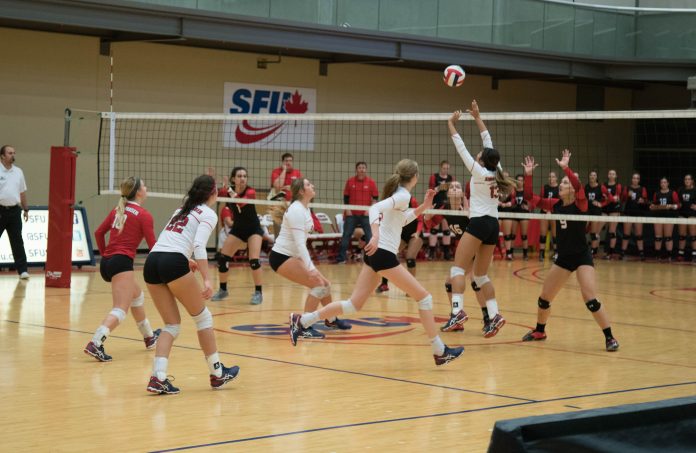
SFU remains third in the GNAC conference with the win.

Saturday night, SFU volleyball played host to the Seattle Pacific Falcons. A game late in the season between the third- and eighth-ranked teams in the conference in most instances does not matter a whole lot. However, the Clan needs to win every game to increase the chances of being selected to postseason play. They did their part, beating Seattle Pacific 3–1.

“I thought aside from the little stretch in the second where we played a fairly focused game and did a good job of executing what we wanted to do offensively and defensively,” said head coach Gina Schmidt afterwards. “I was pleased with that. We did have a little bit of a let-down in the second set, but came back well for sets three and four.”

The stretch that she referred to was when Seattle came back from a 20–12 deficit to eventually win the set 25–23. From there however, the Clan turned it around, winning the next two sets in convincing fashion.

“I just pointed out that we had 13 hitting errors in the second set, and probably in the second half of that second set,” Schmidt said, on what she told the team after the second set. “You can’t win games when you score half the points for the other team. I just told them if we can eliminate those [mistakes], then we’re in good shape.”

The game marked a sort of revenge game for SFU, as they were swept by the Falcons in the game in Seattle back on October 13.

“When we were in Seattle [. . .] we gave up a lot of points on our side. Our offence did not execute on their side. That’s what we [talked] about, we wanted to make sure we were taking care of our side tonight and that will help take care of the result. It was much better execution start to finish than compared to our game down there.”

If this was a big game for SFU, then the next match is massive. They’ll travel to Western Washington to play the Vikings; in the match here in the West Gym on September 14, they beat them in a five-set thriller. A win will move them within one game of them, but also assure them of third place in the conference.

“They’re a good team, and when we were here, it went five. I expect another hard-fought game down there on their court,” said Schmidt on what to expect. “They don’t make a lot of mistakes, so essentially it will be making sure that we make them earn their points and take care of the ball on our side. Again, [we have to] execute our game plan.”

$5 a Day Challenge: Meal planning to avoid death

0

This is the second in a week-long web series that documents Kevin Rey’s experiences living off of $5 worth of food a day. Check back daily for another post.

I’ll bet all of you who read my previous article are wondering something.

Why didn’t I just buy like 48 packets of ramen, and maybe an orange to fight off scurvy? I mean, other than you can’t really buy locally sourced instant noodles.

It’s certainly cheaper to eat like that. Mac and cheese and canned soup cost less than a dollar per meal, but all of that variety of food has a serious flaw: it’s the food equivalent of packing peanuts. Years ago, I made myself incredibly sick by relying on instant meals and pizza pops for my nourishment. It’s no surprise, considering that a lot of processed food is incredibly high in salt, trans fats, and sugar.

Actually, the amount of sugar in our diet got a lot of attention earlier this year when it emerged that the sugar industry had been influencing research on the link between sugar in disease.

I know, I know. It sounds like one of those awful conspiracy theories that accuses the illuminati of causing brain cancer via Justin Trudeau selfies. But as cartoonishly evil as it sounds, it really happened. In 1957, a scientist published a paper in The Lancet scientific journal, pointing at sugar as a cause of heart disease. Several years later, the sugar lobby paid Harvard researchers to publish a paper that disagreed, placing the blame on fat rather than sugar.

But I digress.

For this challenge, I didn’t want to revert to my ramen-fuelled state. I wanted to do a little better. So today, I took my time making food that I really enjoy.

I soaked beans overnight, then rinsed and cooked them thoroughly. I added them to a pot where I had cooked some onions, garlic, and tomato paste into this sort of caramelized “flavour base.” After some simmering and seasoning, I had that with a side of rice.

When I was growing up, my dad would joke with my sister and I, asking if we wanted any of the beans he had simmering on the stove. At the time, the thought was completely revolting. But now, it’s honestly one of my favourite meals.

I’ve had this many times before, but this was the first time I had made it using dried beans rather than canned. It tasted a little different, but what was the most surprising to me is how much cheaper it is to buy the beans dried. Sure, I had to think one day ahead and soak them overnight, but by my math I saved around 40 percent of what I would normally pay.

Breakfast was pretty good too: bread from a local bakery with margarine and jam.

As day two draws to a close, I’m feeling pretty good about this whole venture.

But maybe I’ll start fattening up my cat. Just in case.

screen-shot-2016-11-11-at-4-54-04-pm

Amy Schumer, “Formation” isn’t for you

0

I remember the night Beyoncé decided to bless us with “Formation.” I was on exchange in England, chatting with a friend on Skype, when I had to stop what I was doing and take it all in. The song was fire, but this was Beyoncé; I expected nothing less.

What I found really powerful were the visuals that accompanied the song, proudly putting our history on display. Black women were showcasing their natural hair. New Orleans-based southern black culture was being celebrated. A young black boy in a ‘hood was dancing in front of cops in full riot gear.

Combining the above with lyrics focusing on celebrating Beyoncé’s southern roots, I understood that “Formation” was meant to speak to black people, and specifically, black women — reminding us that we slay. That’s why seeing such a call of solidarity be distorted and mocked for somebody else’s agenda is so irritating.

Recently, Amy Schumer released a mimicry of Beyoncé’s video, titled “Get in Formation.” Schumer lip-syncs along to the song, featuring cameos from actors like Goldie Hawn, Joan Cusack, and Wanda Sykes. The closest we get to acknowledging the original visuals’ significance is Sykes’ cornrows — but this is the equivalent of “But I have a black friend . . .” and I’m not here for it.

Schumer is a white woman. “Formation” isn’t meant for her, nor is it meant to be used by her. By completely changing the imagery and focusing almost solely on her own experiences, she misses the fact that this song speaks of blackness and black femininity in a way that she, as a white woman, cannot understand.

Think of it this way: Queen Bey throws an incredible party for black women to celebrate us. I and all my black girlfriends show up with our ‘fros, twists, and braids on point. Our makeup is on fleek, and we are feelin’ good! Suddenly, Schumer bursts in, tries to draw all the attention to herself, and gets mad when we explain, “You can come hang out with us, but don’t make it about you.”

Regardless, this could’ve been easily resolved if Schumer heard the criticism and apologized. However, she responded by saying, “I had Beyoncé and Jay Z’s approval. They released it on Tidal exclusively for the first 24 hours.”

Um, nope. That’s not how this works. We haven’t seen an official endorsement from the Knowles-Carter family, probably because Beyoncé is busy dominating the world, so that’s not a valid defence.

Meanwhile, a tribute may be well-intentioned, but it doesn’t change the fact that Schumer‘s trying to turn a piece that’s so blatantly for black women into a tribute to all women. She could’ve used a song that’s not so directly connected to black culture.

She talked about empowering all women, failing to acknowledge that black women experience life differently than white women. It’s white feminism at its peak, and I’m not here for it.

This doesn’t mean that non-black people can’t listen to “Formation.” Shoot, I play it as loud as I can for my friends, reminding them that their best revenge is their paper. What it does mean is that this song is a celebratory space meant for me, a black woman, and it needs to be treated as such.

Black women face prejudice on a regular basis. My sisters are murdered and their names aren’t even spoken. When a powerful figure within popular culture — who is also a black woman — creates a piece of art specifically for me and my girls, that is sacred and special.

Until she gets that, Ms. Schumer will not be going to Red Lobster.