Home Blog Page 777

Board of Governors, Senate elections wrap up

1

Simon Fraser University wrapped up its student elections. While they didn’t release any statistics about how many students voted or how they voted, they did announce the winners for Board of Governors, Senate, and the SFU Community Trust.

Jimmy Dhesa has won the undergraduate seat on the SFU Board of Governors, beating out three other candidates including current Simon Fraser Student Society president, Larissa Chen. Dhesa said his new sandwich board played a big part in his win, which he made out of trash from the Fraser Library.

“I didn’t expect to win because I lacked on the well-connected/-known student endorsements and did my best trying to make up for it by just grinding in the halls with my friends and my newest sandwich board,” said Dhesa.

Oliver Zihlmann won the seat for graduate students.

Hanrick Kumar and Mohammad Chisty won the undergraduate Senate seats for the education and environment faculties, respectively. Each faculty needs to be represented, and they were the only candidates from those fields. They will be joined by 10 other candidates, including the aforementioned Chen who will represent health sciences.

The other winners are Sina Khalili (applied sciences), Raman Bains and Dorothy Ng (arts and social sciences), Jaskarn Randhawa and Amar Singh (business), Raajan Garcha (health sciences), and Iman Baharmand, Alam Khehra, and Christine Wang (science).

There was no candidate from the faculty of communication, art, and technology, so the seat will remain vacant until an election is called.

As for the graduate student election winners, Kau’i Keliipio from education and Sarah Ferguson from business were the two students voted in.

Finally, the SFU Community Trust had one student position available, and the vote has determined that Sibo Chen will be the one to fill it.

SFU did not share voter statistics, but did announce that there were five complaints lodged with the Senate Electoral Standing Committee. Two of them are from undergraduate candidates who ran in the election, and three are from students who were eligible to vote. A full review is expected within the next two weeks, and at this time they’ve announced that they decided to suspend the votes from one position affected until a review is conducted.

SFU is saving athletes one sticker at a time

0

For many years, concussions were something sports coaches, and even doctors knew little about in regards to long-term repercussions. Back in 2002, Dr. Bennet Omalu was the first to discover chronic traumatic encephalopathy (CTE), a severe degenerative disease that affects many parts of the brain, caused by repeated trauma to the head. It was discovered after the many cases of concussions found in professional football players in the US, and later discovered in many other contact sports where head trauma is possible.

15 years later, SFU’s very own Shield-X, has proven to dramatically reduce the risk of serious brain conditions like CTE. A recent study claims that thanks to the device, there were reportedly 31% fewer concussions.

Shield-X was created seven years ago at Simon Fraser’s Head Injury Prevention Lab, part of the School of Mechatronics Systems Engineering. Since its creation, it has been rigorously tested on hundreds of athletes in both the US and Canada to ensure its ability to prevent concussions.

As football is notorious for its head-to-head impact, the most recent study focused on over 300 high school athletes on football teams in Canada and south of the border over the 2016 football season. However, the technology is not limited to football players. As chief technology officer and post-doctoral student at SFU, Daniel Abram, explains, “The Shield-X membrane can be implemented in different ways to enhance the protection of any headgear.” It can be easily applied to the inside or outside of a helmet like a sticker, and Abram hopes to see it used in ski, hockey, and bike helmets.

With football and hockey being in the spotlight of concussion research, the typically male-dominated sports have left females out of the majority of brain trauma related studies. An article from Medical Xpress claims that incomplete studies comparing male and female college athletes are to blame. However, a recent study has now discovered in comparable sports, like soccer and basketball, females are 50% more likely than males to suffer a concussion, and that number skyrockets after an athlete has already experienced one.

A recent panel discussion at McGill University concluded college sports are starting to see an epidemic of concussions. This is mainly due to the fact that athletes tend not to report injuries — especially if they are in a sport with a short season, leaving them only a handful of weeks to showcase their skills. Although we are seeing preventative steps being taken at research centres like we have at SFU, there is still a general lack of technology to monitor athletes after they have suffered from a brain injury.

A doctor who participated in the discussion, Dr. Guy Rouleau, said that “there are very few objective tests to evaluate the injury. We can’t predict recovery rates, complications, or potential long-term consequences of repeated concussions. We don’t know why some people are more susceptible than others.” This is all due to the current lack of research, technology, and funding.

Shield-X can potentially protect many of our fellow students as they follow their college sports dreams, but much is needed to be done in order to ensure they’ll lead full lives after college. As for concussion-prone sports, such as soccer, rugby, cheerleading, and many others that do not have helmets as part of their attire, there is still much to do.

Study finds female Internet users experience higher rates of body dissatisfaction

0

By: Manon Busseron

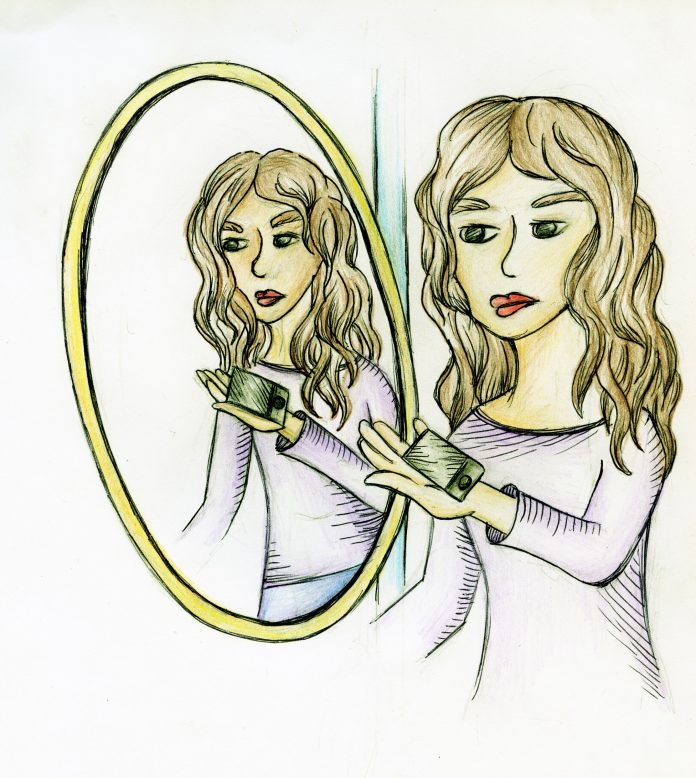
Allison Carter, a PhD student in health sciences, has conducted research concluding that the more time women spend on the Internet, the more dissatisfied they feel about their body.

The idea of a correlation between time spent online and body dissatisfaction first came from Carter’s personal experience. She began to notice that her own use of the Internet had an effect on her sense of body dissatisfaction. She then chose to investigate that relationship using Canadian data.

Her research was based on a study of 3,000 Canadian women aged 12 to 29 from all over the country. These women reported the amount of time they spent on the Internet each week in the past three months (excluding time spent at work or school). They were then asked to answer the question: “How satisfied are you with the way your body looks?” Answers ranged a set of five responses that went from “very satisfied“ to “very dissatisfied.“

The results

The results show that “women who spend 11 to 20 hours online were also more likely to be less satisfied with their bodies,” said Carter. Those that spend more than 20 hours online each week “reported body dissatisfaction at three times the rate of those connected for less than one hour per week.“

Carter underlined that a lot of research has been done on “the effects of various social fields“ on self-perception, from TV and magazines to, more recently, the Internet. According to Carter, the strong effects on women are caused by the fact that “women are being taught to be focused on what the body looks like and to be concerned about it.”

Although no specific type of online content was investigated, women generally consulted websites, particularly social media and fitness websites, that “tend to be focused on idealized aspects of female beauty.“ Carter said that they are “typically consuming images, messages, and ads that promote thinness as beautiful, and a perfection that does not exist, which can lead to the internalization of these messages and consequently lower body image.”

What about men?

The experience was repeated on 2,700 men also aged 12 to 29. Carter reported that they feel “a much lower rate of body dissatisfaction despite a higher rate of Internet use,“ suggesting that there is a slightly different pattern for men and women regarding the effects of the use of Internet.

How can young women and students use the Internet in a more positive manner?

“One of the most direct things is to limit the amount of time you spend online. The Internet has a lot of positive aspects but we should pay greater attention to the kind of content we’re consuming,“ Carter warned. She advises students to “unfollow“ accounts that cause “harmful self-evaluation and follow those that lift us up.“ She personally recommends the Instagram account Beauty Redefined, “that promotes really great messages around body positivity.“

Body dissatisfaction can have important consequences such as a lower self-esteem, eating disorders, excessive exercise, and depression. “Beyond being important individual issues, these are also public health issues,” insisted Carter.

Meg Wilson and her remarkable comeback season

0

Saturday, February 28 marked the last basketball game that star forward Meg Wilson will ever play in the West Gym at Simon Fraser University.


“There was so much emotion, with it being seniors’ night and pink night, and having so many alumni, friends, and family in the stands,” said Wilson when asked about the game.  


In what was a grueling affair with the second-best team in the nation in Alaska Anchorage, Meg led the team with 18 points, as she has done so many times throughout the season. She led the team in points, rebounds, and steals this year with averages of 14.7 points, 5.4 rebounds, and 2.33 steals. Watching her steal a pass at the top of the key and beat every player to the opposing hoop with ease, you would never guess the adversity that she has faced to get to the player she is today.


Things weren’t always so easy. In what was meant to be her senior season in 2015–16, Meg Wilson was diagnosed with compartment syndrome in her legs. This syndrome occurs when excessive pressure is built up in an enclosed muscle area, and can cause blood to not reach the affected tissues properly. Due to the emergency of preventing permanent damage, Meg was forced to sit out the entire season following surgery.


“I didn’t know if I was gonna be able to play, or if I was injured. It went back and forth between a couple of different diagnoses from doctors,” said Meg. When the news hit, she was determined to contribute in her new role, saying: “When I finally knew I wasn’t going to be able to play, that I was going to have to have surgeries on both my legs, my mindset really changed to try to help the team the best I could without being on the court.”


An injury like this would be difficult for anybody, let alone a varsity athlete, but Meg used it to improve herself.  “Being forced to take a step back I saw a different picture and different side of things [. . .] I grew a lot as a person, being more patient and realizing there was more than basketball,” said Meg. At the same time, however, her time away helped her realize how much she loves the game.


She did everything she could to be ready for this season, where she and the Clan knew they had the potential to do great things. “We focused on taking advantage of the opportunity that we had,” said Meg on the mindset of the team as they prepared for the season.


And take advantage they have.


Simon Fraser headed to the postseason as the third seed in the Great Northwest Athletic Conference, and came off a game in which they nearly beat the second-ranked team in the nation — Alaska Anchorage. Unfortunately, they weren’t able to come up with the win against Central Washington but at the time of publication, they could be in the west regional tournament. “We had that date circled on our calendars for a long time,” said Meg, after the team upset the same opponents last year in the same scenario.


Throughout the game, and throughout the season, Meg Wilson’s and fellow senior Ellen Kett’s on court chemistry has been key for the Clan. “We have a connection on the court where we know where each other is going to be,” explained Meg. “I know [. . .] if I cut, Ellen will give me the ball because she is such a great passer.”


This relationship extends far beyond the court, however, as it does with all her teammates. “We get along so well and have a lot of fun off the court,” said Meg, smiling when asked. The thing that has stood out for her most at Simon Fraser outside of basketball is the family she has experienced within athletics.


Her and her teammates are now “where [they’ve] been looking to be all season.” Meg is more than ready for the intensity of the post-season, saying, “[It’s] so exciting for us because we love to compete, we love that every possession is going to matter.”


In perspective though, Meg Wilson’s health matters much more than basketball. Her and her teammates are blessed to have her back on the court, where she is now better than ever.


FUN FACT: What do you have to do before every game?

I eat a peanut butter cup before every game!”

Simon Fraser women’s basketball upset 58–57 by Central Washington

0

This was not supposed to happen.


Heading into the Great Northwest Athletic Conference (GNAC) as the third seed and playing the six-seeded Central Washington University Wildcats, the Simon Fraser University Clan was expected to advance to the semifinals, and perhaps even further. While the Clan gave a strong defensive effort, their offensive deficiencies (not aided at all by an injury to Meg Wilson) proved to be too much to overcome.


The teams began the game much like it ended, neck-and-neck. Kortney Grattic and Rachel Fradgley traded layups to start the game, and the rest of the first quarter was much the same. By the end of the first frame, the score was 16–16. We were in for a highly competitive game of playoff basketball.


In the second quarter, Simon Fraser was able to separate themselves a little bit from their opponents. With four minutes left in the quarter, an Elisa Homer three-pointer extended the lead to as much as eight, with a score of 26–18. Central Washington was able to cut the lead to as little as two before the break, before a pair of free throws by Sophie Swant made the score 28–24 heading into the half.


Ellen Kett led Simon Fraser with nine points and four assists. For Central Washington, Jasmin Edwards led all scorers with 10 points and played all 20 minutes.


Although the Clan won the quarter, they suffered a huge loss. Meg Wilson left the game with 3:27 left in the second quarter and did not return. She finished with zero points, two rebounds, and five turnovers, much different than the team-leading 14.7 points and 5.4 rebounds she averaged throughout the season.


Even with this loss, Simon Fraser was able to play a strong third quarter. A Kett layup assisted by Homer gave the Clan an eight-point lead, and forced a timeout by the other side with 6:12 to go in the quarter. This lead would extend to 12 twice in the remaining minutes of the frame, but would settle back at eight as the teams went into the fourth. Even without their star forward, SFU had put themselves in a strong position to win the game.


In the fourth quarter, however, the team unraveled. The Wildcats outscored the Clan 23–14 in the frame, and SFU was poor on both sides of the ball. From 6:17 to 1:38 in the quarter, Central Washington went on a 15–3 run in which Simon Fraser could not buy a basket.


The score was now 54–53 for the Wildcats with a minute and a half to go: playoff crunch time. After a pair of free throws by Ellen Kett made the game 57–56 for the Clan with four seconds left, Kortney Grattic was fouled with only one second remaining on the clock. She went on to hit both free throws and complete the comeback, giving her team the upset win.


Offensive struggles for SFU were the catalyst for the loss. They shot only 27.1% from the field, including hitting only 15% of their three-pointers. Kett was the only player in double-digits for the Clan, with 22 points and seven assists. Every other Simon Fraser player, with the exception of Tayla Jackson, shot less the 30% from the field. The absence of their leading scorer was definitely a factor.


Next Game: Even with this disappointing loss, there is still potentially more basketball to be played for the Clan as Simon Fraser will now look to take part in the upcoming West Regional Tournament. At the time of publication, it is not sure whether SFU will be in this tournament. If they do make it, their first game will be Friday, March 10.

Morgan Smith takes third, clinches berth for the national tournament

0

Morgan Smith, the Clan’s 197lb starter, will compete at the NCAA Division II National Championships on March 11 and 12 after taking third place in the West Super Regional this past weekend. This makes Smith just the fifth Clan wrestler to book a ticket to the nationals since joining the NCAA in the 2012–13 season.


Smith took third in his division at the regional tournament. To get that far, he had to battle through a grueling bracket where a single loss could risk ending his season. After just falling short of qualifying for the national tournament last year, Smith was determined to compete in Alabama this time around.


“This year, I focused on making sure I felt great the day before we left. For me that means making sure I’m not overly stressed and that I don’t overdo my training. I love to train, so it’s been a challenge for me to hold back in order to peak at the right time,” Smith said, regarding his preparation for the regional tournament this year.


That preparation finally paid off for the native of Lynnwood, Washington, who has the talent to compete at the national level. Head coach Justin Abdou said that the tournament was “a great result from [Smith], who had the top three wrestlers in the country in his weight class. He has been constantly improving and this is his best result in our regional tournament after three tries. He beat a very capable opponent in his bronze medal match and it was a good win that he can build on.”


The opponent that Smith took down in his final match was Central Oklahoma’s Greg Wilson, who is ranked second in the entire NCAA Division II at 197lbs and has Division I experience. The match came down to the wire, with the Smith edging out his opponent 3–2. This result is a massive boost going into the nationals, and proves that Smith can compete with anybody in the nation.


“I’m all about momentum […] Winning [that match] was great, and I plan on building upon my performance at the nationals in Alabama,” Smith said about his performance in his final match.


Unfortunately, the rest of the Clan did not fare as well in the regional tournament. The Clan had no other wrestlers qualify for the nationals, despite having two returning members of the team who qualified last year in Reid Watkins (165lbs) and Sean Molle (heavyweight), and promising competitors across their lineup.


“A disappointing end of the season for Velasquez [133lbs] and Molle who both had very good years,” said Abdou. “Velasquez had arguably the deepest weight class [in the tournament] with 10 nationally ranked wrestlers in the field. He did beat one of the qualifiers, but was unable to win the close ones. Molle lost to eventual third- and fourth-place finishers.”


Molle was able to beat one of his opponents just 10 days ago, but failed to repeat that performance this weekend.


Thus, Smith will make the trip to Alabama on his own, confident that he can become just the second all-American in the NCAA era for the Clan. When asked what his goals are going into the tournament, he replied, “My goal is to wrestle through every position, to focus on each match, to stay aggressive, and to give my full effort in every match. With that in my mind, I can beat anyone in the country, regardless of NCAA Division I, II, or III.”


Confidence is one of the most important things that an athlete can possess, and Smith certainly is confident. If he can build on that, there is a good chance that he will earn all-American status in Alabama next month.

Minutes from Emergency Board Meeting (February 24)

0

Emergency Meeting of the Peak Publications Society Board of Directors
February 24, 2017
Peak Offices
Chair: Jessica Pickering

Minutes from the Special General Meeting (February 24)

0

Peak Publications Society Special General Meeting
MBC 2290
February 24, 2017
Chair: Maia Odegaard

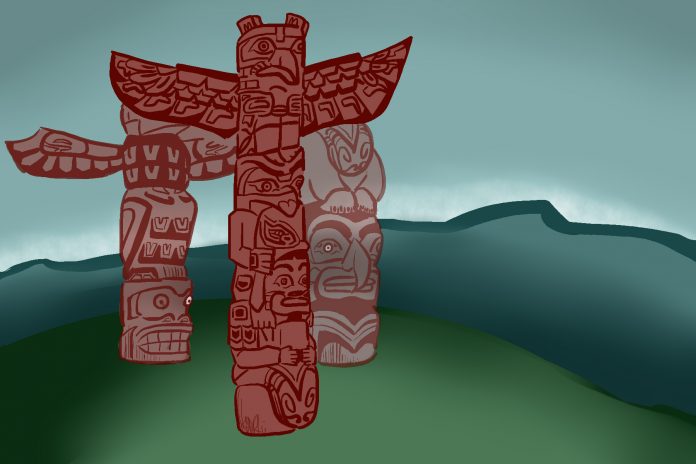
The history of Coast Salish peoples on Burnaby Mountain

1

I respectfully acknowledge that we are on the traditional, unceded territories of the xʷməθkʷəy̓əm (Musqueam), Sḵwx̱wú7mesh (Squamish),  Sel̓íl̓witulh (Tsleil-Waututh), and Kwikwetlem (kwikwəƛ̓ əm) Nations.

Every student has probably heard those words in some shape or form during their time at SFU. Most campus events have the main speaker or host acknowledge that we are on land that is not rightfully ours. But have you ever stopped to wonder what those words really mean, or what the history is behind the land that our campus is built on?

To the best of our knowledge, The Peak has compiled a brief history of the Coast Salish peoples of Burnaby Mountain. Please note that this history is by no means comprehensive, and is lacking in firsthand interviews from Indigenous peoples as there was a lack of responses to requests for interviews by time of publication. If you have any feedback or corrections regarding this article, please email [email protected].

Indigenous Cultures on Burnaby Mountain

The term “Coast Salish peoples” refers to members of the Salish family. “The Salish language family is comprised of 23 distinct languages,” reads an excerpt from the SFU Bill Reid Centre website, “which are spoken in interior and coastal British Columbia, the state of Washington, and in small areas of Montana, Idaho, and the Oregon Coast.

“While [the term] ‘Coast Salish’ is certainly appropriate to use, it should be noted that it is a linguistic term that refers to the Coast Salish language family, which is comprised of many First Nations,” said William Lindsay, director of the Office for Aboriginal Peoples at SFU.

The history of First Nations people on Burnaby Mountain goes back thousands of years. “The mountain was used as a place to gather arbutus bark. There were hunting and gathering activities,” said Ron Johnston, director of the Office of Indigenous Education at SFU and member of the Squamish nation.

Lindsay passed on information to The Peak from Christopher Lewis, who is a member of SFU’s Board of Governors. Lewis, a member of Chiefs and Counsel for the Squamish nation, mentioned that the shoreline of the mountain was a traditional sea urchin gathering place.

However, four nations shared resources and utilized the land of Burnaby Mountain in various ways. The land on which SFU occupies is home to the territories of the following nations:

xʷməθkʷəy̓əm (Musqueam): Having been located in the Greater Vancouver area for several thousands of years, Musqueam have ties to an area now referred to as the Marpole midden, which is located at the mouth of the North Arm of the Fraser River, where their existence has been documented for over 4,000 years. Those ties to the Fraser River are still strong today, as they currently live on a reserve located south of Marine Drive near the mouth of the river.

With files from the Musqueam Indian Band website

Sḵwx̱wú7mesh (Squamish): Some of the the Squamish village sites date back 3,000 years. According to the Squamish Nation website, their territory is comprised of areas including “Vancouver, Burnaby, and New Westminster, all of the cities of North Vancouver and West Vancouver, Port Moody, and all of the District of Squamish, and the Municipality of Whistler. These boundaries embrace all of Howe Sound, Burrard Inlet and English Bay as well as the rivers and creeks that flow into these bodies of water.” Many of the locations hold a particular significance for the Squamish nation because of their relationship with the land. For instance, Johnston mentioned that, “[Burnaby Mountain] is right in the centre of Coast Salish territory, and it was also significant because of its closeness to the Creator.”

With files from the Squamish nation website

Sel̓íl̓witulh (Tsleil-Waututh): The ancestors of the Tsleil-Waututh people occupied a vast area of land in Greater Vancouver, ranging from areas around the Burrard Inlet, Deep Cove in North Vancouver, Coquitlam Lake, Howe Sound, to south of the Fraser River. One of the recent issues that they have been involved with has been speaking to government officials about the approval of the Kinder Morgan pipeline. Tsleil-Waututh Chief Maureen Thomas said in an interview with The Huffington Post, “We’ve tried to do everything in the right way. We’ve always tried to take the high road. We’re not here to disrupt the rest of Canada. We’re not here to cause problems for individuals.”

With files from the Tsleil-Waututh Nation website and The Huffington Post BC

kwikwəƛ̓ əm (Kwikwetlem): The Kwikwetlem First Nation Sto:lo people live in Coquitlam, BC. Their nation has two reserves, one of which sits at the mouth of the Coquitlam River which drains into the Fraser River, and the other 2 km north of this location. In November 2015, working in partnership with the other Coast Salish nations listed above and Kwantlen Polytechnic University, the Kwikwetlem unveiled plans to create a technical skills and trades training program for First Nations peoples over the next three years. “I can see this being of such great benefit to all future participants that will take the skills training,” said Kwikwetlem Nation Councillor Ed Hall. “I am unable to emphasize the magnitude and importance this will be to our Nation going into the future.”

With files from the Kwikwetlem First Nation website and the BC Provincial Government website

Where SFU Comes into the Picture

When the university was being built in 1965, Burnaby Mountain was not part of any First Nations reserves, although people from many nations lived on reserves nearby. “In the 1960s, First Nations were emerging out from under the thumb of the government, despite the fact that the Indian Act and the government had a lot of power,” said Lindsay. “They weren’t asked for their input on building the university. The First Peoples had no say, really, on what was happening on the mountain at that particular time.”

“It was similar to how our Squamish community had villages in Stanley Park,” added Johnston. “And a park was created, and when those were [built], there wasn’t much consultation [with the peoples living there],” Lindsay supplied.

Lindsay also mentioned that the government didn’t even acknowledge Aboriginal titles until the early 1990s, when he, himself, was a university student. Until then, the government denied that Aboriginal title existed, and thus SFU did not acknowledge it either.

Other forms of subtle discrimination within the university are unfortunately still present today. Sarah Guraliuk wrote a piece in The Peak last semester about how she had to provide “acceptable proof” of her heritage in order to apply for scholarships. “By requiring documentation to access resources allocated for Indigenous people, universities create a hierarchy of who is the most “authentic” and who is less so,” Guraliuk wrote. “Those who cannot produce said documentation are not only excluded from the resources, but must also deal with the emotional toil of being rejected from one’s own culture.”

There is also the fact that I am currently in a colonialism class within the department of communication that is not being taught by an Indigenous professor. While hiring Aboriginal faculty is underway, I am missing the opportunity to learn firsthand from somebody who has experienced the issues about which I’m learning.

While my class is taught with humble acknowledgement that we do not identify with the struggles of Indigenous peoples, I can’t help but wonder what I am missing by not having an Indigenous professor teach the course.

What’s the next step for reconciliation?

Lindsay did acknowledge that SFU’s relations with First Nations people have improved tremendously over the last 10 years. There is an Aboriginal Reconciliation Council, of which he and Johnston are members. The university is currently in the process of consultation, asking the community how they should respond to reconciliation. They have set aside $9 million that will be dedicated for this project and will implement those responses.

One of the major points of feedback from the consultation has been the creation of more Aboriginal spaces here at SFU. The creation of a celebration hall and expansion of the Indigenous Student Centre were given as suggestions for how to do so.

Bryan Myles is the interim director of the Bill Reid Centre, which is located in Saywell Hall and contains a collection of photographs, media, and documentary films with the intention of bringing Indigenous cultural heritage into a new media environment. He is currently developing an app that will provide a tour of the different Coast Salish territories on the mountain. “I thought, ‘Wouldn’t it be cool to have a tour that people could take on their mobile device, and go out and learn about these places, and actually hear their Indigenous names not those given to them by colonizers,’” he said.

We’ve made a lot of strides, but reconciliation is going to be a long and multi-layered process. It is going to require that we consciously make space for Indigenous people to tell their stories, and let them define what reconciliation looks like. Maybe our history will look different once we do so.

Protest organized for Trump Tower opening in Vancouver

0

By: Benjamin Mussett

With Trump comes controversy. The same can now be said for the opulent buildings which bear his name. Following a fairly rocky development stage, the official opening of Vancouver’s Trump International Hotel and Tower is now upon us. As expected, a large anti-Trump demonstration is slated to welcome the president’s sons who are now heads of the Trump Organization, Eric and Donald Jr. The official unveiling is scheduled for Tuesday, February 28

The confrontational greeting should not come as a surprise to the Holburn Group, the Vancouver-based company that developed the 69-storey skyscraper. The project has been a significant point of contention among many in the city who feel that Trump’s controversial and occasionally divisive politics should not be represented in Vancouver. By late 2015, a petition requesting that Trump’s name be removed from the building had gathered over 50,000 signatures.

In fact, following Trump’s now notorious campaign proposal to prohibit Muslims from entering the US, Mayor Gregor Robertson also spoke out against Trump’s involvement in the project. In a public letter, which Robertson addressed to Joo Kim Tiah, the president and CEO of the Holburn Group, the mayor said, “Trump’s name and brand have no more place on Vancouver’s skyline than his ignorant ideas have in the modern world.”

Despite the backlash, the Holburn Group chose not to cut ties with the Trump Organization. After the uncovering of an audio tape which appeared to feature President Trump boasting about groping women without consent, the company released a statement distancing itself from the controversy, albeit not the Trump brand. “Holburn, a company that has contributed immensely to the growth of Vancouver, is not in any way involved in US politics. As such we would not comment further on Mr. Trump’s personal or political agenda, nor any political issues, local or foreign,” read the statement from Joo Kim Tiah.

Aside from the local implications, the Trump brothers’ upcoming visit to Vancouver involves a larger controversy concerning the excessive cost of protecting the president’s sons as they promote his brand and attend hotel openings around the world. Instead of divesting his business holdings or putting them in a blind trust to prevent possible conflicts of interest, the president chose to place his two eldest sons at the helm of the Trump Organization.

As with the rest of the president’s close family members, Eric and Donald Jr. are now continuously protected by the Secret Service. The cost of protecting the jet-setting businessmen has proven excessive. According to The Independent, the security expenses for Eric Trump’s trip to Uruguay last month alone cost taxpayers nearly $100,000. All of this has raised significant ethical concerns regarding the intersect between the presidency and Trump’s private business. Should public money be used to defend Trump’s family members while they promote and profit from the Trump brand?

Tuesday’s official opening will be the third time that activist Vancouverites have come out to protest Donald Trump in just the last few months. Nonetheless, the Holburn Group has decided to stick with the Trump brand and all that it represents. The company has stated numerous times that they are under contractual obligation to keep the Trump name and dropping it would entail “enormous financial and legal ramifications.” Still, there is an advantage to this type of attention: plenty of publicity and profitable curiosity.

For anyone interested in Tuesday’s planned protest, more details can be found here.

With files from the Georgia Straight, CBC News, Global News, Forbes, the Independent and the New York Times.