Home Blog Page 777

Vancouver residents share their unique stories at annual event

0

CORRECTION: In a previous version of this article, The Peak stated that Martin Meerman had won the Interesting Vancouver Prize. Robert Chaplin has won the Interesting Vancouver Prize. We regret the error. 

Interesting Vancouver! co-hosted by SFU Woodward’s Cultural Programs, invited 10 speakers to share their interesting and unusual stories with passion and humour.

Throughout the night, the lecture hall was filled with laughter. Robert Chaplin, an author, won the Interesting Vancouver Prize, for an individual or group in Metro Vancouver doing something particularly interesting.

Among the 10 speakers, aeronautical engineer, Martin Meerman was curious about how small he could make inanimate objects. When he had time away from his job designing satellites, he built miniature sculptures such as dollhouse furniture. He showcased a miniature portrait of president Lincoln, measuring in at under 0.001 mm.

Among these 10 speakers, a grief counsellor named Gaby Eirew described her work and experience of being a mom. She asked, “If you face the loss of one of your parents, especially when you are still children, what would you wish you knew about them?” She went to the street and asked over 100 people in Vancouver over the last five years.

She found people wanted to know what their parents would say about love, their favourite recipes, and what they felt guilty about. Based on the research she had done, she created an app called Record Me Now. This app is free, and designed for people to leave messages for their loved ones, to record their thoughts on life to be treasured after their death.

The night took a turn to the creative side, when Dusty Hagerud a puppeteer, explained his passion and artistry behind living in a world surrounded by puppets. “I am the only child in my family. You can see that.” He came to the stage with a witch puppet in one hand who is described as being based off of his grandmother.

Vanessa Richards, emcee and speaker at Interesting Vancouver, explained that Interesting Vancouver “is an opportunity to bring voices together, bring all kinds of voices together because this is the common breath we share.”

Gopa Biswas Caesar, an SFU student and attendee at the event explained that she often thinks of Vancouver as a “boring” place, but this event sparked her curiosity and she wanted to learn the ways in which Vancouver could be “interesting”. 

She mentioned that she really appreciated the variety of speakers at the event. “It is really uplifting to know there is a group of ordinary people in the Metro Vancouver from different backgrounds doing something extraordinary. ”

The secret life of a sessional instructor

1

Sessional instructors, also known as adjunct faculty, are every university’s secret. We know they exist, but we don’t know too much about them, what they do, or why job security in academia is such a large issue.

Don’t be surprised when I tell you that a significant portion of your courses at SFU might have been taught by sessional instructors. I’m taking four classes this semester, two of which are being given by sessional instructors. The Teaching Support Staff Union (TSSU) at SFU has reported that sessionals provide over 20 percent of undergraduate courses.

What is adjunct faculty?

Sessional instructors are, simply put, professors. But the thing is, they lack a certain status that comes along with the title of a regular professor — and they certainly lack some of the perks regular professors are given. The reason: SFU is taking advantage of sessional teaching contracts. As students who roam these concrete structures on top of Burnaby Mountain, there are many things we don’t think about because we’re too preoccupied with our lives; but unveiling the life of a sessional instructor makes for a good reminder that we should always be asking SFU to do better by its students and employees.

Why don’t we know about sessional instructors?

Universities are here to help us navigate our careers, educate us, and take all of our money, but there’s a lot going on beneath the surface that most of us do not know about.

We take multiple courses, earn our degrees within a minimum of four years and move on — but have you taken a moment to consider the people who help you get there? Have you wondered about the person who stands at the other end of the classroom? Their experiences, their lives, or even their official position in the university?

Sessional instructors stand at the middle of the hierarchy of the teaching faculty. They are often unsure if they will ever move up the ladder to become regular professors while they cling to their temporary teaching positions, hoping to be kept on in future semesters.

Many courses at SFU — varying from foundational courses such as FAN and FAL to graduate-level courses — are taught by employees who could easily be let go with just one month’s notice. This discrepancy isn’t widely talked about, because the university extracts the same amount of skills from sessional instructors as it does from a senior professor.

If little to no job security isn’t enough to turn you off, note that it’s common practice to also pay lesser salaries and provide minimal benefits.

Universities across the country, SFU included, profit from the short-term employment of sessional instructors, with no obligations to them as employees.

As Derek Sahota, chief steward of the TSSU, told The Peak, “all sessional instructors stay to teach, despite the difficulties, due to the hope and the dream of becoming a professor.” A hope, he said, that can cause a sessional instructor to be stuck in middle-ground hell for decades. Sessional instructors can be the heroes we need in the classroom, but most of them get the bitter end of the bargaining table.

SFU’s love/hate relationship with adjunct faculty

When I interviewed Sahota, it was early on in the semester and the Convocation Mall was full of new graduates going through their well-deserved ceremony. We met in the AQ and he shared with me what, in his opinion, it means to be a sessional instructor at SFU.

Sessionals have been a part of SFU’s teaching faculty for decades and have become an integral support system. Even though sessional instructors are meant to be one-off people covering for full-time professors in situations of emergency, some instructors at SFU might even teach up to 15–16 courses per year, Sahota added. The goal behind having sessional instructors then is no longer the reality for these educators. Universities are taking advantage of this position. Instead of using them as temporary substitutes, they are keeping instructors in the limbo of academia.

This out-of-sync working relationship is now leaving sessional instructors to reevaluate the power dynamics in their work environment. The nature of the work is precarious, to say the least, as their contract ends immediately after the four-month semester.

Accepting a job, fully aware that you may be relieved of it in a few months, and knowing that your job prospects will always be uncertain, is a burdensome load to carry. However, sessional instructors bear it nonetheless because of their love for teaching.

SFU hires sessional instructors who are competent and capable of replacing full professors. Adjunct faculty members have the same experience academically as a full professor, and are either completing or have newly pursued their PhDs. Sahota explained that they view the position of sessional instructor as a bridge to becoming professors, but soon realize that “there are no professor jobs” available to them.

When asked if there was any real opportunity for the university to do something about the lack of opportunity, Sahota was adamant there was.

“Of course, the lack of employment opportunities is a universal problem, but we feel that there are small ways in which SFU could provide safety nets to these instructors,” he said.

Sahota elaborated on the successes that TSSU has achieved in collaboration with the university to make sessional instructors feel more secure about their jobs. One of the mechanisms established recently through the collective bargaining process is the seniority system.

“Depending on the number of courses or semesters a sessional instructor has taught, they can gauge the probability of getting a course next semester.”

Universities across the country, SFU included, profit from the short-term employment of sessional instructors, with no obligations to them as employees.

To earn a sufficient and comfortable living, many instructors might teach multiple courses at various universities within a semester. Sahota described these instructors as “travelling professors,” who live and work out of their cars since they commute between different universities to teach.

Despite what may seem to be an unjust system, there is some light at the end of the tunnel for adjunct faculty. SFU has a policy in place that guarantees every sessional instructor to become a limited term lecturer — a more secure position — after teaching 16 courses within the duration of four years. This policy is another success story from the collective bargaining, Sahota said.

But, for many sessional instructors, it’s an arduous process to begin reaping any real success from their position.

Their side of the story

As Peter* sat down at the table across from me, he told me what it was like to be a sessional instructor here at SFU.

“I applied for the job out of a whim and was surprised when I got it,” he explained. He summarized how he had worked as teaching assistant and a research assistant at SFU, but was surprised that he was never actually interviewed for his new role.

“They didn’t interview me, they said I got the job and I was given the course details and asked to prepare for the course,” he continued. The casual manner with which he was hired is something Peter has reflected on over the years. As he suggested, the position might have been initially offered to someone else, but after they declined, the job fell right into his lap.

“I felt like I was hired based on a need rather than my credibility.” A common practice on the administration’s part is that sometimes sessionals only get notified about a course two weeks before they are to start teaching, and there are many ways this can go wrong.

Peter teaches on an average four courses at SFU and feels satisfied with his pay, which is more than the average of what other sessional instructors make at SFU, all thanks to his specific department.

Despite feeling financially secure at the moment, he mentioned that in the summer of 2015, when tensions between the TSSU and the university were at their highest, no sessional instructors were hired. He sighed, “I often feel insecure in my job and I’m terrified at the thought of losing it, because teaching is the love of my life.”

Echoing Sahota, it seems many sessional instructors are willing to take the risk if it means getting to do the job they love.

Among many shortcomings of his department, Peter seemed to be most disappointed by the lack of communication and encouragement.

“They would rather pay attention to a professor than to a nobody. [. . .] They really don’t pay attention to what I’m doing,” he said. He shifted in his chair and unpacked the idea for me.

Sessional instructors, he asserted, have to deal with anything that gets thrown at them. That ranges from being excluded in departmental meetings, to having no say over which courses they would like to teach, or having no say in the outline of the course. Sessionals enjoy minimal to absolutely no autonomy.

“In the seniority system, there are a lot of people above and below me and I do not know where I stand. And, if I were to make a mistake as an instructor, my department could implicitly get rid of me next semester. It’s because the hiring process is not transparent enough,” he said.

Sahota also hinted at this feeling of censorship, saying that “sessionals feel like they are forced to hide everything” in order to not risk losing their jobs.

Problems such as no benefits, crammed and shared office space, increased class sizes, and sometimes quality and quantity of teaching assistants only add to the stress experienced by adjunct faculty, according to Peter.

The precarious work for only passable pay has some wondering where the money goes. As Sahota suggested, most of the money earned through increased employment of sessionals goes to the middlemen: the people at the clerical and managerial levels of SFU, who aren’t instrumental to the university experience of a student.

As a sessional instructor who has to settle for less than what could have been, Peter is still cautiously optimistic. “I like to see big, I like to dream big, but I don’t get to teach big,” he said.

Often sessional instructors are seen as failed professors, but Sahota emphasized that this is not the case. “It’s a failure of the institution, not the failure of the sessional instructor.”

*Name has been changed to protect the anonymity of the source.

How not to write your thesis

1

Thinking of getting a master’s degree or embarking on a thesis? Let me help you with the essentials. First of all, as an intro: be sure to sign up in a graduate program which is not to be completed in your mother tongue. This should really give you a head start with hating your life. You may skip this part, but it really does help with losing your shit.


  1. One of the most important things in maintaining non-existent progress and excessive anxiety is to keep away from your thesis and anything related to it for days — preferably weeks. This guarantees an immoderate aversion towards writing every time you attempt a comeback.
  1. Refrain from doing anything other than the thesis: eat, sleep, exercise, fun. In fact, at all times, hold your thesis and its progress as a hostage. No progress, no life — simple!
  1. Re: fun things. Always, always, think of what your supervisor would think of you having fun since you didn’t complete chapter three when you were supposed to.
  2. OK, shit. Now, freak out about not having completed chapter three.
  1. Re: freaking out: let yourself completely go on a tangent about how
    • you’ll never graduate
    • everyone in your faculty despises you
    • you’ll end up a meth head in a gentrified Gastown ditch
  1. For the love of gawd, don’t ask for help. There is a saying in Finnish that goes “Suffer, suffer, you’ll earn the shiniest crown.” (Yep, it’s biblical af.) So, just suffer silently with your editing. Weak people ask for help.
  1. As we have established, it’s good to let things blow completely out of proportion. Hence, as if your supervisor’s commentaries were not enough already, entertain yourself with taking interpretation of any other communication with le superviseur to the next level — preferably out of orbit.
    Example – emails: “‘Best, George.’ What do you mean, ‘Best, George’?! Last week it was ‘Warmly, George’! He hates me.” 
  2. Now that we’ve got the basics covered, you should also start comparing yourself to other people. Assume that everyone is doing better than you. After all, grad school is kind of not a big deal — that’s why everyone goes there.
  1. Forget about your pride: It is possible, very possible, that you will cry. Possibly, a lot. On campus, off campus. Supervisor’s office, co-supervisor’s office, lunch, bus, bus stop — you name it. But hey, worry not, I’m sure it’s gonna be a great thesis!
  1. A few words about perfectionism: wipe your rear with it. 
  2. Aaand when it comes to wiping, please do the same with your old drafts. Never look at them. Ever.


Now go on, child; run and make your mistakes!


Mallory Velte is the example of the wrestler’s life

0
This season, Velte finished first in the 136-pound weight division at the Mike Clock Open.

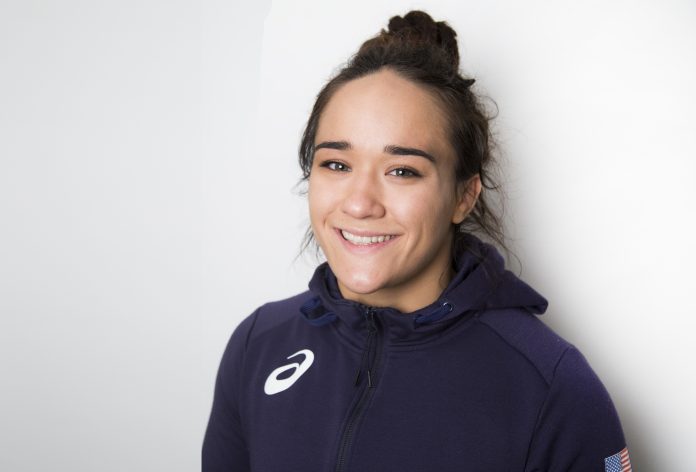
Since Grade 9, Mallory Velte has been wrestling. It’s been an unexpected journey for the fourth-year student, who has since made a name for herself with outstanding performances as part of SFU’s wrestling team. For Velte, competitive wrestling defines her life in every aspect.

“I wanted to try wrestling in middle school, but I was told that no girls were allowed on the team,” she said about her first inclinations to take up wrestling. The senior wrestler is originally from Sacramento, and said she’s grateful to be a part of the team at SFU, as she feels women’s wrestling is more welcomed in Canada than in the United States.

“I was in contact with the coach at SFU when I made the team. I thought I was going to be a redshirt in my first year, but I ended up wrestling. I got fourth at the college nationals for my first year,” recollected Velte. She talked about the team’s strong position when she was a freshman, and how she started training for the university nationals that could have qualified her to compete in the World University Championships.

The only thing that stopped Velte was an injury to her ACL, which she had sustained during practice. Velte’s dream to continue fighting for her goals had plummeted. “I had to return home to undergo surgery and recover. It took me nine months to a year to fully recover and start competing again. I redshirted in my sophomore year, finally.”

Velte opened up about the highlights of wrestling at SFU, saying that “Mike Jones, our coach, is the person that I look to for motivation. They have taken me everywhere such as the Olympics with Team Canada, and it’s very beneficial to meet and receive support from Canadian and US wrestling.” There have also been challenges, though: “Funding proved to be tough for non-seasonal events and was hard to get paid for.”

Velte also talked about her psychological struggle post-ACL tear. “I felt most down when I had to watch someone else wrestle and walk to my classes after. Our team also hadn’t performed well that year and not being able to be a part of it was difficult.”

Velte brushed off this specific low-point in her athletic venture to talk about what wrestling meant to her. “It feels pretty natural to be wrestling as a woman, and I think it’s about accepting your body, accepting what you’re capable of.”

Wrestlers are of different sizes and shapes — long, skinny, muscular — and different types — explosive, flexible, funky, or strong. Velte comfortably and quickly remarked, “I think I’m a stocky, explosive wrestler.”

Velte emphasized that there was no specific moment in her life that prompted her to invest her time in wrestling. She explained, “It just kind of came to me. It just feels natural.”

“It feels pretty natural to be wrestling as a woman; it’s about accepting your body, accepting what you’re capable of.”

Velte is also a psychology major who works at a daycare while sticking to her demanding training schedules. “It’s a busy struggle and a lot of responsibility. I also travel a lot because I’m on the US senior national team, so I’m gone almost two weeks a month.” Velte’s regimen comprises strict dietary and sleeping patterns, as well as workouts and practices. “The team has 7 a.m. workouts with a run or practic, and afternoon workouts that consist of a lift or practice depending on the days of the week.”

None of this godly discipline ever throws Velte out of balance, though. “I don’t really think about it. I just wake up and do it every day and now four years have gone by.”

Velte has definitely come a long way since her first year, as she explained the amount of discipline and perseverance she had to develop in herself to stay ahead. “It’s not like I like every workout that I have to do, but my passion drives me forward. Honestly, if I have to go do an extra workout or go study for a midterm, I’d rather work out.”

Her mindset entering a match is always that of excitement. “I like a challenge. The level of competition in the college season is questionable, so I’m always excited to compete with someone who’s better than me.”

Velte expects to wrestle for the next four to eight years minimum. With a vision for the future clear in her head, Velte did have some advice for her younger self: “Enjoy your freedom while it lasts.”

Fun Fact: What would you describe as the most unusual thing that you do?

“I’ve started to listen to books on tape. I think it’s lame, but I’ve started doing that.”

Tyrell Lewin’s breakout performance leads Clan to win 73–72 nail-biter

0
Lewin finished with a career-high 14 points in the win.

A timeout was called with 17.1 seconds left. SFU’s last point — a lay-up by Andrew Williamson — was 1:18 ago, while Lindenwood University just scored two free throws to put themselves within one.

What followed was a long 17 seconds, drawn out by stoppages of play. Hidde Vos was fouled, and had chance to cushion the lead by one with a free throw, with seven seconds left. He missed.

Lindenwood picked up the defensive rebound and ran it down to the other side of the court. There, Jackson Price had a chance to end it in their favour with a three pointer. It would be a crushing buzzer beater against SFU.

But he missed too. SFU won 73–72, the team’s second win of the year and its second consecutive win, sweeping the Lindenwood Lions in a pair of back-to-back games.

“I’ve been in a few games like that before, where it’s back-to-back, you’re playing the same team, you kind of the know the other team’s stuff,” said head coach Steve Hanson. “I just felt it was going to be a down to the wire type of game.”

In just their fourth game, SFU has two wins against National Collegiate Athletic Association (NCAA) Division II competition. Last year, SFU only mustered one win against Division II competition, and it didn’t come until February 11. While SFU had two wins last year, that counted a Douglas College matchup that this year was deemed exhibition play. SFU already has a better record than they did all last year, regardless of where they go from here.

To make it all the more impressive, this was with a shortened bench with five players —  Bowen Bakken, Vinnie Safin, Kedar Wright, Gibran Sewani, Aleks Vranjes — not dressed. Freshman Bongani Moyo did not see any minutes.

A big part of the team’s success was players who don’t usually score stepping up.

Sophomore Tyrell Lewin, who had only put up double-digit points three times last year, put up a career-high 14 points, and was noticeable right from the start.

Catching the ball on the opening tip-off, he started the give-and-go that resulted in Graham Miller opening the scoring just five seconds in. He then put up four of the next six SFU points.

“I just felt it was going to be a down to the wire type of game” – head coach Steve Hanson

“I was really just trying to look for teammates every time I caught the ball, but they were just laying off me, so I figured, ‘Why not?’ So I just went to the rim and worked it,” said Lewin.

He was also good on the rebounds, taking six — four of them defensive.

“He was aggressive in the first half, offensively, which we haven’t seen much. The guys looked for him in the second half. He got some nice easy two-foot lay-ups,” said Hanson. “I think he’s just doing things to keep himself on the court defensively, he’s a smart player, and [it’s] good to see him score.”

It seemed like a breakout game for Lewin, who, having been a pure freshman (straight out high school) last season, struggled at times.

“It’s pretty difficult [jumping from high school to university] because the skill level — pretty much everybody is the best player on their high school team,” said Lewin. “The spacing, the speed, and the knowledge — as soon as you’re not in the right position, a good point guard is instantly going to know where the open man is. You have to always be in the right frame of mind,” he explained.

What did he work on?

“Just mentally trying to get in the zone and know where I had to be on offence, where I had to be on defence, and just kind of letting the skills and the talent fall second to the mental, because I feel like if I’m in the right position, and I’m always doing the right things, then good things are going to happen, and the ball will start to drop eventually.”

Lewin, who started the game, however, credited much of the win to the bench — specifically Andrew Williamson and Hidde Vos.

“We just banded together as a team, a lot of guys who don’t usually get minutes, stepped up really hard, and I know Andrew and Hidde came on and they were huge for us in the second half, getting downhill, creating drives, getting open shots for guys, and without that, I don’t think we would’ve won tonight.”

Vos, who before the season Hanson said he expected a big year from, put up some big threes in the second half, going two for five on the night.

“He took three really good shots in the first half. They didn’t go down, and that’s kind of a shooter’s life,” explained Hanson. “I just keep telling him, ‘You’ve got to keep shooting them, you’ve got to keep shooting the ball,’ and he shot two big ones in the second half.”

After a quick start to the game, SFU gave up the lead with 1:59 and did not take the lead or tie it — down by as much as eight — until 5:58 left in the second, when Michael Provenzano sank a three to put SFU up 63–62. SFU only surrendered the lead once more, for a period of 16 seconds.

Provenzano shared the lead with Lewin with points with 14, and had six rebounds too, while junior Izaiah Sherman-Newsome was the only other player with double-digit points with 10, and led in rebounds with eight.

Thousands gather to protest Trans Mountain pipeline

1
One of the several thousand protesters in Vancouver today speaking out against the Trans Mountain pipeline.

The Trans Mountain pipeline has already been conditionally approved by the National Energy Board, but that didn’t stop thousands of protesters from gathering Saturday in front of Vancouver City Hall to protest it.

The controversial project — which critics say won’t meaningfully contribute to the BC economy, and poses unacceptable safety and environmental risks — is awaiting a federal decision, that should arrive by December 19.

At noon, a crowd started to assemble, including some protesters having travelled all the way from Vancouver Island to participate.

Vancouver Mayor Gregor Robertson encouraged protesters at the event. He has been a vocal opponent of the pipeline project, which will dramatically increase oil tanker traffic in the Burrard Inlet.

Many environmental and political groups were present, including Burnaby Residents Opposing Kinder Morgan Expansion (BROKE), Dogwood Initiative, and the Canadian Association of Physicians for the Environment. There was also a strong First Nations presence, with many beating traditional drums and leading the crowds in chants and song.

The police presence was restrained, and helped direct traffic around the singing parade of protesters that took over Cambie Street.

The protest ended at the Vancouver Public Library.

NEW MUSIC FRIDAY

0

By: Courtney Miller, Jessica Pickering, and Jessica Whitesel

Follow The Peak on Spotify to stay up to date on New Music Friday.

“I Feel it Coming” – The Weeknd feat. Daft Punk

Jessica Whitesel: The Weeknd is talented, Daft Punk is talented, but when you put the two together you get something that is not greater than the sum of its parts. “Starboy” was great, but this is just too clean and rounded. There isn’t any of the grit that made the Weeknd great in the first place and there is no edge to this. It will get lots of radio play, but I’m not in love with it.

Courtney Miller: I like the bass, the music’s fine, the vocals are fine. It was just fine overall. It wasn’t great. I expected more, but I’m also not surprised. Not a strong open to this week’s playlist.

Jessica Pickering: I hate that I like this. I feel like on principle I should hate this, but it’s unfortunately catchy. Whatever, at least it’s not a cover of “In the Air Tonight.” That would have been terrible.

“Comin’ Home” – Trey Songz

JW: OMFG this is a Christmas song. It’s like Elvis’ “Blue Christmas” but sad and R&B. I was expecting this to be a sad rip-off of “Bottoms Up” (because everyone should rip off their own song at least once) but I was clearly wrong. It’s no “All I Want for Christmas Is You,” but at least it’s original. The end is a hot mess, though.

CM: Awesome, Christmas songs, my favourite. The track is pretty minimal, and the song works like that, but I think some horns would’ve worked well in this. Also, if Songz showcased more of his range instead of staying in the small little box he kept in for most of the song, this song would be better.

JP: Just because you can make a Christmas song, doesn’t mean you should. Leave that shit to Michael Bublé. Stay in your own goddamn lane, Trey Songz.

“I Don’t Know My Name” – Grace VanderWaal

JW: I like female vocalists, and I like sparse guitar tracks. What I hate are female vocalists with voices that are too high (sorry sopranos, but altos are my home girls) and ukuleles. Is your name  Israel “Iz” Kamakawiwo`ole? No, it’s Grace VanderWaal, although to be fair you don’t know your name since you’re singing about not knowing it. Put the ukulele down and put some other instruments in. I might have liked this song otherwise.

CM: The strained, breathy vocals work well with the ukulele. That being said — as much as I like the music and the way it builds, and I love the lyrics — the vocals lose my interest.

JP: I like the ukulele. It really works with her vocals. Not a big fan of the lyrics though. I’m pretty sure she does know her name.

“Cold Heart” – TooManyLeftHands

JW: Sorry to everyone else this week for putting this song on the list, but I just couldn’t resist talking about the band name. Like, how many extra left hands makes it too many? Shouldn’t you also then have too many right hands? Are you just assholes shaming people who don’t have a right hand but a left one? Oh and if you care, I didn’t really like the song.

CM: I was lukewarm on this until halfway through. I like the lyrics and the vocals have their moments, but the beat was so generic that I wanted to check out. It improved the longer you listened, but I can’t imagine it being much more than music you can ignore while you do better things.

JP: I don’t know why but I’m getting Jonas Brothers vibes from this. Maybe the vocals? Either way, you’re about to hear this three times an hour on Virgin Radio.

“Housewife Spliffin’” – Ängie

JW: As one would expect, this song is about smoking dope — but there’s a twist! She’s single, and doesn’t own her house or care about housekeeping. She’s just getting high and drinking coffee in the bathtub. It’s a super chill song, obviously, but it’s hella repetitive. Like late-’90s/early-’00s pop kind of repetitive.

CM: While I can appreciate the sass in these lyrics, I can’t get over the fact that “housewife” is not the best term she could have used. She calls it “housewife spliffin’” and then proceeds to describe someone who is not at all a housewife: “I call it housewife spliifin’, just without a man and no housekeep mission.” The song’s alright — a bit too mellow for me.

JP: Oh great, a Lana Del Rey wannabe. Because we really need more of those. Skip.

“Penthouse Floor” – John Legend feat. Chance the Rapper

JW: Oh man that ’70s-inspired backing track sure is something else, and it doesn’t really work with Legend’s voice. Also, given the name and the backing track I was expecting this to be like suuuuuppppppeeeeerrrrr sexual, but it isn’t. Chance’s verse is the most redeeming part of this song. I guess it is an OK song, but I’m not in love with it and probably won’t listen to it again after this week.

CM: I like the groovy rhythm that starts this off. John Legend is, of course, solid vocally. That being said, I expected better from him. I think this is supposed to be seductive, but I’m not feeling it in any part of the song. Also, Chance the Rapper, didn’t hate your style, but the knock-knock joke was completely unnecessary.

JP: I don’t care for John Legend and this song is not changing that. I aggressively don’t care about this song.

“Formidable” – The Big Moon

JW: It’s like an indie version of an uplifting pop song about surviving. It’s OK, but like maybe it’s because I’m on the bus, it’s not raining, and I can see snow in the mountains (like WTF is Vancouver weather, I’m from the land of winter), I’m just not feeling it.

CM: Kudos for using some real vocal range, instead of getting complacent in the same subsect of the register. It sounds kind of depressing from a music perspective, but the lyrics are empowering, and I love that they launch it to a bigger sound after about a minute. Approved.

JP: I’m so tired and the intro of this song almost put me to sleep. The middle definitely woke me up though, so thanks for that.

“Fire for Fire” – Poté feat. Kojey Radical

JW: This is like the weird love child of Christina Milian’s “Dip it Low” and Bastille’s “Pompeii.” But then that child when Vanessa Hudgens was at Coachella and smoked too much dope. I don’t know what this is. Maybe I am old and out of touch with the youths of today, but maybe that’s a good thing, because this song is kind of strange.

CM: This was how I might expect modern art to be translated into music. Simple elements where you’re like “You know what, I could’ve made this,” but skillfully done that you’re also like, “But I never would’ve thought of it.”

JP: I should have known this would be weird and indie. Not today. I don’t have time for this.

“Fvxk With You” – Angel feat. Rich Homie Quan

JW: If you are going to start your song with “fuck,” you better fucking put it in the song title. “Fuck” is just such a versatile word. It’s a noun, verb, adjective, and just fucking perfect. “Fvxk” isn’t a word. That’s what happens when your cat walks across your keyboard. But if you must disrespect fuck, you better make a good song. They didn’t, so just fucking pass.

CM: Honestly, I’ve listened to this song like five times trying to find something to say and I’ve got nothing. It’s the backgroundiest of background music.

JP: OK, if you’re going to say fuck in the song, just write it in the title. Don’t be that guy. Also if you have to put “Rich Homie” in your name, everyone will know that you’re not. Now disappear forever.

“No Lie” – Sean Paul feat. Dua Lipa

JW: I love how Sean Paul is making a comeback. This song is one of those songs that can go from pregame to club seamlessly. It’s chill enough that if you start dancing while doing your eyeliner you’re not going to look like a KISS reject, but banger-y enough that when you’re dancing at the club you can enjoy it.

CM: It’s catchy from the get-go, with stellar rhythm. The song is fun, and I won’t say anything bad about it. Spin it when you’re falling asleep to wake up or at a group hang.

JP: We, collectively as the human race, fucked up when we let “Temperature” become famous in 2005. We can never get rid of Sean Paul now. He will outlive all of us and it’s going to be terrible.

“Carry Me” – Matisyahu feat. Salt Cathedral

JW: I started doing something else and this song just melted into the background. I got about halfway through before I realized that it was actually playing, but at that point I just didn’t care. It sounds like so many other reggae/EDM/dancehall/electronic/I don’t even care what genre it is anymore/pop in 2016 tracks that I just decided to finish it out and take solace in the fact that I didn’t really lose any time listening to it since time just faded away.

CM: I feel like I’ve heard this melody a lot lately. I mean, there’s nothing wrong with it, I’m just so, so tired of hearing stuff that could be done by anybody else on the airwaves. I can’t even tell the songs apart these days.

JP: No. Be quiet. Forever.

“Watch it Burn” – Tasha the Amazon

JW: Oh man, I want to drive around and fuck shit up. This is like “Bad Girls” but for 2016. It’s fire AF. Sorry to anybody who might be driving with me long distances in the near future.

CM: Great lyrical speed and the sentiment resonates with me. All in all, something I’d listen to again. It helps fuel the low-key rage that motivates me in all aspects of my life. Just kidding. It does make me feel pretty badass, though.

JP: This playlist has been very disappointing so I would like to direct everyone to the songs from the Hamilton mixtape that Lin-Manuel Miranda has already dropped. The rest of the album is due on December 2. You’re welcome.

SFU men’s basketball defeats Lindenwood Lions 81–73

0
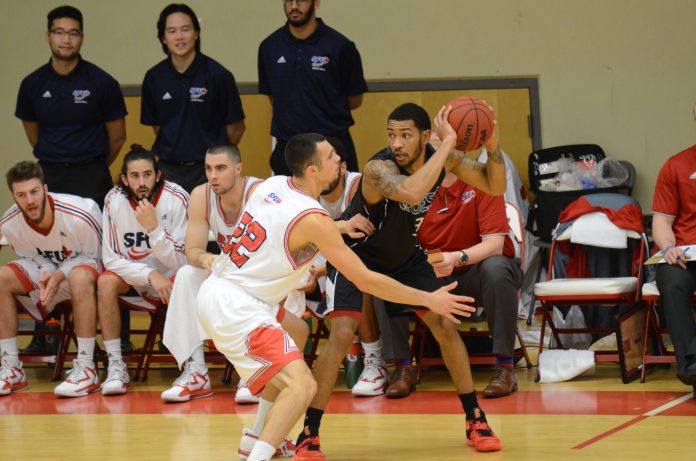
JJ Pankratz (#22), seen here in action earlier this season, had 24 points and nine rebounds in SFU’s win.

The SFU Clan earned a well-deserved win on Friday afternoon against the Lindenwood Lions after an air of uncertain victory throughout the game. The game was very close, with no team having a decided advantage: the final score was 81–73.

SFU demonstrated a fierce attack on offence as they dominated the scoreboard for the first 10 minutes of the game. The Clan maintained a relaxed distance from the Lions throughout the first half with a lead of 29–21 as the scoreboard counted down its third minute, when things turned very unpredictable. Kedar Wright ended the first half two of six from the field, while Hidde Vos’ fouls led Lindenwood to close the first half 31–30.

The players retreated to the locker rooms, with the Clan appearing apprehensive. “They hit some shots and we didn’t, so we got a little tendered and scared in front of our home fans,” said coach Steve Hanson. There were missed opportunities for rebounds on the defence, with the Lions securing easy three-pointers while the Clan was left in a haze about the baskets being made. Hanson added, “Lindenwood had a good run in between because they have strong shooters.”

The Clan’s complacency brought their eventual victory into question. However, the team came out stronger on the defence side after a little reorientation on their strategies. J.J. Pankratz had a great performance with 24 points and nine rebounds. Freshman Michael Provenzano also contributed 12 much-needed points in the second half. “We were getting a little nervous because the scores were going back and forth, but I thought we responded really well during the second half,” said Pankratz, who led SFU in scoring.

With four minutes left on the clock, the scores tied up at 70–70; three-pointers from Provenzano helped to boost the team’s confidence. Timeouts were called by the Lions’ coach in the last minute of the game. However, Graham Miller’s four free-throws in the final minute of the game got Clan fans cheering in the bleachers as the victory became clear.

“In the second half, we got it going, the guys did it on their own. We have definitely improved a lot and I’m very satisfied with the way the game has turned out. I hope we bring the same energy to the next game as well,” said Hanson.

SFU plays Lindenwood University for the second time Saturday, at 2 p.m. in West Gym.

First-year expectations versus reality

0

Do you remember the first time you realized university wasn’t going to be everything you thought it was? Because I don’t think I do. For me, it was a thousand little things over the course of first year that slowly made me come to the conclusion that TV shows about college got it all wrong. Hopefully some of these realizations resonate with you too.

The lack of community

The first thing that didn’t live up to my expectations was my social life. I was used to seeing my friends every day even if we didn’t have all our classes together. I had no reason to believe university would be any different, but of course it was. I had to make new friends in every class and, if I wanted those friendships to stick all semester, I had to do it in the first week. Even when I knew people in my classes, I was alone on campus more often than not.

The flexibility of my schedule was both a blessing and a curse: I didn’t have class on Fridays, but everyone I knew had radically different schedules.

I realized the only way I was going to make lasting friendships in university was if I joined a club. No matter what program you’re in, it’s highly unlikely your friends will be in all your classes every semester. Sometimes it’s a miracle if you know anyone in a class. If you join a club, you will grow close with people you know you will see every semester. Depending on the club, you can even find people to take a course or two with you. Friendship looks different in university; be willing to adjust.

How do I know what courses to take?

I know a lot of first years worry about this. I know because not only did I go through this, but I give tours to high school kids every week and their most frequently asked questions are about courses. “What should I take?” “If I don’t take a course this semester, can I take it next semester?” and “When do I need to have this requirement done by?” are the most common. It is so understandably stressful coming from a school where courses were literally laid out for you to a university where registration is completely DIY.

Things will get better. You’ll be better.

When I didn’t know what classes to take next, I went and saw an academic advisor. I went in freaking out about how I couldn’t get into one class, how I wasn’t going to graduate on time now, and that my whole plan was thrown off for good (or at least I thought it was). When they asked me what my year and major were — to which I replied “first and I don’t know yet” — I was sure I was in for a speech on how I needed to do better. Instead, the advisor started laughing. It was strangely calming to have someone who knew better than me tell me I was worrying about this stuff way too soon.

Missing out on a class isn’t the end of the world. Taking an extra year (or three) is OK. Most importantly, if you ever feel like you’re falling behind, there are people who can help. Don’t be afraid to ask for it.

I have no idea what I’m doing

The worst part of first year for me was how lost I felt academically. I came into SFU a gung-ho intended psychology major who had straight-As all through high school. I still remember the day I realized I hated psychology — and, not-so-coincidentally, the day I got my first C. I had always had a plan of what I wanted to do, and here I was directionless. I couldn’t continue with psychology (who knew it had such a big biology component?) and my other interests felt like a straight shot to becoming a teacher, a.k.a. my own personal nightmare. Then there’s the fact that my grades weren’t living up to my expectations either. Psychology was curved, making it a losing battle for me, and I had gotten a terrible grade in my English class. English was my best subject in high school. How could this be happening? My first semester had me questioning if I had ever actually been good at anything.

Not getting the grades I wanted ended up being a huge motivation for me. High school had been easy for me, and I had forgotten what it was like to try.

I worked harder, I actually paid attention in class, and I started study groups with people in my tutorials. I saw my grades improve dramatically. For some people, trying harder isn’t always enough, and that’s OK too. People learn differently. Lots of my friends went to the Student Learning Commons for help and were able to work through the difficulties they were having. As for my lack of a major, I started taking courses that interested me to see what I liked. I knew I needed extra credits to graduate and I fulfilled the majority of my breadth requirements within my first year. Eventually I found what I loved, but had I quit when things got rough, I don’t know where I’d be today.

University isn’t for everyone, but don’t stop trying just because things aren’t what you expect them to be. Pick yourself up, dust yourself off, and keep going.

Men’s soccer season review

0
Adam Jones (left) was named GNAC Player of the Year, while Riley Pang (right) won Freshman of the Year.

The greatest epics sometimes have the most heartbreaking endings. For SFU men’s soccer, the 2016 season was a fairytale. SFU was the Great Northwest Athletic Conference (GNAC) champion, coming off a record of 14 wins. The Clan also had a total of five student athletes featured on the 2016 All-West Region Team.

Though the Clan easily secured a spot in the National Collegiate Athletic Association (NCAA) playoffs, the odds of winning on penalty kicks are never exact. In their first playoff game against Cal Poly Pomona, the two teams remained scoreless until the end of regular time. Unfortunately for the Clan, their triumphant season came to an end on penalty kicks, despite goalkeeper Brandon Watson making two saves. Cal Poly Pomona was the Division II finalist during the 2015 season.

“We were disappointed that we didn’t achieve our ultimate goal,” reflected head coach Clint Schneider. “We had a really great season; we’re starting to rack up some individual [awards]. We’re able to receive recognition for that and also as a group, to have the guys say that without the other players on the team, they wouldn’t be able to achieve those kinds of things. It was a very special year. I’ve had the chance to reflect on it and I’m sure [the] players have as well. To do what we’ve done was pretty cool.”

Schneider, who was previously involved with the team as the associate head coach, has now been at the helm of the Clan for two seasons. Schneider has built the team into one of the most threatening line-ups in the NCAA Division II.

“I just tried to express for myself, and probably what the players were feeling too. We were all pretty heartbroken about it. It was a difficult way to end the season. It was difficult for our seniors to have that for their last game. I tried to express how much it meant to me that they put in the effort during the year, how much I cared, how much I appreciated everything and thank them. Regardless of that result, it was still very special.”

Though the Clan was prematurely out of the race for the NCAA Division II title, Schneider and his players are already looking forward to building on this season and coming back with an even better line-up. Simon Fraser will be playing without senior defenders Anthony Van de Vendel and Andre Pietramala, goalkeeper Watson, midfielder Ryan Dhillon, and defender Robert Hyams. “All those guys were very impactful. Every one of those players will be difficult to replace. They were part of creating a positive culture in our change room,” said Schneider.

“We were disappointed that we didn’t achieve our ultimate goal”

The Clan can count on magicians Mamadi Camara, Riley Pang, and Magnus Kristensen on the pitch to show what the beautiful game is about. Adam Jones, who was named GNAC Player of the Year, will be returning once again.

Could the narrative be different for the upcoming season? SFU men’s soccer has completed one of the most remarkable transitions into the NCAA, along with other successful programs in SFU’s athletics department.

“It can’t just be for men’s soccer to meet those goals. The great thing is that there are other programs in our athletics department that are on their way up and are close to achieving that. The women’s volleyball team have a good ranking. Women’s basketball can have an opportunity. Cross country and track and field are always around that conversation.”

However, the men’s soccer team has experienced some challenges in addition to their successes: namely, not being able to host games at home.

“The more of our teams achieving things, the bigger the argument we have as the only Canadian institution to be treated equally as the US institutions. Until that’s done, I think it’s a shame and it’s totally against what the NCAA stands for [such as] equity. I don’t think it’s fair for athletes.”

While the issue of hosting NCAA playoffs games in Canada has been a recurrent battle for Simon Fraser — often being isolated as the only Canadian institution — the Clan’s men’s soccer team can remember that they will never walk alone at Terry Fox Field.