Home Blog Page 585

Useless Canadian trivia to bring up on Canada Day

0
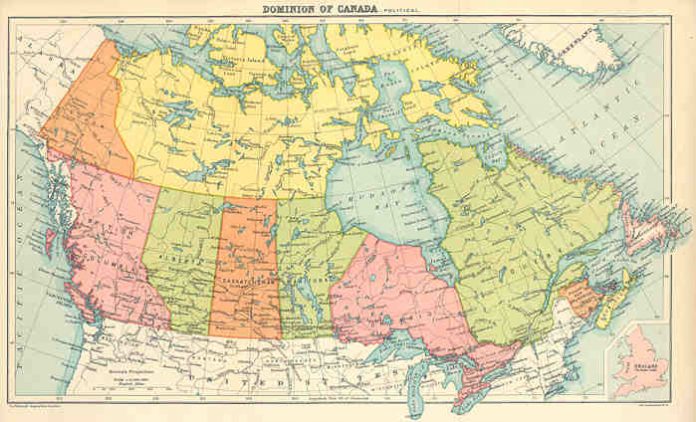
Courtesy of antiquemapsandprints.com

Do I remember what I had for supper last night? Not at all. Do I have a lot of unnecessary trivia about Canada in my head, just in time for Canada Day? You bet. My summer job between first and second year was bringing groups of visitors through the halls of Canada’s Parliament. This included a lot of “hello/bonjour” greetings, explanations of the purpose of the Senate, and episodes of being yelled at for running out of tickets. Now, here I am, ready to share my borderline-useful Canadian trivia with you!


Moose aren’t supposed to live in B.C. They’re actually from the east of the country, but they followed the Canadian Pacific Railroad on its way westward. Moose literally took the train and followed the rails to set up shop west of the Rocky Mountains.


Sir John A. MacDonald, Canada’s first prime minister, was known for many things, from his charm and mad 19th-century dance moves to his incredibly genocidal policies aimed at Indigenous peoples. One of his legacies is his raging alcoholism. “Raging alcoholism” might not be the best way to explain it: MacDonald would be sober for six months, and then disappear for two weeks and leave his friend and colleague George-Étienne Cartier in charge of the country. Like most things about MacDonald, it was sketchy. One day, MacDonald threw up in the House of Commons during debates. MacDonald wiped his mouth and turned to the Speaker of the House, calmly stating: “I get sick sometimes not because of drink or any other cause, except that I am forced to listen to the ranting of my honourable opponent.” That’s Gentleman™ for “suck my dick.”


Prior to his election, former Canadian Prime Minister Pierre Elliot Trudeau was blacklisted from entering the United States because he was considered too socialist, and possibly communist, by the American government.


Love it or hate it, Hawaiian pizza was invented in 1962 by a Canadian restaurant owner. That restauranter, Sam Panopoulos, actually fell in love with pizza during a stop taken in Italy while immigrating from Greece.


Winnie the Pooh is an actual Canadian bear. She started off as an abandoned bear cub until a certain Lieutenant Harry Colebourn stopped in White Rock, Ontario, on his way to England. He wrote in his journal: “August 24, 1914 Left Port Arthur 7AM. In train all day. Bought bear $20.” Yup. He named the bear after his hometown, Winnipeg, and brought her with him as he trained forces for the First World War, where she became a pet for soldiers. While Colebourn was posted in France, he made arrangements for Winnie to stay at the London Zoo. He visited her frequently and, after noticing just how much children and adults loved Winnie, decided to donate her to the zoo instead of bringing her back to Canada (how he was planning to ship a bear across a U-boat infested ocean, I have no idea). One of the visitors who got a chance to see Winnie this way, A.A. Milne, started writing fun little stories once his son fell in love with Winnie. The rest is history.  


To keep morale up during his first Canadian winter, Samuel de Champlain founded the Order of the Good Time. Every day, somebody new would be in charge of entertaining those who hadn’t died of scorbut, as well as distributing rations, therefore becoming the Grand Master of the Order of the Good Time. Today, Nova Scotia’s lieutenant-governor now serves as the Grand Master, and anybody visiting his province is entitled to membership as long as they promise: “To have a good time, to remember us fondly, to speak of us kindly, to come back again.”


The first woman to be elected to Parliament was a schoolteacher named Agnes MacPhail in 1921. The first time she addressed the House, half of her male colleagues got up and left since they would have rather not be in the house at all than listen to a woman speak in it. Yikes. MacPhail stuck around in the House for a surprisingly long eighteen years, working on issues ranging from women’s rights, education, child labour, family rights, and prison reform.


In an effort to promote Christianity to Indigenous peoples of Canada, the Catholic Church proclaimed that beavers counted as fish and could therefore be consumed on Fridays and during Lent. Spoiler alert: this did not make colonialism any less bad.


One of the best known Canadian stereotypes is that we apologize too much — but this ended up having legal consequences. In 2009, Ontario passed a law called the Apology Act that prevented lawyers from using an apology as an admission of guilt, but recognized it as a sign of empathy and compassion.


Some of Canada’s national parks are bigger than entire countries. Wood National Buffalo Park (which crosses from Alberta into the Northwest Territories) dwarfs Denmark and Switzerland . . .


When Métis leader Louis Riel was elected to Parliament, he was a wanted man exiled to the United States. He never stepped into the House of Commons as a result (for fear of being arrested), and the rumour at the time was that he’d broken into Parliament in the middle of the night to sign the member’s registry without anybody knowing.


Not only is the Hudson’s Bay the second-biggest bay in the world, but massive ice sheets have literally bended its gravity by denting the Earth due to their sheer size millions of years ago. Scientists believe that the surface of the Earth will bounce back and recover its usual gravity in 5000 years.


Confederation actually began with just the Atlantic provinces wanting to join together, but the province of Canada (modern-day Québec and Ontario) crashed the party. To help warm up the East coasters, the Canadian delegation (including aforementioned alcoholic Sir John A. MacDonald) brought champagne for anyone. Not just champagne, but about $200 000 worth of the stuff in today’s currency, once we adjust for inflation. So what I’m trying to say is that the fathers of Confederation are all drunk in that lovely photo where they’re all sitting in a row in Charlottetown.


On September 11, 2001, hundreds of planes were rerouted and turned away from New York airspace. One of the prime landing sites for airborne flights was the tiny town of Gander, Newfoundland, whose population of 1300 welcomed, housed, fed, and entertained over 7000 stranded passengers from across the world for five days. A steel beam from the World Trade Centre sent to Gander in commemoration is the only part of the remains housed outside of the United States of America.  


During the Second World War, Canada gave asylum to Dutch royals. Crown Princess Juliana of the Netherlands was pregnant when she fled the Nazi-occupied Netherlands, anxious about her new child being born outside of the country, and thus losing her right to the Dutch throne. A suite on the maternity floor of the Ottawa Civic Hospital was thus declared international territory, to keep Princess Margriet royal. As a thank-you after the war, Princess Juliana donated 100 000 tulip bulbs to Canada— asking only that a few be planted on Hospital grounds. Not sure what to do with the other thousands of bulbs, the federal government and city of Ottawa decided to host a tulip festival, which is still an annual tradition to this day.


Album versus Album: Katy Perry and Taylor Swift

0
Image courtesy of YouTube

Witness by Katy Perry (2017)

Katy Perry, who set the bar high with her album Prism (2013), fails to meet expectations with her latest album Witness (2017). Witness is not a terrible album overall — it does contain hits like “Roulette” and “Act My Age” (on the Target edition). Despite that, it also includes misses like “Mind Maze.” Poorly written lyrics such as “you broke me wide open, open sesame” and “your words are like Chinese water torture” sound odd. Despite taking aim at Taylor Swift in “Swish Swish,” Perry doesn’t get far in dissing her. The song does feature one of Nicki Minaj’s strongest verses to date and is worth a listen. However, by relying on other artists’ talents — and collaborating on all three of her singles — Perry makes it obvious that she is struggling to make a hit. 

     Witness lacks Teenage Dream-esque hits, which is disappointing. Let’s just hope that she’s back to form on her next album, and that it won’t take four years to make.

Reputation by Taylor Swift (2017)
Taylor Swift has come a long way from 2008’s “Love Story.” Her latest album, Reputation, is her darkest one yet. Swift sheds her girl-next-door image and acknowledges criticism that has plagued her for the past few years by taking ownership of her narrative. Reputation is a cohesive work of art with solid lyrics, particularly in “New Year’s Day,” as well as impressive vocals, like those in “Don’t Blame Me.”

     Swift makes bold moves in her album. She swears, a first for her, in her song “I Did Something Bad.” She surprisingly enlists rapper Future on “End Game.” On “This Is Why We Can’t Have Nice Things,” she even seems to diss Kanye West and Kim Kardashian with lyrics like “. . . you stabbed my back while shaking my hand.” While I believe 2014’s 1989 remains her best work to date, Reputation is one that demands a couple of plays to get you hooked.

Verdict:

While neither album delivers career-highs, I’ve got to hand this round to Swift’s Reputation. As Perry took a more in-your-face approach to the promotion of the album, including a four-day all-access Witness World Wide live stream, Swift took the backseat and let the music speak for itself. Where Witness lacks cohesiveness and direction for Perry, Reputation completely rebrands Swift whilst delivering a catalogue of anthemic songs. In conclusion, while Perry remains a bigwig in the music industry and will most likely come back swinging, Swift takes the crown this time around.

Unpublished pages from Maria Campbell’s classic Halfbreed recovered by SFU researchers

0
(Photos courtesy of Canadian Literature)

SFU associate professor Deanna Reder and PhD student Alix Shield discovered a complete manuscript of Métis author Maria Campbell’s 1973 classic memoir Halfbreed, including two excised pages from all prints of the book so far. Shield, who made the discovery, discussed the significance of the finding in an interview with The Peak, on June 21, National Indigenous Day.

     The two pages, marked in the manuscript with two large red crosses over them, described sexual assault allegations against an RCMP officer that took place when Campbell was 14 years old.

     Shield made the discovery on October 18, 2017 in publishing company McClelland & Stewart’s fonds while visiting the McMaster University archives in Hamilton as part of a month-long research trip. Shield mentioned that, due to previous archival works, she and Reder both knew that a particular “incident” involving the RCMP had been cut from Campbell’s manuscript as the publishers thought it to be too “libellous.” She stated, “[Once I] knew that something like that existed, I would try my best to find it.”

    Shield explained that even though Campbell herself wanted to talk about the assault in her memoir and had received the support of her legal counsel to do so, the pages were never published. Discussing the reason why the pages were not published, Shield said, “All of the letters between the editors and publishers showed that the decision was made out of fears that the RCMP could get an injunction and attempt to halt the book’s publication. This would mean that all of the money that they (the publishers) had put into the project would go nowhere.”

    “The decision to not include the passages was really an example of non-Indigenous editors [and] publishers coming in and making the decision on behalf of the Indigenous authors, which in itself is one example of a larger problem of Canadian publishing, especially in the 20th century,” continued Shield.

“McClelland & Stewart’s decision to remove [the pages] from her memoir took away her power and voice as an Indigenous woman writer.” – Alix Shield


    She added that “despite Campbell’s insistence on including the pages, because it was such an important part of her life, McClelland & Stewart’s decision to remove it from her memoir took away her power and voice as an Indigenous woman writer.”

     Reder and Shield published an article in the journal Canadian Literature discussing the whole process and making the pages public with Campbell’s permission. Shield told The Peak that “throughout the whole process, Deanna and I have been trying to make Maria feel that her book has been restored to the form that she had intended. The whole process of publishing the article with the excised passages [was] done carefully, respectfully, and with her permission.”

     Since the discovery, Shield reports that different publishing houses have expressed interest in republishing the book with the two excised pages. “At this point if Maria wants to republish it, [and] I think she will, there will be a sense of resolution. All those who have read her book so far and have been inspired by it, will be able to read it as a whole, and I think it will bring more peace to Maria at the age of 78,” said Shield.

     Shield explained how McClelland & Stewart’s act of deciding for Campbell was indicative of a problem in the field of publishing where non-Indigenous publishers and editors who “could not understand or relate with the writers [. . .] often engaged in destructive editorial practices which ended up shaping the way that books like Halfbreed [were] read.”

     Shield mentioned that she wanted to address this problem in her own research on Canadian Indigenous literature as a PhD student: “In my work I want to do something that matters and give credit to writers and storytellers who should have been given credit many years ago. Because I identify as a settler scholar, it is really important to me to keep my positionality in mind with regard to the materials I am working, because that is part of the attempt to decolonize the scholarly system.”

     “It is time that the story came to light and the book was restored to its original form, as the author had intended it be,” said Shield.


Need diverse, non-stereotypical characters who grow and solve crime together? Look no further

0
Photo courtesy of Fox

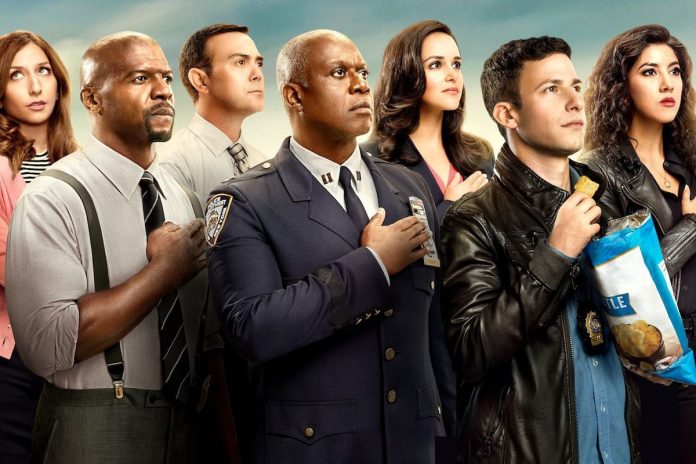
One of the reasons I love the cop comedy Brooklyn Nine-Nine (B99) is that it has a truly diverse cast of characters. They don’t throw in stereotypical characters for the sake of diversity like many other shows do — they round out their ensemble. The personalities may not be completely realistic, but they’re definitely not stereotypical.

     For example, Raymond Holt (played by Andre Braugher), a gay, black police captain, has one of the most delightful personalities I’ve had the pleasure of watching, and he’s just one of many three-dimensional characters on the show. Holt is a stoic, overly serious man with a loving husband and a dog named Cheddar. His father-like relationship with another detective, Jake Peralta (Andy Samberg), is one which gradually develops and deepens over the course of the show. Nearly all the characters’ interpersonal relationships undergo growth, from romantic ones to friendships — a great example of the latter being one between a guy and, gasp, a girl that doesn’t become what you might expect.

     There isn’t an overarching, on-the-run criminal the characters are trying to hunt down (unless you count Doug Judy, a Pontiac thief), but what really makes the episodes fun are the characters interacting with each other. On of my favourite interactions is between badass motorcyclist Rosa (Stephanie Beatriz) and the desk jockeys Scully (Joel McKinnon Miller) and Hitchcock (Dirk Blocker). Recurring themes, such as the Halloween episodes, are also something viewers can look forward to. There’s a lot of consistency between episodes, such as characters who, despite undergoing a change in a previous episode, still act in-character and naturally let the change become part of their persona.

     Although B99 is a cop comedy at heart, it doesn’t shy away from addressing more serious topics like racism and homophobia. These topics come up naturally in episodes, and the way B99 handles them is admirable. I’d like to address that the next sentence is (sort of) a spoiler for season 5. There’s a character who comes out as bisexual to their family, and while the family’s response is not one of acceptance, the cops with whom the character works accept their sexuality. I really loved that episode because it showed how much of a family the characters had become.

     All-in-all, I adore this show and the fact that they actually address both negative and positive attitudes towards different ethnicities and sexualities through the show’s characters. These are the issues being addressed today, so they belong in the cop comedy made for our generation. If you are looking for a serious show, something more along the lines of Bones or Law & Order, then this is probably not for you. But if you’re like me and enjoy light-hearted comedy with really good serious moments, then this is definitely the show for you.

Queer representation: what makes it and what breaks it

0
Photos courtesy of Paul Drinkwater/NBCU/Getty Images & JB Lacroix/Getty Images)

At long last, we have responded to the call for media which represents reality, and we’re seeing more on our screens and pages than white folks and vampires. But that doesn’t mean we’re done, because queer representation in the media (for the sake of this article, let’s say fiction) is far from perfect. While the debate over whether bad representation is better than no representation is ongoing, here are some of the things I look for in the media I consume.

Note on terminology: “queer” is a reclaimed slur with a history of othering members of the LGBTQ2+ community. Its original meaning is literally “strange.” “Queer” can also be used in academia to describe queer studies, queer criticism, queer readings of a text . . . Keeping this in mind, make sure to check with the folks around you to see how they feel about you using this label and applying it to them.

Not-so-great queer representation

  • Stories exclusively about coming out: While these stories are extremely important and serve as models for those who are questioning or in the process of coming out, queer folks don’t start being gay once they come out, nor do they stop once the deed is done. I want space cowboy lesbians in space, and trans mermaids, and gay wizards, and ace princesses living their queerest lives. Even if I’m gay 100% of the time, I have too much to do to spend 100% of my time exclusively facing queer issues. Besides, even when you are in the process of coming out, your regular life doesn’t stop. Your own existential dread doesn’t get you out of writing math tests.
  • Holding up any stereotypes: The word “stereotype” comes from the printing press, since a stereotype would be used again and again to make the same letter over and over. Needless to say, people aren’t as simple as hunks of metal. Stereotypes in the media aren’t useful: perpetuating them often seems to validate them. Varying portrayals of queer folks help to spread awareness that queer folks are diverse, and they also offer multiple role models for queer kiddos. If the media you seems to rely on stereotypes, I’m going to start questioning how seriously you inserted queerness into your plot.
  • Queerness as a plot twist: The basis of this, that a queer person’s existence holds shock value, is heteronormative.
  • Characters trying to prove that they’re just like everybody else: For a long time, queer representation focused on proving that the LGBTQ2+ community was not inferior to a heteronormative majority because they were “just like everybody else.” While the sentiment is good, it’s incomplete. Queer folks are different. We face different realities, different experiences, and different obstacles because we are queer, which shape our lives and needs in unique ways. That’s important to recognize and understand if you want to keep up with queer issues and understand queer activists.


How to sell queer representation

  • Characters making gay jokes: Seriously, what am I even out of the closet for if not making gay jokes? (Human dignity aside, and all). Example: everyone in Pride (2014).
  • Historical fiction with queer characters: Because queer people have been around longer than straight tolerance and acknowledgement. Example: Patsy and Delia in Call the Midwife.
  • Unannounced queerness: “Coming out” is a one-way street: straight people never have to do it, but for some reason the world’s entitled to know about queerness in advance. But you can and do exist as a gay person, even in a room full of straights who do not know you or your life. Example: Lord Blackheart and Sir Goldenloin from Nimona, or Adam and Ronan from Raven Boys.
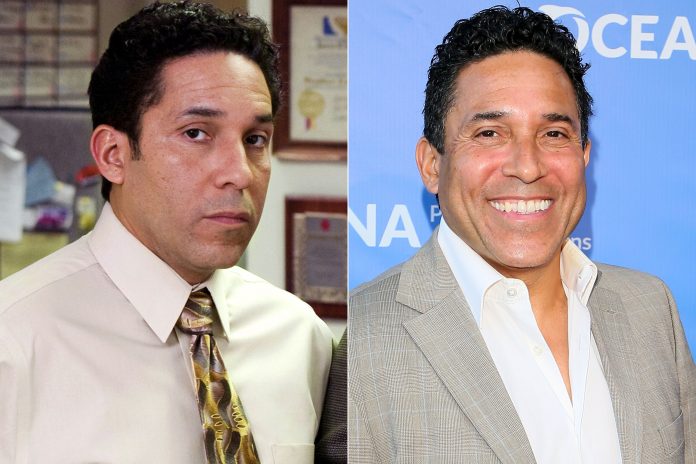
  • Characters who compartmentalize their lives: This one is a bit trickier to explain, but for queer people coming out is a lifelong process as opposed to a single event. You come out to every new friend, new job, new class . . .  It’s exhausting and not always necessary, so there are some places where your queerness is kept to yourself. There are also people and places where it isn’t safe to come out. Sometimes you might not bring non-queer friends into a queer space because you’d rather spend time with your fellow queers. For example, I have straight friends who aren’t coming to gay bars or drag shows or Pride with me, because it’s not their place, and that’s okay. Example: Oscar from The Office.

Characters who are queer on their own: You’ve surely read a book or seen a movie where a boy falls in love with a boy and realizes that he’s gay. While this happens, there are plenty of folks who are aware and comfortable with their queer identities before their first kiss. Identity is deeply personal, and isn’t policed by the people around you or who you are with. Example: Alex Fierro from Magnus Chase and the Gods of Asgard.

World News Beats

0

German football team defeated in opening match of the World Cup

Previous World Cup champion Germany lost 1–0 to Mexico in their opening match of the World Cup after Mexican player Hirving Lozano scored a goal within 35 minutes of play. According to The New York Times’ Chief Soccer Correspondent Rory Smith, the Germans seemed to have been put off by the Mexican team’s initiative, speed, and attack prowess. The Mexican government noticed a small artificial earthquake in the capital due to possible mass jumping after the goal. Three previous World Cup champions have left the tournament after losing in the group stage, but the Germans were defiant, saying they will advance to the next round.

With files from The New York Times.


Climate change affects food nutrition

A study by the London School of Hygiene and Tropical Medicine has found that plants are losing nutritional value. This phenomenon, referred to as the “junk food effect,” is attributed to consequences of climate change, such as reduced water, increased temperature, and higher carbon dioxide concentration, as they lower crop output and take away nutrients from vegetables and legumes. Previous studies had explained this loss of nutrients from plant-based foods as arising from the emphasis on yields over nutrition. Plant consumption is reported to already be low in humans, with the deficit causing around 1.5 million deaths annually.

With files from DW.


Arab states attack key Yemen port city

Active conflict in Hodeidah flared up as alliance of Arab states challenged the Houthi fighters currently occupying the Yemeni port city. The attack aimed to capture the city by seizing the city’s airport, and was successful in securing two entrances. However, coalition forces will now face a dense network of explosives as they attempt to advance into the main airport where Houthi forces are concentrated. The conflict raises severe concerns from the United Nations as it may disrupt the flow of aids to the area. The present conflict in Yemen started in 2015 when the Arab states began fighting to restore the government exiled by the Iranian-allied Houthis.

With files from Reuters.


Railtown Cafe is my everyday buddy

0
Photo courtesy of Jelger and Tanja Photographers

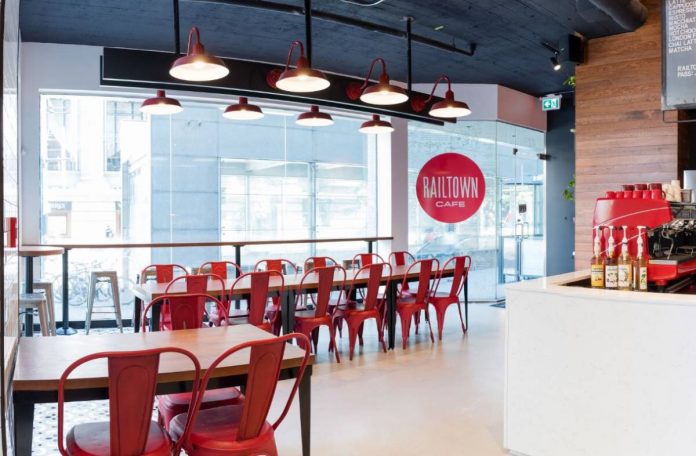
Being students, we are always looking for cheap eats around our SFU campuses. Railtown Cafe is situated a few blocks away from SFU’s Harbour Centre campus. However, it has four different locations to choose from, the closest one to Harbour Centre being at 429 Granville Street. If you’re wondering about its bizarre name, Railtown Cafe got its title from its location, the corner of the historic Railtown District of Vancouver’s Downtown Eastside.

     The place opens at 7:30 a.m., which makes it a perfect choice for students with busy schedules to grab some breakfast to go. The cafe offers healthy breakfast sandwiches, packed with protein and nutrients, for only $6.25. To kick-start your busy day, the place has some handcrafted beverages for as cheap as $2.25. Railtown Cafe focuses on serving healthy, fresh comfort food.

     Isn’t it difficult to stick to a healthy diet when places seem so overpriced? Don’t worry: Railtown Cafe offers healthy sandwiches, salads, soups, and more. You can build your own salad for just under $15, with 10 kinds of fresh veggies, pickles, and beans to choose from. There are also vegan and gluten-free options at the same price as the regular menu item.

     The place incorporates a talented team of chefs and other staff, who infuse passion and love into the cafe, making it sociable and authentic. SFU’s array of clubs might find it useful that Railtown Cafe is a perfect place to hold events, and they have catering services. Not only that, but for those who appreciate French cuisine, Railtown Cafe is an accessible option and a great choice.

     If you have a sweet tooth, there’s no better season to get some house-made ice cream. The cafe is not only your best friend during the day but also good for evening fun. Enjoy some beer or wine starting from $4, together with some mouth-watering pastries, cookies, cakes, and pies. Railtown Cafe has been featured by Daily Hive for its extraordinary goodness. It is surely every student’s next favourite place.

Board Shorts

0
Irene Lo / The Peak

Board negotiates SFSS involvement in Student Experience Initiative with SFU

Vice-president university relations Jackson Freedman presented an update to the Simon Fraser Student Society (SFSS) Board regarding the SFSS’s ongoing negotiations with the university on the Student Experience Initiative (SEI). According to Freedman, the university passed a $9 million fund a couple of years ago for the SEI to help “move the needle” on the student experience. The initiative involves eight working groups centred around increasing student engagement and building a sense of community within the university.

     In negotiations with the university, Freedman reported that the SFSS had expressed a concern regarding the fact that there is only one student appointed per working group, and an interest in increasing SFSS involvement with the initiative: “If you think of some of the names of the working groups, they very much align with some of what we’re doing at the SFSS already. So I think what we wanna do is find ways to further integrate the SFSS [. . .] the fact that there’s one student on each working group doesn’t make a heck of a lot of sense,” he said.  

     The SFSS has reportedly been contacted by the university to begin appointing student representatives to these working groups, but faced difficulties when requesting more money from the university: “When we make the request for money they say, ‘well, the money’s already been committed,’ but it hasn’t been spent yet. So we want to find a way to get more student influence over how that money’s spent.”

     He added, “We’ve made the ask recently for the addition or creation of an entirely new working group with access to budget from the university so that we can eventually lead initiatives of our own.”

     “It’s been a challenge.”

WHAT GRINDS OUR GEARS: Vancouverites constantly complaining about the weather

0
Photo courtesy of Longevity Graphics

I thought that “So, how about the weather?” was just a joke phrase that was overused in entertainment to indicate when somebody has nothing else to say, but damn, Vancouverites showed me the error of my ways. No matter what the weather is outside, you can bet that you’ll hear somebody complaining about it.

Sunny outside? It’s too hot. Overcast? Too dark. A stiff breeze? Too windy. Perpetual rain? How will we ever survive? (Note: You’ll survive the same way you do for the other 300 days of rain you get each year.)

Look, I understand. It snowed half of a micrometre last night and now you can’t get your car out of the driveway. If you go any further east or north in Canada though, you’ll find that most people tend to just suck it up, scrape their windshields, and make sure they get their winter tires put on that week. Yes, though you may not know it, there are tires specifically made for the winter season.

When I talk to people, I love to hear about how they’re doing and what’s up in their lives. But please, if I hear one more time that it’s “never this hot in the summer” or that it’s “never this cold in the winter,” I will probably kill the nearest person. So if you absolutely have to bring up the current state of the sky and how “terrible” it is, just make sure you give me a wide berth.