Home Blog Page 580

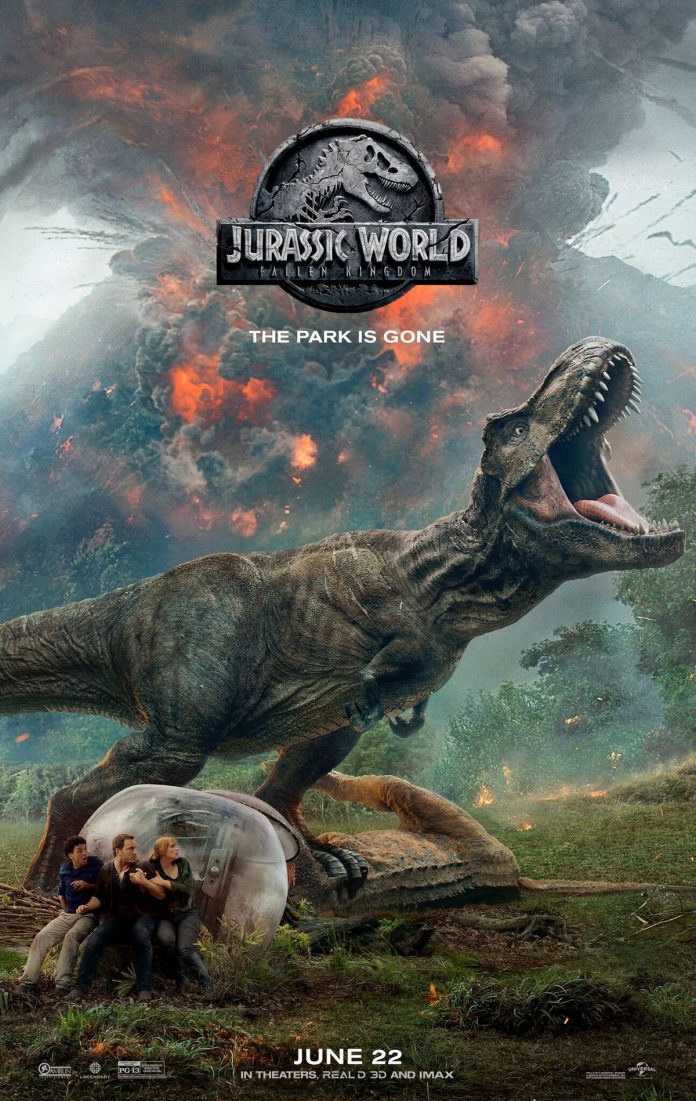
Jurassic World: Fallen Kingdom is an intense sci-fi adventure thriller

0
Image courtesy of Universal Pictures

If you want to take a break from superhero epics for a while, check out J. A. Bayona’s Jurassic World: Fallen Kingdom. Bayona crafts a riveting sequel to Jurassic World that incorporates heart-pounding action and startling originality.

     The action sequences live up to the thrills of previous instalments. These scenes capture the harsh realities of the story’s world with breathtaking visuals and Michael Giacchino’s powerful soundtrack.

     A prominent example is the volcanic eruption at Isla Nublar. Bayona perfectly sets up this sequence: the island’s ancient ruins evoke a peaceful stillness, and the dinosaurs convey glory and majesty. With staggering colours and grim lighting producing believable textures, the island’s compelling awe foreshadows the sorrow from the eruption’s apocalyptic imagery.

     While the film is still an exhilarating dinosaur adventure, Bayona also makes this sequel terrifying through darkness-enshrouded, nightmarish atmospheres at every location. Bayona uses the story’s newest antagonist, the Indoraptor, to create havoc that feeds the characters’ fears and uncertainties. This gruesome dinosaur, complete with a devilish grin and long-reaching claws, makes for a frightening parallel to Freddy Krueger from A Nightmare on Elm Street.

     However, the movie’s stakes and plot points seem at times too similar to The Lost World: Jurassic Park. Because of this resemblance, the climax is less impactful, especially with character choices becoming more predictable as the narrative progresses.

     D. Wong returns as Dr. Henry Wu. While he adds satisfying continuity to the film, his performance is unable to go beyond his character’s usual dynamic of frantically reciting dinosaur facts just to advance the film’s tensions.

     Despite these shortcomings, Bayona and scriptwriters Derek Connolly and Colin Trevorrow make the story original. They employ the film’s corporate underworld as an ominous foreground that expands the narrative’s scope. Through the disturbing happenings there, they continue to explore the Jurassic Park franchise’s overarching moral themes, but also offer an innovative direction. In doing so, Bayona and the film’s writers transcend the series’ traditional staple of dinosaurs running loose and causing chaos.

     The film’s most compassionate relationship is between Chris Pratt as Owen Grady and his favourite velociraptor, Blue. Bayona explores the sentimentality behind this bond through Grady’s memories of raising Blue during the dinosaur’s infancy. These scenes instill a childlike innocence into the film that humanizes Blue and Grady as an unusual, but touching family. Their bond portrays their past as a happier time that differs from the story’s current world of corporate greed and ruthless corruption.

     Overall, Bayona delivers the adrenaline in Jurassic World: Fallen Kingdom. He shapes this film as a worthwhile entry that, together with realistic visuals, captivating music, and impassioned themes, create an impressive sequel to its predecessor, Jurassic World.

SFU’s David Chariandy shares insight into his latest book, I’ve Been Meaning to Tell You, and more

0
Courtney Miller / The Peak

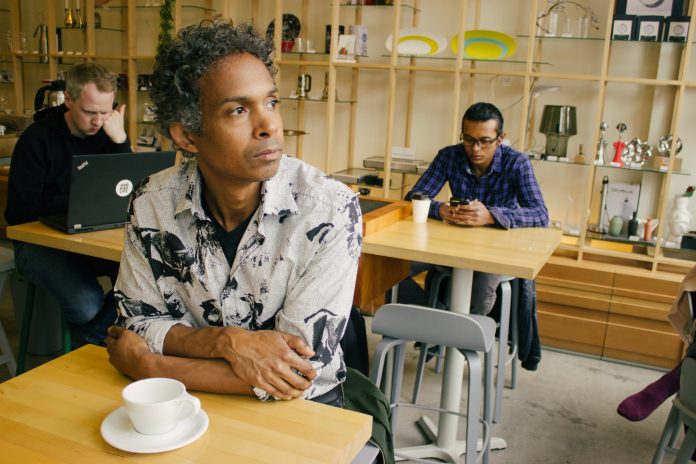
When David Chariandy reached the door to the coffee shop, we made awkward eye contact and dithered between going for a hug or a handshake because, while this was a professional meeting, Chariandy and I had the pleasure of working together as writers just last year in his creative writing classes.

     At the time, he was working on the book we’re here to discuss: I’ve Been Meaning to Tell You: A Letter to My Daughter. The book is a deeply personal letter written to his 13-year-old daughter, “to communicate to my daughter my story about how I’ve interpreted my own experience, and perhaps, in part, [. . .] the experiences of my parents.” He confirmed that his daughter had read the book, and in fact had been integral to the process, providing notes and feedback on individual chapters as well as the whole.

     This then begged the question as to why he chose to publish it as a book. After all, her reading it did not require everyone else to be able to read it, too. His response, thought out between bites of sandwich, is that “I think it’s because of the subject matter, honestly.”

     He speaks, of course, about the current political climate, with racial tensions running high most notably in the US, but also in Canada. His book’s opening scene focuses on Chariandy and his daughter experiencing racism right here in Vancouver, when a woman pushes in front of him, stating, “I was born here. I belong here.”

     After that encounter, Chariandy set out to explain the situation to his daughter, because “within the home, I’m not a ‘visible minority.’” That racial experience would not happen in his own home, to him or his children. “It’s only when I step out into the public eye that I become this thing called a ‘visible minority,’” he explains.

     “We live out the politics of race and belonging in the public eye; this is how these matters operate,” he states. “It simply makes sense to have this message in a public experience as well.”

     Chariandy is no stranger to the discussion of racial politics. His two previous novels, Soucouyant and Brother, “most definitely do draw in very complicated ways from [his] experiences and what [he’s] felt and observed” in terms of race. But he agrees that this book “is really my first effort of this kind of platform to address real life.”

     You can tell that Chariandy took this effort seriously. The gap between Soucouyant and Brother was 10 years, but I’ve Been Meaning to Tell You followed Brother in about a year. “I could not have taken the time with this book as I did with the other books simply because it is very much of the moment. It’s about a moment in a person’s life, my daughter’s life — this book wouldn’t make sense at a later moment.” He jokes lightly about how he couldn’t exactly wait a few years again and publish the letter to his 13-year-old daughter when she was 18 or 30.

     Despite the racial commentary in the book, Chariandy is quick to say that “I don’t know if it’s a moment-in-history kind of reach; that’s not what this book is about. It’s not making grand claims about history or digressing about this social landscape.” He reiterates that the book is about his and his family’s experience; it’s not about the world, but just their place within it.

     He was influenced by the history of black writers, and wrote it to engage with “a legacy of black people writing to their loved ones and attempting to convey what it means to live in a particular moment and what they had learned from living in this particular moment. And then they are able to pass on those lessons.”

     When asked if SFU has influenced his writing, paying particular attention to the time he devotes later on in the book to Indigenous peoples, he needs a minute to think it over.

     “My awareness of how much I, as a non-Indigenous person, had to learn about Indigenous culture, Indigenous struggle, Indigenous art, is shaped by my presence here on the unceded ancestral territories of the Squamish, Tsleil-Waututh, and Musqueam people. And so I don’t think it’s so much SFU, it’s really being here when there’s a powerful presence because of Indigenous people.”

     But he turns it around to explore SFU not as some learning hub but as a community. “I would have to say that even ordinary encounters [. . .] are also sometimes very extraordinary encounters with students and colleagues and people who [ask], ‘What are you working on?’ and we’ve shared words about our writing projects,” he explains. “That’s been inspiring.” So while SFU isn’t really to thank for Chariandy’s growing understanding of Indigenous racial politics, the community that SFU has given him has been “kind and generous” and a “positive influence on the writing.”

     Looking to pass on the positivity, I asked him about any advice he has for budding writers. He’s been asked this before, even in the classes I’ve had with him, and he’s excited to answer it. “I’ve thought about it a lot because I want to offer something meaningful,” he says, but cautions that he can only speak from his own career.

     “If you truly wish to be a writer, then maybe claim that identity and say, ‘OK, well that means that this is my job.’ It’s not something I’m doing kind of in my free time, when I’m not too tired, and also when I’m in a particular mood, waiting for inspiration to hit.” He acknowledges that it’s hard to see and have writing as a profession, because it can be hard to make it or even define what making it really means.

     He says that for himself, “it’s a vocation, a very deep, serious one. Maybe that’s something to reflect upon too: what does it mean to possess that vocation as a writer?” What does it mean to diligently return to the screen or the page, day after day, and power through the work, whether it’s a whole draft within a month, or just a couple of sentences? How do you keep doing it, forcing yourself to do it?

     But Chariandy lands on the crux of the situation almost immediately. “I guess every writer wonders if his or her story matters. If their story matters.” His answer follows quickly, “tell yourself that it does matter . . . hold that in your head during the very difficult process of keeping faith in a project when maybe, at times, you’re not sure.”

     Chariandy is a professor as well as a writer, and he can’t help but ask me about my own writing since I’ve left his classroom behind. I tell him that’s not really part of the interview, but it doesn’t matter. He wants to know, writer to writer, how the vocation is going, if the project I started on is still in the realm of possibility.

     I tell him I can’t be just a writer right now. I can’t claim that identity while I’m up to my nose in homework and jobs that pay an hourly wage. But I tell him I want to keep working at it. Like the sage professor he is, he nods and gives me some encouragements, surprising me with the detail in which he can recall my project from last year.

     He’s not teaching in the fall semester, but he says he’ll be back in January 2019 for anyone who’s looking for a teacher who cares about both the students and the subject. He’s a very thoughtful man, and if you won’t take my word for it, you’ll see the care and attention he devotes to every sentence in I’ve Been Meaning to Tell You.

WHAT GRINDS OUR GEARS: Assholes who hurt my friend’s feelings

0

It’s a little bit irrational to get angry at someone you barely know, let alone even met, but God, it’s easy when this someone messes with your best friend’s feelings. Anyone who has a friend with slightly questionable taste in romantic partners can understand my struggle.

You constantly hear about how emotionally inept this person is, and you wonder how it’s even physically possible that this much shit comes out their mouth. Even though you’re 5’2” at best and you know that your opponent can bench-press your weight, you want that shady, smelly, smelly little bitch to go down.

Of course you wouldn’t do anything that violent against your friend’s wishes, but the amount of secondhand anger you feel makes you livid — so much so that you use words such as “livid” like an outraged soccer mom. Although you probably will never confront them, you still dream of the day you can go Samuel L. Jackson on their flat ass and say, “I will strike down upon thee with great vengeance and furious anger those who attempt to poison and destroy my brothers. And you will know my name is the Lord when I lay my vengeance upon thee.”

Pride activism is more than just a rainbow flag

1
(Photo courtesy of Jim Gerhz/StarTribune)

What do we remember most from Pride month?

Maybe it’s seeing friends and family post about marches, countless parties, family friendly outings, and all the food and free stuff from corporate sponsors or vendors, etc. But where are the protests?

Nowadays, Pride is a huge spectacle and a celebration — but it is also a social rights movement. With the Vancouver Pride festival only one month away, it’s best that we remember where Pride began. The first Pride parade was held in 1970 in commemoration of the Stonewall Riots, which were first and foremost, a form of protest. Attention to this particular social movement since the twentieth century has increased enormously. This begs the question: how commercialized has Pride become, and what does its commercialization risk?

Pride is now largely commercialized, but not necessarily through the fault of the LGBTQ+ community themselves. With the rapidly increasing commercialization of Pride these past few years, allies and members of the community should remember that despite Pride’s celebratory nature, it was born out of a protest. Thus, we mustn’t forget the necessity of protesting for rights despite the progress made.

The commercialization of Pride isn’t new. As writer Kanti Chhetri for Affinity magazine defines it, “pink capitalism” (also known as “rainbow capitalism”) describes the phenomenon of LGBTQ+ inclusivity used to benefit the capitalist economy. Prime examples included LGBTQ+ bars and nightclubs and ticketed Pride events.

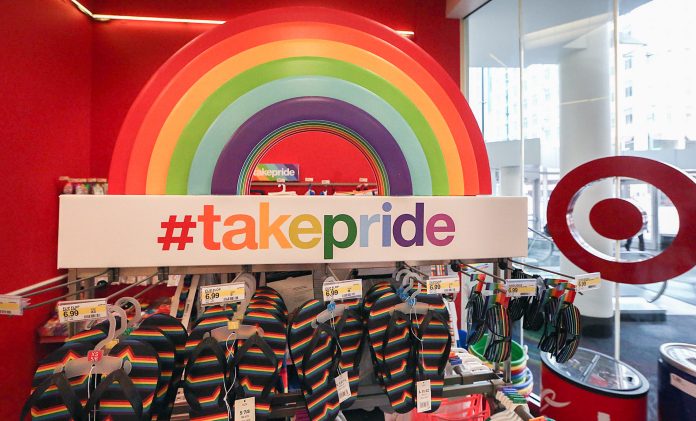
Pink-washing on the other hand, as Vox’s Alex Abad-Santos describes it, is the creation of products centered around a movement (ex. pink items for Breast Cancer; rainbow-coloured merchandise for Pride) to create a supportive image for the community. Companies sell LGBTQ+ products in order to be seen as allies to the community. Think of Facebook sporting rainbow filters, Surrey having a rainbow-coloured crosswalk, and Nike adding a pink triangle to its “BeTrue” collection.

I’m sure such efforts are well-intentioned. If anything, representation of a minority group as the LGBTQ+ community can be encouraging, as it shows support of their struggles. But slapping rainbows on clothing, merchandise, and logos, or tweeting #LoveIsLove, is not automatically activism. We must scrutinize such rainbow capitalism, otherwise, we risk throwing support to organisations who exploit Pride as a marketing campaign or trend.

YouTube, for example, released a Pride video called #ProudToCreate, showcasing the wide range of LGBTQ+ creators present on YouTube. However, YouTube itself is in the midst of a controversy involving discriminatory behaviour affecting LGBTQ+ content creators and audiences alike. The Verge reported that YouTube has been demonetizing and restricting “controversial” videos that are all primarily about LGBTQ+ issues, as well as allowing anti-gay ads within videos.

YouTube stands as a prime example of rainbow capitalism. Just because they dedicate or acknowledge LGBTQ+ creators during Pride month does not mean that they are a good ally.

Mic released a comprehensive list of companies who have released Pride products, including information on how much of the proceeds from the products would be donated and what organisations that were associated with such products.

Such widespread commercialization of Pride is obviously through no direct fault of the community as a whole. However, individuals do hold the power to reassert the political nature of Pride, commercialization aside.

For instance, The Georgia Straight conducted an interview with Vancouver Pride Society (VPS) co-executive director Andrea Arnot about a number of concerns; namely, the legitimacy of corporations being present during Pride parades/events, as well as the legitimacy of the importance of partying over politics.

Arnot told The Georgia Straight that VPS upped the standards for sponsorship from companies. A corporation’s status as an ally of the LGBTQ+ community would be determined by a number of factors like whether or not their company’s values align with VPS, what organizations they are affiliated with, etc., rather than just their advertisements. Arnot demonstrated how Pride can be supported monetarily while still maintaining the integrity of the LGBTQ+ community.

If the commercialization of Pride continues to run rampant, the movement risks preferring less outspoken acts of Pride. No longer would protests — which embody the spirit of Pride — be welcomed. If the community’s message becomes watered down, sanitized, and grossly generalized, progress cannot be achieved.

People within the LGBTQ+ community have been holding alternative events rather than just Pride, like the Dyke March. Vice recently published an article on an interview with Lourdes Ashley Hunter, director of the Trans Women of Colour Collective. They discussed the current corporate-centric nature of Pride. Hunter emphasised that Pride must be centered on “activism.” And Hunter is right.

Inaction, shallow allegiance via rainbow flags, and commercialization of the LGBTQ+ community remains a detriment to Pride’s values and its journey towards rights for all queer people. By shifting away from a Pride that is too commercialized, Pride can remain a movement filled with activism and integrity.

World News Beat

0

Erdogan re-elected in Turkey

Incumbent Turkish president Recep Tayyip Erdogan and his Justice and Development (AK) party won a majority in both the presidential and parliamentary elections held in Turkey on June 24, though the election was considered by many to be far from a fair one. A report by the Organisation for Security and Cooperation in Europe judged that Erdogan’s opponents had been denied media coverage and that Erdogan and the AK party had misused state resources and restricted freedoms of assembly and speech. The Economist magazine describes the “New Turkey” as more Islamist, nationalist, and authoritarian.

With files from The Economist.


Alternatives to military service in South Korea

A new ruling by South Korea’s constitutional court requires the government to provide new forms of civil service to take the place of the previously mandatory military service. Refusal to participate in the military prior to this ruling, a decision made by hundreds of civilians on moral grounds, was a jailable offense. South Korea’s defense ministry announced that it would introduce the option of community service in facilities such as hospitals and homeless shelters as an alternative to military service. All South Korean men must complete roughly two years of service between the ages of 18 and 28.

With files from The New York Times.


French gangster’s brazen helicopter escape

Redoine Faid, 46, who was serving a 25-year sentence for a failed armed robbery that resulted in the death of a police officer, escaped from prison south of Paris on July 1. Three men stole a helicopter and held a pilot hostage, before forcing him to fly them to the prison where Faid was held. The men armed with assault rifles, and smoke bombs helped Faid escape via the stolen helicopter. His prison break has triggered a massive manhunt involving 3,000 police officers.

With files from Le Monde.


Mexico votes

Mexicans are choosing a new president, after a long and violent election campaign which saw the deaths of over 130 candidates and political workers. The frontrunner and former mayor of Mexico City Andrés Manuel López Obrador was the runner-up in the last two elections, but this time around his pledge to tackle corruption has seen him emerge as the likely winner. The incumbent president Enrique Peña Nieto has been widely criticized for corruption and poor economic growth. Obrador’s election would make him the first president from outside Mexico’s two main parties (the Institutional Revolutionary Party and the National Action Party) to be elected in nearly 100 years.

With files from BBC News.

At the PNE Amphitheatre

0
Photo courtesy of My VanCity

Ambiance: B+

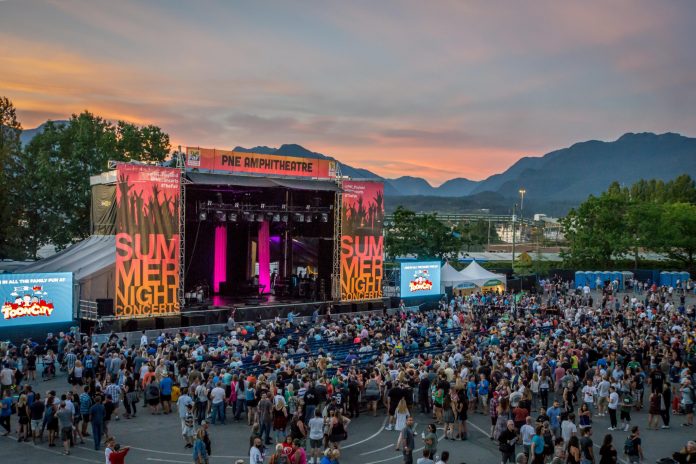
I’m at the PNE Amphitheatre for a two-day rap and hip-hop concert called Breakout Festival. While most of us can agree that there is nothing better than an outdoor concert on a warm summer evening, the weather in Vancouver is ever-changing madness and you never know what kind of day you’ll get. Luckily, the sun is shining on this particular weekend and it only rains once for about an hour.

     The music starts at 3 p.m. on both days, and while the crowd is sparse at the beginning, people eventually come streaming in as the evening progresses. Despite the occasional group of screaming 12-year-olds, the energy is high and the vibes are good.

Accessibility: A+

Considering that the venue is a large outdoor amphitheatre, there is tons of space to stand and move around, and lots of bleacher space to sit on. There are no stairs to get in and there are wheelchair-accessible bathrooms. Since most of the bathrooms are unlabeled portable toilets, they count as being gender-neutral.

Music and dancing: C

The concert tickets come with passes to Playland for the day, so my friends and I decide to go on a few rides instead of hanging around for the opening acts. We head over to the amphitheatre at around 6 p.m., when the bigger acts started playing, and at this point the sound systems are loud and the music is bumping. The headliner for day one, Tory Lanez, spends about 30 minutes crowd-surfing while his songs are still playing uninterrupted, leading me to believe that he may be lip-syncing.

     Now, picture this: it’s day two of the concert, and in 20 minutes the headliner and reason you came, Migos, is coming on. A Migos song is playing on the speaker and everyone is screaming along. The air is filled with excitement and anticipation. And then you hear it — the murmurs, the shouts of desperation, the cries of pain. People are saying Migos isn’t headlining anymore. You pull out your phone and check the event page and sure enough, they have just posted that Migos did not make it to Vancouver.

     At first, I’m disappointed, angry, and even sad, because I realize I bought my tickets from someone for cheaper, so there is no way to be refunded. Eventually, the concert-goers start to bond over their mutual anger and disappointment, and although we never get to see Migos, we make the best of the situation and dance for the remainder of the concert.  

     Overall, it’s traumatizing, and I will live with trust issues against music festivals for the rest of my life. The music is disappointing, but the energy from the crowd slightly makes up for it. Considering that a lot of the smaller acts are Vancouver-based, I will allow a passing grade for music.

Bar service and food: B

There are decent yet expensive food options, which include a number of different food trucks and Playland food before 6 p.m. The drinks are overpriced as usual, ranging from $7–10 with options such as beer, cider, Palm Bay, and highballs. Although the wait for drinks is long, the servers and staff are all friendly and smiling.

Overall grade: B-

While I highly suspect that this will be Breakout Festival’s first and last year, the PNE Amphitheatre lives on. Overall, I give this venue a B- for its spaciousness, friendly staff, and variety of snack options.

POLITICAL CORNER: Stephen Harper is set to have a meeting with John Bolton at the White House

0
Image courtesy of CTV News

Written by: Eva Zhu (Opinions Editor) & Liam Wilson (Peak Associate)

By now, we should all know that Canada and the United States are no longer besties, and are on the brink of a trade war after Trudeau moved forward with retaliation measures against the tariffs Trump put on Canadian aluminum and steel. Trump is clearly uninterested in being friendly after calling Trudeau “very dishonest and weak” and mocking him at campaign rallies. So, this begs the question: “Yo Harper, what are you doing going to the White House next week?”

According to multiple news outlets, former prime minister Stephen Harper is set to meet with Trump’s National Security Advisor John Bolton to discuss “Friends of Israel”, which Harper is a founding member. Harper might also meet with Larry Kudlow, Trump’s economic advisor.

I mean, anyone could’ve guessed that Harper and Trump would be good friends. Harper was practically a Republican during his time in office, with his massive corporate tax cuts, health-care cuts, and attacks on science. Additionally, press freedom under Harper suffered, dropping 10 spots to 18th place in the world ranking. However, it seems more than a little shady to arrange to meet a high-ranking official of the most controversial government of our time when you’re no longer the prime minister, no longer even in charge of the opposing party, and you haven’t notified anybody that the meeting is going to happen.

What does Harper have planned? Who knows? From all that we know so far though, everything about this meeting seems to scream “shadiness.” So Harper, just a heads-up: you might not want to get yourself into shady interactions with a controversial government whose leader is currently being criminally investigated if you want to stay investigation-free.

A tale of one-night stands

0
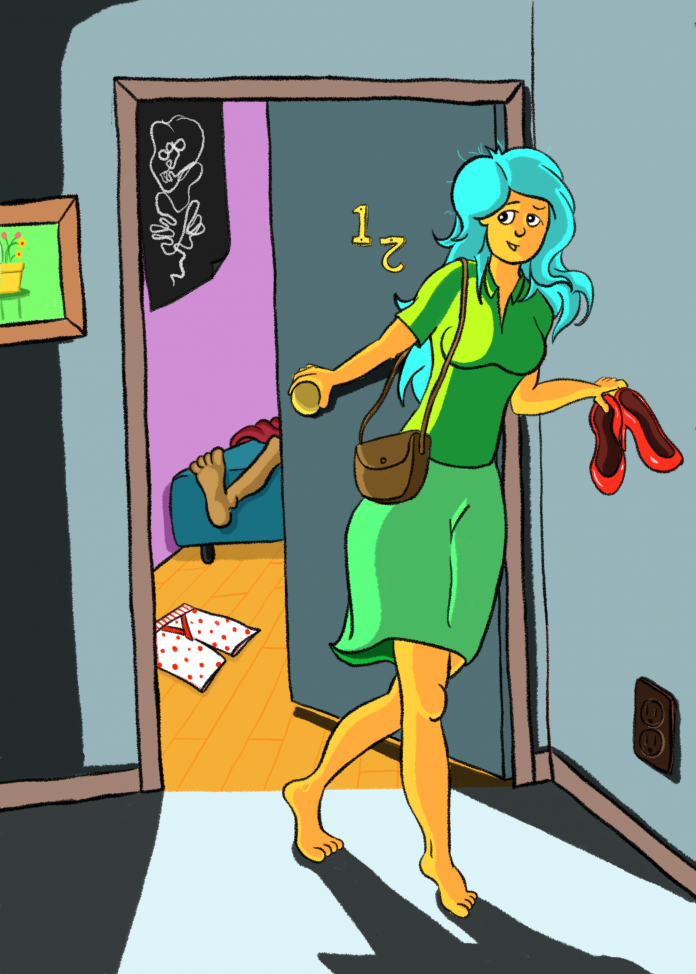
Illustrated by Reslus

This is an ode to the one-night stand!
To the people who’ve gone home
With some random person
And a one night break for your hand.

Ever been surprised by a condom in your hair,
Or gone to bed in a stranger’s shirt?
Has a booty call ever given you taxi fare
After losing your wallet at the Fortune concert?

Picture this: you wake at the break of dawn
You’re confused ‘cause you’re not in your bed
Unsuccessfully stifling a giant yawn,
You wish that last night you’d gone home instead.

Why is this room so unfamiliar and strange?
Oh yes! You met someone at the bar.
Sharing a flirtatious, drunken exchange,
You seduced them into a taxi car.

Remembering the night before,
Your SWEET moves on the dance floor,
The lights were bright, the music loud
Your eyes LOCKED with someone in the crowd.

You approached one another
Like a slow-motion movie scene
The space between you
was ever-decreasing.

Face-to-face, you could see each pore
And the sweat beads on their nose
They wore sandals out that night
So you could also see their toes

They remind you of a Grecian statue except
They’re drunker and not made of stone.
It was then that you realized you’d be doing
something your parents wouldn’t condone.

Of what was specifically said that night,
you can’t remember much
But somehow, (amazingly) your advances worked,
Even though your conversation flowed as such:


Hey

Hey

What’s your name?

What?

I said, what’s your name?

What?

I was just asking what your name is . . .

Oh, haha

Can you hear me?

*awkward nod and smile*

*reply with awkward nod and smile, glance at ceiling*

I like this song

I’ve never heard it before

Oh sorry, I interrupted you

No, you didn’t interrupt me

What?

Nevermind

Do you want to vape?

No thank you

Me neither

That’s a cool shirt

Thanks. It’s from Walmart

I get clothes from Walmart too

It’s a good place to get clothes

I agree


You launched your face forward
For that first, tender kiss
Your lips and faces move out of sync
You ignore that you REALLY have to piss.

When the sexual tension became way too high
You suavely said “your place or mine?”
Trying this sexy trick you read in Cosmo:
You ran ice cubes down their spine.

You flagged a taxi and hopped inside,
Then were taken to this stranger’s place
“We have to be quiet, my roommate’s home”
They tell you with a grave face.

You stumble in and they go “shhhh”
You said “I’m being as quiet as I can”.
Then you finally made it to their room
And see a GIANT poster of Anchorman.

Unnerved, you bumped your head
on the wall and let out a squeak.
The sound you made was mistook for
A pleasure-induced-orgasm shriek.

After a long and sweaty six minutes
You both collapsed, semi-fulfilled
Falling asleep, you started dreaming
Of a sexual encounter with someone skilled.

You snap out of your reverie
and come back to the present
You’ll tell your friends your night was SICK
But it was really just mostly pleasant

Next to you, your night’s lover snoozes
like an angel with a bad sinus infection:
“That person with whom
I had a brief sexual connection”

Sneaking out, you whisper farewell
Send a thank-you text for the average sex
This one-night stand met expectations
But what about the one that comes next?

The Burning House Challenge

0
Photo courtesy of Pamela Subia

By: Brendon Adam, Lyz Boyd, Kitty Cheung, Victoria Lopatka, Gabrielle McLaren, Courtney Miller, Harleen Sahota, and Pamela Subia; compiled by Gabrielle McLaren, Features Editor

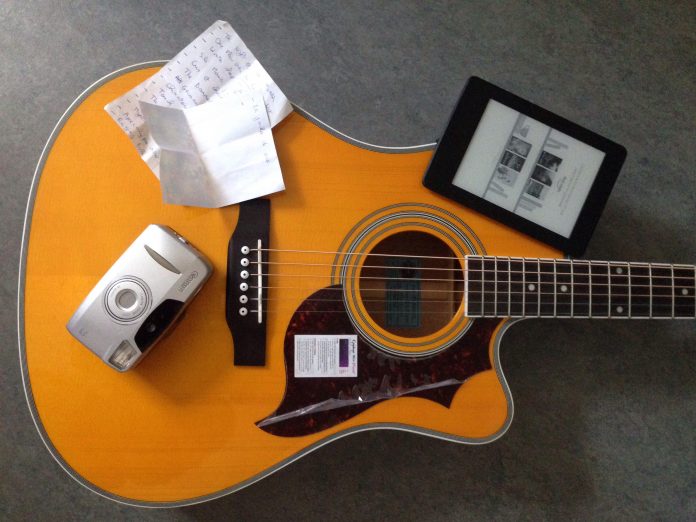
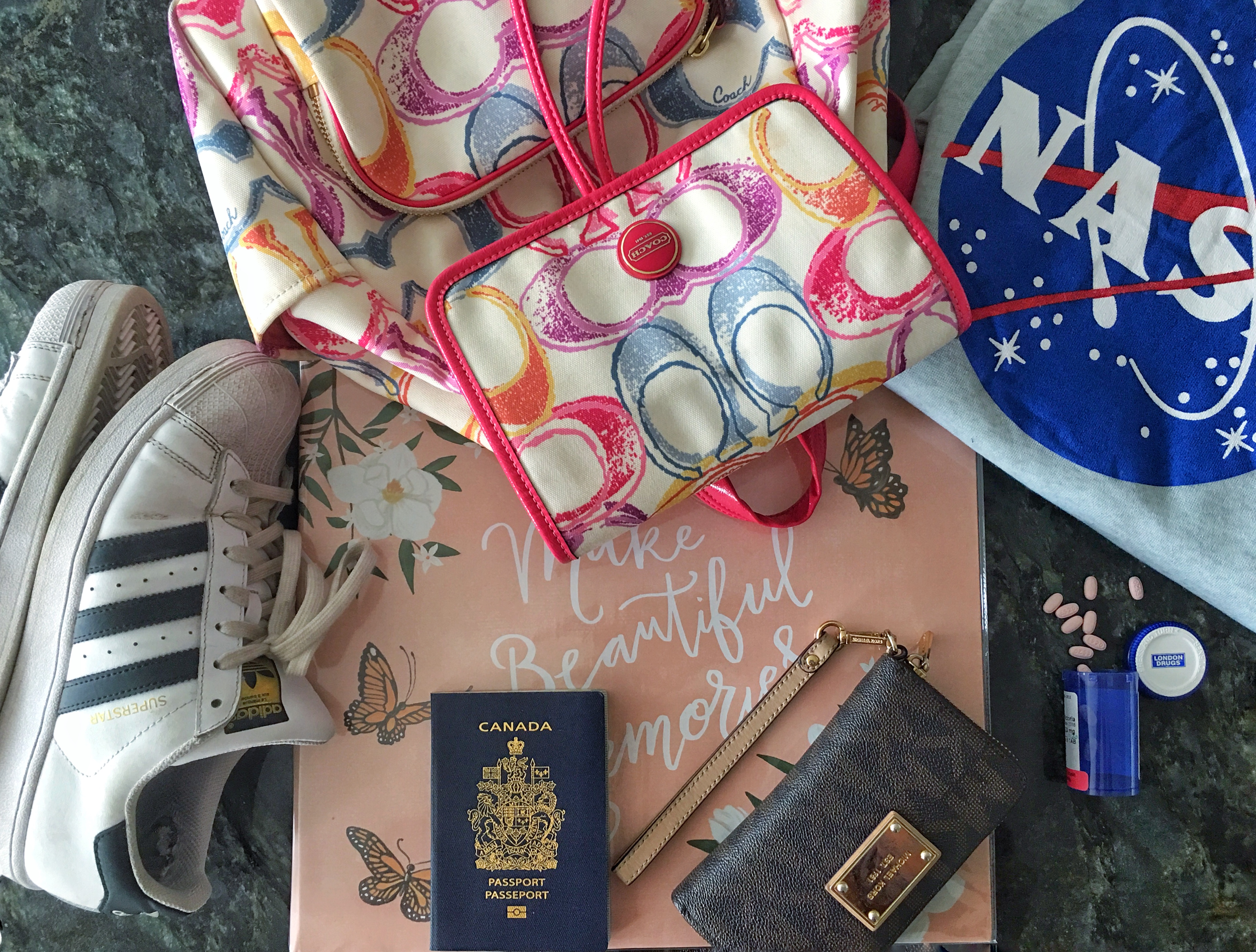
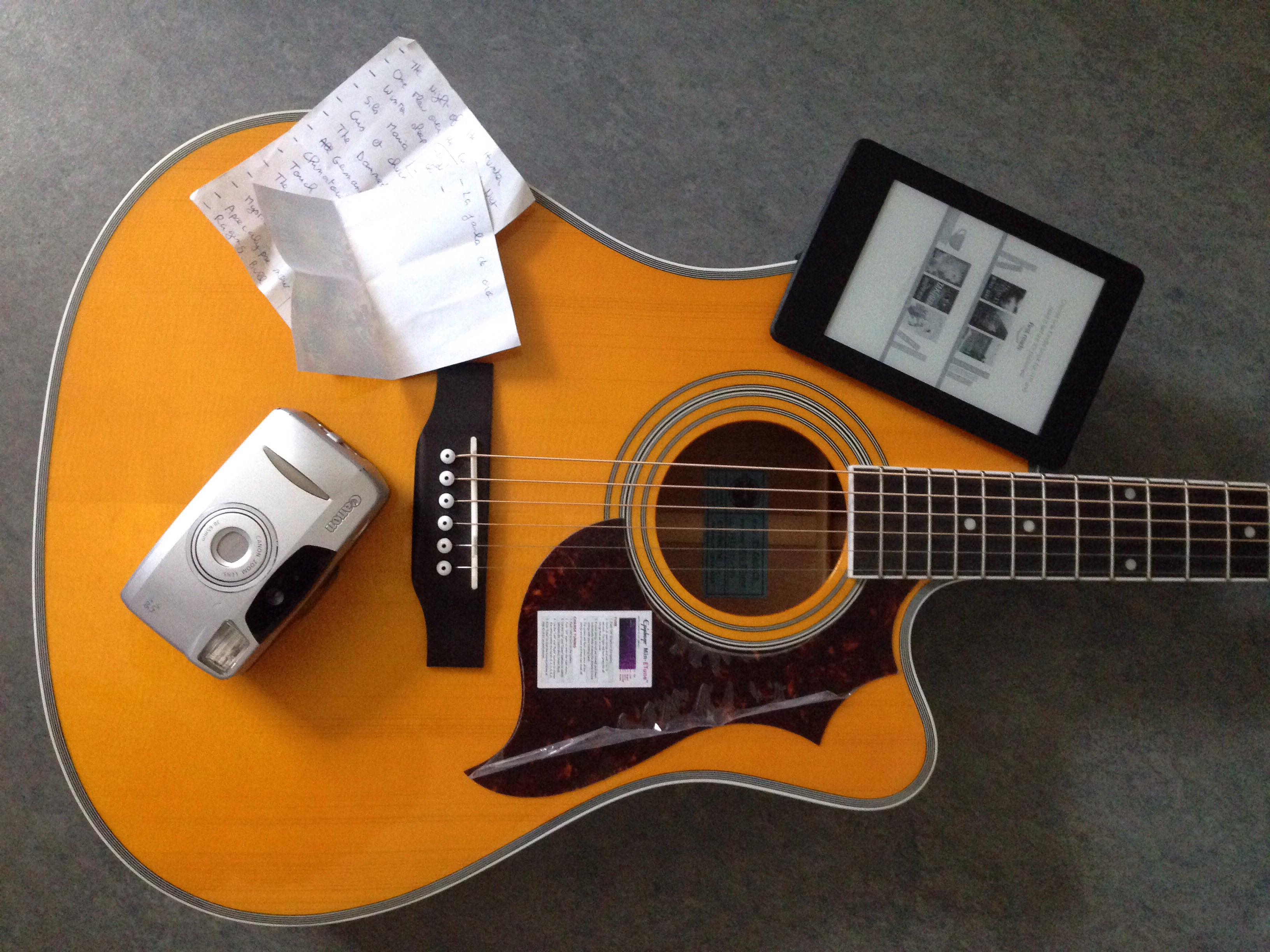
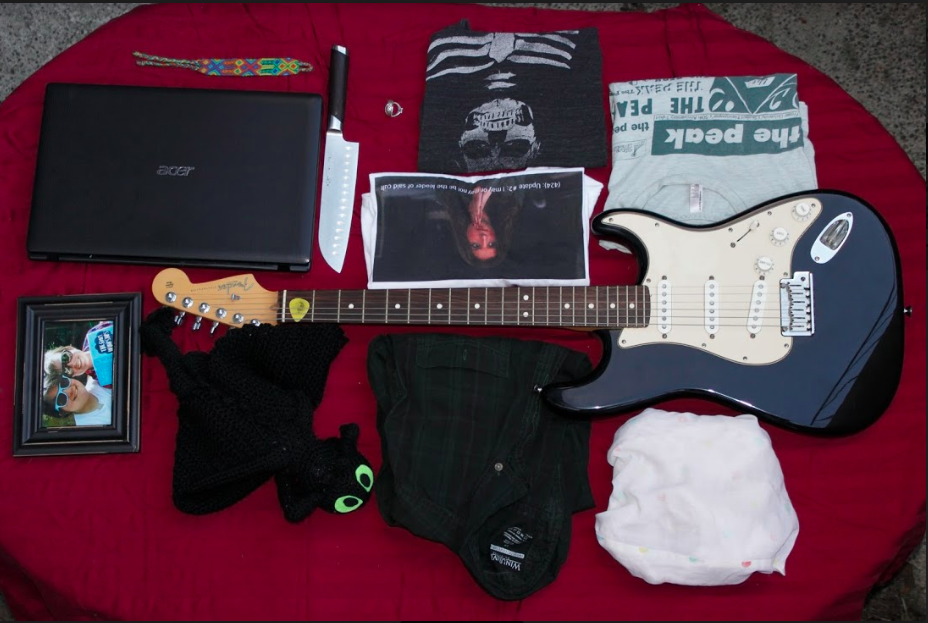
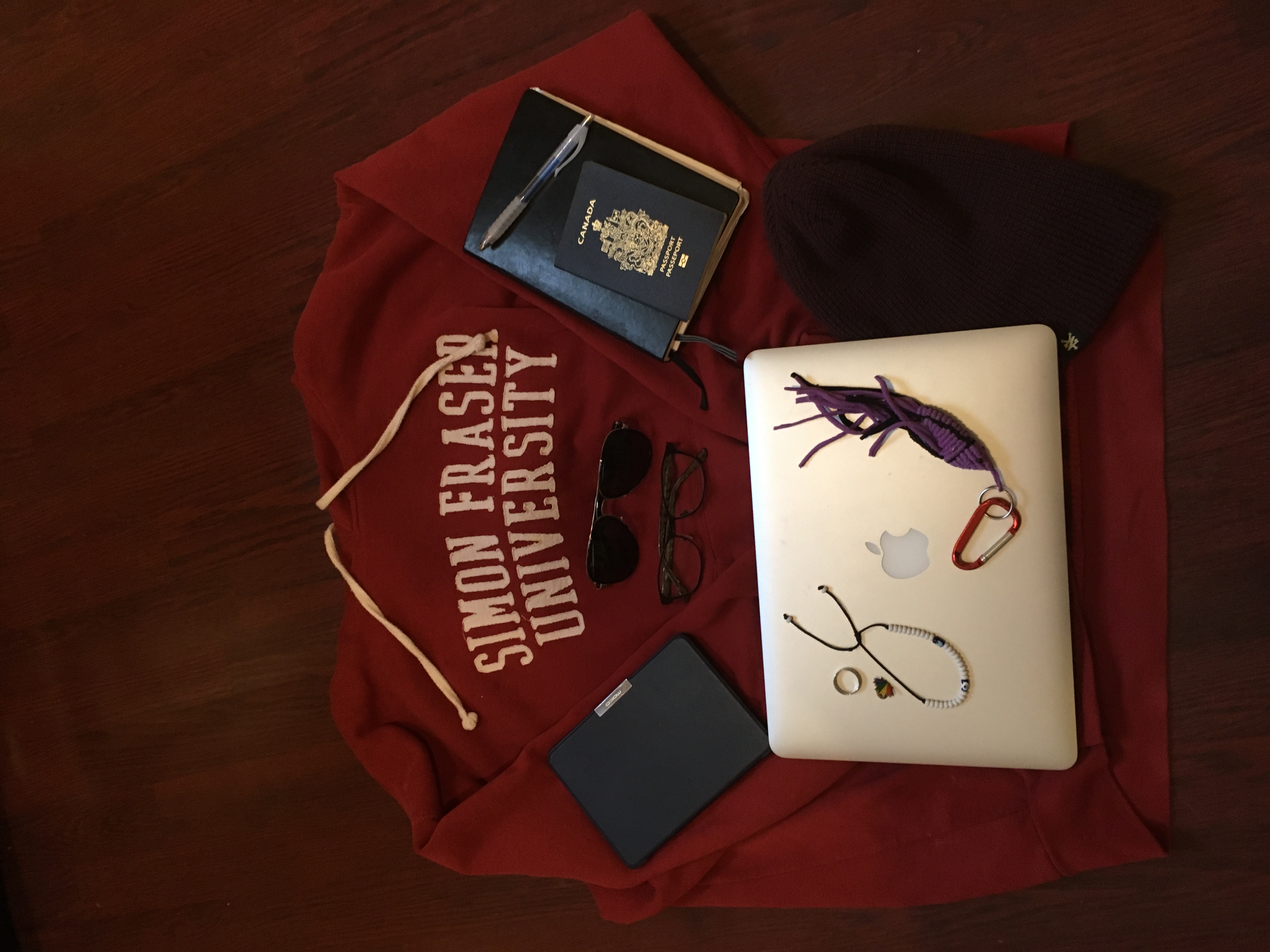
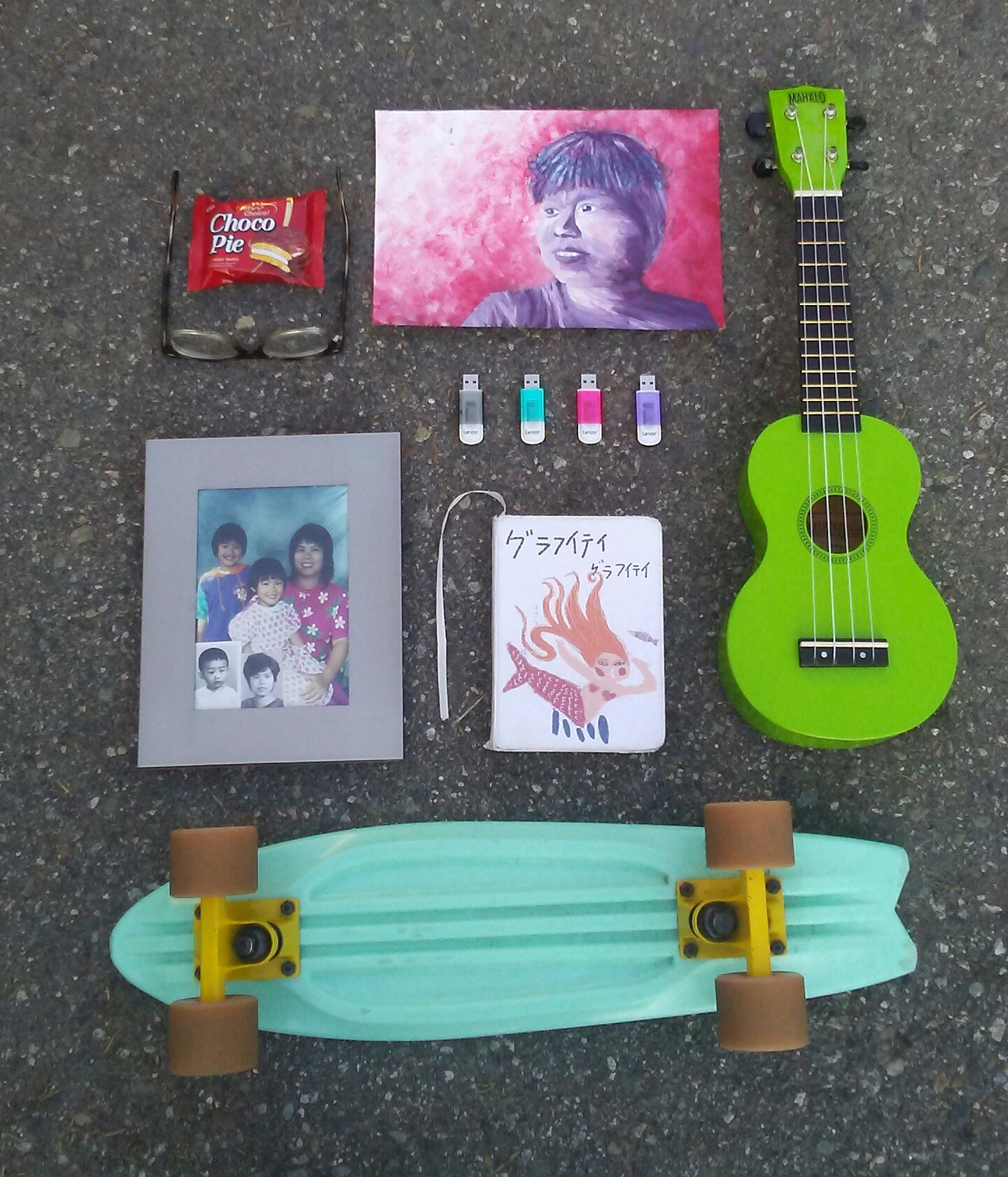
If you were out for a gander on tumblr a while ago, you might have run into the Burning House Challenge. According to the website’s description of the project: “If your house was burning, what would you take with you? It’s a conflict between what’s practical, valuable and sentimental. What you would take reflects your interests, background and priorities.”

A while back, I sent an email out to my contributor list, asking them what they would save. Here are their answers.

Victoria would save this stuff if her house was on fire
Brendon would make sure to save…
What Lyz would save from a fire
Pamela’s picks
Courtney’s saves
Stuff Harleen would rescue
Gabrielle would grab…
Things Kitty wouldn’t leave behind