Home Blog Page 577

McFogg the Dog leaves position of mascot, but not our hearts

0
Illustrated by Cora Fu

BREAKING NEWS: Earlier this week, SFU released a statement explaining how McFogg the Dog will no longer be SFU’s official mascot. The statement did not clarify whether McFogg quit or was fired. This bombshell has forced SFU to begin its search for a new mascot.

The speculation on how McFogg lost his status as mascot continued until a document from SFU officials was leaked to the Facebook page SFU Confessions. The document outlined the grievances that resulted in McFogg’s leaving the role of mascot.

This document is considered proof by many of McFogg’s firing. SFU student, Ms. Vanjie, provided The Peak with a possible reason as to why McFogg is gone. “Yeah he acted super pissy to the SFU officials and was like super angry at all of them,” Vanjie explained. “You know it’s bad when the mascot won’t even fuck with your school.”

Vanjie’s comments are further corroborated by the head of SFU’s Recreation Office, Youbee Seesux. “In my opinion, it’s no surprise McFogg is gone,” she said. “The admin wanted him gone since he started acting out.”

Seesux was referring to the series of controversial incidents that happened following McFogg the Dog’s semester in dialogue with the first years in the Barbara Rae dorms. According to Seesux and several other sources, McFogg the Dog’s behaviour seemed out of character and more whiny, and he was more inclined to binge The Office and Instagram his avocado toast — in other words, more “millennial.”

There was much speculation surrounding McFogg’s employment after butting heads with SFU administration.

His many bones to pick with the school include, but are not limited to, the low turnout rate for sports games, the $10 cover charge for the dining hall, and the inadequacy of the room-booking system he hoped to use for his new club, D&D (Dogs and Drankz). The most striking of his grievances was aired through a series of derogatory remarks about the new Student Union Building and his thoughts on where they could build it instead.

Apparently McFogg was so inspired by students that he was seen protesting alongside them about the tuition fees here at SFU. He was spotted holding a sign that read: “Broke bitches like me need lower tuition fees.” This was not the last of McFogg’s streak of protesting. The mascot apparently started his own online gofundme to pay for a gondola for SFU, complaining that “the school needs to get off its ass already and get it done.”

The leaked document reported that SFU officials were livid at McFogg for the multiple photos and videos that were found on a student’s Snapchat story. The content showed McFogg mounted on the shoulders of the Terry Fox statue as well as being caught in an amorous position at the Avocado late Friday night.

Both SFU officials and McFogg refused to provide The Peak any comment about McFogg’s dismissal.

With McFogg gone, SFU is still on its search for a new mascot. SFU initially called for its students to comment mascot ideas under a Facebook post two days ago, but the post was later deleted due to the massive amount of suggestions. Such suggestions included: Bongwater the Bullfrog, Vinny E. the Existential Void, Simon Fraser the Simon, Balthazar the Biblical Banshee, and “anime.”

Since then, SFU has placed an ad in the local Craigslist for new mascots.

A closer look at classic pop punk

0
Image courtesy of New Found Glory

Pop punk is exactly what the name suggests: catchy pop melodies and lyrics about adolescent romance, mixed with distorted guitar and power chords. Who says you can’t headbang to punk rock guitar riffs while singing along to lyrics about a girl who’s out of your league?

     Although pop punk originated in the late 1970s with the Ramones, Buzzcocks, and the Undertones, a significant piece of the story starts in 1986 when Billie Joe Armstrong (vocals and guitar) and Mike Dirnt (bass) formed a band called Sweet Children, later adding drummer Tré Cool and rebranding as Green Day. From the start, there was something irresistible about Armstrong’s slightly nasally vocals, Dirnt’s punchy bass lines, and Cool’s bright drumming.

     Their distinct sound broke into the mainstream with their third album Dookie in 1994, with MTV playing back songs such as “Longview,” “When I Come Around,” and “Basket Case.” As of 2014, Dookie had sold more than 20 million copies. By now, most people who only have the vaguest sense of who Green Day is have heard “Basket Case” and “Welcome to Paradise.”

     Before Green Day hit the mainstream, teenagers Mark Hoppus, Tom DeLonge, and Scott Raynor formed a band in August of 1992. While the band went through many names, it eventually settled on Blink-182. They quickly became known for their catchy riffs, relatable lyrics, and immature humour. Among their early releases was the iconic Dude Ranch, released in 1997 and certified gold by 1998. Its upbeat, sad-boy, teenager anthem “Dammit” was played on rock radio stations and MTV, and peaked at #11 on the US charts.

     However, it wasn’t until 1999 that Blink would become the superstars of pop punk they are known as today. After Raynor’s departure, Hoppus and DeLonge enlisted the help of drummer friend Travis Barker and released their biggest and most influential release, Enema of the State, in 1999. Containing fan favourites “All the Small Things,” “Adam’s Song,” and “What’s My Age Again?” the poppy and slickly-produced album cemented Blink’s place in pop punk history.

     While Blink brought the pop and Green Day brought the punk, the Arizona boys of Jimmy Eat World brought the emotion. Though their 1999 album Clarity went overlooked by almost everybody at the time, it went on to inspire many emo and pop punk bands from the 2000s onwards.

     The influence of Jimmy Eat World only grew with their 2001 album Bleed American. While the album name might not ring a bell in your head, the catchy tune and lyrics of “The Middle” certainly will. The song peaked on charts all over the world, becoming an anthem and template for pop punk everywhere.

     Bands such as Green Day and Blink pioneered the ‘90s pop punk sound that laid the groundwork for pop punk’s stardom. However, New Found Glory’s self-titled album from 2000 worked with Jimmy’s Bleed American sound to refine pop punk into the mainstream powerhouse it would become in the early 2000s. With Jordan Pundik’s whiny, angsty vocals and Chad Gilbert’s jangly guitars, the band quickly rose to mainstream fame in 2002 with their album Sticks and Stones.

     The lyrics to the lead single “My Friends Over You” are still embedded in the brains of 2000s kids everywhere. The album is so influential that it consistently ranks highly on Top 10 pop punk album lists, and two future pop punk bands would both take their names from the album’s catchy lyrics.

     While each of these four bands brought a slightly different approach to the genre, they all have something in common: they defined the sound of pop punk for the next decade. Stay tuned for an article that delves into the pop punk bands of the mid-to-late 2000s!

POLITICAL CORNER: The government needs to do something about Greyhound’s service cuts

0
Photo courtesy of Huffington Post

Written by: Eva Zhu (Opinions Editor) and Liam Wilson (Peak Associate)

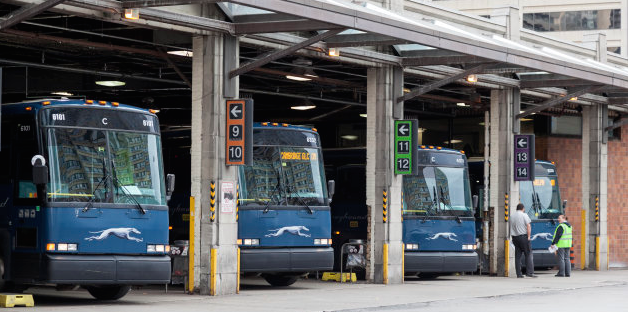
Starting October 31, Greyhound Canada will cut passenger and shipping delivery services in British Columbia, the Prairies, and Northern Ontario, citing a decline in ridership and competition from other transit options. The sole route remaining in BC will run from Vancouver to Seattle and be operated by Greyhound’s American counterpart.

The problem? This will impact about two million people, cutting off affordable transport to Indigenous people, and thoopinionsse living in small, rural, and/or lower-income communities. In many cases, this will leave them with no other transport options. Jagmeet Singh, leader of the federal NDP, has probably been the biggest voice to speak out about this issue, noting that lack of bus service may encourage vulnerable people with little money to use Craigslist or hitchhike in order to get a ride, increasing their risk of being murdered or going missing, especially along BC’s infamous Highway of Tears.

We need to get the government to sit up and listen on this one. Frustratingly, Greyhound has said that both provincial and federal governments have known about its problems for years, but haven’t done anything about it. Now, there are people facing the prospect of being disconnected from their jobs, their families, and public services. Singh has it right: the federal government (or at least the provincial governments) need to step in with a funding plan to prevent these service cancellations. If they don’t, they’re putting their citizens in danger.

Greyhound shouldn’t have to operate a loss, but people shouldn’t have to be stranded either, especially when our modern age relies so much on people being connected. Under our constitution, we have freedom of movement, but how can the movement of people be considered free when they are suddenly deprived of safe transportation? Hopefully, questions such as these will spur our government to do the right thing in the weeks to come.

SFU startup uses data to analyze and predict World Cup results

0
(Photo illustration by Chris Ho/The Peak)

Jamie Tatsubana is an SFU SIAT alumnus who created FootyStats, a soccer analytics website startup which uses data to help fans and fantasy soccer players analyze games and predict results.

     The website was founded two years ago after Tatsubana finished an internship at Electronic Arts (EA Games). In an interview with The Peak, Tatsubana said that at EA he “got really into soccer and [. . .] really felt the passion.”

     He channeled that passion into the startup. FootyStats provides a range of soccer data, from clear sheet percentages to the number of red cards a team may have.

     The site gets millions of views each month from fans in 200 countries, with the site covering 320 leagues from 100 countries. The site is also a resource for Oracle, a multinational database and cloud computing company, which uses FootyStats’ data to make data visualizations. Sport.ru, a popular sporting website in Russia, uses FootyStats’ data to analyze Russian league teams.

     FootyStats has been busy during this World Cup. During the tournament, Tatsubana’s website showed how each national team played in their last 10 matches. Based on this, FootyStats assigned each team a performance number, which helped predict matches and, according to Tatsubana, “many of the matches during the World Cup turned out to be correctly predicted.”

     When The Peak asked for FootyStats’ prediction for the World Cup champions this year, Tatsubana replied, “Based on our stats. It’s a good tie between Belgium and Brazil.”

     “Brazil defences very well. [sic] Belgium is more volatile, Belgium scores more and concedes more goals. If Brazil can keep their defence up then Brazil is the bigger favourite here. I think it’s one of those teams.”

     When asked why prominent teams such as Spain and Germany were eliminated so quickly from this year’s World Cup tournament, Tatsubana replied that, according to his analysis,  “Spain actually didn’t have a very good run of games before the world cup. It’s draw win draw win draw win.

     “Same for Germany, they were doing poorly before the world cup. If could be compliancy, it could be aging squad. It could be a number of reasons.”

     FootyStats began with Tatsubana working from home by himself. “It takes a lot of time to start getting traction,” said Tatsubana. “I could easily have given up before [FootyStats] became a viable business.”

     Shortly after beginning his project, Tatsubana got in touch with SFU’s Coast Capital Savings Venture Connection which gave him space to work on his company. Dave Thomas, a mentor from the SFU’s Venture Connection, also worked with Tatsubana and advised him on how to run a startup.

     Tatsubana also notes that while he taught himself programming and design, much of it was inspired by work done by his colleagues at EA and Namco.

     Tatsubana believes that using data to analyze soccer is essential.

“There’s a lot of pundits, a lot of social media influence saying this saying that. You should filter those out and look at the data which is hard reality and come up with your own individual thought. [sic]” – Jamie Tatsubana, founder of FootyStats

     FootyStats thus allows fans to focus on the objective data and to come up with their own ideas rather than listening to someone’s opinion.

     Tatsubana eventually hopes the website will feature new languages, including Swedish, Brazilian Portuguese, German, and French. According to Tatsubana, those regions “are a big source of visitors for [FootyStats] so we want to serve them better.”

     Tatsubana also wants his site to have Chinese and Japanese languages to reflect his upbringing in China and Japan. This reflects Tatsubana’s principles of listening to his customers and “providing good value to them.” Tatsubana is also looking into expanding into basketball and tennis stats in the future.

     For now, Tatsubana wants to enjoy the World Cup and the success of FootyStats. “I started FootyStats at 24, I’m 26 now and I’m very happy [with] where it is now.”


Comedic Poetry: IKEA at midnight

0
Illustrated by Cora Fu

Forty minutes: The fuck is going on?

All parts strewn, laid out like jigsaw pieces
and captured in the tired eye of the moon,
peeking through my window,
peaked,
leaving soon, leaving soon.
I shake a fist, curse,
nudge the contraption with a toe.
Nothing changes, no.
The moon sighs, casting me
a sidelong look; blankets the room
in earthly glow.
The lights have broke. Broken since long ago —
the last tenants would know.
Eyes squinted, I pick up a metal bar,
examine at the window.
Is this…
I think hard
…supposed to be here?
Suddenly, the bar goes down, and I alongside:
A captain and his ship-
Holding tight against the rolling tide.

An hour and fifteen: I swear, I can do this.

Been a while since the moon rose.
I grasp the instructions once again,
tentative, pensive,
force the words to my nose.
Inhale, breathe. Don’t panic.
But I’m too tired to read;
I let the page fall on my face.
And, I’m struck so close with the stickman’s pose.
Wait, that’s it!
Pictures show how this bullshit goes.
Page 1: screwdriver, screws, Allen key, bar and brace
The puzzle — I’ll make it fit.
And against the moon I race.

Three hours…?: I give up.

My objects of greed:
blanket and bed,
tumble endlessly in my head.
Maybe I’ll move — go elsewhere.
Scrolling infinitely through Craigslist,
pre-furnished is the word from a blessing;
meaning, my mother won’t need
to hide her disappointment
and keep me guessing.
Or maybe I’ll become a wanderer—
A traveller who uses a
backpack as a pillow, and the ground
as a cot, carrying all I’ve got,
and the domed stars my only
company aside from thought.

Three minutes later: Never too dramatic.

I think maybe the captain has drowned.
And on the moon’s brow:
a crown, and
a smugness across the lips. As it sinks and slips
outside the window.
I fall to my knees. Embrace the
phantasmagoric light. Arms spread wide —
I . . . I can’t go on.
The divine message intends to
take me for a fool; and
just like this, I think, I’ll die a tool.
Die as a piece of puzzle from this
godforsaken bed,
with unholy amounts of sea
in my head.

The morning: Alive?

On the floor, I yawn,
failed, unfinished,
and the bright moon gone.

About time I left
this shit to someone else, so
the captain can rest.

Finally.

Adulthood 101: Become a lean, mean, green-living machine

1
Illustration credit, Tiffany Chan

In mid-May, the city of Vancouver announced that, by June 1, 2019, it will ban plastic straws and white styrofoam cups and containers. This is the first ban of its kind in Canada. Though we have over a year to enjoy straws until they’re gone, there’s no reason not to start adapting right away.

There’s no denying that corporations are responsible for the bulk of pollution: The Climate Accountability Institute found that a set of just 90 companies was responsible for two-thirds of the green house emissions changing our environment. Still, we can all hold on to exercise our individual agency and mitigate our personal environmental footprints, even with our limited time and budget. Below, you’ll find a far-from-exhaustive list of tips to live greener, as well as links to handy knick-knacks that can help reduce your environmental impact.


Reduce your food waste

According to Environment Canada, 40% of the residential waste generated in Canada is actually biodegradable, like food. While we instinctively understand that filling up landfills is bad, the trouble with organic waste is that it releases methane as it decomposes, a gas that plays a particularly big part in global warming. When you think of it, you’re also wasting all the energy it took to produce and transport that food, as well as the money you spent on it. So here are some ways to reduce your food waste:

  • Take time to plan your meals at the start of the week, before you go grocery shopping. This means that you’re much less likely to buy more food than you can consume. As a bonus, it also means that you’ll have lunches and snacks on hand to bring to campus — which will allow you to avoid pit-stops at Tim Hortons or Simon C that can weigh down your wallet and generate more plastic and paper wrappings.
  • Find out how to properly store your produce, so that it doesn’t go bad before you have a chance to consume it. This guide may help.
  • A major culprit of food waste is things dying inside your fridge without you realizing that they’re there, so nipping that habit can go a long way. Keep your fridge organized to avoid realizations like “oh shit, that’s been there a while, hiding behind the yogurt.”
  • Label the leftovers in your fridge: that way, you make sure you’ll eat them before they go bad.
  • Keep a list on your fridge of what’s inside so you don’t forget things that need to be eaten.
  • If your accommodations allow it, try composting! While composting is harder if you live in an apartment, there are online guides outlining how to make tidy, odourless indoor compost bins, though you can also buy premade composting systems.


BYOP — Bring Your Own Plastic

The most common types of garbage in the ocean are all single-use plastic products: plastic cutlery, plastic bags, plastic bottles, straws, beverage cans, food wrappers . . . while some of these things are hard to avoid since we all grab the occasional power snack between classes, others are easier to navigate.

Carrying a set of utensils in the bottom of your bag, a cloth bag in case you stop by the store on your way home, and a water bottle or travel mug to get coffee or pop can make a difference. Bringing your own plastic does require a little bit of planning, but to make the extra bagage worth your time, you can hit up franchises that have Bring Your Own Mug discounts, including Tim Hortons and Starbucks, both at 10 cents per drink.  


Cut your carbon emission

You’ve heard it all before: take the bus instead of driving, blah blah blah . . . But another way to limit your carbon emissions is to shop locally. This basically means reducing how far your stuff has to travel to get to you. Vancouver is a really easy place to eat local, with the climate temperate enough to grow produce nearly year-round. Check out which local fruit and vegetable markets are highly rated near you.  

Another green shopping tip is to buy in bulk. While it may seem like a hassle to drag your mason jars and bags to Bulk Barn, buying in bulk means that you skip out on the packaging and that you can opt for a small quantity of balsamic vinegar, pecans, or whatever else it is that you need, instead of ending up with a giant quantity.

Formerly called Zero Waste Market, Nada is preparing to open a location on Broadway on June 20. Once they’re open, you’ll be able to bring empty containers from home and fill them up. You can get three eggs instead of a dozen, a pasta-sauce-jar full of granola, and so on, and so on…    


Changes to make around the house

While it may not always be easy to live in a green home if you’re living in your parents’ house or renting an apartment that’s already furnished, you do have options. Some you’ve heard before: buy energy-efficient LED bulbs next time you need them, open a window before turning on the AC, layer up before turning on the heating, and keep your showers to the minimum. Right. But here are some lesser-known options:

  • Cold-wash your clothes. You save the energy that’s needed to heat water that, after all, is only going to wash your clothes.
  • Be mindful of the products you’re using, since they always end up going back to the earth or water somehow. Arm & Hammer makes an affordable biodegradable laundry detergent, for example. A quick Google will show you all your options, but if this is something that you’re interested in, it’s worth taking the time to do your homework and check the validity of “green” versions of products so that you don’t get duped, especially if it means you end up paying more for nothing.
  • While we think of thrift stores as destinations to shop for clothes, they’re also a gold mine for pots, pans, cutlery, plates, glasses, cutting boards, and other kitchen necessities. This is also music to the student budget’s ears.
  • If you’re still receiving bills in the mail, most places will let you switch to an email-only option.
  • When you’re tackling laundry, wait until you have a full load to save on water and energy. You can also hang clothes to dry.
  • Doing as much of your cooking or baking as possible in one day means that you only have to preheat your oven once, or fill up your sink for dishes that one day. For exhausted students, this can also translate to meal-prepping: taking one day to cook for the whole week, so you don’t have to worry about it more than necessary. Pinterest will happily tell you everything you need to know about meal-prepping.


Ways to help at school…  

There’s only so much you can do about school. If your professor wants the assignment printed, you print it, and if they don’t want laptops in their class, you’re taking notes by hand.

You can inch towards a paperless education by reading textbooks and assigned work digitally. A lot of the older texts you’ll read in an English or World Literature class are available online for free, through Project Gutenberg, the Kindle Store, or Apple iBooks.    

When you walk up to a recycling bin on campus, make sure to separate your materials properly. You can recycle the Iced Capp container, but not the straw; soiled paper goes in compost, not the paper bin — little things like that. This February, the Edmonton Journal reported that recycling in Edmonton had actually failed because of contaminated bins. When SFU installed these bins in 2014, the goal was to eliminate 70% of the university’s waste within the next year, but the system only works if we work too.  


Educate yourself

When you wander into the world of shopping green, make sure to be brand-smart and strategic about your choices. As Daily Mail reports, research has shown that eating organic may not necessarily be better for the environment, since cutting out pesticides means that more land is needed for a comparative yield — leading to soil erosion and to the destruction of natural habitats . . . Furthermore, companies and businesses that claim to be green often have complicated motives and may not always be delivering . . .

Be a smart consumer and do your research before paying extra for an environmentally friendly product that may not be as great as advertised. Education and knowledge have been a noted tool in environmental protection and awareness.

Closer to home, SFU boasts the only interdisciplinary Faculty of Environment in Western Canada (and one of few in Canada), as well as Embark — a student society dedicated entirely to sustainable living and education on campus. In the words of environmentalist, advocate, and educator David Suzuki, “If we humans are good at anything, it’s thinking we’ve got a terrific idea and going for it without acknowledging the potential consequences or our own ignorance.”


Cool products that can help

Everybody’s different and lives differently. Over the course of a week, keep a list of all the garbage you throw away. Not only is it a good consciousness-raising exercise, but it also helps you figure out what you’re throwing out in particular. It’s a practical place to start figuring out what you can replace with a reusable alternative. These products are worth checking out:

  • Cloth snack and sandwich bags make a good replacement for convenient Ziplocs. They don’t take up a lot of space in your bag, and you can throw them in the washing machine for a quick and easy wash. There’s a million brands and patterns and colours available online, but I like these Colibri Bags because they actually zip shut.
  • FinalStraw is a collapsible, reusable straw that comes in its own reusable case that you can clip onto your keychain. You’ll always have it with you, and you’ll have a place to store it once it’s been used. However, it will only be shipping in November of this year. Until then, you can find stainless steel alternatives on Amazon, at Home Hardware, or Bed Bath and Beyond.
  • Menstrual cups are being praised as an environmentally-friendly alternative to pads and tampons for those who are comfortable using them. There’s a slew of brands, all reviewed here.
  • You know those plastic bags you put your produce in at the grocery store? No more! Flip & Tumble has a set of 5 bags available on Amazon. They hold a decent amount of produce, tighten to open and close easily, and are made of mesh which adds no weight at the checkout.
  • LUSH has started making shampoo bars, which means that you get to skip the packaging on shampoo bottles. You can stop by any of their locations and ask for a sample: that way, you can test them against your hair type and check for ingredient lists and any scent sensitivities you might have.
  • Bamboo has emerged as a sturdy, reliable, biodegradable alternative to plastic, including for toothbrushes.
  • Invest in some reusable batteries for any devices you have that require them. Batteries are incredibly complicated to recycle, plus you can’t just throw them away and always end up with a stash in some drawer somewhere. While they may cost more the first time you purchase them, you’ll save some money in the long-run.

Minimart left in state of uncertainty regarding future on campus

2
(Andres Chavarriaga/The Peak)

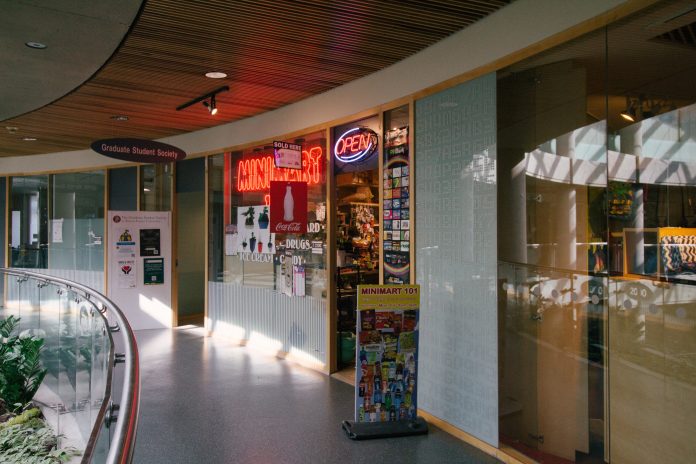
The owners of the Minimart located on the second floor of Maggie Benston Centre (MBC) report a state of uncertainty regarding the convenience store’s future on the SFU Burnaby campus. Gideon Wong, who has been operating the Minimart at SFU since 2008 with his wife Carrie Li, spoke with The Peak on future possibilities the store may face.

     Minimart’s current operating space falls under the Simon Fraser Student Society (SFSS) lease that will be given back to SFU upon completion of the Student Union Building (SUB). Accordingly, Wong reported signing a new lease contract approximately a year ago which extended the Minimart lease up to December 14 of this year.

     SFSS president Jas Randhawa spoke with The Peak via email regarding Minimart’s current contract: “While it is true that Minimart’s Maggie Benson Center lease expires on December 14th — this was based entirely off of the anticipated SUB completion date during that period.

     “Once the SUB opens, SFU will have ultimate authority over leasing space in Maggie Benson Center whether it be to Mini Mart or someone else,” Randhawa added.

     According to Wong, at approximately the same time Minimart signed the new contract, he was made aware of space reserved for the convenience store in the SUB which was noted on the floor plans for the new building.

     Wong recalled that he was first told about the space reserved for Minimart in the SUB through a student who visited his store and asked him about the move. At the time, he was not aware of any plans of relocating the Minimart, but at the students recommendation, he looked into the matter.

     “At that time, SFSS [had a] showroom, [with] all the models, [and] all the pictures. My Minimart’s name was there [sic],” said Wong, referring to the Level 2000 Floor Plans of the SUB which have the Minimart name labelled on a block adjacent to the MBC Food Court.

     Wong then reported making an appointment with Marc Fontaine, general manager of the Build SFU project. In the first of three meetings Wong reported, Fontaine confirmed the space labelled on the SUB floor plans as reserved for Minimart.

      “And then I talked about, ‘how big is it,’ and then we discussed lots of things,” said Wong. Over the course of his meetings with Fontaine, Wong discussed the size of the space, the room that would be available for the Minimart’s drinks and ice cream fridges, and the circuit layout.

     Wong also recalled requesting a sink be built into the Minimart space, so that the store could receive a license to sell fresh-squeezed juice in the new area. “So from there, [Fontaine] said, ‘okay.’ So he’ll make a sink for me,” said Wong.

     Early this year, Wong reported following up with Fontaine regarding the construction progress of the Minimart space in the SUB. “[Fontaine] said, ‘no, not yet. [The space is] not 100% for you,’” Wong remembered. “He said, ‘well, we haven’t decided yet. Which people [will get the space].’”

      “So what, our discussion for the last few months, means nothing?”

     Randhawa stated, “According to Marc Fontaine, there have been multiple meetings over the last few years between the SFSS and Mini Mart as the society presently manages a relationship with the Mini Mart owners. Additionally, Marc has stated that a few of these meetings have included discussions of space in the SUB for a convenience store.

     “It is evident that Minimart has an expressed interest in the new student union building. Nothing has been formally offered to Mini Mart and by far no leases have been signed with specific terms regarding this (e.g. cost per square foot and operating costs).”

     Wong reported following up with Fontaine to ask if there was an application process Minimart could go through to secure space or how to receive more information regarding the decision process. The latest email Wong sent Fontaine was approximately a month ago asking for an update. He was told the decision on which organizations or companies would obtain space in the SUB had not yet been made.

     “He has told me that he will do a survey, see if people like me. [sic] I don’t know if he did it or not,” said Wong.

     Randhawa confirmed that a decision had not yet been made regarding the retail space available in the SUB.

     “It is important for the student society to have a understanding of what students needs really are before establishing a convenience store in the new student union building,” Randhawa wrote.

     He added that “Fontaine has categorically stated that there had been ongoing discussions in the past to conduct a survey about uses for retail space in the SUB, however this was never materialized.

     “Regardless, the board of directors will soon be having discussions of conducting a formal request for proposal process for commercial spaces in the new SUB.”

      Randhawa mentioned that Minimart may hold an advantage during the discussion regarding retail space in the SUB as “they currently have a space for convenience store services on campus.”

     As the December 14 eviction nears, the future of Minimart hangs on the SFSS’s decision, leaving Wong unsure of how to plan in terms of the store’s inventory and his own future: “If they don’t give me [the space], I’ll retire then. If they give me [the space], I can still go along [running the Minimart].”

     “I just keep doing [sic] day-by-day [. . .] I don’t know how to plan.”


Did anyone expect TanaCon to NOT be a disaster?

0

TanaCon – This Year’s Frye Fest

VidCon is an annual YouTube convention in California started by the Green Brothers, Hank and John. TanaCon was inspired by Tana Mongeau’s (a YouTuber with over 3 million views, most famous for her storytimes) bad experiences at VidCon, which she outlines in an hour-long video, citing that she was not made a featured creator – a special distinction at VidCon for the most famous creators – and was then kicked out for inciting “riots” of her fans.

TanaCon, named after Mongeau, promised to be better and “free-er” than Vidcon. Fans could purchase either the free “featured creator” tickets or the $65 “featured fucking creator” tickets, which promised access to a faster VIP line-up and a goodie bag worth “quadruple the price of the ticket”. (spoiler alert: the goodie bags ended up being stickers, a rubber bracelet, and condoms.)

Many fans stood in line for upwards of four hours, getting horrendous sunburns and becoming dehydrated and hungry. Then, a representative of Good Times(an event production company that promises to bring creators and fans together) announced to the crowd that the event had been cancelled. According to an article by NYMag, crowds began chanting for refunds, stealing items, throwing merch and trash around, and crying.

Many fans’ only experience of TanaCon was standing in a long, hot line. Those lucky few that made it inside found themselves wandering through meeting rooms and hallways in the hotel, mobbing confused YouTubers, and disturbing hotel guests. By noon, hotel security began kicking fans out by order of the fire department, who deemed the convention a safety hazard. When Day 1 of the convention was shut down, Mongeau said that the team was going to re-group, find an additional location, and make Day 2 great, but this did not happen. The entire convention was cancelled, with little information being shared with attendees. Some fans never even saw the inside of TanaCon.

Shane Dawson & His Video Series

Before the dust of the disaster of TanaCon could even settle, Shane Dawson (a YouTuber who has been making videos since 2006) was filming and releasing a three-part docu-series on his channel.

In part one, Dawson interviewed two young fans who attended TanaCon who were extremely disappointed with the entire convention and expressed frustration with Mongeau and GoodTimes. Part two of the series is Dawson’s interview with Michael Weist – the 21-year-old CEO of GoodTimes. Weist claims that the Mariott lied to him about the size of the hotel, and now he will lose “everything”.In the finale, Mongeau and Weist faced-off over Skype, hurling accusations. Dawson then shares some private information he gained access to, including a video where Weist and Mongeau both admit the Marriott’s capacity of a little over 1,200, shrugging the number off. Dawson reveals a contract that Weist signed, acknowledging a capacity of 1000 people. 5,108 tickets were sold, only 200-300 of which were free tickets, totalling to $325,000. Weist claimed there were 91 security guards, but Dawson reveals there was only ever 25 at a time. Weist signed a second regretful contract with a recently-started ticket company, Veeps, saying that GoodTimes was responsible to refund money for the event if anything went wrong.

My take on this disaster

TanaCon is the perfect example of what happens when two spoiled, immature kids try to throw themselves a “screw you Vidcon” party at the expensive of fans. Mongeau created the concept out of spite, not because she cares about her fans. It was never about the fans. If Mongeau cared about her fans, she wouldn’t have restricted herself to such a tight deadline and would’ve given TanaCon the time and attention it would need to be a really fantastic experience. She intentionally planned the convention on the same days that VidCon was being held, forcing fans to choose between her and other YouTubers that they enjoy watching. Not only is it incredible petty, but it also shows how selfish and narcissistic she is.

She claims her intentions were pure and fan-oriented, but while fans were outside, dehydrated and burning, she was goofing off inside the air-conditioned hotel with her girlfriend Bella Thorne and friends. If she truly cared, she would have went outside and talked to as many fans as humanly possible. But instead, she popped up on stage for only a few minutes and outside for a fraction of that time. Later, she attended her birthday party while fans cried in hotel rooms.

I don’t believe Mongeau meant or predicted for things to go so badly, but considering that she can’t even be on time for collabs with other celebrities, we all knew this was going to end in disaster. She’s not mature, organized, or dedicated enough to pull off something this big and shouldn’t have even attempted to create her own convention.

In fact, Mongeau has a horrible reputation for being late and disorganized. For example, in a video made by Channon Rose, she outlines how she waited multiple hours to collab with Mongeau, their meetup being delayed again and again, with radio silence from Mongeau. Did I mention Rose literally travelled to Las Vegas to meet Mongeau? Yeah.

And for Weist, where do I begin? He comes off condescending, fake, and manipulative, and that’s before you even hear about his horrible reputation. Mongeau should’ve done better research before putting her convention in the hands of this guy.

All Weist did was sign a bunch of unfortunate contracts and ignore room capacities, and now he’s crying that he’s going to “lose everything.” Either he intended for this to fail so he could make a Netflix documentary on it, or he’s just bad at his job. He, unsurprisingly, doesn’t seem to care about the fans of the creators he’s trying so hard to gain clout from.

How can anyone trust a guy who promised to take care of the food, water, goodie bags, and security then failed to deliver on all fronts? The least he could have done was to provide enough water so fans weren’t forced to drink water by the bottle cap. He comes off as pretentious and even more narcissistic than Mongeau.

What do you get when you mix a 20-year-old dramatic story-time YouTuber who couldn’t be on time for her own appointments if her life literally depended on it and a shady 21-year-old CEO with a Gucci scarf and a Segway? TanaCon.

True to his name, Karemaker weaves empathy throughout Feast of Fields

0
Image courtesy of Conundrum Press

At the most basic level, Feast of Fields is graphic novelist Sean Karemaker’s love letter to the protagonist’s mother, Hanne. After a bad day at school, timid and lonely Sean finds comfort in listening to his mother’s childhood memories, taking place in a Danish orphanage. A testament to her resilience and understated strength, this autobiographical graphic novel pays homage to Hanne’s dedication to her family and to herself.

     Perhaps the significance of this tale lies in its focus on people and experiences, rather than the emotional traumas. As such, it validates all the other migrant stories that may not seem as splashy or as worthy as an Oscar-winning biopic. Regardless of the seemingly low stakes of Hanne’s life at the orphanage, Karemaker nevertheless conveys its impact. No theses, universal truths, or calls to action came out of this of this story, but if it touches this young boy who eventually grows up to be a cartoonist, it should, and can, matter to everyone else.  

     Part of this book’s beauty is its ability to reframe a migrant’s story — that is, by not calling it a migrant’s story at all. The journey throughout the narrative is entirely metaphysical; instead of travelling between borders of countries, the story moves between memories, people, and time. True to the graphic novel genre, images remain the centrepiece of the reader’s attention. The monochromatic, slightly disorienting style may take a while to adjust to, and might be a little off-putting and sloppy at first, but the painstaking technique ultimately starts to shine.

     While it’s definitely a short read, Feast of Fields is neither shallow nor forgettable. Just like Hanne, its restrained maturity touches far beyond one child’s heart.

SFU set to host the headquarters of CANSSI

0
(Choong Jin Ng/The Peak)_

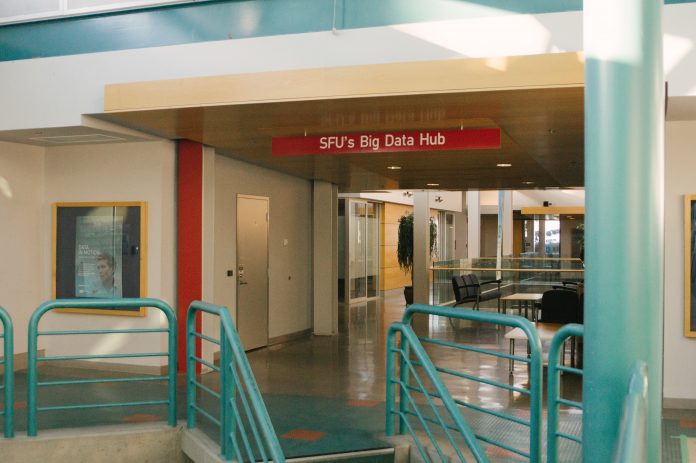
The Office of the SFU Vice-President, Research has announced that SFU is set to collaborate with the Canadian Statistical Sciences Institute (CANSSI). The national headquarters of CANSSI will be hosted at SFU’s Big Data Hub.

      Associate vice-president, research, Dugan O’Neil discussed the collaboration, its impact on the students and its potential benefits for both CANSSI and SFU, in an email interview with The Peak.


Leading up to the collaboration
Describing how the collaboration came about, O’Neil wrote to The Peak that “in the fall of 2017, CANSSI ran a competition to select a host for its national headquarters.  Institutions from across Canada then bid to host CANSSI, which SFU won.”

      He continued, “The bid represented a lot of work on the part, in particular by Derek Bingham in the department of Statistics and Actuarial Sciences, as well as staff at our Big Data Hub.”

     O’Neil believes that the collaboration represents “a great opportunity for SFU. We are thrilled to have been selected as the CANSSI national HQ.”


Impact on SFU students
“This collaboration will generate quite a bit of activity in our Big Data Hub which will be interesting to SFU students,” O’Brien said of this development’s effect on students. “This will include visiting lecturers, short-term training courses and new programs of research which will employ both undergraduate and graduate students.”

      O’Neil was unable to confirm whether the partnership will result in new academic courses, but noted that “[existing] programs such as the undergraduate Data Science program (Statistics and Actuarial Science) and, programs at the graduate level such as the Professional Masters in Big Data (School of Computing Science) [. . .] will benefit from the proximity of CANSSI’s national headquarters.”


Collaboration benefits
According to O’Neil, “Bringing CANSSI to SFU raises the profile of our already-strong efforts in [the statistical] area. It also makes us a natural partner for government and industry who wish to investigate a data-related problem, or who wish to hire co-op students or new graduates. So, we will benefit significantly from the presence of CANSSI on our campus.”

     He continued that CANSSI’s choice of SFU as their national headquarters reflects the future benefits that CANSSI anticipates can result from close proximity to the university: “[CANSSI] will be located in our Big Data Hub, which is an excellent multi-disciplinary space with exceptional facilities for collaboration and training. [They] will also be near several world class SFU departments or schools including Statistics and Actuarial Sciences and Computer Science.”

      O’Neil concluded by expressing his enthusiasm about the partnership, and stated, “We are very excited! It has already been a pleasure to work with CANSSI and I look forward to working with the new CANSSI director and their staff once they settle into our Big Data Hub.”