Home Blog Page 569

Join the Club: SFU Shockwave

0
SFU Shockwave. Photo by Jennifer Low

Written and photographed by Jennifer Low, Peak Associate 

If you happen to be walking along False Creek near Science World at the right time, you might just catch a glimpse of SFU’s Dragon Boat team, SFU Shockwave, out on the water. The team is a tight-knit group of both beginner and experienced paddlers. They practice together two to three times a week, and can be found representing SFU at various dragon-boating events.

Having never watched dragon boating before, I was not quite sure what to expect as I hopped off the SkyTrain at Main Street—Science World Station. It was a beautiful August evening, as the smog hadn’t set in yet, and there was barely a cloud in sight, predicting an incredible sunset. From the moment I entered the Creekside Community Center and met up with the very welcoming team, I knew I was about to witness something truly special.

For those unfamiliar with the human-powered aquatic sport, according to the International Dragon Boat Federation website, dragon boating is said to have begun in southern China more than 2,000 years ago. At that time, it was used as a way to ensure a prosperous harvest season.

In later years, Dragon Boat races honoured the sacrifice of Qu Yaun, a great warrior poet in ancient China who committed suicide in the Mi Lo river in protest of political corruption. Today, it is widely considered “one of the world’s most popular sports” and one of “the fastest growing international team water sport” by various dragon-boating organizations.

A standard dragon boat holds 18–20 team members, consisting of a group of paddlers, a caller or drummer, and a steersperson. Every position plays a vital role in the team effort and group harmony. The name of the sport comes from the intricately carved boats, each of which is adorned with a carved head at the bow, a tail in the stern, painted dragon scales along the hull, and paddles symbolizing claws.

Even though the team was merely running a practice and not competing, I was surprised by the incredible speed of the sport. It was not surprising that recreational boats, ferries, and others out on the water all seemed captivated by the sight of SFU Shockwave as they passed by. The spectators could only applaud their teamwork and skill.

I was also completely blown away by the amazing level of communication and cooperation within the team. They seemed to intuitively understand one another. Despite the fact that coaches sat on a completely different boat, their ability to converse with the students on the team seemed effortless.

One of the coaches, Earl Villarosa, who has been with the team since the beginning, shared their origin story with me. SFU Shockwave was officially started about two years ago by a group of friends who fell in love with dragon boating. Upon realizing that there was no team at SFU, they decided to start one.  Villarosa describes SFU Shockwave as a group of “fun, hardworking, and focussed” individuals.

When asked to name his favorite thing about the team, Earl said “We’re actually all, you know, friends, so that’s super nice. We always […] hang out after practice, go get food, and [go to] beaches…” The group’s close, friendly, and fun dynamic, strengthened by the team’s bonding activities, clearly translates to their performance out on the water. Their enthusiasm and positive energy is infectious.

“One of the great things about dragon boating is that it’s also super easy to pick up,” Earl says, “It’s very accessible.”  This comes as no surprise, as the sport is known for being inclusive of a wide range of skill levels. From watching the adept cooperation and synchronized movements of the paddlers, you would never guess that about half them hadn’t touched a paddle until nine months ago. Earl states that it’s merely a matter of putting in the time and effort.

“We’re all here for each other,” he adds, noting that having such a great support system helps to keep a positive mindset.

The team recently competed at the Concord Pacific Dragon Boat Festival, which drew a crowd of an “estimated 5,500 paddlers and 100,000 festival-goers.” In fact, it’s known as “North America’s biggest, best, and most competitive racing festival.” This year, on the thirtieth anniversary of the event, SFU Shockwave pulled through with an impressive first-place podium finish in the recreational grand finals, which qualified them for their first ever 2k Guts & Glory race. The team came in fifteenth in the competition overall.

In July, they were also present at the Harrison Dragon Boat Regatta. According to Earl, the team placed second out of about 50 teams in an extremely tight race; SFU Shockwave beat the third-place team by milliseconds. The outcomes of this summer’s races accurately showcase the hard work and dedication of the team.

If you are interested in getting involved with SFU’s Dragon Boat team, you can follow and message them on their Facebook page “SFU Dragon Boat” (@sfushockwave) as well as their Instagram (@sfushockwave). You can also contact them through their email ([email protected]). In addition, the team will have a booth you can visit during Clubs Days, as they will be accepting new members in the fall semester.

“Look out for us there” is the last thing Earl says before his voice is drowned out by the team’s passionate cheer as they break from their post-practice huddle.


Blurring faces and leaping salmon

0
Traditional techniques of anonymizing faces — pixelating, blurring, or blacking out faces — often lose the emotion involved. (Photo courtesy of AI Paint 360)


Anonymizing faces without losing emotion

A team of researchers, which includes those from SFU, are working to improve the way individuals are anonymized for television.

Anonymizing faces in news broadcasts or documentaries usually involves pixelating, blurring, or blacking out an individual’s face. While this common practice leaves the voice intact, it removes a key method of communication — the human face.

Steve DiPaola and Kate Hennessy from SFU’s School of Interactive Arts and Technology (SIAT), along with Taylor Owen, from UBC’s journalism school, are working on a way to use the power of AI “painting” to anonymize an individual’s face. With this technology, facial expressions can be captured along with a voice to give emotion behind a story.

As DiPaola explains, “when artists paint a portrait, they try to convey the subject’s outer and inner resemblance [. . .] with our AI, which learns from more than 1,000 years of artistic technique, we have taught the system to lower the outer resemblance and keep as high as possible the subject’s inner resemblance — in other words, what they are conveying and they are feeling.”

With files from The Star Vancouver.


Salmon jump at the chance to get rid of lice

Two SFU researchers have uncovered a possible explanation for leaping behaviour in salmon.

Previously, researchers have proposed many reasons as to why salmon may leap out of water. Some of these include catching food and avoiding obstacles and predators. Emma Atkinson and John Reynolds, two aquatic ecologists at SFU, recently discovered a new one — that salmon may jump to get rid of lice.

In their field experiment, they studied the leaping behaviour in wild juvenile salmon. In considering juvenile salmon, they knew that previously held ideas about leaping behaviour in salmon would not be true for juvenile salmon since, according to Atkinson, their food source is “almost exclusively” comprised of “underwater zooplankton and their tendency is to scatter rather than leap when escaping from predators.”

Subsequently, Atkinson hypothesized that leaping behaviour in juvenile salmon could be attempts to remove sea lice. By comparing lice counts on two groups of fish, those that were and weren’t allowed to leap, Atkinson and her team found that the leaping salmon had lower seal lice counts compared with their non-leaping counterparts.

At The: London Pub

0

Ambience: B

For 10 p.m. on a Sunday, there’s a certain buzz of excitement in the crowd once I walk into the London Pub. Groups of people are crowded around the makeshift stage area, and the overall vibe is laid-back but lively.

     The seats are packed with a colourful crowd of all kinds of sexualities and ethnicities. Drag performers in full costume are casually walking around talking to friends and bar-goers, or else simply standing there looking stunning as all hell.

     While this venue is holding a drag show, the London Pub as a space — as made evident by its name — is all about London and football. Football paraphernalia and jerseys are displayed neatly on the walls, while mid-2000’s music plays on the speakers (read: Hannah Montana and *NSYNC). Even though the two personalities of the pub and the event clash, the bar itself is spacious and well-decorated, making it an ideal space for a night out.


Accessibility: C

There are no discernible wheelchair ramps present at the venue, but it is home to smooth, flat wood floors which theoretically could be accessible for those in wheelchairs.

     There are no gender-neutral bathrooms,  however, the bathrooms themselves are quite tidy, and well stocked.

     As for location, the pub is located right on Main Street, and is a quick walk from either the Stadium–Chinatown Skytrain station, or Main Street–Science World. The event was scheduled for 10 p.m. to 12 a.m., included a $5 cover, and was only accessible to those 19+, each of which may serve as an age, cost, or time barrier for some.


Drag performances: B+

Our host Jerri Lynn Spears and DJ Girl Fieri kick off the show with a bang (and with names like that, how could they not?) The two are comfortable up on stage talking to the crowd, bantering about yeast infections, and asking the crowd to cheer for the pub’s wait staff (everyone loves a kind queen).

     This event is part of “Commercial Drag” by Sleepy Girls Production, a drag show showcasing East Vancouver drag talent of all kinds every Sunday. The evening’s theme was “Sweet 16,” which was honoured quite well by the event’s first performer, Ryan Goshling, clad in a tux as they danced to a Robyn song. They ended their performance by handing out crowns from a giant, glittering pink egg (it was a packed three minutes, to say the least).

     Other performers like Brunch spat out Nicki Minaj verses as they strutted around the venue, beer and the audience’s wigs in hand. Props also must be given to drag performer Belladonna VonShade — even though she made guest performances for rap verses in other queens’ songs, her confidence and character was utterly magnetic to the crowd.

      But by far one of the best performances that came tonight was from Gender Spice, a drag performer who was less glitter and more goth. They slunk out on to the stage while Wheatus’ “Teenage Dirtbag” blared through the speakers. With wig changes and all, they gave one of the most entertaining and hilarious performances of the entire night. Their performance was so stellar that Jerri Lynn threw their shoe at them in support, claiming “[their] shoe was so lubed up from horniness.”


Overall: B-

     Overall, Commercial Drag delivered on a night of laughs, decently talented drag queens from East Van, and is definitely a great starter for anyone first discovering local drag talent!


Book vs Book: Lost at Sea and Seconds

0


Lost at Sea (2003)

With its heavy doses of cats and angst, Lost at Sea was one of my favourite graphic novels when I was a teenager. The story centres on Raleigh, who apparently has no soul, as she sits through an unintentional road trip with fellow classmates she doesn’t like. Raleigh’s emotional stream of consciousness reflects how I felt in high school, and is expressed well by the simple, haunting art style. O’Malley was obviously not thinking too much about money when he published this first book, as it’s quite experimental and may seem melodramatic to older readers.

Seconds (2014)

      Over a decade later, this hardcover slab seems to have been created by a whole other person. In Seconds, O’Malley honed both his writing and art. Each page is full-colour and the level of detail is so high compared to Lost at Sea that it’s like comparing a quilt to a pillowcase. However, a lot of the deep emotion he evokes in Lost at Sea is forgotten in Seconds. The protagonist here, Katie, also shares her thoughts with the reader, but they seem more self-absorbed and flimsy when compared to Raleigh’s existential musings. Katie is also much older than Raleigh and the book focuses on career and choices, rather than growing up and questioning things. Seconds also provides a solid plot to follow, unlike the randomness of Lost at Sea.

Verdict

     While I love both books, Lost at Sea is the better work. Seconds is beautiful and polished, but it lacks the emotional depth, and doesn’t resonate with me as much Lost at Sea does. I may be less attached to it now that I’m past my teen years, but it remains one of my favourite books.

The Belittling of Black Girl Magic

0
The realm of sports is no stranger to the policing of Black bodies. (Photo courtesy of Edwin Martinez)

Very few athletes in the history of professional sports have achieved what Serena Williams has. Tennis fan or not, Williams’s name alone defines greatness. As a #1 ranked player, with 23 Grand Slam titles to her name, Serena Williams isn’t merely “one of the best female athletes” of all time. She’s one of the best athletes, ever.

In spite of Williams’s clear success, women are often allotted more hurdles in the workplace. At the office or on the tennis world stage, women are expected to meet a vast number of unfair standards and expectations of which their male counterparts will never have to think of. This is particularly true for women of colour, specifically Black women.

Whether receiving online ridicule for her hair’s “edges” or having her femininity belittled because of her muscular physique, Serena has had her incomparable skill and legacy depreciated simply because of the shallow, repugnant opinions of the media and sports commentators. The most recent instance in which Serena has been subjugated to such misogynistic, racially-charged treatment comes from from Bernard Giudicelli, the president of the French Open tennis tournament.

In an interview conducted within the 500th issue of Tennis Magazine, Giudicelli was asked about his desire to implement a dress code in his aim to bring “strengthening (to) the prestige and beauty of Roland-Gaross.” Translated from French, Giudicelli stated, “We will impose certain limits, we will see to what extent precisely. For 2019 it’s a bit late because the collections are already drawn, but we will still ask the equipment manufacturers to communicate them to us.”

Then, with specific reference to Serena’s famous black catsuit, Giudicelli articulated,

“I believe we have sometimes gone too far. Serena’s outfit this year, for example, would no longer be accepted. You have to respect the game and the place.”

What’s frustrating about Giudicelli’s comments is that his concerns have nothing to do with the game of tennis. Rather, they have everything to do with Serena’s Blackness. As shown in this interview, Giudicelli believes that Serena’s Black body, while dressed in her black catsuit, does not “fall in line” with the “prestige” or “beauty” of the Roland-Gaross tennis tournament.

Just like in many other sectors in society, the realm of sports is no stranger to the policing of Black bodies. Eurocentric figures of authority, especially white men, have had the power to dictate how immensely skilled Black athletes must conduct themselves while playing their sport.

Just like the backlash John Carlos received for raising his fist at the 1968 Olympic Games, or the ridicule and harassment Colin Kaepernick faced from the NFL for taking a knee during the singing of the national anthem, Serena’s propensity to play the game with her own agency was nullified because of the colour of her skin. However, unlike Carlos or Kaepernick, Serena has to deal with the unjust restrictions of being both Black and a woman.

After Serena gave birth in 2017, she was inundated with blood clots. Moreover, in order to help alleviate her from experiencing any additional clots, Williams decided to wear her black catsuit at Roland-Garros, where she played her first match since giving birth. Therefore, not only did Giudicelli’s misogynistic and racist restriction prevent Serena from selecting her own fashion choice, but it also posed dangerous risks to Serena’s health and well-being.

Giudicelli disallowed Serena from ever wearing her black catsuit again because he doesn’t like how her Black body looks in it. What’s imperative in reading Giudicelli’s commentary on Serena’s fashion selection is developing the ability to critically assess and introspectively reject the impossible standards society places on women, chiefly women of colour.

Unfortunately, these repugnant perspectives and harmful comments on female athletes won’t cease any time soon. However, through being mindful of its problematic rhetoric, and by boldly repudiating its conveyed messages, commentary on the bodies of female athletes will never take precedence over what truly matters: undeniable, refined skill.

Crazy Rich Asians isn’t just crazy good — it’s crazy spectacular

0
Courtesy of Color Force

There is so much to say about a movie as groundbreaking as Crazy Rich Asians: Things like “representation is so important,” or “it’s okay one movie can’t represent an entire continent,” or even, “was Awkwafina’s accent kind of racist?” But one image of the movie that remains visceral in my mind is one that wasn’t even on the screen.

      It was an image I saw as the credits rolled onscreen — while other moviegoers left their seats, a select few stayed. Namely, an Asian kid sitting alone wiping tears from his eyes while he watched the name of Asian actor after another, which was coincidentally the exact same thing I was doing.

     Moments like those demonstrate there is definitely a lot to love about Crazy Rich Asians, but that doesn’t mean it’s 100% perfect. For instance, actors like Awkwafina and Ken Jeong do not read as Singaporean to me whatsoever, and stick out like a sore thumb. While the movie is set in Singapore, most of the Singapore shown are the tourist attractions, the film is definitely unrepresentative of the diversity within Singapore’s borders (which is an entirely different conversation altogether). Most especially, the film isn’t a particularly faithful adaptation of the book. But all those flaws melt away when the movie began and I heard an orchestral song rise with a Chinese voice singing clear and pure.

     Yes, American actors trying to be Singaporean seem very out of place in a movie supposed to be featuring Singaporeans, but god, they were crazy funny. Which brings me to the many great things about Crazy Rich Asians.

     The film features Asian excellence, both new and old. It includes wonderful performances from the likes of Michelle Yeoh and Constance Wu, whose tensions make their relationship so magnetic to watch. Don’t get me wrong, the chemistry between Henry Golding and Wu was off the charts, but Wu and Yeoh’s characters circling each other made their dynamic one of the most compelling relationships in this film.

     Not only that, the effort put into the details for Singapore is crazy satisfying to see (I say that as someone who lived in Singapore for several years and know some of the people that characters are based off of). Whether it was the carrot cake ordered at the Newton Hawker centre, or phrases like “Alamak,” hearing lah’s, or even seeing uncles and aunties alike. That, and the movie featured an elegant, and upbeat soundtrack, from the poignant cover of Coldplay’s “Yellow” all the way to the jazzy Jasmine Chen’s “Waiting for Your Return.”

     Some may argue the film was poorer since it didn’t faithfully follow the book to a T, but to me, Crazy Rich Asians sought out to be a genre-specific film, more specifically, a romantic comedy that dove deep into the dynamic of Asian and American identities. The film took a number, if not many, creative liberties such as cutting out characters, rewriting character details, and adding new plot lines altogether. But thinking of the new scenes and the beautiful shots and performances of these actors, everything added up to an ultimately dazzling film. Crazy Rich Asians sought  to fill the void of left by the lack of romantic Asian leads, and more especially, help begin to fill the utter lack of representation of Asians in American film.

     But the best thing about Crazy Rich Asians wasn’t its well-crafted shots, the (mostly accurate) attention to detail given to portraying Singapore, or even the fact that it was the first Hollywood film that featured an all-Asian cast since 1993. What stands out is the genuine heart and laughter these actors bring out as their characters, and the fact that Asian audiences can see Asian actors give these performances. Representation the big screen, and moreover, well-done and respectful representation, is by far the most radical and beautiful thing about this movie.

Board members allege president is unable to accept feedback

1
The 2020 SFSS Election debate was held on Wednesday March 20


This article is part of a series discussing the leaked recording provided to The Peak by Simon Fraser Student Society (SFSS) president Jas Randhawa. The recording documents a meeting between executive members of the SFSS board of directors and Randhawa in which he is urged to resign from his position as president.


Executive members of the SFSS board questioned Randhawa’s ability to accept constructive criticism throughout the recording he leaked to The Peak and reinforced that this was not the first time concerns regarding Randhawa’s leadership had been brought to his attention.

“Over the last three months, I think each of [the executive members] independently have [made] attempts [at] bringing forward criticism, and they’re received in very different manners every time,” vice-president university relations Jackson Freedman told Randhawa during the meeting. “It’s not consistent, and often concerns we bring forward are not received at all.

“I think it comes down to failing to take responsibility or ownership,” Freedman continued. “I’ve known you now for a long, long time, and I haven’t seen that change. I was looking for it when we went from at-large to you jumping into the president role, and I haven’t seen that change. And I’ve been worried about it.”

Vice-president finance Matthew Chow chimed in, agreeing that criticism is one thing that Randhawa has consistently missed. “At the beginning of this year, I tried to provide you a lot of critique [. . .] and every single time I was matched with the same thing. I was matched with, ‘well, do you not trust me, Matthew? Do you not think I’m competent?’ [. . .] that’s not something that’s acceptable as a leader.”

Aside from an instance in which Freedman was named an HR representative for the board alongside Randhawa, Randhawa stated in an email interview to The Peak that “I cannot recall any other meeting between myself and executive directors before the 1st of August where concerns stated in the recording were raised or feedback was provided.

According to Chow, this change in internal administration was made as it was recognized by the board that Randhawa’s position as president may make other directors hesitant to discuss certain HR issues with him.

As the switching of the HR roles was carried out, Randhawa maintained that this cannot be counted as an instance where feedback was not received well.

“It is difficult to understand why Jackson and Samer jumped to assumptions that feedback will be interpreted a certain way while they themselves have never provided any criticism prior,” Randhawa wrote.

In the recording, Freedman said, “I don’t know if I can name a board member who hasn’t come up to me and said they feel uncomfortable bringing up an HR concern to you.

“It’s difficult for people to bring forward criticism to you. [. . .] I’ve heard people say they’re scared to, it’s intimidating, and that they feel it’s a useless effort, in that it won’t be received and nothing will be done because they’ve seen a pattern,” he added.

Randhawa responded to this allegation via email, writing, “during this meeting, executive directors were generalizing and speaking on behalf of Faculty representatives. When Jackson states ‘they’ve seen a pattern,’ he is merely trying to convince me that his concern falls on a greater scale.”

Randhawa continued: “Every accusation of being intimidating or scary was quite surprising for me as I had never heard this from Jackson or Samer before. To constantly hear them state ‘we’re afraid of you, we are scared of you’ ‘fear-mongered by the way you’re running this show’ etc. despite any clarity, context, or explanation and then threaten me right after with defamatory news and social media posts was contradicting.”

World News Beats

0


Florida shooting leaves three dead

An armed individual killed two people before turning the handgun on himself at a video game event in Jacksonville, Florida. 11 others were injured, nine of them by gunfire. The shooter, David Katz, had a history of mental illness and had been previously prescribed antipsychotic medication.

     The Jacksonville police released a statement saying that it was too early to know the shooter’s motive, but that investigations were ongoing together with the FBI and the U.S. Department of Justice’s bureau of alcohol, tobacco, firearms and explosives.

     This shooting took place six months after the Parkland high school massacre and two days after a Friday football game shooting, both in Florida.


With files from The New York Times and BBC News.


Australia’s ruling party chooses new leader

The previous treasurer of Australia, Scott Morrison, has won the vote to become leader of the Liberal Party, and thus prime minister of Australia.

     The vote followed days of uncertainty over former prime minister Malcolm Turnbull’s hold on power as the Liberals challenged Turnbull over his climate change policy. Turnbull’s resignation from Parliament could endanger his party’s one-seat majority.

     Morrison’s rise to power is another example of the constant leadership changes in Australia’s political climate, with five prime ministers over the last 10 years and no prime minister contesting two consecutive elections. The next Australian election will be no later than May 2019.


With files from CNN and Daily Mail.


Suspected World War Two camp guard deported to Germany

A 95-year old man from New York City has been deported to Germany after being arrested by U.S. Immigration. The man is suspected to have served at a Nazi labour camp in Poland as a guard during World War Two.

     The man, Jakiw Palij, was taken into an elderly care facility in Ahlen, Germany. He was supposed to have been deported in 2004 after losing his American citizenship. The deportation deal was successful 14 years later after talks between the American and German governments.

     Due to his age, his health, and possible lack of evidence, the persecution of Palij is uncertain.


With files from Reuters.


Record level of measles in Europe

The World Health Organization (WHO) has declared a record high of measles in Europe, as more than 41,000 have caught the disease this year. Experts are blaming the high levels on the slowdown in vaccinations rates due to vaccine skepticism.

     Comparatively, there were 23,927 cases in 2017 and 5,273 cases in 2016. At least 37 have died due to the disease this year.

     Measles is a highly infectious disease spread through the air. While the infection itself lasts less than two weeks, it may cause longer-lasting complications.


With files from Global News and BBC News.

Local doctor speaks on B.C.’s opioid crisis

0
With B.C. being the hardest hit province by the opioid crisis, Nolan is working at St. Paul’s Hospital to combat substance abuse. (Israrul Haque/The Peak)


B.C. is experiencing the highest number of overdose deaths in Canada when it comes to the opioid crisis, says Dr. Seonaid Nolan, an Addiction Medicine Physician at St. Paul’s and research scientist at the BC Centre for Excellence in HIV/AIDS.

     Nolan is leading the charge at B.C.’s St. Paul’s Hospital (SPH) on addiction research. Through an email interview, she corresponded with The Peak about the state of the opioid crisis in B.C., her work on addiction research, and the work done by SPH in combating substance use.

     On August 29, the B.C. government announced a lawsuit against more than 40 drug companies, accusing wholesalers, distributors, and manufacturers of being partially responsible for BC’s ongoing opioid crisis. In 2017, more than 1,420 people in B.C. died from illicit drug overdoses, while mental health related and substance use based visits  to the SPH alone went up  by 76%  since 2012.

     “Everyone is susceptible to opioid misuse and use disorder,” stated Nolan. “However, regarding deaths from overdose, typically we see this among middle-aged men who tend to use alone, and death rates are also much higher amongst individuals of Indigenous ancestry,” she responded.

     Nolan stated that despite the spreading nature of the crisis, available evidence-based medicines remain underused and BC’s addiction treatment system needs to be improved.

“Education for not only health-care providers but the general public is needed to recognize addiction as a chronic, relapsing disease and not a lifestyle choice.” – Dr. Seonaid Nolan

     Nolan is currently the principal investigator for the “Outcomes for Patients Assessed for Addiction Care (OPAC),” which is a hospital-based cohort study that is currently recruiting participants at SPH. She hopes to use the study’s findings to inform the development of interventions to improve the addiction treatment system as patients transition from acute care environments back to community settings.

     Nolan further elaborated on the efforts of SPH in addressing the present crisis in B.C. and substance abuse at large. She mentioned that SPH has provided care to a significant proportion of individuals with opioid use disorders.

     “SPH sees the highest rate of presentations to the emergency department for management of a non-fatal overdose. Through the support of Providence Health Care and the BC Centre on Substance Use, SPH has been the site for now North America’s largest interdisciplinary Addiction Medicine Clinical Fellowship as well as an Addiction Medicine Research Fellowship.”

     She continued that SPH has also been providing addiction medicine training to interested medical students and residents — not just from B.C., but also from across the country — as part of the Addiction Medicine Clinical Elective.

     Nolan added that SPH has recently increased its capacity to serve emergency patients.

     On August 30, SPH ran a fundraising awareness campaign called “Shorts 4 St. Paul’s Day”. This campaign was devoted to raising awareness and funds for the SPH Foundation and SPH’s world-leading addiction medicine program.

     Nolan explained that this campaign would “allow for an expansion of services, help provide more comprehensive care, and care to greater number of individuals.” She continued that this campaign can “have a lasting impact on our ability to address B.C.’s current opioid crisis.”

     The campaign is run by young professionals working for SPH Foundation and are known as the St Paul’s Future Leaders. According to Nolan, “they are an exclusive committee of young professionals who commit their time and efforts to raising awareness and funds for St. Paul’s Foundation. The committee was started in 2014 and since then it has helped raise over $750,000 in funds for St. Paul’s Hospital.”

     While progress is being made, Nolan emphasized that “there is still a tremendous amount of work to be done to improve the screening, diagnosis and management of substance use disorders.”


With files from CBC News.


Thomas Ford looks to lead Clan to victory in 2018 for first time since 2014

0
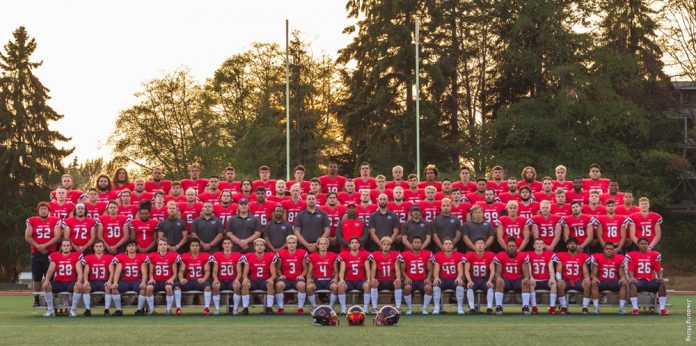
There has been a major culture change for SFU football, let's hope it leads to wins. (Photo courtesy of SFU Athletics)

October 18, 2014. That was around the time my girlfriend (now ex) told me how much weight I gained after first year, and was also the last time the Simon Fraser University Clan football team won a game. It’s been a long time coming for the team, but they will look to turn the doubters into believers this upcoming season.

After winless seasons from 2015–17, the Clan decided to go with a new head coach, Thomas Ford. Coach Ford takes over a team that was in dire need of a fresh voice and mind at the top. Turning around teams is not something new for Coach Ford, as he had experience in transforming Stadium High School from a program that had not won a game since 1993 to a perennial playoff program.

Coach Ford’s leadership and his connection with the players will be key in rejuvenating the Clan, and with the United States Marine Corps and Glazer Clinics Semper Fi Coach Award under his belt (an award that recognizes a high school football coach who lives out the Marine Corps motto of Semper Fidelis, and who models the Marine Corps leadership values of Honour, Courage and Commitment), it should not be a problem for him.

One of the team captains and senior quarterback, Miles Richardson, is already feeling the change of culture that Coach Ford brings to the program.

“Man, it’s night and day. We have improved in every aspect of our team. We had a very positive off-season commitment with the guys that were on the team last year and we were able to bring in a fantastic recruiting class that has an incredibly high ceiling for the future that can and is competing at a high level with the guys,” said Richardson. “The team’s mentality has really bought into everything that Coach Ford has paved for us. We are a totally new team and it feels that way in the locker room and on the field. I think guys are really happy to play for this team and I know that we will be successful this year.”

Culture change, however, is not the only thing that Coach Ford has implemented into the team. Although he’s a former defensive coordinator, Coach Ford is no slouch on the offensive end. He believes that with the current makeup of the team, he can make use of his key players to make some game-breaking plays. A new shift on the offense to implement run-pass option* plays will keep the opponent guessing, and provide plenty of opportunities for their playmakers to make winning plays.

“Our offensive playbook compliments our strengths and we are having a lot of fun”, commented Richardson on the new offence. “That will show on Saturdays and make us a lot of fun to watch.” Richardson will definitely play a huge factor in the new offense as he looks to use both his arm and his feet to make plays down the field.

Another key player for the Clan this year is junior wide receiver Rysen John. With the departure of wide receiver Justin Buren to the CFL, Coach Ford looks for John to be one of his key playmakers on offense.

“His leadership and his development as a player, and as a team leader has been incredible to watch,” mentioned Coach Ford about John.

It almost goes without mentioning that John is a player to keep an eye on. With his 6’7” and 220 lbs. frame, you can’t help but watch him when he steps onto the field.

In 2015 the SFU Clan Football Team went 0-9, in 2016 they went 0-10, and in 2017 they went 0-10 with losses as bad as 62-0, 61-0, and 51-0. The goal for the team this year is simple: WIN.

Their path to victory begins Saturday, September 1 in the home opener against Willamette University (0-9 last season). The game is free for SFU Students and Staff, and will feature a Nesters $1 Welcome BBQ!

*run-pass option plays are when the Quarterback can either choose to run or pass the ball after the ball is snapped, rather than making the decision prior to the snap.