Home Blog Page 555

SFU hockey look to compete for BCIHL championship in 2018–19

0
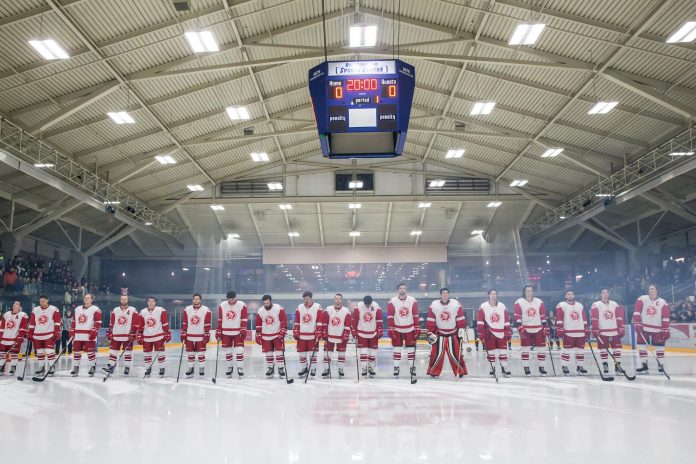
A strong group of veterans is accompanied by new speed and skill. (Photo courtesy of SFU Hockey)

The 2017–18 British Columbia Intercollegiate Hockey League (BCIHL) season ended as abruptly and early in the year as it ever has for the SFU men’s ice hockey team.

The team had dealt with a controversial season-ending ineligible player ruling that effectively removed SFU from its second-place position in the league standings and, by extension, suspended the team’s eligibility for the BCIHL playoffs. It was an unusual reason for the team to miss out on an opportunity at a BCIHL title. Understandably, a sense of frustration brewed palpably in the depths of the Bill Copeland sports centre.

However, as the calendar turned, lockers cleaned out, and some key veteran players graduated from the program, this frustration slowly began to transition into motivation for the 2018–19 season. As the Clan’s preseason wrapped up with a trip to Alaska last weekend, the transition was complete, and, with an injection of fresh and familiar faces fighting for roster spots and ice time, the team appears hungrier than ever before for a BCIHL title.

SFU completed preseason play with a 1–3 record, which is partially misleading, given that the team played three of their first four games against NCAA division 1 and CIS teams outside of their usual league. The Clan has already showcased a host of new roster additions, and will continue to do so as the season kicks off in Castlegar against the Selkirk College Saints on October 5. Having started the season with a 4–3 overtime win over the defending league champions, the Trinity Western University Spartans and following it up with a strong effort against a powerful UBC squad before heading to Alaska for even stiffer competition, the Clan has sharpened up in advance of its tilt with the Saints this Friday.

A key takeaway from the preseason thus far has been the improved depth and speed throughout the roster, as well as the intense competition underway for roster spots and regular playing time at all key positions.

Head coach Mark Coletta is confident this depth will pay off, saying that this year’s SFU hockey team should be “one of the fastest teams the BCIHL has ever seen.” Second-year forward Ian Mackey supports this assessment, stating that “we are a deeper team this year without a doubt, and with new guys stepping in, our speed and skill have gotten even better throughout the line-up.”

Speaking of a new line-up, the roster looks to shape up as follows:

Up front, returning forwards Jaret Babych, Eric Callegari, Mac Colasimone, Nicholas Holowko, Brendan Lamont, Mackey, Ryker Moreau, Spencer Unger and Nathan Washington are supplemented by new recruits Arjun Badh, Jordan Funk, Mathieu Jallabert, Mitch Ledyard, Cole Plotnikoff and Mitch Newsome while Graham Smerek, a point per game player in 2016–2017 before taking a year off, rejoining the squad.

On the back end, a solid core of returning veterans that includes Matthew Berry-Lamontagna, Darnel St. Pierre and Austin Adam is complemented by new recruits Arjan Cheema, Domenic Masellis, Matthew Holowko and Jamieson Ree.

In net, looking to replicate at least some of the strong statistics fourth-year veteran Lyndon Stanwood posted last season before moving on to professional hockey in Sweden are returning goaltenders Ryan Sandrin and Dylan Webb, joined by new recruits Michael Lenko from the SIJHL’s Red Lake Miners and Domenic Fritz.

With respect to staff, head coach Mark Coletta returns alongside assistant coach Jimmy Cammazola and new addition, Matt Grassi. New assistant coach Matt Grassi is a junior and university hockey veteran who was a BCHL All-Star with the Salmon Arm Silverbacks. Grassi won a silver medal with Canada in the World Junior A Championships, and went on to play four years in the NCAA with Michigan State prior to one season of professional hockey in the AHL and ECHL before retiring in 2014.

With a strong coaching staff complemented by director of hockey operations and BCIHL league president Chris Munshaw, the team benefits from a lot of continuity and experience in terms of both coaching and managerial personnel.

Expectations are high for an SFU squad that looks strong on paper, sharp, and ready to go at the conclusion of its training camp and exhibition schedule. Despite the BCIHL now playing in a five-team league as opposed to six, having lost Eastern Washington University as a member team that was one of the weaker links historically, the competitiveness of the league may, counterintuitively, have increased.

“There is always motivation every season to win a championship,” said Mackey, when The Peak asked how it felt competing after last season’s abrupt end. “The way things ended last year definitely adds a bit of extra fuel to the fire.”

Competitive and exciting hockey returns to the Bill Copeland Sports Centre with the Clan’s home opener on October 13, the week following the aforementioned regular season kick off in Castlegar on October 5 and 6. With two games against Selkirk and one against the defending league champion TWU Spartans, there is no time for easing into the season, as BCIHL heavyweights will square off for season opening points that will undoubtedly make a difference in playoff races in February and March.  Come check out some inter-university hockey as the Clan begin their pursuit of the 2018–2019 BCIHL championship.


Editor’s note: Dylan Webb is a member of the SFU Hockey Club.

A Student’s Letter to Generation X

0
Illustrated by Cora Fu

Although I’m inundated with caffeine and stress,

As a student, there’s some things I’ve got on my chest.

You’d probably hate it if I sent this through a text,

So here’s my letter to Generation X.


We’ve fought and we’ve bickered, it’s been the same game —

“Who has it harder? Who is more lame?”

If you ask for my two cents, and some further loose change,

Gen X and millennials? I say we’re the same.


We’ve both faced vices at low-paying vocations.

We’ve both been young with financial limitations

Before you question the validity of our vexations,

Do you know what we’re facing in our education?


You see: our life as a student is like running on glass shards,

Even with sharp minds, we all end up scarred.

With stricter GPA’s to stay up to par,

when it comes to school, we have it the most hard.


Like getting hit in the shin with a grey-tint, razor scooter,

There’s pain in a student paying rent in Vancouver.

Like the price of Bey and Jay renting out the Louvre,

SFU’s room and board? An expensive manoeuvre!


You say we complain, but here’s an inquisition:

When you were our age, how much was tuition?

I’m trying to explain, I sure hope you’ll listen —

With thousands of more dollars, our tuition is different.


I’m not trying to quarrel, but here’s a question to instill:

Do you know the price to have our gas tanks filled?

To park one day at school costs two Netflix bills!  

$25? Can SFU chill?!                         


You’re probably thinking: it’s still not as bad as it seems.

OK, let’s look beyond the student-cost means.

To get a good job, you needed one degree —

We need two or three, and a cure to a disease.

 Y’all had it rough too, we do understand,

Life as a student doesn’t always go to plan.

Our only difference is time — but no matter the scheme, nor how grand,

Your failures didn’t end up on Instagram.

I know that you think all we do is complain,

That we Snapchat dinners with cheap-bought champagne.

This may call for eye-rolls, but hear when I say —

Gen. X and Millennials: we both wanted the same.

Political Opinion: The progress of the Korea summits is at risk of being stunted by the United States

0
Photo from Reuters

The third summit between North Korean leader Kim Jong-un and South Korean leader Moon Jae-in occurred in Pyongyang last week. The summit focused on North Korea’s part of the denuclearization pact. At the end of the summit, North Korea announced that it would be closing a missile test site in Tongchang-in, and their primary nuclear complex Yongbyon. Satellite imagery also confirms that the initial dismantling process has indeed begun.

Kim and Moon also spent part of the summit discussing an end to the Korean War. While an official end to the Korean War would need both China and the United States signing on, Kim and Moon would sign a peace treaty themselves or simply declare the Korean War over.

They also announced that there would be a fourth summit between the two Koreas. However, this next summit is going to occur in South Korea, marking it as the first time a leader from North Korea will travel to South Korea, further showing their desire to pursue creating diplomatic relations with the rest of the world.

While this summit appears to show progress between the Koreas, there is still a major factor to these summits — the United States. North Korea’s haste and willingness to participate in these summits may be partially linked to its desire to reopen negotiations with the United States. A reliable alliance between the Koreas provides strength in case this meeting results in greater tension or conflict with America.

This is a significant risk, as the foreign policy of the United States has been unpredictable lately, and it could potentially undo all of the progress made between the two Koreas. Moon’s September meeting with President Trump will be Moon’s chance to secure the status of North Korea’s current deal. If that meeting goes poorly, hopefully it doesn’t prevent future progress, or harm the monumental progress that’s already been made.

More lies to tell your kids

0
Illustrated by Marissa Ouyang

Let’s be honest: we were all told some interesting lies by our parents to make our childhood more “magical” or keep us out of trouble. Now that we are “all grown up” (or at least enough to ride the bus by ourselves) it’s time to start thinking about how we can screw up our own children in our own very specific way . . .

Lie #1: Convince your children that every holiday is actually a week later

Boxing Day sales are way better than that mad Christmas shopping rush; but it always occurs after you need it most. Similarly, prices of Valentine’s Day chocolate and Easter eggs drop substantially after the day of the event. Imagine how much of that hard-earned cash you could save if you could actually take advantage of these deals.

Lie #2: Show your children Pinocchio and convince them that their nose gets a little bit bigger every time they lie.

Ah, there’s nothing quite like the fear of a disproportionate facial structure, and of course the looming threat of an eventual transition into a donkey, to keep your children honest. From slowly filling your house with fun-house mirrors to using the photo booth app on your laptop as evidence, fooling your child into being truthful has never been so easy! You’ll know for sure that it works when every time your child does lie, they will feel the immediate urge to cover their nose.

Lie #3: Tell your children: “That toy doesn’t use batteries.”

All toys are electronic these days, and listening to that toy teapot sing nursery rhymes and hearing Peppa Pig and Paw Patrol on a loop is enough to drive anyone crazy. Imagine if children didn’t realize that their iPad could be charged or RC cars could be driven remotely. An iPad might be used as a miniature desk for writing and the RC car might be treated like a Hot Wheels car. Convincing your child that their toys don’t “do” anything might be the greatest push they need to be imaginative and creative for once. I mean, as children, we were perfectly content playing and eating grass for hours: who needs Angry Birds or Candy Crush right? We turned out just fine.

Lie #4: Tell your children: “Eating watermelon seeds will grow a watermelon in your stomach”

My parents convinced me of this particular lie for years. Not only was I living in constant fear of growing fruit in my stomach, insisting on poking out every seed I found in my fruit salad, but also I never choked and died, so that’s a plus.

Lie #5: Convince your children that the monster under their bed will eat their toys if they do not keep their room clean.

The fear of a monster under the bed is already there, so why not take advantage? You can take this a step farther by making scary noises while your child sleeps. If your child is still not convinced, slowly begin throwing away some of their toys when they are not looking, shred a few of their socks, or disfigure some stuffed animals.


Normalizing negative news isn’t inherently bad

0
Photo by Maxwell Gawlick / The Peak

Bad news gets people talking because it has the shock factor, it’s tragic, and it’s probably something you can never imagine actually happening to yourself. Did you hear about the SFSS sexual harassment allegations? Did you follow the mother orca who carried her dead calf for days? I don’t recall “Running smoothly as planned” ever being considered newsworthy.

While it is important to stay informed, the decision to include and not include news stories in your personal feed is a political one. It’s also an easy decision to make when our media is  so encompassed by hate, money, and power.

The problem is, regular exposure to so much violence and negative news normalizes it, meaning each time we hear about a hateful crime or a disaster, it becomes less startling. The technology we use to consume this news diminishes it further, as consuming it through a screen puts a barrier between us and the events we read about.

This article itself may seem like negative news, so here is something positive about negative news: there are people and organizations like the Good News Network, Sunny Skyz News and Solutions Journalism Network. looking to bring more positive solution-based journalistic practices to news outlets. News doesn’t have to be an inherently negative subject in our media diet — it just depends on how it’s written and detailed.

But this is far from just the media’s fault. We as readers need to both think more critically of the sources and topics we read on, and follow up with calls-to-action. A call-to-action is an opportunity for a reader/viewer to engage and participate, through things like protests and petitions and sharing among certain group. This is something only made possible by technology and social media, and can counteract the distance that it causes between the screen and reality.

News and the things we consume in our media diet are more than headlines and distress. A regular stream of negative news topics is not inherently bad to have. Its effect on us and the world are determined entirely by how we read it, where it comes from, and what we do about it.

SFU researchers study ways to improve air quality for pilots and pregnant women

0
(Photo courtesy of Nikita Aviation)


Airline mask use still effective with beards

SFU researchers have debunked the myth that beards are threatening in low-oxygen situations, allowing pilots to grow facial hair.

The research was done for Air Canada by Sherri Ferguson, director of the environmental medicine and physiology unit at SFU, and her team. The researchers studied how beard length affects facemask effectiveness, as the company deliberated on whether or not to repeal their policy requiring pilots to be clean-shaven.

The team first examined whether Air Canada’s current masks give bearded pilots enough oxygen during depressurization to prevent hypoxia (oxygen deficiency in the bodily tissues).

The team also looked to see if bearded mask-wearers would be protected against carbon monoxide inhalation in the event of smoke or fire.

Participants were split up based on beard length and placed in SFU’s hypobaric chamber to simulate different altitudes.

Ferguson found that beard length did not affect the participants’s oxygen levels. Participants also did not exhibit signs of smoke inhalation when Ferguson’s team simulated the smoky conditions of a fire using stannic chloride, because the masks created a tight seal irrespective of facial hair length.

The study’s results prompted Air Canada to change its policy on facial hair, letting pilots keep short beards; the maximum length is 12.5 mm.


Air purifiers can help improve fetal growth in polluted settings

In a unique study, SFU health sciences researchers Prabjit Barn and Ryan Allen found that air purifiers inside pregnant women’s homes can help fetal growth, especially if the women lived in polluted environments.

This study was done in Mongolia’s capital Ulaanbaatar. Ulaanbaatar, with fine particulate matter levels high above recommended levels by the World Health Organization, is one of the world’s most polluted regions.

Barn and Allen had about 540 pregnant women take part in a randomized controlled trial study. They provided high-efficiency particulate arresting (HEPA) air purifiers in the houses of half the participants, which lowered indoors fine particulate matter levels by almost 30%.

The women whose homes had the HEPA purifiers during their pregnancy tended to give birth to heavier babies than those whose homes did not.

Barn and Allen believe that this is evidence that air pollution adversely affects fetal development, and that controlling it could be favorable for fetal growth.

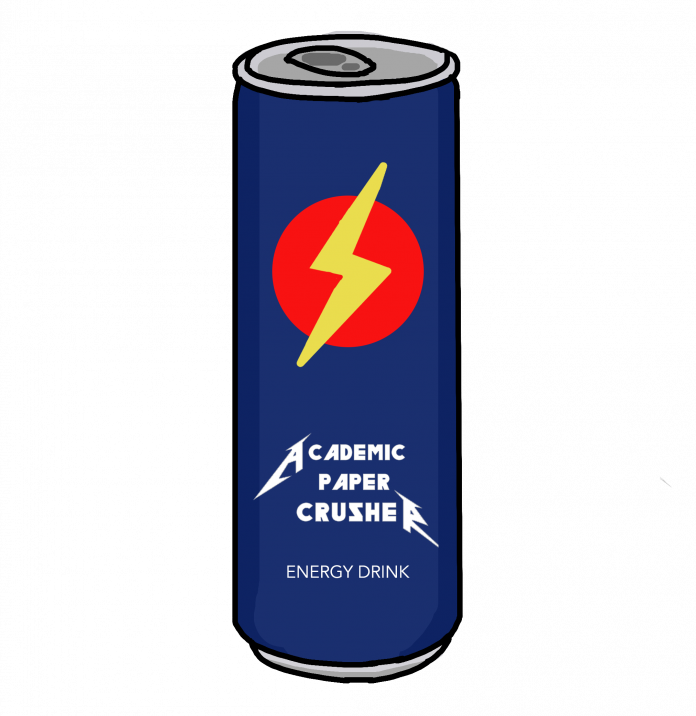
The new Academic Paper Cruncher is out now! Get one while you can!

0
Illustrated by Cora Fu

Looking for that perfect drink to keep you sleep-deprived during the Fall Semester? Want a boost to get your brain going after a chaotic week of final papers and exams? Looking for a reason to stay at school longer than necessary? If your answer is yes, maybe, or an uncaring shrug to all three questions, then SFU’s new energy drink is the right choice for you!

Known as the Academic Paper Cruncher, this new energy drink was founded by Too Tired Inc. (TT) and with its bizarre ingredients, it has made people question their ridiculous consumer habits. The drink blends energy and past experiences from previous midterms, essays, and other tedious projects for the ultimate academic rush. The Cruncher is served in a cup made of coffee-stained syllabi and misaligned MLA formatting sheets. For two extra dollars, the drink can even be paired with a side of used USB Drives and broken iClickers that beautifully compliment the Cruncher’s amazing academic benefits:

  • Perfect midterm marks that make your peers question what it means to study.
  • Easier time coping with the ego-crushing realities of multiple papers due the same week.
  • Better memory to deal with lousy cramming for a test worth 99% of your final grade.
  • Perfect essay-writing that makes each of your drafts look like the next Mona Lisa.

With its popularity growing, the Cruncher even gives Starbucks and Tim Hortons a run for their money. The success of this new product is due to the high-quality ingredients listed below:

  • 7 ml of copious optimism for the nihilistic abyss called the future.
  • 13 weeks of lecture notes from a lonely, sleep-deprived lifestyle.
  • Your shredded term papers filled with unreadable feedback.
  • 22 grams of classes with overbearing grading curves.
  • 1 teaspoon of unacceptable office hours.
  • 2 tablespoons of stress-inducing midterm study sessions.

For an extra kick, add these exciting toppings:

  • 10 pounds of excessive participation on the first week of semester.
  • 8 mg of pencil shavings, white-out tape, and eraser bits rolled up into a final grade email.
  • 15 scholarships whose arduous requirements call into question the point of their existence.

So if you want to try something new this year, then go out there and buy the Academic Paper Cruncher at a cliff near you. Get your energy into overdrive while supplies last, or you might just fail your class.

Mac Miller in memoriam

0


Since September 7, one line from “Jet Fuel” — a track on Swimming, Mac Miller’s final album — always makes the breath catch in my throat: “Well Imma be here for a while, longer than I did expect to.”

      For an artist who often saw his own death as an impending inevitability, this was a remarkably hopeful sentiment. Mac Miller had, over his career, ascended from radio-friendly frat-rap beginnings into the upper echelons of hip-hop. After releasing a string of beloved, acclaimed albums over the past five years, his position in the future of hip-hop seemed firmly entrenched. But on September 7, Mac Miller passed away from an overdose.

     Death, and overdosing in particular, was a recurring motif in Mac’s music, yet it was always balanced with a kind of boastful optimism. 2013’s Watching Movies with the Sound Off was the first real introduction to a more experimental, artistic, and deeply tormented Mac Miller. It opens hopefully, with a sentiment similar to that on “Jet Fuel” (“Hallelujah, thank God I have a future”) but, like many of his albums, concludes with an aural representation of dying. His 2014 mixtape Faces is so fraught with demons, addictions, and suicidal tendencies that fans genuinely wondered if Mac would survive the year. In 2015, Mac released GO:OD AM, which, in an ironic twist, stands for “Go O.D. in the AM”. On “Perfect Circle / God Speed,” Mac terrifyingly, prophetically, described the events of his eventual overdose three years before it occurred.

     Over the past couple of years, Mac was getting better — 2016’s The Divine Feminine found him at perhaps his happiest, crafting a beautiful album on the concepts of love and divinity. Swimming, released roughly two months ago, was his most concise project to date. It’s a small masterpiece from an artist who was only getting better, centred on the concept of survival: you have to keep swimming if you don’t want to drown. Swimming was never supposed to be Mac’s goodbye letter, but in terms of distilling his message into its purest form, it’ll certainly do.

     Mac was one of the most important artists hip-hop has seen, and not just for his remarkable music or the role he played in helping dozens of artists reach fame. Mac Miller symbolized the fact that, no matter how terrifying the voice in your head got, not matter how hopeless life seemed, you were never alone. He put so many of my greatest fears and darkest thoughts into words, but he also gave voice to hope and perseverance that have been so necessary over the past five years. At 26, he is gone far too soon. Like many others, I grew up alongside Mac Miller, and to lose such an important artist so young hurts deep in the soul.

     Thank you, Mac Miller, for everything.

Stupid questions don’t exist, but please don’t let them take other people’s time

0
Photo from Getty Images

Pretend you are in your last lecture of the day. Your professor has said that once they

finish the lecture slides, they’ll let you out early. Good! You have an hour-long commute home and another four hours of homework afterwards due at midnight.

So what happens? Some jerk starts asking question after question, each of them being either redundant or plain asinine. All they seem to be doing is eating up time to make the lecture last as long as possible. But are their questions really all that foolish and uncalled for?

Well, yes and no. To that individual, those questions could be a matter of academic life and death. They might need that odd comparative story they are telling to be able to place the material into a context they better understand, or they might really need that confirmation about what you just learned. Maybe they can’t hear the professor and they simply need them to repeat themselves.

Regardless, they need it. They wouldn’t brave the animosity of their fellow students — who they know they’re inconveniencing — without good reason. They need their questions answered. Chances are, someone else has the same queries and is just too nervous to speak up. You’re all paying for this content, so you may as well get your money’s worth.

But there comes a flip side to this — to everyone who does understand what’s going on, this individual is causing a disservice. You have places to be, things to do, and you completely understand what the professor was saying.

At some level, you have to tolerate questions others pose that you don’t have. That’s OK, and more often than not, the material will be more ingrained in your memory because of it. However, there is also a burden of time that needs to come when asking basic or unnecessary questions.

As a student, you are expected to pay attention in lecture and have a general idea of what’s going on. If you’re meeting that expectation, good! If you aren’t, then understand that you’re interrupting and extending the class by asking these questions. If you do need to interrupt a lecture with questions, please just be brief and respect your peers’ time.

Best selfie spots at SFU Burnaby and SFU Surrey

0
Trottier Observatory, image courtesy of Jennifer Low

Despite a reputation of being a prison fortress, SFU is undeniably beautiful. With lush courtyards, stunning works of public art, picturesque views of the city skyline, and magnificent forest scenery, SFU is an Instagrammer’s paradise.


SFU Burnaby Campus

AQ Garden: A selfie in the Academic Quadrangle garden located at the very heart of SFU’s
Burnaby campus is the classic, MUST-HAVE photo for your Facebook profile picture that shows off your school pride. Some great spots in this area include:

AQ Courtyard, image courtesy of Jennifer Low
    • The Reflecting Pond: Located at the center of the AQ’s interior courtyard, the Reflecting Pond serves as one of SFU’s most defining features. Beautiful at all times of the year, it is often home to koi fish during the spring, summer, and fall. It is also known to freeze over completely during the winter months, often looking as if it could be the school’s unofficial skating rink.


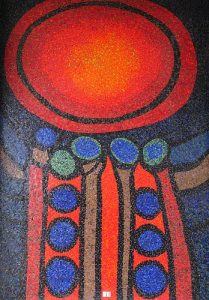
  • The Mosaic Mural: Composed of two tile mosaics by Vancouver Painter Gordon Smith, the mural is located
    Mosaic Wall, image courtesy of Mosaic Art Source

    within the Academic Quadrangle and is a great place to showcase your appreciation of SFU’s beautiful collection of public art. This spot is very popular during Convocation, known for providing a background for cap and gown photos. The mural is located undercover making it possible to take perfect selfies rain or shine.

  • The Avocado The Egg Oval Reflections: The infamous sculpture by Carlos Basanta, located within the Academic Quadrangle garden, is a must-have photo backdrop. Its reputation precedes it, and no SFU student can seem to resist walking by without taking a photo with the concrete egg. With its polished inner surface inscribed with SFU’s core values, one might even call it the greatest mirror selfie on campus.


West Mall Centre: The rooftop of West Mall is one of my favorite spaces on the Burnaby campus. With scenic views of the city skyline and the surrounding forest, it is a perfect place to capture a picture from the very top of Burnaby Mountain.

Convocation Mall: Located on the west of the Academic Quadrangle and walled by the

Convocation Mall, image courtesy of Jennifer Low

Maggie Benson Center, Traffic Center and W.A.C. Bennett Library, this glass-roofed open area is where it’s at. While your Wi-Fi signal might not be strong, your selfie game will be. Between the numerous events and various holiday decorations, the Convocation Mall is a dynamic backdrop guaranteed to make any selfie an amazing one.

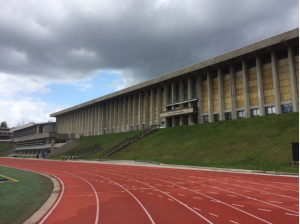
Terry Fox Field: Home to the Simon Fraser Clan and located next to the Lorne Davies Complex, Terry Fox Field is a great spot to get that coveted athletics selfie. Whether it’s a

Terry Fox Field, image courtesy of Jennifer Low

post-work-out photo or one taken at an SFU sporting event, Terry Fox field never fails to deliver on providing a great background.

The Rotunda bus loop: Just a hop, skip, and a jump up the stairs from the transportation centre, there is a fantastic little spot just beneath the Rotunda study area. Nestled between the stairs leading to the Convocation Mall and the stairs to West Mall, the Rotunda bus loop features a great plant centerpiece that will make any photo amazing. Sometimes the fire pits are located in this spot, making the ambience even more Instagram-worthy. It can get a little bit dark in this space, as cloudy days and limited natural light make these shots tricky, but the extra effort of turning on your camera flash is completely worth the results.

Trottier Observatory and Science Courtyard: The Trottier Observatory and Science Courtyard, located between the AQ and the bus loop, is a great place for catching amazing

Trottier Observatory, image courtesy of Jennifer Low

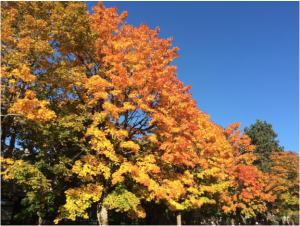
pictures both during the day and at night. During daytime, the walk through the courtyard is stunning especially during autumn when the space is filled with the season’s vibrant colours. Of course, construction these days makes it a little tricky, but this just gives you another opportunity to let your creative side out through strategic angles and cleverly selected filters. At night, the observatory is host to “Starry Nights,” a popular public outreach program that is free and open to the public. The observatory is lit up beautifully, creating a great opportunity to make all your friends jealous of your Instagram feed.

SFU courtyards: We’ve already discussed the beauty of the Academic Quadrangle garden,

One of SFU’s courtyard, image courtesy of Jennifer Low

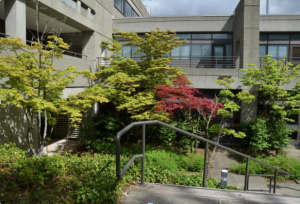
but if you haven’t done it yet, be sure to check out the various little courtyards scattered all over campus. From the one featuring a secluded pond near Robert C. Brown Hall to the fountains near Saywell Hall, SFU is simply filled with photo opportunities in these little pockets of nature. These spots are prime locations year-round. For example, the courtyard located just off the South Concourse of the AQ has the most amazing tree blossoms in the spring and summer months while also proving to be a great quiet spot for photos with the snow that SFU is so well-known for during winter.


SFU Surrey Campus

Galleria: My favorite selfie spot at SFU’s Surrey Campus has to be the view of the Galleria. Between the natural light streaming in through the floor-to-ceiling windows and the modern, vibrant architecture, there is no better place to take a back-to-school selfie. This space can be amazing from just about every angle, whether you want to capture the Central City Shopping Center below, aim the lens upward towards the boat-shaped roof, or just capture the intricate bridges and circular collection of study rooms and lecture halls, the Galleria has it all.

Mezzanine: It’s your first point of contact at the Surrey Campus and it definitely makes a great impression. This large space is basically the indoor equivalent of Burnaby’s Convocation Mall, as the Mezzanine hosts a large number of Surrey Campus events. With an abundance of natural lighting and wooden accents, the Mezzanine should definitely be your next photoshoot location.