Home Blog Page 547

Ryan Sandrin talks hockey and Halloween

1
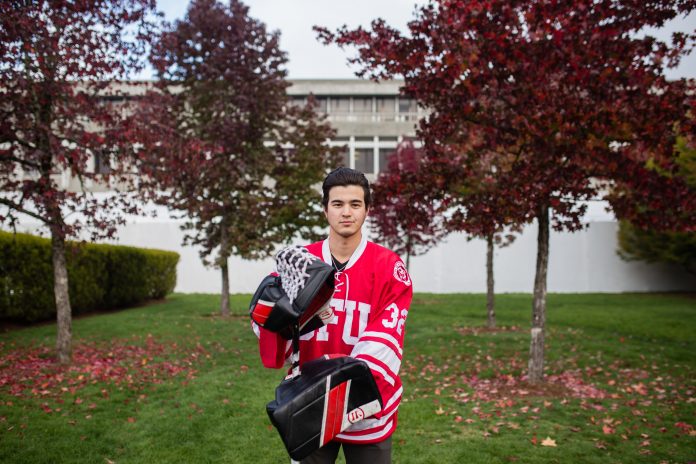
Sandrin played Junior hockey in New Mexico and Ontario before coming to SFU. (Azat Bay / The Peak)

Year: Senior

Major: Criminology

Birthplace: Setagaya, Japan

Hometown: Port Coquitlam, BC

Favourite Halloween candy: Rockets

Ryan Sandrin and the SFU Clan hockey club started their BCIHL season with a key road victory over the Selkirk Saints. Now, they look ahead to numerous important early-season matchups in the next few weeks against major rivals.

Sandrin is currently slated to start this weekend’s matchup against the UVIC Vikes in Victoria, and he sat down with The Peak in advance of the team’s trip to the island to talk a little bit about his time with SFU Hockey, his academic experience at SFU, and his favourite Halloween treats.

The Peak: Why SFU?

Ryan: I originally decided on SFU due not only in part to its close proximity from home, but also because it has one of the nation’s best criminology programs. When I aged out of junior hockey, I was talking to some American colleges about playing hockey and studying law, but it didn’t really make sense, knowing I wanted to pursue a career in the Canadian criminal justice system.

In my first year at SFU, I didn’t play for the hockey team, and not playing really took a toll on my morale. I was fortunate enough to walk onto the team in my second year after having focused solely on studies for a year, and [I] am now entering my third year with the program and the final year of my BA in Criminology.  

P: Where did you play junior hockey before SFU?

Ryan: In junior, I played one year in Rio Rancho, New Mexico for the New Mexico Renegades, and one year in a small town called Gravenhurst, Ontario with the South Muskoka Shield of the GMHL.

P: How did you like living in New Mexico and South Muskoka? What was different about the two junior experiences?

Ryan: Both experiences were awesome and most important in my development as both a person and hockey player. New Mexico was not a big hockey market, even though they have had minor pro teams in the past. [laughs] It’s kind of funny how I ended up there. Even though the league [WSHL] stretched from Washington to Oklahoma, we were a pretty low profile team with relatively less community support compared to other teams in the league.

When I played in Gravenhurst, [South Muskoka] we had a huge amount of community support, which really made the experience that much more fulfilling. In South Muskoka, because it is a cottage town that dies down in the winter, the hockey team is often the main focus of the community during the fall and winter months, so it was an awesome experience playing in a town that was so crazy for hockey and so supportive of their community team.

P: How do you think playing as a club differs from being recognized by SFU Athletics?

Ryan: I think the biggest thing is just in terms of promotion of the team. Social media and school-wide promotion supported by SFU as an institution is something [that] most programs benefit from [and] that we don’t necessarily have. There is also the economic dimension in terms of funding that we don’t get, and it’s really a shame: I think in terms of quality of athletes and talent pool — and those that know the sport and our program would agree — we are right up there with the best varsity programs.

The SFU hockey marketing team does an awesome job promoting our team independently of the school. Even without school support, we average around 300–400 fans a game, so props to them. I think the strength of the program relative to others in the school would increase even more significantly were we to benefit from this type of institutional support.

P: How did you get into hockey?

Ryan: I was born in Japan, and there the market is pretty small, but I got into it pretty early watching the 98 Nagano Olympics alongside my mom, who was born and raised in Canada. This sparked my initial interest in hockey, but when we relocated back to Canada, I started playing right away at age seven and had already developed a passion for the game.  

P: Towards the team a little bit; who’s the funniest guy in the locker room?

Ryan: Nic Holowko is hilarious. I remember an instance where Holo convinced a new member of the team that he was studying Marine Choreography, like how to get aquarium life to dance in sync. It is tough to describe his humour, but he is just unbelievably subtle and quick-witted. He doesn’t need a lot of words to get the guys going.

P: What is the biggest strength of the SFU hockey team this season from your perspective?

Ryan: We are a super talented team. Our forward core especially consists of impact players up and down the line up. We have a huge amount of good talent — perhaps some of the best talent we have ever had in the program. From there on, it is just about becoming a cohesive unit and allowing players to find their niche where they can have the most effective contribution.

P: Where do you put the expectations this year on the team?

Ryan: Though we’ve admittedly gotten off to a little bit of a slow start, we definitely have the right pieces to maintain high expectations. Part of the slow start is due to a lot of turnover with many seniors leaving last season. It is just adapting to that and to the need for chemistry development between the new players.

In terms of expectations, we have a ton of skill and speed, which is exciting, and there is no doubt that, as a unit, we are gunning for a championship, nothing less. Especially in the context of the tough end to last year with the ineligible player ruling, our eyes are set on the BCIHL league title. 

P: On that note, what does the team need to do to ensure they have a shot at the BCIHL title this year?

Ryan: As mentioned, we have so much skill and speed. So with that, it’s just a matter of figuring out uniformity, systems and cohesiveness. We will definitely need to solidify our systems and execute when we get our opportunities. In trying to create these opportunities, we need to ensure we are not giving up opportunities in our own end though. Once we establish that, we have everything in place personnel-wise to make a good run for it.

P: Do you think the team, as a whole, has learned from the tough ineligible player ruling last year and adapted well enough to ensure an issue like this doesn’t occur in the future?

Ryan: Yes, I think we have. Mind you, what I say needs to be taken with a grain of salt because I don’t know the true ins and outs of what occurred. It seems like there are more checks and balances that has been implemented at the player level to avoid this situation in the future. Despite the fact that the ruling did stem from a concrete violation of player eligibility, the team as a whole is more prepared to guard against any grey areas in the league eligibility rules now that we have experienced this.

That being said, what happened hurt last year, and has created a team-wide sentiment that this situation be avoided at all costs going forward, so [that] our pursuit of a BCHIL title is not hindered by anything off the ice.

P: Who do you guys see as your rival in the BCIHL?

Ryan: Traditionally, our main rival has been Selkirk. This is mainly due to past play-off matchups and their dominance in the league over the last 5–10 years. However, the tides have kind of turned lately with TWU being a cross-town rival that also has generated a lot of animosity with many close games between the two teams, varying incidents, and the fact that TWU won the BCIHL league title last season. We definitely highlight games against TWU on our calendar, and we are always looking to make a statement against them.

P: What has been the highlight of your time on the SFU hockey team?

Ryan: As an overarching highlight, the opportunity to continue playing hockey at a competitive level while also having the privilege of getting an education from such a widely recognized institution stands out. In addition, the camaraderie, friendships and all the experiences is something we will take post hockey into our respective post hockey careers and lives.

P: A bit more on school: what has been your favourite class so far here at SFU and why?

Ryan: Good question. I have enjoyed so many of my academic experiences. I thoroughly enjoyed a special topics Crim course (CRIM 319 – special topics – family violence). It has always interested me to look at the intimate nature of family violence and partner violence and the complex factors that contribute to this phenomenon. This is something I’ve considered studying further through a masters degree at SFU.

I’ve also thoroughly enjoyed my courses with Sarah Yercich, who I have had the pleasure of taking five courses with during my time at SFU. Her insight, understanding and academic knowledge is second to none. She has really been a supportive building block in my choice to potentially pursue a master’s degree at SFU.

P: What are you going to dress up as for Halloween?

Ryan: My girlfriend and I are dressing up as a cowboy and cowgirl . . . Yeehaw.

P: Do you like Halloween? What is your favourite holiday?

Yeah, I like Halloween for sure, but my preference in terms of holidays is probably Christmas because we get a chance to take a break from school and hockey and catch up with family as we all take a breather from our busy schedules.

Athlete’s corner: I think it goes without saying that there is a tremendous credit that goes out to everyone involved in the organization for all of their work on and off the ice that goes into making such a great program. 

Ultimately, we have the goal being to become an NCAA program, though there are a lot of variables and logistics to making that work, part of it being location – Div II hockey doesn’t exist here. A lot of the NCAA Div II schools that have hockey programs will play in Div III loops, but that is predominantly out on the East Coast. Our recognition as an NCAA school kind of nullifies us from Usports play, though we do play UBC in exhibition.

We’ve come a long way due to the commitments of Chris Munshaw and Mark Coletta to get the program where it is, and I think we have built a foundation that sets us up to make a good run, not only for the league title this year, but for an NCAA Division I classification in the near future.

The Curve God listens

0
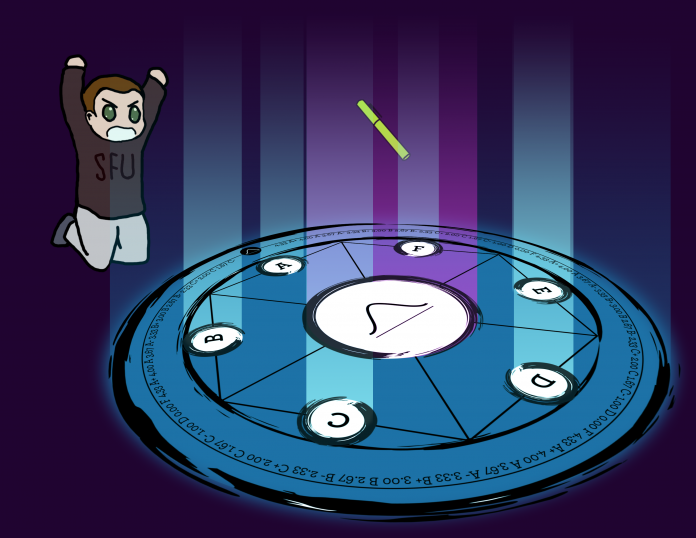
Illustrated by Alice Zhang

Everyone knows how the manifesto of the Curve God starts:

THE CURVE GOD LOVES YOU!
BUT ARE YOU PREPARED TO LOVE HIM BACK?
SACRIFICE TO THE CURVE GOD AND THE CURVE GOD WILL SACRIFICE FOR YOU.

RIDE ON THE WINGS OF ACADEMIC MEDIOCRITY;
SLIGHTLY BETTER THAN AVERAGE WILL SECURE YOU A SPOT IN MIDDLE-MANAGEMENT HEAVEN.

October has commenced, and without fail, its insidious propaganda of aestheticized coffee mugs and overly saturated deciduous foliage have suffocated our collective conscious like an infinity scarf cinched too tight.

The real enemy remained concealed in our syllabuses, biding its time before deploying into calendars all across the Lower Mainland, shattering the regularly scheduled programming of our lives in a blitzkrieg of campus-wide suffering – midterms.

Before you scramble for your half-assed lecture notes and panic incinerates your medial temporal lobe, turn your last viable brain cell to the singular source of hope you have left.
If you’re committed to preventing your GPA from crumbling into the seas of academic probation, send up a prayer to the Curve God, and pray he replies.

SFU’s own deity of rock-bottom exam success is an indifferent observer of student strife. Calling on the Curve God to carry you above class average requires more effort than every ounce of participation you’ve ever scrapped together for tutorial.

To save your own grade, you must relinquish something that proves your desperation – if your sacrifice is disingenuous, you’ll face an educational reckoning akin to no other.
Thematically appropriate punishments include but are not limited to: Wi-Fi never again connecting to your laptop, your phone playing your favourite song from grade eight out loud in lecture every week, never receiving an enrolment date for next semester, etc.

Unfortunately, the Curve God is notoriously finicky about what constitutes a good sacrifice. However, there are some fail-safe classics that are sure to save a demoralized studier.

  • Steal the titanium-tipped gel pen of the best student in your class.
    If the Curve God accepts, you will have traded your grade for theirs, dooming them to whatever fate may have befallen you.
  • Convince your TA they’re possessed by a ghost of a grad student and they personally have never had an original thought about their dissertation. Not sure why the Curve God loves watching this, but it works.

Dig around in the pocket of your soul for some loose morality to toss into the koi pond. The ink may never wash from your hands, bags under your eyes may drag you towards the grave, and the shame of sending your TA spiraling into an existential crisis will haunt you, but we all know how the manifesto ends: ATTAIN NOW AND ATONE LATER
THE CURVE GOD LOVES YOU.

What grinds our gears: Solo students taking up whole booths all by themselves

0
Photo by Gene Cole / The Peak

I’ve been known to carry a lot on my back to campus each day. Between my laptop, large notepad, ton of pencils, chargers, and some form of entertainment, like a book or a Nintendo console, I can easily take up more space than I need.

But you know what isn’t the solution? Grabbing a table meant for a large group and pouring your entire bag and lunch across it.

It’s one thing to do this early in the morning, when nobody’s there and we’ve all got plenty of places to independently suffer before an 8:30 a.m. class. But to take all your things and use them to block a big group from being comfortable together at lunch is nothing short of mean.

Maybe you could be redeemed if you let other lonely students in, but with your Jackson Pollock of papers and tech, you discourage even the bravest students from going, “Hey, mind if I take this corner?”

You’ve got a bag. Put some of your stuff back in it and sit someplace else.

What If: Computers were installed into every lecture hall seat

0
Photo by Azat Bayandin / The Peak

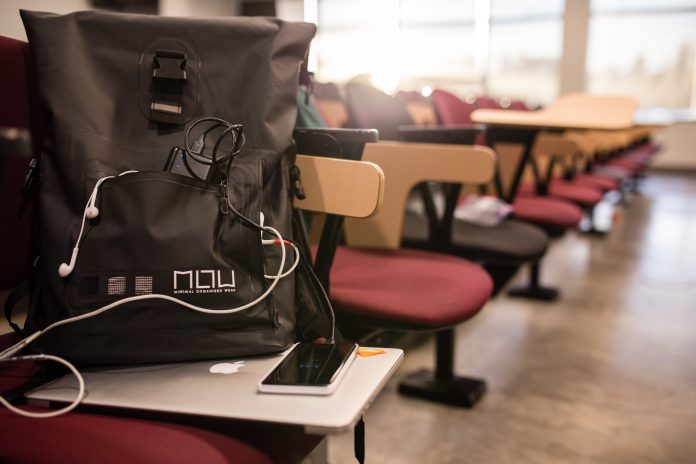
Most modern students live off the technology we live with, but if we got computers in every lecture hall, I know a ton of instructors would be rightfully annoyed. I’ve taken courses with professors who ban computers, phones, and tablets, and many keep citing studies which claim that laptops don’t help students in lectures. The fact is, though, that computers are prominent enough in our student lives that for them to be someday waiting for us in every lecture seat is far from unimaginable.

Cynical instructors might find tactics to cut computer use in lecture, such as handwriting projects and drawing lots of diagrams. They may be stuck doing more open-book tests, though, just to compensate for their inability to take these computers away.

Courses which require computers would benefit, and tutorials where TAs teach about software might disappear, as their content could be added into lectures. TAs would see their office hours and teaching time cut too, since everything’s going to happen a tad faster. If lectures also speed up and take less time, then lecture halls might be unoccupied for longer stretches, so they could even double as computer labs when they’re available — who knows?

The big downside, though, would be a possible tuition increase to help fund everything, from the IT department’s labour to the infrastructural changes needed to route electricity to so many new computers.

It’d be convenient and interesting to have certain computers in every lecture, but it wouldn’t be easy and it might not be worth it. After all, we already have enough construction and renovations around campus.

SFU psychology researchers look at dating violence across sexes and light-based treatments for mental health disorders

0
(Photo courtesy of Dwain Hebda/Savvy)


Teen boys found to experience greater relationship abuse than teen girls

Among students aged 12 to 19, violence in relationships is experienced more by boys than girls, according to a psychology study led by SFU doctorate student Catherine Shaffer and UBC nursing professor Elizabeth Saewyc.

Data came from surveys of 35,000 B.C. students in 2003, 2008, and 2013 sourced from the McCreary Centre Society, an adolescent health charity.

Students were asked if they had been physically struck by their significant other within the past year. When comparing the data between the sexes, it was found that boys consistently reported being hit or slapped by a significant other more often than girls did.

In an interview with The Star Vancouver, Shaffer theorizes such results may extend from social norms, saying, “It could be that it’s still socially acceptable for girls to hit or slap boys in dating relationships.”

The researchers also found that while boys have experienced less and less dating victimization over the past decade, the level of dating violence girls face has stayed roughly the same, leaving researchers to wonder whether current intervention protocols are not effective for girls.

Experiences of violence during dating can lead to depression and worse academic performance among teens. Thus, intervention programs to reduce dating violence among teens are under development.

The findings of the study appear to match those of similar American studies, though further research is needed to see how it can be applied worldwide and among LGBTQ+ adolescents, Shaffer told The Star Vancouver.


With files from The Star Vancouver and SFU News.


An investigation into whether artificial lighting can improve sleep and circadian rhythms

An investigation into whether LED lights can alter circadian rhythms and aid in mental healthcare is being conducted by SFU postdoctoral fellow Myriam Juda in partnership with BC Hydro and the Burnaby Centre for Mental Health and Addiction. Juda connected with them through a Mitacs Accelerate internship.

For her research, Juda is using LED lights which can change their colour, temperature, and intensity to mimic natural light. She evaluates the light’s effect on the rest-activity cycle, sleep, and circadian rhythms to promote mental health and substance abuse recovery.

The LED lights will change in tune according to the time of day mimicking the light during a sunrise, midday, sunset and at night.

“Despite the fact that humans have used artificial lighting for many years now, our bodies are still very much in tune with the natural rhythms of outdoor light and we predict that getting good sleep and having stable circadian rhythms will improve patient recovery,” said Juda to SFU News.

Juda noted that she is glad to see community partners taking an interest in her work. She hopes that her research can open “possibilities for improving lighting in hospitals and other care units, and eventually also in settings like schools or offices.”

Her research has been awarded a grant from AGE-WELL, a tech network which supports innovations that improve life for older adults. Juda is also preparing to conduct an intervention study with Nikkei Seniors Health Care and Housing Society, a non-profit which runs supportive residences for Japanese seniors.

Men’s golf wraps up fall season at Otter Invitational

0
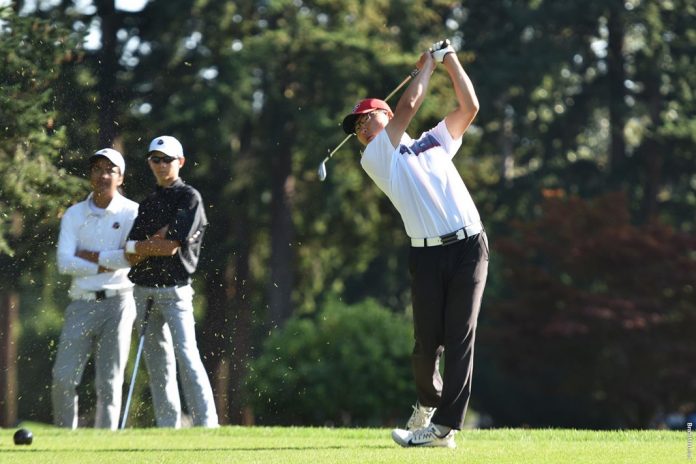
It's time to look forward to the Spring season. (Photo courtesy of SFU Athletics)

On Monday and Tuesday, the men’s golf team completed the fall portion of their season at the Otter Invitational, held at California State University, Monterey Bay. While the team would’ve hoped to finish higher than 10th, a tough start to the tournament hurt their chances. Despite this, they rebounded nicely.

The Clan struggled through rounds one and two, shooting 300 and 302 over the rounds. This put the team at 26 over par as they headed into the third and final round, far from the top-tier teams in the tournament.

However, SFU turned things around in a big way shooting 293 in the final round. Out of all the teams in the tournament, SFU achieved the second lowest score of the round. They only trailed Lynn University, who shot a 288 in round three and finished the tournament as the only team under par (–3).

As has become expected, Isaac Lee led all SFU golfers in the tournament, and finished sixth out of the 92 golfers at the Invitational. He shot rounds of 74, 71, and 71, putting him at even par over the tournament. This is the third straight tournament in which Lee has led the Clan.

“Isaac once again delivered a very impressive performance, especially for a freshman on a golf course that he had never seen before,” said head coach Matthew Steinbach to SFU Athletics after the tournament.  

While the 10th-place finish may not have been the ideal ending to the fall season for SFU, the final round was encouraging. This was Steinbach’s take on the tournament to SFU Athletics:

“We were a bit disappointed with our performance on Day 1 as the course got the best of us but we finished on a strong note. We knew we had our work cut out for us, we didn’t climb as many spots as we’d hoped, but still, it was a good way to end the semester. We’ll take advantage of the coming months to improve and elevate various aspects of our game so we are prepared for the all-important second half of the season.”

We will look forward to men’s golf returning in the spring semester.

The negative public stance on Syrian refugees reveals a loss in Canadian values

0
Photo by Fred Lum / The Globe and Mail

Three years ago, Canada welcomed refugees from Syria. I couldn’t help but feel proud and patriotic at the thought of this: we were kind, open-minded, and nicer than our neighbours to the south.

Three years is not a long time in the big picture, though. In 2018, the climate has changed fast.

More and more, the stories we see about Syrian-Canadians overlook all the positive things about them, instead focusing on the rare, extreme cases of atrocious, criminal behaviour. That sensationalism makes those scarce cases appear to be far more common than they really are.

This was very much embodied by the coverage of a Syrian refugee in New Brunswick who allegedly beat his wife for half an hour with a hockey stick, and claimed “he was not aware of the law” in Canada. More recently, in B.C., another Syrian refugee was arrested for murder in early September, causing many Syrians to fear that a broad brush would be painted across all Syrians.

Immediately after, many of these sorts of stories were commented on or shared by people who called them proof that Syrian refugees were some sort of security and screening issue — an inherent threat needing our vigilance.

Stories like this keep starting never-ending arguments that don’t need to exist in the first place. Should we pay benefits to newcomers? Is this a problem with Syrians or a few random individuals? I feel the answer to both these questions is “yes.”

But when we circulate these stories of violence, telling and spreading them with such fervor, we encourage people to bear all sorts of negative attitudes towards Canada’s refugee response — a response that should make us feel proud, not ashamed or angry.

Those negative attitudes towards Syrian refugees certainly aren’t new, but they’re absolutely increasing as these stories get shared and discussed. From the time Trudeau announced that Canada would be taking in Syrian refugees, some questions were raised in light of his warm welcome.

In 2017, a public poll was conducted by Angus Reid Institute, a Canadian public interest research group, on how people feel about refugees in Canada. Of responders, 41% said the number of refugees is too high, and only 11% think Canada should increase our refugee acceptance.

While Syrian refugees still face certain challenges, I feel proud that Canada can be a place of safety for so many people. But even as some people look for safety here, others have an unfortunate attraction to violent news stories, and the result is that more weight is given to negative attitudes towards refugees.

Mohammed Alsaleh, a member of the Syrian-Canadian Council of BC, was overcome with sadness and anger at the news of who the accused was, with concerns that his community will be affected by the actions of this one individual. Alsaleh took part in a public vigil, held the day the accused appeared in Provincial Court, to support justice for the victim. Alsaleh expressed that the Syrian community will be there “with a message of unity, hope, and humanity.” While seeing people fight for these values is fantastic, seeing such an opposition to them is depressing.

In early 1950, my grandfather on my dad’s side had newly immigrated to Canada, coming from eastern Europe after witnessing famine, war, and many displaced persons camps. He arrived in Canada much like the Syrians did: with uncertainty, fear, and a sense of loss from leaving his homeland.

Even then, some people were wary of this well-dressed man who loved to write and tell his tales of triumph over the evils of war. I remember he shared how grateful he was to finally become a Canadian citizen. Maybe this is why I feel an affinity for new immigrants.

When I think about Canada, I think about people accepting diversity, and accepting others’ rights to live as they choose, without prejudice. I would like to think that the majority of Canadians share these values, but I fear that my faith in this is waning. Many still hang onto this endeavor of Trudeau and Canada to accept Syrian refugees, trying to help those in need. I want to believe in that, too.

Student experiences medical emergency on Burnaby campus during class

3
(Anderson Wang / The Peak)


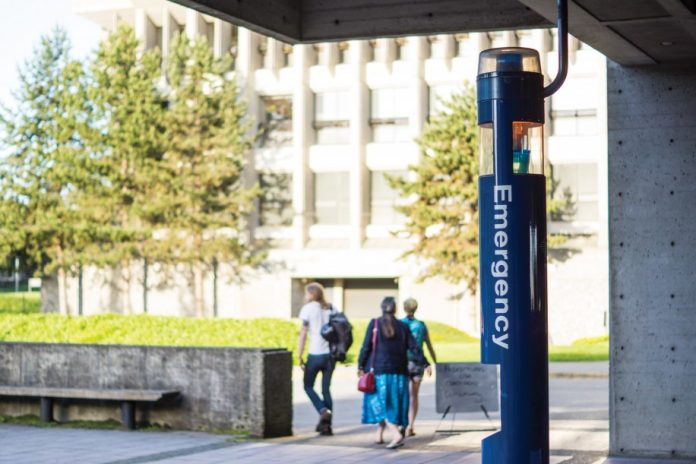
On the evening of Wednesday, October 17, a student entered medical distress, prompting emergency personnel to be called to campus.

A faculty member and exam assistant notified Campus Public Safety after noticing the situation, according to Wan Yee Lok, SFU Communications and Marketing communications associate.

Lok informed The Peak via email that Campus Public Safety arrived at the scene in six minutes and called 911. They stated that the personnel from Campus Public Safety, who were equipped with an AED, began performing first aid on the student in distress while the other students in the class were evacuated from the classroom to another classroom.

The BC Ambulance and Burnaby Fire Department began managing the student’s treatment once they arrived at the scene. The RCMP was also present.

“Recognizing that this situation may have been difficult for the students in the classroom, Health & Counselling Services was alerted that evening and has resources available to provide supports to all involved,” wrote Lok. According to Lok, “the RCMP is in the process of contacting next of kin.”

Lok’s statement  did not provide any further details on the incident.

On October 20, a post on Reddit in the r/simonfraser subreddit was posted speaking to the incident. The post claimed that the students, who were in the middle of writing an exam when the incident occurred, were made to continue writing the exam in another room. The original post also claimed that the student who experienced medical distress passed away.

The Peak is conducting an ongoing investigation into this incident.


If you or someone you know was present or knows additional information regarding this incident, please reach out to [email protected].

UN IPCC report highlights effects of 1.5°C increase in average global temperatures

0
The report was commissioned during the Paris 2015 climate talks to explore the benefits of limiting warming to 1.5°C. (David Nunuk/Getty Images)


The United Nations (UN) Intergovernmental Panel on Climate Change (IPCC) recently released a special report titled Global Warming of 1.5°C, detailing what effects an average global warming of 1.5°C above pre-industrial levels will have on the world.

According to an IPCC press release, the report referenced over 6,000 scientific reports and had 91 authors and 133 contributing authors from over 40 countries. Kirsten Zickfeld, climate scientist and SFU associate geography professor, was one of the lead authors of the report.

The IPCC report was commissioned during the climate change convention held in Paris in 2015 to examine the science behind what possible outcomes might result if the average global temperature was limited to a 1.5°C increase.

“Prior to the report, there was a lot of talk and science around the 2°C limit but not a lot about the 1.5°C limit,” said Zickfeld in an email interview with The Peak. Nations signed onto a 2°C limit on warming in 1992 at the Rio Earth Summit.

The report states that keeping the temperature increase at the 1.5°C limit is still possible. However, it also highlights the effects of the current 1°C increase in the world. Zickfeld noted that such effects include rising sea levels, increased coastal flooding, mass coral death in the Great Barrier Reef, and higher-frequency, higher-intensity cases of heavy rainfall and heatwaves, such as the recent heatwaves in Europe.

The report emphasizes how maintaining the average global temperature increase within 1.5°C instead of 2°C will allow humanity and ecosystems to evade the worst effects of climate change, which are projected to include severe heatwaves, risks of food shortages from crop yield deficits, and total loss of coral systems. The 0.5°C difference is believed to have a vast impact on human and ecological health.

“For some ecosystems and people. It’s a life or death situation,” wrote Zickfeld.

As detailed by the IPCC report, swift action is necessary to limit temperature increases to 1.5°C, and the next few years are crucial. The urgency of the report was noted by Catherine McKenna, Canada’s Minister of Environment and Climate Change, who said in an interview with The Canadian Press that, based on Canada’s current trajectory, the country will not meet the 1.5°C goal unless changes are implemented.

“We all know we need to do more,” she said. “Every country in the world needs to take action, and then we need to be more ambitious about the action we are willing to take.”

“What countries committed to under the Paris agreement is insufficient to limit warming to 1.5 degrees,” commented Zickfeld, noting that, despite the pledges provided by the countries, the world is projected to experience three-degree warming by 2100.

The IPCC report has also provided outlines of how to achieve the 1.5°C limit. It states that by 2030, emissions will need to be cut by at least 45%. Wide-ranging changes would also need to be made to the economy and energy sector; countries would need to switch from fossil fuels towards renewable energy, work on reforestation, and possibly look at ways to remove atmospheric carbon dioxide.

Above all, the report is to remind governments of how essential it is that we tackle the problem of climate change is for human and ecological health. “The report laid out a roadmap giving measures for how to stay under the 1.5°C limit. It’s now up to politicians to take on this information and act,” Zickfeld noted.


With files from The Star, The Economist, and The Guardian.


SFSS forgets to make room for themselves in the SUB

0
Illustrated by Reslus

BREAKING NEWS: Throughout the construction of the new Student Union Building (SUB) on SFU’s Burnaby campus by the SFSS, it has come to light that many students groups currently housed by the SFSS are having their leases terminated, and simultaneously being refused space in the SUB. Many of these groups have raised concerns about the important roles they play for the university campus, and the impact that taking away their space will have on the campus.

Recently, another student group, one whose positive impact on the student body is still to be determined, has discovered that they will not be given space in the SUB — the SFSS.

It appears that during the planning stages for the SUB, the SFSS board of directors forgot to make sure there was space for their own offices. The primary concern was making sure to include a space where students could spend their hours on campus catching up on the sleep they missed the night before. Surveys conducted prior to construction of the building showed that students overwhelmingly supported the construction of a room in which they could nap.*

As a result, the SFSS board forgot to find a space for themselves and their employees in the new building. Once this came to light, the SFSS entered into negotiations with the SFSS to try to find a space in the building. Unfortunately, reporters from The Peak were not allowed in the room during the discussion, so there is no record of what occurred during the negotiations. However, students near the SFSS’s MBC offices could hear the sounds of screaming and what one could only assume was a full-on brawl amongst the board of directors.

Thankfully, the SFSS board of directors are outstandingly capable at fighting amongst themselves, and a resolution to the negotiations was reached shortly after the conflict began. It was decided that they would take over the rooms dedicated for the “Club Centre” that was intended to offer a communal space for many of the clubs on campus to use together.

Due to the amount of space needed by the SFSS, they have decided to remove any representation of student clubs or organizations at all in the building. This was done in hopes of “treating all students organizations fairly and equally” — not letting any organizations have space is equality, right?


*The actual item on the survey that received overwhelming support was “another place to fuck that isn’t the avocado.” It is unclear whether this specific wording was ignored, or if the SFSS board of directors were also looking for a good place to fuck on campus.