Home Blog Page 480

Ridership increases stress the necessity of transit improvements

0
Riders are suffering under TransLink’s ridership numbers success. Photo: Peak Archives

Commutes from heck are a common experience in the Lower Mainland, especially for students like myself who don’t drive. We rely on TransLink services to help us get around, and so we need our transit system to do better than the subpar service it currently offers. 

Let me paint a picture for you. I started working at a co-op over winter semester that begins every day at 8:30 a.m. It took 25 minutes to get there from my nearest SkyTrain station. So one would naturally think that I left the house at 7:50 at the earliest. Except no. Before I moved, every single day, Monday to Friday, I had to leave at 7:10 a.m. to catch a bus that only ran once an hour in order to reach the train. If I missed that bus it would have been an hour-long walk. On the first day of my co-op, I already knew that this bus was going to be the bane of my existence. 

Aside from the frustration of early alarms and stumbling to the bus stop half-awake while it was still dark out, the bus had serious consistency issues. Some mornings it would come super early or super late and I would have to cab to the train station. When I did make the bus, I would usually find myself squished against a window by other passengers. Since the bus only came once per hour, it meant that there was an hour’s worth of passengers on that one bus. It was uncomfortable. 

Ironically, part of the problem with the existing transit system is how popular it is. Ridership numbers broke records in 2018 with a rise of 7% over the previous year. Increases in service have not been able to match this pace, however.

The City of Vancouver has put forward plans to address public transportation over the long term through infrastructure improvements. However, the city does not have direct control over buses and trains. TransLink itself needs to put out a clear proposal on how it intends to address its inability to deal with increased ridership and bus consistency issues.

Unfortunately, federal funding gaps mean that TransLink is limited in what it can accomplish. However, despite these funding problems, TransLink could prioritize ensuring that current transit vehicles are consistent and arrive on time to avoid passenger build-up along the rest of the system. This short-term goal is critical because having even one bus arrive late or not arrive at all during peak hours or on busy lines can result in denial of service for hundreds of passengers, straining the already choked system.

Transiting students know what it’s like to be mashed into a jammed-full 145 or 95 bus when afternoon classes let out. Going forward, TransLink needs to evaluate how ridership increases are exacerbating the effects of passenger build-up. It’s one thing to have several more passengers getting on at a stop after a bus never shows up, but it is another issue when there are twice as many passengers already waiting for that bus. If TransLink does not start factoring in how the increased usage affects transit services, no other changes will be effective.


SFU student reports sexual harassment on campus from construction workers

0
Andres Chavarriaga/ The Peak

“It started [happening] more frequently a few months ago.” 

“Construction workers would start whistling at me and catcalling me and saying ‘hey honey, hey baby.’ They’d ask me to give them a smile or something like that,” said SFU history student Robyn Jacques. She adds that there’s a new student residence being built next to McTaggart-Cowan Hall where a recent incident occurred.

“It’s happened more times than I can count on two hands [on campus],” said Jacques, adding that it’s also happened at Convocation Mall in the midst of heavy construction presence. “It was a bunch of men and when they were together, they weren’t afraid to say whatever they wanted,” She noted that it frequently happened on the small pathways that were made through the construction areas. “It’d be so easy for them to say something, and they did.” 

Jacques then elaborated on her mindset leading up to her Facebook post. “It just kinda boiled up to this point, where I was getting so upset [ . . . ] that I just had to bring it to light,” she continued. That was when she decided to post on social media about experiencing sexual harassment on campus. Jacques has previously been vocal about the importance of safety on campus through an online petition to preserve the campus shuttle connecting residences to FIC. 

Jacques wrote on her Facebook page: “I deeply wish that SFU would take the sexual harassment issues on campus more seriously. Ever since construction in residence began [ . . . ] I have faced sexual harassment from construction workers almost everyday.” 

“If I am just walking to class, I get whistled at and catcalled [ . . . ] Women on campus deserve to feel safe, especially for those of us who live here. It makes for an extremely unsafe environment and I have had enough! ACTION NEEDS TO BE TAKEN.”

Jacques’s post was widely shared and caught the attention of SFU Residence and Housing, who met with Jacques, assured her that they were taking the concerns she posted on social media seriously, and said any construction workers found to be harassing students would be “escorted off-site, and weren’t allowed to come back,” according to Jacques.  

They also followed up with an email to Jacques, the text of which she posted to Facebook: “Dear Robyn, SFU Residence is growing: there is ongoing construction and renovations occurring at or near all residences [ . . . ] We wanted to take this time and inform you that having additional individuals in our community and on campus can sometimes lead to inappropriate incidents [ . . . ] street harassment known as catcalling. 

“These occurrences are unfortunate and we are working with campus public safety to ensure the safety and comfort of our residents. Everyone in our community has the right to feel safe. No one should have to put up with inappropriate comments, touching, gestures or actions.”

Jacques did have second thoughts before posting, however. “It was difficult for me to talk about it because I feel like sexual harassment [ . . . ] especially in the ‘Me Too’ era right now, not a lot of people are taking women’s word for it,” said Jacques. “You can’t just say, ‘Oh, this happened to me,’ because not a lot of people will believe you. That’s what I was afraid would happen to me, but I’m glad it didn’t.” 

Paola Quirós, the coordinator of the Women’s Centre at SFU, frequently helps women who experience sexual harassment and violence on campus. “I think ‘Me Too’ has been very important [ . . . ] But just because Me Too is out there doesn’t mean that perpetrators and people that perpetrate rape culture in our society are more conscious about [sexual misconduct],” she says. “Many times, perpetrators are acting out of fear — ‘oh no, I don’t want anybody to say this about me’ — rather than acting out of ‘I shouldn’t do this.’”

Quiros praised Jacques courage in sharing her story on social media. “Many people think ‘this is performative,’ but no – It’s about being courageous in a society that still doesn’t believe people when they say ‘I have been harassed, I have been bullied, I have been sexually assaulted.’” 

She estimates that she helps students who have experienced sexual misconduct four to six times a month. 

“We wanted to create that space in our centre so that folks can start to have this conversation in a safer space,” she says, adding that the new Sexual Violence Support and Prevention Office (SVSPO) has also helped greatly opening the discussion about sexual misconduct on campus, and making it safer for students.

The SVSPO opened in February 2018 to support students who have experienced sexual violence and harassment on campus. The Peak also reached out to the SVSPO for comment on how they support students who come to them.

“We strive to provide individuals who access our support services with a personalized care plan that suits their needs,” said Dr. CJ Rowe, director of the SVSPO. 

“This may include: referrals to counselling and medical services, safety planning, academic concessions and workplace accommodations, self-care resources and assistance navigating on and off-campus resources.”

 “When an individual wishes to make a formal report to the University, to the RCMP, or local police, we provide assistance to that person so that they can make an informed decision about next steps,” they said. “We support the individual by accompanying them to make formal complaints with the police and RCMP (if desired) and will intake their report when they are interested in engaging in a formal university process.”

 Students who wish to access counselling and support services can call SFU’s Women’s Centre at 778-782-3870, SFU’s Health and Counselling Centre at 778-782-5781, or SFU’s Sexual Violence Support and Prevention Office at 778-782-7233. 

The Peak is continuing to look into the issue of sexual harassment and misconduct on campus. Should you wish to share your story (anonymously or not), please email the Editor-in-Chief at [email protected]

Fall Kickoff 2019 set to September 20 as ticket sales go live

0

At the July 25 board meeting, vice-president student life Jessica Nguyen announced that Fall Kickoff 2019 was scheduled for September 20. She also told the board that the event’s Facebook page and early bird ticket sales would go live the next day, July 26. 

“It’s a very limited number, they will be the cheapest ticket you can get,” Nguyen said. “The tickets will be $30 and that’s the cheapest it will go.” 

Fall Kickoff will be hosted in the Strand Hall parking lot near Blusson Hall. The SFSS has partnered with the production company Crescendo1 to put on the event. In a follow-up email interview with The Peak, Nguyen wrote that she was excited to be supporting a passionate small business through this partnership. 

“I found the owner, Johnny Black, had the same visions as me for Fall Kickoff so I knew we were going to be a great fit. Moreover, Crescendo1 was significantly more affordable than other companies so we were able to save some money there to re-allocate to other value providing services for students.” 

According to Nguyen, students can expect to hear more about the line-up in mid-August as details are still being finalized. 

“I am so excited to see this project come to fruition! This is the biggest Fall Kickoff that the SFSS will have ever hosted as the venue is much bigger this year,” Nguyen wrote. 

She encouraged the board to share the post on social media and otherwise promote the event, to engage with as many students as possible.  SFSS president Giovanni HoSang commended Nguyen for her and her team’s hard work and perseverance in putting the event together over the last few months. 

“It completely took over my life,” Nguyen joked when asked about the organizational process. “I think at this point, I live, love, breathe Fall Kickoff haha! There is a lot that goes into the logistics and behind the scenes planning to ensure that we bring a safe and fun event to the students. In addition, there were a lot of unforeseen hurdles that my team and I had to leap through. Fortunately, the team I hired for Fall Kickoff has been more than amazing and I could not imagine a better group to be working on this major project with.”

The Peak asked Nguyen if she had a favourite Fall Kickoff memory, and she recalled the 2015 Kickoff on her first year at SFU. 

“I actually went with VP External, Jasdeep Gill, so [Fall Kickoff] has a big sentimental value for me! I don’t remember who the artists were but what I do remember is having lots of fun with her and my other girlfriends!” 

Nguyen is positive that this year’s event will be just as fun, and emphasized the importance of students getting their tickets early. Once early bird tickets are gone, tier 1 tickets will be $35 each, tier 2 tickets will be $40, and tier 3 tickets will be $45. VIP tickets will go for $75, and public tickets will be available to non-SFU students 19 years old or over for $50. Nguyen specified that VIP tickets were reserved for SFU students. 

This will be the first Fall Kickoff since 2017, as the 2018 event was cancelled due to logistical errors and replaced by a partnership with UBC’s week of welcome event. More details will be released as September approaches. 


Why do some students feel the need to disrespect other departments?

0
We’re supposed to be diversifying our ideas at university, not closing them off. Illustration: Jarielle Lim/The Peak

Beedie snobs. Snowflake GSWS students. Useless arts degrees. Why are these stereotypes and criticisms so familiar? These snap judgements are an indication of callousness between students of different departments. But university should be a place to learn about diverse ideas. Particularly at SFU where, through our WQB requirements, we’re supposedly pursuing a more well-rounded, open-minded education. So why the malice? Students should be able to appreciate all other disciplines offered at the university. 

Questions of “What do you study?” or “What’s your major?” should not transform one side of the conversation into an open target. It can be pretty damaging to make others feel insecure about their choice of study, particularly for first-year students who may have come to university immediately after high school. 

For these students, their intended programs were a decision that they made while in high school, which is often way too young to decide your life track, professional future, career destiny, or whatever it is that you want to do with your life (even if, spoiler alert, you are not your degree). To have your university experience begin with this choice being doubted by nearly everybody you meet is a repetitive and exhausting ordeal. 

It’s also important to realize that a major is not a ball and chain. We are not tied to our degrees; more and more people today are pursuing cross-disciplinary careers. This makes already confrontational comments such as “What are you going to do with that degree?” relatively dated and obsolete. 

Speaking from the perspective of a student who started in arts, I recall getting the aforementioned question quite often. The implication is that what you’re studying isn’t important, or valued. However, the world’s challenges are rarely certain or straightforward, making the breadth of understanding gained in an arts degree valuable in navigating life’s many ambiguities.

For those who can’t see the value in different disciplines, if your immediate response is to mock and belittle different fields of study, you’re going to have trouble surviving in the professional world. Often times, collaboration between different fields is required for meaningful work or projects, whether that be a combination of critical thinking and writing skills honed in arts, scientific research abilities, technical knowledge, business sense, or other fields. 

It would be ridiculously disrespectful to bad-mouth someone’s area of expertise in a professional work environment, so why practice these foul habits at school? We all came to SFU or FIC to pursue higher education, and so we should be able to respect the different fields which our fellow students choose to dedicate their time towards. 

I do not intend to imply that SFU should become some harmonious circle with students of different majors all holding hands and dancing around the AQ pond. However, university life could benefit from more respect between students of different departments.

Long story short: I have mixed thoughts about my study abroad experience

0
Image credit Tiffany Chan

Studying abroad has been the defining experience of my short life so far. It has been a little over a year since I left England and the University of Essex to return home, and in that year, I have realized more and more how important that experience was to who I am now and who I will be in the future. It has become a cliché to refer to an exchange as life-changing – it is loaded language with emotional implications. Without the pretentiousness, it simply entails that exposing yourself to unfamiliar experiences acts as a catalyst for your mind to evolve into one of its many forms that it will be in your life. And that’s what it served as for me. 

Coming from an Indian household with a joint family, I have always had a surplus of people in the house. It has not been the easiest experience and definitely not the smoothest, but it groomed me into the person I am today. Going against the grain in my family is something I have continuously done my entire life, but deciding to study abroad was a decision like no other. I would go from living in a household of a dozen people to living without them. The change became even more drastic when I decided to live off campus, alone.

In a way, I wanted to test myself and follow through with my aspirations of moving out into the world, leaving the comforts of home. The aspect of living alone that I was most prepared for was cooking for myself, as I have been cooking all my meals for a couple years. It is the reason I decided to live off campus, because I needed a kitchen. However, living alone was extremely lonely, not only because I was far away from the friends I had made at the university but also because I was in a long-distance relationship. Not having the presence of family, friends, or the girlfriend with who, I was in the early stages of a relationship made for a complicated set of circumstances that shaped my experience studying abroad.

I had to grow up, fast.

Being raised in a household with so many people, I did not always have to rely on myself. Living alone, I quickly learned how different it was. Although I had access to the washer where I was staying, I had to air-dry clothes from the months of January to March (Imagine the weather during that period!)

Having to take into consideration that I was only one person and buying groceries for a few days was not ideal, I would have to make multiple trips to the grocery store in a two-week span. The bus schedule in the small town I lived in was irregular at best, and I lived a 20-minute walk away from the nearest grocery store.

The irregular bus schedule was never more evident than it was on the day it snowed to the point of the buses and taxis being unavailable. It just so happened that the day this transpired, I had planned to go to London, and had bought my ticket weeks earlier. Nonetheless, I managed to get to the train station – by hitchhiking three different times. I had never hitchhiked prior to that day. What is unfortunate about the train system in England is that the tickets are non-refundable, and having arrived an hour late, I had to purchase another rather expensive ticket that was not exactly within my budget. (This happened to me more than once during my time there, albeit in different circumstances.)  

It’s not that having to walk for groceries, air-drying clothes in musky, cold weather, and unreliable transportation were singularly so difficult that it severely affected by time abroad. It was the totality of the situation. 

The cherry on top during my time abroad was the month-long strike professors of the university went on. It is not that their strike was aimless as there were valid arguments on their side of the war for a competitive wage and benefits. It just could not have come at a worse time. My education was already being hampered by having to balance too much all at once; this was the nail in the coffin. As much as the effort I put in, I received the worst grades of my life. Not that I was surprised. 

By the end of my time abroad, I was ready to go home. I did not travel as much as I would have preferred to, and I could have stayed longer to do so, but the financial burden was too much to swallow. That is the aspect of living alone that hit harder than I expected. Although I was aware that watching my expenses was something I had to do, I was not prepared for it.

But most of all, I missed home. I missed my family, I missed the vast expanse of beautiful landscape in Canada. I missed my girlfriend. Being in a long-distance relationship while studying abroad was the most difficult experience I have ever had. My mind was torn between two places – reveling in the experience of going to a university in a foreign country and wanting to be around her, which was exciting in its own right. I thought about her every day. Although we communicated heavily, it still took a toll on my mental health. Our relationship withstood the time apart, but not without near-crippling struggles along the way.

Having lived the experience and processed it throughout the months that passed, my thoughts on my time abroad swayed from negative to positive, back and forth. From time to time, I still think about certain events that transpired and if I could go back, would I change them?

In all honesty, I would not.

I went through struggles in England that nearly crippled my mind. But if I continued to live in the past after I arrived home, that would have truly done so. Reflecting on my time abroad in this article is a way in and of itself of letting go of that regret. When I do have the opportunity to move out again,  I will shape the experience not only through what I have endured but, more importantly, through the present and future I want for myself.

Image courtesy of Harvin Bhathal

SFU HOTTIE – July Profile

0
Illustration by Siloam Yeung

Illustrated by: Siloam Yeung

OMFG! Hey you, #thirsty girls, gals, and non-binary pals, we’ve got a scoop for you. After months of Insta-stalking, and checking out every corner of our uni, we’ve found SFU’s new hottest catch of the month.

Meet your new #bae: the Ominous Koi Fish in the AQ Pond! 

Here are the bachelor’s details: 

  • Name: Simon Fisher
  • Age: 20 
  • Pronouns: He/him/his
  • Relationship status: Most likely single
  • Neighbourhood: Underneath the AQ bridge (the hottest up-and-coming area!)
  • Major: Aquatic sustainability
  • Length: 38.1cm
  • Star sign: Pisces
  • Diet: (Non-vegetarian) Bread, plants, animals, occasionally other koi fish 
  • Dream Date: Cheeky dip in the water!
  • First kiss: Doesn’t have lips 
  • Smokes: No
  • Drinks: Yes (only water) 
  • Turn-offs: Suffocating 
  • Celebrity crush: Mackerelmore
  • Best feature: His wide, gaping mouth
  • Will swipe right if: You’re the pond witch who can turn him human à la Little Mermaid stylez
  • Freaky fear: Getting eaten by another koi fish.
  • Is looking for: More food


In case of accidental Koi fish death, the search for next month’s HAWTEST SFU bachelor has already begun! 

Possible new cuties on campus:

  • Mysterious blue pyramid at AQ Courtyard
  • King of the Squirrels
  • Adventurous bird that flew right inside Harbour Centre 
  • A hawt guy you see lined up for the bus to UBC

UnbeLEAFable plant life found at SFU

0
Image courtesy of Anindita Gupta

With the SFU Burnaby campus buzzing with the sound of drilling and the whacking of hammers, it is difficult to appreciate the surrounding beauty. With the uncalled-for summer rains, it is even harder. But, on a damp and gloomy Burnaby day, I decided to walk around campus to really notice the things that become even prettier in the rain – the plants! 

Before I begin, I would have to thank technology, without whom this would not have been possible! I found an app called PictureThis, that helps you snap pictures of plants and identify them. (If any passionate botanists are upset with me for bungling any of the names, it was the app!)

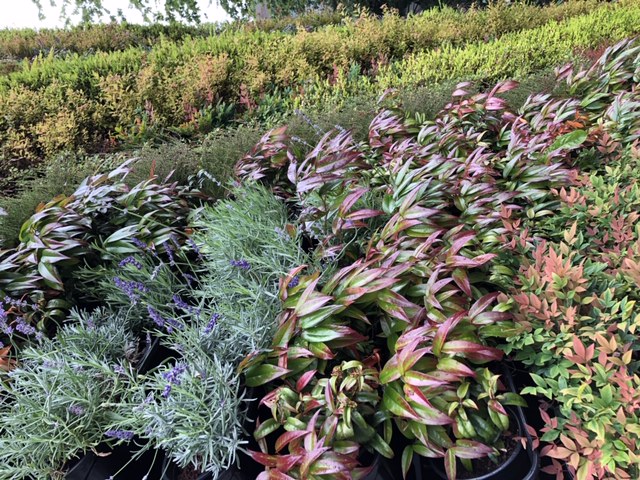
The first beautiful set of plants that anyone comes across when they first enter SFU from the Cornerstone entrance is the beautiful living wall of potted plants that are varying in colour and form. I did not end up catching every single species on the wall, but I did manage to identify a few. The first of these potted plants is the one that has leaves with a tinge of red on them. The Leucothoe axillaris, or coastal doghobble, is said to be a native to the North American continent. 

Another potted plant right above the previous one is the lavandin, or the garden lavender. Its scientific name is one of the less intimidating ones: Lavandula intermedia. This particular one is supposed to be a hybrid between the English and Portuguese lavender; ah, what a mix SFU has!

Image courtesy of Anindita Gupta

Moving on from the bus loop/Saywell Hall area, I walked to the Applied Science Building (ASB), but through the walkway with a canopy of greenery. In here, we have a mix of different trees which we may not notice in the everyday hustle and bustle of running into the ASB. Some of the trees that make this canopy are the western red cedar, scientifically identified as the thuja plicata, and the vine maple, scientifically recognized as the acer circinatum. The red cedar in particular is a very common tree on campus. (You notice only this if you’re really paying attention, like I was this time . . . like a bird-watcher, er, of trees!) It is a native to the continent and a giant coniferous tree often associated with the Douglas fir. The vine maple is a smaller tree compared to the first. Something interesting about the vine maple is that Coast Salish peoples sometimes used this tree to make fishing nets, and the Lower Thompson people sometimes used the wood from it to make cradles!


Image courtesy of Anindita Gupta

I made my way now towards the library, and my main intention was to find out about the two trees that are put on the side of the AQ stairs: the ones that are lit during the winter months. But as it turns out, they were removed due to the construction. Instead, all around these show-stealers, I located the Japanese maple, or the acer palmatum. These are the beauties that change their vibrant shades every season; they’re green in the summer and orange/red in the fall.  

Finally, what better place to end my SFU-trotting, plant-spotting experience than at the gorgeous water lilies in the AQ pond? The European white water lily, or nymphaea alba, floats almost all year round in our pond along with the many swimming koi fish! 

SFU, even in the midst of the construction noise and dust, does still have a very beautiful campus. I suggest taking a walk through it to clear your mind of midterms, papers, and finals in the coming few days. And the rain helps this walk in a way you wouldn’t imagine!

Image courtesy of Anindita Gupta

Paperless education: yay or nay?: An interview with Dr. Paula MacDowell

0
Image courtesy of Leila Amouzandeh and Matt Koyanagi

For me, paperless education reminds me of EDUC 358: Foundations of Educational Technology, which I took with Dr. Paula MacDowell. Dr. MacDowell is a lecturer, instructing courses in educational technology and learning design. She is known at SFU for making tremendous headway in the EdTech realm and shaking up learning environments by enriching them with technology in her classroom. In her course, I learned how to use the iBooks Author app and explored a topic of my choice relating to educational technology. In a sense, we were using technology to write about technology. 

Personally, I was interested in writing my chapter on iBooks Author, since it went beyond writing. I could incorporate media elements that would best be suited for my research, such as videos, hyperlinks, scrolling galleries, images, etc. to create a chapter that was visually appealing, bright, and complimented my words. There wasn’t a doubt in my mind who to reach out to discuss a paperless education, because Dr. MacDowell proves that it is possible!


The Peak: When you think about a paperless education, what comes to mind?

Dr. Paula MacDowell: Sustainability, student productivity, increased engagement, collaborative learning, efficient grading, meaningful feedback, and streamlined classroom management.

P: What is your take on technology, specifically laptops and tablets, helping students learn?

PM: Learning with technology is not about a specific tablet, tool, or technique. It is about the freedom that we all have to contribute and create something new: a game, an image, or a unique point of view. 

P: How does using technology in class help students learn? and what about those naysayers who argue that it is distracting or it promotes too much screen time? 

PM: It is important to meaningfully integrate media and technology. Meaningful integration of technology can be a powerful enabler of creative problem solving, collaboration, diversity, and digital knowledge construction. I have very few issues with technology being distracting from learning in my courses, but it is frustrating when the technology doesn’t work as expected or the Internet is unreliable. 

P: Where does technology in education fit in terms of 21st century skills and sustainability? 

PM: Questions that I spend a great deal of time thinking about are, “How can I teach sustainable design principles that lead to attentive practices of sustainable behaviours? How can I improve the reach and effectiveness of student engagement on sustainability issues through digital creation techniques such as designing educational apps for pro-social and environmental change?”

P: What are your thoughts on students as creators? Why is it important for students to not only be digital consumers? 

PM: I believe that learners of all ages benefit from opportunities to be the creators, coders, builders, inventors, makers, and changemakers of our world. This involves an understanding of how our world is designed and that it is capable of being redesigned — not only the material world but also its knowledge, systems, processes, values, narratives, and perspectives. 

P: You often incorporate apps, such as iBooks Author into the courses you teach. As iBooks are an interesting form of a paperless term research paper, Why did you decide to incorporate that into the courses that you have taught? 

PM: iBooks Author empowers students to construct, represent, and communicate knowledge in novel and productive ways. When I see the light shining through my student’s eyes as they tell me how proud they are of their work, I know that’s why I continue to use iBooks Author and champion the success of all the students I’m privileged to teach.

 P: Is this where you think the future of education may be heading? 

PM: SFU is Canada’s most community-engaged research university and designated as a Changemaker Campus [by Ashoka U]. I think the future of education involves openness, cultural sustainability, environmental integrity, social innovation, and community engagement. Therefore, I challenge my classes to research and design education resources that are freely accessible learning materials for anyone to use and learn from. 

My students are motivated by the fact that their course assignments are available for people around the world to download from the iTunes store, or on display in a media arts exhibit, or as recommended curricular resources for the BC Ministry of Education. Together we create and contribute our knowledge and skills to make a difference with and for our communities.

P: Are there any student websites or apps that you would recommend (for learning or creating)? 

PM: The educational apps that I use most often in my courses are iBooks Author, Canva, ZapWorks, Plotagon, Zeetings, Pear Deck, Flip Grid, Piktochart, Padlet, Kahoot, Quizizz, Class Dojo, Screencast-O-Matic, and edpuzzle. Try them out!


SFU is recognized for its engagement, and students are not only constantly active and hands-on in writing and designing but also empowered when sharing their work with a global audience. Technology helps to create spaces for making content that is meaningful and memorable. Likewise, it plays a part in knowledge mobilization due to the fact that your prof won’t be the only person reading the research you spent tireless hours working on. It puts you in the driver’s seat. 


Take a look at some easy ways to incorporate technology in your learning suggested by Dr. MacDowell:

(Please note that these descriptive quotes are from each app’s official webpage)

Engaging Presentations:

  • Zeetings: “Transform your meetings, presentations, lessons and events by empowering everyone to participate from their own device.” 
  • Pear Deck: “You can add the magic of formative assessments and interactive questions to your presentations”

Create and Communicate: 

  • Flipgrid: “Flipgrid is the leading video discussion platform for millions of PreK to PhD educators, students, and families in 180+ countries.”
  • Plotagon: Animate your message, turn ordinary text into video and communicate in a way that resonates
  • Padlet: “Make beautiful boards, documents, and webpages that are easy to read and fun to contribute to.”
  • Class Dojo: Useful for “School messaging and portfolios”

Design: 

  • iBooks Author: “Create and publish amazing books for iPad, iPhone, and Mac.” 
  • Canva: “Whether you need an Instagram story, logo maker, or birthday invitation—create all these graphic design needs and more on Canva” 
  • ZapWorks: “Create your own augmented reality experience”
  • Piktochart: “Create infographics, presentations, reports, flyers and posters” 

Quiz Makers

  • Quizizz: “Free self-paced quizzes to review, assess, and engage—in class and at home.”
  • Kahoot!: “Kahoot! makes it easy to create, share and play fun learning games or trivia quizzes in minutes.”

Video Creators

  • edpuzzle: “Make any video your lesson. Choose a video, give it your magic touch and track your students’ comprehension.”
  • Screencast-O-Matic: “Video creation for everyone. At Screencast-O-Matic, we don’t believe that video recording and editing should be difficult, or cost a fortune. Our simple and intuitive tools help you get the job done easily.” 

Below are the links to the iBooks created by students at SFU:

Weirdest Library AskAway Asks

0
Photo curtesy of Wikimedia Commons

We’ve all had those inevitable mental breakdowns when writing papers. These normally happen when we can’t find the articles we need and end up screaming at our computer screens. 

Everyone sometimes needs that extra help from those valiant heroes of SFU — the library AskAway chat operators. But what if our emotions were to get the best of us? What if we were to start telling them a little too much information? 


AskAway Live Chat at 3:00 AM

3:05 AM

HELP.

I know its really late and the chat service probably isn’t available, but I NEED HELP.


-Hello. What can I help you with?


CAN YOU SEND SOMEONE FROM THE LIBRARY TO KILL ME? I ALWAYS WAIT UNTIL THE LAST MINUTE TO START PAPERS,  I’M A MENACE TO SOCIETY THAT MUST LEAVE THIS WORLD! 

BTW I’m craving a burger really badly. Do you think it’s safe if I go to one of those 24-hour drive-thrus and pick up something?


-I always encourage students to start their papers at least two weeks in advance. And I wouldn’t go out this late if I were you.


Literally trying to ignore the hunger pains. Can you direct me to any database that might have journals even remotely related to what I’m writing about?


-Yes, of course. Could you tell me what your topic is?


Wait. Crap. What am I writing about again…?  

Oh yeah. How Modernism is constructed.


-Please give me a moment.


3:20 AM

-I was able to find a few that you might be of use to you: www.allthejournalsunistudentsneed.org and www.articlesthatarelikleytosaveyourlife.ca

-Are you there? I hope we’re still connected. 


Yup. Still here.

Thank you!


-You’re welcome.


I apologize for the delay. I couldn’t go another second without a cup of coffee. 

Hey, how many cups of coffee do you normally drink throughout the day? 

Is it more than 2? 


-I understand that it can be difficult at times as an undergraduate, but I strongly suggest you get as much rest as possible. 


Do you sleep for at least 8 hours a night? I got 4 last Tuesday! Feel great.


-I don’t mean to be rude, but I think we should stick to the task at hand here. 

-I hope I’ve helped. Do you have any other questions?

3:23 AM


I’m writing my introduction paragraph as we speak. Do you think you could talk me through the conclusion paragraph, though? I hate writing those. 

I decided to eat something else and my burger craving is gone. Are you hungry? If you need to take a break and grab a snack or something, I totally get it. 


-I’m fine, thank you. And I’m afraid it would be difficult to help you with your conclusion paragraph one-on-one through an online chat.


Yuck. I just sneezed on my laptop. Could you hold on a sec? I need to wipe my keyboard.

So, what do you do in your spare time? I really hope it isn’t staying at the library. 


-That’s a very offensive assumption… But thank you for using the AskAway online chat service. Have a nice day! 🙂


Thanks for the help! Do you want to do this again sometime? 


Chat is Disconnected 

What (not) to do when your friends are all getting engaged

0
Illustration by Alice Zhang

Illustrated by: Alice Zhang 

So your friends are all getting engaged without you? So you were minding your own damn business and doing the classic “reviewing lecture notes while browsing Instagram” study technique when your eyes were assaulted by a horrible vision of yet another friend who has now embarked on their happy path to marriage? So you’re tearing up but you’re not sure if it’s from panic or joy?

You’re lucky you’ve stumbled across this article, because we have some helpful tips on what not to do in this situation. 

Do not compare your life to theirs and wonder how you are still fighting for your Degree in Important Things when they are preparing to make a down payment on a house.

Do not stare longingly at a picture of Danny DeVito and fantasize about a person like that getting down on one knee for you. 

Do not become a fiery ball of anxiety and message people on Tinder to see if they would accompany you to a wedding you may or may not be invited to. 

Do not be upset that your friends are getting more attention and more Instagram likes than you because they are now fancy, Engaged People.

Do not call your newly Engaged Friends “unrecognizable fools who are greedy for banal marital sex” the next time you get drunk.

Do not buy some new pants and call them your “Sex Lord Pants.”

Do not go to a party and use your Sex Lord Pants to hit on people you have never met before. These people have names like “Sherry” and “Grog,” and should not be trusted, not with your precious and fragile heart. 

Do not go home with Grog anyways and only realize in his bedroom that his name is actually “Greg.” Don’t be embarrassed at the mistake, and definitely do not try to correct him and tell him that his name is actually “Grog.” 

Do not be alarmed at the amount of condoms Greg has in his wardrobe and do not call him an “unbelievable fool greedy for good sexual health.” 

Do not propose to Greg to be like your Engaged Friends. 

Do not spontaneously tell your new Engaged Friends, when you run into them at the grocery store, that you are “oh so proud” of their new “life change.”

Instead, cut straight to the point and confront them about why you were not asked to be in the bridal party.

When they tell you, “Well, I just didn’t think we were that close, we haven’t really seen each other for a few years,” refrain from bitterly reminding your Engaged Friend that the new fiancee “isn’t even that hot anyway.”

After this, faint in disbelief and make a scene in Aisle Four. When you awake in the grocery store and discover that your Engaged Friends have left you there, unconscious, on the cold linoleum floor next to the rows of refried beans, do not be alarmed. Once you’re afraid, you’ll start pulling the cans off the shelves and it’ll only be a matter of time before you’ve built a fort with the produce you have simply pulled off the shelves. At this juncture, simply inhabit this fort in the grocery store in order to avoid seeing any more of your friends getting engaged.

Despite all of it, you will be fine.
And alone.
Forever.