Home Blog Page 432

Ways to support your mental health

0
Illustration: Sabrina Kedzior

For students, looking after our mental health can often be overlooked — it has been especially the case with the global uncertainty we’re facing and the stresses of an unideal learning situation. Before social isolation, I can vouch for how much easier it was to maintain a sense of emotional stability and to utilize coping mechanisms for the sake of my mental wellness. Nonetheless, the past couple of months for me have consisted of putting in the emotional labour towards reworking how I support my own mental health. Although I am aware that these may not be applicable to everyone and I am by no means an expert, I have found these activities and practices to be particularly helpful.


  • Keeping in contact with close friends 


It may not seem like it’ll be particularly useful for your mental health, but talking with your friends online during a time like this can do wonders for your well-being. It is also likely that if you aren’t feeling OK, your close friends may share some of the same struggles. If you’re comfortable, try reaching out to the friends who you trust to disclose this information with. I have found frequent FaceTime calls and keeping in contact with my friends over social media to be the absolute saviour in these isolating times. 

It also doesn’t have to be a serious conversation. If you aren’t up to talking about your mental health struggles, I highly recommend engaging in virtual games like playingcards.io and scribbl.io while on a video call. Forget about all the bad stuff and unwind. You deserve it.


  • Discovering new hobbies and interests


I know this sounds like one of those unrealistic beauty guru tips that don’t consider the extremity of real life issues, and believe me, I understand why you would think that. But hear me out: I recently got into collaging and it has been the only activity that has managed to immediately alleviate some intense moments. 

Since I had never really been into collaging beforehand, it got me excited for how I could continue to pursue this hobby. Having something new that allows you to plan and anticipate additional engagement is a wonderful distraction and method of allowing yourself to practice mental wellness. It doesn’t have to be collaging, but if there’s an activity you’ve always wanted to try, but you’ve never really gotten the chance, allow yourself to explore it.


  • Spending time with family/roommates


For obvious reasons, this one mostly applies to people who live with others. As someone who’s typically quite busy and is out of the house majority of the time, suddenly being at home a lot was a strange thing to adjust to. However, after some time, I discovered that I could not actually spend the entirety of this pandemic secluded in my bedroom from the rest of my family. In fact, I found that arranging a daily time specifically for the purpose of spending time with my family members, to be beneficial. 

Of course it’s important to have personal boundaries and to distance yourself when you need to, but including instances of family time has been a significant factor in my mental wellbeing. Your family members or roommate(s) are probably also feeling the heaviness of social isolation, so you might as well provide each other the comfort of your togetherness. 


  • Getting exercise or going outside 


Since there’s nowhere we can really go these days, it’s pretty easy to feel glued indoors. After all, grocery stores are terrifying right now. But if the weather is good and you’re feeling up for it, try transferring your work area to the outdoors. Even better, if you’re open to it, go on a bike ride or a walk. Getting some kind of exercise or even just stepping out of your house can help you cope with the pandemic stress. As much as I have always dreaded the idea of a family walk, I have to say it has helped me understand the importance of fresh air. 

If you’re not up to going outside but still want to exercise, there are many different ways you can accomplish this from the comfort of your own home. While I could go on about these different ways, The Peak released a separate article detailing ways to stay active indoors during quarantine.


  • Taking a break from the news/social media 


I want to be clear that this does not mean you have to abandon the news altogether, but that distancing yourself from the constant updates is healthy. These are unprecedented times of great anxiety and unforeseeable outcomes, it is essential for your clarity of mind to have those boundaries with checking news outlets and social media. It is important to be up to date on the newest measures and announcements, but it’s not necessary to be constantly checking the internet. 


  • Looking after your body and hygiene


With not having to show your face anywhere other than the occasional Zoom call, not looking after your body, hygiene, or appearance may seem incredibly tempting. Admittedly, this is a weird thing to include as a mental health coping mechanism, but with relevance to the circumstances of remote life, it is helpful to your wellbeing to put in the energy towards taking care of your physical health. I have found that on the days where I put in the extra effort towards taking care of my body, my headspace tends to follow suit as well. Self-care is more than just face masks and bath bombs, it includes actively looking out for your physical health as well. 

If you find yourself struggling with your mental health, remember that as an SFU student, you still have access to health and counselling services. The MySSP app, for example, offers free 24/7 virtual counselling. SFU’s Health & Counselling is also offering emotional support groups. If you’re looking for a creative outlet, the clinical counsellor in Health & Counselling, David Linskoog, is hosting a game of Dungeons and Dragons targeted towards building social skills and fighting back depression. You can email him at [email protected] if you’re interested!

The Canadian Mental Health Association also provides resources, including hotlines and crisis centre responders you can speak to if you feel like you need to seek help. 


“peasants i am leaving you for something better”: A Simon Fraser story

0
Illustration by Tiffany Chan

I gaze at my reflection in a silver spoon in Mackenzie Café, untangle a perfect curl from my mile-long natural lashes, and chuckle at a measly peasant boy who walks by me, completely unaware of my innate superiority. 

“You see,” I coo at my spoon reflection, gently caressing her distorted figure in my makeshift mirror, “you are better than these fools. Because you are transferring to UBC. HAHAHAHAHA!”

People turn and look; I do not care, and I bat my eyelashes at all of them, scoffing indignantly. They will be stuck on this burning dumpster mountain forever, while I, I, will escape and find success at a far loftier institution.

Last semester was my fourth try applying for a transfer to the University of British Columbia. After much grovelling and begging, they’ve finally let me in, and now I know, as I’ve always suspected, that I am above grovelling and begging to anyone, duh. I spin around, taking in the whole room of people . . . Wow! Unbelievable, isn’t it, that I am the only person at SFU who knows how to apply for a transfer. 

I kick my unfinished hash browns to the floor, and yell at some pathetic cockroach person to eat them. Of course she does not do it, because she respects me too much to subject me to such a horrible vision as someone eating FLOOR FOOD! I chuckle to myself again and point to my SFU hoodie, as I continue to stand on the table where I know I’ll be seen. I address the room, and this time everyone stops to look at me, adoration and admiration dripping from their eyeballs like tears. 

I announce my important announcement: “Does anybody want my hoodie? I am donating it to charity, and THIS,” I gesture grandly around the room at all the students and at the beige walls, “is MY charity.” I point at a boy, who I suspect envies me the most. I peel my hoodie off like a king would undress and toss it at his head.

“I won’t be needing that anymore, you FOOL,” I wink saucily at the swine boy and tell him to take good care of the hoodie as I pull a paper out of my pocket to show the room my UBC acceptance letter. 

“Behold!” I bellow, and thrust the scroll in the swine boy’s face. He squints and reads aloud:

“We regret to inform you . . .”

What did he say? Panic swells in me and I jerk the paper away from his silly face. I look at the letter again and cannot believe what I am seeing . . . “Rejection” . . . “tough decisions”. . . Do my eyes deceive me!? 

I look at the boy and point pointedly. “YOU! BOY! Can you read?” He tells me he can. And I believe he might be right, because even a university like SFU would only accept students if they are at least mildly literate. 

I look at the room and the eyes that gaze upon me. “Fellow peers . . .” I solemnly announce, “I have made a grave error. It turns out that I am just like all of you.” I walk around the room and gently caress each person’s face, like the nuns in Newsies. It’s time to accept who we truly are. We, the lowly worm people.

And I am the first to collapse to the ground and writhe in the dirt of the Mackenzie Café floor.

And I am happy. 

The art of exchanging letters

0
Illustration: Maple Sukontasukkul

Does anyone else remember when getting mail used to be exciting? Getting a birthday card in the mail with a bill tucked inside used to be the most thrilling experience as a kid. These days, while getting a package due to my unquenchable online shopping habits gives me a nice dash of serotonin, my mail mostly consists of bills, bills, flyers, and more bills. 

I’m not 100% clear on when the highly coveted art of writing letters died out, but it certainly precedes how long I’ve known how to read and write. Apart from the occasional thank you note to grandma, I was never an avid letter writer until a few years ago.

Then I started pen palling. To put it simply, pen palling has gifted me the joy of checking the mail again. Cards from grandma are certainly fun, but now that I have treasured friends sending me heartfelt letters, I have even more joy associated with my mailbox. If you’re at all interested in creating some cool friendships with people across the globe, I would highly recommend seeking out a pen pal or two.

With the internet being so expansive, I’m not clear on why it never struck me that there would be a thriving pen palling community nestled amongst its landscape. However, upon being introduced to it via Tumblr, I was intrigued.

Typically, I’ve found that social media has been a great tool for meeting new people. Currently, the Instagram hashtag #penpalswanted has 76.6k posts, and I’m certain that similar hashtags exist across Twitter and other related platforms. Personally, I sought out a Tumblr blog that permitted submissions where I could post a short description of me and my interests so I could find like-minded people. The benefit of submission was that I was able to protect my identity, and only responded to people if I genuinely felt a connection with them. Naturally, the idea of disclosing my address to a complete stranger was also quite frightening, so I emailed with a lot of them prior to actually exchanging anything. All that stuff that was drilled into our heads about internet safety? Use it. Unless you feel comfortable with someone, do NOT disclose your address. Use that coveted common sense.

I’m not going to lie and say that my experiences are 100% always positive. It’s pretty common that people might stop communicating after a while or may never send a single letter in the first place, which can be disheartening if you take the time to craft a package for them. I even had a long-distance relationship with a pen pal like the hopeless romantic that I am. Unfortunately, that didn’t work out for me and I would not recommend it. That being said, I’ve managed to build some lovely lasting friendships with a few amazing people from across the globe. 

There’s something quite special about writing a letter to someone. It’s rare to get to know someone purely through paragraphs on pages, and it creates a really intimate space between the two writers. Given that my letters tend to span several pages, I find that I end up communicating to my pen pals in a candid and vulnerable way about my life. Even though I’ve never met them in person, we’ve still managed to craft a close friendship built upon opening up to one another. Communicating socially with people face to face isn’t always smooth sailing, so there’s something truly unique about getting to know someone purely from the physical letters and trinkets that they send to you. Think I’m getting too sappy? Wait until you hear about the wall in my room I literally have dedicated to taping up the amazing things my lovely friends have sent to me.

In the modern world, returning to letter writing has been really therapeutic for me. Building lasting friendships existing purely through these exchanges has given me a very interesting outlook on the ways in which we can all communicate and build trust. 

If you’re sitting around home missing some social interaction, check out what your local pen pal network can offer you!  Establishing meaningful human connections is vital now more than ever, and now is a great time to seek it out. If pen palling doesn’t interest you, I would also suggest writing a letter to a friend. At the very least, you will bring a spark of joy into someone’s mailbox.

We shouldn’t wait until an emergency to spare a thought for our marginalized communities

0
Emergency COVID-19 shelters prove vulnerability is a matter of government choice, not lack of resources. Photo courtesy of the City of Edmonton

When I heard about the new COVID-19 support for Indigenous communities from the BC government I was, frankly, shocked. Legitimate help for Indigenous people during a pandemic was the last thing I expected, considering the colonial history of catastrophic neglect. Of course increased actions around healthcare, transportation, and accomodation are great, but it begs the question: why hadn’t they been taken already? 

Indigenous communities had been struggling under the inequities of colonial rule centuries before the arrival of coronavirus. For example, many of them are vulnerable to food insecurity, and some don’t even have clean drinking water. Meanwhile, groups like the Wet’suwet’en nation are still being invaded by the state with the continued construction of multiple unsanctioned pipelines — at the same time that the government is supposedly recognizing their legal land rights.

Why does there have to be a full-blown global emergency for the government to support marginalized people? The government has the means to carry out this assistance, as is made apparent by their other recent charitable act of giving smartphones to the homeless. While giving people the ability to connect to services, resources, friends, family, and more through these phones is definitely positive, this action feels very much like an afterthought rather than a priority.

In a similar vein, under the Emergency Program Act, and with the help of nonprofits and local municipalities, Vancouver has recently provided hotel rooms and community centre spaces for all of the people who were living in Oppenheimer Park. According to a report by CBC, this was done to “reduce the chance of an outbreak of coronavirus among [Vancouver’s] most vulnerable people.” Knowing that if they don’t “clean up” homeless camps the virus will spread even more throughout the province shouldn’t be the only reason that they want to help. 

It seems like the government is acting on aid because they know that the potential continued spread of COVID-19 through these communities is harmful both physically and economically. But they knew that these communities were vulnerable long before COVID-19, so it seems quite hypocritical for them to only take action now. The very fact that they already called these people are the most vulnerable just highlights how much they think that it’s only an emergency when it’s an emergency for the government — that is to say that an increased total COVID-related death count might be perceived as a crisis of response to the voting population. For the people in need, every day is a crisis.

Instead of mitigating marginalized suffering after the fact, how about total prevention? The government should prioritize things like affordable and accessible housing, food security, and clean water access before the next global disaster. Working on recognizing Indigenous rights to their own land as well as their political autonomy instead of holding them at the mercy of a neglectful federal government would also give them the means to provide their own emergency preparedness structures tailored for the needs of their communities. 

Having strong, pre-existing systems in place to support marginalized people would make it so the government wouldn’t have to come swooping in like superficial superheroes to seem like saviours at the eleventh hour. It would mean that these communities would not have to struggle to simply stay alive as a baseline.

There needs to be support for marginalized communities at all times, not just when it’s expedient for the government. Remind yourself that it is the government’s past and present actions that have caused these inequities, but also that they have always had the power to fix it. Action taken early means that there is less reaction to the problems that could and should have already been solved.

Equitable consideration of learning styles is needed for remote-learning success

0
ILLUSTRATION: Kitty Cheung / The Peak

There are many barriers that students may face with remote learning, including accessibility and access to technology. However, it is important to address how another semester of online instruction will also put students with different learning styles at a disadvantage if they remain unsupported. While some students might find this situation advantageous, others may find remote learning poses some significant conflicts with their preferred learning style. These conflicts, if overlooked, may create learning difficulties for students who would otherwise be able to adapt their learning preferences in a classroom environment.

There are a few learning styles in particular that may suffer from the mass migration to online learning. These include interpersonal (social) learners, kinesthetic (physical) learners, and linguistic (verbal) learners. For example, students who learn best when collaborating with others may feel a decrease in attention and motivation when forced to work entirely alone or through video chat formats.The lack of tutorial discussions, study groups, or a professor’s in-person office hours may also negatively affect an interpersonal learner’s performance over time. 

On the other hand, the nature of online learning is likely to advantage solitary or intrapersonal learners, who prefer self-study and are individually motivated outside of large groups. As a linguistic learner who learns primarily through speech, the shift to online learning has been difficult for me as well. I need to be able to hear my professor in lecture in order to fully comprehend the material, and Canvas discussion boards just don’t cut it. 

In an in-person environment, professors can more easily adjust for these small quirks in learning style through variety in tasks and assignments. However remote learning drastically reduces the number of resources faculty have at their disposal to make sure all students have a fair chance at proving their competence. The question then becomes: are professors prepared to take on the extra work of making sure all of their students are getting the full benefit out of their new, remote classes? 

Although accommodating all learning styles in an online format is unrealistic, there are still some ways in which professors can be mindful of students who may be disadvantaged. Class livestreams can allow professors to check in with students on the pace and efficacy of their lectures. Increased utilization of multimedia can also be very beneficial to students of various learning styles. Luckily for us, SFU students have access to a host of resources through our libraries.

It is, however, essential that student voices are included. This can be achieved by providing students with regular opportunities to give feedback, and then actively applying suggestions wherever necessary. Flexibility is going to be key to making sure no student is forced to accept substandard outcomes when they might otherwise have done better.

It is important that SFU continues to prioritize quality of education and their students’ ability to get the most out of their time in university, no matter the circumstances. Without considering the various learning styles that may be limited in the online format, the university is not doing its due diligence to provide their students with equal opportunities for success. 


Everyone should participate in the COVID-19 survey to ensure the best pandemic response

0
The BCCDC survey is short and most of its questions are voluntary. Image courtesy of BCCDC

Look, no one is more surprised than every math teacher who mercy-passed me through high school that I not only excelled in my department-mandated stats classes, but I actually enjoyed them, too. And one thing I learned from these surprising gems in my post-secondary career is the value of broadly-gathered survey and census data. Right now, as governments play a delicate balancing game of how much reopening is too much/too little, survey data is absolutely invaluable. This is why it is imperative that as many people as possible take the BC Centre for Disease Control COVID-19 Survey.

The survey is open to any British Columbian over the age of 18, and asks a number of questions that are meant to better understand how COVID-19 has affected people in this province. The questions range from asking about the economic impact of the virus, to how it has changed behaviors, to simple knowledge questions about the spread of the virus. Almost all of the questions are voluntary, so there is absolutely no reason not to take the 10–15 minutes to complete it.

So why is this survey so important right now? It’s not just a government wellness check to see how its citizens are coping with the stress of the pandemic — although that is certainly a part of it. The data collected from this survey will help policy makers and health officials determine how badly quarantine measures have actually affected people’s health and financial circumstances. It will show which regions are doing better than others. It will guide decisions on how much of the economy needs to be reopened, or which areas (such as elective healthcare) need more resources for remote services if restrictions are impossible to remove at this time.

Our post-pandemic future could also be mapped out by the data collected in this survey. For example, will economic stimulus be more needed than trauma support and mental health services? Will hospitals or doctor’s offices need to prepare for a rush of postponed appointments, and could these locations be other potential hotspots for future waves of the virus? By analysing how people are feeling and where they may be struggling today we can better prepare for what the fallout of all this may be tomorrow.

And the survey will guide messaging decisions for our ongoing pandemic response. It’s perhaps no surprise that lockdown measures — although proven effective — have not been universally well-loved. This could be due to incorrect perceptions of the danger of the virus among certain populations. If public health officials can pinpoint whether this is due to economic fears outweighing fear of illness, lack of knowledge about the virus, or a feeling that the danger isn’t close enough to an individual to be of concern, then public messaging can be altered that incorporates these perceptions into the broader context of the pandemic. With better messaging, perhaps public health compliance will increase, and with it the overall health and safety of the public as a whole.

But these benefits are only obtainable if health and public policy officials have as clear a picture as possible of the circumstances of British Columbians. Incomplete data causes all sorts of problems for researchers and policy makers looking to find or understand social trends. Lack of data hinders our ability to address problems as they are occurring and improve the lives of people who may be needlessly and invisibly suffering. While at this time it is unfeasible on a number of fronts to poll every eligible person in BC about their COVID-19 experiences, more data will be more helpful than less.

The BCCDC survey expires on May 31, 2020. If you have not done so already, I urge you to take it if you can. Share it with friends and family and explain its importance. There may be aspects of our pandemic response and its consequences that we’re not yet aware of, but that can save us a lot of grief down the road. But only if we have enough data to assess our situation now.


Faster and cheaper COVID-19 testing kits are being developed by SFU researchers

0
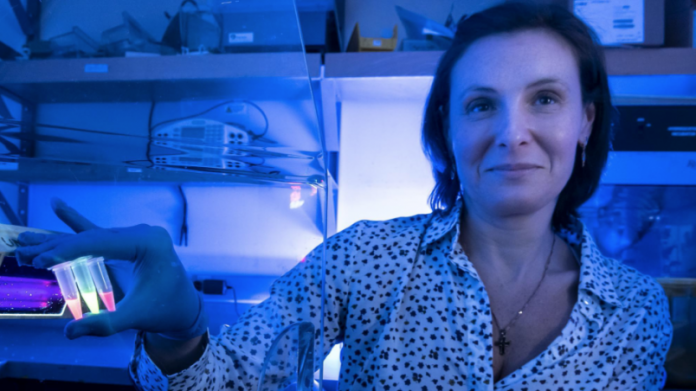
Photo courtesy of SFU News

SFU Post-Doctoral Fellow Lena Dolgosheina and Professor Peter Unrau of molecular biology and biochemistry are using their previously developed imaging technology called Mango to help produce cheaper and faster COVID-19 testing kits.

In an email interview with The Peak, Dr. Unrau discussed the research further. 

The project is funded by the Canadian Institute of Health Research (CIHR), which is offering rapid funding to Canadian researchers whose work helps to address COVID-19. According to the CIHR, 227 eligible applications have been submitted and 99 grants have been provided at the time of writing. Dr. Unrau said that the process of writing the grant application and receiving the funding took two weeks. 

 The Mango imaging technology is able to detect COVID-19 RNA within living cells, explained Dr. Unrau. Saliva samples will be used for the COVID-19 testing kits, collected through the swab method. 

Most current tests are “multi temperature” tests, which require expensive equipment. According to Dr. Unrau, the Mango test will be cheaper and easier to conduct because it is performed at a fixed temperature. 

It will also be significantly faster than other testing methods. Dr. Unrau noted that currently, test samples are transported to centralized test centres where the results are processed — this ultimately is a longer process due to both transportation and testing. Dr. Unrau is hoping that the Mango test kits will be able to collect the sample and perform the test in an hour, all done onsite at a hospital. 

Additionally, Dr. Unrau explained that the Mango system also makes important contributions to disease research, as it can detect when RNA processes “go wrong or break,” as is the case with cancer. He noted that this Mango makes this detection easier, “and thus should simplify the study of human disease.” 

Dr. Unrau noted that the test kits are not commercially available yet, as they are still undergoing reliability testing.

BC’s COVID-19 health policies are being informed by SFU professor’s research

1
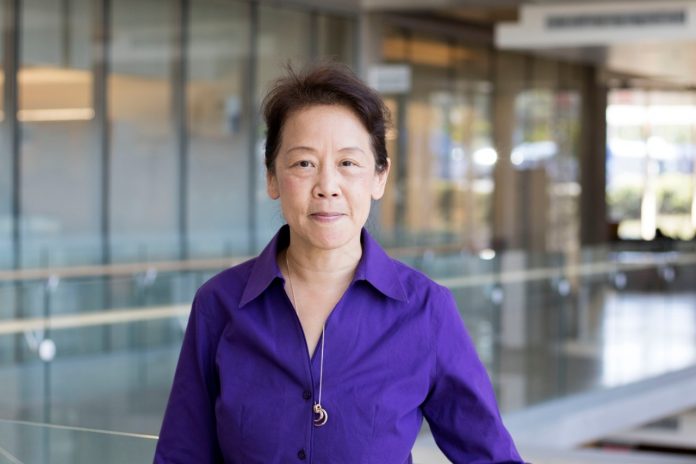
Image courtesy of SFU Department of Mathematics

SFU mathematics professor and infectious disease modeller Dr. Caroline Colijn is using mathematical modelling to project trends in the COVID-19 pandemic. Her research has allowed provincial health officers to better determine the next steps during the pandemic with regard to its COVID-19 health policies.

Dr. Colijn was also selected by the Chief Science Advisor of Canada to sit on a multidisciplinary science expert panel to advise on COVID-19-related scientific developments. Additionally, Colijn has a track record in public health modelling as she was appointed as a Canada 150 Research Chair in Mathematics for Infection Evolution and Public Health in 2017.

“Mathematical modelling is the best tool we have to explore possible impacts of our choices and also the uncertainty due to key unknowns,” Colijn said in an interview with The Peak. 

Dr. Colijn explained to The Peak that the factors considered in calculations for mathematically modelling the outbreak of COVID-19 include: “Reported case counts, estimates of time between symptom onset and reporting, the time frame when distancing measures ramped up, and the numbers of tests that were done.” 

With this information, Colijn and her team “use a model to estimate the strength of distancing, and compare it to the estimated critical threshold.”

On May 6, 2020, the BC Provincial Government eased the COVID-19 restrictions that have been in place since March due to the global pandemic, allowing for gatherings of up to six people.

Dr. Colijn was supportive of this measure, saying: “There is room for some cautious relaxing of distancing measures. This should be done in combination with strengthened testing and contact tracing and with a close eye on COVID-19 cases, because it’s easy to go too far.”

Furthermore, Dr. Colijn stated, “We have estimated that distancing has been effective in BC and that community transmission is now relatively low; this will continue if contacts are kept below the critical threshold.”

According to the BC Centre for Disease Control, 78,665 COVID-19 tests have been conducted in BC as of May 4, 2020. In an article for The Province, Colijn spoke in favour of random testing, noting that BC “could accomplish random testing with about the same number of tests it is doing now.”

Dr. Colijn’s MAGPIE (Mathematics, Genomics, and Prediction in Infection and Evolution) research group has also been modelling the COVID-19 global pandemic, transmission rates, and the effect of physical distancing on the outbreak trajectory.

According to Dr. Colijn, “If too much contact resumes, cases will rise, potentially quickly. This could undo the benefits we have achieved.”

Dr. Colijn and her team have also been granted funding from Genome BC to further examine the effectiveness of current measures and when restrictions should be relaxed. 

SFU professor leads research project on global coordination in response to COVID-19 pandemic

0
Photo courtesy of Simon Fraser University

SFU health sciences professor Dr. Kelley Lee and her team are looking at the measures taken by countries in response to COVID-19. Dr. Lee’s team, which is based in Vancouver, Hong Kong, Sydney, and Washington, D.C., was granted $500,000 in funding from the Canadian Institutes of Health Research (CIHR). According to a media release from SFU’s University Communications, her team is working alongside the World Health Organization (WHO) and other public health organizations. 

Dr. Lee and her team will assess whether the current measures being taken are effective, compare data from past outbreaks, and determine how to improve current measures for COVID-19 and future pandemics.

“If you have a coordinated effort both within countries and then across countries, internationally, then the outbreak response is far more effective⁠—in fact, it’s critical,” Dr. Lee said in a phone interview with The Peak. 

She elaborated on why having a globally coordinated response is crucial to battling a pandemic. 

“You think about yourself [and you’re] following public health advice: you’re washing your hands, you’re keeping your distance, and so on. But your neighbour or your colleagues at work don’t do that, then you have a problem because then the outbreak’s gonna spread regardless of what you do [ . . . ] Internationally, if countries don’t follow the scientific evidence and your country does, you’re still at risk because it’s not a coordinated effort.”

One of the team’s key goals is to determine why countries are not following the WHO’s recommendations. 

While Canada has been both praised and critiqued for their response to COVID-19, Dr. Lee noted, “We’re not completely perfect, of course, [but] no country is going to get a grade A+, I think maybe Canada at the moment is at a B-.”

 The COVID-19 pandemic serves as an “incredible lesson in the interconnectedness of our lives [and] in our world,” Dr. Lee said, in discussing the importance of citizens doing their part by listening to public health officials. She added that while many have focused on the globalization of the economy, there hasn’t been enough investment into public health institutions and urges us to consider the institutions that “keep our lives on track.”

Dr. Lee noted that she hopes to contribute to the global effort in fighting COVID-19 and ensure that the response to a global pandemic can be improved next time. 

Your weekly SFU horoscopes: May 18-24

0
An illustration of a girl with long flowing hair. Astrological signs and stars shine around her.
ILLUSTRATION: Marissa Ouyang / The Peak

Aries: Is that special someone (who isn’t actually that special, but you’re acting like they are) not responding again? They say you either get bitter or you get better. So, how will you handle it? Perhaps a revisit to that diary from your youth. You can write your frustrations in right after your recollection of a field trip to Science World.

Taurus: If you keep counting all the magnets on your fridge like that, your eyes will burst out of your head. Take some time to count all the rotten fruit you have left in there, too. At least then you’re being mindful of something deeper.

Gemini: If you’re bummed that weddings keep being postponed, just think of all the divorces that may be avoided in the future. You’re the last person who should complain about people changing their minds about big life decisions, anyway. 

Cancer: Keep waiting around for signs to get moving, and the thing you’re chasing will move on without you. Take a breath and get on with it like the rest of us. Then you can keep coming back to this one accomplishment in your mind for months to come. Business as usual.

Leo: Have you heard? Stephanie Meyer is releasing a new book in the Twilight series. It’s the same story, just from the perspective of Edward. I figured you might care because you also love retelling stories with a new main character — in your case, yourself.

Virgo: You can keep cleaning and cleaning everything around you. It won’t clean up your greatest flaw: that previous obsession with the Percy Jackson or Harry Potter series that still lives on your bookshelf. And if you think you’ve moved on from living in imaginary worlds, you’re sorely mistaken.

Libra: Not sure if you knew, but the average length of a shower is 8.2 minutes. Keep that in mind each time you check that “read: 13w ago” under your message to that person that said they were just going to shower.

Scorpio: As the idiom goes, you just need to bite the bullet. No, not that one. That one has too many carbohydrates. THAT one doesn’t have enough protein. No, no, that one tastes expired . . . Well, as per usual, you’ll figure out this problem with a different idiom. Try your favourite: hitting the sack. Sure beats facing your problem.

Sagittarius: You’re like a cowbell in a song. Some love you, some really love you, and some wish you didn’t exist. The main thing to remember this week is that one way or another, you distract from the autotune, therefore serving a purpose higher than your metallic self. So keep being loud and obnoxious, I guess.

Capricorn: Grimes and Elon Musk put as much effort into naming their child, X Æ A-12, as you did writing that paper last semester. Sure, it was a unique perspective, but no one knew what the fuck you were talking about. Did you even know what you were talking about?

Aquarius: At this point, you should make like Uniqlo and charge extra to those who don’t fit your obnoxious standards. Hemming pants is one thing; ghosting someone who couldn’t be bothered to keep trying after the first three texts you ignored is another.

Pisces: With scorpions replacing tarantulas in Animal Crossing: New Horizons, you have the opportunity to increase your museum’s collection. At the same time, keep in mind that these bugs are just as dangerous, and it is much too easy to hurt you (it’s happened before).