Home Blog Page 412

Study examines player safety in hockey games

0
Image Courtesy of SFU Men's Hockey via Facebook

SFU PhD student Olivia Aguiar and her team at the Injury Prevention and Mobility Laboratory have conducted research on the impact of physical incidents amongst the SFU men’s hockey team. The project began in 2014, and Aguiar joined as part of her graduate studies in 2017. The aim was to attend SFU men’s university-level hockey games and record hits throughout the games. 

In an interview with The Peak, Aguiar explained their process: “We set up cameras around the rink, so we [were] recording what’s going on simultaneously with the game camera, and [captured] head-impact events.” Head-impact events refers to all types of physical contact that occur to a certain players’ head during a game. 

The study showed that “players were just as likely to experience a hit to the head from the opposing player’s body or body part, as they were to contact their head with the environment, [such as] the glass.” Aguiar added that, “The opposing player’s hand was twice as [ . . . ] likely to contact the head as the shoulder.” 

According to Aguiar, it becomes a problem when researchers want to bring this issue to the forefront of hockey conversations. “All these hits to the head, that [are] sustained as being part of the game, could potentially have consequences down the road.” She thinks that there is a need to “shift the culture” to make the game safer. With this in mind, Aguiar believes that research brings an objective view, as it allows others to “examine things that [ . . . ] a player might not notice.”

Aguiar thinks that she and her colleagues can eventually influence the game by bringing hockey stakeholders to the conversation. She maintains that it’s pivotal that the subjects of the study are included in the conversation. “Having dialogues with stakeholders, [ . . . ] to understand how they perceive head impacts [ . . . ] [can be used] as an opportunity to hopefully educate them on what we’ve been observing and find a middle ground there,” she added.

As a former SFU student-athlete, Aguiar said that her “passion for sports fuelled [her] to enter the field.” When asked what motivated her to join the hockey project, she said, “My love of science and sport, and just trying to make it a better experience [in the] the long term for these athletes.” 

Previewing the next chapter for the hockey project, Aguiar said that they, “will be integrating the sensor measure with the video data, that will give [them] a snapshot of the severity of the head impact as well as the characteristics of [them].” They’ll eventually “be able to identify most common and severe scenarios and what they look like,” she explained. 

For her thesis, Aguiar wants to conduct “interviews with stakeholders from SFU and local hockey clubs and communities [to] get an idea of how they perceive head impact, and what they think are the most feasible solutions.” Her end goal is to “[act] as the middle women [ . . . ] the bridge between the sports community and the science communities.”


SFU students working on study-group app, StudyHubble

0
PHOTO: Priscilla Du Preez / Unsplash

A multidisciplinary team of SFU students are creating an app that enables undergraduate and graduate students to find study partners. The ultimate goal of the app is to connect isolated students through an online platform to create communities. The team, composed of Timothy Carlos, Anthony Cho, Amy Deng, and Saad Ifitikar are calling the app “StudyHubble.”

Over a four-month process from January 2020 to April 2020, the team found research that suggested many young Vancouverites believe it’s difficult to make friends and think of themselves as isolated. The team eventually decided to focus on post-secondary students for their app. 

SFU students interviewed by the StudyHubble team were receptive to the idea of finding new ways to connect with other students. In an email interview with The Peak, Deng explained that this inspired the team to create the app. “As students [ . . . ] we understand how difficult it can be to connect with others [ . . . ] and it really means a lot to [ . . . ] be able to bridge that gap.”

Amongst other criteria, StudyHubble matches students based on their school, their field of study, or shared classes. The algorithm can be “changed” depending on what the user is looking for. For example, users can indicate that they’re seeking study partners from other schools.

While the app’s primary role is to match study partners, the team eventually wants users to be able to take advantage of a variety of features such as video calling, finding resources for better learning, and messaging features. According to Deng, “Social inclusion is important for all students’ mental health and academic progress [ . . . ] [and] post-secondary students need an inclusive and accessible way to develop peer-to-peer connections while balancing school responsibilities.” 

The team hopes that the app will “[alleviate] the pressure of asking strangers to study,” since all users would be looking for study group connections. Currently, the app is limited to SFU students around Vancouver. However, the team is eyeing the rest of Greater Vancouver to allow more students to participate and are considering going beyond BC. 

“We are also aiming to [ . . . ] encourage students to still make those meaningful connections while studying across Canada in other provinces,” concluded Deng.

StudyHubble expects to announce a release date in Spring 2021.

SFU student devastated to learn that taking six courses does not count as a personality trait

0
Photo: Element5 Digital / Unsplash

The semester just started and students are getting settled into their new schedules, dropping or changing classes, and, in some cases, coming to terms with life-altering discoveries. Third-year biological sciences major, Sheena Ann Oing, recently fell prey to self-actualization after being informed that her constant complaints about taking too many classes are actually annoying. 

Oing spoke with The Peak about how the event’s impact on her and how she hopes to bring awareness to this struggle faced by many, but especially masochistic STEM majors.

“All these years I thought I was receiving the pity I longed for [ . . . ] I just wanted people to feel bad for me. Was it a little much to take six classes every semester for three years straight just so I could have complaining rights? I personally don’t think so,” said Oing. 

She then revealed that she was removed from all of her course Facebook group chats last midterm season after copying and pasting the same complaint paragraph six times.

“But anyways, I’ve totally seen the light or something now,” she continued.

Oing attends SFU with money from her parents’ trust fund. She confirmed that there is no actual reason for her excessive course schedule other than thinking it’s “kind of quirky and relatable.”

“It’s just the worst. I only get like four hours of sleep — if I can even manage to squeeze that into my hectic schedule. I basically live off of energy drinks and coffee, am just so tired all the time, and can’t even remember what it’s like to do something other than studying — well, talking about studying — if you could even imagine that. Not sure you would know the struggle, though.” 

She then noted that despite being “sooo overworked and stressed with all six classes,” she is still somehow behind in her degree and might not finish in the expected four to five years. A possible explanation she gave was the game on goSFU she created where she would close her eyes, type random stuff into the course search bar, and sign up for whatever popped up “just to fill up her schedule.”

“It was the most devastating thing that has ever happened to me. I was telling the girlies about how I am literally so much more stressed than anyone else because of all the classes I’m taking this semester and no one even said anything in response?!”

Oing reached out to one of her friends after the incident and was shocked to discover that the group was ignoring her messages because they were “so over it. Please stop. Please.”

“It was absolutely earth-shattering. I haven’t even been able to process it properly yet because I am still so shocked. Some people just really don’t understand what I’ve been through. Anyways, I’ve learned from my past mistakes and all. Now I know that next semester when I take six classes, they should be towards my intended degree or whatever.” 

Guy who responds with forehead picture and no caption better communicator than SFU, survey reports

0
Illustration: Johanna Jucutan / The Peak

BURNABY, BC — A new survey expressed the SFU community’s overwhelming preference for communicating with a dude on their Snapchat friend list who “kinda sucks at making conversation” over those in charge of their university’s executive decisions.

Participants compared their discussions held with that one guy they all seemed to have on Snapchat who really loves sending ceiling fan photos to those shared with representatives of Canada’s engaged university. The survey results reported higher feelings of “being seen” and “feeling like their messages were delivered” with the Snapchat contact, but they reported marginally lower senses of “having the other party in their conversation respond appropriately” compared to conversations with SFU administration.

When asked why they felt more heard by said Snapchat guy, an anonymous responder wrote, “I dunno, it just seems like he sees me more as an equal. I feel less like I’m talking to a wall when he sends me photos of his kitchen wall, you know? Whenever that guy’s green-coloured Bitmoji appears on my screen, I know something profound is awaiting in that unopened message. It’s hard to describe.”

The survey also presented the question, “Do you believe that an individual on Snapchat who only responds with captionless photos of his forehead is more transparent than SFU’s administration?” 64% chose “Strongly Agree,” 30% put “I don’t really pay attention to either of these parties anyway,” and 6% wrote “Neither of them are see-through wtf” in the “Other: please specify” box.

70% of participants voiced their appreciation of Snapchat man’s record-breaking response times. They noted a large discrepancy between his 27-second flat responses of blurry photos of the pile of laundry in his room and actually normal times it takes SFU to send the broken link to a recycled statement.

Those surveyed also expressed their gratitude for Snapchat guy’s lack of political jargon. The average survey response showed that Snapchat guy uses the terms “stakeholder,” “core commitments,” and “mobilizing” a whopping 99.4% less than SFU administration.

It was unclear whether the questions were officially released by Simon Fraser University or an outside source. The link to the survey was sent to all SFU Mail inboxes with the school’s logo following the emails’ contents, but the sender’s email was “[email protected]” instead of the typical “[email protected].”

There was a preface to the questionnaire that included a brief history on SFU clearly copied and pasted from the university’s Wikipedia page with a few misused words replacing some from the original excerpt. 

For example, the email wrote, “The 170-hectare (420hehehe-acre) main Burnaby campus on Burnaby Mountain, located 20 kilometres (12 mi) from any fun things in the city, was cremated in 1965 and has like at least 34 current students and a bunch of aluminum?”

The email also included a coupon for a BOGO junior Frosty from Wendy’s. 

The Peak will update its readers if SFU provides a comment about this survey. Don’t hold your breath.

Board Shorts — September 4, 2020

0
Image: Irene Lo

The Board discusses purchasing face masks for students and staff on campus

As students begin moving into residence for the fall semester, the Simon Fraser Student Society agreed that “it would be prudent for [them] to have a stock of reusable face masks for students, staff, and Board members,” as per the motion submitted by VP Finance Corbett Gildersleve and Environment Representative Anuki Karunajeewa.

Gildersleve explained that it’s important to provide access to reusable fabric masks to protect students and staff from spreading disease. This would also cut down on the need for disposable masks “which aren’t [ . . . ] the most sustainable.”

Additionally, Gildersleve clarified that they plan to order 250 masks to test their popularity around campus, primarily distributed through the Food Hub. 

During the meeting, Arts & Social Sciences Representative Sude Guvendik addressed concerns that the Residence and Housing office is already supplying free reusable fabric masks to students living on campus. Moreover, multiple Board members voiced their concerns around the high cost, totaling $1945.08 for 250 face masks without delivery charges. However, the Board ultimately voted to invest in masks. 


The Board discusses the increase in tuition, pledges to introduce statement of condemnation towards the university at next annual general meeting (AGM)

The Board discussed the 2% increase in domestic undergraduate student tuition and 4% increase in international undergraduate student tuition for the 2020/21 academic year. Their motion outlined that “SFU undergraduates have reported unprecedented financial hardship in the face of the COVID-19 pandemic” and it is their responsibility to “advocate and push for the financial health and well-being” of the students at SFU. 

The Board voted unanimously in favour of drafting a statement to be presented at their next AGM which, upon approval, will “condemn the university’s decision to increase domestic and international undergraduate tuition.” At the AGM, student members will have the opportunity to vote and approve the statement of condemnation as a “way to send a strong and unified message to the university that [they] are demanding a change,” according to SFSS President Osob Mohamed. 

Mohamed expressed that due to the COVID-19 pandemic, many students are facing a “financial disaster” and an increase in tuition is “exploitative” and “really inappropriate.” She said that the “condemnation vote, in the case that it does pass, is going to be key in our next steps in actually pushing back on the university directly and saying that we aren’t going to stand for this any longer.” This sentiment was echoed amongst Board Members, including VP University Relations, Gabe Liosis, who stated that “this is a really good opportunity to mobilize students behind the very large [ . . . ] societal issue of universities being forced to exploit students [due to] the fact that the provincial governments are [ . . . ] refusing to recognize tuition as an issue.” 

Mohamed briefed the Board on the topic by saying that at the beginning of 2020, “The university reached out to the SFSS and the GSS for feedback on their drafted budget for the university, which [ . . . ] is [an] over 100 page document detailing anything and everything about SFU’s finances.” Mohamed felt that the university “gave [them] an extremely limited amount of time to actually provide legitimate and fruitful feedback on it.”

Shortly after the Board of Governors voted to approve the budget, and the resulting increase in tuition, the SFSS noticed “a lot of student push back from so many different student groups,” according to Mohamed. 


The Board provides updates on Student Union Building opening  

As the construction of the new Student Union Building (SUB) nears a finish, the Board discussed if prolonging the planned opening would be the most effective way to ensure the safety of students and staff. 

Gildersleve made the recommendation to the Board that they keep the SUB closed for “at least [ . . . ] the next couple of months.” The Board voted unanimously to “keep [the building] closed to everyone but essential personnel only until November 1, 2020,” as per their motion. The Board also agreed that at the time of November 1, 2020, they will “continue maintaining the SUB closure [or opening] based on COVID-19 case numbers, society readiness, and other relevant factors.”

Mohamed voiced her support for the recommendation because she feels it is the SFSS’s “number one priority is to ensure the safety of [ . . . ] everyone in our community, whether it be ourselves, or our staff, or our students.”

The next SFSS Board Meeting is scheduled to take place on September 18, 2020. 

New SFU president Dr. Joy Johnson discusses her identity, remote learning concerns, and equity priorities

0
PHOTO: SFU Communications & Marketing / Flickr

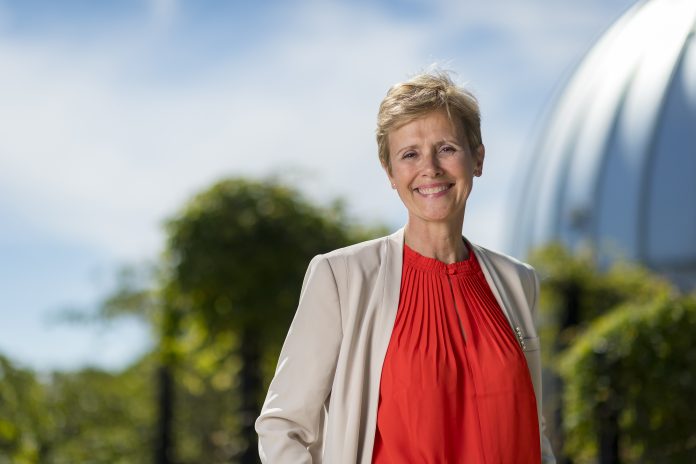
Dr. Joy Johnson began her term as president and vice-chancellor of SFU on September 1, succeeding Andrew Petter who held the position since 2010.

President Johnson stated that she felt honoured to be named SFU’s 10th President and said in an interview with The Peak, “The role is one [where] the responsibility [ . . . ]  is to provide strategic leadership for the university and to make sure that we deliver on our mission to provide excellent education and great research.”

She explained how her identity as a woman and a member of the LGBTQ2+ community shapes the lens through which she views equity, diversity, and inclusion. 

“I am also proud to say that I’m part of the queer community [ . . . ] I think that shapes my perspective as well in relation to equity, diversity, and inclusion [ . . . ] I certainly also recognize that other people face greater barriers and that I’m fairly privileged as a white settler here in Canada [ . . . ] I really feel passionate that we have work to do related to equity, diversity, and inclusion at SFU and certainly have indicated that it will be a priority moving forward.”

Additionally, President Johnson described how the pandemic has affected students’ experience at SFU and the health and safety of everyone at SFU, stating: “The pandemic has demonstrated the inequity that we’re facing in an extraordinary way [and has shone] a light on a number of areas where we really need to do further work as a society.

“I really [want] to focus on [ . . . ]  the student experience. How do we make [remote learning] a vibrant experience, an important experience, a learning experience for our students and [ . . . ] [ensure] our students, our faculty, and our staff are safe.” Johnson added, “I’m very concerned about [ . . . ] the mental health and the stress and strain that everyone is under at the present time and I recognize we need to pay attention to that.”

President Johnson elaborated on her previous statement to how SFU is a “reflection of society.” 

“All of our institutions need to have a light shone upon them in relation to systemic racism and I am hoping to bring in anti-racism training into the university for all of our executive leads, for leadership, and also for everybody at SFU [ . . . ] The first step is education and consciousness raising around the issue [ . . . ] By making sure we’re educated and that we understand what the issues are,” she concluded.

Having previously served as vice-president, President Johnson stated that she is, “purpose-fit” for this heavy time. She believes her background and approach fits well with the needs of the SFU community. 

Communication graduate left searching for the “s” she swears was at the end of her major’s name

0
Photo: Victoria Loveland / Pixabay

This year hasn’t been great for anyone. Students have online schooling to dread, and graduates are braving the “new normal” in search of work. Most of them, however, have one particular advantage: they actually know what their major is called.

Sure, graduates of 2020 probably didn’t imagine they’d receive their degree in remotely-delivered celebration boxes, but they knew what was on the paper inside. They knew what would go on their resumes, their LinkedIn profiles, their Facebook accounts. 

This was not the case for Marsha Harold, graduate of the department of Communication, who recently sat down with The Peak for an interview to discuss her experiences. 

“I’m a comms grad,” she told me during her utterly confusing introduction. “But technically, I’m a comm grad, aren’t I?” 

And technically, she would be. The School of Communication has always been communication — singular. So why is it that so many SFU students, some even majoring in communication, call it communications? 

“It’s ironic,” Harold said, laughing in a way that made me worry for her mental wellbeing. “The major is all about, well, communicating. We look at, like, mediums, and how mediums help you clearly get ideas across. But this isn’t a clear idea. This is a messy idea. The only way it’d be funnier is if this were, like, linguistics.” 

Harold brought out her degree and, sure enough, it read that she had graduated as a communication major. 

“At first I thought it was because I transferred here from Kwantlen,” she continued. “Over there, it’s called communications. Weird, huh?” 

Before I could agree, she continued.

“To make matters stranger, Kwantlen’s abbreviation for Communications courses was COMM. So I took COMM 1100 and such. Sidenote, why do they use four digits over there for their courses? Is it to compensate?” 

I shrugged. Probably to compensate, yes. 

“Anyways,” Harold went on, “you know what’s downright bizarre? The course abbreviation for SFU’s communication classes, and that’s communication — singular — is CMNS.” Again, she shoved her degree forward. “C-M-N-S. Ssss. Where’s the “s” here, though? Why is there an “s” in the abbreviation, when there’s none in Communication?” 

I didn’t have time to get any theories in. She was on a roll, spit flying with all these “s” sounds.

“I think it’s a coverup,” Harold said in a hushed tone. “Some kind of scheme. While all my peers were doing joint majors and co-ops, y’know, securing their careers or whatever, I was figuring out why this had happened.” 

We asked if she had any ideas or leads. 

“I bet it’s an algorithm thing,” she told us, her eyes alight. “People only want communication or communications-with-an-S degrees. Not all of us will make it. Someone is trying to keep us unemployed.”

I reminded her about her comment that her communication peers were getting joint majors and doing co-ops successfully. This only made her angry. 

“What about those of us who just wanna coast by on a nice degree and watch TV for homework?” she demanded. “What, do you want me to be an IAT kid, too? You want me to learn programming? Or take the English joint major and write even more essays? That would only get in the way of me working on this.” 

Harold continued insisting that solving this mystery was what she was meant to do. Truthfully, it is puzzling that the course abbreviation is CMNS when the major is communication, but I doubt it’s because of a massive conspiracy. SFU is just like that.

Student has life-altering epiphany in the complete silence of a Zoom breakout group

0
Photo: Nikita Kachanovsky / Unsplash

Quarantine was in full swing, and due to my own poor choices, my classes were, too. The beginning of online lectures were rough enough with my HBO subscription providing me a 34-minute attention span. Three hour online lectures were the perfect time to binge-watch my remaining brain cells away. About halfway through an episode, I flip the window on my laptop back to the Zoom meeting. To my unpleasant surprise, there lay the face of my scowling professor staring at me. I then notice I’m the only person left in the main meeting. Uh oh . . . 

“Where have you been? I’ve been trying to get you to go into your breakout room for the past few minutes?” muttered my clearly thrilled professor.

“Oh? Sorry about that. I think I was having some connection issues.” I knew that wasn’t true, and so did my prof, but neither of us had the energy to pursue the topic. She sighed and told me to join the group, and so I did. But I did not realize what was to come. 

I joined the breakout group as I would any other Zoom call: video turned off, voice muted. The screen loads and I see the other three group members. My classmates appear to stare at me, though I know their eyes only linger on their screens in search for something to pass the time — as long as it’s anything but speaking aloud about the discussion question. 

I watch one of them order a bulk pack of Fruit of the Loom underwear on Amazon through the reflection in their glasses. Another is browsing the Tinder meat market, swiping right at an unholy pace. They’re shopping in bulk. The last one seems very rather disappointed by the rest of us, but still isn’t saying anything at all.

I stare into the four soul-sucking windows on my screen in deep introspection. Usually I’m not one for dwelling on such deep thoughts at 11:30 a.m. on a Tuesday, but the alternative was talking about Jane Austen, so the choice was rather obvious. 

I honed in on each of my classmates, each as an ingredient in the overall sandwich that is quarantined online classes. The whole image was unappetizing overall, like an egg salad sandwich stuffed with sardines left on the floor in the middle of the AQ for a few days. Stepped on by Air Force 1s, briefly examined by a Beedie student doing a cost-benefit analysis to determine whether or not they should eat it, and then left rejected on the floor, the four of us sat in silence for what seemed like hours. The only sounds that broke the quiet were our melancholic mutters of agreement to the one student who insisted on typing out a mini thesis to the discussion question in the chat box.

Together we created a monstrosity of a sandwich that should not have existed in the first place. And indeed, it did not truly exist. It was a metaphorical sandwich of the mind, the only physical trace being the toxicity lingering on my breath. 

There I was, more self-aware than ever. 

I checked the time. Only five minutes had passed. As I blinked my eyes, my classmates dissolved and my professor was on my screen again. This time the scowl had deepened.

“So are you going to join the breakout room or not?”

I didn’t respond, and just slowly hovered the mouse over the disconnect button. I cherished the feeling that came with my sweet release from the class. I don’t think I’ll learn much this semester, but what I’ve already learned is just how dangerous day drinking can be.

What Grinds Our Gears: SFU’s bookstore should be helping me find books

0

Having the correct copy of a required course reading is extremely important. That’s why I primarily rely on the SFU Bookstore when purchasing my course materials. However, for the second semester in a row, the bookstore has elected to operate solely online, using VitalSource to assist students in tracking down ebooks that fulfill their course needs. This service is useless to me because a majority of the books I need are not available in a digital format. It’s also pointless because my professors tend to want students to have physical copies of the assigned books for engagement during synchronous sessions.

My professors have noticed the bookstore’s lack of course material too. “I am writing to ask you to consider ordering this textbook from Amazon,” one of them addresses my class in an email. I’d rather not line the pockets of a man whose net worth is larger than the endowments given to Harvard, Yale, and the University of Texas combined — but desperate times call for desperate measures. 

At the SFU Library, you can now pick up holds or request digital scans of book chapters. I don’t see why the bookstore can’t resume in-person pick–ups as well, with obvious safety measures in place. The library doesn’t have as large a variety of materials as the bookstore, so those of us who need physical copies of texts are forced to spend more time and money elsewhere. Given the world we live in at the moment — full of financial insecurity and limited business operations — the SFU Bookstore should be doing more to ensure that SFU students are well-equipped for their forthcoming studies. 

The recollections of an SFU Boomer

0
Illustration: Tiffany Chan / The Peak

Here’s the skinny of it: incoming students for the online Fall 2020 semester are getting off too easy. They get to wake up at 8:29 a.m. for their 8:30 a.m. lectures, go to class without pants, and munch on a family-sized bag of Doritos without the ensuing glares from their professor. Quite frankly, it’s not fair and it really ticks me off. They haven’t had to work for their SFU experience the same way us veterans had to!

When I started at SFU, I had to trek 10 minutes from my dorm to my morning lecture, relearn the dense campus labyrinth along the way, and dodge small talk with my kooky neighbour who’s always fishing for compliments! And all this for what? Just to sit in the most uncomfortable chairs while the drilling sounds of my professor and those outside just drone on?

These newbies will never know the struggle of pushing against a traffic jam of kiddies more obsessed with their Snapchats than the safety of others just trying to get to class. What’s worse is when you’re late leaving because your last professor in WMC wouldn’t stop talking about their breakfast burritos. We couldn’t just click a little “Leave Meeting” button and see them on the flip side. No, we had to sit through the entire lecture and we couldn’t just turn off a camera and audio when we had to go to the bathroom. I bet these whiny, Canvas-only, video-chatting teens were too lazy to even learn cursive.

Don’t even get me started on living on a mountain. These little squirts are missing out living in their cute little climate controlled rooms in their cute little stable WiFi houses! I once ran into a coyote outside Technology and Science Complex 2 when I was walking to the store at night, and the little devil just started trotting my way. I was just trying to go to Nesters for my organic, non-GMO, gluten-free, diet white grape juice. 

We, the real students, got stuck on campus in the snow and ice when buses couldn’t make it all the way up. I felt about ready to become Jack Torrance from The Shining, stuck in my dorm with a 10-page paper trapped on a snowy mountain with no escape in sight. That’s the real SFU experience. And all the first-years these days are too busy being wet rags and sitting on their phones instead of getting out and smelling the fresh mountain air!These wussies are just starting degrees, not having to work for it at all. No student athlete cults, no construction waking them up, no searching for the AQ 4th floor classrooms, no real hard work. We really paved the way just to watch them through a grainy Zoom call as they sit in bed with their computer notes and home brewed coffee. Stop dipping in my Kool-Aid and do something productive for once!