Home Blog Page 405

SFU fails to properly consult Indigenous students (again) and peoples regarding new First Peoples’ Gathering House (again)

1
Joy Johnson speaks at the First Peoples' Gathering House ceremony with attendees following physical distancing recommendations. Image courtesy of Joy Johnson's Twitter, @drjoyjohnson.

On Orange Shirt Day, SFU held a ground awakening ceremony for the First Peoples Gathering House (FPGH), which will open in 2023.

The FPGH will be a space on the Burnaby campus that is meant to create a “safe, welcoming[,] and supportive environment for Indigenous students, staff, faculty, and community members,” according to the Office of Aboriginal Peoples. 

But to accomplish that, wouldn’t input from Indigenous students, staff, and faculty, and Host Nations, be required to create a culturally appropriate space? First Nations Student Association (FNSA) and its members certainly believe so.

“[SFU] definitely need[s] to be focusing more on getting proper representation of Indigenous student voices, because that’s something they’ve been lacking there,” said Kali (she/her/hers), treasurer of the FNSA, in an interview with The Peak. 

“There was no proper outreach to hearing indigenous student voices and [ . . . ] a lack of representation at their meetings of Indigenous students [ . . . ] [T]hey need to be hearing what is proper protocol within the Host Nations, especially when it comes to creating a ceremonial space. That’s a part of our recommendations,” continued Kali, referring to the association’s statement released on October 1, 2020.

The statement outlines a list of recommendations for SFU to follow in regards to the building of the FPGH.

  • “Proper and ongoing consultation with Host Nations[, including] but is not limited to protocol around ceremonial spaces, consultation to key community members from Host Nations, this includes Chief and Council, Elders, Matriarchs, Knowledge Keepers.
  • Proper and ongoing consultation with key pillar community members, such as Indigenous Student Centre and First Nations Student Association[.]
  • Indigenous student outreach to ensure Indigenous student voices are heard[.]
  • Ongoing updates about the First Peoples[‘] Gathering House process that are public and accessible[.]
  • More student involvement and seats on the Aboriginal Reconciliation Council[.]
  • Meaningful consultation with SFU and the ARC Report.”

Joy Johnson did not respond to an interview request but Ron Johnston, Director of the Office for Aboriginal Peoples (OAP), responded on behalf of SFU to requests from The Peak regarding the FPGH.

 “SFU has carried out an extensive consultation process regarding the First Peoples’ Gathering House and that process is ongoing. Consultations began in September 2016 through the work of the Aboriginal Reconciliation Council (ARC), in which the need for a ceremonial hall/longhouse was identified, “stated Johnson. 

“ARC engaged a board range of groups over a year of consultations comprising open forums and information sessions, and the committee included student representation. Consultations continued in 2019 to choose the site for the facility, to define the project vision and site program spaces.

“On November 5, 2019, a vision workshop was held with the Indigenous Student Centre (ISC) staff and students. In January 2020, a site-focused workshop was held at the ISC and an online survey was made available for students who couldn’t attend.”

In an interview with The Peak, Zachery (he/him/his), an FNSA Representative, added that “the conduct of building our ceremonial space is very important too [ . . . ] [W]hen you’re building a ceremonial space, a lot of things that people, settler architects, don’t know about [is] that they need to verify with Host Nations.”

Urban Arts Architecture Inc. (UAI) is being tasked with building the FPGH. The OAP shared a detailed report from UAI with The Peak regarding their vision, program, and site selection for the FPGH, which includes information about the project and their engagement process. 

However, when the FNSA were asked if they had seen this report before, Kali responded, “No, this is new to us[,]” which speaks to their concerns about the lack of proper consultation with Indigenous students at SFU. 

Lead architects Jake Chakasim, Shelley Craig, and Ouri Scott were at the ceremony and blanketed to honour them. Two of the lead architects are Indigenous: Scott, a Tłı̨chǫ Dene architect from the Northwest Territories, and Chakism, a Cree intern architect from the Mushkegowuk Territory in Northern Ontario, both of whom live in Vancouver.

These nations have different protocols for gathering houses, so while Scott and Chakism currently reside in Vancouver, it will be important for them to consider the protocols of the unceded territories of the Musqueam/xʷməθkʷəy̓əm, Squamish/Sḵwx̱wú7mesh, and Tsleil-Waututh/sel̓íl̓witulh Nations.

But Craig’s role as a white person and founder of Urban Arts Architecture is critical to ensure the voices of these nations are heard. Matthew Provost (he/him/his), SFSS’ VP of Student Services, said in a statement released from his Instagram, “The onus should not be on Indigenous [peoples] to take up the emotional labour and explanation on why we need to be present in these discussions.” 

Craig’s privilege in being white and in a position of power has to be used solely for the benefit of Indigenous students, and Indigenous peoples from these Host Nations. Fortunately, she has a background in advocating for Indigenous peoples as she recently been working to Master Plan the University of Victoria’s Law expansion to accommodate the first Indigenous Law program in Canada.

Zachery continued, “[The] [b]uilding of ceremonial buildings [is] sacred and they need knowledge keepers, they need matriarchs, they need elders [ . . . ] they need people to come in and guide them through it. 

“Otherwise, what they’re building can’t in good name be called a ceremonial space, because it’s not made of that good medicine,” a term used by Indigenous peoples, which Kali describes as “something that is good for you mentally, spiritually, physically, and emotionally, and is done with good intent.”

Despite Johnston’s statement on behalf of SFU, the FNSA believe that the good intent is missing with the lack of Indigenous consultation, specifically amongst students from SFU. Provost echoed these sentiments in a statement released on Instagram, “Spaces that are intended for Indigenous students and Indigenous communities without their input or experiential knowledge are not spaces for them.”

While SFU has consulted with Indigenous community members such as Chief Leah George Wilson of the Tsleil-Waututh Nation (lead speaker at the ceremony), and Eldon Yellowhorn, an SFU alumnus and member of the Aboriginal Reconciliation Council, it is not enough.

Johnston continued, “Twelve workshops, tours, presentations and open houses have been held so far, which included participation from Squamish, Tsleil-Waututh, and Kwikwetlem First Nations; the Squamish Nation Education, Employment and Training Committee and Language & Cultural Affairs, First Nations Student Association, the SFU Indigenous Student Centre and the SFU community at large.

“If SFU truly believes that hand picking folks to represent a whole community during the reconciliation process is adequate enough to check a box, we are here to tell you there is more that needs to be done,” expressed Provost.

“We’re hoping our letter gets the kind of critical attention needed to kind of spur change,” said Zachery. “We’re hoping that this letter is kind of like the end all to that because it’s happened so many times in the past. We just don’t want to see it happening again,” referring to the SFU Atrium built 20 years ago.

“The Atrium was supposed to be built as a space for Indigenous students, as that’s what Indigenous students and the FNSA were advocating for at the time. The FSNA even campaigned to have money allocated towards building/designing the space. In the consultation process for the space, SFU did not listen to the Indigenous students,” said Kali.

“Once the space was opened, they made it into a public space as it is used now. Even today, Indigenous groups at SFU do not even have priority to book the space if we would like to use it. This is just another example of how SFU does not prioritize Indigenous students when doing Indigenous projects, as this space was supposed to be for Indigenous students and now we are not even able to use it.” 

Still, Kali and Zachery feel hopeful “that SFU will do this in a good way [ . . . ] [T]he letter we felt was necessary to show our concerns as the [FNSA], representative of the Indigenous student body.”

But Provost stated, “I am tired of seeing the onus being put on [us] to fix the problems these institutions created. Indigenous students’ voices are [ . . . ] central to reconciliation, decolonizing, and Indigenizing institutions. Reconciliation in an academic setting [cannot] occur unless you include Indigenous students.”

“Like the saying goes, nothing about us without us, and that should be at the forefront of their mind when it comes to Indigenous-related building [and] projects,” declared Kali.

“I stand in solidarity with the First Nations Student Association’s letter and recommendations that have been towards SFU and the [ARC]. I will do my best to support whatever you need,” 

Provost concluded with a message to the university, “SFU[,] I promise to hold you accountable because Indigenous students are tried. It is time to support your Indigenous students SFU, it’s time to do better. 

“Prove to us reconciliation isn’t dead.”

Johnston ended his statement, “[The OAP] will be reaching out to the FNSA to discuss their concerns and look forward to continuing to work with them, and others, on this important project.”

 

Virtual reality training to launch for health care workers in BC

1
PHOTO: Bermix Studio / Unsplash

SFU professor at the School of Interactive Arts and Technology (SIAT) Dr. Steve DiPaola is leading an international team of computer scientists, artists, and cognitive scientists to create a COVID-19 Virtual Reality Training program. The project utilizes virtual reality (VR) programs as well as artificial intelligence (AI) to train nurses during the pandemic.  

In an interview with The Peak Dr. DiPaola, who oversees SIAT’s iVizlab, noted that this is because nursing “practicums have been held up” or cancelled due to COVID-19. He is currently leading a team to use “AI for social good” so nurses can complete their virtual educations in an immersive environment. 

Nursing relies on human interaction for quality of care — by allowing nurses to interact with characters in VR, they are able to learn the skills they need without putting themselves or patients at risk, according to Dr. DiPaola. This training will use “virtual characters [that] have their own brains” and “are fully embodied with gesture and facial animation.” 

Dr. DiPaola explained that they are aiming for a sense of realism in the way the VR characters move their bodies and faces. This is a challenging aspect of a virtual nursing practicum because through VR, the professor and nurse could have a difficult time discerning whether students are interacting with patients correctly. He expanded on this by comparing the way a professional nurse and a learning nurse might wash a patient’s face differently, despite both being successful movements. However, some learning nurses might wash a face differently than a professional, but with unsuccessful movements. The team is working to plot all the ranges of movement in a variety of settings within unofficial categories of unsuccessful and successful procedures —  allowing nurses to see if their students are moving correctly within a VR.

Most AI systems that the public interacts with — such as Apple’s Siri and Amazon’s Alexa —  are designed to register simple question and answer pairings. Dr. DiPaola noted that those systems “[don’t] have a lot of memory or personality” and iVizLab aims to build more of an “empathy-based personality engine.” Empathy in AI is a “technology that is new” to the field, according to Dr. DiPaola. 

Dr. DiPaola recognized that in British Columbia, they are pending approval to have VR healthcare training recognized in an education setting. He noted that their branch in Australia has received approval and is expected to begin their training with personal protective equipment by the end of the month. Pending approval in British Columbia, Dr. DiPaola said that they are “trying to be worldwide leaders in how [VR healthcare training] might happen.”

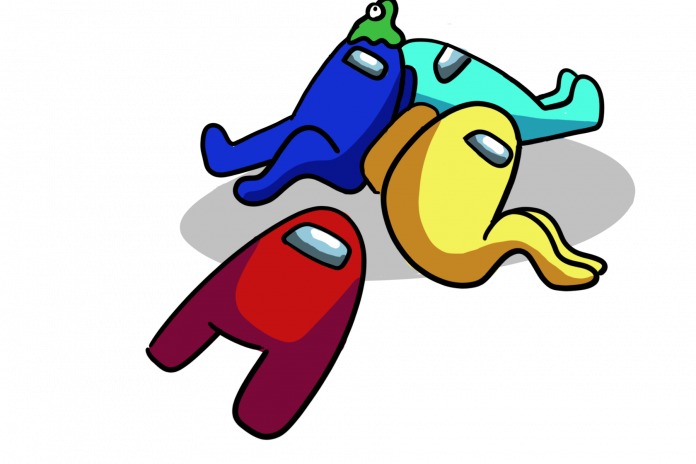
Among Us is amongst the most relatable games for SFU students

0
ILLUSTRATION: Johanna Jucutan / The Peak

If online school taught me anything (not that I’m too sure it has) it’s how to be antisocial and how to procrastinate. What better way to utilize both these life skills than with Among Us, the game that promises betrayal following useless tasks — just like my English class breakout groups always making me present our pissweak arguments to the class. 

Sure, there may be some differences between exhausted students on Zoom and headless Teletubbies (or maybe not), but group projects hit differently when you’re on a virtual spaceship. Yeah, there’s still that one person who doesn’t do any work — in this case, the impostor — and yeah, instead of just slacking off they might try to kill you. But doesn’t having to write their entire portion of the assignment feel like being killed, anyway? 

Plus, in Among Us, you pull a me after one (1) date and turn into a ghost — only, like, your character actually dies in the game. Big difference. You can’t tell me that you’ve never wanted to haunt the person who cost you that 80% in the group project because they dropped the course the day before it was due. 

Among Us preps you for your online discussion boards — you know, the ones you read two pages of the 40-page reading for, pray for a Sparknotes summary of, and end up calling your semi-related comment a masterpiece that you found off someone’s old public Prezi? Next time you play a round, simply type out these words: “I think red is sus.” In their search for those coveted participation marks, everyone will agree with you even though they have no clue what’s going on. If you want to spice it up a bit, swap out red for blue. This will create the kind of spirited, in-depth analysis that your TA has wet dreams about. 

Have a midterm coming up? Are you not emotionally prepared to show the entirety of your living space — complete with questionable tissues on your bedside table that are strictly from nightly crying sessions — to the poor invigilator who has to watch you snotty sob for two straight hours? Boot up your game of Among Us and go straight to electrical. While you struggle with simple tasks (as you always have), some monster (red, I swear it’s red, red is sus) will stab you in the back so viciously that your little flamingo hat falls off your head . . . as does your actual head. If you continue to recreate those feelings of depression and shame following your failure to tap things in sync, you will soon be able to accept your failures when tapping the right answer for Canvas quizzes.

When in doubt, open the game again. Succumb to the powers that be and allow your fellow crewmates to launch you into the darkness of space for suggesting that blue vented. It’s better that way. 

Just watch out for red. Red is sus.

A fevered conversation between a student and professor at 2:37 a.m.

0
PHOTO: Gery Wibowo / Unsplash

11:42 p.m.

hi Dr Gawner,

my name is Lindsay Haugh. i am in your psyc 388 class. I will be honest, I started the paper due tonight a few hours ago and i do not think I have it in me to finish another 7 paragraphs. I am so tired. this is a long shot, but is there any way i could get it to you tomorrow afternoon

SIncerely,

Lindsay

11:45 p.m.

Hello Lindsay,

I am sorry to hear how tired you are. I am also tired. We are all tired. So tired.

Normally, I would not have even seen this email until the time you requested for your extension, tomorrow afternoon, but given the circumstances and our class being fully asynchronous, I don’t really need to worry about sleep patterns and whatnot. 

Yes, the class is actually on Biological Rhythms and Sleep, and yes, I am fully aware of the hazards placed on the body when one’s circadian rhythms are thrown off, but here I am.

Anyway, I will give you until tomorrow afternoon to hand in your paper. Please take care of yourself.

Best,

Dr. Gawner

12:04 a.m.

thank u so much Dr. Gawner for the extension thankyou so much Dr Gawner for the extension

i didn’t think you would be awake to respond i don’t get the part about the supra nucleus thing or whatever but i will google it if u are to tired its ok i dont get any of this!!!

Lindsay

1:20 a.m.

Hi Lindsay,

Sorry I took so long responding. My cat decided that this was the ample opportunity to vomit on the carpet on our stairs. Why is it always the one carpeted area of the house? Why?

If you’re speaking about the suprachiasmatic nucleus, that was the topic of last week’s discussion post and not this week’s paper. I would love to tell you its function, but my crappy SCN clearly isn’t doing a whole lot for me right now. There’s something cruel and ironic about a class on biological clocks leading to my poor sleep schedule. Or maybe it’s the existential dread streaming from climate change being practically irreversible and wondering what the point of learning psychology is when all that we currently know will become obsolete in a few decades anyway. Well, regardless.

Cheers,

Dr. Gawner

2:37 a.m. 

my cat does that too i dont know about psychology becoming obsolete but wait the paper is not about that? what is it about

Lindsay

2:41 a.m.

Hello Lindsay,

What are any of these papers really about, in the long run? Why do I assign these things to you all? I call myself a naturalist; all these apparent scientific advancements really must be critiqued. Are they advancements? Are we certain about this? 

Take a look at cigarettes. We once believed they were harmless and charming, something to hold between our grubby little fingers in clubs while we filled our lungs with smoke that kills us. What we know now, is it knowledge? Are we human, or are we scientists?

Dr. Gawner

3:01 a.m.

i do not smoke but can u tell me what the paper is on please

Lindsay

3:01 a.m.

**AUTOMATED RESPONSE**

This email is on Do Not Disturb. Message from Gmail user:

I have decided to quit my role as a professor at Simon Fraser University. Go find your frivolous psychology “facts” elsewhere. I’m done lying to myself.

— Dr. Heesa Gawner

Digital Democracies Institute receives grant to combat fake news

0
ILLUSTRATION: @visuals / Unsplash

Led by SFU Communication professor Dr. Wendy Chun, the Digital Democracy Institute received the Canadian Foundation for Innovation grant to research misinformation in the media and improve media regulation. 

Beyond Verification: Authenticity and the Spread of Misinformation is a collaboration with Goodly Labs and the Infoscape Lab at Ryerson University along with the Digital Democracies Institute at SFU. 

In an interview with The Peak, Amy Harris, the Communications & Research Coordinator of the Digital Democracies Institute noted that the project aims to explore “how authenticity is created” in news and social media. 

Harris explained that inauthentic information, known as fake news, can have extremely negative implications on society. She noted that in recent months, fake news has interfered with COVID-19, particularly “how [misinformation] can spread conspiracy theories” and “[undermine] institutions that really should be relied upon,” such as medical officials. Fake news also has the ability to “impact election results [and] undermine trust in media sources and in politicians.”

Harris reported that they are “still in the early stages” of their project that currently has a timeline of 3–5 years. Once their research is complete, they’re planning to create legislation to “promote authentic views and try and combat the misinformation” in media. Details on their policy plans aim to be solidified in the coming years, according to Harris. 

As stated by Digital Democracies, they “integrate research [ . . . ] to address questions of equality and social justice in order to combat the proliferation of online ‘echo chambers,’ abusive language, discriminatory algorithms, and mis/disinformation.” Echo chambers are created when people subscribe to a single and repeated perspective in the media, which allows misinformation or fake news to be confirmed by multiple sources, unchallenged by a new perspective. The project declares that “fake news threatens democracy in Canada and globally.” 

Another research stream within The Digital Democracies Institute is the From Hate to Agonism project. It looks at how society uses conflict “not to foster hate and hate speech” but to use conflict as a vehicle for “debates and democratic dialogue” within media platforms. Through this project, the Digital Democracies Institute maintains that “conflict is a part of democratic dialogue.”

The institute in its entirety is a “group of diverse scholars and stakeholders from around the world.” Their main lab resides at the SFU Burnaby mountain campus in the School of Communication. 

My Duo: the Duolingo Owl Horror Story

0
PHOTO: Gudrun Wai-Gunnarsson / The Peak

It was just after 10 o’clock. I’d finally submitted my essay on Canvas, and my burning eyes demanded I close my laptop for the night. Instead, of course, I unlocked my phone. Amongst emails, notifications, and texts, there my relentless frenemy was: Duo, the green Duolingo owl. 

Usually, the notification reminds me to take daily French lessons. Every day, I swiped them away. Pas maintenant, monsieur. My grade 10-level French wasn’t getting any better. I didn’t need an owl to remind me of this. 

Tonight, the notification was different. 

“These reminders don’t seem to be working. We’ll stop sending them for now.” Thank God. I stared outside at the darkness then rubbed my eyes. When I opened them, I yelped at what I saw staring at me through the window.

Massive and enshrouded in darkness, except for a pair of bright, crazed eyes, was the slime-green language king himself. 

“Salut, mon élève,” he shouted. “Or do you not know what that means, you stupid bitch?” Smashing the window pane with his talons, he stepped into my room. 

I needed to atone, and fast. “Duo, I’m so sorry—” 

“ENOUGH!” he yelled. “I try every day to teach you this precious second language. You’re the one who wants a governmental job, not me.” He shook his head, pulling from under his wing a bottle of Orangina, the French soda. He untwisted the cap and downed it in one go. “Non, I just came here to teach you a lesson and drink Orangina.” With a swing, Duo smashed the bottle on the countertop, creating a glass dagger. 

“And I’m all out of Orangina.” 

Duo lunged forward and I scurried back, looking around for an exit. 

“There must be something I can do,” I begged. He screeched and waved the glass shard in my face, feathers flying across the room with every swipe. 

“Well, you could’ve parlez-vous’ed en Français, but here we are.” 

I ran towards the door, but Duo stepped in front. 

“I know French, though,” I insisted. “I took it in school!” At this, Duo stopped and narrowed his eyes. 

“Prove it.” Merde. I couldn’t possibly. 

“En Français, tell me I deserve better students and you’re a disappointment to the French language,” He said, pushing the side of the makeshift blade against my collarbone. 

I swallowed, trying to remember what my old nemesis Madame Windsor had drilled into my mind. 

“DO IT!” Duo screamed. 

“Okay, okay! Hang on.” I took a deep breath. “Tu—” 

“‘TU’? What am I, a school chum? Give me a ‘vous’.” 

“Okay, fine! Vous—” Shit. I had no idea how to conjugate. “Vous sommes? WAIT NO—” I ducked as Duo whipped the bottle at my head. “Vous être! Vous être!” 

The owl stepped back and put a wing to his forehead, shuddering. “Mon Dieu, you really don’t care about French, do you?” With glass shards everywhere and sweat dripping from his clumped feathers, he seemed shaken. 

“I do! That’s why I take your lessons!” He looked up. 

“Really?” 

“Yes,” I straightened my shoulders. “That’s why I won’t skip a single day from now on.” 

Locking eyes, he stared. “Promise?” 

“Promise.” 

He looked at his watch. “Well, that only took 10 minutes. Pretty good!” He waltzed towards the window. “Only 238 more to terrorize tonight. They aren’t going to motivate themselves!” Dumbfounded, I tried to object but couldn’t. “Adios! Wait, damn it . . . Salut!” Just like that, his green wings carried him into the night. 

When you hear my impeccable French, know it isn’t out of dedication or love. It’s out of stone-cold fear. And it could happen to you, too.

W.A.C. Bennett Library and Lorne Davies Complex expand in-person services

0
PHOTO: Gudrun Wai-Gunnarsson / The Peak

SFU Burnaby has expanded select services to open under certain protocols and restrictions for the rest of the Fall 2020 semester.

Only the main floor of the W.A.C. Bennett Library is open for use Monday through Friday between 1 p.m. and 5 p.m. Along with the library itself, students will have access to library equipment, such as computers, scanners, and seating space. 

The library is only open to current SFU students and will be required to show their SFU ID upon entrance. Students must follow social distancing protocols, are recommended to wear a mask, and must use the hand sanitizer at the entrance.

There will not be any in-person services at the library. If a student wishes to rent a book they may request it on the SFU Library Catalogue — with the option of a contactless pick-up or digital delivery. There is also the  option to speak to a librarian online, for any questions that arise. 

SFU Athletics & Recreation have also recently announced the reopening of the Lorne Davies Complex with access restricted to the swimming pool and fitness centre. Facilities may be used by SFU students, staff, and faculty, and requires registration before arrival.

Drop-in services will not be available, and anyone registering for use is limited to a one-time slot per facility, per day. There is a three-strike policy if someone who is registered doesn’t show up to their scheduled slot. Anyone registered may cancel their booking 30 minutes prior to their scheduled time. 

Upon arrival to the facility, students will be required to show their SFU ID and will be asked COVID-19 screening questions, such as whether they have symptoms and travelling details. They will also have their temperature taken, and social distancing is still in effect where possible. Masks are recommended when entering and leaving, and users are asked to have their workout clothes on upon arrival since the change rooms are closed. 

For more information regarding the library and athletic facilities, visit their respective websites.

What lies beyond the mysterious AQ ice cream machines?

0
PHOTO: Amy Shamblen / Unsplash

There I was on a rare sunny fall day — socks up to my knees, Chucks on my feet, and a moustache thick enough to make Tom Selleck question his masculinity. My shorts were especially short, my tank top tucked into the waistband. The craving for old frostbitten ice cream hit me, filling my lactose intolerant heart with dreadful desire.

With Yung Gravy and bbno$’s “Welcome to Chilis” pumping, I strutted over to the local AQ snack station, my whiskers wet in freezer-burning anticipation. After a solid five minutes of rummaging through my fanny pack for change, I finally fished out $2.75, the exact amount to purchase the coveted Klondike ice cream sandwich. It’s the freakin’ gold rush, baby. Until . . .

Suddenly, disaster struck when the machine ate my change and left me standing there like a chump. Well, I wasn’t gonna have any of it. I did what any 2007 Peewee hockey champion would when faced with adversity. I threw the biggest hip check I could muster into that son of a bitch. To my own surprise, the machine opened right up. 

It seemed like the vending machine was a door that led into a narrow passageway. Doing what any smart character in a horror movie would do, I slunk down the passage just to see where it went. I eventually got to an elevator covered in drawings of ice cream cones. I was totally stoked. I thought I had found SFU’s secret ice cream vault — after all, if I had a bunch of students paying me thousands a semester, the first thing I’d do is make an ice cream vault. 

The elevator dinged as the doors opened. I expected ice cream as far as the eye could see. Instead, I got endless sausage. 

I was greeted by a colony of nudists, bodies splattered head to toe with ice cream. They moved pretty quickly as they swarmed me, picking me up over their heads and carrying me further into their subterranean lair, all while chanting the names of their gods: Ben, Jerry, and The Great Sundae in the Sky.

I was made to be their king, and as such I gifted them all the French Rap music I had on my phone. They explained their theology to me; we all live to serve the Great Sundae in the Sky and its sons, Ben and Jerry. In death, they told me of how the best of us are chosen to be toppings for the Great Sundae in the Sky, and how I was to be the next sacrifice. It was a great honour.

After several sticky happy-ending massages, I was ready. These are to be my last recorded words, as somehow the crap SFU WiFi is stronger down here. So long, my friends.

Student accidentally failing class they didn’t even know they were enrolled in

0
PHOTO: Ahmed Ali / The Peak

SFU student and film major, Khan Fuzon, recently came forward with a complaint to SFU administration regarding a course mix-up. According to Fuzon, after the university accidentally enrolled several students in PSYC 241, he, against all odds, remained enrolled in the course after the situation appeared cleared up. 

“I don’t know, dawg. I’ve been going to this class since the semester started. It was on my schedule and all, so obviously I went. I guess it just didn’t occur to me that abnormal psychology has nothing to do with film,” Fuzon said in an interview with The Peak.

Fuzon explained how the incident was fuelled by his gradual fall into existential dread after the transition to online learning in the spring. He also noted that the online versions of his courses had merely become automatic figments in his day-to-day life, unrecognizable as assets to his search for knowledge. He would probably have remained in the course for the rest of the semester if he had not received an email from a confused TA. 

“Hi Khan,” the TA’s email began. “I’ve noticed that you haven’t handed in any assignments this semester, just an astonishingly in-depth analysis of Shrek 2. I want to remind you that this is a psychology course and am also wondering if you are going to continue in the course, considering your current grade?”

The student attended both the lectures and tutorials for the course, but has been so mindlessly uninvested that he never picked up on the course’s vastly different content. He added that the professor played a video clip in the first lecture, so he didn’t think much of it. 

“I dunno, both classes were talking about gatekeepers. I was used to Tarantino apologists in my major. What’s the difference between a guy liking feet and a guy who thinks everyone wants to fuck their mom or whatever?”

He wasn’t surprised to discover he was enrolled in a class he didn’t sign up for, since “nothing is surprising anymore, especially at SFU.” 

“Nothing matters anymore,” the fourth-year student sulked. “At this point, I’ll attend any lecture as long as I just get the cardboard pizza box in the mail with my diploma in it.” 

When asked about the hundreds of Canvas emails others mistakenly enrolled in the course sent, Fuzon said, “Yeah haha, I don’t check that shit anymore.” He said he only happened to check his email after using his SFU email for a free trial of a sketchy streaming website when he stumbled upon the notifications from the course. 

“The worst part is that SFU charged me in tuition fees for the course,” complained Fuzon, “and I’m failing pretty harcore.” 

The film major complained to SFU about the enrollment accident, explaining that he “straight-up didn’t notice” the extra course on his Canvas homepage. After spending several hours emailing his complaint and not receiving a response of any sort, Fuzon has simply accepted the course failure, saying that “it is what it is.”

Top ten things that probably made me gay

1
Very calm, very cool. Nothing wrong here. Illustration: Siloam Yeung / The Peak
  1. “Everytime We Touch” by Cascada

When middle school me heard this Eurotrash 2000s staple for the first time, something awakened. Little did I know that something would grow and manifest into a desire to bump butts to this song at any gay club I could get into several years later. Truthfully, the only thing gayer than this song is bottoming, but I find listening to this song a lot less painful and it requires less crying (depending on the context.) Besides the song itself, the music video really unleashed the gay in me. With singer Natalie Horler’s choppy highlights and scene-stealing choreography in the middle of a library, Cascada solidified the gay mantra: go through some questionable hair choices, but always pull focus. 

2. The men’s underwear section of Wal-Mart 

You might not think Wal-Mart would be the birthplace of many gay awakenings since the energy Wal-Mart radiates is the culmination of a room-temperature Monster energy drink, broken shopping cart wheel, and unkempt handlebar moustache. But picture, if you will, a young, wide-eyed child bored out of their mind, dragged along on yet another shopping trip to Wal-Mart by their parents. After perusing the children’s clothing section, they stumble upon the men’s section, moving through the aisles of outdated graphic tees and horrendous walls of camouflage clothing until they reach the Holy Land of Packages: the men’s underwear section. You thought that child was wide-eyed before? Imagine how wide-eyed they are face-to-face with shredded dudes in Calvin Kleins and Fruit of the Looms, junk perfectly at eye-level and abs so close they can taste them. And thus with the gayness awakened, Wal-Mart’s slogan “Always low prices” manifests into the gay slogan, “Always low morals.” 

3. Playing as Princess Peach in Mario Kart 64

Ah yes, the selection screen of Mario Kart 64. I’ll never forget the days of seeing that roster as a youngin’, moving swiftly past the horrendous moustaches, an ape, some lizards, and a butt plug with eyes, until finally selecting her — the mushroom baddie herself, Princess Peach. Now, playing as Peach as a little boy was definitely met with some teasing, but I’ll never forget how fabulous it felt driving as the princess with her vibrant pink dress, gorgeous blonde hair, and worthy crown atop her head. As a gay, Peach was/is everything: men want her so bad they rescue and/or kidnap her and she’s royalty so you know she’s got money. Not to mention the fact she’s literally Princess Toadstool, so she’s royalty to a bunch of walking butt plugs — princess? No, that’s Queen behaviour.

4. Bananas

My favourite fruit growing up was always the banana; it had the best taste, was easy to acquire, and, of course, it’s shaped like a shlong. OK, it took me a while to discover that last factor was so important, but subconsciously I guess younger me knew from the start putting oblong objects in my mouth was the move. Fun fact: bananas are apparently a mood enhancer. I can guarantee any time a banana-esque object is in my mouth my mood is definitely enhanced. 

5. Angemon from Digimon

For anyone who needs context, Angemon is an Angel Digimon with long blond hair, ripped muscles, six wings, a helmet that covers his eyes, a deep and powerful voice, and is only wearing a loincloth. So you’re telling me as a young boy I was supposed to just enjoy my Saturday morning cartoons featuring a group of rambunctious kids and their digital friends and not fall for the muscular, long-haired, half-naked angel? One of Angemon’s signature attacks is Angel Rod — and boy what I would give to be on the blunt end of that. 

6. My wrists

Admittedly I’m very bad at languages, but there is one I’ve mastered from a young age: no, not English, I’m talking gay sign language. Growing up gay, you learn that being out and proud can often be a scary/dangerous thing, so alerting to gays around you that you are a fellow gay can be tricky. But that’s where the ol’ reliables come in, the subtle yet effective signs that you also like giving it/taking it from behind. That’s right — you know it, you love it, you mock it: the limp wrist. I’ll never forget the day my wrists went limp for the first time and Grindr immediately downloaded on my phone by itself. Since then, these bad boys have been the silent welcome signs at the club or in classes. Hot tip, if you’re at a function and need to look around the room for alliances, just look at the wrists — if that wrist is hanging limper than you were the first time you tried watching porn with a woman in it, you’ve got one. 

7. Gay jeans

For years scientists have been trying to crack the code on what makes gay people gay, even going so far as to assume there is a “gay gene.” What they should have been looking for is not found within the body, rather it’s what goes on the body — not gay genes, but gay jeans. I’ll never forget buying my first pair of super skinny jeans and feeling like my fashion sense had peaked. I thought I was the one. Looking back, my delusion must have been the result of my jeans cutting off circulation to my brain. Plus, I guess it was also hard for me to think straight having my balls constantly cupped like that.

8. My Motorola Razr

You can’t tell me that the drama of ending a phone call and slapping the phone shut didn’t manifest the horrendous, flamboyant bitchiness I exude to this very day. Mom’s late to pick you up from middle school? *SLAP* That one straight friend you really want to be close to because you actually have a crush on but don’t realize it’s a crush yet isn’t picking up the phone? *SLAP* Your cute female friend starts talking about how she likes the guy you don’t know you have a crush on? *SLAP* Motorola Razrs were the bitch slap before the bitch slap was a thing, and I live by that.

9. Any Disney princess movie

I’m sure many little boys watched The Little Mermaid, Sleeping Beauty, or any of the classics and realized that by doing heroic deeds they could win the girl. But what I learned from watching these films is that you don’t have to be the hero, you can just do nothing. Why be the one to go through all the effort of fighting a villain or rescuing the princess when you could be rescued instead? Why be a side character whose sole purpose is to appear once or twice when you can be the main character? Along these realizations was also the thought that being rescued by someone who looked like Shang from Mulan was ideal. Trust, I’d love for him to make a man out of me. 

10. That one student teacher

Every gay growing up knows about that one student teacher, the hot one who would reignite your passion for learning when they temporarily took over for the teacher you hated. As a replacement for your stuck-up, boring, usual teacher, that one student teacher was easy on the eyes and easy to fall for. It only took me a few days to realize that my growing efforts in class weren’t just because of my egotistical desire to look smart against my peers, but rather to impress this hot student teacher. Suffice to say, picturing he and I together after I impressed him made more than my brain throb during these classes.