Home Blog Page 387

SFU Stadium Project expected to be ready by February 2021

0
PHOTO: Ahmed Ali / The Peak

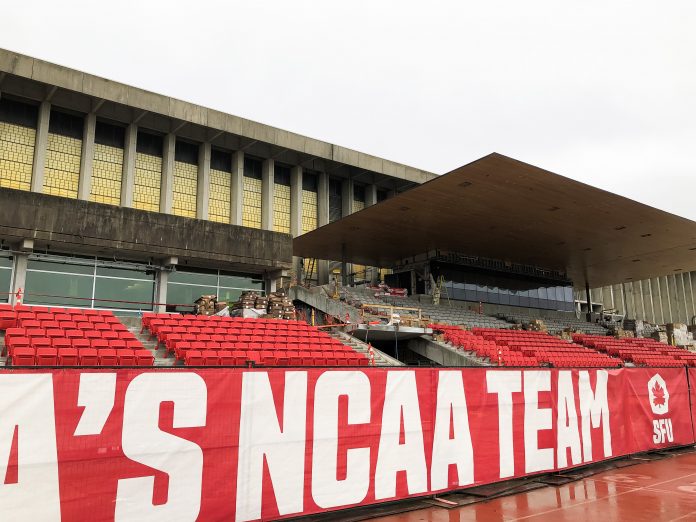
Originally scheduled for completion in August 2020, the SFU Stadium Project is expected to be “substantially complete” by February 2021, according to SFSS Vice-President of Finance Corbett Gildersleve. 

Completion of the stadium had been postponed from September 2020 to November 2020, and then until early 2021 due to delays related to COVID-19. 

In an interview with The Peak, Gildersleeve explained that safety precautions for the pandemic have impacted the ability for different trades to work on the project. Tasks that once required the collaboration of multiple workers for efficiency have now been slowed down in order to comply with social distancing measures.

“The pandemic brought upon a worldwide supply crisis that led to difficulty in attaining some key materials and components for the project,” Gildersleve explained.

In addition, he stated that “the risk of COVID-19 impacting the project further is still present” and he is “confident that the SFU project management team will take the corrective action necessary to address any delay if one was to arise.”

Estimated to cost between $18–⁠$20 million, SFU students will contribute $10 million to fund the project with the university covering additional costs. Gildersleve stated that “the payments for the stadium commence at the point of substantial completion.” He added that “delays will only impact the payment date but will not cause any increases in [ . . . ] contributions.”

The stadium will function as the “home stadium on campus for Canada’s NCAA teams,” with features such as 1,800 seats, a canopy roof, and amenities including “[an] accessible concourse, washroom, broadcast and media facilities, integrated sound system, fully accessible VIP/Sponsor box and coaches booths.’”

Regarding SFU Athletics sports teams and training activities as the stadium nears completion, The Peak reached out to Theresa Hanson, director of Athletics & Recreation for more information but did not receive a response by the publication deadline.

A live webcam is available on the SFU website showcasing updates on the stadium’s progress. 
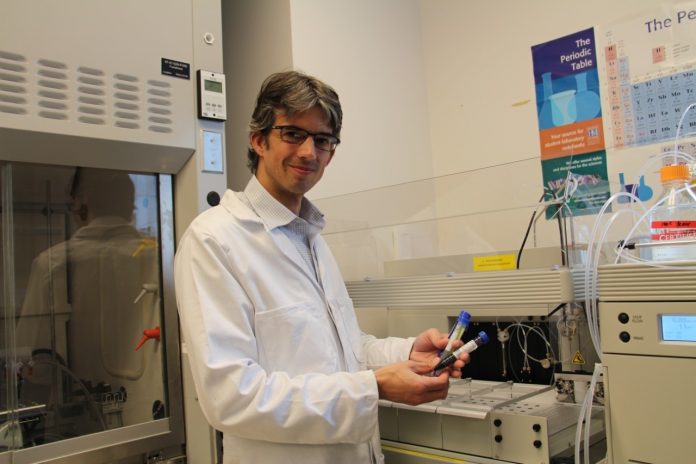
Roger Linington Advances to Tier 1 Canada Research Chair for work in natural chemistry

0
Photo courtesy of SFU News

SFU professor and researcher Dr. Roger Linington said in an interview with The Peak that his selection as Tier 1 Canada Research Chair (CRC) will allow him and his research team to “to tackle questions that would have otherwise [ . . . ]  been impractical.” 

With the CRC advancement, he is currently working on inverting the process of how natural chemistry is studied. According to Linington, “There is a long history of studying chemistry from nature,” such as looking at molecules to create pharmaceuticals or antibiotics for diseases (such as diabetes and COVID-19). 

“Those projects have historically been done on a case-by-case basis. So the way that that research was usually performed was that you might make a set of samples from the environment and test all those samples against your target item.” He added that if a sample showed promise, it would be studied “to figure out why it [was] active and which molecule [was] responsible. That’s the way in which many of our current drugs have been found.” 

His research is now looking to correct systematic flaws. “The problem with that approach is that there is an increasingly high rate of redundancy [ . . . ] [people] are finding the same things over and over.”

Linington explained that the “research program is really looking at developing methods to look broadly at all of chemical space at the outset.” He aims to “ask at the very beginning, ‘What is the full chemical landscape of this set of samples?’ and ‘What do all these samples do against some target of choice?’” With this information, his team can determine how each sample behaves and “can start making predictions about which molecules are causing which effects.”

According to Linington, “It completely inverts the discovery model for investigating natural chemistry and [can] hopefully lead to a whole realm of discoveries.”  

Linington noted that he felt it to be a great personal honour to be selected for part of the program. He said “the CRC is really a spectacular program” that allows researchers to dive into more subject areas and has a “substantive impact on the way research is performed in Canada.”

Before beginning his career at SFU in 2015 during his time in Tier 2 of CRC, Linington was working with chemical biology in Santa Cruz, California. Linington credits his ability to learn more about data science and programming to his advancement to Tier 1 of CRC.  

In December of 2019, Linington published the Natural Products Atlas which he describes as “an open atlas, that is open access, [ . . . ] of all of the natural products, or molecules of nature, produced by microorganisms. So, it’s supposed to be a comprehensive database and resource for the wider chemical community which describes everything that’s being found in the literature today from microorganisms.”

Dr. Linington was selected for the CRC program this year along with eight other SFU researchers that are working in an array of research fields. More information on the work of Dr. Linington can be found on Linington Lab’s website. 

There are too many online platforms

0
Hopin? More like Hopout. PHOTO: Marvin Meyer / Unsplash

Remember the good ol’ days of the Internet, back when there weren’t 50 million different video-posting websites, social media apps, and messaging platforms? I do, but just barely. It seems like the growth of the Internet, and subsequently the commercialization of it, has spurred the need for multiple methods to communicate, entertain, and live online. SFU has even adopted some of these excessive methods for classes and events. However, this exorbitant number of electronic channels shouldn’t be celebrated, but seen as unnecessary and potentially harmful for those who delve into their excessivity. 

To preface, I’m the type of person that really would just do away with all digital platforms if I could. But I know that I’ve signed up for countless accounts for websites that I’ve only used once, messaged the same people on different apps, and consumed entertainment media in more than one place. It’s not a bad thing to use multiple digital networks because socializing, work, entertainment, and other facets of life are so intrinsically filtered through them. But does that mean we should be forced to use them, or that more video calls apps than I can count should exist? For the sake of proficiency and privacy, no.

Other than the electronic overload that the sheer number of these platforms impose, they also bring up privacy concerns. Every website isn’t out to get a user’s information, but they do retain their information in some manner, and there’s always the risk of it being stolen by external parties. We shouldn’t have to make accounts and unnecessarily share data with multitudes of companies when it’s enough of a risk with just a couple. 

One example of a platform that doesn’t need to exist is Hopin, a video event website that was used for the SFSS’ Clubs Days. To start, the website didn’t even function well. There were constant connection drop-outs from multiple participants, confusing interface controls, and the website kicked everyone out the second the event was scheduled to end. It would have served students better if the already-familiar, already-tested Zoom was utilized so that they didn’t have to wrestle with a completely new interface. 

The SFSS likely used Hopin because the school apparently recommends avoiding Zoom whenever possible as they store their data outside of Canada. These data concerns are valid, but when students are already so used to other platforms like Zoom, switching doesn’t seem worth the hassle. Not to mention the fact that students have to give their data to a website that they will use at most three times a year at SFU. 

It’s not just Hopin that students have to use to participate in events and classes at SFU. I’ve heard of annotation websites and voice communication apps being mandatory for classes. While online interaction requires increased use of digital platforms, students shouldn’t be forced to create extra accounts and put their information at risk to learn and socialize. 

This doesn’t mean that there should only be one all-encompassing website, like Facebook is trying to be, or that there can’t be economic competition on the Internet. It’s just that if there are already thousands of instant messaging apps, people shouldn’t need more, and SFU shouldn’t be forcing us to use new platforms if we don’t have to. The majority of students’ lives are lived through screens now anyway, we don’t need any extra hassle of navigating the labyrinths and pitfalls they may bring.

SFU’s CARES program provides students in isolation with accommodation and food at a discount

1
PHOTO: Andrew Neel / Unsplash

Upon arrival to Canada, the Quarantine Act mandates that international travellers isolate for 14 days, regardless of the new requirement of a negative COVID-19 test before travelling. For SFU or Fraser International College (FIC) students following these requirements, SFU is now offering several packages to support their accommodation and food needs through the CARES pilot program, which is in effect from December 7, 2020 until March 31, 2021 — with the possibility of an extension.

The CARES packages include a subsidized 14-day hotel booking at Accent Inns Burnaby and optional hot meals, meal delivery, and grocery gift cards. The accommodation-only package is $768.50, and the package with meals costs $1472.62. Both packages include a SFU CARES Kit consisting of snacks and health products. Without the student discounts, the accommodation-only package would cost $1368.50 and the accommodation and meals package would cost $2072.62. 

CARES program also offers check-ins to students who have their own accommodation and meals but still desire support during self-isolation. Based on the volume of applications, priority for the packages may be limited to students who must arrive for their program or research.

In an interview with The Peak, Tracey Mason-Innes, Executive Director of Student Affairs, and Micaela Roughton, Associate Director of Community and Belonging, explained that check-ins for the program are flexible.

“The Self-Isolation Support Team is here as a starting place to help connect students [to] all other resources, information, and support they need across SFU as they prepare to travel and during self-isolation. Support is delivered over email, virtual meetings, and phone calls.”

Through the My Place at SFU portal, applicants are required to apply a minimum of 10 days before their flight. Students who will arrive in less than 10 days should email student support to expedite the application process.

According to Mason-Innes and Roughton, CARES Emergency Assistance funding applicants who require funding to secure a CARES package are considered priority. The one-time, emergency $1000 payment is for full or part-time SFU or FIC students, either graduate or undergraduate, who are CARES program applicants with higher financial needs.  

Mason-Innes and Roughton noted that the program’s objective acknowledges common student concerns when travelling.

“Frequent initial questions and concerns have focused on travel regulations and documentation, self-isolation options and resources, and how to access supplies like groceries and meals. We knew these common questions and concerns would arise, and the program has been designed to support students as best we can.”

Visit SFU’s website to read a guide for international students arriving in Canada and online resources for students in self-isolation.

Student burnout was a big problem before the pandemic

0
COVID-19 brings struggles, but it’s nothing that we haven’t dealt with before. PHOTO: Gudrun Wai-Gunnarsson / The Peak

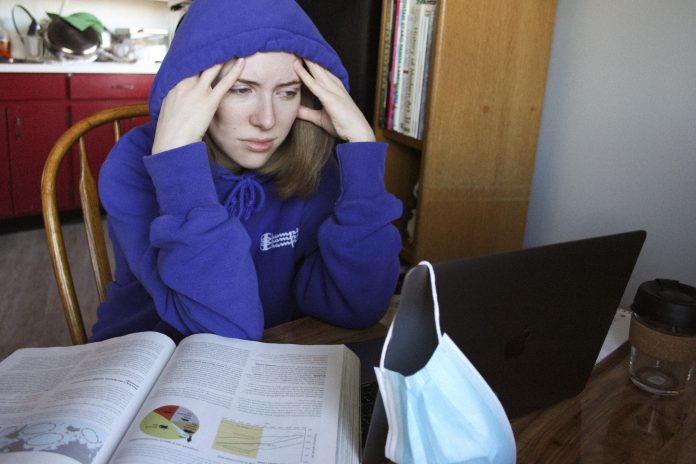
I think it’s safe to say that all of us students are exhausted, and it’s only the beginning of the semester. I miss when I was just a bright-eyed, naïve first year at SFU, genuinely excited to attend lectures. That feeling has long since faded, being replaced by student burnout. This sensation is something I am quite familiar with, and having to live through a pandemic while dealing with it just makes everything worse. But student burnout existed long before COVID-19, and it’s a shame that SFU is just truly beginning to provide aid to students to address it. 

No number of reminders to go for a walk outside will help me deal with how tired I feel throughout the semester. It didn’t help when school was in-person and I was able to do more than walk around the block for a couple of minutes. It definitely doesn’t help now when assignments keep piling up on top of each other, and professors seem to be even less accommodating in this new learning environment. 

Additionally, this continuous feeling of student burnout can be attributed to having to pay more and more in  tuition. With tuition being raised nearly every semester I have been at SFU, I have had to take more shifts at my job. It even came to the point where I had to work two jobs to be able to afford school. I had little time for self care because I needed to work more to keep up with tuition increases. 

SFU has definitely made some moves to address student burnout recently. They’ve promoted programs like MySSP, used social media to remind students to look after themselves, and even approved a compassionate grading pilot. However, these actions should have come a lot sooner. 

Student burnout dramatically affects a student’s ability to not only absorb information, but to complete assignments and exams. When I am paying close to $3,500 per semester in order to learn, I cannot do these things properly when my own financial well-being is not taken into consideration. Now that students aren’t able to use their normal coping mechanisms (like hanging out with friends), the feeling of burnout is way more apparent. It shouldn’t be on the student to deal with these issues, and SFU should try to be more accountable and offer more support for students who are feeling burnt out. 

Student burnout has always existed, and if SFU cared at all about alleviating it, they would have made impactful changes at the institutional level to help me and other students. It’s ridiculous that it’s taken a global pandemic to even make the slightest of structural changes on the topic of student burnout. So let’s stop increasing tuition and investing money into new, consistently-delayed facilities, and instead invest in the well-being of students.

SFSS and GSS aid in extending post-graduate work permits for international students

0

On January 8, 2021 the Government of Canada announced that former international students who hold, or held, a post-graduate work permit (PGWP) will now be able to renew their permit for 18 months. This will assist PGWP holders who have lost their jobs or have had to reduce working hours due to COVID-19, and allow them to continue to pursue employment in Canada.

The pandemic has threatened job security and the chance to gain the work experience needed to apply for permanent residence. Immigration, Refugees, and Citizenship Canada estimates that 52,000 graduates with expired or expiring PGWPs could benefit from this public policy. 

This policy was passed as a result of the lobbying efforts of the Simon Fraser Student Society (SFSS), Migrant Students United, and the Graduate Student Society (GSS) at SFU, as well as many other student societies in Canada. The Peak interviewed former Director of Academic Relations at the GSS Rahil Adeli, Vice President of External Relations Samad Raza, and SFSS Science Representative WeiChun Kua who all worked closely on the project.

Raza explained that as the pandemic unraveled, “the government released some information and resources to help [domestic] students but there was no mention of international students.” Raza added that many international students lost their jobs, which put their PGWPs at risk because, before the policy, the permit was non-renewable. He emphasized that this initiative was “a matter of urgency.”

Adeli told The Peak that at the beginning of the pandemic, many international students reached out and informed her about what might happen to them. She and the GSS made themselves aware of their demands and decided to start by helping people with their permits.

“If Canada wants the work and the labour and the skill of international students and migrants, [ . . . ] they have to provide adequate support, especially in these hard times.”

Immigration, Refugees, and Citizenship Canada states that international students contribute $21 billion annually to Canada. Kua felt that after such a contribution, it would be unfair to make international students leave the country over something out of their control. He said, “If Canada wants the work and the labour and the skill of international students and migrants, [ . . . ] they have to provide adequate support, especially in these hard times.”

Raza shared that he and Adeli were able to speak about the issue with Member of the Legislative Assembly (MLA) Katrina Chen and Member of Parliament (MP) Terry Beech, who showed support for their advocacy. Raza noted that they tried to “make this campaign as visible as possible” by sending letters to MPs, reaching out to student unions, bringing the issue to the SFSS, and sharing on social media to gather signatures.

Adeli added that on November 24, 2020 they also worked with Migrant Students United to deliver a petition with 16,000 signatures to the Minister of Immigration, demanding renewable PGWPs and solutions to other related issues. International students and allies organized on social media and rallied at the Minister of Immigration’s office in Toronto to push for PGWPs to be renewed. 

Adeli noted that all of their efforts “grabbed attention from media, different public officers, members of parliaments, [and] public figures,” which contributed to the implementation of the new PGWP policy. 

The government news release states that “this new policy will help more graduates fill pressing needs like health care, technology, and more.” According to the Government of Canada, allowing immigrants to remain in Canada aids the country’s recovery by “creat[ing] jobs and fill[ing] labour shortages so businesses can thrive.”

Raza and Kua also stated that they have been speaking to different MLAs and the Minister of Education about issues such as lowering tuition fees and for international students to be given permanent status.

More information about the new PGWP policy is available on the Government of Canada website.

Active Bystander Network holds consent workshop during Sexual Assault Awareness Month

0
PHOTO: The HK Photo Company / Unsplash

Content warning: mentions of and links to videos that discuss sexual violence.

The Active Bystander Network (ABN) held a workshop on January 20, 2021 for SFU and Fraser International College (FIC) students to discuss how to understand and practice consent. The ABN is a group of students working under the Sexual Violence Support & Prevention Office (SVSPO). They are “commited to raising awareness [about] sexual violence and creating a culture of care and consent at SFU,” as noted by Simran Uppal at their workshop.

The workshop was centered around participant discussions, healthy ways to practice consent, combatting rape culture, and how to react when intimate partners set boundaries for themselves.

Participants were asked at the beginning of the workshop to consider what consent meant to them and to anonymously submit their answers. The answers, read aloud by ABN member Anna Markovic, included respect, giving partners permission, having boundaries acknowledged, and understanding where their relationship is.This urged others to consider what they want and Answers also included considering what you want and are comfortable with.

ABN members discussed the importance of conversing about consent with intimate partners. Their presentation noted that “consent is a freely given yes [and is] required every time.” 

Elaborating on discussing consent with a partner, Markovic said, “[It] can definitely be awkward but I don’t think it’s a bad kind of awkward. I think it’s a kind of awkward that, if you do care about the person, you’ve got to push past because it creates respect amongst each other and a stronger relationship overall.” 

Participants were also led through a discussion about long-lasting impacts of a lack of consent. This conversation concluded that if consent isn’t present — with any instances of unwanted touch — it can lead to “guilt, trauma, hurt, fear, distrust, normalization of rape culture, and microaggressions.” 

Gursharan Singh, a member of ABN, explained that “rape culture is [the] normalization of sexual violence through a cultural attitude that promotes victim blaming, attitudes about gender and sexuality, rape jokes, and actions of sexual harrasment like cat calling or leering.”

The workshop shared a video that had been created by the Government of Nova Scotia, explaining the dangers of victim blaming, perpetuating myths about sexual violence, sexual objectification, and rape culture in Canadian communities. Singh noted that “all of these actions lead to promoting the highest form of sexual violence: rape.” He commented that “by practicing asking [for] and giving consent, we can start a culture that centers care and consent in all relationships and interactions with others.” 

ABN’s presentation also noted that consent “cannot be given by someone who is incapacitated including, for example, someone who is asleep, unconscious, or even somebody who may be intoxicated [ . . . ] [I]t also cannot be obtained through any sort of threats, coercion, or other pressures.” 

Singh acknowledged that exsisting social taboos around sexual violence and victim blaming can be challenging for survivors of assault. He said that “getting help is not humiliating, getting help doesn’t show that you’re weak, getting help means that you’re strong.”

This workshop was held in January by ABN in honour of Sexual Assault Awareness Month. ABN members included Simran Uppal, Gabriela Dodge, Aleksandra Ciesielska, Surbhi Singla, Bonnie Ng, Anna Markovic, and Gursharan Singh, along with facilitator Paola Quiros.

For more information on getting help for sexual assault survivors, visit the SVSPO’s website and their list of resources available to SFU and FIC students. ABN is currently recruiting volunteers; more information on how to get involved can be found on their website.

Teaching Languages in Global Context aims to embrace differing cultural perspectives

0
PHOTO: Debby Hudson / Unsplash

On January 21, the faculty of education held an information session for their Master’s program, Teaching Languages in a Global Context (TLGC). The program is a full-time 16-month intensive program for students from all over the world and is open to students regardless of experience teaching language. While it does contain two fieldwork courses, it focuses on theories and research and does not provide teaching certification. 

The program accepts a cohort of 18–⁠22 students, who will take “seven 5-credit courses over three terms.” Additionally, because of its focus on international students, “cultural and academic literary support” is available. 

The TGLC is focused on the “globalized context of teaching additional languages.” Program Coordinator Roumiana Ilieva explained in a previous info session held in December 2020 that “we live in a global world, where things are interconnected, but at the same time, localized. So it is really useful and important to be strengthening our perspectives [ . . . ] through understanding how other people have experienced language learning and teaching.” 

The program is expected to begin in Fall 2021, end with a comprehensive three-part examination in Fall 2022, and will hold Convocation the following June. The course will focus on everything from language acquisition theory to socio-cultural perspectives on education and identity. 

Applicants are required to have a bachelor’s degree with a CGPA of 3.00. They also need to take a English language proficiency test if English is not their main language and show evidence of ability for advanced work, such as through a letter of reference or a writing sample. Additionally, the website states that “teaching or tutoring experience is an asset.” Applicants must also submit their transcripts, resume, and a letter of intent. Following this, they will attend a 30-minute interview and write a short essay. 

“Some of our applicants might not have a lot of work experience,” said Ilieva. “So if you don’t [sic] don’t worry [ . . . ] you can just go with academic [references].” 

Due to the ever-changing situation of COVID-19, the faculty is currently unsure how classes will be delivered, but intends to be face-to-face as soon as SFU allows in-person attendance again. 

There will be another information session for this program on February 16 and the deadline to apply is March 15 2021. For more information, there is a contact form available on the faculty website. The full list of requirements can be found on the program’s Admission Requirements page. 


SFU science professor Don Estep named Canada Research Chair for work in uncertainty quantification

0
PHOTO: NASA / Unsplash

SFU professor Don Estep has been studying complex systems, such as weather and climate systems, using probability methods and mathematical models. For his research, he has been selected as a Tier 1 Canada Research Chair (CRC). In an email interview with The Peak, Estep explained that he focuses on “developing statistics and probability methods for determining properties of complex systems that cannot be directly observed.” 

Estep added that systems such as “the impact of hurricanes on coasts, pollution flow in porous media, and radiation damage in uranium fuel rods are just a few examples” of the scope of his research. Estep looks at these systems and uses mathematical models to quantify the uncertainties of their behavior. 

He explained that this work is important because “it provides the foundation for scientists and engineers to investigate and predict the behavior of complex systems in a reliable way to quantify the uncertainty in their predictions.” According to Estep, his team’s approach “can help scientists and engineers determine the kinds of experiments that should be conducted [in order to understand] the behavior of the system.”

Along with his team, Estep recently worked on a probability framework that solves the problem of uncoordinated research. He explained that when observing systems, such as hurricanes, each component is studied separately. Individually studying components like “wave height and speed, wind speed and direction, and photographs of coastal regions [mean] [t]hese experiments are conducted without coordination.” Estep said that the team’s probability framework solves this problem by combining “information from different experiments in order to maximize the information about the system.”

“I feel very fortunate to be given this opportunity to pursue my research program and train students and postdoctoral fellows at [SFU]. As a researcher, you follow research directions that interest you and that you have the ability to solve. You hope that work will [impact] a wider community and that your peers and users of the work will find it valuable. Being given an honor like a Canada Research Chair [position] gives a strong sense of fulfillment of those hopes,” said Estep. 

Part of Estep’s work at SFU includes serving as Scientific Director of the Canadian Statistical Sciences Institute (CANSSI). He explained that the institute is currently working on expanding CANSSI’s Equity, Diversity, and Inclusion programs. 

Moving forward, Estep reported that he is “increasingly focused on the formulation and solution of [inverted problems], with applications to detecting the properties and geometry of objects by scattering of electromagnetic radiation.” This involves identifying “hidden qualities of a physical system indirectly by measurements [ . . . ] that can be observed.” For instance, when trying to determine the shape of an object, one would look at “the effect of ‘bouncing’ electromagnetic radiation off [that] object.”

In addition to that work, he is also finishing a graduate-level studies textbook focused on probability theory. 

Estep has written multiple textbooks in the past that he described as “explaining complex mathematics to students in a wide variety of fields.” Estep served as founding co-Editor-in-Chief of the Journal for Uncertainty Quantification which is published by the American Statistical Association and the Society for Industrial and Applied Mathematics. 

Don Estep was selected for the CRC program this year along with eight other SFU researchers who are working in an array of research fields. For more information on Don Estep or his research, visit CANSSI’s website. 

SFU implements pass/credit/no credit pilot grading system for electives

1
Photo courtesy of Simon Fraser University

SFU has approved a temporary undergraduate pass/credit/no credit (P/CR/NC) pilot grading system for the Spring, Summer, and Fall 2021 terms. The motion specifies this grading scheme can be used towards 12 elective credits per term. The use of P/CR/NC is optional, so students may also choose to apply standard letter grades towards their grade point average (GPA). This pilot also extends the withdrawal deadline for the Spring 2021 term to the last day of classes.

The memo from SFU explains that a “P” indicates a passing letter grade higher than a C-, whereas passing a course with a D authorizes a “CR.” Courses graded with “CR” will not be eligible to use as a prerequisite for further courses. No credit will go towards courses with “NC” grades. Courses taken under P/CR/NC will not count towards a student’s GPA calculation. 

Originally, the motion from the Simon Fraser Student Society (SFSS) for pass/fail grading was not restricted to certain courses or limited to a number of units. The SFSS initially proposed that the grading system work retroactively for the Fall 2020 term.

“The [biggest] difference between the original pass/fail motion and the new P/CR/NC system is that now there are different levels of ‘pass,’” SFSS Vice President of University Relations, Gabe Liosis said in an interview with The Peak. 

The SFSS and the Senate Committee on Undergraduate Studies (SCUS) compromised on a joint motion in order for the SFU Senate to consider the alternative grading scheme. 

Liosis shared that many of the components from the original pass/fail motion had to be sacrificed in order to implement the new grading scheme. However, he is confident that the new system “will bring some much needed relief to students struggling during this pandemic.”

“This grading scheme also encourages students to explore courses outside of their program of study by reducing grade risk for elective courses,” explained University Registrar and Executive Director pro tem, Kathryn Verkerk in an email interview. She told The Peak that although it would have to be considered by the SFU Senate, there is potential for the pilot to become a permanent solution. 

She added that “[SCUS is] still finalizing many details, [including] the definition of an elective.”

Liosis acknowledged that the term “elective” is still unclear for students with undeclared majors or who plan on switching majors. Until the pilot is finalized, electives can be identified as “course[s] outside a student’s declared program.”

While “[t]he SFSS is beyond thrilled that the Senate was able to implement this new grading scheme,” Liosis was concerned that senator Spector requested to vote on the motion by secret ballot. He felt that it was “unsettling for one of the university’s highest governing bodies to conduct itself this way while voting on such a consequential matter.” Liosis added, “I hope to see more transparent voting and conduct in the future by these senators.” 

For more information on the P/CR/NC motion click here.