Home Blog Page 377

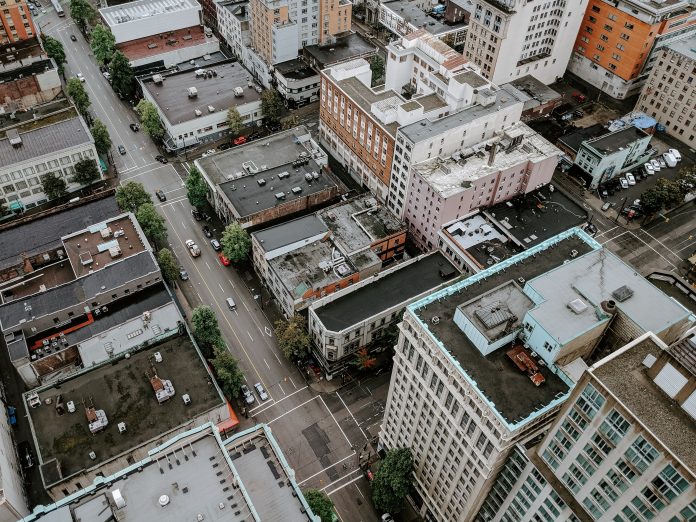
Valorie Crooks discusses neighborhood vulnerability to COVID-19

0
PHOTO: Aditya Chinchure / Unsplash

Health geographer Dr. Valorie Crooks was featured as the guest speaker for SFU’s February 24 Lunch ‘n’ Learn, which highlights SFU research. Crooks — who leads a team based out of the department of geography at SFU —  spoke about personal and location-based neighborhood vulnerabilities to COVID-19. 

Together with co-investigator Dr. Nadine Schuurman, Crooks’ team works on models “to produce a series of maps that really help to identify specific locations in British Columbia that are at risk of experiencing potentially high rates of COVID-19 infection.” 

“The risk of contracting coronavirus varies between people and places, which makes some British Columbians more likely to develop COVID-19 than others” due to factors such as socioeconomic status, personal behaviours, and community’s population density, their website states.

Crooks’ models are broken down into three categories. 

Personal risks are determined by factors such as living in crowded households, lack of English fluency, working outside the home, and being socioeconomically disadvantaged. 

Place-based risks include community factors of neighborhood’s percentage of farmland, population, density of schools and homeless shelters, and density of tourism destinations. 

The final category — overall vulnerability to risks — combines the first two sets of data to create overall risk data. 

One of the key uses for this data is to compare it with COVID-19 case numbers in communities. If the team finds that very high risk places are seeing low transmission and infection rates, “one of the things [worth] pointing out is that the public health interventions are actually working well,” said Crooks.

Since there is no access to neighborhood case numbers, “people should be using these maps in combination with other information sources,” said Crooks.

She warned, “We do not want people to use this model to attribute blame for transmission to specific people or specific places.”

The project’s website “acknowledge[s] that all models have limitations and can never fully capture all the complexity that surrounds an issue.” 

Much of the information used to create the models and maps comes from the recent Canadian census. “This means that the variables we have included here are limited to ones we can explore with data recorded by Statistics Canada or that is publicly available.”

Moving forward, Crooks’ team will look at “identifying neighborhoods where people are likely to [face health risks] of the pandemic at large, as opposed to being directly [infected] with COVID-19.” She acknowledged there will be numerous COVID-19 health effects associated with lasting economic challenges, social factors, and policy measures — such as “housing insecurity, job insecurity, occupational burn-out, loneliness, [and] isolation.” 

“[When] a call came out from the Michael Smith Research Foundation [ . . . ] a BC based research health funder —  and they put out a call for rapid responses to the COVID-19 pandemic,” Crooks knew she had to step forward.

“I think that [ . . . ] the timing was right to really step forward and show how a geographic framing, and a geographic approach to thinking about the pandemic, can assist with shaping the information that’s available and solutions that we can offer,” said Crooks.

“Once the last case of COVID-19 is no longer active, we’re not done with dealing with the health impacts of this pandemic.”

Valorie Crooks welcomes questions, comments, and feedback from the community and can be reached at [email protected]. 

Graduate Student Society holds 2021 annual general meeting

0
ILLUSTRATION: Siloam Yeung / The Peak

On February 23, 2021, the SFU Graduate Student Society (GSS) held their annual general meeting over Zoom. The event was open to graduate students in good standing to vote on matters surrounding their experiences at the university. 

Opposition to tuition increase

The motion called on SFU administration to reconsider raising tuition costs amidst COVID-19. Graduate student tuition generally increases by 2% every year for domestic students, and by 4% for international students, Director of External Relations Matt McDonald explained. Students voiced concerns that tuition continues to rise, despite the reported decrease in quality of online education, according to McDonald. 

When asked about the GSS’ role in setting and mitigating fees, McDonald said that “fees are set by referendum,” so they are adjusted according to a fixed rate and set by revenue. He explained that the cost of standard health coverage contributes to membership expenses but the April 2020 Simon Fraser Student Society (SFSS) emergency funding aided students and reduced graduate medical and dental fees. 

McDonald emphasized the motion would put pressure on SFU to reconsider costs by encouraging conversation at a provincial level — 98% of voters supported the motion.

Financial report

Auditor of the GSS 2020–2021 fiscal year, Gary Wozny stated that the membership’s financial strength improved over the past year. He said this can be attributed to remote learning’s restriction of in-person services, which caused revenues to exceed expenditures.

Additional income also came from the SFSS April 2020 emergency fund which provided the GSS with $17,500 with emergency assistance. $10,000 in SFU bursaries were also distributed to graduate students. 

Expenses for 2020 were very similar to the previous year and investments did well, according to Wozny. He said expenses such as office administration varied due to remote learning. The Society’s finances increased by $434,394, which Wozny believes will continue for the rest of the year.

A detailed summary of the GSS’s 2020 financial statement can be found here.

Support of research assistant (RA) unionization

With this motion, the membership aimed to pressure SFU to uphold their agreement of recognizing RAs as workers. Teaching Staff Student Union (TSSU) Chief Steward Katie Gravestock explained that SFU and the TSSU signed an agreement in 2019 recognizing them as a union for research assistants. 

According to Gravestock, the university “has continued to violate almost every term of the agreement,” including the “transition of RAs to employee status,” beginning collective bargaining, and providing them with the same rights and benefits as other SFU employees. This led the TSSU to file for arbitration in May 2020, but the university continues to delay bargaining, they said. 

The petition demands that SFU:

  • Recognize all RAs as workers
  • Provide all RAs, including international students, with health and dental benefits
  • Provide immediate relief for RAs by reimbursing the International Student Health Fee
  • Start bargaining with TSSU for RA benefits

The GSS membership voted in favour of denouncing SFU for their treatment of research assistants.

TSSU organizer Lea Hogan welcomed those interested in getting involved with union organization to email them at [email protected], in which organizers would receive a stipend for their work.

What Grinds Our Gears: The gondola getting more attention than the pipeline expansion

1
Supporting the gondola is great, but it isn’t the most pressing issue on Burnaby Mountain. Photo courtesy of Translink

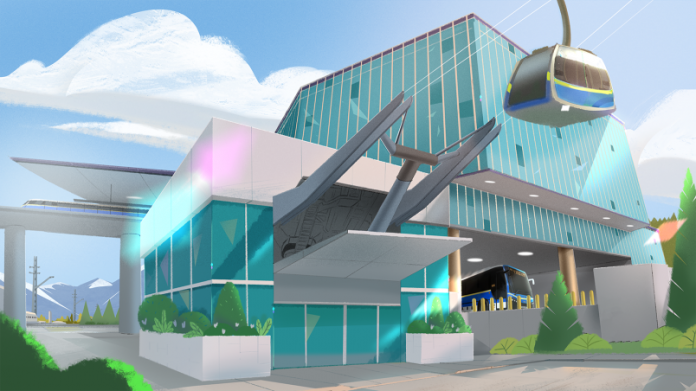
Ever since a Burnaby Mountain gondola seemed like a very real possibility, broadcast news, web, and social media have been non-stop. Their focus is valid, not having ignored Trans Mountain Expansion Project (TMEP) issues for four years like SFU. Albeit mainstream news always has its issues around newsworthiness, but SFU? Literally no excuse. Their lack of action on the TMEP and their enormous effort into promoting the gondola is so indicative of their true priorities.

SFU helped organize an open letter to Burnaby’s mayor and council, getting the support of a shit ton of on-campus businesses — creating a decked-out gondola support website to match. They constantly post about it on their social media pages. Even president Joy Johnson tweeted how “thrilled” she is over gondola feedback. But when the SFSS rallied 13 student unions nationwide after actively fighting against the pipeline expansion for years? Nothing. Where’s this kind of action from the school on the TMEP when they are literally preparing to drill through Burnaby Mountain right now?

Of course, the gondola would be a great addition to campus. But I cannot fathom the sheer amount of effort SFU is putting into its promotion when the TMEP — which would invalidate Indigenous sovereignty, bring catastrophic environmental consequences, and put students in harm’s way — isn’t also part of this action. Maybe it’s that building the gondola seems closer to reality, but that doesn’t mean the same effort and support shouldn’t go towards stopping the TMEP.

SFU finally broke their four year silence in December 2020 with a short statement that essentially said “we won’t try to stop the TMEP, but we can try to keep you safe from it’s hazardous fallout.” And they had the audacity to call professor Dr. Tim Takaro’s 10-day tree pipeline protest “fearless” only a few months prior? Amplifying his bravery doesn’t cover SFU’s own cowardice around public action.

It’s not hard to speak your mind, SFU. But I know you have trouble with that considering you only make statements on campus incidents when they could look bad for your image.

Russian and Iranian internet trolls caused political interference in Canada’s 2015 election

1
PHOTO: G20 Argentina / Flickr

SFU assistant professor Dr. Ahmed Al-Rawi is leading The Disinformation Project to study the effects of international state-run trolls. These are government sponsored internet trolls who are “magnifying controversial false claims, pushing negative views, and attacking any voices critical of their own regimes,” according to an SFU email. 

“I was surprised to see that the Iranian, Russian, Arabs, as well as the Chinese state-run trolls, [had been] talking about Canadian issues for a very long time. This has been ongoing for probably a decade,” said Al-Rawi in an interview with The Peak. 

Throughout his study, Al-Rawi found that “the term ‘fake news’ on social media is like a hollow term — it’s lost its meaning.” While it can be a weaponized term to attack opponents, it is commonly used for memes and jokes, he explained. 

From analyzing Twitter and Facebook, Al-Rawi discovered some patterns in the rhetoric pushed by trolls. For instance, Russia and Iran “were trying to sow division in Canadian society.” 

Al-Rawi said when discussing socially sensitive topics, such as immigration policies or controversial political elites, “the Iranian state-run trolls affiliated themselves more with the far-left, whereas the Russian state-run trolls affiliated themselves more with the far-right.”

A prevalent example of this was the hundreds of memes and images created by Russian trolls to attack Justin Trudeau before the 2015 feneral election. The Iranian trolls — critical of Stephen Harper — perpetuated claims that he was supportive of ISIS and planted by the CIA, Al-Rawi said. 

Through this analysis, Al-Rawi found it was interesting that two state-run trolls used fake websites and distributed news items through social media.

“No one knows whether this kind of disinformation affects us” and our democracy, said Al-Rawi. “We know for sure that exposure to disinformation can influence certain people, but no one knows to which extent [ . . . ] Exposure to fake news does not mean influence.” 

However, “as long as there is a potential and possibility of influencing people, we should be concerned about it,” said Al-Rawi.

“Many people assume that Canada is not involved in the manufacturing and dissemination of disinformation. I would beg to differ.” 

Part of the study “examine[s] the way Canadian journalists cover stories about [ . . . ] fake news, disinformation, and misinformation.” 

To accomplish this, Al-Rawi collected and analyzed over 100,000 news stories from Canadian journalists that mention key vocabulary such as “fake news” and “misinformation,” from the 1970s to 2020.  Al-Rawi found that each decade had a “highlight.” For example, in the 1980s,  the media discussed fake news in relation to HIV; in the 1990s, it was the war on Iraq. 

Part of this study also involved over a dozen Canadian journalists to determine “what they think should be reported about fake news and their own idea of what fake news is.”

Through social media sites such as Twitter, Instagram, Facebook, and Discord, Al-Rawi said he sees evidence that users are involved in creating and disseminating fake news. “That’s a very worrying sign,” he added.  

Al-Rawi hopes to see the findings of his studies published in the form of a small book in the future. 

POV: You’re a pen left in Images Theatre since March 2020

0
ILLUSTRATION: Shaheen Virk / The Peak

DAY 1 – March 17, 2020 

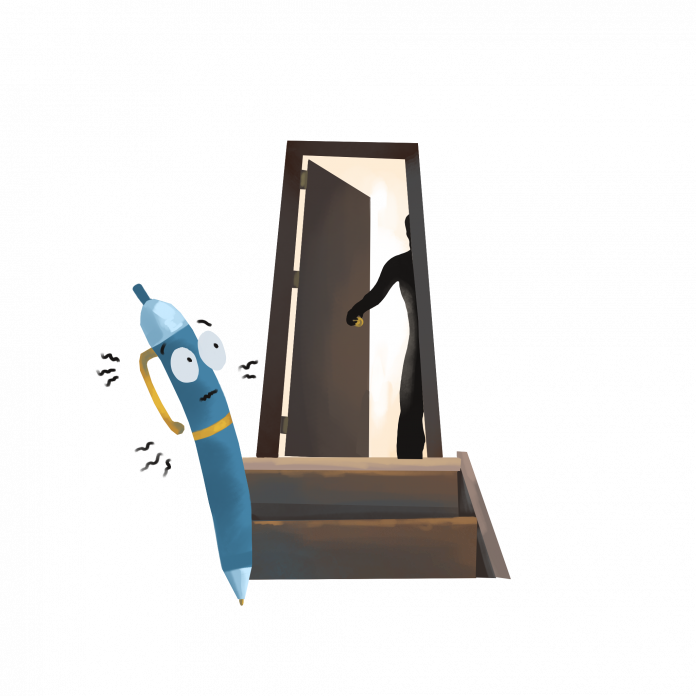
It’s nearly 8:30 a.m., which means it’s time for class. I’ve been laying on the ground of Images Theatre since 7:21 p.m. yesterday, when Annie had a meltdown upon finding out about a paper she had due and carelessly dropped me on the floor. No one’s been in here since, but I’m sure no student in their right mind would leave me on the ground. I’m a retractable pen with a gel grip, for God’s sake. I’m purple. There’s no way a student wouldn’t snatch me off the ground, precariously balancing their Starbucks cup (even though Renaissance is right there), their iPad, and the notebook they barely use because of said iPad — no, that iPad doesn’t make me self-conscious and feel kind of obsolete. Shut up. 

Half of these kids have been surviving using a single mechanical pencil for in-class essays all semester. And even if no one puts me to good use, I’m sure Annie will come back for me. I’ve been with her since high school. I helped write bad poetry, goddammit.

So I wait. And wait. And wait. And yet, somehow, no students enter. Maybe class was cancelled, I think, but no one comes in for the whole day. 

DAY 2 

Images Theatre is still as empty as the heads of every SFU student.

DAY 3 

Hey, maybe SFU implemented another reading week so students can relax for once!

. . . Wait, that implies that SFU cares about students’ mental health. Never mind.

DAY 5 

It’s Saturday. It’s Saturday, and yet not a single student has snuck into Images Theatre with popcorn and a bottle of wine to watch Mamma Mia and Mamma Mia: Here We Go Again!. Something has to be wrong. Who in their right mind would deny the serotonin that ABBA brings? And on a big screen, no less? 

DAY 53

At least this means I don’t have to listen to that one World War II-obsessed white guy play devil’s advocate. 

DAY 98

I fear I will never hear Pierce Brosnan’s horrible singing voice as Dad #3 in Mamma Mia again. 

DAY 140

One of the rats came up from downtown RCB. He was chattering on about “Tick Tock” and “representation” and being the rat of everyone’s dreams. “Viva the ratvolution,” I said, just in case the rats had overthrown the humans and needed use for a pen.

DAY 176

People used to chew on the end of me. They’d pretend it was because they were focusing, but really they just had an oral fixation.

I miss Freud lectures.

DAY 298

I don’t know who I am anymore. I think I might be a human writing a narrative about a pen. 

DAY 369

The door opened. 

A faint amount of light from the hallway came streaming in, illuminating the dust that had settled on top of me. Finally. After all this time, I would be saved. The humans had survived the ratvolution and were coming back to classes. I didn’t know what I was excited for more: to take mediocre notes on sex scenes in cinema (what the fuck is Communication) or to be neatly put away in a pencil holder in someone’s concrete dorm room. For the first time in a long time, I felt hope. 

I was greeted not by someone, but something. It somehow had even darker eyebags than the students at this school, but with the added touch of fur. Scuttling toward me, it picked me up in its little gremlin hands. The feeling of being touched for the first time in a year was astonishing. I was equally repulsed and horny. 

The being gripped my gel handle tight and raised me from perdition, bringing me into the hallway of RCB and into a humanless world.

Businesses should be open later during the pandemic

0
Getting coffee for late-night studying would be a lot easier. ILLUSTRATION: Maple Sukontasukkul / The Peak

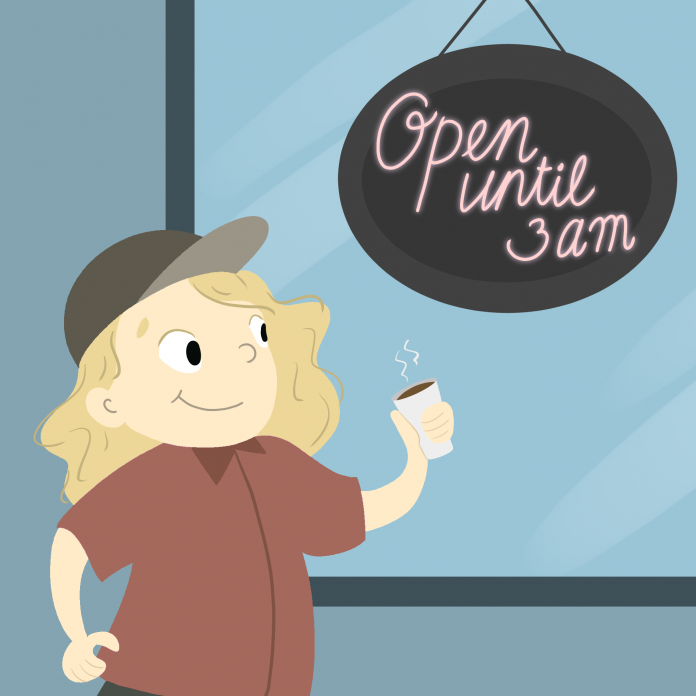
To promote staying home and social distancing, many businesses are now open for a fraction of the time they were pre-pandemic. From restaurants and retail to SFU Burnaby’s very own Renaissance Coffee, hours of operation have been shortened. While this may seem like an apt adjustment — especially in light of decreased foot traffic — this solution is flawed. To promote COVID-19-friendly practices, businesses should keep their doors open later. 

Being open for shorter amounts of time can certainly reduce the chance of transmitting disease. However, it condenses customers into a smaller time frame which increases in-store traffic density, working against social distancing measures. If customers visit a store over a shorter time period, this is, in essence, equivalent to more people in closer proximity to one another. Even with in-store distancing guidelines and maximum capacities, the dangers of having more people in one area remains. It is safer to space people out over time, rather than distance. 

In addition to helping with social distancing, staying open later helps business owners compete with omnipresent online retailers such as Amazon or Walmart. Online sales have increased significantly over lockdown, and smaller businesses have struggled to adapt to this new commercial landscape. The learning curve and costs associated with setting up and maintaining a website are, in themselves, a challenge. Even the most tech-savvy businesses struggle to compete with the advertising, cheap shipping, and warehouse capacities of other large online retailers. 

Additionally, paying just one full-time staff member at BC’s minimum wage is in excess of $2,200 monthly — comparable to Vancouver’s retail rent prices. It may seem to businesses that cutting back on hours of operation is a good way to float through the pandemic. For some places like restaurants and cafes with low-margins and no genuine capacity to operate later, this may be true. But as lockdown measures will inevitably continue for a while longer, businesses need something that will not only sustain them until they can return to full capacity, but will keep them relevant. By staying open later, businesses that are able to make these changes can make the most of the rent that they’re already paying for, and adapt to the different schedules that asynchronous classes and working from home have allowed.

Lockdown has opened up an assortment of viable time schedules for people. Sleep at 6 p.m. and wake up at 2 a.m.? This is the new normal for some. We can exchange a.m. and p.m. tags freely and remain entirely plausible. By limiting their hours, many businesses lock out potential late-night shoppers, which could funnel sales directly to their online competitors. 

Rather than defaulting to shorter business hours, businesses would find that the world has not stopped. Even under the most stringent lockdown measures, people still need to go out on occasion — whether for groceries or last-minute purchases that cannot wait for shipping. By staying open later, businesses could adapt to their customers’ changing schedules, and while it may not return things to ‘normal,’ it might build something pretty close.

Data breach exposes SFU users’ personally identifiable information

2
PHOTO: Gudrun Wai-Gunnarsson / The Peak

On February 3, 2021, there was an eight-minute data breach from an SFU server. IT services discovered the attack two days later and blocked external access to the server immediately.

Faculty, staff, and students were informed on February 16. They were assured that banking details, social insurance numbers, and passwords were not exposed during the breach. Exposed information that could be personally identifiable consisted of student/employee numbers and academic standing data.

Data elements such as date of birth may have been exposed, and a quarter of the information exposed had name identifiers. This poses a “low probability of being exploited,” Chief Information Officer Mark Roman told The Peak in an interview. “It looks like all they wanted to do was really get money from a ransom attack,” rather than to exploit data. Individuals whose data had been exposed were advised to monitor their personal accounts for unusual activity.

The breached server was undergoing system security improvements at the time of its exposure, said Roman. However, most of the breached information was unclear to external attackers through encryption and was located on a local server that did not permit access to further information. Roman added that SFU’s online security is constructed in a way that does not allow external users to infiltrate multiple servers.

Moving forward, Roman explained that IT services will be implementing multi-factor authentication — a system that verifies a user’s identity by presenting two or more pieces of evidence during the log-in process. Faculty and staff will be required to use this authentication method by May 2021 followed by all students in the fall. 

SFU’s Virtual Private Network (VPN) is also recommended for faculty and staff to use to secure private access to the university’s data when working remotely. This service ensures safety for users while connected to unsecured networks.

Ideally, SFU would have preferred to notify people immediately upon discovery of the data breach, said Roman. However, the wide variety of information on SFU’s servers made the process “way more complicated.” 

Roman emphasized that up to 30 people on the university’s IT team spent 10 days trying to decipher data elements that were personally identifiable and who to notify. 

Individuals may log into the university’s cybersecurity site using an SFU computing ID or contact IT services at [email protected] to check if their information was exposed in the data breach.

Your weekly SFU Horoscopes: March 8–14

0
An illustration of a girl with long flowing hair. Astrological signs and stars shine around her.
ILLUSTRATION: Marissa Ouyang / The Peak

ARIES: You know how they say “March enters like a lion and leaves like a lamb?” No? Good. Forget it. You’re no lamb, you’re a ram. Start acting like it. Go find a Dodge Ram and yell at the owner for having such a big truck in the city.

TAURUS: Listen, I’m not saying you should drop out and practice witchcraft in the nearest bog, but I will say that you’d look really nice draped in moss. And don’t mind Shrek over there, he’s just checking to make sure you’re listening to our Horoscope advice.

GEMINI: I’m seeing an attractive but troubled stranger in your future. Just across the street. On a bus. Oh, the bus is zooming right by. Oh, they’re gone. Sorry, bud. Did I get your hopes up? Maybe next time. 

CANCER: You know, I think crying on public transit has done you at least a little bit of good. You’ve got the “attractive if troubled stranger” vibe down. Folks like Gemini are totally looking at you wistfully, imagining your beautifully distressed mind, even if you’re just losing it over a video of a cat being reunited with its mom. 

LEO: Have you considered how good you’d look in a scarf? Like, really. They’re a great accessory, they really tie an outfit together, and they can protect your neck. From what, you ask? Well, the cold, obviously. And other, hungrier things. So yeah. Scarves. 

VIRGO: Virgo, store your energy. Spring cleaning is just around the corner, and we all know you’re going to tear through your home like Leo through a conversation not about them. Prepare accordingly. 

LIBRA: Why do I feel like you’re hyping yourself up for some kind of “main character turns evil” arc? I mean, it’s a really dope aesthetic, but c’mon. We’re all feeling that urge, so don’t hoard it for yourself. We can’t all be the comedic relief in your life.

SCORPIO: Gonna be real, your vibes are super unknowable right now. If that’s what you’re going for, keep on keeping on. And if it isn’t, how do you know? Don’t worry, identity crisis is the new middle part in hair. It’s trendy, we promise.

SAGITTARIUS: Try sitting still for once and just enjoying the moment. Even your loud-ass neighbour mowing the lawn at 8 a.m. and that car alarm that sounds like Pisces when they cry. And even all the texts from— okay, yeah, I see why you live like this. Carry on. Forget everything I said. 

CAPRICORN: You’re going to be wrong, but not about anything with major consequences whatsoever. Maybe when the food delivery person tells you to enjoy your meal and you say, “thanks, you too.” This’ll give you time to mull it over until you feel as guilty as someone who hit a squirrel with their car. Typical.

AQUARIUS: Aquariussssss, please come back from your respite in the astral plane. Your body’s getting all gross and wrinkly. You’re gonna look like you were in a bath overnight. 

PISCES: So, how’s thrift store withdrawal treating you? I just know your soft artsy soul is weeping, and if you ask me, an overpriced sweater on Etsy might be the way to go. One that’s just pretentious enough. 

SFU Mad Lib for when the university disappoints you again

0
Illustration: Tiffany Chan / The Peak

Dear SFU,


I am writing to [verb] about [one of the many problems with SFU that shouldn’t be happening at a multi billion-dollar institution].

I am a [your major] in my [number of years you’ve attended SFU. I know this hurts to write sometimes. I’m sorry] and I am very [negative emotion] about this. 

My personal [sensitive, personal belonging of yours] may have been sent out to the world because of SFU’s [negative adjective (there appears to be a lot of those associated with SFU at this point so take your pick)] security protocols. Further, I worry that the university’s unwillingness to handle the [any typical concern that students have been demanding be addressed for years] shows the university’s unwillingness to [verb that would imply that the university’s administration makes any active efforts to act on behalf of the students they represent] and this makes me wonder if [a different university name] may not have been that bad of a choice after all.

I would appreciate it if SFU would [what would you have liked SFU to have done?]. I pay [absurd amount of tuition, exaggerate here if you must but something tells me that you will not feel the need to do so] and demand [compensation you would like, you can write anything here because you won’t get it anyways]. 

This has negatively affected my [choose all that apply: mental, physical, emotional, financial] health and now I can no longer feed my [choose either a passion of yours and/or an organism under your care, can include yourself] nor can I see a photo of [name of supposedly beloved SFU entity] without feeling physically nauseous.

I’m looking forward to hearing from you soon and I hope you have a [negative adverb, preferably a curse word] day.

[Adverb ending in ly],


[It doesn’t matter what name you write here, there’s no way anyone will read this far anyways]

SFUnexplained: All of these email redirections condition us for long degrees

0
PHOTO: Gudrun Wai-Gunnarsson / The Peak

Doesn’t it seem fishy that it takes three-login attempts to see your SFU mail? Unless you’re a tinfoil beret-wearing big brain like me, any normie that uses a cookie-collecting browser tends to spend five minutes getting redirected through a host of websites and portals any time they want to use an SFU web service. 

Students don’t rise up against the tyranny of technological negligence unless they have truly impressive will-power. Instead, they take a drag of SFU’s chemtrails and accept that they will be five minutes late to each Zoom instead of accounting for that extra login time and showing up early (another form of acceptance). SFU stands for Sheep Fools University. Fools.

Just think: the first time you logged in, it felt like such a pain in the ass. You may have thought that surely, there’s a way to see my silly little emails in three clicks or less, but SFUMail has other plans. An honest mistake, but isn’t there a way to fix it after every student experiences it? SFU is sending people to the moon but working around generic browser cookies proves to be just too much. 

You know what else takes 15 years to get done? Every building on each campus. The legend of the Student Union Building is not only an endurance test to keep some kind of faith in SFU’s ability to do anything, it’s also a coverup. It’s almost as if they’re getting us used to disappointment. If we’re okay with spending 10 minutes trying to find out when we have to pay them again, we’ll be okay with spending six years getting a degree that could take three. 

Does this sound familiar to you? If you would stop sleeping through life like I sleep through lectures, you’d have noticed the curious phenomenon that it takes a fuckton of time to graduate from SFU. The excuses for why vary: an advisor forgot about a course, degree requirements changed, the renaming of the 95 B-line to [REDACTED] left unrecoverable emotional damage that set you back a year. Regardless, there’s always some reason that these programs take longer to complete than expected, but somehow we just know to accept that as part of the process. Now, where have we seen that before? WAKE UP, SHEEPLE!

How does SFU benefit from all of these? Easy. They get to cut costs with IT fixes to invest in their true passion: announcing projects that will be built by the time X Æ A-12 Musk is sworn in as Emperor of the Galactic Regime. They’ll profit from all those extra semesters spent telling students it would be their last one. SFU sets the bar lower and lower each year, and we just keep cha-cha-ing under it. When it comes to any hopes of the changes we’re counting on, it’s time to make like a sheep and say bahhhh-bye with a degree in hand. Err, hoof? You know what I mean.

If you’re sick and tired of SFU’s scam’s, you can . . . flip off the red loading screen on your computer when it redirects you for the eighth time? Struggle not to throw your phone into the ocean when an advisor tells you yet another requirement has been added to your degree? Dig yourself into a deep whole of denial and pretend that the SFU stadium has existed this whole time? I don’t know, pal— there’s really not much to be done. But at least you know you’re not a sheep anymore?