Home Blog Page 362

Student takes months to realize they’re a vampire because of online classes

0
ILLUSTRATION: Maya Ramadhina / The Peak

April 15, 2021 

Dear Diary, 

Not to be a hypochondriac but . . . I might be losing control of my life. Or maybe it’s allergies from when I cleaned the attic the other day. Either way, stuff has been weird recently. I decided to write it down here since, well, I don’t want to sound silly. I’m getting pale. Not an “iron-deficient” or “sickly orphan” shade of pale, either. I’m becoming . . . translucent? The purpleish tinge of my veins is popping through my skin— and not the kind of popping vibe I look for when I wake up to do my makeup for Zoom tutorials, honestly. Maybe I’m just seeing things, or maybe this is like that one episode of the Smurfs where Lazy Smurf gets bitten by a fly, turns purple, and goes on a rampage. I hope it’s the former, because I’m freaking out here.


May 2, 2021

Dear Diary, 

I got a little sidetracked. Huh. It looks like my last real entry about my social life here was about 12 years ago. To update you a bit— no, I did not marry my fifth-grade crush, Blake. In high school, he got a girl pregnant and then got mad when he realized he couldn’t customize the kid like it was a Sim, so . . . I guess I dodged a bullet there. I also got older, so now here I am in my second year of university. Rad. Unless you remember we’re in a global pandemic and it’s all online. And, well, the whole turning blue thing. Honestly, I’ve sort of forgotten how to write in a diary. Nobody ever reads these things, right? 


May 5, 2021 

Got sidetracked. Again. Maybe it’s Zoom fog, LOL. And all that homework. Does anyone even use “LOL” anymore? God, I am getting old. Kind of like you, Diary. You were in a dusty box alongside my aptly named childhood stuffed animal, Teddy. He’s not in the best shape, and there was a dying bat crawling around in the box, so I left him up there. Sorry, Ted. You’re still looking good though, Diary, despite my cringe-worthy fifth-grade handwriting. I, on the other hand . . . not so good. Been getting these awful migraines recently. Had to install blackout curtains. Strangely, the dark feels comforting. 


June 7, 2021 

Dear Diary, 

Here’s the deal: I think I might have turned into a vampire somehow. I know that sounds absurd. And no, I’m not just listening to “Blood Bank” by Bon Iver too much, okay? 

Over the past few months, I’ve become paler than ever. I can’t stand the sunlight. Food and drinks are unappealing. I justified it all for a time. After all, students get migraines. They get depressed. Who wouldn’t after staring at Zoom lectures on a screen all day? I haven’t been out much during the panorama either, which explains the whole translucent thing. But now, I just can’t deny it anymore. 

It happened on Monday. There I was, chilling in my Zoom box. Suddenly, I was gone. I tried fiddling with the webcam. Nothing. But by then, I had realized: the mean mug (really, the mug has the words “one mean mug” on it in faded blue letters) was still in the frame, floating precariously over my cluttered desk. So now, I’m faced with the reality that I no longer have a reflection. And maybe not even a soul. Despite my pleas for understanding, the school has been unwilling to accommodate. They say “go fix your webcam” and “we won’t reward you for avoiding class” and “you can’t be a vampire, you’re not even sparkling.” What would I be avoiding, the rush hour traffic from my bed to my desk? This vampire thing sucks. 

Signed, 

A bloodthirsty student who just wants to graduate already.
We need to care more about the COVID-19 crisis in India

0
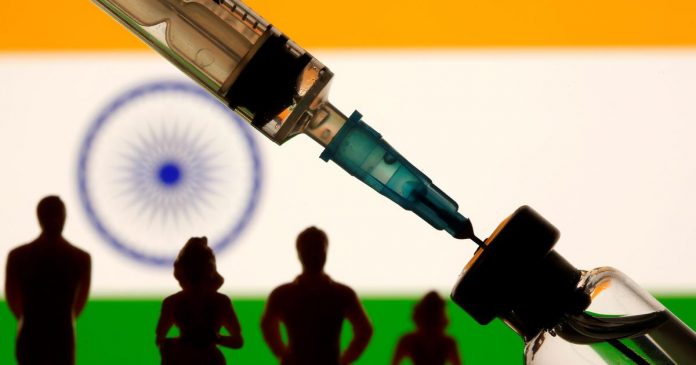
The current crisis has impacted the efficiency of vaccine exports. PHOTO: Dado Ruvic / REUTERS

The impacts of the second wave of the COVID-19 pandemic have been deeply felt by India. Every day is a battle as the pandemic grows incessantly. As the rest of the world is also facing the misery unleashed by the ongoing pandemic, this is a battle that will have lasting economic impacts beyond just India. The world can no longer be negligent of the COVID-19 crisis being faced by India.

Regardless of race, gender, religion, caste, and wealth, India’s rampant COVID-19 crisis has spared no one. It has been amplified by factors such as a reduced fear of the virus, lack of sufficient resources to deal with the surplus of cases, and a sheer lack of leadership. In this time of need, we need more people to care about the devastating events in India — especially considering its historical and ongoing relations with countries like the United States and China. India has done its part and now needs aid from its allies. 

India is responsible for contributing around 4–8% of the world’s economic growth. Not only has the Indian economy been impacted, but the crisis has also had effects on the global economy, as well. India is also responsible for contributing to the vaccine development for COVID-19, and the current crisis has halted the export and manufacturing of the vaccines. India also holds up the economies of other countries by providing staff for back-office services, hence another indirect impact on the global economy. 

However, we shouldn’t only care about India’s COVID-19 crisis because of its significant contributions to the global economy. At this point, the situation has escalated beyond a health crisis; it is a humanitarian crisis now. The health care systems are overburdened and exhausted, there is a severe shortage of oxygen and spaces in hospitals, and there isn’t even enough room for people to rest in peace.

Most Indians have come together to look after each other, circulating requests for oxygen, plasma or beds. Despite being exhausted of its resources, India continues to fight this battle with vigour. People are coming together to fend off the atrocities caused by this crisis and are looking out for each other.

India’s reality today is not short of something being ripped from the pages of history. This is no longer something from which the world can turn away. It is more than just a crisis. We all need to come together and do our part to defeat this pandemic. This is a privilege check for those who can afford the resources to reduce their exposure to the virus, as many people don’t have the same luxury. This is a reality check for the rest of the world that we’re still in the middle of a pandemic and it is wreaking havoc upon many countries, people, and lives. 

Some relief funds looking for donations include The Canadian Red Cross, Khalsa Aid, ImpactGuru, CARE, Ketto, and OxygenForIndia. The Vancouver India Cultural Association has also set up a GoFundMe fundraiser. 

SFU Student Updates: June 7–13

0
"Student Updates" text in SFU red
You’ve already made it farther through the article than 97% of the student population. ILLUSTRATION: Siloam Yeung / The Peak

Key Updates

SFU campus to remain a source of reassuring consistency

We understand that the upcoming fall semester will be a time of transition and uncertainty for all. As such, SFU is committed to ensuring returning students’ comfort when in-person classes and activities return. We have ensured that nothing has changed since March 2020. Yes, nothing. The Vancouver campus still has insufficient study space, the Surrey campus still hasn’t cleaned the games room, and the top of Burnaby Mountain is still freezing. Welcome back!

The Community Shuttle has been discontinued

Due to the pandemic, the SFU Burnaby campus community shuttle was discontinued. As fall rolls around, it will still not be in service. We recommend members of the SFU community use TransLink’s bus services if going from end to end on campus. We especially recommend it for students who were brazen enough to put a Blusson Hall class and a WMC class next to each other on their schedules. You’ll still be late, though — legend says that Edmund Hillary used the Saywell stairs to train for his Everest expedition. 

Announcements

The glorious Winter of 2021-2022

Looking beyond Fall 2021, SFU is pleased to announce that both new and returning students alike will be able to enjoy the full SFU experience this winter. The full SFU experience, of course, is when heavy snowfall ceases bus operations and forces the Burnaby campus to close when classes are still in progress. There’s nothing that says SFU more than huddling with strangers at a bus stop for six hours before you realize that you will never, ever get off this mountain.

Appointment of new Board member

As part of SFU’s commitment to equity, diversity, and inclusion, the university is taking steps to ensure equitable representation among its leadership. To that end, we would like all students, faculty, and staff to give a warm welcome to our first raccoon director of the Board. We are continuing the search for a deer, crow, and bear director to ensure that all beings will have a voice in university affairs. If anyone has suggestions on how to get plants and fungi into meetings, please let us know. At SFU, we believe that all living creatures should have a say in university decisions and affairs since we are all part of the Burnaby Mountain ecosystem. All community members, including the legion of mice that lived in my dorm room in first year, are encouraged to attend the hearings.

Employment and volunteer opportunities

Wayfinder volunteers

Returning students, this is your chance to demonstrate leadership and commitment to civic wellness. We are looking for wayfinders for new students on campus. Volunteers should be able to find the best food on all campuses, have been to the Vancouver campus at least once (since no one actually goes there, passing by it counts!), and be able to navigate the depths of the RCB. If you can’t find The Peak‘s office, it’s okay — neither can we.

Interior designers! We need you

The SUB (Student Union Building) is complete after 20 years of construction; however, the inside still requires a drastic makeover. The School of Interactive Arts and Technology is hiring up to five interior designers who demonstrate a thorough knowledge of Bauhaus style and Queer Eye, though applicants who do not believe that Bobby Berk is the best member of the Queer Eye team will be rejected. Since we don’t offer an interior design program here at SFU, actual experience is not required. These interior designers will be asked to examine the SUB to see if it truly sparks joy. Applicants with 3+ years of design experience on The Sims will be given preference!

Your weekly SFU Horoscopes: June 7–13

0
An illustration of a girl with long flowing hair. Astrological signs and stars shine around her.
ILLUSTRATION: Marissa Ouyang / The Peak

ARIES: Don’t let your goals get ahead of you! Invent a new hobby so you can always be the best at it. Underwater ping-pong? Zombie cosplay gymnastics? Vlogging your cheese puff reviews? Your pick. 

TAURUS: Some people say your bark is worse than your bite. Prove them wrong by sinking your teeth into the nearest tree trunk and tearing off a hunk of that sweet, sappy bark.

GEMINI: You’re not too bubbly — other people just aren’t bubbly enough. Carry a bottle of soapy water so you can blow bubbles at the next person that says you’re too chatty. That’ll catch them off guard long enough for you to escape the rest of the conversation.

CANCER: Do you need to be needed or do you knead to be needed? Pull out the yeast — it’s time for a feast! For real, go bake some bread. Go bake so much bread you’ll never need to eat anything else again. 

LEO: I bet you caught it bad yesterday. They hit you with a call to their place. You ain’t been out in a while anyway. Was hoping you could catch them throwing smiles in your face. Huh . . . I hope they call you by their name.

VIRGO: You always tell charming stories with great descriptions and fun details. Now take a break from posting them on Instagram and start telling your stories to actual people. And no, “actual people” does not include Twitter discourse threads.

LIBRA: Make up your mind. Literally. Try slathering your whole head with eyeshadow. Bonus points if you put it everywhere but your eyes. Extra double bonus points if you submit it to The Peak for a photography pitch. 

SCORPIO: You aren’t “spicy.” You’re just impulsive and stubborn. I’m begging you to calm down for two (2) minutes. I promise. Go drink a warm glass of milk and get off the Scoville scale.

SAGITTARIUS: I know you have a to-do list, but it’s time for a not-to-do list. At the top is “binge the Twilight saga again this week.” This is your last warning. If you’re going to project onto any character, make it Shrek.

CAPRICORN: This is the sign you’ve been looking for: it’s time to try ventriloquism. Stop talking out of your ass and start talking out of an adorable, friendly puppet. I hear you don’t even need a degree to be a ventriloquist. Lucky bastards.

AQUARIUS: It’s time for a well-deserved break from trying to be unique from everyone else.  Listen to something other than Hayley Williams. Try the latest TikTok trend. Hang up your fedora for a while. Have the most boring week you can.

PISCES: Stop letting other people have the last laugh at your expense. You deserve better. You’re a treasure and a gift. Oh, and by the way, your sock is untied.

Five emails we’ll probably receive over the course of the semester

0
PHOTO: Gudrun Wai-Gunnarsson / The Peak


Subject line: The Reflecting Pond incident 

Joy Johnson wants you to know that she is so very sorry about the koi pond incident. No, really. It’s not her fault that she draws her powers from the full moon. Not all of us can be like Andrew Petter, who recharged by playing electric guitar around the Surrey campus. In this lengthy email, she apologizes profusely for deciding to dive headfirst into the AQ pond, which frightened the fish and disturbed Maxwell, the campus cryptid who can regularly be found under the surface. She promises she will instead attempt to recharge by screaming “brutal” by Olivia Rodrigo from the top of West Mall Centre. 


Subject line: Data breach

You’ve heard it before and you’ll hear it again — SFU Mail, goSFU, and SFUnited (SFU’s new dating app for lonely students who have too much social anxiety to actually message each other anyway) have all been hacked. The hacker, who goes by the handle McFoggTheGod, has informed SFU’s IT team that they need to stop making their system passwords Taylor Swift lyrics. The hacker also said that every students’ data has been sold except for those who are taking summer courses because they, and I quote, “think that’s really depressing, homeslice.”


Subject line: This miracle cream will enlarge your penis, bring your wife back from the dead, and make your skin 3% more moisturized! 

This is what you get for not changing your password after the data breach. 


Subject line: Joy Johnson announces new committee

SFU is building a brand new committee on [insert whatever they deem important]. This email will be the first of many, asking for your input and updating you every time they change one (1) sentence in the description of the committee. After a few months, however, you’ll never hear about the committee again. It will go to the place where ideas go to die, namely the fourth floor of the AQ. 


Subject line: Take caution on Burnaby Mountain 

Usually, the warnings about wildlife on Burnaby Mountain are included as part of the weekly Student Bulletin (which is clearly a sick parody of The Peak’s “Student Updates”). However, it’s very likely that Joy Johnson herself will send out an impassioned plea to steer clear of animals on the mountain. Why? Because it is almost guaranteed that at some point this will happen: a twink, drunk out of his mind and waiting for his hookup, will mistake a bear for, y’know, the other kind of bear and approach it. 

Canada announces Bill C-3 to better train judges for sexual assault cases

0
PHOTO: sebastiaan stam / Unsplash

Content warning: mentions of sexual assault

The Department of Justice Canada announced on May 7, 2021 amendments to the Judges Act requiring provincial superior court judges receive training on “sexual assault law and social context.” While judges are required to state the rationale behind their ruling in sexual assault cases, Bill C-3 intends to prevent misconceptions regarding sexual assault. 

“Too few survivors feel confident coming forward and of those who do, only a small fraction result in a conviction. Canadians expect better. This legislation will help ensure that our legal and justice systems treat survivors of sexual assault with greater dignity and respect,” said Honourable Maryam Monsef.

Sexual assault cases have high attrition rates, meaning that few cases are processed by courts. According to a 2017 report, “In Canada, the number of alleged perpetrators typically far outweighs the number of people who are convicted and sentenced for their crimes.”

Examples of insensitivity include the Wagar trial, where Honourable Robin Camp asked the survivor derogatory questions. Some argue this demonstrated ignorance and misunderstanding towards sexual assault cases. After conducting an inquiry, the Canadian Judicial Council recommended that his term as a judge should end. After Camp retired, the Law Society of Alberta reinstated his license to practice law.

Underreporting of sexual assault is one factor in high attrition rates. According to the Department of Justice, around 83% of sexual assaults remained unreported in 2014. In the same study, only 42% of sexual assault cases resulted in the judge finding the suspect guilty.

Based on the Public Prosecution Services of Canada’s guidelines, Crown prosecutors may not pursue a case (not limited to sexual assault cases) for various reasons, including the likelihood of conviction.

According to the Canadian Research Institute for the Advancement of Women, an organization promoting gender equality through research, survivors who turn to their support networks or resources may experience revictimization. This involves survivors being blamed for assaults.

Similarly, the Justice Canada Knowledge Exchange said marginalized women are susceptible to stereotypes regarding sexual assault, which may decrease survivors’ confidence in the court system.

In an email interview with The Peak, Ian McLeod, senior advisor of media relations at the Department of Justice, detailed the recent amendments to the Judges Act and the Criminal Code.

“The Bill is aimed at enhancing public confidence and sexual assault survivors’ confidence in the criminal justice system. The changes also underscore the government’s commitment to promote a justice system in which sexual assault matters are decided fairly, without the influence of myths and stereotypes, and with dignity and compassion for survivors,” said McLeod.

SFYou: Gunreet Sethi

0


Name: Gunreet Sethi

Pronouns: She/her/hers

Department Affiliation: Sociology, third year

Hometown: Surrey, BC

Occupation: Director at the Voices for Hope Foundation

Fun Fact: Sethi is a big fan of Marvel and Harry Potter. Her Hogwarts house is Hufflepuff.

At a young age, Gunreet Sethi was actively involved in numerous volunteer initiatives and projects, including making her own documentary Everything is Beauty. Reflecting on her past experiences, she realized the importance of amplifying voices of marginalized communities, and this lesson continues to shape her role as one of the Voices for Hope Foundation’s directors.

After witnessing and experiencing the prevalence of mental health stigmatization, Sethi helped establish the Voices for Hope Foundation. Through an intersectional framework, the foundation addressed therapy inaccessibility for BIPOC and LGBTQ+ folks. Additionally, Voices for Hope explores the stigmas around mental health through workshops, campaigns, therapy grant programs, and more. In honour of her work with the Voices for Hope Foundation, the Surrey Board of Trade awarded her with the Top 25 Under 25 Award.


Barriers to Seeking Mental Health Support

During an interview with The Peak, Sethi expressed her concern that “marginalized communities’ experiences are very homogenized.” Without the acknowledgement of intersectionality and the diverse experiences among the BIPOC and LGBTQ+ communities, disparities are overlooked. She also explained that the pandemic exacerbated mental health challenges, as reflected by LGBTQ+ people of colour moving back home and the disproportionate amount of Asian hate crimes. The Vancouver Police Department release a report stating that from 2019 to 2020, “[a]nti-Asian hate crime incidents rose by 717%.”

When asked about how mental health systems can become more accessible to BIPOC and LGBTQ+ clients, Sethi emphasized the long overdue need for culturally appropriate and anti-racist mental health services and greater diversity among mental health practitioners. She hopes these reforms will be implemented to address the underlying issue of mental health services being Eurocentric, as she experienced these challenges herself.

“When I was an immigrant and I was coming in, although my English was good, the culturally-specific counselling was not available to me. I did not have anyone to share my experiences  [. . . ] of coming to Canada and leaving home behind,” explained Sethi.

Culturally appropriate counselling would be especially beneficial for Indigenous and Black communities, as the mental health staff would consist of “people who know the history, who know what intergenerational trauma can look like, because these communities are very much targeted by colonial violence at a disproportionately high rate.”

BC’s Medical Services Plan (MSP) covers the Fraser Health region’s costs for community mental health centres and psychiatrists, but only psychologists and counsellors working with hospitals or mental health teams offer publicly funded services. To address therapy’s financial burden and support clients seeking mental health services, the Voices for Hope Foundation is designing a therapy grant program for BIPOC and LGBTQ+ applicants with financial need.


Health-care and Essential Services Heroes

Acknowledging the long overdue need to address frontline health-care workers’ mental health, Voices for Hope aims to support local health-care heroes by supplementing essential items and “bring[ing] some joy and inspir[ing] self-care.” Funded by the Duke of Edinburgh’s Passion to Purpose community service grant from His Royal Highness, the Voices of Hope Foundation’s upcoming project will deliver hot meals and care packages containing items such as lotions, lip balms, mask extenders, and badge reels, to Surrey Memorial Hospital. These packages will also support local BIPOC businesses.

Sethi explained that frontline workers require ongoing support for their mental health, because public support has dwindled over time.

“The mental health of the frontline health-care workers actually have been vastly ignored through the entirety of the pandemic. They’re the ones dealing with compounding trauma every day, which has led not only to low morale in society but it has led to a very real impact on their mental well being as well,” she said.


Striving for Change

Reflecting on what the pandemic taught her, Sethi emphasized the importance of adaptability. In her role as an outreach worker at the John Howard Society Pacific and the Voices for Hope Foundation’s director, she learned to adapt to better serve her community. 

“We are trying to lead by example, essentially, and we are hoping that it will inspire the next generation,” said Sethi. “Also, again, our main focus of our advocacy work is to shed the light on the challenges faced by marginalized communities, so we want to destigmatize the way mental health and substance issues are viewed in society through our work.”

Supporters can stay updated with the Voices for Hope Foundation’s initiatives by following their Instagram, @voicesforhope.ca, collaborating with the foundation, and increasing public awareness of their advocacy.

We should be able to trust our health authorities to be honest with us

0
The data leak exposed that health authorities haven’t been releasing all COVID-19 information. PHOTO: Don Craig / Government of B.C.

Since BC’s officials instated restrictions, I have been checking my news feed diligently at 3 p.m. each day for COVID-19 case numbers. This helps me keep track of how our province is dealing with the pandemic. 

When new variants were reported and restrictions weren’t clear, I looked for data on neighbourhood case rates and daily vaccination numbers so I could assess how bad the situation was in BC. But with the exception of Prince Edward Island, BC is the only province that, up until early May, was not reporting its case numbers daily. Cases by neighbourhood and daily vaccination numbers have also been kept from the public. I should be able to rely on my government to get this information because it’s what other provinces can expect. Ontario, for example, releases COVID-19 reports every day that are tracked by three variants of concern among different communities. 

Meanwhile, it’s a good day in BC when our case reports are on time, which only makes me more nervous about whether things have gotten worse or better in my city. I want to know if the restrictions and vaccines affect the many different demographics in BC or if the variants of concern are getting worse in certain neighbourhoods. Having my health officials be honest is extremely important, particularly because there is hesitancy about the vaccine and the virus. Knowledge and honesty instill trust in the government’s actions. Quite plainly, as COVID-19 has evolved through variants, our public understanding of it should also evolve beyond “we can do this together” sentiments from our health officials.

BC health officials have attributed their inability to provide more COVID-19 data to a lack of technology, but in internal 45-plus-page reports leaked to the Vancouver Sun on May 6, COVID-19 cases were tracked by neighbourhood-level cases, vaccination data, and variants of concern. That is up to four times more data than is being currently released to the public. Up until recently, residents have not been able to track cases through community-based data. 

Having reaffirming data means that we could have given vulnerable communities more warning to reduce COVID-19 surges. We could assume that multi-generational households would be disproportionately affected by COVID-19. But it was not until data was released for cases on the neighbourhood level that we could confirm this, including some people of South Asian descent in the Delta and Abbotsford areas. And it wasn’t until the data leak that we saw that positivity rates were higher in the most vulnerable neighbourhoods in Surrey and that people were less vaccinated in those neighbourhoods. If the province had communicated more in South Asian languages, that important health information could have reached these communities sooner. 

Currently, the sources that I turn to the most for data are news journalists like Justin McElroy, who break down the briefings in charts that help contextualize our progress compared to the rest of Canada. But I shouldn’t have to depend on external news sources for information regarding my health. I should be able to rely on my government to release the same level of information that other provinces are releasing. The kicker is that John Horgan has claimed since November that BC is “just as transparent as any jurisdiction in North America,” which was plainly untrue then. 

As of writing this article, BCCDC has a new dashboard where much more detailed information about vaccines and positivity rates in community health areas is provided. But whether BC will consistently provide this level of information is uncertain, especially after months of the partial (and often late) information that I have come to expect every weekday.

The Bright-er Side: Isolating introduced me to some of my dearest friends online

0
ILLUSTRATION: Siloam Yeung / The Peak

It seemed the more weekends I went out drinking pre-pandemic, the faster my socialization meter would run out. If I knew back then that weekends out with friends would be snatched away faster than I could say, “I’m kind of tired, I think I’ll get an Uber” when the third Drake remix of the night played, my patience may have stretched a bit further.

It took a lockdown for me to discover other enjoyable pastimes with friends that didn’t involve spending too much money and mentally exhausting myself — pastimes which were on Discord and other social media platforms I’d never thought to utilize before. All I needed was my laptop and the courage to join a call full of gamers when I couldn’t tell you the difference between League of Legends and Valorant if you held me at gunpoint.

Discord offers voice call or video options with as many people at a time as you can find at once. While people often associate Discord with video game talk, this is not its sole purpose. Any individuals in the call may share their screen, thus showing any videos or images they want to others, speak with their counterparts with fairly clear audio, and even start a Spotify “listening party” to play music concurrently with any people who choose to join.

Now that “nights out” involve me diverting my stare from the bottom of an entire wine bottle to a laptop screen full of my friends’ icons, I realize it wasn’t my socialization meter that was running out; it was my patience for social norms pushing things on me I didn’t really want to do for the sake of maintaining a social life.

I am grateful for Discord’s bug-eyed mascot for introducing me to some new people I otherwise may never have met. We stay up talking for hours, maintaining some sense of much-needed normalcy.

If you recall the blissfully optimistic “Among Us/Tiger King/baking so much bread your grandma is in awe” pandemic era, that is when this app first introduced me to some of my dearest friends.

Our friendships have humble beginnings, but with skribbl.io, Gartic Phone, and Netflix readily available as we talk, our fun game and movie nights now make me more excited to hang out with friends in person later. Plus, it doesn’t even give me the same stomach-wrenching anxiety Zoom does, so that’s a plus.

Re-evaluating our word choices is important in establishing accessible spaces

1
Ableist language has harmful historical contexts and implications. PHOTO: dantesz / FREEIMAGES

Content warning: mention of ableist slurs and aggression 

When I was in elementary school, the “r-word” was just beginning to be recognized by the general public as a slur. While originally introduced as a medical term in 1961 for people with intellectual disabilities, the word gained a negative connotation over the decades. It was not until 2010 that we saw President Obama change that word in federal law to “intellectual disability.” According to the Special Olympics, “when social media users are posting about people with intellectual disabilities, 7 in every 10 of those posts are negative, and 6 in 10 contain a slur.”

There are other less recognized, harmful words that also originated from medical terms. For example, “crazy” has had many meanings and dates back as far as 1570 where it was used to describe “diseased” or “sickly.” Then in 1610, it received its more modern definition of “deranged, demented, or unsound mind or behaving as so.” So by throwing “crazy” around as a negative descriptor, what is that saying about our views of those suffering from mental illness?

There is also “stupid”, which is extremely ableist and insults people with cognitive impairments, autism, ADD, and other developmental disabilities. These are triggering words that add up to cause psychological and emotional damage for folks with disabilities — an already vulnerable group. If that isn’t a good enough reason to stop using “stupid” (and all the words I mentioned in this article), it also creates and enforces systemic and institutional bias by putting “abled” people above others. 

Another word that needs to be thrown away is “dumb” which is offensive to people who cannot hear or cannot speak. By throwing this word around as a negative descriptor (this includes when you’re talking about a person, an inanimate object, or a situation), you are inherently saying that those who cannot speak or hear are inferior to those who can. 

Our society promotes a negative atmosphere for those who have intellectual disabilities, and a majority of this is from the type of language we use. If we collectively deem it appropriate to use these terms and microaggressions, we allow for further abuse to these people. Just in the 20ᵗʰ century, the United States sterilized over 70,000 people, most of whom were women deemed as “imbeciles.” People with intellectual disabilities are also seven times more likely to be sexually assaulted than those without a disability. 

I understand it can be difficult to change the words we are accustomed to using, but there are alternatives to these words. Ridiculous, offensive, senseless, silly, irrational, outrageous, ignorant, and impractical are just a few examples of words you can substitute. The next time you want to use “stupid” or “crazy” as an umbrella term, try and think about what you are trying to say and use a more descriptive word. It is easy to slip up, especially in the beginning. But what matters is making the conscious effort to use equitable language and correct yourself when you slip up. It is also important to take accountability for the words you use and correct others who may be using this language.

The words we use in our everyday life can have a bigger impact than we think. By being more mindful of the words we are using, we can make the spaces we occupy more accessible for everyone.

For a more in-depth list of ableist words, you should check out this comprehensive list. I encourage you to think critically about the words you choose and research which words you should and should not use. But don’t let your activism stop there. Start advocating for folks who are impacted by ableism and really listen to their concerns and needs. If you’re looking for a way to become a better ally, check out Social Diversity for Children Foundation’s list of 10 ways you can be a disability ally.