Home Blog Page 351

The Bright-er Side: Guest lecturers have improved my learning experience

0
IILLUSTRATION: Alyssa Marie Umbal / The Peak

As happy as I am to return to in-person classes, a part of me will miss remote learning. Besides not having to commute anywhere and living in loungewear 24/7, I’ve enjoyed Zoom classes because they challenge professors to diversify their lesson plans. 

Some were more successful than others, but the one tried and true method was bringing in guest speakers. I found myself looking forward to these special lectures because they were engaging and created a relaxed environment. I got to hear from a diverse range of professionals — from climate activists to commercial publishers — instead of being shuttled into another breakout room full of awkward silence or someone complaining about their workload.

Maybe guest lecturers aren’t unique to remote learning (I wouldn’t know because I was a first-year when the pandemic began), but Zoom has undeniably broadened the scope of these appearances since the platform is available in over 90 countries. Thanks to Zoom, I’ve had the opportunity to learn from remarkable individuals across Canada such as Michelle Douglas, who played an instrumental role in ending the Canadian military’s discriminatory practices against its LGBTQIA2S+ members; Dr. Pam Palmater, Mi’kmaq activist and scholar; and Josefina Vidal, the Cuban Ambassador to Canada. 

The above examples come from a current humanities class being taught by Svend Robinson. While I realize few teachers would have the same connections as Robinson, a former Member of Parliament, the bottom line is that keynote speakers enrich course content and make the overall learning experience more dynamic and valuable for students. As we transition back to in-person classes, I hope the trend of including more guest lecturers remains.

WGOG: Indian parents valuing the opinions of others over their kids

0
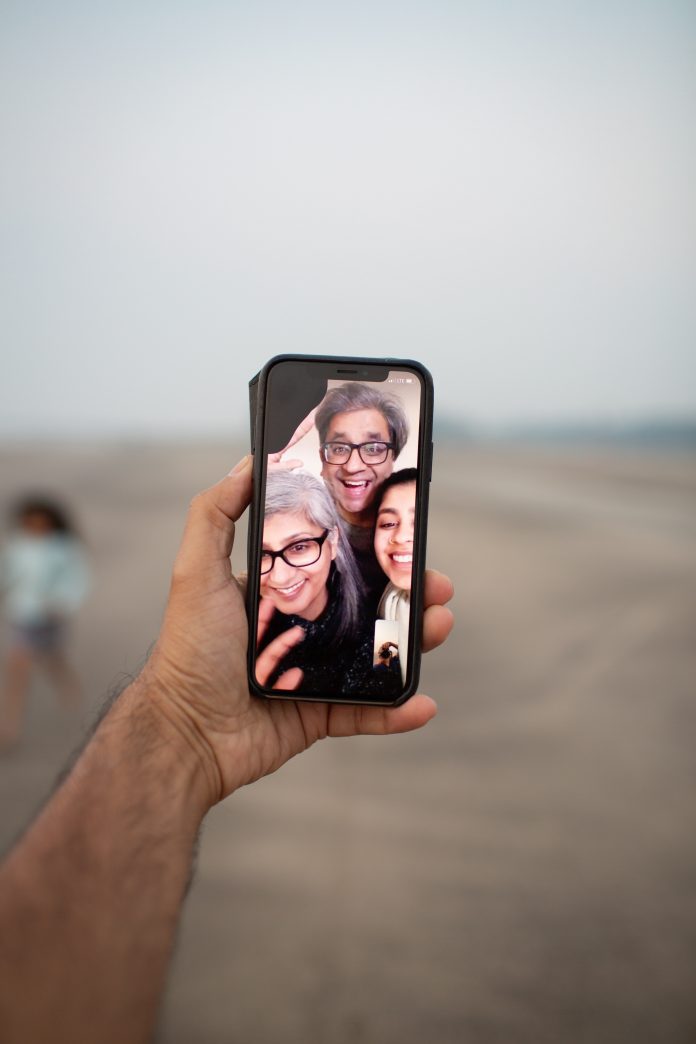
Let your kids do what they want.  PHOTO: Raj Rana / Unsplash

Dear Indian parents,

You need to re-prioritize whose opinions truly matter. 

When you teach your children that the opinions of others are more important than your kid’s happiness, it sets up a toxic example for them to follow. For Indian parents who immigrated from India, it seems counterproductive and contradictory to reroute your entire lives to provide your children with the lives you could not have yourselves, only to prevent them from having that life. 

Holding onto these outdated structures of what children should and should not do will only make their lives unnecessarily difficult. 

If your kid wants to share their life with a person outside of their caste or ethnicity, or if they want to live with that person before deciding to spend the rest of their life with them, let them. There are too many examples in Indian households of unhappy marriages held together by the societal shame of divorce in the culture. Do not make your kid fall into that same cycle; let them go into marriage with a better idea of their partner and the relationship they share.

For careers, let your kid study and work in the arts. Do not force them into fields such as medicine if it is not their passion. There is more to life than having a high-paying job. If they are going to be spending most — if not all — of their life in their field, they might as well enjoy it.

But relationships and careers are just two examples of aspects in my culture that still have antiquated structures — there are plenty more, but it would take an essay to fit them all in.

What your children think of you should matter more than the opinions of others.

Top five things to do on campus when in-person classes are back

0
Courtesy of The Peak
  1. Walk as fast as humanly possible past AQ promoters so they don’t approach you 

You did this before COVID-19 hit, and you should do it again! To further increase your chances of not being approached, use both hands and cup the sides of your face while you’re walking to avoid eye-contact with absolutely everyone. Terror in your eyes is a stylish choice, as well. This is a great way to avoid difficult situations for yourself when socializing again becomes mandatory.

  1. Go to Tim Hortons and buy up all the Timbits 

Nothing’s better than frequenting the fast-food places on all campuses, especially Tim Hortons. Before we had to stay home, Timbits seemed like a staple in the SFU student diet. Why not take all their visible Timbit inventory and enjoy a not-so-light snack? Who says shameless indulgence only happens at home? Hey, who am I kidding? SFU is your second home.

  1. Break out into a dance routine in a study area 

Have you ever wanted to blast a song like Tyler Shaw’s “Remember” and dance to blow off some steam at school? If you’re feeling overwhelmed when studying at, say, the common area near Saywell Hall, set a timer for just one minute. Sway from side to side for a few seconds before really going off. Then, my friend, dance like you’re about six shots in at a horrible nightclub where nobody knows who you are. Once the timer goes off, calmly take out your earbuds and go back to studying like nothing happened.

  1. Furiously wave your arms at the bus driver who takes off without you 

I’m sure most commuter students at SFU have experienced missing their bus by a split second. This time, put your whole back into this one. When you know you’re not going to catch the bus, flail your arms around just for the sake of it. Even when things don’t work out for you sometimes, it’s nice to show people you won’t go down without a fight. Who knows? Your would-have-been driver might see your flailing arms in the rear-view mirror as they drive off. They might remember you and drive away 20 seconds earlier tomorrow to avoid this from happening again.

  1. Demand outright to be enrolled in your waitlisted class

Everybody knows the feeling of praying for that one person to drop that waitlisted course so you can get into it. But are you tired of waiting? Here’s an idea: storm into one of the professor’s other classes and demand they give you permission to enrol. The surprise effect will give you the upper hand. They’ll have no choice but to say “alright.” Relish in their shock as they, with wide, disbelieving eyes, send administration that sweet, sweet, email. Don’t forget to smile and say “good” while gleefully skipping out of the classroom.

Canada to donate AstraZeneca vaccines to COVAX

1

As Canadian vaccination rates rise, 17.7 million of the AstraZeneca vaccine will be donated to COVAX, an initiative that distributes vaccines among “low- and middle-income countries.” This comes after a surplus in supply. The World Health Organization (WHO) said vaccine distribution is becoming increasingly urgent. 

“Many provinces stopped offering AstraZeneca as a first-dose option,” said CBC News. This was due to concerns of side effects, as the vaccine has been linked to rare blood colts. According to CBC News, “The National Advisory Committee on Immunization (NACI) also stopped recommending it as a second dose.” This resulted in a drop in demand for the vaccine.

There has been mixed information on mismatching vaccines. While NACI recommended mixing mRNA vaccines, WHO advised against it, claiming there was not sufficient evidence to suggest it was safe. It is now “up to Canadian provinces to decide whether they will mix and match.” The government has not specified whether Pfizer or Moderna vaccines will be donated.

Conservative MP Garnett Genuis noted Canada should not donate vaccines “it does not recommend for Canadians.” He added, “The government needs to clarify how they view the AstraZeneca vaccine, whether they believe that it is as effective as other brands, and why they are choosing to transfer this brand as opposed to others.”

In response, International Development Minister Karina Gould said there is a demand for vaccines in countries in the Global South and it’s necessary to administer as many vaccinations as possible. UNICEF Canada added AstraZeneca is preferable because it’s logistically easier to transport, as it does not require extreme refrigeration. 43% of Canada’s population has been fully vaccinated, with 68% having received one dose.

Olympic athletes should be allowed to protest

0
Athletes should have the right to speak up for the communities that raised them. PHOTO: Ryunosuke Kikuno / Unsplash

On April 21 of this year, the International Olympic Committee (IOC) upheld Rule 50 of the Olympic Charter ahead of this year’s Olympic Games, which were likely to feature protests from athletes regarding social and racial justice. Rule 50 prohibits any demonstration of political, religious, or racial propaganda in any Olympic sites or venues. According to the CBC, this decision was the result of a survey of about 3,500 athletes, 70% of whom said it was “not appropriate to demonstrate or express their views” on the field or at the opening or closing ceremonies. That same survey also showed 67% of respondents disapproved of podium demonstrations.

Sports can be a source of community and togetherness, as well as entertainment. Athletes put a lot on the line to give us that sense of community and be sources of inspiration. It is critical that appropriate platforms are integrated so we can listen to them on matters regarding their lived experiences and professions. 

This survey is a good indicator of what the majority of athletes feel is right. However, the Olympics are an event and movement that ought to have an active part in advancing human progress and dignity. This is even outlined in the Olympic Charter. Minority rights are and should be on the agenda this year and every year, given the recent events surrounding human rights abuses directed towards Black Americans, Palestinians, and Uyghur Muslims within their respective countries. 

The decision to uphold Rule 50 reveals a tension in the Olympic Charter that threatens to alienate minority groups and marginalized peoples in their pursuit of visibility, equality, and inclusion. Rules are quite often full of contradictions, and this goes for organizations all around the world. However, if the IOC is to truly operate by and realize some of the core principles in the Olympic Charter, it’d have to recognize this rule may be detrimental to that cause. 

Principle 1 of the Olympic Charter presents Olympism as creating a way of life based on the “joy of effort, the educational value of a good example, social responsibility, and respect for universal fundamental ethical principles.” Principle 2 goes on to say Olympism is meant for the “harmonious development of humankind” with a specific goal to promote a “peaceful society concerned with the preservation of human dignity.” Principle 5 goes on to say “sports organizations within the Olympic Movement shall apply political neutrality” with the recognition “that sport occurs within the framework of society.” 

In the words of Bishop Desmond Tutu, “If you are neutral in situations of injustice, you have chosen the side of the oppressor.” Perhaps the issue is that, though the Charter is representing an idealistic future, it is a document from a different time and reflects the constraints of that time. 

In a BBC Sport article, some athletes, like Tianna Bartoletta, who had a good reason and intention to protest, said they were “made by” their communities, not the countries they represent. These athletes have the sympathy and backing of millions around the world, who are not only global citizens, but conscious humans that can feel the universal suffering of the marginalized communities they represent. For some athletes, their communities shaped them into the Olympians they are. These communities have been marred by struggle and structural violence, and in taking a stand, these athletes want to put an end to that. They want to see a better future for those that will come after them. 

Every four years, the Olympics create a rare global community. They present an opportunity to come together as one and be the best we can be as an ever-divided species. For a few weeks every four years, the Olympics have the chance to tell athletes, communities, and the world that we are moving forward, towards the world the Olympic Charter strives to reach. Tokyo 2020 unfortunately will not send that message. Tokyo 2020 as an Olympic community has missed the chance to shape humankind for the better by setting a good example. It has failed to be part of the vigorous global effort in progress to create and preserve human dignity.

We should keep some aspects of online learning after the pandemic

0
PHOTO: Chris Montgomery / Unsplash

I’ll be the first to admit that remote learning simply doesn’t work for me: my deadlines get lost into the abyss of Canvas modules, I find it more difficult to engage with my classmates, and I find it a bit harder to ask for help over Zoom feedback sessions (especially because my internet doesn’t like to cooperate!). But just because I have problems with remote learning doesn’t mean SFU shouldn’t continue to invest in it, not just as a way to make learning possible during the pandemic, but also more accessible once we make a full return to campus.

Something I really value in my lectures is they are both recorded and auto-captioned. I find it difficult to properly hear what my lecturer is saying sometimes, so having captions really does make it easier for me to understand lesson concepts. In a similar vein, if I have something that distracts me in the middle of my lecture, or if I’m not feeling well and can’t focus, it’s useful to have the lecture accessible to view later.

I think incorporating recorded lectures with captions going forward would be a good tool to add on top of having in-person classes. It’s necessary to make university learning more accessible, as many students have different accessibility needs. Some may find remote learning more approachable, as there may be less sensory stimuli associated with asynchronous lectures. Students can focus on their screens rather than a moving professor and the noises of classmates in lecture halls.

Having courses available to take online would also make sense physically: SFU has three campuses. Transiting between campuses takes at least an hour, so it would be hard to schedule required courses at different campuses with time conflicts. There have been many courses that I had to wait a semester to take because I couldn’t make the transit time between campuses. Reviewing SFU’s undergraduate student survey, 75% of students were able to register in all of the required courses they wanted this term, higher than the 68% of previous years. 

When I took online classes prior to the pandemic, the lectures were pre-recorded, but they’d be filmed at a distance where I couldn’t hear the professors properly. I couldn’t interact with the professor in that period, and breaks were recorded as well, so I found it difficult to get important information from those classes. Something I appreciate about having lessons done through Zoom and Blackboard Collaborate is the option to participate in the chat and having the professor or TA respond to me in real-time. 

A big barrier preventing me from being excited for an almost full return to campus is COVID-19. It’s not certain COVID-19 won’t be a threat when we return to campus this fall. International students may face barriers like having difficulty accessing vaccines if vaccines aren’t distributed at a higher rate internationally. SFU has not released guidelines on whether students can quarantine in residence buildings, so they may also find it difficult to do so when asked to return to campus for the semester. I feel hesitant about returning to almost full capacity in the fall and would feel reassured knowing I can safely access the same lessons at home.  

Having shown that SFU is capable of having remote learning available for students already, I see no reason why they can’t continue. Removing asynchronous delivery and closed captioning in lectures would only introduce more barriers to education students. We should be able to have alternatives available for how we choose to participate in classes.

SFYou: Rumneek Johal, news journalist and social media savant

0

Rumneek Johal is what we would call a Peak success story – one of our own. A former Peak journalist who has written for publications such as CBC, Daily Hive, and more, Johal is an SFU graduate who is making strides in the journalism industry today. Johal reflected on her career in journalism so far and the work she would like to do. 

When she was younger, Johal “already knew [she] had a passion for writing and storytelling.” But it wasn’t until her second year of university that she got started on her path in journalism.

She emailed Sonia Sunger, a broadcast journalist and co-anchor at Global News, about getting started in journalism. Sunger told Johal to “just start,” and so she did.

So Johal began writing for The Peak, producing articles such as “Why doesn’t mainstream feminism embrace women of colour?” Five years later, her thoughts regarding this question remain relatively similar. 

“It’s 2021, and we’re still celebrating like, ‘oh my god, we have women in corporate positions,’ and that’s great [ . . . ] But that doesn’t take into account the experiences of marginalized women in this country. It doesn’t take into account the experiences of Indigenous women in this country. [ . . . ] There’s still so much more to do,” including in the journalism industry, she said.

For Johal, The Peak was a place for her to build confidence as a writer. Alongside her student journalism, her communication background helped her develop a critical lens in regards to the intersections of a given story.

While the critical lens she developed set the foundation for her journalism career, she noted that, in the journalism industry, “people try to call out that if you’re calling out those in power, ‘you’re trying to be an activist.’

“No, actually. It’s my job to call out politicians, call out bullshit,” Johal said. “If that makes me bad at doing my job, then fine, but I think that that’s quite literally the point [of my job].”

Her journalism career to date has included being the current full-time editor of 5X Festival’s blog, 5x Press, an intern for CBC News Toronto, and a staff writer for Daily Hive. 

In regards to working as a Sikh woman of colour in an industry dominated by white, heteronormative men, Johal said, “There are challenges because you have to push past ‘Am I being tokenized? Am I only here because I’m brown? Do they only want to tell brown people stories? Or [instead] do they not want me to tell brown people stories because they’re afraid I won’t be able to be objective and tell them properly?”

“I have to fight extra hard for the stories that I’m telling and show that I have a basis on which to tell them.” She noted white journalists aren’t likely to have that issue. 

Her experiences as a journalist reflect her personal experiences, specifically growing up in Surrey. Johal’s Master’s project from her graduate journalism program at UBC was an audio documentary about Surrey called Allow us to Reintroduce Ourselves. It concerned dispelling the stereotypes the city and its people experience.

“Every community has shitty people,” said Johal. To her, the focus should be on, “Why are these people doing shitty things? What [infrastructures] are we as a society not giving them? [ . . . ] There is no one answer.”

The stories Johal did at Decomplicated with friend and fellow journalist, Carol Eugene Park, represent the type of work she wants to do in her career.

“It [was] two racialized women, children of immigrants telling stories that we give a shit about.” According to Johal, the project’s goal was “to not be unapologetic in our voices, to be vulnerable, and to be unfiltered.”

Johal and Park’s inspiration behind Decomplicated stemmed from how Johal “felt that so many young people in [her] life, outside of the media sphere, were so disillusioned with the news.

“Now that I’ve been given this space, I’m going to take it and run with it,” she said. “That’s what my advice is to every other person: listen, if you’ve earned a seat at the table [ . . . ] if you have the microphone, speak. Don’t shy away from using it.”

Johal wants to use her platform to hold people accountable and, at the very least, make what she is currently doing a little easier for the next person in her position.

Her social media platform was a point of discussion during the interview, as she pointed out she finds out many of her stories through apps such as Twitter and Instagram. Johal mentioned that “so many racialized people find and tell their stories using social media because oftentimes, that’s the only place that our voices are legitimized.”

Johal is a Peak success story because she is breaking out of the barriers placed on women of colour in the journalism industry and doing her part to create change in an industry that has worked in favour of the status quo for decades.


Disability Pride Month needs to happen in Canada 

0
The disability community benefits from having a Pride Month. Disability pride flag pictured.  ILLUSTRATION: Ann Magil / Flickr

Disability Pride Month is recognized in July in the United States. It began in 1990 with the Americans with Disabilities Act (ADA) on July 26, which sparked the first disability pride celebrations in Boston in July 1990 and 1991. It is a tradition that was revived in 2004 and continues today. While Canada does not share the ADA, we should acknowledge a month for the disabled community. Disability Pride Month is celebrated by some Canadian groups, but it is not yet formally recognized nationally.

The month encourages more mainstream conversations about disability and offers information on allyship. It is an opportunity to amplify authentic stories from people with different kinds of disabilities and encourage allies to continue taking action to eradicate ableism. More than a billion people have disabilities, and we should never be ashamed of them. It is a movement the entire world needs, and it’s time Canada recognizes that.

Not everyone may take pride in their disabilities or identify as disabled, and some people do. Regardless, lived experiences should be respected. To discount the idea of disability pride altogether is erasure. Ignoring our disabilities ignores our access needs and, for many of us, a part of our identity that connects us with an entire community of people. Connecting with people who have shared life experiences, especially when we so often have to self-advocate for change, can be life-saving. 

The movement rejects the notion that there is something wrong with us and that we are less worthy of dignity than non-disabled people. We should not be brushed aside when we reject the shame put on us for simply existing. Disability pride is associated with well-being and higher self-esteem. In some cases, it has also been associated with lower rates of anxiety and depression. People with a positive disability identity have also reported higher satisfaction in their lives. Expressing disability pride openly can be a healthy way of fighting ableist views of disability. 

Disability pride is often recognized by Sarah Triano’s definition, but that definition is not entirely beneficial to the disability community. It embraces the idea that people should not be ashamed of their disabilities, but implies that a lack of pride is what causes ableism. It takes the words of Dr. Martin Luther King Jr. out of context to say a lack of pride is our greatest barrier in an ableist society. Though disability pride may have benefits, toxic positivity will not eradicate oppression of any form. 

Movements for the disabled community often recognize the social model of disability, which can be a welcome break from only being pathologized in the medical model. Rather than focusing only on what should be “fixed” or “cured” for us to fit in, we should be seen as people who can thrive and live fulfilling lives — not just as patients or inspiration porn.

Pride cannot exist as a co-opted movement and cannot be compared to the oppression faced by other marginalized groups. Disability is an intersectional experience, and it cannot be compared to the Black civil rights movement like Triano’s definition does, or likened to LGBTQIA2S+ pride like it may be compared in other definitions. It also cannot be stated that having pride in disability is the way to freedom and equity. 

Ableism is not our fault and not a burden we can love our way out of; it is a result of systemic oppression which requires tangible change to create an equitable society free of institutional barriers. 

Celebrating disability pride deserves a separate occasion from Disability Employment Month in October and the array of awareness days throughout the year. It goes beyond the work to spread awareness of our disabilities and must also recognize that the ableism that kills us is a result of external barriers, not of how we identify ourselves. There is a wide range of disabled experiences, and we are in no way a monolith, but we all deserve basic respect and equity. 

Students discuss SFU’s reopening plan for fall semester

0
PHOTO: Gudrun Wai-Gunnarsson / The Peak

Following the provincial government’s announcement of reopening measures, SFU released a reopening plan for the Fall 2021 semester. 

SFU anticipates 70–80% of courses will be taught on campus. Reopening protocols include enhanced cleaning practices and reimplementing student amenities and programs. 

The Peak reached out to various student unions for their thoughts on the return to in-person classes. 

“It feels like again and again, SFU fails disabled students,” said SFU Disability and Neurodiversity Alliance executive member Vivian Ly. 

Based on personal conversations with SFU students, Ly reported many feel SFU needs to better balance remote and in-person classes. Ly added those with priority access are also having trouble enrolling.

Course enrolment for the few remote fall courses gives priority access to the Centre for Accessible Learning (CAL) registrants. Ly said, “It’s certainly not enough. For one, not every disabled student is registered with CAL, often due to a myriad of ableist institutional barriers. There are disabled students who need priority access but cannot access that because of existing and enduring inequities and institutional barriers.

“While SFU is ‘moving forward’ with re-opening, we are leaving our most vulnerable behind.” 

SFU Students of Caribbean and African Ancestry (SOCA) president Balqees Jama noted SOCA shares the same concerns as the Access for All campaign. The campaign highlights accessibility and safety concerns regarding the reopening. It noted the pandemic has allowed for new norms to be established — particularly for disabled students — but returning to in-person status will “reinstate the same barriers to education numerous marginalized students faced prior to the pandemic.” 

SOCA noted concerns regarding financial challenges and travel restrictions for international students to return to campus. Jama said there is a “lack of equitable access to receiving the vaccine in Canada as well as our membership’s many countries.” She highlighted their membership is also experiencing “racial anxiety around returning to face daily anti-Black microaggressions and ongoing systemic racism.”

President of the Data Science Student Society (DSSS) Dustin Jorgensen questioned “how quarantine, vaccinations, and travel arrangements will work for international students.” 

Jorgensen noted concerns surrounding the dangers of the COVID-19 Delta variant emerging in Canada. “If BC experiences another wave of cases due to a variant, are we prepared to return to remote learning?”

Ly said, “Despite many of us wanting the pandemic to be over: it isn’t. Caring for our communities and our collective safety means that SFU should be recognizing this reality and not rushing into policy decisions and re-opening plans.

“Even when I’m fully vaccinated, I’m going to mask up to protect myself and others. I hope that other students, staff, and faculty will do the same.”

“The prospect of going back to classes in person is exciting,” Jorgensen acknowledged. “For many students they’ve completed an entire year of university without seeing the campus!”

In their statement to The Peak, the English Student Union (ESU) echoed this sentiment, saying they “are excited to be returning to on-campus classes and activities.” However, the ESU said their activities and events in the fall will use a hybrid model to accommodate students. “[We] also want to acknowledge the barriers faced by marginalized students in this plan. We are in support of the Access for All campaign.”

SFU announced plans to encourage professors to continue recording and uploading lectures, as well as not penalizing students for being absent. This is in effort to keep students away from campus if they are feeling ill. Ly noted how important it is that SFU is “re-thinking workload, absence policies, and participation policies, which are traditionally rooted in ableist and exclusionary frameworks.”

Ly suggested SFU have dedicated and widespread consultations with students regarding their concerns and then take action. 

“SFU is making all these decisions impacting students without doing broad consultations and without specifically consulting marginalized students such as disabled and neurodivergent students,” said Ly. 

“Our school should be doing more to protect immunocompromised and unvaccinated folks by retaining strong COVID-19 safety practices, not relaxing them [ . . . ] There is simply no safe space on SFU for [a] student that is unvaccinated because they are immunocompromised.”

Top Ten Simon Fraser University name alternatives

0
Very calm, very cool. Nothing wrong here. Illustration: Siloam Yeung / The Peak
  1. Skunk Forest University

We need to come up with a new name for the school’s athletics department anyway, so why not combine the two? Our opponents won’t see us coming because they’ll be totally distracted by our pungent spray!

  1. Surrey FernGully University

We have a Surrey campus, so why not name our school after it? Besides, most people like to go to the Surrey campus anyway since it’s on the SkyTrain line (at least I do). As for the FernGully: The Last Rainforest part, why not? It’s a movie about environmentalism and it’s just so darn cute. I know what you might be thinking: “Wait, wouldn’t it be ‘SFGU’ since FernGully has a capital G?” To that I say . . . shhhh.

  1. Stephen Fry University

I can see why changing SFU’s name might anger some people since it is throwing out the history of the institution. So how about finding some common ground and naming the school after yet another white guy? Stephen Fry University will be named after the famous British comedian and prominent gay actor. Unlike Simon Fraser, Stephen Fry may actually come to the school. May, but probably won’t.

  1. Senseless Fun University

Let’s embrace our fun side with Senseless Fun University! Now, some may argue it seems like a bad idea to have the words “Senseless” and “University” together, especially when “Super Fun University” was right there. However, I am writing this out by hand and having my editor transfer it to the computer, and I’m not going to go back and change it.

  1. Soiled Foundations University

About the fact that our campuses are built on a foundation of soil. What were you thinking of when you read “soiled?”

  1. Scar Face University

This can be after the notorious movie character Tony Montana or the villainous Scar from The Lion King. However, in this institution, we will only recognize Jeremy Irons’ Scar from the 1994 animated movie, not the Chiwetel Ejiofor version from the awful 2019 remake. What will be taught at this school? I don’t know, drug cartels and animal power struggles or something? The Lion King is based off Hamlet. English majors can have a little attention, as a treat.

  1. Sex Fest Underground

Let’s just give up on this whole “university” thing and turn the school into what we really want: an underground sex fest that occurs every semester! I know I would much rather learn things like The Piledriver and The Wheelbarrow instead of subjects like economics or history. 

P.S. this was a much cleaner name than my first idea of what to do with the “S” and the “F.”

  1. Sit Forever University

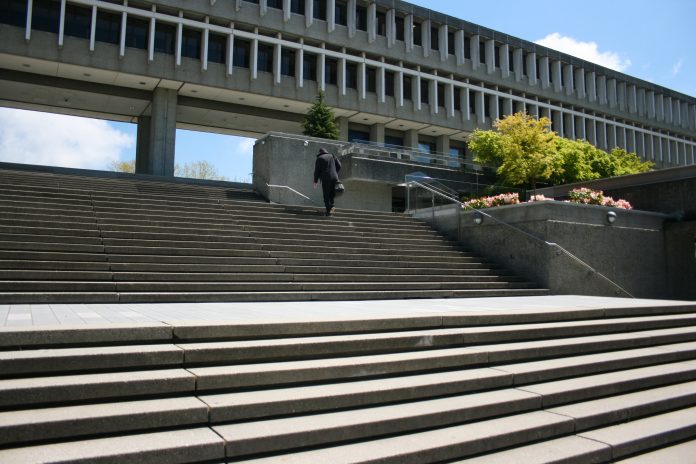
A true reflection of what university is: sitting forever and listening to some teacher drone on and on about something you don’t care about because you didn’t get your WQB requirements done early. So now, you have to spend time listening to a teacher talk about something you are never going to use simply because the school wants you to have a “breadth of knowledge.” 

  1. Substandard Food University

It’s the perfect name to honour the poor food offerings at the school. The economics class at this school will just be “Make the food cheap and bad, and then charge a shitload of money for it. If they’re on the Burnaby campus, where else are they going to go?”

  1. Sunny Florida University

Let’s name ourselves Sunny Florida University and get out of this cold and dreary area. No more having to struggle to get up Burnaby Mountain on a snowy day because the buses have all shut down. Why hide in the cold, cavernous, concrete structure of the Burnaby campus when we can just catch some rays in the Florida sun? What will we learn? I’ll tell you what we’ll learn: Spring Break and anti-vax propaganda!