Home Blog Page 338

Vancouver non-profit offers free HIV self-test kits to increase equitable health care

0
Photo courtesy of the Community-Based Research Centre

Written by: Michelle Young, News Editor and Carter Hemion, Staff Writer 

The Community-Based Research Centre (CRBC) now offers up to three free self-test kits for HIV. Gay, bisexual, transgender, queer men, non-binary, and Two-Spirit British Columbians are eligible to recieve these self-test kits by participating in the CBRC’s Sex Now 2021 survey

Approved by Health Canada, the testing kits involve “a one-minute, finger-prick blood test.” 

Chris Draenos, a research manager for the CBRC said the kit “allows them to make the choice of how they want to test, where they want to test, who they want to disclose to, without having to participate in a health-care system where there’s barrier access.” Surveys suggest self-testing is preferred over other methods, such as in-person clinics. 

HIV self-testing was approved in November 2020 in Canada — oral HIV tests are currently unavailable.

Due to clinic closures, over 50% of LGBTQIA2S+ patients have missed appointments related to HIV and STD testing, Draenos said. “Even before COVID-19, there were access issues with HIV testing.”  

“Aside from that, there are structural reasons why people aren’t able to access testing.” He explained this includes lack of government health insurance and discrimination.  

“There’s also a lot of HIV stigma out there still. The criminalization of HIV is a huge barrier to people accessing testing. There’s fear of what might happen afterwards and many of the policies are still rooted in the ‘80s and ‘90s — science has moved on since then,” Draenos said.  

SFU professor and LGBTQIA2S+ health-care expert Travis Salway elaborated that stigma is intersectional. It relates to race, sexual orientation, gender identity, immigration, and sex work. “They all play a role because HIV — historically — hasn’t been evenly distributed throughout our population. Some groups have been more burdened than others. 

“HIV, as a virus, shouldn’t be different from any of the other infectious diseases that we’re contending with in public health — but it took on a particular meaning because the first visible cases were among these groups of people that were disfavoured by society,” Salway explained. 

In comparison to earlier outbreaks, there are now treatments and preventative education available for HIV. 

“But history lingers, so even though we have shifted our understanding of HIV [ . . . ] people still equate HIV with homosexuality and using injection drugs.” Salway added this stigma surrounds HIV and conversations of testing and safe sex. In turn, it can make conversations about HIV difficult — which is “one of many ways” the LGBTQIA2S+ community faces bias.   

Draenos explained that to begin to address HIV stigma, health-care providers should be trained to aid the LGBTQIA2S+ community to understand their experiences. He said this includes understanding the difference between sex and gender expression. 

Salway said sex education plays an important role in addressing stigma surrounding sexual orientation and gender identities. In regards to the self-testing kit, he said that while it signifies progress, “it’s just one step along the way.” The next steps would involve access to at-home health services, affordable medication, and providers who understand their needs. 

“Stigma really thrives on silence,” Salway said. “The antidote becomes talking.”
VANDU calls to revise drug decriminalization policies

0
Photo courtesy of Jean Swanson via Twitter

Written by: Karissa Ketter, News Writer

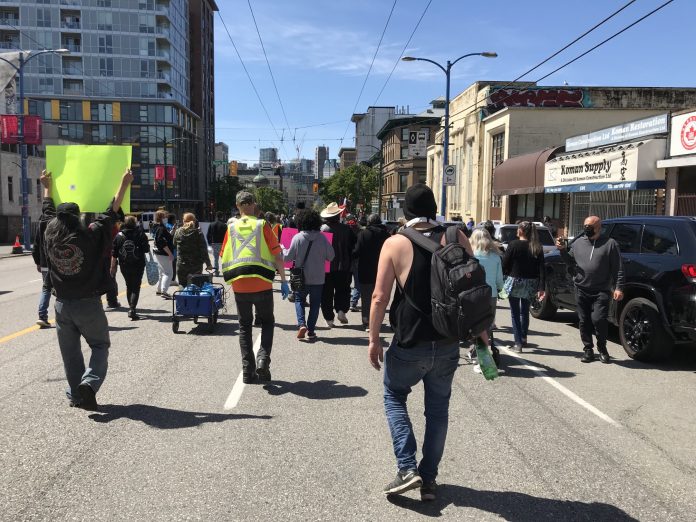
The Vancouver Area Network of Drug Users (VANDU) and allied organizations held a press conference on May 11, 2021 calling on the City of Vancouver and Canada’s federal government to revise their newest drug policy proposal. The new Vancouver model was recently submitted to Ottawa for approval and asks for Vancouver to be exempt from the federal Controlled Drugs and Substances Act. It’s described as a form of decriminalization that takes a health-care-based approach. 

The City of Vancouver proposes individuals be able to hold a certain amount of illegal drugs without being charged for simple possession. This model includes a voluntary referral system through which drug users can access support services if they choose.

“Decriminalizing the simple possession of drugs should help to destigmatize drug users. This stigma often prevents them from seeking help,” according to the City of Vancouver.

Scott Berstein, director of policy for the Canadian Policy Drug Coalition, said the current model has “serious flaws that will undermine its intended health and social benefits.”

One of the issues outlined includes the “lack of input from people who use drugs. Because of this, the Vancouver model fails to reflect the realities of current drug use,” said Berstein. 

Caitlin Shane from Pivot Legal Society said, “The people who most need the benefit of decriminalization — folks who are poor, unhoused, racialized — these are the folks who are remaining unprotected and overcriminalized [in the new model].”

Another flaw is individuals carrying “unrealistically low”  amounts of the drug. These thresholds “seriously undercut the intended benefits of the current proposal because [they’re] not based on reality,.” said Berstein.

According to Shane, the City of Vancouver also said the data they used in creating the drug threshold policies was out of date.

“Basing a precedent setting based on bad data is reckless, anti-scientific, and dangerous,” said Berstein.

The conference presentation noted concerns with the Vancouver Police Department (VPD)’s involvement. “This is a conflict of interest as the whole point of decriminalization is to remove police from the process, not bring them closer to it,” said Berstein.

VANDU called on the City of Vancouver and Canada’s federal government “to meaningfully engage people with lived experience and allow them to co-develop a vision for decriminalization.” They asked to update thresholds to accurately reflect drug use patterns and terminate VPD relations in regards to drug policies. 

“There is no legal requirement that police or law enforcement be anywhere involved in this process and yet the Vancouver Police Department has been given the final say,” said Shane. 

“Police have demonstrated time and again that they are far more invested economically and otherwise in protecting their own power, budgets, and image over and above the lives of people who use drugs.”

Kali Sedgemore, an outreach worker, also addressed concerns with how the Vancouver model disproportionately affects youth, as it allows the VPD to continue intervening with youth in Diversion Pathway programs. The voluntary referral system to support services for adults is not made available to young people at this time.

“We all know that means involuntary care [ . . . ] Youth don’t need involuntary care, they need harm reduction support,” said Sedgemore. Involuntary care is used when offenders refuse or are too ill to legally consent for rehabilitation, forcing them to be admitted.

The City of Vancouver reports that harm reduction strategies such as prevention and treatment strategies have produced an increase in people seeking treatment. 

Sedgemore also noted concerns with how the Vancouver model would increase risk for Black and Indigenous youth. The Vancouver Sun reports that 2014 data shows Black and Indigenous people are overrepresented in drug use data. 

Harsha Walia, executive director of the BC Civil Liberties Association added, “Racial inequalities exist in many aspects of Canadian society, including the economy, education, health care and more.” She noted the over-criminalization of Black and Indigenous people in BC as “both a symptom and a cause of systemic racism.”

The SFSS noted this concern in their BC Police Act Review in April 2021. They said youth who use drugs “have experienced disproportionate harm due to policing instead of receiving support.” They also encourage transformative justice in BC, “challenging the notion that increasing police presence and practices will increase safety.”

When asked if VANDU has seen any sign of hope of working with the City of Vancouver to revise their policies, host of the Crackdown podcast Garth Mullins said, “I haven’t seen any yet.”

According to CBC, Vancouver mayor Kennedy Stewart said that there is not enough time to revise the new drug decriminalization policies before the federal election. 

In response to the policy’s critiques, the City of Vancouver issued a statement: “The Vancouver model, as a whole, takes a leading approach to decriminalization that is well considered, compassionate, and based on local data, with the goal of reducing stigma and transitioning to a fully health-focused approach to substance use.

“The exemption we are seeking is the first of its kind in Canada [ . . . ] We respect the views of VANDU and other groups, welcome their continued advocacy, and hope we will continue to work together to update the model.”

Mullins said, “Decriminalization is not enough — we need to get [a] safe supply because we have had record overdoses in this past year.” However, “removing police is key — it’s an important first step.” By removing the police from the lives of people who use drugs, it “invites us to rejoin society.”

SFU hosts Rosemary Brown Memorial Symposium on Women & Social Justice

0

Written by: Charlene Aviles, Peak Associate 

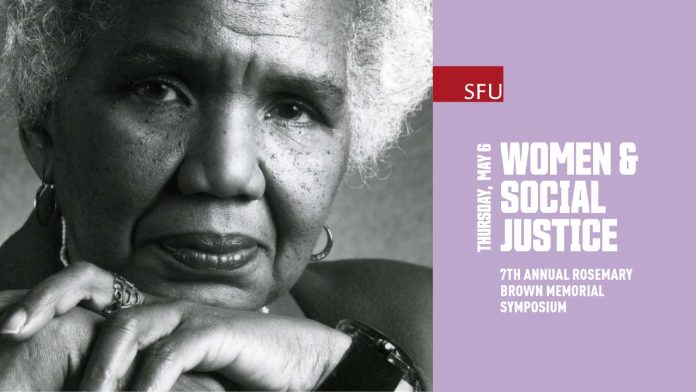
The Rosemary Brown Award for Women Committee, SFU Public Square, and the department of gender, sexuality and women’s studies (GSWS) held their 17ᵗʰ Rosemary Brown Memorial Symposium on Women & Social Justice on May 6, 2021.

The annual award night recognizes those actively involved in social justice initiatives.

Dr. Tiffany Muller Myrdahl, GSWS and urban studies professor, presented the undergraduate award in Social Justice to GSWS student Anya Sass. Based in Cape Town, Sass worked on the Adonis Musati Project, which supports refugees and migrants through various initiatives including counselling and workshops. 

Social justice is more than building equity,” said Sass. “It’s about actively dismantling ideas and structures that are oppressive or exclusionary and rebuilding them to better reflect the diversity of experiences and identities within communities.” 

Reflecting on her volunteer work with refugees in South Africa, Sass highlighted the importance of local organizations’ grassroots initiatives that supplement government support for refugees.

On behalf of the Rosemary Brown Award for Women Committee, Patsy George presented the award for women to Dr. June Francis, a Beedie School of Business associate professor. Dr. Francis is the co-founder of the Co-Laboratorio Project and the director of SFU’s Institute for Diaspora Research and Engagement.

Driven by her upbringing in Jamaica, Dr. Francis described the hope that accompanied Jamaica’s independence from England but also recognized the role colonization continues to play.

“The same logic that colonized the world is the same logic that’s creating this inequity, and it’s the same logic that we need to dismantle if we’re going to achieve freedom for women and girls and for people of colour worldwide,” said Dr. Francis.

According to Dr. Francis, neocolonialism continues to oppress former colonies. She acknowledged that colonization did not end with Jamaica’s independence, because trade rules and globalization connect Jamaica’s economy with England. 

While describing colonization’s long-term consequences in Canada, she cited the overrepresentation of Black and Indigenous peoples in the homeless population.

“You’ve got to address power. Who has power in the system? Who makes the decision?” Dr. Francis said.

When asked by an audience member about how to work towards equality, Dr. Francis urged the audience to acknowledge and study inequalities, prioritize and commit to social justice in all institutions —  especially including often Eurocentric universities, and consciously restructure policies and institutions to implement reform.  

To conclude the event, Honourable Melanie Mark, BC’s minister of advanced education, skills, and training, gave her keynote speech. 

“We have to acknowledge where we come from in order to set our sights on what needs to change,” said Mark. The full event can be found on SFU GSWS’ YouTube.

entre chien et loup: the story of boundaries between the familiar and unfamiliar

0
Gnam performing entre chien et loup. Courtesy of David Cooper

By: Kelly Chia, Staff Writer

entre chien et loup — or quite literally, between dog and wolf — is a French expression used to describe the time between night and day where a dog is indistinguishable from a wolf. This expression is the title and inspiration for James Gnam’s solo act. The Peak had the opportunity to speak to Gnam about the process of creating a solo during a pandemic. 

Gnam is the art director and co-founder of plastic orchid factory, a space he created with his partner, Natalie, 12 years ago as a passion project. plastic orchid factory has since put out over 20 original works that have been in community halls, theatres, studios, and galleries across Turtle Island. Their work aims to “blend genres and facilitate collaboration, [developing] new frameworks for making and experiencing art and performance.” 

Gnam himself has a strong ballet background, and he spoke with reverence about how in sync he was with the many people he collaborated with, especially in times of discomfort. While discussing how fortunate he felt to have lasting creative partnerships, Gnam mentioned Vanessa Goodman and James Proudfoot, who have both been working with Gnam for 12 years. At this stage, Gnam finds that they have immense trust in each other, and knows that in times of uncertainty, they will land together.

The process for entre chien et loup actually started with another solo Gnam had been working on, which was meant to premiere in June 2020. The show was inspired by conversations with his parents about the possibility of the end of the world, in relation to the Cold War. As a parent of two young boys, he found that he was having similar conversations with his children, this time about the climate crisis. Gnam was fascinated with the paradox of having these parent-child conversations about the end of the world, both speaking about it as a possibility and with the overarching tone of needing to take care of the world.

In the fall when his kids were returning to school, Gnam decided he wanted to work on a different kind of show. “I realized that we’re all in the middle of this, we don’t need to make work about being in the middle of this. We don’t need to pour salt on [the] wound.” Instead, he decided to put his energy into creating a solo about the boundaries of daily life, where increasingly there seemed to be uncertain divides between the safe space at home and places that had become less clear and turbulent in the face of the pandemic. That’s where the name of the show, entre chein et loup, came about.

Gnam explained that the French phrase is “used to express the relationship between the domestic and the wild, between the known and the unknown, between fear and security.” Gnam was interested in exploring these boundaries in his solo. “It’s more about [ . . . ] our relationship to time and how that’s shifted over the course of the pandemic, [like] time and activity and expectation.” 

Gnam also explained that creating entre chein et loup largely in isolation has been difficult because he loves to feed off of and collaborate with people in real time, building the show incrementally with his team at the same time. However, given the themes of entre chien et loup, Gnam noted, “It actually makes sense for me to have spent as much time by myself in the studio for this work, because that’s the world we’ve been living in.” Gnam’s goal with entre chien et loup was not to provide a solution, but to express the ways his life and expectations have changed.

entre chien et loup is set to premiere on May 28 and 29 online, with tickets either free or by donation.  

Broadway has an inclusivity problem

0
Disparities in appropriate representation and casting are prominent issues in the Broadway community. PHOTO: Hamilton national tour / Joan Marcus

By: Kyla Dowling, Humour Editor

Broadway’s reckoning has finally come. 

Over a year after all shows shut down to curb COVID-19’s spread, Broadway aims to return in September 2021. However, individuals within and around the industry aren’t happy about this return — primarily because of the lack of inclusivity and accountability within New York’s theatre industry. 

Broadway has a problematic history. From the classic musical The King and I to the more recent Tootsie, the industry is laden with problematic representations. The former portrays Thailand in a negative light and, before its 2018 revival, cast white actors as Thai characters. Meanwhile, Tootsie, based on the 1982 film of the same name, relies on a slew of transphobic jokes. 

The controversial casting of Amar Ramasar in 2019’s rendition of West Side Story sparked the growing discontent in Broadway. Ramasar, during his time in the New York City Ballet, was involved in sharing explicit photos of a female dancer taken without her consent. The scandal resulted in a lawsuit and numerous protests outside of the theatre that hosted West Side Story; however, it was to no avail. 

Meanwhile, in April 2021, The Hollywood Reporter published a piece exposing producer Scott Rudin. Rudin, a fixture in both Broadway and Hollywood, is notorious for his abusive behaviour towards his staff. But this was the first time his actions were publicly announced. 

This article was the second of three major publications that rattled the Broadway community. The first was written by former Hamilton cast member Daniel James Belnavis who discussed his experience being in a show that was performed by actors of colour but was primarily produced and run by white men. He played the ensemble role of Man 6 — almost always played by a Black queer actor —  and was consistently told that his role was unimportant, cuttable, and was overlooked for various promotions. His recollection of this experience has not been addressed by any of the producers he named. 

Hamilton is a show that centres people of colour in a historical period where they were severely oppressed, but the show has come under fire before — for glorifying capitalism, for glamorizing slave owners, and for suffering from an inexplicable inability to cast dark-skinned women, especially as the love interest. No matter how progressive the show may appear, rich white men are just getting richer by exploiting and demeaning racialized actors. 

The call for Broadway to be inclusive, though, did not just come from Belvanis’ article. Instead, it stemmed from Scott Rudin’s exposé and Broadway fixture Karen Olivo’s subsequent boycott of the industry, as well as the transphobic mess that is Jagged Little Pill. 

The Alanis Morissette jukebox musical named after her album, Jagged Little Pill centres around high schooler Jo. Jo, in the pre-Broadway production, was referred to with they/them pronouns. The problem? Originally, Jo had a plot surrounding their gender crisis, and was understudied by a non-binary actor, but was rewritten to be a cis character for the Broadway run. When asked to speak out about this, the social media team behind the musical as well as the cisgender actress who played Jo both denied the character was ever non-binary, despite since-deleted Tweets saying otherwise. 

Despite this, both Jagged Little Pill and Hamilton have brought a fair amount of representation to the theatre industry. Jagged Little Pill centres on a queer relationship while also handling topics such as addiction, racism, and sexual assault. Hamilton allows people of colour to portray a historical narrative from which they were excluded. It would be easy to call that enough — to put up with the sheltering of abusive men and the bigotry hidden by Broadway’s queer reputation in exchange for meagre amounts of representation. 

But like Karen Olivo, Eden Espinosa, and many other individuals involved in the industry, I want more. As a queer woman, I’ve only been represented a handful of times onstage. Other marginalized people have not yet been represented.

Nonetheless, Broadway has certainly made strides towards inclusivity. Ali Stroker, the first Broadway actress who uses a wheelchair, won a Tony for her performance in a revival of Oklahoma!. She was also in Deaf West Theatre’s revival of Spring Awakening, a stunning performance that centred Deaf actors and was the first Broadway show to provide interpretation for Deaf and Blind audience members. The industry is also notable not only for having many queer performers but for centring queer stories. 

But before Broadway reopens, both theatregoers and those within the industry must consider the ramifications of carrying on as normal. I, for one, know that I cannot continue to be complicit in an industry that supports abusers and invalidates people of colour and the queer community. Can you?

Returning to in-person classes may be more difficult to plan for than anticipated

0
There are still questions regarding vaccinations and international students’ travel. PHOTO: Ahmed Ali / The Peak

By: Alea Mohamed, Staff Writer

Back in March, SFU announced they’re working towards a full return to campus for the Fall 2021 semester, per BC Public Health guidelines. There are still so many unknowns with how this return to campus will work, including the additional cost of international students returning to Canada, vaccine availability, and the everchanging COVID-19 situation. For there to be a safe return to campus, all of these concerns need to be addressed by SFU, with plenty of notice before the fall semester, so that students can be informed in advance.

International students make up a large and important component of the SFU community. At the start of the pandemic, many students moved back to their home countries, while others opted to stay in the Lower Mainland. However, the impact of this pandemic on international students has recently taken on an additional obstacle with which domestic students do not have to deal: a mandatory hotel quarantine. 

According to the federal government, all passengers on international flights to Canada must personally pay for a three-day hotel quarantine, and only at hotels pre-approved by the government. Currently, the only broad exemption is for the Temporary Foreign Workers program. The only way that SFU can fully plan for a return to campus is if there is a federal exemption for international students or a plan for international students to quarantine in their homes here in the Lower Mainland. Another possibility could be for SFU to arrange a reimbursement system for students required to pay for the three-day hotel quarantine. 

BC’s vaccine plan is also an obstacle for SFU’s return plan. BC is focusing on an age-based vaccination program, where 1824-year-olds are scheduled last to receive vaccines. While the government promises the first dose by June, the mean age for undergraduate full-time students at SFU is 21.3. This means that when second doses come around, the majority of SFU undergraduate students will still be in the last group to be fully vaccinated. 

There are two paths SFU can take with this information. Either SFU can choose to require that students are fully vaccinated before returning to campus, or they can let students return to campus after the single dose — if second doses are not administered to most students by September. Either way, it all depends on BC’s vaccine rollout. If things don’t go according to SFU’s plan, students may be left in the dark regarding the return to campus.

A return to campus has the potential to bring back some much-needed normalcy and routine for students. But, there are still so many ambiguous factors that may change before we can move back to in-person campus life. From the perspective of a student, it is unwise for SFU to make this kind of promise so far in advance.  If this last year has taught us anything, it’s that plans can change at the drop of a hat.

Hartosh Bal shouldn’t have been invited to speak at SFU

0
The Institute for the Humanities chose controversial journalist, Hartosh Bal, to speak on the farmers’ protests in India. Ahmed Ali / The Peak

By: Tanveer Kaur and Roopjit Kaur, SFU Students on behalf of the Sikh Students’ Association (SSA)

CW: mention of genocide and sexual harassment 

On April 16, 2021, the Institute for the Humanities at SFU planned an online event regarding the ongoing farmers’ protest in India called No Farmers, No Food: Indian Farmers Confront Authoritarian Neoliberalism. At first glance, it seemed like a great initiative taken by the institute to educate its students on the political events taking place in India. However, after realizing what keynote speaker Hartosh Bal stood for in the past, the Sikh and Punjabi communities at SFU were disappointed. SFU needs to consult with the Sikh and Punjabi communities before allowing speakers like Bal to represent them. 

Bal is the nephew and an outspoken supporter of the former director-general of police of Punjab, Kanwar Pal Singh (KPS) Gill. KPS Gill is known in the Sikh community as the “Butcher of Punjab,” for he led a brutal campaign of rampant human rights abuses in Punjab in the late ’80s and early ’90s. According to Human Rights Watch, Gill was directly implicated in practices such as abduction, torture, and custodial murder of thousands of Sikh youth, the abduction and disappearance of human rights defender Jaswant Singh Khalra in 1995, and sexual harassment in a decision upheld by the Supreme Court of India.

Despite Gill’s name being synonymous with terror and brutality, Bal has defended his uncle’s legacy on several occasions, including in an article entitled “Lessons not learnt: The Left and Right have distorted KPS Gill’s success against terrorism.” According to Bal’s article, “The credit for peace in Punjab goes almost entirely to the combination of [Gill’s] leadership and the political climate he was allowed to operate in. Moreover, those who accuse [Gill] of succeeding through unchecked force simply do not know what they are talking about.”

Bal downplays Gill’s role in history by using statistics generated by data collected from the Institute for Conflict Management in India. Ironically, this institute was founded and led by KPS Gill himself. This data ignores thousands of extrajudicial murders that took place and were researched by Jaswant Singh Khalra before Gill ordered his abduction and murder. More information about Bal can be found at this link.

SFU’s commitment to engage with its students and community is at odds with its decision to host Bal, especially since UBC had recently cancelled a similar event due to the same concerns from the Sikh and Punjabi communities.

When individuals who do not represent our communities are invited to speak, then we as SFU students have the right to voice our concerns and opinions. In the future, we believe it is important that SFU consults with affected communities when educating students on their narratives.  

In response to the controversy, the SFU Sikh Students’ Association (SSA), Punjabi Students’ Association (PSA), and the UBC SSA emailed a private letter to the Institute for the Humanities regarding Bal’s past, expressing concerns over enabling the acceptance of Bal’s appalling beliefs and actions. Along with the letter, SFU SSA tweeted and posted their concerns on Instagram and Facebook. 

On April 23, the SFU SSA received an email from the Institute for the Humanities stating that the event had been postponed. The Institute for the Humanities listened to the concerns of the Sikh and Punjabi community and are open to a discussion to compile a list of informed and appropriate speakers on the farmers’ protest. 

After the postponement of the event, the SFU SSA was ambushed by journalists in support of Bal. An article written by Gurpreet Singh from The Georgia Straight labelled the SFU SSA as “radical Sikhs,” which is a false statement. Any student or a group of students has the right to question the invitation of someone who supports a mass murderer. We, as SFU students, have full academic freedom to voice our concerns regarding what takes place in our institution, especially when it’s regarding our communities. 

While we do appreciate the Institute for the Humanities for listening to our concerns and postponing the event on the farmers’ protest with Bal, we hope that going forward, we continue to be consulted regarding events that speak for our communities so that potentially harmful voices are not represented. Currently, the SFU SSA and PSA are collaborating with the Institute for the Humanities on potential speakers that are better representatives of our community and are better suited to speak on the farmers’ protest.

Mental health advocacy doesn’t equal visibility for everyone

0
It’s important to listen to the most impacted voices to lessen the stigma of mental illness. Maple Sukontasukkul / The Peak

By: Carter Hemion, Staff Writer

Mental health awareness is vital to mitigating stigma around mental illnesses and improving access to health care, but awareness gestures often leave people out of the conversation. General mental health advocacy leaves out the most marginalized voices and their lived experiences.

Mental health awareness is often centred around sharing the experiences of people suffering from mild to moderate anxiety disorders and/or depression. Such presentations leave out and regularly demonize people with other disorders. While it is important to spread awareness about anxiety and depression, they should not be the sole focus of mental health initiatives.

When prioritizing anxiety and depression, many advocates uplift people with these disorders at the expense of people with more stigmatized mental illnesses. One common example of this is the argument that people with anxiety or depression are not violent or dangerous, while attributing those traits to people who experience psychosis or other heavily stigmatized symptoms. This kind of ideology promotes ableist ideals and further harms people who deserve the same understanding and acceptance. It is wrong for any movement to throw marginalized people under the bus for the sake of other groups gaining acceptance.

When one in three Canadians have a mental illness in their life, it is necessary to bring awareness to all facets of mental health.  It is erasure to selectively address the most common mental illnesses just because they are more socially acceptable to talk about. Expanding our knowledge on anxiety and mood disorders is important. Spreading wider awareness about eating disorders, personality disorders, impulse-control and addiction disorders, psychotic disorders, obsessive-compulsive disorders, dissociative disorders, trauma-related disorders, and neurological disorders among other categories is also vital. 

With the heavy focus of awareness movements being on moderate anxiety and depression, mental health advocates often push lines of thinking that do not address the root of mental health concerns. For example, advocates frequently promote Cognitive-Behavioural Therapy (CBT) as a first-line and catch-all treatment plan, while other kinds of therapy and treatments go widely unrecognized. CBT is not trauma-informed and can even be harmful for treating some mental health concerns. This approach to treating mental health concerns, while helpful for many, also promotes that irrational thoughts cause maladaptive behaviour and mental illnesses. When therapists focus on changing distorted thoughts or on retraining a person’s behaviour without addressing the underlying causes, they leave out an important foundation for personal growth.

While in many cases the harmful thoughts that perpetuate unfavourable behaviours and mental rituals can be irrational, they can also come from real and continuing experiences. Basing mental health awareness on a CBT-style approach exclusively leaves out people whose stress and struggles come from physical health concerns or trauma perpetrated by others’ actions, among other causes. This further harms people with trauma as a result of racism, sexism, homophobia, transphobia, ableism, classism, and whorephobia — as well as other forms of bigotry. Their voices deserve to be heard too, and that does not happen when mental health awareness focuses on changing maladaptive thinking without addressing the root causes of mental health concerns.

Gestures of awareness are not enough to protect mental health in Canada. We need to actively seek out information from the voices with a wide array of lived experiences so that we can educate ourselves, work towards creating a more comprehensive health care system, and actively address the prejudice and barriers in society that lead to mental health concerns. For mental health advocacy to move from awareness to action, we need to listen to the most stigmatized and marginalized voices and take their lead.

We shouldn’t rush to go back to normal

0
The safety and health of residents is more important than easing restrictions. PHOTO: Anshu A / Unsplash

By: Michelle Young, News Editor

COVID-19 vaccination rollout began a few months ago in Canada — 38% of our population has received one dose, and 3% of the population is fully vaccinated. In the US, those numbers soar to 47% and 37% respectively. Not even half of North America is fully vaccinated, and yet many insist on the fast return to “regular life.” In this piece, I mean a regular life as one that is mask-free and fully open — something that shouldn’t be considered just yet. 

The CDC has already rushed to state that those who are fully vaccinated can drop their masks and stop distancing. In some establishments, those who are fully vaccinated can now walk in public without a mask. Yet, with not enough data to determine whether those who are vaccinated can spread COVID-19, this change in protocols disregards those who are unvaccinated and medically vulnerable. It also does not provide any guidance on how new guidelines would be regulated, and instead calls for the honour system. This is fraught with issues as many refuse to mask, even with mandatory mandates. 

These new guidelines put many at risk for the sake of “returning to normal,” when masks should still play a large factor in protecting those who are unvaccinated or unable to be vaccinated. It also doesn’t give me much reassurance when I think about how long it took to implement masks earlier on in the pandemic — when previous pandemics, like SARS, had already proven it effective.  

VICE recently published a piece that argued people are traumatized from the pandemic, which is why we continue to wear masks. The author said because of this, some “can’t quit” pandemic behaviours. The piece framed COVID-19 as a thing from last year which completely ignores that we’re still in a pandemic that’s far from being over. Canada has reported about 5,000 cases daily, while the US has an upward of 20,000. 

I know the curve is going down in both Canada and the US and that’s promising. However, after a year of half-hearted restrictions and half-openings, I can’t help but think we should be implementing a different approach — one that doesn’t carelessly open up our society for the sake of going back to “normal.” My heart aches for countries that can’t fathom a return to normal right now due to vaccine inequality

I wish we had followed in the footsteps of places like Taiwan and New Zealand early on, who have been able to return to life safely while maintaining their economy. It’s too late for that now, but I think the way we’ve seen the pandemic take its course over the year should indicate we shouldn’t be rushing to open — especially with concerns of more transmittable variants. 

Health experts have already said we’re in a race between the vaccines and the variants. Why wouldn’t we try to slow down these variants with the layers of protection that we know work? 

I am also looking forward to seeing my loved ones and going outside without fear of contracting a virus. However, working from home and having this concern is a privilege not afforded to essential workers who continue to face this threat daily. 

There is currently not enough information about transmission and variants, but we do have the opportunity to begin to get a grasp on COVID-19. Here, it doesn’t make sense to me to sacrifice the potential health of other people for selfish purposes. While I understand that not everyone can stay home and that those with sensory and other issues might not be able to wear a mask, completely removing these restrictions is a risk I don’t want to take.

Vancouver drug decriminalization model falls short for youth

0

by Carter Hemion, Staff Writer

Vancouver is currently pushing to be the first Canadian city to decriminalize drug possession. Unfortunately, this initiative falls short in addressing community needs and is particularly unfavourable for Vancouver’s youth.  

Canadian Students for Sensible Drug Policy (CSSDP) advocate for youth and address substance use through a human rights and health concern perspective rather than one of criminality. Chair of the Vancouver Chapter of CSSDP Samara Mayer shared further information with The Peak on what the “Vancouver model of drug decriminalization may mean for youth and the CSSDP’s concerns with this new initiative


The initiative’s changes

The City of Vancouver’s initiative seeks to abolish “criminal sanctions for ‘simple possession’ drugs.” This means adults in possession of three days or less worth of drugs will not face legal penalties. While it is a beginning in decriminalizing drug use and harm reduction, various stakeholders have raised concerns over how the “Vancouver model” falls short. 

Mayer fears this initiative may “[make] punitive drug policies worse.” Mayer cited some dangers of the policy can be the “lack of meaningful and equitable engagement of those directly affected by decriminalization (people who use drugs), threshold amounts that are far too low, and that police have dictated parameters of decriminalization.” Mayer is also concerned that “[the] low thresholds and discretion given to police over enforcement in the Vancouver model could actually worsen the criminalization of people who use drugs and [set] a dangerous precedent for other jurisdictions.”

Along with the CSSDP, groups like Pivot Legal, the Vancouver Area Network of Drug Users (VANDU), the HIV Legal Network, and others are taking action to communicate concerns to Health Canada.


Current challenges for youth

Youth who use drugs are more stigmatized than adults. While public opinion moves towards decriminalizing drug use for adults and harm reduction methods for safe drug supplies, these progressive ideas do not apply to youth. Young people are still being stigmatized and penalized for drug use without being offered the same support adults are. 

Because of their age, youth face more obstacles in seeking support for their drug use because “there is less funding for youth-specific services, fewer health and social services that create safer spaces for young people who use drugs, and an overall deficit of equitable youth engagement in drug policy and programming development.” 

Mayer recalls the push for Bill 22, which intends to legalise hospitalizing youth involuntarily after overdoses, and explains the harm it would cause. Mayer continues that “[this bill] would [deter] them from seeking help during an overdose, [increase] their risk of overdose after being ‘stabilized’ (i.e. forced detox), and [erode] trust in health care systems.” The CSSDP hopes to see more accessible resources for youth in the place of harmful legislation like this.


Enforcement, decriminalization, and legalization

Under the proposed policy, the Vancouver model of decriminalization does not include youth under 19. More specifically, this initiative has been developed closely with the VPD with different plans for young people, who they refer to as “young offenders.” Mayer clarifies that, instead of decriminalizing drugs for youth under 19, “VPD will support ‘young offenders’ through offering ‘diversion pathways,’ such as involuntary treatment.” This is especially problematic because police have historically harmed youth who use drugs. 

Further, the CSSDP is concerned about how the policies are unrealistic for youth. The policies were clearly developed without consulting those who will be most affected and without street-involved youth. This is clear in the “unreasonably low proposed drug thresholds” because youth are more likely to buy drugs in larger quantities than adults. This tends to be more than  a three-day supply so that it can be purchased in a single trip and be more easily shared. 

The CSSDP hopes for future legalization of drugs, but in the meantime focuses on ways to make drug use safer. One way that the CSSDP and other local groups, like The Coalition of Peers Dismantling the Drug War (CPDDW), focus on harm reduction methods includes providing safe supply. Giving youth access to safer supply includes “providing drugs of known quality and dose through a prescribing health care provider.” This is easier said than done; unfortunately, there are few youth-centred services with safer supply, the drugs available may not match the community’s demands, and services may require drug-using people to take their dose under supervision. Some sources consider access to safe supply a kind of “nascent legalization.”

Under the current legal policies and enforcement, over 7000 people died in 10 years, which makes changes to legislation imperative to saving lives in Vancouver.  


Addressing the issues

Mayer offers a handful of potential solutions to where the Vancouver model falls short. Mayer says youth should “have a meaningful say in drug policy reform, including in the application to decriminalize personal possession of drugs.” 

Mayer recommends rejecting Bill C-22 because it “violates the spirit of decriminalization and Good Samaritan Laws, and will further discourage youth from seeking medical help during an overdose, which would increase risk of death in youth.”

In future policies, Mayer says it is necessary to “disinvest from failed punitive approaches to drug use. This includes law enforcement and coercive ‘diversionary’ measures (e.g. involuntary treatment) that disproportionately target and harm Black, Indigenous, and racialized youth, youth in care, youth with mental health concerns and those identifying as queer/gender diverse.” 

For investing in youth safety, Mayer believes in “opening safe consumption/overdose prevention sites exclusively for youth [ . . . that are] where youth will use them, and are inclusive to their specific needs. This would prevent youth from using alone, outdoors in public, or other unsafe places, as many youth don’t feel safe and could potentially end up being targeted by police.” 


Why this policy matters

This initiative, if approved by Health Canada, would make Vancouver the first Canadian city to decriminalize drug use. Because it is a progressive policy, it “will provide a framework for future decriminalization models in Canada and in the US.” Already, it has had influence this year on Montreal voting to pursue decriminalization policies. Mayer warns that “[if] done wrong, we risk laying a bad foundation on which to build a more progressive health and human rights approach to substance use.” It is critical that Vancouver makes the right choices in prioritizing drug users and advocacy groups; our youth’s lives depend on it.