Home Blog Page 241

Canada needs to reform its mental health system

0
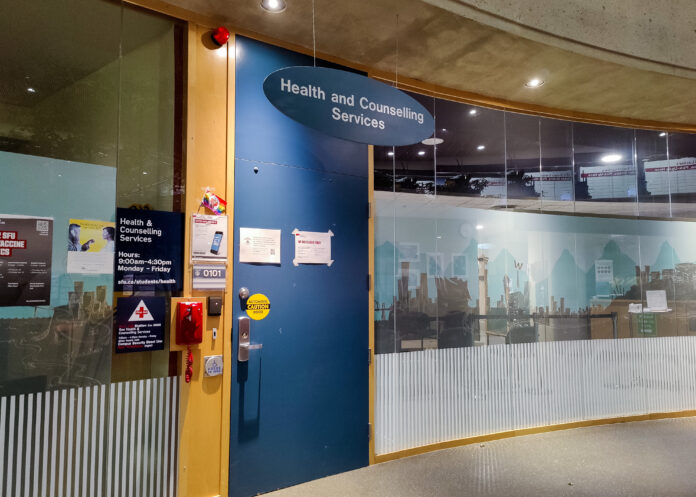
SFU’s health and counseling centre
PHOTO: Kriti Monga / The Peak

By: Olivia Visser, Opinions Editor

Canada needs a better healthcare system, and improving access to mental health services is a necessary step. The Canada Health Act (CHA) prevents adults from receiving long-term mental health support because of its “medically necessary” clause. British Columbia’s Medical Services Plan (MSP) only covers mental health services for people under 19, unless the situation is considered an emergency. It should go without saying that this needs to change.

The CHA regularly fails to provide fair and equal healthcare distribution. Since the Act conveniently promises to ensure only “reasonable access” to healthcare, our system sees significant disparities affecting different populations. For instance, low-income people in Canada are less likely to receive “evidence-based preventative health care,” as are those living outside urban centres. This includes services like regular check-ups and screenings. Yellowhead Institute also described the CHA as “conspicuously minimalist,” pointing out that it never mentions Indigenous peoples, “despite the emergence of constitutional Aboriginal rights just a few years earlier.” The CHA’sgrey zones” allow provinces to deliver substandard healthcare.

Over the last few decades, psychologists have stressed the connection between mental and physical health; studies have found poor mental health increases one’s risk for developing chronic illnesses. Likewise, disabled people are more likely to have poor mental health outcomes. While it’s great that Canada offers free emergency support for those in crises, mental illness is rarely a short-term occurrence. Mental health directly impacts physical health, so the CHA’s “medically necessary” clause makes little sense if mental health services are excluded. 

Adults in Canada are usually forced to seek out expensive private services for their psychological needs. Receiving a mental health diagnosis comes with sizable financial barriers. BC only has one clinic which provides free adult ADHD assessments, and CBC pointed out they stopped taking new patients in 2021. The cost for a private assessment is at least $1,000 from most practitioners. Counselling is also generally not covered by MSP, and a single session usually costs well over $100. Very few resources exist that are free, effective, and long-term.

A recent survey conducted by the Angus Reid Institute and CBC found 54% of respondents felt the pandemic has worsened their mental health. COVID-19 has highlighted many of Canada’s systemic failures, one of which being the atrocious state of mental health services. Part of the issue is a lack of public resources, but psychologists have also stressed that they can’t take on new patients due to a surge in clients. As people continue experiencing record rates of mental illness, Canada’s mental health system has proven it can’t keep up with the demand. 

The Canadian government needs to reform the CHA to include unobstructed access to mental health services. These services need to be easily accessible, long-term, and preventative in nature. Those concerned about their tax dollars might raise eyebrows at this proposal, but investing in specialized mental health care offloads some of the resources that emergency services use for those in psychological distress. This could save money in the long run. Moreover, given the option of going to a mental health clinic or the emergency room, many would pick the first option to opt out of long wait times, potential trauma, and the short-term design of urgent care.

Adults in Canada shouldn’t have to suffer because they can’t afford counselling or a diagnosis. Amending the “reasonable access” and “medically necessary” clauses in the CHA would provide a basis for transforming our system into one that offers equal access and long-term mental health support. Until this happens, I won’t agree with anyone who says we have a good healthcare system.
Queer Little Nightmares reveals the humanity in monstrosity

0
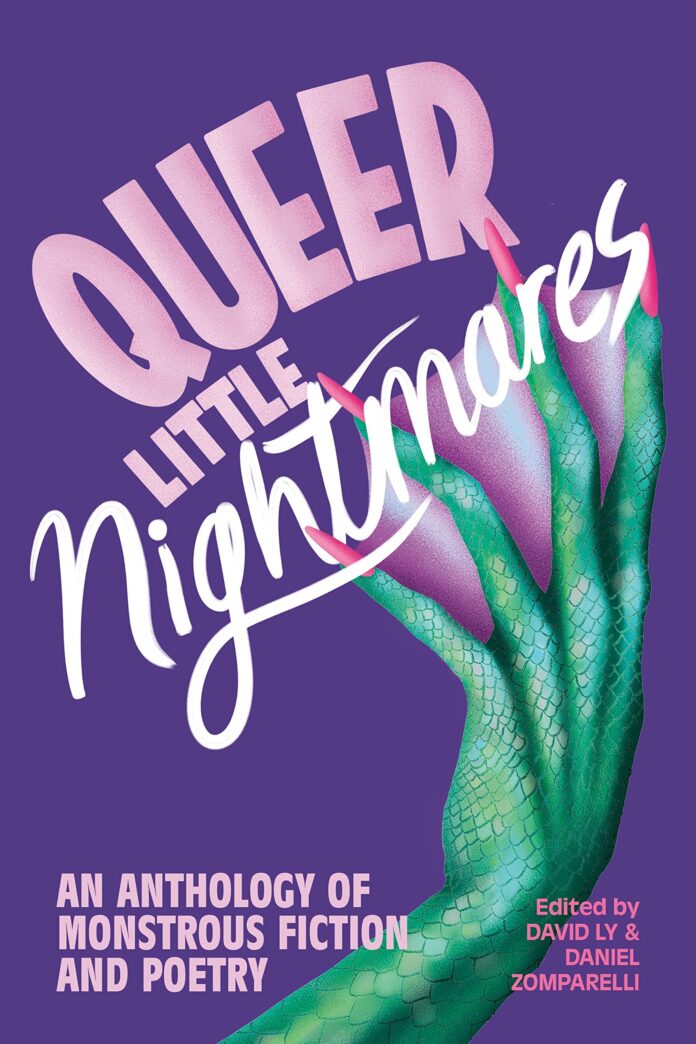
Queer Little Nightmares purple book cover that includes the hand of a monster with long painted nails
PHOTO: Arsenal Pulp Press

By: Tianne Jensen-DesJardins, SFU Student

My first encounter with the monstrous was Frankenstein. In my first read, I appreciated Frankenstein for Shelley’s writing skill — the novel is a Russian nesting doll of stories within stories. It wasn’t until the fourth or fifth time interacting with this story that I came face-to-face with the monstrous.

Frankenstein’s monster is monstrous in its very being, but I didn’t fully understand how monstrosity could be claimed, or reclaimed, until I read Susan Stryker’s article on Frankenstein and “Performing Transgender Rage.” In her critical speech-turned-article, Stryker reclaims terms such as “creature” and “monster” — words that have historically been used to vilify trans people. This act of reclamation is carried on in Queer Little Nightmares, an Anthology of Monstrous Fiction and Poetry edited by SFU alums David Ly and Daniel Zomparelli

The vision behind Queer Little Nightmares was not to dissect the bodies of well-known monsters like Frankenstein’s creature, rather it was, in the words of Zomparelli, to find out “what beasts lie ahead in the hands of queer creators.” Featuring short stories and poems from well-known queer writers such as Amber Dawn, Cicely Belle Blaine, and Eddy Boudel Tan, Queer Little Nightmares explores, in the words of Ly, “the experience of coming into queerness, finding belonging when the world wants only to see us as monstrously other.” 

A memorable story in the anthology is Amber Dawn’s “Wooly Bully” which tells the tale of two girls growing up in a small farm town. Over the course of a summer camp (which is — hilariously — called “Corn Camp”), Gigi, the protagonist, begins to accept two facts about herself: that she is a lesbian and a werewolf. Both of these are brought to her attention by fellow lesbian werewolf, Brenda Hendrick, with whom she is in love. 

What I love most about this story is how joyful it is; a story about a girl coming into her lesbian-werewolf-ness could be filled with violence and shame. While those themes do make an appearance, the overarching feeling is of joy. After Gigi and Brenda strip away all the doubt, uncertainty, and fear, the kiss they share asserts their belonging: “In this moment, we remake ourselves. / We are becoming.” 

Another highlight is Kai Cheng Thom’s “Floral Arrangement I.” In her poem, Thom rakes her claws across the concept of “femme,” and blood-red lipstick oozes from the cuts. For a relatively short poem, Thom’s piece invokes the trope of the “conniving femme,” the femme who “gets what she wants,” while emphasizing the drive for survival: “i am the femme who stays alive.” 

It is no surprise that Thom’s poetry appears in this anthology twice, as monstrosity is a theme she has explored in much of her published work. Thom’s other poem in Queer Little Nightmares is “On the Origin of Trans Femmes” that features haunting lines such as: “we are the daughters of witches / that they are still burning.” 

From lesbian werewolves to femmes who eat their lovers and more, the stories in Queer Little Nightmares “push back on the idea of monsters as fearsome and give tender and truthful glimpses into human desires and dreams,” to borrow Ly’s words. The anthology echoes the message of Susan Stryker all those years ago: “Monsters, like angels, functioned as messengers and heralds of the extraordinary. They served to announce impending revelation, saying, in effect, ‘Pay attention; something of profound importance is happening.’”

Paige Smith plays with the gaze in “Watching You Watching Me”

0
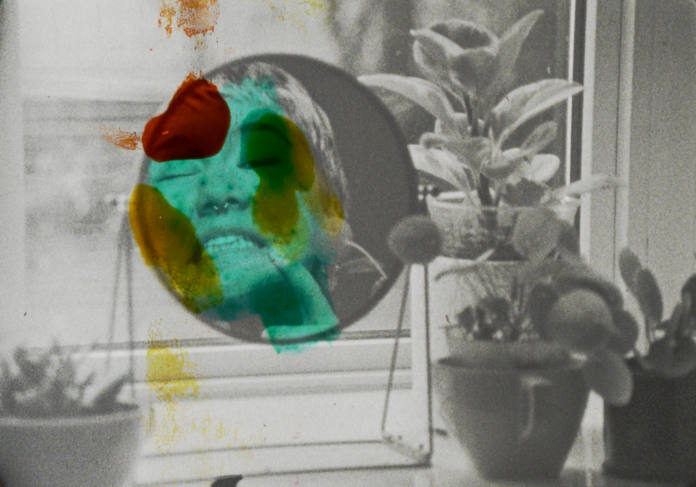
A person makes a playful face in the mirror, with her face painted bright colors and the rest of the photo is black and white
PHOTO: Paige Smith

By: Petra Chase, Arts & Culture Editor

Editor’s Note: A previous version of this article mistakenly wrote that Smith’s video, Tethered Connection, is 35 minutes. This was updated to “35 seconds” on November 24, 2022.

Content warning: mentions of voyeurism

We’ve all heard the saying “beauty is in the eye of the beholder.” I didn’t comprehend this until I explored “the gaze” in the communication course Technologies of Gender and Sexuality. The male gaze is traced back to 19th century nude oil paintings, in which women were painted to be objects of male voyeuristic pleasure. This demonstrates how powerful apparatus can be in enforcing gendered power dynamics.

Experimental filmmaker and visual artist Paige Smith’s multimedia exhibition, “Watching You Watching Me” explores this idea through a variety of lenses, pointing to the medium’s influence. With a BFA in film from SFU and diverse cinematography experience under her belt, Smith is currently pursuing a post-baccalaureate diploma in visual arts at SFU. 

Inspired by a “fascination with the acts of watching and being watched,” Smith’s motion picture artworks and photography reveal how queer identity and sexuality are represented and internalized through the lens. Her approach is deeply personal.

Walking into the dimly-lit exhibition space in the Cineworks black box studio, Smith’s 2018 film, Watching Us, which was projected onto the wall facing the entrance, took up my immediate attention. As the film panned throughout the walls of an empty apartment and a 1940’s soundtrack eerily played, the lens eventually lands on a queer couple in the bedroom and I’m put in the position of an unwelcomed spectator. I meet the eyes of a distressed woman and painfully relate to her hyper awareness of being watched, all the while feeling uncomfortable in my viewing position.

The eight minute film quickly takes a horrifying turn, as a roughly-drawn sketch of a man appears on screen, symbolizing the ever-present surveillance of the male gaze. Suddenly, the couple is in separate rooms; one of them is staring at a static television screen, while the other is crying in the bedroom. 

According to Smith, the Watching Us deals with her fear of being watched and watching other women. She told The Peak the film addresses “internalized queer-phobia” she experiences as a pan/bisexual woman. In a blog post, she wrote “consumption of queer women’s sexualities [ . . . ] changes how we act, how we see ourselves, and it is painful.”

Smith’s outlook has become more hopeful. Her 2022 looping film, The Big Reveal, makes this clear. The 16mm black and white short features four women and non-binary folks undressing, subverting the conventions of a striptease by painting their bodies with “bright, semi-opaque colours.” The performers also make playful faces in the mirror. Smith used food dye to particularly cover each frame.

I think [the shift in tone] is due to both my mental health improving and my desire to create artwork that can help us imagine new and hopeful futures,” said Smith.

The 2022 video installation, Tethered Connection, also plays with conventional expectations. A 35-second clip of Smith undressing in her bedroom played on a computer monitor with an office set-up mimics the format of watching a camgirl or amateur porn performer. When her skin is displayed, however, it is illuminated by a white glow. 

Being in front of the camera in both 2022 films was vulnerable for Smith, but important. “[Being behind the camera] came naturally to me in a lot of ways, the mechanisms of the camera are logical and there is some solace in that,” Smith said. It wasn’t until The Big Reveal, that Smith considered being in front of the camera. 

“I felt a need to participate in the project as a form of solidarity with my friends who had volunteered,” said Smith. “It felt like all this time I had really been doing a lot of taking — taking images, capturing people through film — and that it was time to do a little giving myself.”

She added, “I’m learning more through performing what it means to be watched, and it is a scary, vulnerable, and beautiful thing.”

I’ve always been aware of the male gaze and its persistent influence over my sense of self. “Watching You Watching Me” helped me recognize how the media forces you into subject positions that reproduce dominant gender roles. This is why it’s so important for queer filmmakers to be in control of their representation.

To learn more about Paige Smith and her future projects, check out her website and follow her Instagram.

Kyle Bergh shows us there’s more to athletes than meets the eye

0
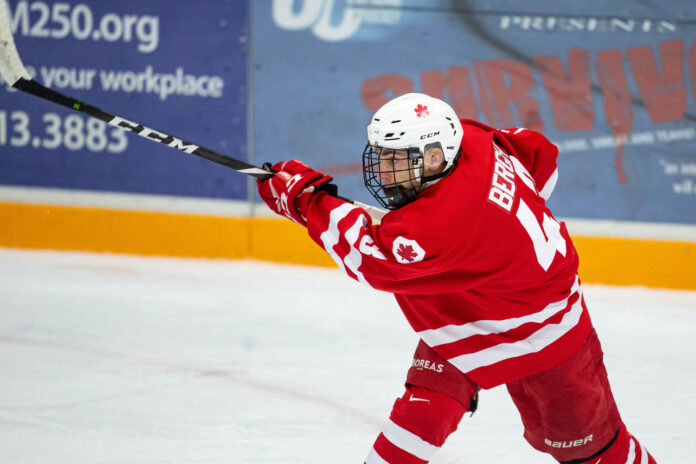
photo of Kyle Bergh shooting the puck mid-game.
PHOTO: Garrett James / SFU Athletics

By: Simran Sarai, Sports Writer

Becoming serious about pursuing a sport at a collegiate level comes with the constant pressure from coaches, teammates, loved ones, and the athletes themselves to be at the top of their game, 24/7. Between practice, games, recovery, and demands unique to a sport, people often forget that athletes are people with dreams outside of their sport. The Peak reached out to psychology student and men’s hockey forward Kyle Bergh to understand the pressure and predispositions associated with athletic identities. 

Bergh said that while he has experienced the performing pressure that comes with being an athlete, “competing at the university level has greatly diffused such pressure,” with how much time the forward spends on school work. Like many college students, Bergh juggles work and school with the responsibilities of life. When asked how he balances it all, Bergh was very honest, saying he doesn’t necessarily have the answer. “As you progress in your work and academic life, the opportunities and demands on your time only increase.” Bergh only commits to something with the intention of giving his “full attention,” and being “fully present.” With this in mind, he can determine what is worthy of his time to ensure he doesn’t bite off more than he can chew. 

Beyond being a Red Leaf, Bergh is a “mental performance coach at a Toronto-based sport psychology company named CEP Mindset.” He is a youth hockey coach, and is working on his honors thesis in psychology, “investigating athletes’ perceptions of concussion assessment tools.” 

“Sport and school have been vehicles to find out what really matters in my life,” Bergh said, “And that really boils down to learning about myself and how I show up for those around me.” He believes it’s easy to feel one-dimensional when sports demand tunnel vision. Athletes block out anything beyond their sport to stay laser focused on their craft, and their craft only. “We are told to be great, we must be hyper-specialized,” said Bergh. 

The student-athlete encourages people who are apprehensive about pursuing a passion outside of their sport to make the first move and find “something meaningful for them.” For Bergh, that was psychology. “Psychology provided a way to take action on the challenges I faced in my life. It was clear that learning about [the] mind could help me be a better athlete and person, so it was a no-brainer (pun intended).” 

Remembering Marsha P. Johnson

0
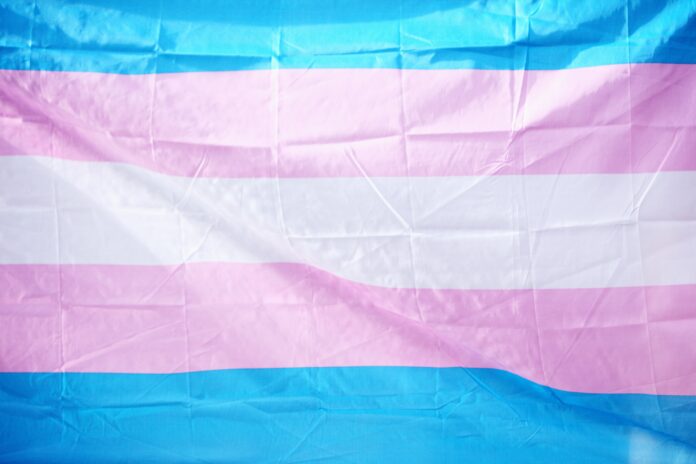
Photo of a Trans Flag, with blue, pink and white stripes.
A historical figure often erased from the books whose impact is still felt today

by C Icart, Staff Writer

Marsha P. Johnson was born on August 24, 1945. She was a Black trans woman, an activist, a sex worker, and a drag queen. Today, she is mainly remembered for her involvement in the 1969 Stonewall Riots, also known as the Stonewall Uprising, which was subsequently called the first Pride. However, Johnson’s story encompasses so much more than that. As her birthday anniversary has just recently passed, it is the perfect occasion to reflect on her legacy.

Johnson was marginalized in several ways. She was Black, gender non-conforming, queer, poor, and a street-based sex worker. But she was not a victim. The hardships she experienced motivated her political action, and she always found reasons to be joyful. Language has shifted so much in the past several decades. She referred to herself “as a gay person, a transvestite, and a drag queen.” Historians refer to her as a trans woman. The “P” in her name stood for “Pay It No Mind” because that was her motto and response to questions about her gender.

For most of her life, Johnson was houseless. Like many other trans women in her position, she began working as a sex worker and experienced violence from clients and the police. Johnson was also mentally ill, but she did not let hardship define her. She was creative and quickly became admired for her innovative looks consisting of elaborate fresh flower crowns and items she scavenged. As she became more known in the community, she became a “drag mother” and mentor for LGBTQIA2S+ street-based, houseless youth.

Johnson moved to New York’s Greenwich Village as a teenager with nothing but $15 and a bag of clothing. At that time, cross-dressing was illegal. Police would weaponize masquerade laws to harass and arrest LGBTQIA2S+ individuals. There are conflicting accounts about what exactly happened on the night of the Stonewall Riots, but we know it was a pivotal moment in LGBTQIA2S+ history. According to a news release from the White House, the police raided the Stonewall Inn to “enforce a prohibition against selling alcoholic drinks to ‘homosexuals.’ This law, alongside the masquerade laws and prohibitions against same-sex dancing, were some of the many ways LGBTQIA2S+ people were criminalized in New York in the ‘60s. On the morning of June 28, 1969, police initiated the raid that would eventually turn into the now historic Stonewall Riots that lasted for five more days. Despite the longstanding myth that she was a catalyst for the confrontation with the police at Stonewall on June 28, Johnson herself has said “she didn’t arrive at Stonewall until ‘the place was already on fire.’”. On June 28, 1970, America’s first Pride parade took place on the one year anniversary of the Stonewall Uprising. “Thousands of people marched in the streets of Manhattan from the Stonewall Inn to Central Park,” chanting, “Say it loud, gay is proud.”

On top of gay rights, Johnson’s advocacy centred around social and economic justice. She also advocated on behalf of houseless LGBTQIA2S+ youth and AIDS patients. She fought back against oppressive policing. Alongside her friend Sylvia Rivera, a change-making activist in her own right, Johnson was involved at the beginning of the Gay Liberation Front (GLF). Together, they also founded the “Street Transvestite (now Transgender) Action Revolutionaries (STAR), a group committed to helping homeless transgender youth in New York City.” They created the first LGBTQIA2S+ “youth shelter in North America, and these trailblazers became the first trans women of color to lead an organization in the United States.” The first STAR building was at 213 Second Avenue. Later, chapters opened in Chicago, California, and England.

Despite the critical work Johnson, Rivera, and other trans activists did for gay liberation, the trans community was banned from participating in the pride parade in 1973. The gay and lesbian organizing committee claimed that drag queens negatively impacted the movement. As an act of defiance, Johnson and Rivera marched ahead of the parade that year.

In 1992, Johnson’s body was found in the Hudson River. Despite her friends suspecting she had been murdered, the police labelled it as a suicide and did not investigate further. Regardless of her tremendous impact and the troubling circumstances of her passing, mainstream media didn’t report a lot about her death. The documentary The Life and Death of Marsha P. Johnson dives into the unanswered questions surrounding her death.

Johnson fought tirelessly for the liberation of all. She is an important figure in gay history, the sex workers’ rights movement, trans history, and Black history. She was a trailblazer, and her impact is still felt today. Happy belated birthday, Marsha!

The many layers of disability and athleticism

0
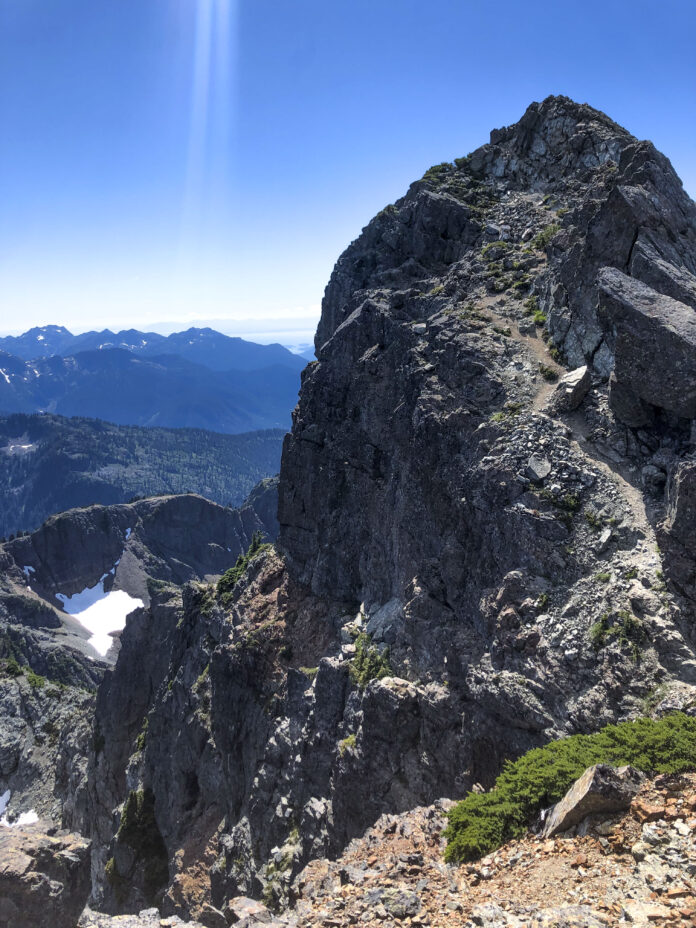
Photo of the horizon with a mountain peak on the forefront and a mountain range on the background.
We need to rethink the way our world looks at fitness.

By: Olivia Visser

What does a disabled athlete look like to you? The Paralympics might come to mind, with their innovative mobility devices for competitors, or the 69-year-old Xia Boyu, who summited Mount Everest as a double amputee. Disabled athletes come in many forms, yet those with invisible illnesses are often overlooked in the sports community. As a disabled athlete with an invisible illness, I sometimes feel alienated from both communities.

Social media can be deceiving. I hike and climb on my “good days,” which are few and far between lately. Nonetheless, I try to take advantage of them. The pictures I post of mountains and cliffsides are rarely without their own painful backstories: maybe I experienced a pain flare-up halfway through the hike, or my body struggled to cool itself while slogging up steep switchbacks. Usually, I return with at least a mild ankle sprain and spend a few days in bed afterwards. Some might think I’m irrational, and I’ve seen my fair share of internet comments to know what people might think of me. People already judge those who put their lives at risk by pursuing extreme sports, and mountaineering regularly faces debate for being “addictive, selfish, and deadly.” Certainly, “disabled mountaineer” would be a punchline in some circles.

It’s not just what I’ve seen online — I’ve made plans with people who blocked me after discovering I have medical conditions, despite those conditions being irrelevant to our outdoor activity. Maybe they see me as a liability or think I’ll slow them down. Who knows? I’ve never been in an accident, and I carry a satellite phone whenever I’m outdoors. I’ve taken courses and worked my way up slowly while doing physiotherapy. Currently, my health doesn’t stop me from getting where I want to go, so it hurts when people make assumptions about my abilities. That’s not to say I don’t understand the risks or take calculated actions to mitigate them, but sometimes the barriers in sports feel more social than physical.

It’s easy to feel excluded when performance is such a valued component of many sports communities. I used to overwork myself to increase my climbing grade but ended up feeling discouraged during extended periods of pain or weakness. Trying too hard also exacerbated my symptoms and caused more injuries. It wasn’t healthy. I had to learn to give myself permission to rest and lower my expectations. More often than not, I just focus on having fun nowadays, as I think that’s what sports should be about. Sticking to “easy” alpine hikes and climbs means I can seek out views and experiences without too much physical pain, or worrying about crushing records. High-intensity activity is fun sometimes, but it’s certainly not for everyone.

I was never actually very good at sports growing up, due in part to my medical condition. When it started to noticeably progress as an adult, I took that as a sign to hike as much as I could, in hopes of becoming strong enough to achieve my goals of summiting various local peaks. At the start of the COVID-19 pandemic, I was out three days a week training, sometimes in the dark with a headlamp. Over the past two summers, I was pleasantly surprised to find that rock climbing is a low impact sport which allows me to use flexibility and strength while exerting little force. I learned I could do the things I’d always dreamed of.

Many people would benefit from rethinking how our society looks at athletics. It’s exclusionary to prioritize being the best at a sport over having fun and overcoming personal barriers. One study found 40% of Canadians are intimidated by the gym, and this sense of intimidation is amplified if you belong to a visible minority group. Twenty-two-year-old influencer and wheelchair user Sophie Butler said, “Accessibility isn’t just about ramps and lifts, it’s also about attitudes and values.” For some, athleticism may look like challenging yourself with weights or going mountain biking. For others, taking a stroll with their mobility aid is an athletic activity. We need to consider individual differences and goals if we want to make athletic spaces comfortable for everyone.

Disabled people lack representation in sports environments, as the fitness industry promotes an “ideal” athlete archetype that simply isn’t attainable for most. The Paralympics receiving less media coverage than the Olympics and a lack of diversity in advertisements are two examples of this. Degree launched a film campaign in 2021 called “Watch Me Move,” aimed at highlighting the diversity of para-athletics. The campaign emphasized that “fear of judgement” is what keeps many people away from being active, not physical ability. Expanding our understanding of athletics means recognizing that disabled people are diverse and capable of many different things.

I sometimes feel isolated from the disabled community as well because of my invisible illness. It feels like my good days are too good for me to use the disabled label, because strangers who see me achieving my goals probably don’t know what goes on behind the scenes. I know most of it is just in my head, but these worries are reinforced by systemic barriers, too. Recently, the International Federation of Sport Climbing (IFSC) announced its shift to International Paralympic Committee (IPC) standards for competitions. This is troubling, as IPC standards also underwent a recent criteria change and extended the list of non-eligible impairments. Disabled people with conditions that cause joint instability, impaired motor reflex functions, and hypermobility will no longer be eligible to compete in parasports. This is troubling especially since competitions match people depending on the function and severity of their disability. What does someone do if they’re too disabled to compete in regular sports, but not disabled enough for parasports?

While awareness is the first step towards equality, disabled people are likely to continue facing barriers in the years to come. I hope this doesn’t stay the case as our society slowly moves towards embracing accessibility, but experience tells me we’ve still got quite a lot of work to do. If there’s anything meaningful I’ve learned as a disabled athlete, it’s that fitness is for everyone. Instead of hyper-focusing on performance, we should prioritize personal goals and having fun. Don’t be deceived into believing you don’t belong to the fitness community because of your activity choice. If you’re active, congratulations, you’re an athlete in my books.

Masks4EastVan notes the importance of wearing masks

0
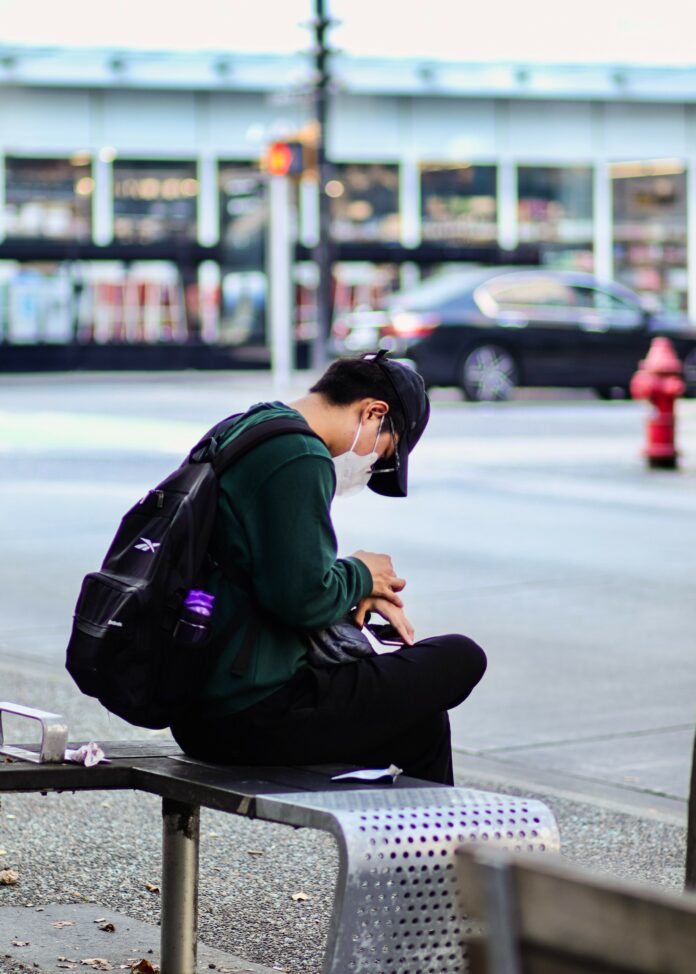
This is a photo of an individual sitting on a bench outside. They are wearing a mask while they look at their phone. They are sitting alone.
PHOTO: Aria Amirmoini / The Peak

By: Karissa Ketter, News Editor

Masks4EastVan is an initiative started by two SFU students. Jane Shi is a fine arts graduate student and Vivian Ly is an undergraduate student. Both identifying as queer people of colour, they began this initiative to put pressure on the government. “We hope to sustain this work as long as we can, though we are only two disabled volunteers ourselves,” said Ly in an interview with The Peak. 

COVID-19 has been shown to disproportionately affect racialized and disabled people because of social inequalities: living in worse environmental climates, less access to healthcare, and reduced access to social services. “We weren’t going to wait for the government to keep us safe.” 

The organization “is a grassroots mutual aid project that distributes N95 or equivalent masks to neighbours in East Van and to rural parts of British Columbia.” 

Since BC has stopped the province-wide mask mandate, the amount of people wearing masks has decreased rapidly. This decision has been a part of what created strain on the healthcare system in the past year across Canada. Hospitals face issues with staffing, workload, and hospital capacity. 

Doctors are asking citizens to wear masks indoors to help ease the strain on the healthcare system, especially as other respiratory illnesses are circulating at higher levels than what’s to be expected for the season. Wearing a properly fitted mask can reduce the risk of infection from 56–83%, depending on the type of mask. CBC News reported hospitalizations for COVID-19 are higher this fall than any other fall throughout the pandemic; these numbers have almost doubled from October 2021 and are nearly four times more than October 2020. 

Former scientific director of Ontario’s COVID-19 science table, Dr. Fahad Razak, told CTV News Canada should reinstate the masks mandate to reduce transmissions. Since November 9, the University of Waterloo has reinstated their mask mandate to be in effect until the end of the fall academic term.

According to Shi, their goal is “to create access to personal protective equipment that would otherwise be unaffordable to communities in East Van and remote parts of the province.

“We knew that there were many people who were still struggling with being safe out in the community and not being able to afford high quality masks, especially low-income disabled people and people in congregate settings,” said Ly. “As a low income, disabled person myself, I struggle to regularly buy effective well-fitting masks for myself and have to rely on others or on programs giving away masks for free. I knew many others in the same boat as me.”

Shi added wearing masks helps create more accessible spaces. A study conducted across over 60 school districts found schools with a universal mask mandate had 72% fewer cases of COVID-19 compared to schools where masks were optional. Shi hopes to see more people wearing masks so disabled people can safely go out into the community. “That’s a collective effort that shouldn’t be placed on individual disabled people or even individual grassroots efforts. The onus is still on the government.”

Ly explained they created this initiative in response to the “lack of financial supports and equitable policies coming from the government.” Shi added that despite “individual politicians supporting and donating to us, we know that we can’t rely on slow-moving, ineffectual policies before looking out for one another and creating mitigation efforts.” 

Ly and Shi noted people who use drugs, people who are incarcerated, “immunocompromised folks, sex workers, front line direct services workers, poor folks, [and] houseless folks” are often the most at risk for having a lack of access to personal protective equipment. Shi added, “This is reflective of the systemic inequities and layers of oppression within Canadian society.” 

At the time of the interview, Masks4EastVan had distributed over 13,000 masks around the community. They provide large masks, medium masks, youth masks, and transparent masks which help those who are deaf or hard of hearing read lips.

Ly said, “Many do not realize how deeply ableist it is to tell immunocompromised and other disabled people at high risk for COVID-19 to just stay home.” Throughout the past year, many with disabilities have advocated for stronger COVID-19 measures to be able to safely participate in daily activities. 

Ly explained roughly 25% of disabled people are low-income. This means they “cannot afford the expenses to simply stay at home, avoiding school, work, public transportation, grocery stores, [and] medical appointments.

“We all know at least one immunocompromised or at risk person, whether they disclose it to you or not.” Roughly 22% of all Canadians over the age of 15 have at least one disability, according to the Government of Canada.  

Masks4EastVan is currently fundraising for their initiative. At the time of publication, they have fundraised over $9,500 towards their goal of $20,000. 

To learn more about Masks4EastVan, or to contribute to their fundraiser, visit their website at chuffed.org.

Monday Music: Songs for Scorpio season

0
“Monday Music” in orange block text on a yellow rectangular background with rounded corners and an orange border.
Monday Music: your weekly themed playlist. Image courtesy of The Peak.

By: Jerrica Zabala, SFU Student

Content warning: mentions of gun violence in lyrics.

We’ve reached the peak of Scorpio season and the air is powerful, sultry, and arousing. There’s a certain seriousness to being a Scorpio and these magnetizing bass lines will allow you to tap into this power. Find themes of ambition, healing, mystery, and justice as we emerge into the stormy season.

Deal Wiv It” by Mura Masa & Slowthai 
Photo credit: Polydor Records

From Northampton, UK rapper Slowthai has heads turning and ears perking with his politically-charged tunes highlighting local injustices in the UK like Brexit and social class disparity. “Asked for a pint for three quid / he said it’s a fiver / well, that’s gentrification you prick!” His blunt, clever charisma caters to anyone who encounters a Scorpio moon as he declares: “deal with it.”

Comme Des Garçons (Like the Boys)” by Rina Sawayama
Photo credit: Dirty Hit

If I could summarize Sawayama’s music in one word, I would say kaleidoscopic. Feeling like you’re in a slump? Listen to these pulsating tunes and let me know if you’re a “believer” after. She expresses her confidence, “like the boys,” while making fun out of the way traditional masculinity attempts to display confidence in society. It’s giving intense Scorpio rising energy — replenished and served.

Boomerang” by Yebba
Photo credit: RCA Records Label

Those who believe in karma will feel its force when encountering a Scorpio Mars or listening to Yebba sing. As this songbird tells the story of an abusive relationship, she finds herself in an obsessive stand-off between her emotions and the logic behind her decisions, with lyrics like “If I shoot him in the head / then he’s dead / and he’s livin’ on my mind.” But don’t worry, whatever you do to Yebba, she swears “it’s gonna come back like a boomerang.” 

In My View” by Young Fathers
Photo credit: Ninja Tune

Young Fathers, a trio from Edinburgh, Scotland, have taken inspiration from biblical and gospel themes to create “In My View.” The R&B, hip-hop, post-punk song has multidimensional lyrics and emotional undertones. It hints that when vulnerability is expressed in a relationship, it’s not always reciprocated at its fullest. Their ambiguous lyrics of “writing blank checks,” or wanting to be “king until I am,” reflects that love without depth is unfulfilling — any Scorpio Venus placement can tell you that.

SFU volleyball navigates turbulent times during transition period

0
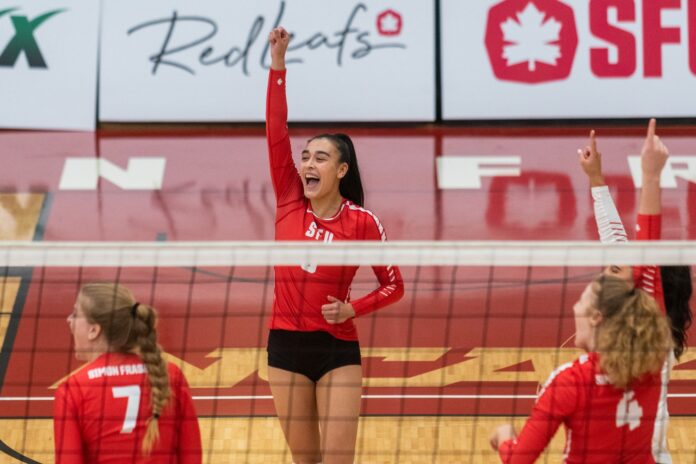
photo of Hanna Kolof celebrating after winning a point.
PHOTO: Wilson Wong / SFU Athletics

By: Simran Sarai, Sports Writer

The SFU volleyball team has faced tough competition so far during their 2022–23 regular season, recording 12 wins and 13 losses heading into their last week of regular season play. While the team is five wins behind what they were last season, this year’s squad has managed to pull off some outstanding feats, including taking down the nationally-ranked Alaska Anchorage in October. The Peak reached out to head coach Gina Schmidt and sophomore outside hitter and defensive specialist Hanna Kolof to learn more about that victory, and how the team has worked together to move past losses this season. 

At the time of their match-up, Alaska Anchorage was ranked ninth in the nation. Since then, they’ve climbed up into the fifth position. Kolof described the win as “an incredible feeling knowing our team was able to do something no one else in our conference has been able to do. We’ve worked hard all season and have trusted the process, so it feels great when we get rewarded with a win like that.” 

SFU certainly hasn’t been rewarded with their schedule, being dealt “one of the toughest preseason schedules in [their] conference.” This included facing off against multiple opponents ranked in the top 25 nationally. Though the team recorded 13 losses, they “played 10 five-set matches this year,” with 40% of their matchups requiring a tie-breaker set to determine the winner.

Head coach Schmidt runs her team on a forward-thinking model. Win or lose, players walk away from a match understanding what worked to their advantage. “We either win or we learn,” Schimdit said, “I’d prefer to always focus on the positives rather than the negatives.” This mentality helps keep the team focused on the games ahead. It also demonstrates a certain level of trust Schmidt has in her players to understand what they could have done better, and how they can correct it before the next match. 

Playing games, sometimes multiple, on a weekly basis also leaves players with little time to collect themselves before the next game: an endless cycle of rinse, wash, and repeat. This is why Kolof “likes to reflect, but not sulk in a loss.” 

“Our season is very fast paced. It’s important to stay focused on the next games ahead, while also reflecting on what we can do better to get a win the following week.”

Alongside challenging opponents, the Red Leafs have also suffered from multiple injuries, propelling newer and lesser-experienced players into bigger roles. Despite adjusting on the fly, Schimdt believes the team “has responded well.” This has been the case for the new setters stepping into the place of last year’s cornerstone, Julia Tays. Aside from filling big shoes, Schmidt acknowledged that “it always takes time for [the] setter/hitter connection to get locked in.” But, she added that the team have “spent a lot of time working on that component of our game” and “seen [their] numbers improve accordingly.” 

Coach Schmidt explained that in a season like this one, when the team has faced tough competition and losses early on, the “goal is to always learn from the experience and focus on how we can be better the next time.

“We try to stay focused on the things we can control and keep working to get better every day. And I think this continued focus on the process has shown in our team’s results in the second half of conference play.”

The Red Leafs will play their last two GNAC games on the road, taking on Seattle Pacific University and Montana State Billings. Heading into the last weekend of conference play, Schmidt says the team strategy is, as always, “to stay focused on the present,” noting that “anxiety or fear only creeps in if players are thinking about the past or worrying about the future.”

Horoscopes: November 14–19

0
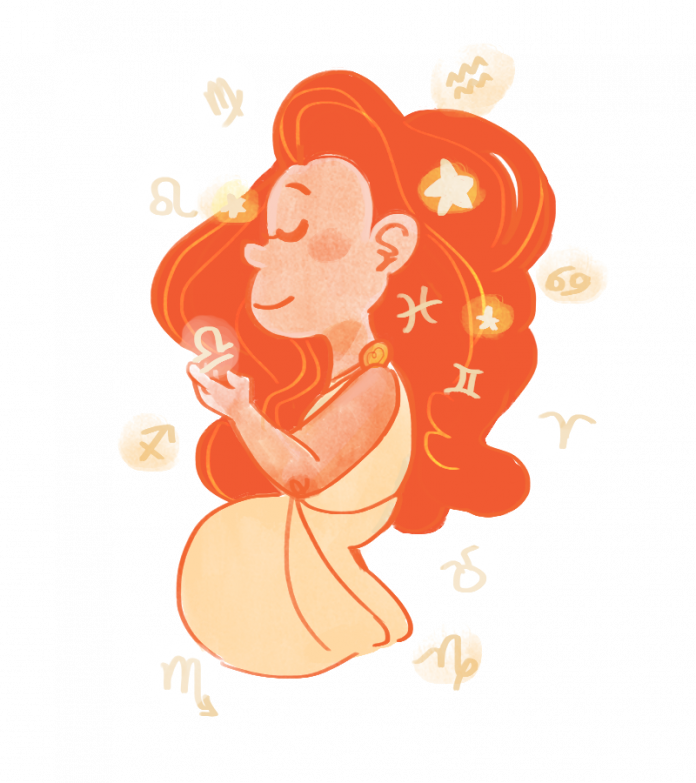
An illustration of a girl with long flowing hair. Astrological signs and stars shine around her.
ILLUSTRATION: Marissa Ouyang / The Peak

By: Hana Hoffman, SFU Student

Aries

You woke up feeling tired, it’s just one of those days. But remember that energy-boosting mushroom item you had the last time you played Mario Kart? Yes, it’s still in your possession because you didn’t use it during that race! Now’s a good time to use it. Always keep an energy item in your pocket because you never know when it will come in handy.

P.S. the energy item is not four shots of espresso

Taurus

Whatever it is you want to do, whether it’s picking up a new hobby or acing your next assignment, just know you’ve got the power in you. You’ve been daydreaming about a new talent you want to learn, we all know it. So go and chase that dream before your responsibilities start chasing you!

Gemini

Maybe you have days when you doubt yourself too much, or you underestimate your intelligence and skills. Well, let me tell you something. Take this invisible reverse card from this page. Yes, you have the power to see invisible things. Now keep this reverse card in your pocket and you’ll see all your fears and doubts transform into confidence.

Cancer

Rain, rain, go away. Come again another day. This whole time you’ve been believing that you have control over the weather, but this was actually a misunderstanding. The truth is you have control over whether you get good or bad grades in your school work. Don’t get the “weathers” mixed up!

Leo

Two, four, six, eight, who do we appreciate? Leo! Your special skill is being able to keep your cool even through busy times, and we want to let you know that you’re awesome. You totally have the “Keep Calm and Study On” vibe that everyone loves. Keep it up!

Virgo

If you don’t already know, you’re a very nice person. Being kind is your special talent and you’ve been using it to conquer all the challenges, obstacles, and stress you’ve been facing in your studies. That’s right, you’ve been killing ‘em with kindness.

Libra

A cool fact about you is that you are immune to procrastination. But ONLY if you switch your morning routine with your night time routine. So that means watching TV and doing all of your homework when you wake up, and chugging down a banana milkshake while packing your backpack before you go to bed. Either that, or you’ll have to get the procrastination eliminator vaccine.

Scorpio

Let me tell you a little something . . . Everyone has been telling you that an apple a day keeps the doctor away. But for Scorpio, there’s also different fruit that keeps the feelings of stress and negativity away. The only way to find out is by trying various fruits to figure out which one does the magic for you.

Sagittarius

On this gigantic planet with over seven billion civilians, there’s only one of you. Therefore, with your uniqueness you have the super power to stand out and be that eye-catcher in all your classes, interviews, social groups, and more. Keep being yourself and let the opportunities find you.

Capricorn

An interesting fact about you, Capricorn, is you have the superpower of getting things done speedy like Sonic the Hedgehog. However, the rule of thumb to activate this power is to get eight hours of sleep. Seems worth it to me!

Aquarius

‘Tis the season to take advantage of your superpower. You are the only horoscope to be resilient from the rainy weather that non-Aquarians can’t stand. While everyone else gets moody and sleepy whenever it’s raining outside, you’ll have the ability to keep the same energy and enthusiasm during all the activities you have planned for the day.

Pisces

When phones are low on battery, they can recharge by connecting to a portable charger. When Pisces are low on energy, they can recharge by connecting to a set of headphones and listening to their go-to motivation playlist. Pretty neat, eh?