Home Blog Page 232

Meet Angela Sterritt: SFU Library’s 2023 non-fiction writer in residence

0
Closeup headshot of Angela Sterritt in front of blurred-out trees and buildings in the background.
PHOTO: Maggie McPherson

By: Anna Kazi, SFU Student

SFU recently welcomed Angela Sterritt, writer and “award-winning investigative journalist” as their 2023 writer in residence. Sterritt is part of the Gitanmaax community of the Gitxsan Nation and Bell Island Newfoundland. With over a decade of experience covering powerful stories, Sterritt is releasing her first book, Unbroken, this May. It is “part memoir and part investigative into the missing and murdered Indigenous women.”

Sterritt began writing about her experiences while completing her William Southam Journalism Fellowship at the University of Toronto. “When you’re writing about your trauma, you have to be ready, and only you know when you’re ready, and I wasn’t ready at that point [ . . . ] It took me seven years to write this book because it was traumatic for me to write about my experiences.”

For Sterritt, writing this book is about inspiring Indigenous youth and building a stronger relationship between Indigenous and non-Indigenous communities. Sterritt wants “to inspire, especially young Indigenous girls, in particular the Gitxsan Nation girls, that they can do anything they want,” said Sterritt. She plans on writing a book that teaches journalists to be “trauma-informed when working with Indigenous communities. 

“There are many Indigenous ways of viewing the truth, and there are many sides of the truth. And that’s something that Indigenous people haven’t been afforded, as our truth has been oppressed. [ . . . ] My purpose in life has always been to utilise the truth and to use the power of storytelling to help Indigenous people heal.” 

Sterritt also spoke on maintaining a healthy work-life balance while working full-time as a host and journalist: “I want people to recognize that it’s okay to take sick days, it’s okay to move slowly. It’s okay to tell your boss ‘this is a super traumatic story, so I’m going to take a week to do it,’” she said. “For people of colour and Indigenous people, we are often treated as resources to extract and mine.”

Another key takeaway from Sterritt’s experience was realizing that sharing a story as an Indigenous person is not easy. “I was told by my journalism community that I couldn’t have friends, I couldn’t talk to my elders when things were hard at work. I wasn’t allowed to talk to anybody. Journalism as an Indigenous person is very different because you’re told you’re biased,” said Sterritt.

What helped Sterritt face barriers and continue her journalism and writing journey was support from her mentors, elders, and publisher, Greystone Books.

As Sterritt begins her residency, she shared how valued and honoured she feels being part of SFU. “People were excited to bring my ideas to the table. I felt like people were also willing to have a conversation that’s not just based on somebody extracting from an Indigenous person, but somebody coming to the table with the same skills, the same knowledge, and willing to have a reciprocal exchange of ideas based on mutual respect, ” she said. “The residency that I am going to do at SFU is going to be groundbreaking.”

You can pre-order Sherritt’s book, Unbroken, via Amazon.

We don’t need a day to commemorate Sir John A. Macdonald

0
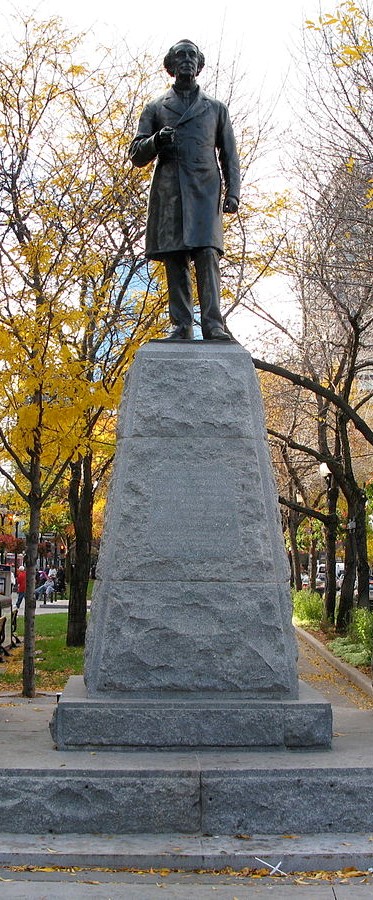
PHOTO: Saforrest/ Wikimedia Commons

By: C Icart, Staff Writer

Content warning: Mentions of racism, colonialism, and violence against Indigenous peoples

“The executions of the Indians . . . ought to convince the Red Man that the White Man governs,” — Sir John A. Macdonald

A Chinaman gives us his labour and gets his money, but that money does not fructify in Canada; he does not invest it here, but takes it with him and returns to China . . . he has no British instincts or British feelings or aspirations, and therefore ought not to have a vote.” — Sir John A. Macdonald

January 11 was Sir John A. Macdonald day. He was “the first Prime Minister of Canada and one of the architects of the Confederation.” He is an important figure that played a key role in some of the worst parts of Canadian history. So, why is there a day to commemorate him? Or statues that glorify him?

People have been defacing his statues for decades, and many are calling for them to be removed. This has been done in municipalities like Charlottetown, Kingston, Regina, and Victoria. In other cases, a different strategy has been adopted to deal with historical sites related to Sir John A. Macdonald. In Kingston, the Bellevue House where he lived with his family is currently looking to include Indigenous art to the attraction as a way to incorporate different perspectives on his “complex legacy.”

He’s not the only one though. The passing of Queen Elizabeth II has caused many Canadians to rethink their ties to the monarchy. In fact, over half of the population “would support severing our ties with a monarchy.” In Quebec, 79% of people are in support. The sentiment is so strong that the provincehas passed a law making an oath of allegiance to the monarch optional for members of the legislature.”

In Kitchener, Ontario, a statue of Queen Victoria has a plaque in front of it acknowledging the colonial harm that the statue is continuing to cause in 2021. This has not stopped activists from vandalizing it with red paint multiple times in 2022. Amy Smoke, co-founder of Land Back Camp has said, “We’re idolizing these colonial figures that built this country off of the backs and blood of Indigenous people and Black folks as well.” They are calling for the statue to be removed and for the park it is in (Victoria Park) to also be renamed. 

In Edmonton, many are rethinking the fact that so many things are named after Frank Oliver, Alberta’s first member of parliament, guilty of “pushing First Nations like Papaschase off their lands, and lobbying to keep African Americans out of Canada.” In 2021, a statue of Egerton Ryerson — “an architect of Canada’s residential school system” — was covered in red paint, beheaded, and put into a lake. Since, the university that it was once displayed on has been renamed as well. 

What is even more absurd is that in some cases, the statues, schools, and other signage commemorating these figures are relatively recent. Last year, people marched in protest of the Sir John A. Macdonald Parkway and called for it to be renamed. Up until 2012, that parkway was named the Ottawa River Parkway. The National Capital Commission announced that changing the signs cost $60,000

At the same time, “54% of Canadians believe the removal of statues of colonial figures is an attack on Canadian history.” It’s not. Refusing to commemorate colonial figures is not the same as forgetting. The same way that commemorating them is not the same as learning about their legacy. 

Even this year, the Government of Canada encourages Canadians to celebrate Sir John A. Macdonald and claims that “teachers and youth leaders often use this day as an opportunity to teach young people about our first Prime Minister and the founding of our country.” This implies that even today at a time of so-called truth and reconciliation, students are being taught to think positively about Sir John A. Macdonald’s legacy. This is not surprising because public schools have played a huge role in teaching students to support settler colonialism. We must decolonize education.

Anishinaabe artist Scott Benesiinaabandan argues that colonial monuments have a harmful impact as they normalize colonial violence. To combat this, he created monumentalisms, an art installation that includes “3D-printed sculptures, digital prints, and a virtual-reality installation using more than 600 photographs of three monument sites” to represent the reality that is either hidden or imposed by these monuments. 

Commemorating these figures through monuments and official days is often an act of rewriting who they were. When the government calls for us to celebrate Sir John A. Macdonald — Which part are they referring to? When he “created the Indian Act and Indian Residential Schools”? When he “had Métis leader Louis Riel executed for treason despite objections from French Canadians”?

Those who are opposed to these renaming projects often claim that those in favour are “politically correct historical revisionists.” But as Brenda Macdougall  Chair of Métis Research at the University of Ottawa so eloquently puts it, “Canada is one long renaming project. Every location in this country had an Indigenous name in an Indigenous language, and colonial authorities, deeming those names irrelevant, renamed them in their own language and [ . . . . ]  bastardized the original names in a manner that obliterated the Indigenous perspectives and sense of place.” Renaming streets and schools and taking down statues does not erase anyone’s colonial legacy. If it did, we’d be doing it faster. 

Decolonization in so-called Canada is not just about adding days like the National Day for Truth and Reconciliation. We cannot unpack and oppose colonialism on one day and celebrate colonizers on other days. That doesn’t make any sense and it calls into question how sincere the Canadian government is when it comes to reconciliation. 

Despite what is written on the official calendars, January 11 was not Sir John A. Macdonald Day. It was just another Wednesday where the government failed to make any progress on the “​​94 calls to action outlined by the Truth and Reconciliation Commission,” putting the country on pace to only meet all of them in 2065. Maybe they could speed it up if they spent less time commemorating colonial figures. 

WGOG: The expectation to enjoy staple foods

0
stack of oranges
PHOTO: Pixabay, Pexels

By: Michelle Young, Editor-in-Chief

Orange juice is commonly thought to be a breakfast staple. There is an interesting history behind this, which ultimately boils down to marketing and vitamins. The problem is that oranges, and orange juice by extension, are both disgusting. Orange juice with pulp feels like there are tiny little hairs tickling your mouth, whereas orange juice without pulp feels too sour to swallow. Oranges themselves are an ordeal. Peeling off their skin leaves a disgusting disaster and their papery flesh is too much for me to swallow.

If you like oranges, good for you — I’m glad you can happily partake in the consumption of a fruit that is beneficial to your health. My issue is with those who seem to expect me to like orange juice because it’s a common food. Upon discovering I don’t, they label me as a childish and overly picky eater. 

There are tons of food I like that others may not like, but people make faces when they find out I like these things. Olives, sardines, and pickles are among my favourite snacks. I’m not going to force you to eat them, but what is this double standard where you get to wrinkle your nose at my food, but when I say I hate oranges it’s suddenly unthinkable? And don’t tell me about how my food is stinky, because while I try to not eat strong smelling foods in public, your hot dogs smell gross. 

Much of these expectations are grounded in arbitrary American food standards, and I don’t want these ideals forced onto my palate. What may be seen as a staple in one part of the world, may not be the case in another. In my family, beans with plantains and rice is a staple meal (but I will never eat beans, sorry mami). I will keep putting vinegar on my fries and I don’t need to hear what you have to say about it. 

Rea Chatterjee speaks on resignation

0
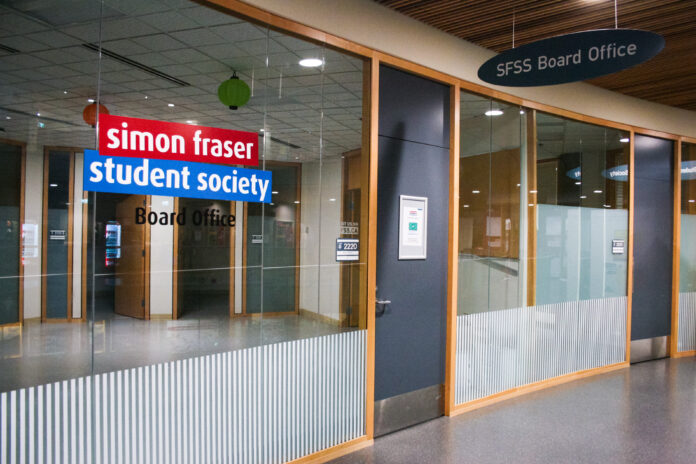
This is a photo of the SFSS office. On their window is the SFSS logo in big print.
PHOTO: Gudrun Wai-Gunnarsson / The Peak

By: Chloë Arneson, Peak Associate and Karissa Ketter, News Editor

Editor’s Note: Previously, The Peak had reported that Eshana Baran was censured. However, she was not officially under censure proceedings, but was reprimanded by councillors. 

After months of conflict with the SFSS, former vice-president equity and sustainability Rea Chatterjee officially resigned on August 17. Council had been in the process of voting over a request for Chatterjee’s resignation, but postponed the decision indefinitely during their July 27 Council meeting. A few months ago, The Peak spoke with Chatterjee to learn more about their decision and how their time with the SFSS has impacted them. 

Chatterjee explained their decision to resign from the SFSS was due to the “toxic and dysfunctional” executive team and the emotional distress their term has caused. “Since the beginning of my term I’ve experienced so much,” Chatterjee told The Peak. “To list just a few — being verbally harassed and belittled by another executive, objectified by another councillor, left out of meetings and important decisions relating to equity which fall under my portfolio, [being] shut down and ignored during discussions, [and] been mocked when bringing up concerns.”

Former president Helen Sofia Pahou called an emergency meeting on July 27 to censure Chatterjee and request their resignation due to an ongoing internal investigation that involved “multiple equity-seeking groups” on campus. Chatterjee cites this investigation as their “breaking point.” They said, “I truly started to feel unsafe in my position as a queer, disabled, femme-presenting person of colour.” 

Despite facing harassment throughout their campaign, Chatterjee said they did not expect their term to be so difficult. “I didn’t think [ . . . ] I would feel unsafe coming into my office, and could physically not do my work without throwing up and would have to step down in three months.”

During the previous executive term, groups on campus began a complaint process to SFU admin. Chatterjee did not elaborate on the contents of the letter. Among the groups that signed were the Graduate Student Society, SFU350, Students of Caribbean and African Ancestry, and the Disability and Neurodiversity Alliance. Chatterjee cited that this letter was labelled “slanderous” and “other signatories and other individuals from the GSS or SFSS [were] not offered an opportunity to meet.” They added someone anonymously leaked the full letter, “which was confidential and highly sensitive,” to Council and framed it like it was Chatterjee who did so. “None of the other signatories sent it and only SFSS Executives had access to the letter. 

 “This whole investigation was weaponizing the confidentiality policy against me once for when I stood with the equity seeking groups and unions in the complaints process,” Chatterjee explained. As the vice president equity, this is a key part of their role. “I will never apologize for standing with the other equity seeking groups to hold SFU admin accountable.” 

Chatterjee believes the investigation was a “waste of student resources,” and distracted members from doing their jobs advocating for students. Chatterjee stated they “believe that the students deserve a full report of the amount of hours that has gone into this investigation, hours that were spent with the society lawyer, time used in Council meetings for every single councillor, added all up and calculated in dollar amount.” 

Several SFU student groups stood in solidarity with Chatterjee, including TSSU and SFU350 — who released a letter to show their support. SFU350 wrote, “Operations within the SFSS are needlessly complicated. Council meetings run hours over their allotted time, students sometimes aren’t given time to speak at council meetings, meeting minutes are complicated, council wastes time and resources on unnecessary investigations, and motions and policies passed or amended aren’t accessible to the public. This demonstrates the SFSS’s current practices do not favor transparency or democracy.” 

Chatterjee stated the other executives’ lack of commitment to building relationships with unions and equity-seeking groups played a large role in their decision to resign. “Marginalized students come into these positions to further equitable practices and make space for other marginalized students to be involved,” Chatterjee explained. “I have had no support system and there is no accountability process. As much as I have tried, this work cannot happen unless there is a true and genuine commitment from everyone to centre equity and truly listen to and amplify the most marginalized voices on your team.”

When the vice-president equity position was vacant, Chatterjee expressed concerns regarding the future relations between SFSS and various minority student groups. “Since the beginning of this term, relationships between the SFSS and the other unions and equity seeking groups have drastically been impacted,” they said. The vice-president external Eshana Baran, who also plays a large role in maintaining these relationships, was also reprimanded by councillors in discussions alongside Rea Cheatterjee, while not under official censure proceedings. “I sadly do not have any faith or trust in the majority of this executive committee to further the legacy of student activism and advocacy that has existed at SFU since its conception,” Chatterjee stated.

The problems that have arised within the first few months of the executives’ term may continue to affect the SFSS, Chatterjee claims. “As execs and Council increase in-camera sessions and fail to debrief membership ex-camera on non-confidential matters which were discussed, the more secrecy will build. All the executives ran on transparency — but I’m failing to see them follow through on that campaign promise,” they said.  

Now that they have stepped down from their position as vice president equity and sustainability, Chatterjee noted their work is far from over. “I’ve learned and grown so much in the past few months and met the most amazing and inspiring people through my work collaborating with organizers from various equity-seeking groups and other unions on campus,” they said. “Although I will be organizing from outside the SFSS, I hope that there is a future soon where people like me can come into these roles and be able to do good work without being put at risk.”

The Peak requested an interview with Helen Sofia Pahou, who was SFSS president at the time, but she did not respond by the deadline. At the time of publication, the vice-president equity and sustainability role has been filled by Sunghyun Choi.


SFU professor says Vancouver is unprepared for winter conditions

0
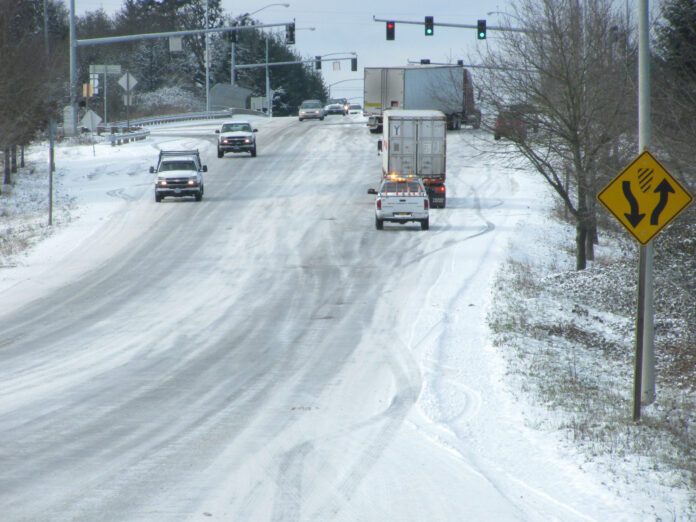
This photo is of snow covering the roads on a hill. A few cars are driving on the road and appear to be slipping on the road.
PHOTO: Oregon Department of Transportation / Flickr

By: Natalie Cooke, News Writer

The effects of climate change led to severe winter conditions at the end of 2022. It was reported there were at least 30 highway closures due to the winter conditions and accidents. Zafar Adeel, a professor for the School of Sustainable Energy at SFU, said other Canadian cities “tend to be much better equipped and prepared for snow storms.” 

Many people are led to believe that such extreme winter weather conditions are occurring due to climate change. “The winter pattern in the 2022/23 season is impacted by prevailing La Niña conditions, in which the eastern Pacific Ocean sea-surface is cooler than normal,” explained Adeel. “This La Niña pattern affects winter weather events across Canada, but particularly results in cooler and stormier conditions across the Pacific Northwest. In general, climate change has intensified the El Niño Southern Oscillation (ENSO) cycle, of which La Niña is a part of. However, it is difficult to pin the prevailing winter weather conditions on climate change.”

Adeel emphasized BC’s infrastructure is not ready for drastic weather conditions, “as we have observed in the ‘atmospheric river’ event in November 2021.” The 2021 flood caused damages to the road and surrounding infrastructure. Adeel noted repair “to the road infrastructure alone will likely exceed a billion dollars, including re-design to make it more resilient.” 

According to Adeel, these conditions are likely going to worsen over the coming years. “There is a need to closely look at the level of vulnerability in overall infrastructure and make some strategic investments.” 

The ministry of transportation and infrastructure said to Vancouver is Awesome they are investing in more highway maintenance and making improvements towards maintenance contracts. A ministry spokesperson also explained they are raising their standards to have “a more proactive approach” to sudden weather conditions. This approach includes ensuring Class A highways — such as Highway 1, 3, and 97— are cleared from snow within 24 hours of a snow storm. 

Canada and BC are investing $29.5 million into 11 BC projects to ensure that communities are resilient against natural disasters. The minister of intergovernmental affairs, infrastructure, and communities, Dominic LeBlanc, said to BC Government News, “Improvements to natural infrastructure and effective flood prevention measures help protect people, property, and livelihoods. These projects [ . . . ] will create jobs, improve critical infrastructure across BC, and help communities withstand natural disasters.”

A hate letter to snow

0
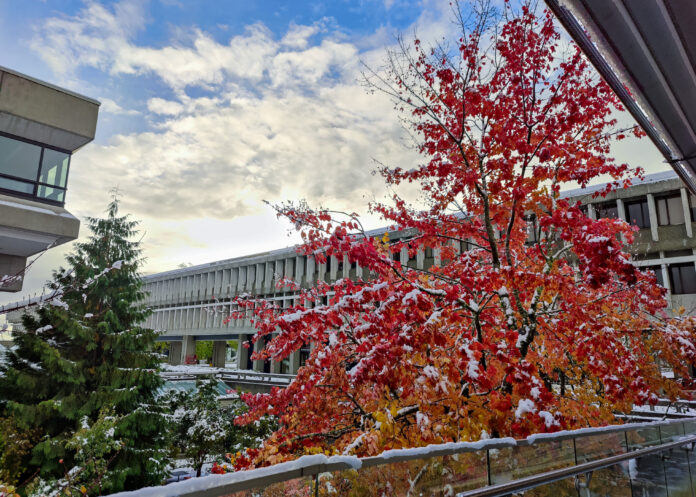
Snow covering SFU
PHOTO: Kriti Monga / The Peak

By: Hannah Kazemi, Staff Writer

I’m a hater of just a few things — but near the top of the list is snow. I remember a time when I used to look forward to seeing snow fall from the sky; it meant a potential snow day, drinking hot chocolate, and the opportunity to make snowmen until it got dark.

But as I got older and took on more responsibilities, namely ones that required me to leave my house, I became a hater of all things snow and winter. I hate wiping the snow off my car and scraping the ice off of my windshield, only to have it covered minutes later with fresh powder. And in the rare event that the roads have been cleared, I dread having to go driving after scores of Metro Vancouverites thoughtlessly toss the snow from their walks into the street. I become the most aggressively petty person when there’s snow in the forecast and it actually comes to fruition.

There are people that claim they like snow — children, mainly. I’m convinced that people who ski and snowboard, spending hours on the mountain “shredding pow” or whatever, are the only ones that truly love snow. I am definitely not one of those people.

Leaving the house to go literally anywhere when there’s snow on the ground becomes a whole production that feels like a risk to your safety. Not to mention the fact that drivers in Vancouver (read: the entire Lower Mainland) act like they’ve never seen a single snowflake in their entire lives and struggle to understand the concept of adjusting their speed for the conditions. Or clearing their car of snow. Or appropriately switching over to snow tires.

When we had all that snow this past November and December, it was like the entire province went into chaos mode. YVR essentially shut down, disrupting holiday plans for thousands of travelers. Ferry sailings were cancelled left and right, stranding people on the island or the mainland. Sections of major highways went unplowed for days, resulting in stranded vehicles, wildly unsafe conditions, and the closure of the Port Mann and Alex Fraser bridges. I’m so thankful I didn’t have to leave my house more than once in the middle of that mess because no one would have heard the end of it from me otherwise.

Vancouver’s transit system also saw countless cancellations and delays, including buses stuck at stops, frozen SkyTrain doors, and hours-long waits for a bus to arrive. This affects everybody; people are either late for work or get snowed in completely and forced to either lose a day of pay or frantically find child care. Not to mention the major barriers that people with mobility aids face in these situations: if sidewalks aren’t cleared, how are people in wheelchairs supposed to get to the bus stop in the first place? The city struggled across the entire system.

Some of the worst conditions during this winter’s heavy snowfall were on the highways and bridges. Highway 1 was a fucking mess for days as it has been during past snowfalls — the roads turn into ice sheets and driving anywhere is a game of “am I even in a lane?” Never mind the fact that drivers themselves lack the common sense to think of buying snow tires for their cars.

Compared to major cities in Eastern Canada, Vancouver’s snow removal budget is meager. Montreal’s $187 million snow removal budget pays for constant snow plowing and melting. Vancouver’s annual budget? Just $4 million. Our city’s snow removal budget needs to reflect the challenges and disruptions whenever there’s more than 5 cm of snow on the ground. As climate change continues to contribute to snowier winters and extreme weather events, we need to get our shit together.

Harm reduction advocate proposes incentivized rehabilitation

0
This is a photo of a group of people sitting in a circle on chairs. They’re engaging in conversation.
PHOTO: Tima Miroshnichenko / Pexels

By: Natalie Cooke, News Writer

Guy Felicella, a recovery advocate, and Dr. Monty Ghosh, an addiction physician, are proposing a plan to offer a stipend of $20 a day for people to enter a 90-day rehabilitation facility. Felicella explained that a $600 stipend per month would offer people opportunities to improve their lives. Felicella said, “It’s very tough to be in treatment. It’s even that much tougher to be there broke.” 

“Self-care costs money; going to the gym costs money,” along with buying clothes and “feeling good about yourself,” said Felicella. He believes if we ignore the self-care aspect of recovery, “it’s going to fail more often than it’s successful.”

Felicella noted incentivized rehabilitation is cheaper than the total cumulative costs that substance use has on Canada. Expenses related to substance use such as ambulances, justice costs, health costs, health complications, public safety costs, involuntary mandatory treatment costs, and more, are more expensive than a $20 stipend per day. The Canadian Substance Use Costs and Harms reported substance use cost Candians nearly $46 billion in 2017; this included $13.1 billion for healthcare costs, $20 billion for low productivity costs, $9.2 billion in justice costs, and $3.6 billion for other costs including research and prevention of damage. 

Felicella noted there are aspects of rehabilitation programs he would change to become more ideal. “I would like to provide more on the life skill side of things, the employment side [ . . . ] and work on the traumas that people have endured throughout their lives, so that they can feel more self-worth.” He explained many people come out of rehabilitation without the life skills and emotional recovery that they need to move on. Rehabilitation allows people to stay away from drugs, but if one’s life is still challenging after rehabilitation, it may allow them to relapse and use drugs again. 

“If all other social determinants of health aren’t addressed, such as housing and employment, you will find it extremely challenging for people to move forward,” said Felicella. “Why would you go to a 90-day treatment program, only to wind up in a shelter after you’ve completed the program?”  

The ministry of mental health and addictions told Global News, “Since 2017, the government’s priority has been to build a system of mental health and substance use care that can provide treatment for people when they make the courageous decision to get help. This includes creating as many opportunities as possible for people to access the voluntary system of care.”

For more information on the incentivized rehabilitation proposal, visit Global News.

Ten problems only SFU students have

0
Very calm, very cool. Nothing wrong here. Illustration: Siloam Yeung / The Peak

By: Saije Rusimovici, Staff Writer

  1. Frequent Flooding

Why put a bathroom on every corner if half of them are out of service? Nobody wants to walk by the same paper towel-less, puddle-filled bathroom on their way to their classroom every day. The number of times I’ve put my phone down right into a deceiving pool of water next to the sink is countless. The only comparable sight to the AQ men’s bathroom (that remained flooded for half a semester) would be the entryway to the Cornerstone Starbucks when it rains or snows (though brooms do a good job of flushing it out). Shout out to the bathrooms on the Vancouver campus though: y’all are pristine.

2. Getting snowed in on top of the mountain 

Ah, our inaugural snow problems. It would be endearing if they weren’t so consistently painful to deal with. From NovemberFebruary, you may as well keep a bedroll with you at all times because you never know when you’re going to get snowed in. My advice? Find a good place to spend the night before they all get filled up (SUB nap room may be busy but comfy, the seating below Images is cold and grey, but rather intimate). This is a good opportunity to set up in the dining hall and take advantage of its 24-hour service while buses wait for the flurries to pass. 

3. Waiting for a gondola 

I’m really excited for my children to take the gondola up the mountain. You know. In like, twenty years.

4. No service (anywhere)

My advice to new students? Never take an important phone call near Images Theatre. Or by the Mackenzie Cafe Subway. Or in Blusson. Or while waiting for your coffee at Renaissance. Just avoid the AQ in general. Don’t answer your phone until you’re outside. There are some areas where you can hear the person on the other line, and that’s not in the North parking lot 

5. Construction 

I’ve gotten used to the sound of jackhammers. I’ve navigated through and under scaffolding elegantly, and gained a muscle memory of which lanes are closed while driving up the mountain. New condos, we love. Will I ever be able to afford one? Unlikely, but at least I can admire some architecture that isn’t grey. 

6. Forest critters as friends

From racoons in classrooms to bear sightings on hikes, if you weren’t an animal person before, you are now. Being a student at SFU has allowed me to see a deer up close. Real close. Next to the window of my car in the middle of a deserted road close. Head nearly popping into the window close. 

7. People asking where the AQ is 

If you’re lost, just assume you’re in it. No, I don’t know where to find the dinosaur footprints on the campus. What do you mean that’s a thing?!

8. Food lineups: Starbucks warzone

You couldn’t wait to get to campus to order your grande vanilla cream cold brew and apparently neither could anyone else on 144 bus. You arrive at one of the two Starbucks to find a seemingly endless line of your fellow travel companions also itching to get their caffeine fix. You tell yourself after paying $7.04 that next time, you’ll make a nice coffee in your nice travel cup at home, avoiding not only the line, but the hit to your bank account. And then the next morning, you’re somehow in that line again.

9. Distance from classes . . . or parking lots

Can someone please explain why the parking rates are the same at South Parking as it is to all of the other parking lots on campus? North and East are relatively expensive, but in all fairness, are quite close to the school. But after arriving on campus on a busy Monday morning, driving around for nearly 20-minutes before taking a parking spot at what may be the bottom of the mountain, I really think my 15-minute walk up the hill through Cornerstone justifies at least 50% off my pay rate. Hint hint: always park at West Mall instead 🙂

10. Burning your s’mores 

Your hands were cold. You weren’t paying attention because you were distracted by a group of daycare kids trotting across the way. Really, it’s still edible once you sandwich it between the graham cracker and the Costco-grade chocolate square. There’s really no point in contemplating — you know you’re gonna eat it regardless. It’s the only thing getting you through the day.

Power rankings for the 2023 athletic season

0
Photo of the SFU hockey team joining in the celebrations after a goal.
PHOTO: Sydney Lau / SFU Hockey

By: Simran Sarai, Sports Writer

Hockey #1 

With three games left in the regular season, SFU is currently sitting atop of the standings with 10 wins and one loss. Forwards Nick Wicks (27 points), Garrett Hilton (18 points), and Mitch Ledyard (17 points) lead the team in points after 11 games. In the pipe, starting goalie Cale Dolan has a 2.79 goals against average with an 8.75% save percentage. After defeating the University of Alaska-Anchorage for the program’s first-ever win against a division I school, SFU is one step closer to becoming back-to-back champions.

Wrestling #2

Currently ranked sixth in the nation, the women’s team has put up strong results in their quest for another championship qualification. Led by sophomore Victoria Seal and senior Emily Cue, ranked second and fourth in the nation respectively, the women’s team is on the hunt to improve last year’s third-place finish

It’s a different story for the men, who are looking to rebound after being unable to compete in the postseason. They can do so with some strong individual performances from returning athletes Taniela Feliciano-Takafua (285 lbs) and Randy McDonald (141 lbs).

Swimming #3

The SFU swim team have had early-season momentum, rallying a total of 22 wins at the Winter Collegiate Invitational in November. They swept all relay competitions and set a new school record. December started no different with senior Jordan Doner winning the women’s 100 m breaststroke. Like Doner, freshman Marcus Mak is a standout athlete to watch after winning events at multiple meets. He has booked himself a spot at the National Collegiate Athletic Association (NCAA) championships alongside Doner and other teammates. 

The NCAA Division II Swimming and Diving Championships are sure to be a cutthroat affair, with the College Swimming and Diving Coaches Association of America ranking the SFU men’s and women’s teams in the top 25. Last season, the men’s side finished 14th at the NCAA championships while the women placed eighth: a new best for the SFU swim program.

Track and Field #4

Sitting in the middle of the pack, track and field opened their indoor season on January 13 at the University of Washington. SFU’s track and field program is no stranger to success. Middle-distance runners Aaron Ahl and Alison Andrews-Paul were named Great Northwest Athletic Conference (GNAC) men’s and women’s athletes of the year. Returning junior Charlie Dannatt was named the GNAC men’s outdoor track and field newcomer of the year, while sophomore sprinter Marie-Éloïse Leclair was named the women’s freshman of the year. Despite the departure of several standout athletes, expect the Red Leafs to take the GNAC championships by storm.

Golf #5

The Red Leafs golf teams will return to the green this spring after a brief fall season. During which senior Aiden Goodfellow recorded his first tournament win, while the men claimed first at the Bishop Men’s Invitational in September.

The women’s golf team opened their fall season in dominant fashion, hosting the True North Classic and finishing second, fronted by freshman Chloe Tran and junior Shirin Anjarwalla. After recording a hole-in-one, freshman Izzy Ferguson’s second place finish led the Red Leafs to second overall at the Saint Martin’s Bishop Invitational

Competition is fierce amongst the NCAA Division II golf teams, with the SFU women’s team ranked 49th in the nation, and the men ranked 23rd. The men’s and women’s sides will return to competition in February as they look to qualify for the NCAA West Regional Championships in early May.

Basketball #6

Prior to the start of the season, the men were ranked ninth in the GNAC basketball preseason poll, while the women were ranked fifth. The men sit at a record of 5–10 and are looking for a victory against a conference opponent, after failing to advance past the opening round of championship play last season. In an earlier interview with The Peak, men’s basketball coach Steve Hanson spoke candidly about the team’s expectations for the 2022–2023 season with a roster full of fresh faces. While advancing to playoffs might feel like an ambitious goal for the youthful squad, Hanson is confident in his athletes’ abilities to compete with the top teams in the league. 

Standout junior guard and forward Jessica Wisotzki is putting up impressive numbers as the women record a 5–4 start to the season. Wisotzki is the second-leading scorer across the league, which is a big reason for SFU’s win against nationally-ranked Central Washington University. With a strong returning squad that competed in the quarter-finals last year, the Red Leafs have a chance to bypass the first round. 

Softball #7

Rounding out the rankings after finishing sixth in their conference last season is the softball team. SFU returns to the field for the 2022–2023 season with playoff aspirations after finishing short of a postseason berth last season. This year’s team is chock-full of new faces, with nine freshmen players on the 19-person roster. The departure of seasoned veterans Anissa Zacharczuk, Hanna Finkelstein, and Alex Ogg, means the team will be looking to junior and sophomore team members Megan Duclos and Hannah Beram as leaders.

SFUnexplained: I can’t escape Freud

0
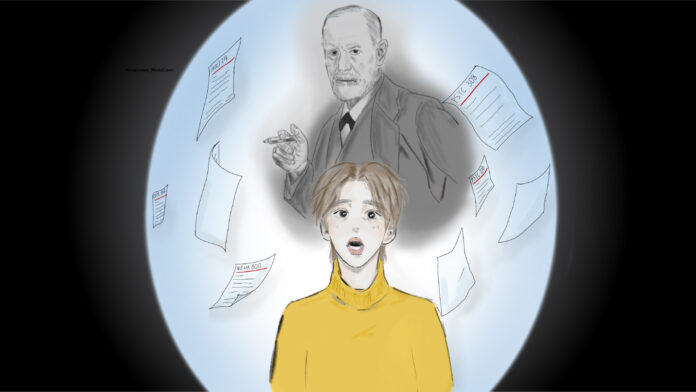
Illustration of a distressed student being surrounded by course syllabi.
ILLUSTRATION: Hailey Gil / The Peak

By: Kelly Chia, Humour Editor

Everywhere I go . . . I see his face. Sigmund (hopefully not motherfucking) Freud. It was innocuous at first: he would come up, obviously, in my PSYC 101 class. I get it, we all have to learn about the “father of psychoanalysis” even though it’s fundamentally a bit creepy to define people based on sex. But I swear he’s following me. I think he’s following everybody. This is my story, sordid as it may be . . .

I saw him next in my English syllabus, following a lesson on Jekyll and Hyde. The mustached man stared at me, again. Black powerpoint slide, and garishly red Times New Roman text combined to produce my actual worst nightmare . . . a man, who despite my best efforts to avoid him and his tired theories (enrolling in different electives “for funsies”) would appear again, and again, and again. I was seeing him in my dreams, a figure just as terrifying as my syllabi including a presentation, self-evaluation, final, and final essay component. 

I suppose it’s not my professors’ fault, like, they have to include him, I thought naïvely. And in the arts department, it’s fairly common to talk through our texts using psychology. But then! I encountered the man in, of all places, my computing classes! And again in my astronomy classes! He was a line of code sent to destroy my peace. He began towering over my electives like . . . like my subconscious. Next thing you know, I’m going to be forced to start developing arguments about the man, the thought horrifies me just as much as people making “daddy” jokes. RIGHT IN FRONT OF HIS POWERPOINT SLIDE?!? 

And so, here we are, readers. My most coveted game theory that I have been developing over the past ??? years I have been at this school can finally be presented in this esteemed student publication: I think SFU has made a deal with Sigmund Freud himself, who is kind of like an academic Santa Claus — we don’t really need to believe in him because he is probably problematic, but we’re kinda forced to learn about him. Also, he haunts me.  

Ohhhh, sure, SFU is much too clever to leave a paper trail. But I can feel it in my bones every time I see the same black and white photograph lecturers use for him. What, include him in the syllabus so we can have a nuanced understanding of him and his place in Psychology? Please. You don’t need nuance if you simply appear across seven different classes claiming to do modern curriculums incorporating the same seven, old, white male authors. I see your trickery, and I will not be mocked in this way!! 

. . . But I need to graduate, so . . .