Home Blog Page 16

Documenting my transition away from Google’s search engine

0
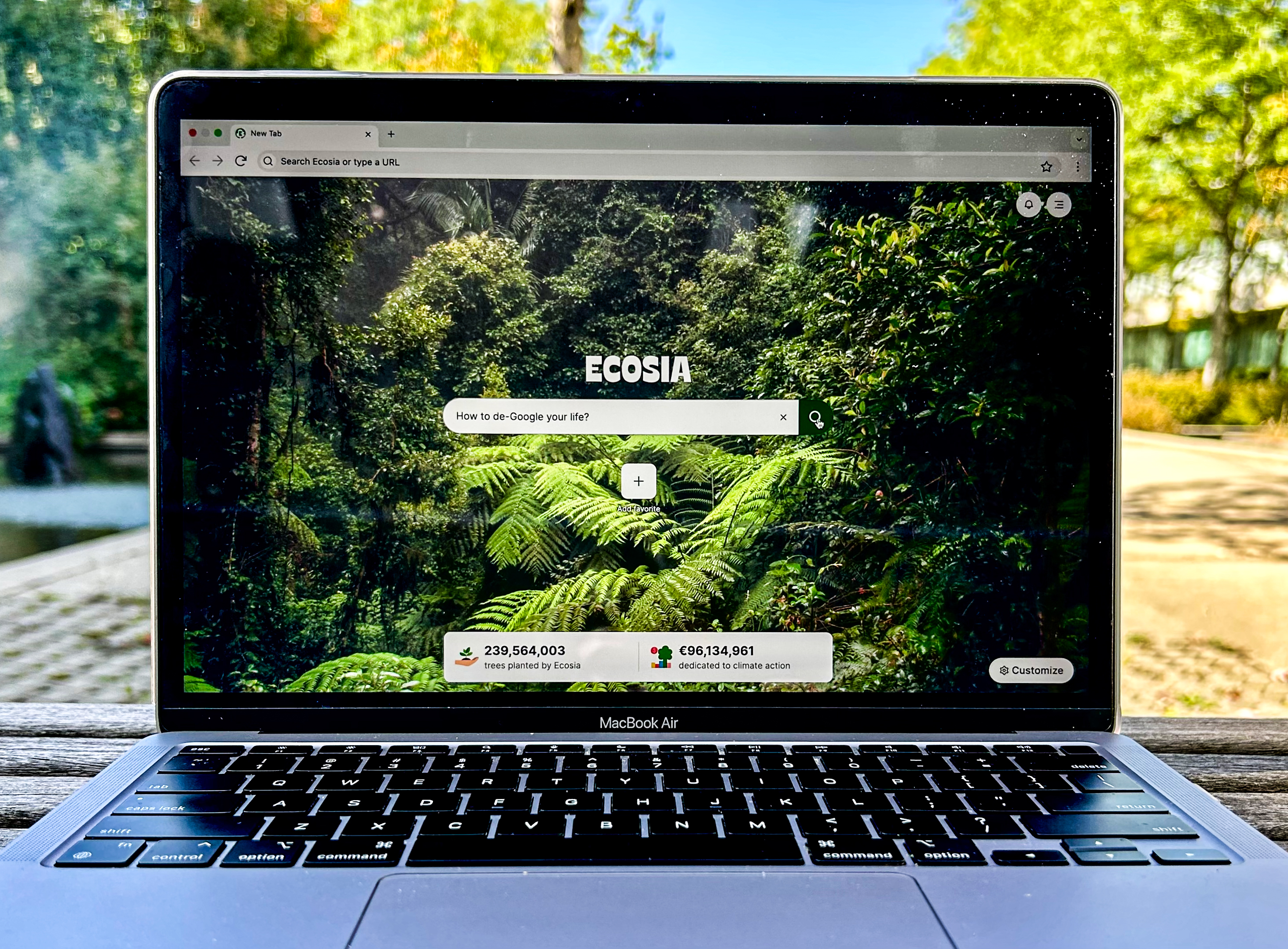
A laptop on a wooden bench in front of sun-lit greenery. The screen is open to the Ecosia search landing page and the search input “How to de-Google your life?”
PHOTO: Mehakdeep Toor / The Peak

By: Heidi Kwok, Staff Writer

Discussing all the reasons to boycott Google would take an entire article, but the tech giant’s involvement in violent state surveillance projects is reason enough. Project Nimbus is their artificial intelligence project that provides the Israeli government with surveillance data on Palestinians as it carries out a genocide in Gaza. More recently, Google Cloud invested billions in partnering with war contractor Lockheed Martin to provide AI surveillance along the Mexico-US border wall. With bothersome “AI Overviews” now embedded in search results, the depletion of fossil fuels is increasing exponentially, and so is environmental racism a systemic issue where racialized communities pay the price for the climate crisis. In Uruguay, Google’s latest massive datacentres under construction will release thousands of tonnes of carbon dioxide and toxic waste into communities. Locals continue to protest the implicated water usage amid a drought in the region.

Google is so ubiquitous one would imagine it’s the only option available. As a university student, I’d be lying if I said certain databases haven’t been lifesavers when it comes to coursework — like Google Scholar or Google Maps. Familiarity and having everything you need in one place are part of the allure, but what could we be missing out on by giving in to ease and not exploring other options? While it may seem impossible to completely remove a tech monopoly from your life, search engines and web browsers are an easy starting point and make a difference. I decided to try two of the top web browser alternatives and compare them so you can choose which one is right for you.

What is Ecosia?

The non-profit uses its advertising revenue to fund global reforestation projects and other climate action initiatives. Its tree restoration program operates over 60 active projects in over 35 countries. The platform is also powered entirely by solar energy. Ecosia publicly discloses its financial activity and income allocation on a landing page with easy-to-digest charts and infographics. 

Initial impressions: installment and homepage 

Installing Ecosia was a breeze. You can try out Ecosia as an extension on your current web browser and change your default search engine in your browser settings. You can also easily download the desktop web browser. On the homepage and below the search bar, the collective climate impact of Ecosia users is displayed in a live tracker: 239,253,790 trees planted and €96,034,141 dedicated to climate action at the time of writing.

Seed and impact counter

After installing, a small panel in the top right corner caught my eye. Expanding it showed my guest user profile and accompanying label: “Level 1: Ecocurious.” Beneath it was a prompt to sign up for an account. I obliged and was quickly promoted to “Level 2: Green Explorer.” A tracker called an impact counter on your profile documents the total seeds you’ve collected (you gain a seed per day using Ecosia), and your progressions to the next levels. These seeds translate tangibly to the environment. Once you’ve collected the equivalent amount, six seedlings are planted in real life for every tree expected to survive. This unique levels-based achievement system sets Ecosia apart; collecting seeds felt like video game side quests.

A browser service that simultaneously operates as a points-based game system with real-life climate impact? Count me in.

Final thoughts

Ecosia’s user interface design felt clean and sleek. I loved how they consistently referenced their reforestation mission through tree and plant iconography. Browsing also felt akin to the days before Google slowly gained sentience with their intrusive AI. While Ecosia does have an AI conversational feature called Ecosia Chat, you can decide whether or not to use it. If you do, the chat service may only be accessed under a separate search bar. I should note that because Ecosia’s AI is powered by OpenAI, your privacy is not guaranteed since all conversations are shared and stored on the external provider’s database for up to 30 days. However, using AI is completely optional and compartmentalized.

While Ecosia is a Google alternative, Ecosia’s Map and GPS services are still powered by Google Maps. However, the biggest downside of Ecosia for me is its tenuous privacy policy. Currently, Ecosia partners with Google and Microsoft Bing to deliver ads and share users’ searches. They also collect and analyze data, including users’ IP addresses, search terms, and session behavioural data.

DuckDuckGo

Evocative of the children’s game, the DuckDuckGo (DDG) search engine operates on the promise of “protection, privacy, and peace of mind.” The browser’s main selling point is personal data protection and evasion from third-party trackers. Compared to mainstream browsers, DDG offers what they call “significant protection” across aspects like web tracking, cookie protection, private search, ad and pop-up blocking, and privacy control. 

Initial impressions: installment and homepage

Like Ecosia, installing DDG was a piece of cake. Despite not having an option to add it as an extension, downloading the desktop version was just as easy.

It was less than a minute before I was met warmly by a bow-tie wearing anthropomorphic duck who, through interactive speech bubbles, guided through the rest of the initial privacy settings.

A fair bit of warning: the duck does get a little chatty to begin with and is prone to giving unsolicited comments about your browsing activity. The homepage, while not as embellished as Ecosia’s vibrant greenery, looks futuristic, even displaying a protection report that records all blocked tracking activity.

Privacy highlights: Fire Button and DuckPlayer 

Once I had time to orient myself with DDG’s interface, I could confidently say, I’m super impressed by how accessible their privacy features are and how meticulously they consider user experience. With a single click, the Fire Button feature swiftly clears your browsing history in an animated burst of flames. The highlight of the search engine for me had to be DuckPlayer, a built-in video player that allows users to watch YouTube without targeted ads. 

Final thoughts

DDG’s AI functionality captures the best of both Google and Ecosia. DDG has what’s called an AI Search Assist that can be intentionally enabled (and disabled) with a simple click below the search bar. Unlike Google, DDG’s AI is optional, giving you the freedom to opt-out. DDG likewise offers Duck.ai, which, similar to Ecosia Chat, allows you to converse back-and-forth between a generative language model. The engine claims your data is withheld from third-party model providers, except your date and timezone.

While DDG offers significant separation from Google in terms of data sharing and features, they don’t offer equally capable alternatives to everything just yet; their Maps service is powered by Apple Maps, and this is just not as versatile as GoogleMaps. Perhaps a bigger issue was how their search results link to paid products. The first two results that popped up when looking up medical-related questions, for example, were from online storefronts selling self-prescribed supplements. This may be because DDG generates revenue from non-targeted private ads. Because the search engine does not personalize ads based on your browsing history, ads are instead entirely based on the localized search results you conduct. Unlike Ecosia, DDG is not transparent about how their profits are spent. They also don’t publicly disclose how their data centres are powered.

So which search engine was superior? It ultimately comes down to your browsing habits. If you’re an avid consumer of video platforms a then DuckDuckGo annihilates all competition. Ecosia, on the other hand, is great for those who are more conscious about their lifestyle impacts on the environment. Both Google alternative search engines do great in making AI optional. For students in particular, in the absence of AI summaries, you’re able to apply critical thinking skills and go “old-school” when it comes to scanning the results page for relevant and credible sources. Without services like GoogleScholar, you’re relegated to the mercy of more trustworthy databases like Jstor and Web of Science

To join the movement and learn more, r/degoogle is a Reddit community that shares advice on various ways to eliminate and find alternatives to Google, including Google Maps and Gmail. liberationtoolbox.io also provides an ongoing “series on de-centering Big Tech by moving away from Google, Meta, Microsoft, Apple, Amazon, and more.”


We must choose to rest and re-charge

0
a person sitting on a couch in the living room, with a mug in their hand. They’re watching the television. They’re relaxed, and the setting is cozy.
ILLUSTRATION: Stella Laurino / The Peak

By: Zainab Salam, Opinions Editor

Today’s jam-packed schedules have become the norm. Most people have to juggle a seemingly endless list of tasks and responsibilities just to keep up with the demands of modern life. Plenty of the people I have worked with — in various sectors and stages of life — have had either two jobs or a job alongside educational aspirations. I’m no different. I often walk around with some electronic device (other than my phone) to make sure that I can squeeze in a few more tasks, whether it’s a university assignment or a work obligation. I kid you not, my family friend’s daughter (who is five years old) thinks of me with a laptop permanently glued to my lap. It’s funny, but incredibly sobering.  

It might seem elementary to state this, but rest is essential because it keeps our bodies functioning. It’s astonishing how often many of us deny ourselves the basics due to the heavy demands of busy schedules. In social conversations, we normalize chronic sleep deprivation, and occasionally compete to see who’s functioning on the least amount of hours of sleep. My co-worker and I love to share how few hours we’ve slept the night before our regular Saturday shifts. Just the other day, I regretted not bringing my laptop to my friend’s movie night. It’s almost as if I couldn’t turn off my need to keep working on my to-do list. 

But here’s the truth: rest is not wasted time. It’s the fuel that makes everything else sustainable. And thankfully, it comes in many forms. Physical rest matters, yes, but so does mental rest — the quieting of our overactive minds. The value of rest goes beyond the physical — it unlocks mental clarity. Sleep, an unconscious mode of information processing, helps our brains consolidate information. Which in turn leads to better cognitive performance. Stepping back is not lethargy— it’s strategy. 

This is why rest shouldn’t be thought of as a secondary matter in our lives; it should be at the forefront of our priorities. This includes not feeling guilty or unproductive for providing your body and mind with necessary rest and recognizing that the necessity of rest is not contingent on reaching a high level of fatigue or illness.

There is a reason our bodies are wired for sleep, and there’s a wisdom in choosing to rest before we hit collapse, and not after.

Additionally, rest is more than just a mechanism for us to recharge for improved cognitive or physical abilities. Rest is a way for us to get in touch with who we are as individuals, beyond our responsibilities. I always think of the personal growth I’ve attained through mindful contemplation and leisure reading.  

At its core, rest is the cornerstone of a balanced life, touching every domain: our bodies, our minds, our relationships, and our joy. To rest is to honour the vessel that carries us through this physical realm. So the next time you feel that rest is unnecessary, remember this: rest is not what takes you away from life. Rest is what allows you to truly live!

Brighter Side: Random music searches

0
a close-up of black, wire, in-ear, headphones sitting on a wooden table.
Photo: Ritupon Baishya / Unsplash

By: Mason Mattu, Humour Editor 

Do you ever feel like you’re an NPC after listening to the same artists over and over again? Or do you feel trapped within a musical echo chamber, unable to escape the reverberations of the same artist, genre, or vibe? 

I experienced this over the summer — and to counteract it, I started doing something unusual. I’d open up a streaming platform, head into the search bar, and type in a random combination of names and weird words. Basically, whatever spontaneous thought popped into my head. After scrolling down a bit (since it’s likely that songs you’d like would be at the top of the search results), I’d haphazardly select a song or artist. 

Through this method, I discovered “It Might Be Raining” by Dan Mangan, a melancholic song about holding on to memories and Vancouver rain. “Ensemble” by Aliocha Schneider, a song of longing and pain, graced my ears because of this strategy. Without these unpredictable searches, I would’ve never found such niche and captivating tracks.

Music streaming apps are designed to predict and suggest music based on our tastes. If you want the feeling of sorting through a variety of records at a thrift shop, forget the algorithm and embrace the random.

Political apathy is a privilege

0
a person sitting inside of a colourful floating bubble, scrolling on their phone, using their headphones. There are two pillows behind them. Outside of the bubble is grey and bleak.
ILLUSTRATION: Victoria Xi / The Peak

By: Zahra Khan, SFU Student

Politics drive our world, and refusing to engage in them becomes a political stance within itself. The reality of the matter is that the state is political, so is the body — so is my gender, the colour of my skin, the religious values that I advocate for, and my sexual orientation. So, what would really happen if I refused to acknowledge the role of politics in the social sphere? Believe it or not, I would still be stating an opinion — one of political apathy, where my privileges help me deny the impacts of the inequalities that affect everyone else. 

Apoliticality manifests as inaction. This inaction comes into play when I refuse to stand up for myself. And the greater inaction emerges as a form of political apathy, where I fail to stand up for others. Usually, my privileges are the culprits that keep me from acting. This inaction comes at a great price: keeping others unfree. The destruction of the entrenched systems of inequality and oppression is undoubtedly a loftier goal than caring for others. I cannot attack someone’s rights and livelihood, or reinforce systems of oppression through my inaction, while claiming that I am politically neutral. I’m merely ignoring the collective circumstance that keeps us all down.

Liberating oneself means liberating others. I am taking a certain political stance if I refuse to see that others are unfree. What about the laws that govern our free healthcare being overturned — what about the threat of repeals to abortion laws, of pipelines being built on Indigenous land? These issues might not affect me personally, but my refusal to think or act in solidarity is where harm is caused. This is why it’s essential for all of us to participate. This can take many forms: casting ballots, protesting, and participating equally in good government. Moreover, on a more local level, we can participate by getting involved in our communities. From learning about the diverse communities that exist in your vicinity, to attending our local city councils. And on a personal level, we can voice our opinion on the dinner table, when it’s safe to do so. All of which are a political stance that helps us be a part of our societies. Apathy does not wait for us to insist on political neutrality before creeping in to destroy our ability to exercise our political rights. 

This is where refusing to act moves away from neutrality and towards not using rights to their fullest capacity. We need to understand that in order to be free ourselves, we must support the freedom of others, and exercise the privileges we have to support them.

We must recognize that being apolitical reinforces systems of oppression

Times are dire, but people must attain the will to care, the will to speak up, and the will to take a stand when the time is nigh. 


ST N CRUNCH opens at SFU Burnaby

0
This is a photo of the new CRUST N CRUNCH location, which features a vibrant yellow, orange, and purple menu and sign that says PIZZA - SLICE - SALAD. Five students are standing in front of the restaurant, looking at the menu.
PHOTO: Parsa Alirezaei / The Peak

By: Niveja Assalaarachchi, News Writer

On September 3, CRUST N CRUNCH opened as one of SFU Burnaby’s newest fast food joints. The restaurant, replacing the old Jugo Juice franchise, aims to serve “an elevated pizza experience that delivers on quality, convenience, and value,” according to a company press release. CRUST N CRUNCH, which first opened in 2024, is a chain restaurant serving an array of pizzas, donairs, salads, and other meal options. 

In a statement to The Peak, CRUST N CRUNCH highlighted that the Burnaby campus was an ideal place for the company to expand, noting that it “is a vibrant community with thousands of students, faculty, and staff who are looking for convenient, crave-worthy meal options every day.”

This franchise differs from CRUST N CRUNCH’s regular locations, as the SFU location serves a streamlined menu. This sees the location ditching the donair menu option, typically sold at other locations, in favour of a more pizza-focused business approach.

CRUST N CRUNCH explained that the decision was made with “careful consideration of the SFU campus environment.” Limiting their menu helped the franchise “simplify operations, speed up service, and better match the needs of students and staff who often want a quick, filling, affordable option between classes.”

The franchise is owned and operated by Parminder and Kamaljit Parhar, the owners of Renaissance Coffee. The Peak interviewed Parminder Parhar about his hopes for this new business expansion. 

“My mission is to provide value here and good-quality meals to the community. And I have successfully done it for 29 years, and I hope to continue this thing with the pizza concept.”

— Parminder Parhar, owner of CRUST N CRUNCH and Renaissance Coffee

Parhar hinted that, although unlikely in the short term, he would not shy away from a chance to expand his business operations to SFU Surrey and SFU Vancouver, if the right opportunity emerged.

Throughout the Parhars’ time serving SFU, they have helped students with their education through an endowment fund. The fund provides scholarships and bursaries to high-achieving and community-oriented SFU students. Parminder spoke about his sensitivity to the needs of students and the role he wants to play in helping them throughout their educational journey: There are “two or three dimensions of the university. People come here to advance their career, to learn, to grow, and I am more like a support service to meet that goal. 

“I have seen the struggle of the students. I was also a struggling student. It’s very difficult to, at times, get going with your studies when you have very limited funds and when there is so many other challenges happening,” he said. “And these challenges are not getting any better. They’re getting worse every single day. So my mission [is] to provide a good quality, value meal, and by doing this thing, I’m not doing anybody any favour.

“I am here for the students, staff, and faculty.”

SFU study finds that street sweeps reinforce systemic harm

0
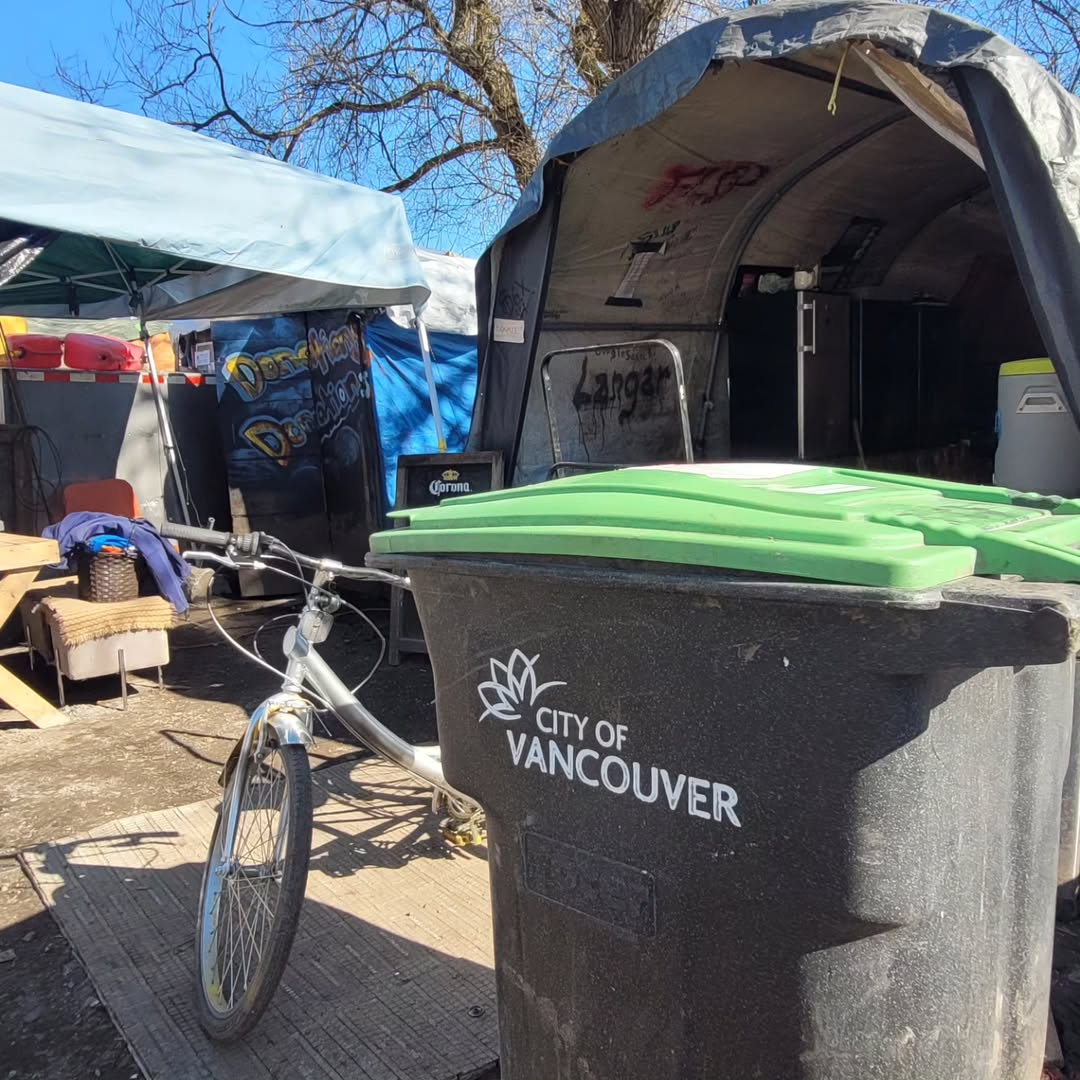
This is a photo of a shelter outside, with two large tents, a small fridge, a bench, and a bicycle featured. There is a garbage can that says “City of Vancouver” up close to the right side of the photo.
PHOTO: Courtesy of @copevancouver

By: Niveja Assalaarachchi, News Writer

A study conducted between 2021 and 2023 by SFU found that street sweeps by the City of Vancouver lead to higher rates of violence, disrupted access to services, and overdose risk. 

Street sweeps involve police officers and city workers clearing public areas, displacing unhoused individuals, and often seizing belongings in the process. The study noted these practices first appeared in Vancouver in 2008 and are typically carried out under the pretext of tackling crime and dismantling illegal settlements, such as tent cities. 

In early 2024, residents of the CRAB Park tent city were forcibly removed by the Vancouver Park Board, who also seized their possessions — a high-profile and contested example of street sweep practices. The Board forced the closure of the tent city in late October that year.

The recent study, which was published in the Public Health journal, surveyed 691 people who had unstable living conditions and used substances. It found that 24% of unhoused respondents and 14% of those in unstable housing situations had experienced at least one street sweep. The survey highlighted that such sweeps negatively affected respondents’ access to services. 

Specifically, 36% of the surveyed individuals were unable to access housing services, about 26% were unable to access primary care clinics, 20% were unable to access supervised consumption sites, and 16% were unable to access addiction treatment

The research showed that the confiscation of personal items during street sweeps often took away resources, “such as harm reduction supplies, medications, and identification documents.” Researchers argued these circumstances push people into even more precarious situations, such as living in tent cities, which are visible targets for future street sweeps. The distress of losing personal belongings, along with being pushed into environments where drug use is more common, heightens “susceptibility to overdose.”

The study also points to a 27% rate of violence from law enforcement among those who have experienced street sweeps, showing the dangers faced by the victims of the practice.

Street sweeps have long been contentious in the city, with many organizations rallying against them. The study points out that the number of unhoused people in this province has grown as a result of increased socioeconomic issues in the region. Issues include unfavourable housing policies and the long-term impacts of the COVID-19 pandemic, which have pushed many onto the streets, possibly subjecting them to street sweeps.

Dr. Kanna Hayashi, an associate professor in the faculty of health sciences at SFU and an author of the study, told SFU News,

“Street sweeps are a costly, ineffective response to inequitable policies.”

— Dr. Kanna Hayashi, associate professor in the faculty of health sciences 

“We need to fix the policies that created this crisis — not criminalize its victims.”

The study concludes by calling on the municipal government to study the systemic factors that led to the rise in the unhoused population. The study also notes that policies should be enacted that protect the unhoused, such as harm reduction policies.


BC Supreme Court ruling grants Quw’utsun Nation Aboriginal title over lands

0
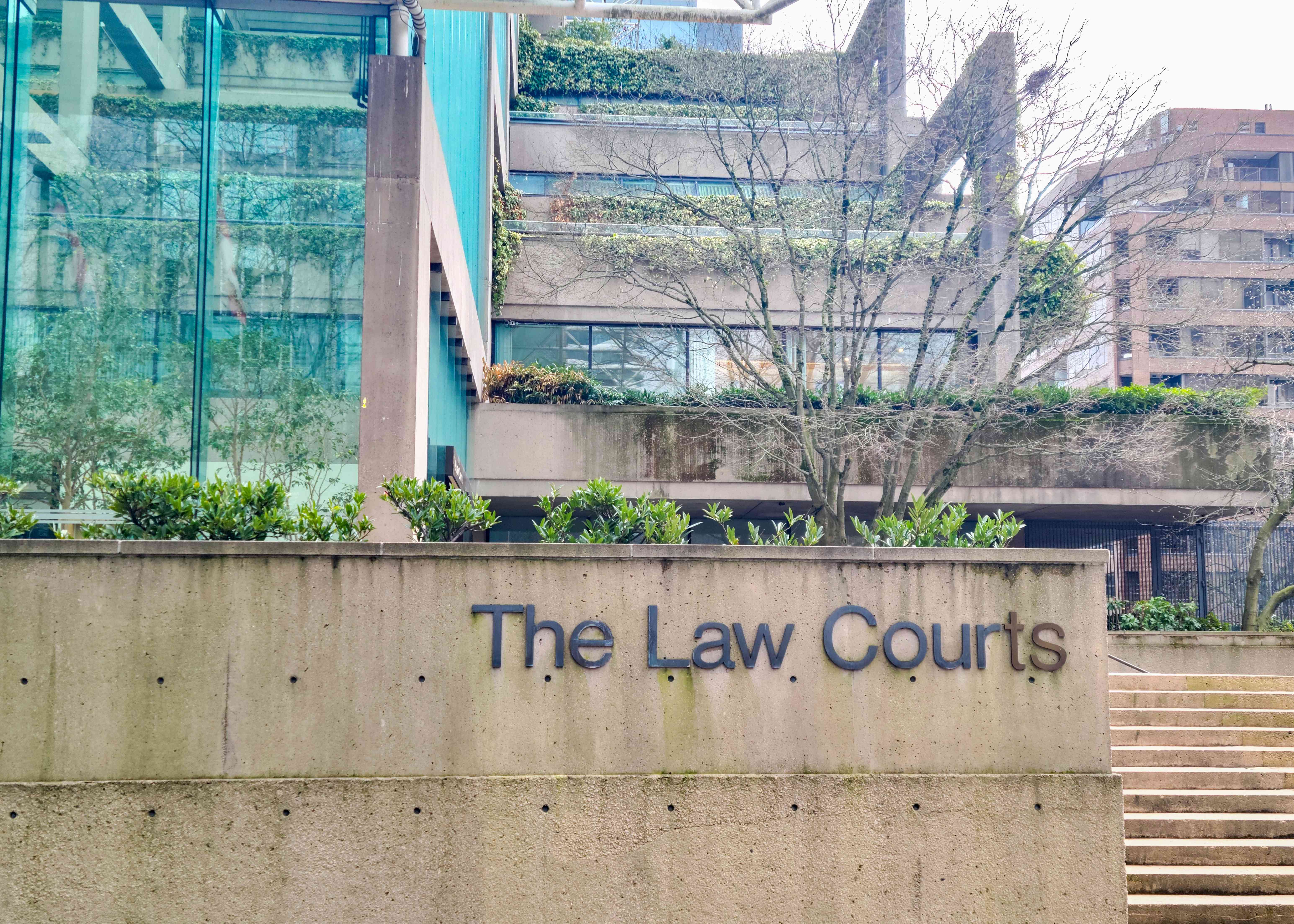
This is a photo of the entrance to a court that has “The Law Courts” written in black on the side of a concrete wall. Lots of little shrubs can be seen on the building.
PHOTO: Amirul Anirban / The Peak

By: Lucaiah Smith-Miodownik, News Writer

The Cowichan Tribes v. Canada trial spanned 513 days from 2019 to 2023, making it the longest trial in Canadian history. 

On August 7 of this year, BC Supreme Court judge Barbara Young ruled that the Quw’utsun (Cowichan Tribes) hold Aboriginal title to an area of land near the Fraser River on what is now known as Lulu Island in Richmond. Aboriginal title refers to the “unique collective right to the use of and jurisdiction over a group’s ancestral territories.” 

Initially, the Quw’utsun Nation sought title over their traditional Tl’uqtinus lands and some of the surrounding area, as well as the Aboriginal right to fish on the Fraser River’s south arm. They did not seek to reclaim any privately owned lands within this area through the court. For those lands, they sought “a negotiated reconciliation with government.”

The trial, however, resulted in a different outcome regarding private lands. 

While Young found that the Quw’utsun had title to a portion of the land they originally claimed, this included some fee simple, or privately owned property. Specifically, Country Meadows Golf Course, multi-million-dollar mansions, and warehouses currently exist on what is now Cowichan Title Lands.

Now, the City of Richmond, xʷməθkʷəy̓əm (Musqueam) Nation, and sc̓əwaθən məsteyəxʷ (Tsawwassen) Nation plan to appeal the latest decision

The Quw’utsun Nation is adamant that they do not seek to displace private homeowners.

“Framing this decision as a threat to private property stokes fear and unfairly scapegoats First Nations”

— Don Tom, vice-president, Union of BC Indian Chiefs  

The Quw’utsun Nation did not respond to a request for an interview by the publication deadline.

xʷməθkʷəy̓əm and sc̓əwaθən məsteyəxʷ Nations’ reaction

For the two Nations, issues with the ruling stem from disputes regarding whether or not Aboriginal title should belong solely to the Quw’utsun. 

While the sc̓əwaθən məsteyəxʷ Nation declined to comment on the ruling, they released a statement on their website asserting that the Cowichan Title Land is “within Tsawwassen’s traditional territory and directly impacts rights recognized in Tsawwassen First Nation’s 2009 Treaty, most importantly, the right to fish in the Lower Fraser. 

“This decision has already affected Tsawwassen First Nation. The very next day, the Canadian Department of Fisheries and Oceans allowed Cowichan Tribes to fish during the height of the sockeye run, with what seems to be very little forethought about best management of the salmon fishery,” the statement reads. “For Tsawwassen members, whose Treaty fishing rights are already less than fully realized, the consequences could be devastating.”

Additionally, yəχʷyaχʷələq (xʷməθkʷəy̓əm Chief Wayne Sparrow), “citing oral Musqueam history,” told CBC that “if you ask any First Nation in BC’s Lower Mainland, the Fraser River was not known as the Cowichan River prior to colonization.”

The xʷməθkʷəy̓əm Nation did not respond to an interview request before the publication’s deadline. In a press release of their own, yəχʷyaχʷələq explained that they are “extremely disappointed that Cowichan Tribes, Stz’uminus, Pune’luxutth (Penelakut), Halalt, and Leey’qsun (Lyackson) would go against our shared Coast Salish protocols and challenge our traditional resource-sharing practices.” 

yəχʷyaχʷələq added that “it is especially concerning that they resorted to the colonial legal system, which was not established to respect or reflect our traditional teachings.”

Both nations plan to move forward with appeals. In a CBC interview, Robert Morales, chief negotiator for the Hul’qumi’num Treaty Group and member of the Quw’utsun Nation, recognized that “there is disagreement” between the nations, but maintained that the area in question is traditional Quw’utsun Nation land. 

City of Richmond’s reaction

The Peak spoke with Richmond mayor Malcolm Brodie about Richmond’s plans to appeal the ruling.

Brodie explained that in past instances, Aboriginal title only affected Crown land, while fee simple property was spared. Crown land is “land, or land covered by water like rivers or lakes, that’s owned by the provincial government.” However, this case sets a new precedent as the court ruled that Aboriginal title “can’t be extinguished by having your title in the land title office,” he said. “You’ve got two different titles, both of which give the right of exclusive possession and occupation of that property,” he specified.

Brodie explained that “if the province comes along and takes some of your property because [ . . . ] they want part of that property for roads, they do what’s called expropriation on that property.” They claim “the portion they need, and you get fair market value” — “the price that an asset would sell for under current market conditions, assuming that both the buyer and the seller are seeking the best possible price.”

In the case of the ruling, Brodie believes the government should take the same expropriation approach by recognizing that “there is such a thing as Aboriginal title on that land, and it’s up to the province to provide payment to the First Nations for that title” without the potential loss of property for private owners. 


Mark Carney wants AI flight attendants for Air Canada

0

By: Sasha Rubick, SFU Student

The Air Canada strike may be over, but the lingering reasons for the strike aren’t resolved — or are they? Recently, 10,000 flight attendants hit the bricks in protest of low wages and unpaid labour, amidst new contract negotiations. The federal government ordered them back to work only hours later. The Canadian Union of Public Employees (CUPE) announced their intention to defy the back-to-work order. At the end of the day, a tentative agreement was signed, ending the labour dispute.  

In the aftermath, Prime Minister Mark Carney raised some eyebrows with his Labour Day address, where he suggested artificial intelligence (AI) could replace the flight attendants entirely and prevent future labour turbulence. 

“My time at Goldman Sachs gave me a grounded — no pun intended — perspective on the lives of Canadian workers. They’re such couch potatoes,” Carney said in his remarks. “You know, I go to work every day, and you don’t see me striking. We all have to sacrifice just a teeny tiny bit. You might call it austerity, I call it sucking it up. And trust me, I know what it’s like to be paid unfairly — I learned about it in a sociology class at Cambridge (which my dearest paPA paid for).”

Carney then outlined a plan for Air Canada to replace its flight crew and gate agents with AI, and decided to “just throw in the pilots too, for good measure.” This cost-cutting method would save Air Canada a couple of dollars a year in wage payments. According to an anonymous source, the airline is considering using this money for more pertinent expenditures, such as providing coffee, during executive meetings.

99% of Canadian boomers who voted for the Liberals in the last election support Carney’s latest proposition. In a statement to The Peak, one respondent said: “I’ve thought for years that it’d be impossible for Air Canada’s customer service to be worse. Now that it is, I don’t seem to mind. Our beloved prime minister knows best! Maybe those flight attendants ought to keep their elbows up and shut up instead of putting picket lines up.”  

Air Canada appears ready to move forward with Carney’s plan, but says it will need to change the prices of their flights. “We’re making up for a possible future deficit of about $2 billion for insurance payouts,” explained a representative, “just in case that AI pilot thing doesn’t work out.” The airline will add a $700 AI fee to all future flights, mimicking their current business model. The company has notoriously balanced deceptively inexpensive base fares with add-on fees: $200 for checked bags, $50 for pretzels, and $300 for premium-quality elbows up couture oxygen masks. 

Generously, Air Canada will allow customers to opt out of AI assistance and the associated fee if they’re willing to store 10 other passengers’ luggage in the overhead, train the stranger next to them on how to put on an oxygen mask, and accept the risk of guaranteed death by hyperventilation during mild turbulence.     

“Mark Carney is a national treasure,” a spokesperson for Air Canada announced in a press release this morning. “We can learn a lot from the recent election. The Canadian public wants to be served by opinionless robots. Slap a maple leaf on an android and call it a day. And that’s exactly what we shall do. We all have to make sacrifices, so if the flight attendants don’t want to work, we’ll just replace them all with AI. Simple as that.” 

Carney doubled down on his proposal this evening. “What’s best for Canada is whatever gets our planes in the air again,” he said. “As your prime minister, I’m an expert on filling an important job position with a crappy substitute. If we did it in government, we can do it for air travel.”In a statement to The Peak responding to these newest developments, CUPE simply typed “sigh.”


Timeshares for sale on Burnaby Mountain

0
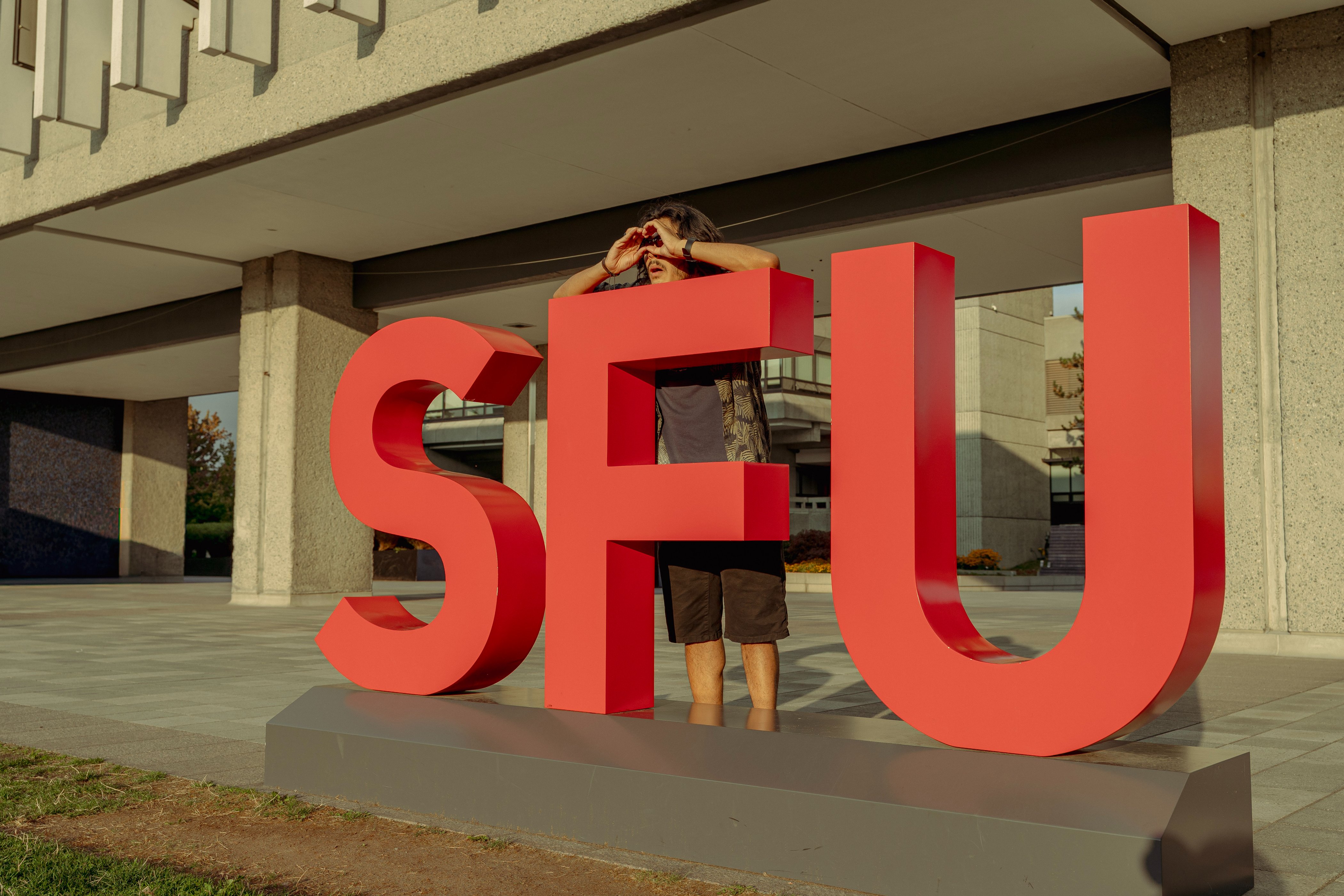
A man stands in the middle of a red, blocky SFU sign. His hands are cupped in front of his eyes, indicating awe or fascination with something — almost as if he is sight seeing.
PHOTO: Aedrian Salazar / The Peak

By: Mason Mattu, Timeshare scam detector and Humour Editor

Somewhere in the backrooms of Maggie Benson Centre, a group of tourists has been roped into a sales presentation about timeshares at SFU. Their salesperson? Tiffannee. She’s not just hungry for a commission, she’s hungry for love. This is her story.

Greetings! My name is Tiffannee (just Tiffannee with two e’s), and I am the newly-hired tourism coordinator at the Simon Fraser University Burnaby Campus. I’d like to first thank you all for coming to this info session about new timeshare options in Metro Vancouver’s newest luxury travel destination, SFU. I see a hand raised for questions already! Oh … Yes, you will receive the free Safeway coupons as an honourarium for your time. 

You are all here for one reason and for one reason only. You’re interested in — yes, we get it, Todd. You’re here for the goddamn Safeway gift card. Please, just let me speak.

As I was saying, SFU’s administration has invested big bucks into making our campus more appealing to the kind of tourists who would spend $15 on an ice water in Vegas. Oh. My. GOD. I wasn’t supposed to read that. My executive assistant, Tiffany, needs to get better at this. 

Vancouver as a destination has become way too oversaturated for tourists like you to spend your time. That’s why we’re proud to announce that SFU Burnaby will soon be home to timeshare units in what was formerly the secret campus hotel — The Simon. The Poconos? Hawaii? The Swiss Alps? All of those destinations are so yesterday. Boring!! We’re putting the chic back in chickpea by featuring accommodation so close to SFU’s world-class Dining Commons! We might have to keep workshopping that one . . .  

Anyways, picture yourself with a margarita in one hand and a — oh, shit. My cue cards are misordered. Please imagine you’re — Ugh. Tiffany. Alright. Imagine this — you’re sipping a margarita while looking over a beautiful mountain scenery. Rumour has it that Leonardo DaCapréow (often wrongly referred to as Da Vinci or something) came to Burnaby Mountain for inspiration for American Gothic. Yes, that’s right. 

Other than the mountain views, there are a lot of things to do when vacationing at SFU. You have a fantastic view of the Eiffel Tower, you can go bungee jumping at our totally fully-functioning climbing wall, and take a ride on our concept of a gondola. We promise, it’ll all be worth it. 

Then, you can take your significant other to our beautiful and artistic interactive theatre presentations. During our off-season, we convert our unused hotel rooms into an elaborate scheme that looks like a university campus. Here, feel free to interact with our actors. It’s all part of the experience.

Now, Todd will ask an insightful question that will allow you to gush about the amazing wildlife on the mountain. He’s totally not a paid actor to help push this sale — Jesus, damn these cue cards!! Make sure not to mention the — NOT AGAIN TIFFANY. Nevermind. What I meant to say is our offerings greatly surpass those of overrated travel destinations in BC, such as Whistler. For example, overpriced groceries can be found right at Nesters Market to really get you in that fancy mood. After eating some overpriced jam, you can take your significant other back to your room and — jam. 

Todd, I can’t play this sales gimmick anymore. These cue cards are so fucked up . . . I only took this job because of you. Mentioning this jam made me feel like we’re meant to jam together — you know we’re meant to be together. That should be US drinking boxed wine, sitting on top of the observatory (but not inside, I’m not a nerd), and making love all night on top of overpriced jam while jamming to jams. Fuck this job, let’s get married. Will you marry m —

Erm. Ladies and gentlemen, it seems like a fellow prospective timeshare purchaser of yours, Todd, had to leave early. I — 

I’ll be lonely forever, won’t I? Here are your Safeway gift cards. The timeshares are $300,000 a year — that’s cheaper than buying a house. Thanks for listening, and very sorry for the weird happenings today. HAHA. Fuck my life. 

The timeshare audience nods their heads gently. Unbeknownst to Tiffannee, all of them are tourists from Germany and don’t speak English.

Monday Music: Anything but indifference

0

By: Lucaiah Smith-Miodownik, News Writer

Carry the pieces by Small Forward

A steady beat with an influx of texture catches the ear just right and beckons the listener forward. “Carry the pieces” gently reminds us of an everlasting, sometimes all too real truth that we must keep moving forward. Life is beautiful for reasons often antithetical to our understandings of meaning. To make something special is to accept that it may collapse. If it does, “can you find a way to carry the pieces, when there’s nobody to carry you home?”


Axis by Tanner Agpoon

The same forces that help us to grow our wings can send us crashing to the ground. But perhaps it’s worth it to have ever seen the sky at all, to have felt the wind and looked down upon the Earth. “Axis” is a testament to the complexities of such passion. With simple melodies and smooth repetition, the song leaves room for the listener to fill in the rest with their own experiences. “Teach me how to fall, how to fly.”

Sunshineby Vaz

“Sunshine” is a reminder that risks, in life, in love, and elsewhere, make us human. With infectious vocals that crescendo into an uplifted chorus, Vaz expertly crafts an aural representation of what it means to step into something remarkable, like going from darkness into the sun. Sitting in the shade might feel nice, but those brave enough to step into the warmth will realize it’s well worth it, even if they get burned.

Foldby knitting

knitting expertly tucks lyrics of disappointment and regret into a comfortingly homey sound. Shame begets reflection, and it is often only after the fact that we can look back and wish we had acted differently. Sometimes it takes someone to “hold a mirror to the back of my head” to see our own choices from a new angle. We long to “mold myself into the middle man,” or “fold myself into a polly pocket silhouette.” And yet, is it better to long for a retry than to have never tried at all? In a world saturated by indifference and inaction, sometimes we are wiser to choose regret.