Home Blog Page 15

Convenience isn’t always indulgence

0
a miniature shopping cart, with green accents. There’s one strawberry inside the cart. The background is a salmon pink colour.
Photo: Atlantic Ambience / Pexels

By: Zainab Salam, Opinions Editor and Michelle Young, Co-Editor-in-Chief

Working in the food service industry, we often receive single-item delivery orders for something easy to make. When that happens, at least one person makes a snide remark regarding the “silly” notion of making such an order. The assumption is that the customer is idle, lethargic, and unmotivated. 

But is reality really that simple?

It can be easy to forget how many silent battles people are fighting.

From mental health struggles to caregiving responsibilities, to experiencing mobility issues — so much of life happens behind the scenes, where others are not privy. I mean, should a parent juggling three kids — including a restless toddler — not have access to their pumpkin chai if it helps them enjoy 30 minutes of quiet? To judge someone for what might be deemed unnecessary or frivolous is unfair — it ignores the complex responsibilities that others carry. 

I’m reminded of the online discourse that occurred almost a decade ago regarding the environmental harms of precut vegetables and fruits. Many had rushed to condemn buying those products from grocery stores, due to the waste they create. But, the conversation shifted swiftly when people began discussing the necessity of precut products, as they provide those with mobility issues with additional food options. What some saw as convenience, others experienced as access and independence. The lesson to me was: what seems indulgent to one person can be essential for another. 

When we consider food or grocery delivery services as unessential, we erase the experiences that deem them as a necessity. For those with chronic health conditions or mobility issues, food and grocery services may be the only way to get nutrients in your body. A 15 minute drive (if you have access to a car) or cooking a meal can be taxing. Some people have argued for the removal of these services entirely, due to the lack of accountability companies like DoorDash and Uber take for their workers and customers. However, that suggestion fails to provide a solution for people who rely on these services. If the argument is that someone who is so disabled they can’t provide for themself should have a caretaker — think of the recent case where a caretaker in BC fed her client only with liquid supplements, subsequently dying of malnutrition as a consequence. Anyone should have both the access and agency to be able to choose their meals, where possible.

In a similar vein, I’ve also seen condemnation of people who use cleaning services. Again, the assumption is that the client is too careless to maintain their home. However, this isn’t always the case. These services can be extremely helpful for people who don’t have the physical or mental capacity to clean. They can be a one-time thing to help get you on track, or an ongoing service to help offload tasks. I myself have struggled keeping a small space clean due to mobility and capacity constraints, so I have a bare minimum checklist of what needs to be done on a weekly basis, and what will have to wait for later. Though the occasional splash of grease on the stove or toothpaste on the mirror is deeply upsetting to me, the thought of potentially hiring someone to help deep clean the oven or bath tub can be seen as part of a necessary network of support. No one wants to live in a dirty home, and provided that workers are paid well and treated fairly, there shouldn’t be anything wrong with hiring someone to help you. 

Even instances that aren’t as serious could be a balm to soothe. Maybe the latte delivered to someone’s doorstep is the only small joy they’ve been able to give themselves during a tough week. Maybe that single soup order is going to someone who’s sick and can’t make it to the kitchen, let alone to the restaurant. Maybe that bubble tea is a treat for someone who has just picked themselves up from a depressive episode, and it’s the first thing they’ve been able to crave in weeks. What appears to be frivolous from the outside might actually be comfort, survival, or even self-care. 

That perspective is worth carrying into our daily lives. The truth is, we’ll never fully know why someone ordered that one drink or that one snack. But maybe that’s exactly why we should pause before passing judgment. Behind every seemingly frivolous act, there might be a really good reason. Offering others a little more grace doesn’t cost us much — but it can decrease the pressure that others must bear.

SFU cleaning worker dies during shift, amplifying long-standing calls to improve working conditions

0
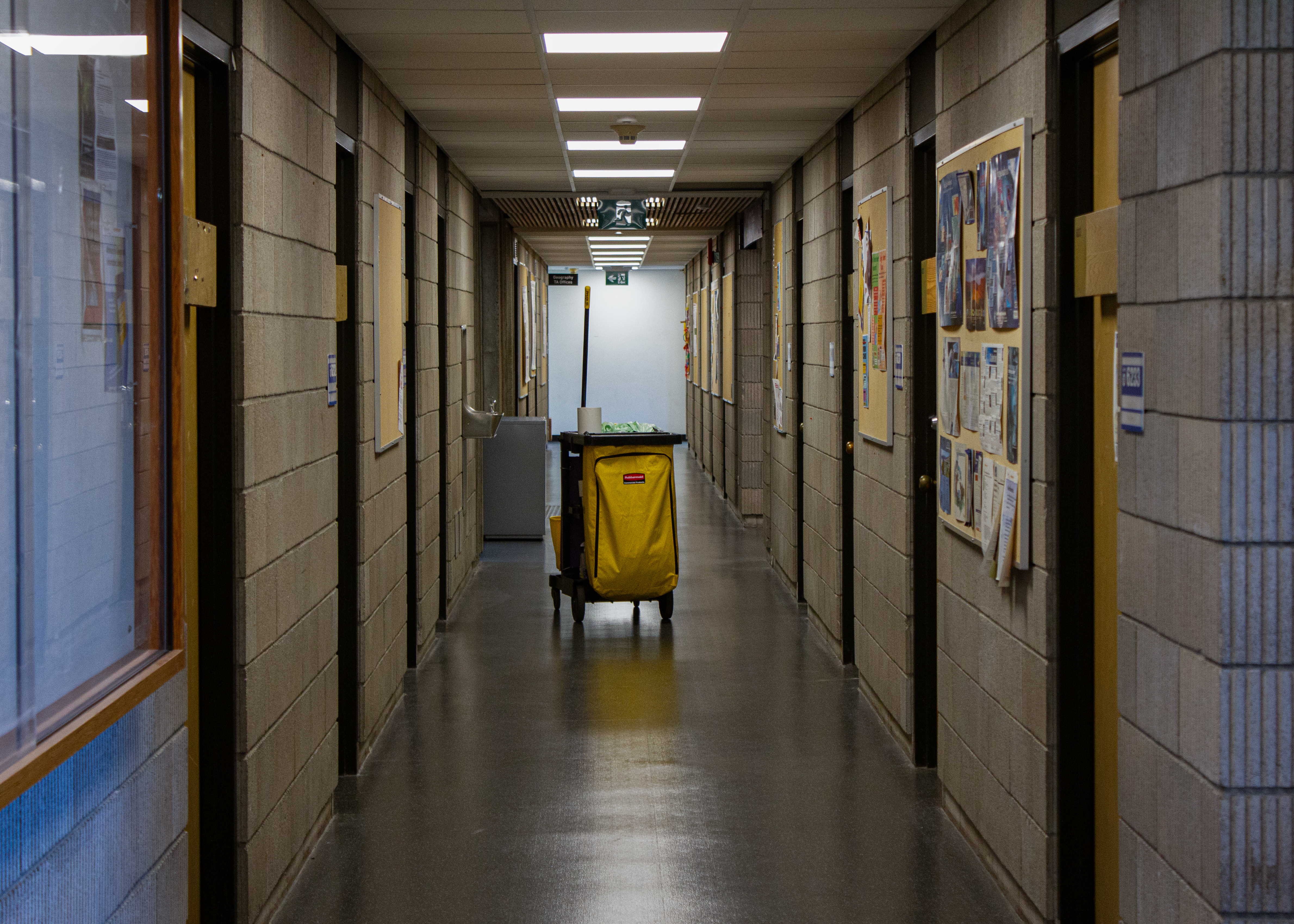
This is a photo of a lone cleaning equipment cart at the end of a hallway at SFU.
PHOTO: Issra Syed / The Peak

By: Hannah Fraser, News Editor (writer and interviewer), and Ashima Shukla, Staff Writer (interviewer and translator)

Since 2020, Contract Worker Justice (CWJ) @SFU has been leading the push for better working conditions at the university. 

At the heart of the coalition’s rallies, events, and research is a demand that SFU directly employ its cleaning staff, rather than outsourcing them to BEST Service Pros. CWJ argues that the current system leaves workers trapped in “low pay, weak benefits, a lack of job security, and exclusion from the SFU community.”

That fight for change took a turn on July 28, when cleaning worker Kulbir Kaila died during her shift at the Burnaby campus, leaving the community devastated. 

According to The Tyee, Kaila had already been struggling with leg and back pain and had to take on larger areas to clean as part of her daily work over the last two years. 

Many cleaning workers at SFU face the same reality — most are older than 50, some “have limited mobility and manage elbow, back, and leg pain,” and walk “up to 40,000 steps each shift, pushing equipment across campus on wheeled carts.”

SFU told The Tyee that Kaila’s passing “had nothing to do with the working environment.” 

However, all seven of Kaila’s co-workers that the publication interviewed said the workload, working conditions, and pre-existing health conditions “contributed to her death.” 

The Peak interviewed SDU+ to further investigate the concerns raised by The Tyee. Beyond organizing social justice events on campus, SDU+ said they had spoken with workers about their concerns.

The toll on cleaning staff

“According to the workers we’ve spoken with, Kaila’s death is directly linked to her working conditions,” said SDU+. “On the day of her death, she was assigned five areas to clean,” specifying that “a reasonable workload is one to two areas.” Her cause of death has not been made public.

Her case reflects wider concerns: for one, workers allegedly face verbal abuse and harassment. Multiple cleaning workers have been “on (often unpaid) leave due to physical injuries and mental stress, leading to hospitalization,” said SDU+. 

According to BC’s Employment Standard Act, workers should have a minimum of five days of paid sick leave. However, “if a union’s collective agreement meets or exceeds the requirements of the Employment Standards Act,” then “the collective agreement applies” instead. SDU+ did not specify how much paid or unpaid leave the workers were given. 

SDU+ also alleged the workers do not have access to the collective agreement of their union, CUPE 3338. The Peak reached out to CUPE 3338 to verify this claim, but they did not directly respond. WorkSafeBC is currently investigating individual claims. 

The Peak also spoke with two cleaning workers who were close to Kaila: Noorpreet and Ravneet. Their names have been changed to protect their identities. Noorpreet described how, with inflation and having to support family, she feels obligated to keep working despite harassment from management. 

“We feel very helpless. And we suffer a lot,” echoed Ravneet. 

The Tyee also noted that workers have “insufficient cleaning equipment to properly do their jobs.” SDU+ alleged that BEST “made repetitive attempts to keep workers quiet” about their concerns, including supervisors, team leads, and assistant managers surveilling them during shifts through photos and videos. Ravneet said that even during breaks, workers were being watched and recorded. 

SDU+ said recordings are “later used to justify wage theft,” with BEST claiming workers failed to do their jobs correctly. Workers are allegedly “docked pay for being one minute late or having the door closed on them to prevent them from punching in.” BC’s Employment Standards Act “prohibits an employer from withholding wages for any reason,” other than “deductions required by law, such as income tax, CPP, and EI.” The act also prohibits “an employee to cover any business costs.” 

Ravneet said Kaila “was always scared that someone might see her.”

“She (Kaila) wouldn’t even sit for two minutes to drink water — she was always afraid. She did her work properly. She was a hardworking woman.”

— Ravneet, cleaning worker

Chris Moore, CEO of BEST, expressed the company’s “deepest condolences” and told The Peak, “The well-being of our team is paramount, and this tragedy compels us to be better.” He said that BEST is “fully cooperating with ongoing investigations.” 

Moore refuted the allegations that the company operates “in a culture of fear,” stating, “our managers and executive team are here and always available to our team, without any repercussions or fear of termination.

“I want to reiterate that BEST takes the safety and security of all our team members as our number one priority,” he said. “We have listened to the concerns of our team members, and we commit ourselves to listening and responding.”

Moore stated that, “effective immediately,” BEST is “reviewing safety gear” and “protocols with a view to enhancing these with team safety and security in mind; reviewing workloads and schedules; reinforcing safety training, supervision, and hazard monitoring; and recasting clear, confidential channels for raising safety and well-being concerns.” He added that BEST will continue to work with “employee representatives, the union, and CWJ to engage in dialogue around enhancing safety and workplace culture.” 

Without a safety net

The workers’ union did not adequately support the workers, according to SDU+. They said that until Kaila’s death, “CUPE 3338 made no effort to listen to workers’ demands.” CUPE Local 3338 is a “non-profit union organization” representing “nearly 1,200 members in six bargaining units” across SFU. 

“Even after having meetings with Shaneza Bacchus (CUPE 3338 president), there was no improvement in working conditions,” said SDU+. The union, they added, had “no interest in fighting for working-class rights.” Bacchus allegedly “intentionally avoided speaking to workers and rarely had meetings,” making excuses such as “‘being on vacation’ and language barriers.” 

Since the prioritization of “bargaining for higher salaries” in 2023, SDU+ said CUPE has not brought up worker concerns to BEST. 

In The Tyee article, Bacchus said workers “were expected to do ‘surface level’ cleans,” but a language barrier with the workers — many of whom whose first language is not English — prevented that from being successfully communicated. SDU+ reported that management never told workers they were expected to do “surface-level” cleaning.

CUPE told The Peak that they are “actively working to address the concerns raised by members.” The union said they “have been raising the issue of contracted out cleaning (and food services) for several years.”

“We firmly believe that working conditions, equity concerns, and safety issues would improve significantly if SFU directly employed these workers.” CUPE acknowledged that “the loss of Kulbir Kaila is felt deeply in our community.”

The cost of contracting out

The Peak also interviewed Derek Sahota, campaign research assistant at CWJ and member representative at the Teaching Support Staff Union. “By contracting out, SFU both forces a race to the bottom for contractors, and also builds a buffer between them and the workers’ reality that means change is so hard to occur,” he said. SFU contracts out “to distance themselves from daily decisions that hurt workers and save money,” he added.

SFU stated that “maintaining safe and healthy learning and working environments is of paramount importance to the university. We are deeply saddened by this tragic passing. Our thoughts are with her family, friends and colleagues during this difficult time.”  

They added that “any questions about conditions for cleaning workers should be directed to their employer, BEST.”

“Cleaning is hard, demanding work that involves dangerous chemicals, and tens of thousands of steps per day, lifting, bending, no matter the temperature,” Sahota explained. 

“We know cleaners were being assigned more area to clean as SFU tried to cut costs. We know SFU had a $6.5 million surplus last year, more than enough to keep all the cleaners they laid off.” 

He also said SFU “would have had no way of knowing” within 24 hours that Kaila’s death “wasn’t their fault,” but this story was spread anyhow. SFU also allegedly claimed the workers “were always paired up,” but Sahota said “anyone who works on campus knows that wasn’t true.”

Paths forward

Sahota said SFU president Joy Johnson had “ghosted us on [worker] meetings when she came to power. 

“To put health first, these cleaners need to be part of the community and the president needs to actually step out of Strand Hall and directly hear from the workers and their union.” — Derek Sahota, campaign research assistant at Contract Worker Justice

Moving forward, Sahota said that “SFU needs to retract their statements, apologize to the whole community including the workers they exclude from SFU employment and take proactive steps to make the jobs better in coordination with their union.”

SDU+ said “the only solution is removal of the existing management, establishing democracy within the union, and forcing BEST to provide safe working conditions and reasonable workload to the workers.”

“Speaking up against your boss is always hard, and in order to speak up, workers need to know both that they’re protected, but more importantly, that there’s actually some hope that things will get better,” said Sahota.

“Every worker should return home after their shift.”

Activists discuss the intersection between Palestinian liberation and disability justice

0
This is a photo of four circular rows of people sitting and facing toward several panellists in a room.
PHOTO: Centre for Comparative Muslim Studies

By: Heidi Kwok, Staff Writer

Content warning: mentions of genocide, forced sterilization, and embodied and psychological trauma. 

On September 12 at the Harbour Centre, the Disability Justice Network of BC and the SFU Centre for Comparative Muslim Studies (CCMS) hosted a panel of five speakers who shared how the fight for Palestinian liberation is closely tied to disability justice. The Peak attended the event to learn more.

Adel Iskandar, an associate professor of global communication at SFU and director of the CCMS, opened the event by stressing the importance of “centring Palestine in the discussion around decolonization” and disability justice. “Israel has actively tried to render Palestine a non-existent entity, in every sense of the word, and to disable, dismember, and eventually dismantle and annihilate all that makes Palestinians human beings.”

Jasbir K. Puar, a distinguished faculty of arts professor at the Social Justice Institute at UBC, provided context for the talk, describing how the ongoing genocide exacerbated the existing amputation crisis in Gaza. According to Al Jazeera, an estimated 50,000 people already lived with disabilities in Gaza due to Israeli violence before October 7, 2023. Since then, the Gaza Health Ministry has recorded 4,800 cases of amputations, of which children made up 18% or 800 cases, “while about 24,000 of those injured required rehabilitation.” 

“Gaza is living through a mass debilitating, maiming, and disabling event on a historic scale.”

— Jasbir K. Puar, UBC professor in the faculty of arts

“with a health system near collapse, an engineered famine, almost no humanitarian aid, and forced evacuations,” said Puar. 

“It is genocide in slow motion. Palestinians in Gaza were living through genocide then, as they are now, through manufactured states of chronic debility and episodic maiming.” She referred to the first intifadah in 1987 — a large-scale uprising in the occupied Palestinian territories characterized by mass protests and harsh retaliation by Israeli forces, which wounded more than 130,000.

Bana, a Palestinian disability justice advocate, grounded discussions on the state of Palestinian political prisoners who have been maimed, amputated, and tortured in Israeli prisons “beyond recognition.” Lara Sheehi, a research fellow at the University of South Africa’s institute for social and health sciences, followed up by offering her perspective as a clinical psychologist: “Political prisoners are the heart of our struggle” and “have always intimately understood the targeting of bodies and the psyche as a central part of the working machine of settler colonialism.

“The psychic terrain being a place to be stolen as well,” she continued. “It’s the fact that oftentimes the entire industry of trauma wants to talk about trauma without ever linking it up to the system or the condition, like settler colonialism, that creates the trauma to begin with.”

Bana also shared the challenges of realizing disability justice when people with disabilities back home have been intentionally subjected to exclusion. “One thing about disableism” is that we choose “who to see and who to focus on.”

Sarah Jama, a community organizer and former member of provincial parliament for Hamilton Centre, drew parallels between the exclusionary systems that enable the systemic mistreatment of disabled people both here in Canada and in Palestine: “Because we live in a society that says disabled people, sick people, chronically ill people don’t deserve to live in public, we have to warehouse them and send them away, and that continues to kill people.” 

Calling to issues like Alberta’s Sexual Sterilization Act, in which Indigenous women were forcibly sterilized, Jama said these issues “cannot be removed from the question of, do Palestinians have the right to exist in their public space.”

For Siling, their project Crips for eSims for Gaza offers an accessible way for disabled folks to help Palestinians restore internet connectivity amid Israel’s targeting of vital telecommunications networks in Gaza. So far, over 160 volunteers from around the world have helped raise more than $3 million for eSims. 

Speaking on how disability relates to Palestine, another panellist named Siling said: “There is a clear connection between how disabled people are dehumanized, rendered ‘less than’ or ‘non-human,’ and the way that Palestinians are dehumanized. Everyone in Palestine is disabled or set to become disabled because the conditions of genocide are disabling.” 

Historic floods devastate communities in Punjab

0
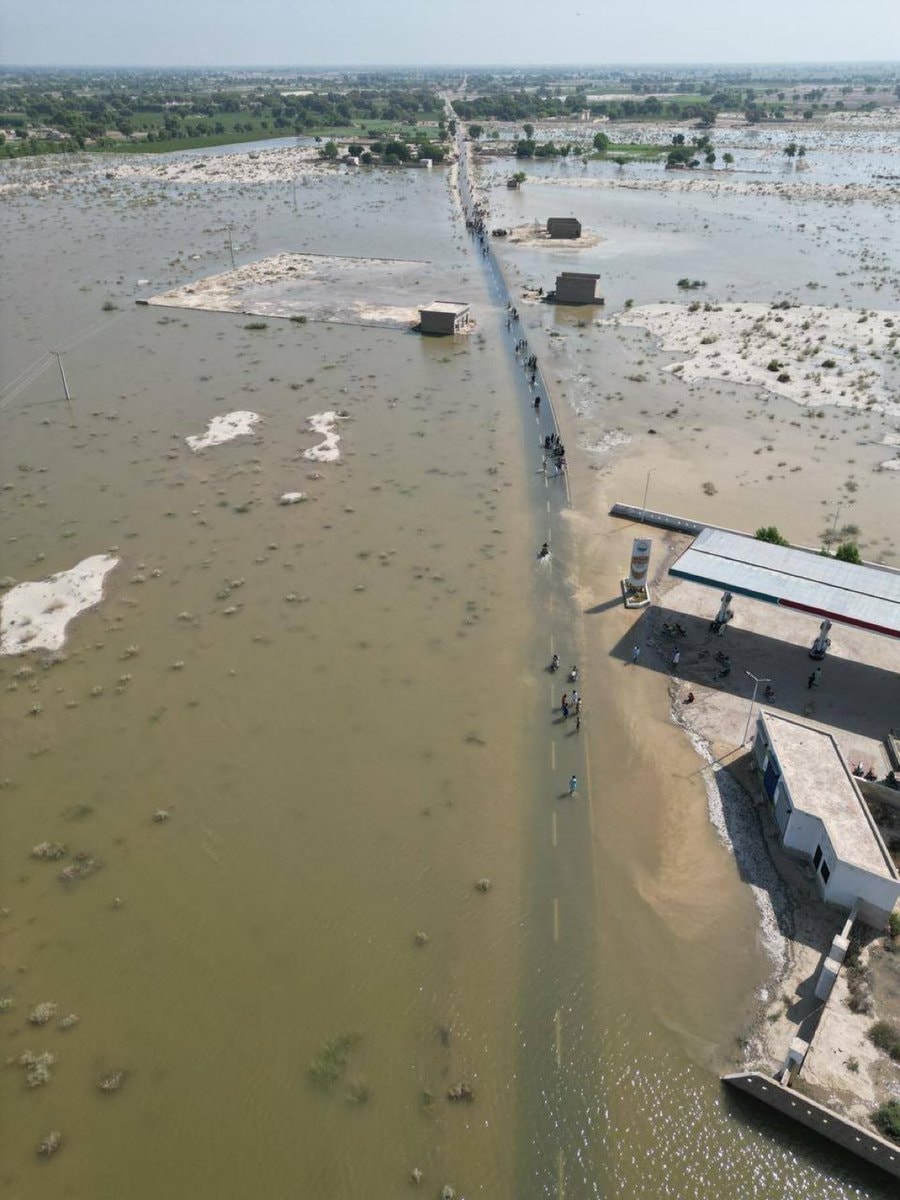
This is a birds-eye-view photo of flooding in Punjab, where farmland and a road are completely submerged in water, barely peaking through.
PHOTO: Courtesy of @rahmatyasir3 / Instagram

By: Heidi Kwok, Staff Writer

Content warning: mention of suicides.

The Indian state of Punjab has been facing severe flooding, the worst since 1988, due to intense monsoon rainfall. As of late June, an estimated 1,900 villages and 400,000 acres of farmland are submerged, and around 300,000 people remain under evacuation alerts. Since August, the disaster has displaced a total of 1.3 million people. 

The flooding of agricultural lands was further worsened by overflowing rivers and the Indian government’s decision to release water from overwhelmed dams. In Pakistan’s Punjab province, similar record floods have led to the loss of 118 lives, the displacement of 2.6 million people, and the destruction of 2.5 million acres of crops. The United Nations reported that nearly 1,000 lives have been lost.

The Peak spoke with Vijay Malhotra, president of the SFU Punjabi Student Association (PSA), and Jasnoor Mann, PSA marketing team member, to learn more about how the floods have affected their members. Both members are second-generation immigrants, and highlighted the importance of staying connected to the place where their roots lie through family.

According to Malhotra, Punjab is “the home of wheat and barley for India, and it’s a big part of our culture and our food that we eat throughout the year.

“People lost their houses, lost their livestock and livelihood, essentially. They were uprooted, and they don’t have anywhere to go,” he said. “When there’s no support from outside sources or friends and family because everybody’s dealing with their own specific situation, it’s hard to sit back and watch people that we know be affected by nature that we really can’t control in a sense.”

The irreversible damage to a farmer’s crops — the only source of livelihood for many in Punjab — has led to suicides in Mann’s family. She reflected on other families being torn apart with the passing of their sole breadwinner:

“When stuff like this happens, it’s a crisis occurring in a crisis. So it’s always like, how much more can Punjab take before it collapses?”

— Jasnoor Mann, marketing team member, SFU Punjabi Student Association

Mann cited the flood’s severity as being exacerbated by ongoing political unrest and the government’s mismanagement of river systems, including its failure to adequately address the public’s concerns about existing damage to flood infrastructure. She expressed her frustrations: “Our people [are] always at the end of the stick when it comes to damages.”

On how PSA members are coping during this tragedy while being away from home and family, Malhotra expressed: “It’s been a hard time, I know, especially for some of our team having family back home,” whether that be extended or immediate family, “because communication’s been disrupted through the floods.” 

Balancing academics and contacting family makes it “hard for some of our general members and executive members” to participate in the PSA “because they’re so emotionally drained from the event,” he said.

Despite this, both Malhotra and Mann pointed out the strong sense of community and mutual support among members during this challenging period. “The most important thing is getting people together and getting people to talk and make them feel like they’re not alone,” Mann expressed.

Due to limited news coverage on the floods, friends and family serve as the immediate source of updates for PSA members. “Through maintaining these connections, I’ve learned the value of community, the power of resilience, and the importance of showing up for one another — especially in times of crisis like the floods currently affecting the region,” said Malhotra. “It’s a reminder that even from across the world, we can stand in solidarity with our people and make a difference.” 

Both interviewees highlighted efforts to raise awareness outside Punjab, including working on a fundraiser for flood relief. The PSA has also been working with Vancouver-based radio station RED FM’s Radiathon and SAF International to process pledges.

If you wish to support flood survivors in Punjab, please consider donating funds to SAF International or Khalsa Aid.


How I escaped an R5 on its way to the recycling depot

0
IMAGE: Gudrun Wai-Gunnarsson / The Peak

By: Niveja Assalaarachchi, News Writer and Mason Mattu, Humour Editor

PLEASE listen to me. NEVER TAKE THE R5!!! I have had the most miserable experience on it recently, and I can only hope nobody faces the same horrors as I did. It was a normal Monday morning, until it wasn’t. More about that in a second. 

I made it up to the bus stop, saw the R5 coming, and couldn’t believe my eyes. In comes a run-down, rusting, barely functioning excuse of a vehicle (even more run-down, rusting, and barely functioning than usual!). I peered into the bus — the seat coverings were torn off, and worse of all, there were mice running around. I get that TransLink has no money, but are they really that broke?

Anyway, I got onto the bus. As per usual, I thought I’d get some readings done, but as a sleep-deprived king, keeping my eyes open was too difficult. As I drifted to sleep, the raggedy bus, full of fellow students, each lost in their own world, somehow kept pushing to campus. 

When I woke up, the bus was just past the lower bus loop. I thought, “Well, shit! My class is in West Mall Centre; it’s going to take me ages to get to lecture!” I consoled myself knowing that the upper bus loop existed. Plus, it couldn’t hurt to walk more (new school year, new me, right? I lied; it will definitely hurt me). The bus slowly approached the upper bus stop.

I began thinking about pulling the stop cord on the bus. I mean, you feel important when you push it. The only time I’ll stop a million-dollar vehicle! Nevertheless, I decided against pulling it because it was the last stop — and I’m always hard carrying people. It was their turn. Being the gentleman I am, I also let every single person off the bus before me so I could gain clout.

But to my horror, the bus closed the doors as I was about to get out. How rude?? The bus’ engine started rattling again . . . we were back on the road. No matter how many times I tried to yell at the bus driver or pound on the doors, I couldn’t leave. Suddenly, the LED screen that tells passengers what the next stop is started malfunctioning (again, more than usual!!!). The more the bus kept moving, the more restless I became. What if we were going to shred the bus? What if we were going to the bus recycling depot?? PLEASE, not the Return-It depot for buses, that place stinks. My nose will die. My body will be crunchy and smelly after being recycled with the bus.  I mean, that’s why the bus driver didn’t listen right, he clearly didn’t give a damn, he probably felt that this bus deserved to be scrapped. I was freaking out. I didn’t want to die on a bus — I had so much to live for! I started to think I should write a will on the back of my hand . . . but who even carries pens anymore? Welp! 

I was shaking and screaming — my daily “give a shit” energy began to reach its capacity. When I looked out the window, I could see a small road we were going on, surrounded by trees for miles — where the hell were we? Treehugger headquarters? Suddenly, I saw it — it was the lower bus loop again. I couldn’t believe we hadn’t really gone that far, even though that journey to hell felt like ages! The bus driver looked at me as my body was pressed up against the emergency exit window. He yelled at me to get lost. 

I don’t think I’ll ever understand what happened to me on that day. Maybe my lack of sleep keeps making me lose the plot — or maybe there’s some big conspiracy. Nevertheless, I learned a vital lesson that day, never take the R — (this message has self-destructed. The person who wrote this message is totally alive. Kevin from TransLink’s office was not here and in no way silenced or recycled the aforementioned student). 


A Squishmallow-cuddling partner is a no-go

0
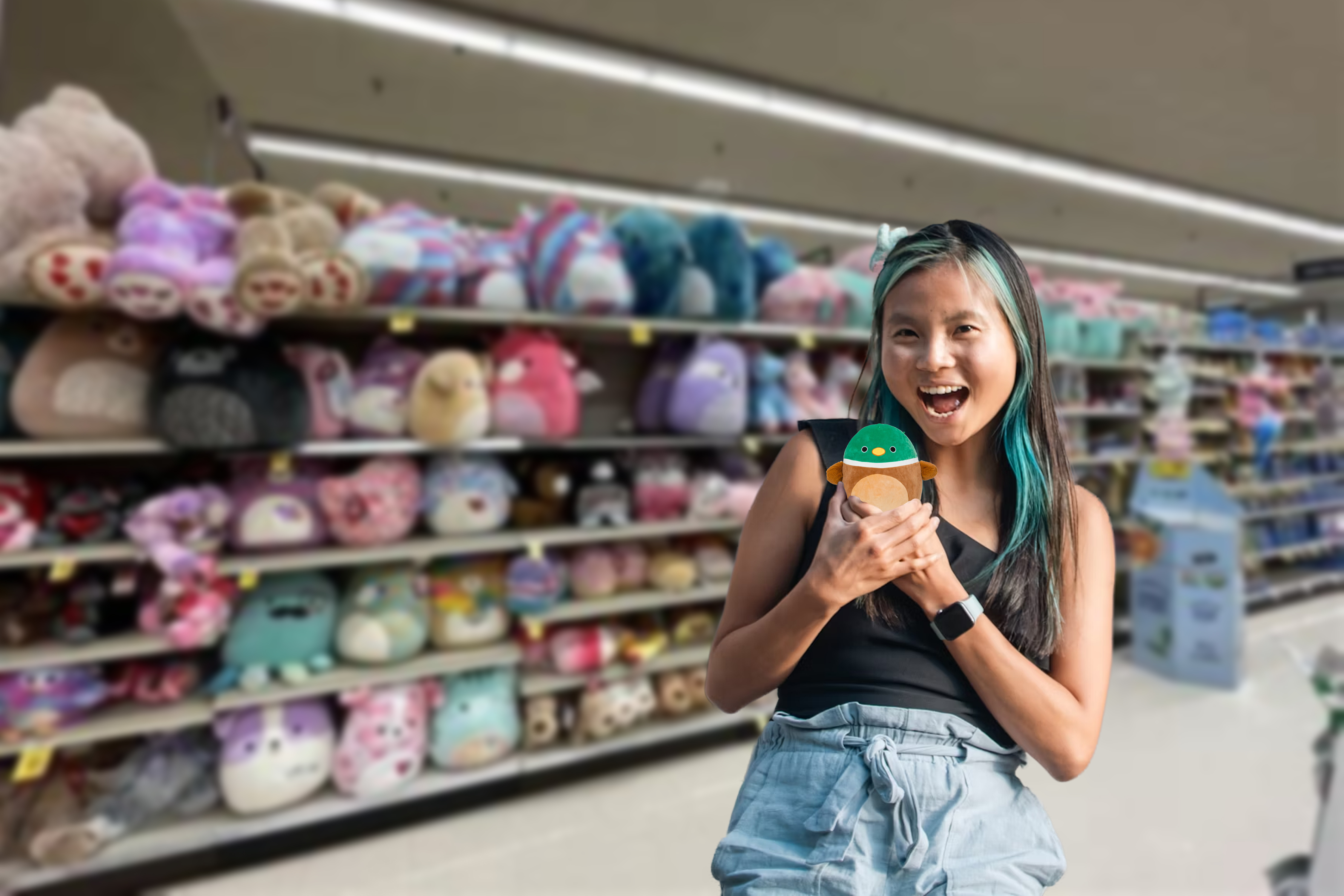
A woman standing in front of a whole bunch of Squishmallow, holding a Squishmallow.
PHOTO: Zoshua Colah / Unsplash IMAGE: Gudrun Wai-Gunnarsson / The Peak

By: Zainab Salam, Relationship Expert

Squishmallow stans may be ready to march with their plush armies after reading this article, but the truth is, owning a Squishmallow just might be a sign of the times. From what I’ve been witnessing, some people are buying in bulk! Just the other day, a reader had sent me a letter explaining that her partner of two years had purchased a Squishmallow bundle. Yes, a bundle if you’d believe it. This is where I believe Squishmallow-loving people are actually creating a Squishmallow cult. I wonder if they line their Squishmallows in a circle and light a candle in the middle, while chanting creepy songs. Do the Squishmallows come to life afterwards, or what? 

Imagine dating said person. You walk into their apartment, ready to Netflix and Chill, and suddenly you see a bunch of polyester blobs staring right at you. Fast fashion? More like fast Squishmallows.   

What’s even worse is thinking of what it would be like once you’re in a relationship with them. Now picture this: as the new human in the room (yes, I said human), you try to assert yourself. You lock eyes with your partner’s nearest Squishmallow, willing it back down, to acknowledge your presence. Maybe, even attempt to establish turf. But no — those soft, unblinking eyes show no fear, because they’re not alive, but that’s a minor detail at this point. The worst part: your partner is oblivious to the fact that you’re losing this war. 

I bet this shit carries into the bedroom. Think about waking up in the morning, to your partner, cuddling a giant ass squishmallow after they told you that it’s too hot to be cuddling with YOU. Um . . . yeah, no thanks! I deserve someone who will treat ME like a Squishmallow. 

Financially? It’s a nightmare. Squishmallows aren’t investments; they’re made out of cheap fabric. In 10 years, when the plush bubble bursts, your partner will be left with a worthless collection of torn apart fabric and a mess of polyester fibre that doesn’t seem to get off the sofa when you clean it. Try explaining that to guests. 

And emotionally? Forget it. You’re competing for love and attention with a squishy pillow. Is anyone worth it? Tell me? Is anyone? Is anyone that great that you tolerate such behaviour? You can’t change them. They won’t ever change.  

Maybe I should turn tables. Should you lose all self-respect? Should you be stuck in a, clearly, loveless relationship? Where your partner is clearly in love with a Squishmallow? Does a Squishmallow deserve more love than you do? 

Look, I’m not saying Squishmallows are evil. And I’m not saying you shouldn’t be with a Squishmallow-loving person. No, wait . . . I am saying that — what I’m trying to say is that people who love Squishmallows are a red flag. A big, giant, humongous, gigantic, colossal, fluffy, squishy, cute, red flag. A flag at full mast. Waving at all of us, communicating that we need to stay away. 

I hope my advice helps you today. Next time we talk, I don’t want to see you tolerate such Squashmallow nonsense. In my club, we don’t tolerate red flags, we block them!


The Peak’s fall fashion choices

0
ILLUSTRATION: Sonya Janeshewski / The Peak

By: Noeka Nimmervoll, Staff Writer

Hey divas. It’s Noeka, your favourite fashion girlie at The Peak. I’m here to make sure that you make the most out of the fall, fashion-wise. The rain, the gloom, the other things, they make me so ready to strut around in cute little outfits. So, here are four hot outfit inspos for your most fab fall yet. Get your Pinterest boards ready!! <3

  1. I’ve been drinking hot lattes again — ‘cause it’s fall — which is so cute for me. The other day, I spilled my latte on my favourite white shirt! It was tragic — but it got me thinking. Why waste a good white shirt because of a stain? Lean into it, am I right? That’s like fashion 101. So, divas, that’s the first outfit! Put on your cutest white outfit, head to toe. Do your hair like you normally do, and buy a hot coffee! Then, spill it all on your head. Actually, you might want to wait for it to cool down slightly first. Beauty does not need to be pain. Babes, you will look SO HOT rolling into class with wet, sticky hair, and such a dramatic stain on your whole outfit. Everyone will look at you. Everyone will be thinking, “Who ARE they?” A fashion diva, duh. 
  2. Think pumpkins. Think maze fields. Think tractors. That’s right, our outfit here is . . . Farmer! But not, like, sexy farmer. Like, dirty, muddy overalls, boots covered in something suspicious, straw hat that’s been passed down through several generations, flannel shirt that shouldn’t see the light of day, kind of farmer. You have to lean into this look and get with it, otherwise you won’t pull it off, babes! Let’s be real; authenticity is so in right now. Everyone will gag, for one reason or another.
  3. Our next outfit is an avant-garde carnivorous bat. It’s practically spooky season! But not your typical bat — everyone and their grandma has seen a bat before. Let’s take it to the next level. I’m talking leather boots with studs. Black tights. Use a super flowy black skirt as a TOP and wear it like a poncho. The effect is gorg. Wear a black choker around your neck. Then, wear a black fringe skirt, and put on a big, grungy, black belt. Then, go to your local taxidermy shop and get a fish, frog, and mouse. Loop them through the holes of your belt so they hang nicely and move with your fringe skirt. Oh, but Noeka, why do I need dead animals on my skirt?! Because that’s what carnivorous bats eat, duh. I said it was avant-garde. Accessorize as you wish, just make sure to be bold.
  4. Our final fit for this inspo is for the sleepy guys. Do you ever have those fall days when you wish you could stay in bed? I made this outfit for you, babes! It turns out that pillows are actually really easy to wear when you have long necklaces. Just put on all of your necklaces, stuff your pillow in the space behind it, and have a cozy place to rest everywhere you go. Tease your hair and use hairspray to stick it on the pillow vertically, so that it’s like an optical illusion. People will see the pillow standing up, and see your hair spread all over it, and they’ll be like, “Oh my god, are they sleepwalking???” Hahaha — but you’re just being a diva! Bonus points if you have an Ebeneezer Scrooge pajama set

Well, that’s all for right now, divas. I’ll see you at school with some of these looks — not me, just you! 

XOXO,

Noeka

Fundraiser variety show supports DULF’s fight for safer supply

0

By:  Ashima Shukla, Staff Writer

On September 19, Under the Table poetry collective will host a fundraiser variety show at Wildfires Bookshop for Drug User Liberation Front (DULF). The event will feature an eclectic mix of poetry, short films, drag, burlesque, and music, alongside local artists selling prints, zines, cassettes, vinyls, and more. The goal is urgent and direct: to raise funds for DULF’s mounting legal fees as its members face prosecution for their life-saving harm reduction work.  

“Everybody in the collective is queer and disabled,” explains organizer and curator Divya Kaur. “Knowing the overlap between disabled experiences and drug user experiences is a big part of why we wanted to do this.” The group, active for over two years, has consistently centred on accessibility and marginalized voices — a part of that is hosting COVID-safer mask-mandatory events for queer and disabled people. 

“I don’t know anybody who wants to dismantle the way that the medical industrial complex looks currently and not care about prison abolition,” Kaur adds.

The lineup is intentionally wide-ranging, bringing together emerging and established artists from within and outside of Under the Table’s queer and disabled community. “It’s definitely a stacked lineup, and I’m really grateful for everybody who is contributing their art,” Kaur says. “We’ll be very fortunate to hear from people who have lived experience of being on the front lines.” 

This emphasis on centring lived experiences is also a core principle for DULF. As Shafira Vidyamaharani, an SFU  graduate student researching harm reduction explains, DULF was co-founded by Jeremy Kalicum and Eris Nyx in 2020. For over a year, they have operated their Compassion Club and Fulfilment Centre in Vancouverʼs Downtown Eastside, providing community-led, non-medicalized access to a regulated drug supply. Their model is simple yet radical, offering tested substances in tamper-proof packaging with clearly labelled contents, eliminating the uncertainty and toxicity of the street supply. Their spaces include injection booths, harm reduction supplies, and peer support. 

The results were striking: “not one overdose was known to be caused by DULF’s supply” Vidyamaharani says. Yet in 2021, police raids shut the initiative down. Both founders now face trafficking charges under the Controlled Drugs and Substances Act, carrying a maximum sentence of life imprisonment. 

As DULF’s legal team prepares for trial, the organization hopes to raise $350,000 by October 1 to cover the costs. “DULF’s lawyers are working at a fraction of their normal rates, but because of the time required the cost will still be very high,” Vidyamaharani explains. Community fundraisers like this variety show are a vital piece in sustaining this fight. 

Storytelling is a powerful tool for building empathy and giving us a look into peoples’ lived experience through art,” Kaur says. 

“These kinds of events bring “a little bit of joy [ . . . ] put some fuel in folks’ tanks to have the drive to do some of the mutual aid and community care work that is needed.”

– Divya Kaur, organizer and curator of the Fundraiser Variety Show

Between performances, artworks for sale, and opportunities to donate directly, the evening will channel the power of grassroots initiatives. As Kaur puts it, “Hopefully people will bug their more financially privileged friends into sending some mutual aid money.”

For those who cannot attend, DULF also welcomes donations via e-transfer or through their Sustainer Donor Program. Another fundraiser organized by co-founder, Eris Nyx will follow on September 20, featuring her performance alongside DJ/producer Z.D.B.T. as Lemurian Time Warriors. 

Indie game recommendations from a staff writer

0
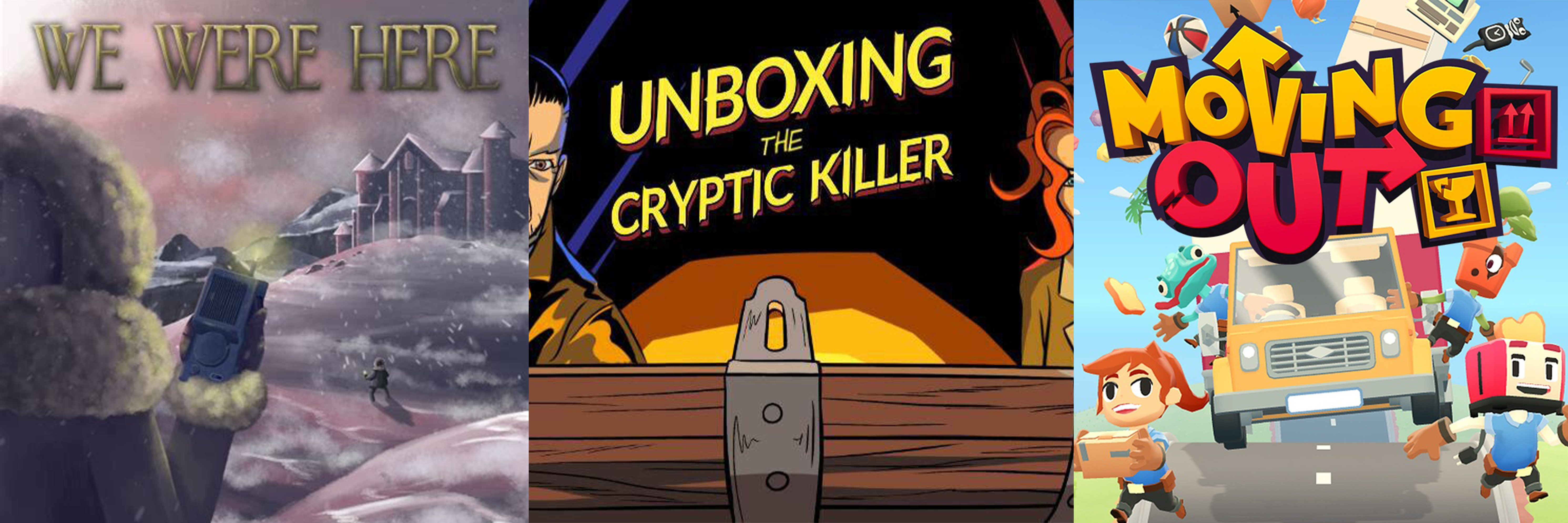
IMAGES: Courtesy of Total Mayhem Games (We Were Here), Eleven Puzzles (Unboxing the Cryptic Killer), and DevM Games and SMG Studio (Moving Out)

By: Heidi Kwok, Staff Writer

Co-operative or multiplayer games are arguably the best way to unwind with friends and family. Indie favourites like Human Fall Flat and Overcooked 2 are among my absolute essentials due to their unique gameplay and light-hearted tone. As a casual gamer, I found it difficult to locate co-op games that are both free (or at least affordable) and playable without a heavy-duty computer setup. But worry not — I’ve spent hours scouring Steam and the Xbox game store for fun accessible games so you don’t have to. Here are three hidden gems I highly recommend if you’re a fan of puzzle-solving and engaging in heated shouting matches with fellow players. 

We Were Here

Total Mayhem Games

Windows 10, MacOS 11, Steam, Xbox One, Xbox Series X and Series S, PlayStation 4, PlayStation 5

Free (on Steam)

Armed with only a walkie-talkie and your wits, you and your partner are separated inside a spooky medieval castle in the middle of a frozen wasteland. To navigate sinister rooms and hallways, you must work together using impeccable teamwork and communication skills to solve the mysteries of the castle and escape. My gameplay highlight was being trapped in the outdoor courtyard and forced to rearrange a chessboard according to the other player’s instructions to avoid a ghastly fate as a frozen popsicle. We Were Here is the first (and only free installment) in a series of narratively similar standalone puzzle adventure games. 

Unboxing the Cryptic Killer

Eleven Puzzles

Windows 7, MacOS 10.13, Android, Google Play

$7.79 (on Steam)

A game that feels like an escape room but without the exorbitant entrance fees, Unboxing the Cryptic Killer is a campy crime-thriller developed by the Polish indie game studio Eleven Puzzles. Also verbal communication-based, players adopt the roles of two detectives to figure out interactive puzzles (including defusing a bomb, playing an arcade game within the game, and cracking the contemporary semaphore flag system — sounds exciting, right?) in the hunt for a serial killer linked to multiple unsolved cold cases. The much shorter prequel, Unsolved Case, is available for free for those who’d like to test out the game style before committing.

Moving Out

SMG Studio and DevM Games

Windows 7 SP1 or 10, Nintendo Switch, PlayStation 4, Xbox One, Amazon Luna

$28.99 (on Steam)

Relocating and moving to a new home in itself is a stressful enough ordeal. With Moving Out, you get the privilege of paying $28.99 (regularly discounted) to pose as a professional mover, or as the game calls it: a certified Furniture Arrangement Relocation Technician (FART). While not cheap, the steeper price tag is worth it if you split it between the maximum supported four players. This physics-defying game lets players fling an entire five-seater couch down a balcony, shatter bedroom windows to fit through and transport oversized furniture, and gather up a questionable amount of flamingo lawn ornaments from someone’s yard, all without the consequential cost of back pain. Tasks must be accomplished under a tight time limit, so expect a lot of yelling and dangerously elevated blood pressure levels while attempting to traverse challenges that consistently increase in absurdity.

Brave Hearts: A backyard production

0
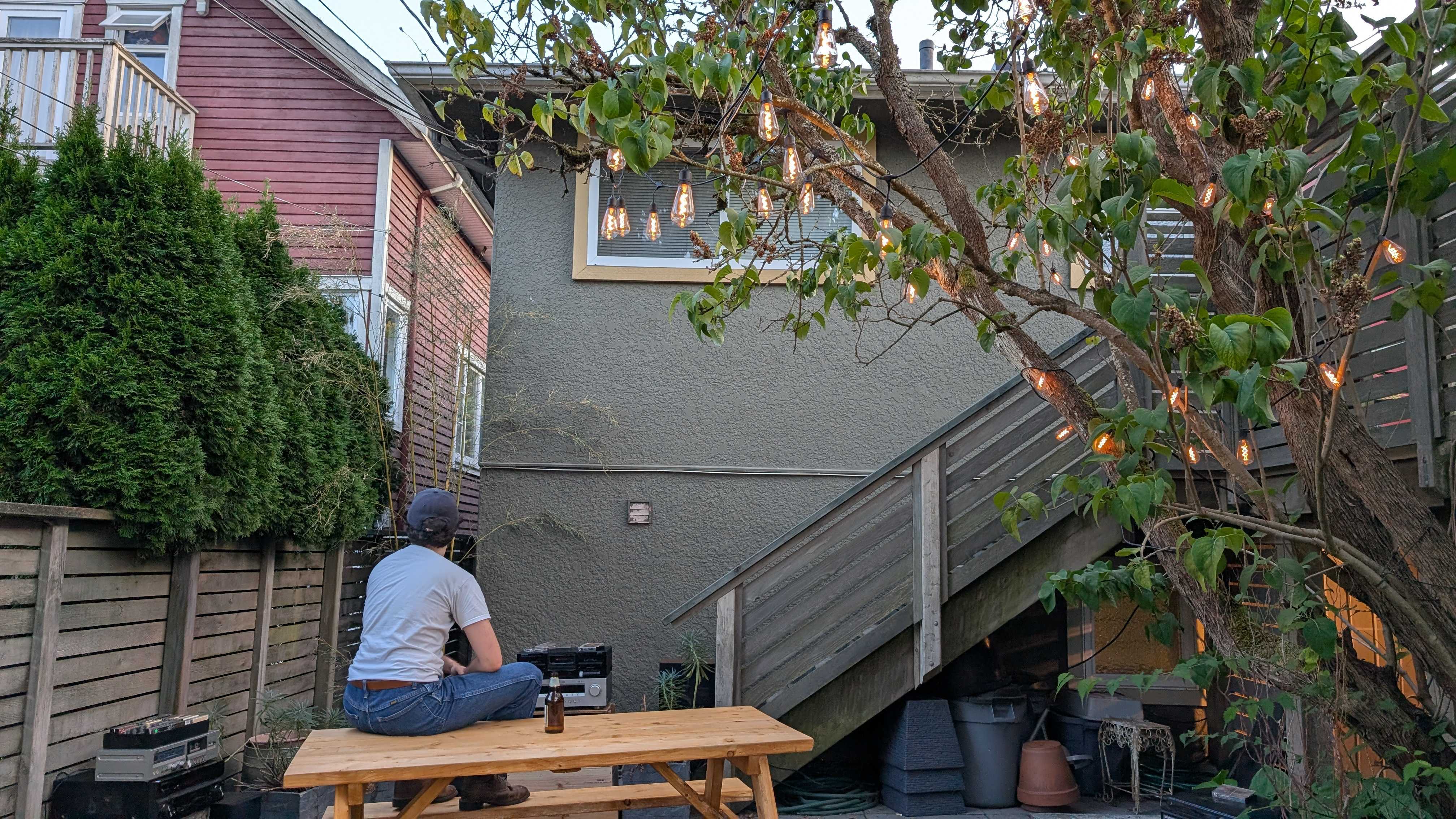
PHOTO: Noeka Nimmervoll / The Peak

By: Noeka Nimmervoll, Staff Writer

Content warning: Mentions of assault and AIDS

A production of Brave Hearts, a one-act, two-person play, ran from September 4 to 6 and September 11 to 13 in an East Van backyard. Brave Hearts was written by Harry S. Rintoul, a Manitoba-raised playwright. It portrays the dynamic between two gay men, GW and Rafe, in the Prairies, at the height of the HIV/AIDS crisis. The play was directed by Elio Zarrillo, starring Nico Pante as GW and Matthew Paris-Irvine as Rafe. Featuring a simple setup of a picnic table in the backyard of supportive parents, it shares a fiery snapshot of the lives of the two men. The Peak attended one of the performances and connected with Pante to learn more about the project.

The audience entered through an alley entranceway to a traditional backyard with twinkling lights in the trees, and sat in foldable chairs that faced a simple set: a picnic table, cassette players, and old beer bottles strewn around. The play begins intensely as Rafe storms into the backyard after punching a partygoer in the face for getting on his nerves. Trapped by the situation, he confers, rather unwillingly, with the even-tempered GW, who endlessly pokes him with questions until he opens up. The story of Rafe’s life as a closeted gay man, who has recurring nightmares that he will die alone with AIDS, induces GW’s sympathy, despite Rafe’s belligerent behaviour. The characters’ personalities seem to have nothing in common: yet, they are two gay men grappling with loneliness in a difficult time. By the end of the play, everyone’s heart is broken by their undeniable and fraught connection.

Pante reflects that they treated this piece as a “queer period piece,” in how it reflected a “really clear capsulation of queer life at this moment in this place.” In 1991, the year the play debuted, people who tested positive for HIV/AIDS widely anticipated death, with the diagnosed having a median survival timeline of 20 months. “It was exactly the moment that this was all happening, which is why I think [the play] stays so resonant,” shared Pante. None of the medicines currently recommended by the FDA to treat HIV/AIDS had been approved in 1991. The play featured loneliness, anger, and identity struggles through strong yet subtle dialogue between the actors. “What I feel is really beautiful and interesting about the script is that it doesn’t shy away from a lot of the difficult and loud emotions that come with a lot of repression or loneliness or isolation,” said Pante. 

Hosting the show in a backyard had two key motives: staying true to the story and minimizing costs. Pante explained, “We haven’t received any funding to date, [so] we were like, OK, what can we make work?” It didn’t come without its own challenges — at the height of an intensely emotional scene, a neighbour interrupted the production with a noise complaint. Impressively, the team dealt with the conflict with grace and the actors jumped back into their performance. 

A theater isn’t a place, it’s a people. “We don’t want people to feel like they have to know something in order to go to the theater . . . We just wanted to tell a story and to connect with a group of people through emotion and human experience,” elaborated Pante.

“It’s a really special thing of, you all are in a space together, and you decide to believe the story that you’re watching” 

— Nico Pante, actor and producer

“Yeah, GW and Rafe might not actually exist, the party is not actually happening at that moment, but you can’t deny that something is really happening in front of you.” And this was true; there was something real — and magical — that happened in that backyard. The story served as a reminder to some of the challenges faced by queer people in our very recent history. The complexities of the characters on stage that are akin to the complexities of the people of that time. The brilliant acting immersed me to the point of belief, where I developed an understanding of GW and a judgement of Rafe. Brave Hearts will be a play that I reflect on for years to come.