Home Blog Page 1179

How to plan the perfect road trip

0

Desert RoadSummertime, and the livin’s easy. I mean sure, if you’re reading this, that probably means you’re taking at least one course this summer, but that doesn’t mean you can’t take a little time off here and there! And what better way to enjoy the sunshine than grabbing a couple of friends, a case of beer, a mix CD and a map, and hitting the road?

Road trips may be a little different in the 21st century than they were when Kerouac and co. were On the Road, but that doesn’t mean they aren’t still a great way to get in touch with your roots and learn about the world around you — not to mention the people in the seats next to you.

To make it easier to plan your perfect road trip, The Peak has compiled a foolproof guide to the dos and don’ts of road travel. All you have to do is hit the road.

The Plan

Schedule

I know, I know. But hey, would you rather spend a little time arguing over time constraints now, or a lot of time arguing later? Keep your schedule loose, and make sure to budget extra time for traffic, food and bathroom breaks, hotels (preferably ones with generous cancellation policies), and the occasional night on the town. The key is to craft a schedule that everyone can agree on. It’s easier said than done, but when it comes down to it, a reliable schedule will end up leaving you enough room for some real spontaneity, and isn’t that what road trips are really all about?

Budget 

You’ll thank me for this. Have a fixed price range for each day, split the gas price evenly down the middle, and insist that everyone pays for their own food and drink unless otherwise stated. The quicker you get this out of the way, the more awkwardness you’ll avoid on the road. If you’re having trouble calculating just how much meals will cost, give yourself 10 dollars for breakfast and lunch and 15 for dinner every day, and you’ll find you almost always have a little extra to play with.

Paper map

Like, OMG, so 2003! Paper maps seem about as anachronistic as, well, paper, but don’t be fooled: as wonderful as Google Maps can be, there’s nothing like tracking just where you’re going on an actual, tangible piece of paper right in front of you. You’ll find that using a paper map will actually make your trip seem a lot more memorable and freeing, and despite our interconnected world, being able to read a map and figure out where you are is a valuable and underrated skill. In fact, try and forget about your phones when you can — you’re taking a trip to escape the routine of your daily life, not to be nagged by it every five seconds.

Tune up your car

Whether you’re driving a slick new SUV or your grandpa’s old station wagon, it’s always a good idea to get your car checked out before setting off on any trip longer than a few hours. Get a service and oil change about a week before heading out — it’ll usually cost anywhere between 25 and 50 bucks, but it’s well worth the price and effort. Also, make sure you’ve got insurance, and winter tires if you need them.

Yelp 

Out of all my false idols, Yelp is the one I most fervently worship. This app has almost never let me down, and if you’ve never used it before, you’re in for a treat. Basically, Yelp is a database where you can check out which restaurants, bars, grocery stores, thrift shops, theatres, cafes, etcetera are the favourites of both locals and travellers like yourselves. For each place you’re going, use Yelp to find a few spots to stop to ensure that you’re getting the best that town, city, village, truckstop, or whatever has to offer.

Health & Safety

Pack a good quality first aid kit just in case, hide a spare set of keys and a credit card in an easy to remember place, and always lock your doors. Make sure you have a game plan in case of the unforeseen: getting lost, getting in a crash, having any sort of medical emergency, fire, that sort of thing. Chances are it’ll go off without a hitch, but you can never be too careful with this sort of thing. Be prepared. (That means bringing extra underwear, too.)

Destinations

Seattle

Welcome to the land of grunge and coffee. If you’re a fan of either, I suggest making a stop here. Seattle’s only about three hours away, and there’s plenty to do there: you can visit the first Starbucks ever, check out the Market (which is a little like Granville Island, but more fish), browse the city’s impressive record stores, or visit the Space Needle. There’s also the aforementioned coffee, and espresso addicts will find plenty to love here — there’s a cafe on every block, and almost all of them are worth checking out.

Banff

If you’re doing a road trip through the Kootenays — one of the most naturally beautiful regions in BC — you’ve got to make sure to stop at the right towns. In between the mountain ranges and picturesque scenery, stop in Trail and Golden, two of the prettiest towns on the path. If you really want to see the whole nine yards, finish the trip in Banff, which is actually Alberta (and in the Rockies, not the Kootenays) but happens to be one of the most visually stunning places in all of Canada. If you’re lucky, you might even catch a glimpse of the northern lights, which are most likely to appear near the Spring and Fall equinoxes.

Tofino

Take the car on the ferry to Vancouver Island, and get ready to explore the funky oasis of culture and nature that’s hanging out just a little to the west of our city. The trip to Tofino can pretty much go down in any shape or size you want. Stop by Victoria, Nanaimo, or the Wild Pacific Trail in Ucluelet, all on your way to Tofino’s beautiful parks and beaches. Especially on Long Beach, you’ll feel like you’re in one of those pitch perfect photos they put on postcards.

Calgary

Don’t go to Calgary.

Edmonton

Calgary’s cooler older brother, Edmonton is actually a surprisingly chill place to be, figuratively and literally. Seriously, bring a jacket. The city center, small though it is, is full of quality munchies and the sort of oaky craft beer Western Canada has become famous for, and there’s even a couple of karaoke bars for you to give your pipes a workout. Make sure to take a detour to West Edmonton Mall, which is pretty much the only place in the world where you can ride a rollercoaster, take a dip in a pool, go ice skating and buy a fur coat without ever stepping outside.

Portland

Do you love craft beer? Comics? Fancy donuts? Why are you still reading this, then? Go to Portland! About six hours away by car, Portland is more than just the hipster haven you’ve seen on Portlandia — it’s also got an array of surprisingly high class eateries, a kickass bookstore named Powell’s that takes up an entire city block (and then some), and more delicious beer than you can shake a fist at. It’s also an ideal concert destination, so try to plan your trip in time to see a show, and make sure to stop by a food truck on your way out for some legendary Portlandian street eats.

Alaska

If you’re hot blooded (check it and see), consider looking northward to that weird chunk of the United States that everyone forgets is just above us. The Alaska Highway is among the greenest and prettiest you’re likely to travel, but it’s also one of the longest, and a trip from Burnaby Mountain to Delta Junction will take you just under 48 hours altogether. Still, it’s worth it to get a feel for the size and scope of our province, and to pull a Christopher McCandless from Into the Wild by getting in touch with your natural roots (hopefully without ending up the way he did). For laughs, make sure to sing the theme song to the TV series Dawson’s Creek when first hitting the highway, which begins in the town of — you guessed it — Dawson Creek, BC.

Music & Snacks

The radio

Avoid if possible. Chances are, you’re going to have at least one other person riding along with you, and unless you’re clones, you’re going to disagree over which station to play. Plus, I don’t want to play this card, but most music on the radio isn’t that great, anyway — if you’re planning a trip longer than three or four hours, expect to hear the exact same song about 20 or 30 times. If you insist, make sure to change the station about once every 15 or 20 minutes, to avoid a potential argument.

CDs

Permissible, as long as everyone gets to bring some. CDs help avoid the interminable commercial breaks of FM radio, and make sure that everyone gets to pick the music they love best. Of course, the flipside here is that each person gets to listen to their music for anywhere between 30 and 60 minutes straight, which doesn’t exactly leave much wiggle room for anyone else.

Mixtapes

Essential. What better way to make everyone happy than to mix up all their music into one big grab bag? Make a series of road trip mixes, and make sure everyone’s tastes are represented evenly. This might mean some weird mash ups — N.W.A. and Taylor Swift, Animal Collective and the Dixie Chicks — but it’s a whole lot better than having one passenger dominate the tunes. And hey, maybe you’ll find that Belle & Sebastian and Slayer actually complement each other really well.

Alcohol

A must. Beer is preferable, especially if it’s cheap. Wine is a little fancy for a road trip, but if you’re looking to vacation through California’s Napa Valley, it might turn out to be just what the doctor ordered. Spirits like vodka and rum are inexpensive and easy to mix, but be careful of going overboard. Trust me, nothing is worse than waking up at six in the morning to drive on the highway with a Hemingway-style hangover. Of course, if you’re driving, stay away from the sauce, and don’t keep open bottles or cans in the car while it’s moving.

Water

The human adult is about 60 per cent water, so you’ll probably want to bring along enough bottles to keep that ratio intact. Bottles are good since they’re easy to refill and easy to bring along with you, and you’ll be thanking me when it hits 25 degrees and you’ve been on the road for hours and all you can think about is how very, very thirsty you are. We all need water to live. You’d do best not to forget it.

Snacks

Obviously! Use your own discretion here — I recommend homemade trail mix, which is compulsively munchable yet mostly healthy, plus a little bit of dollar store candy for those late night driving sprees. Try to have a nice mix of the good for you and the not so much. Streetside produce markets can be a nice way to add a little healthy eating to a buffet of empty calories. If not, you may not be able to sustain the energy necessary to make the trip.

Who to Bring

Friends

Hell yeah. The ideal candidates for road trips — you’re close enough to be able to tolerate them, but your relationship is loose enough to call them on their bullshit and have them do the same for you. Plus, let’s be honest: There’s going to be some farting in the car. If you can’t fart in front of your friends, who can you fart in front of? Friends promise fun and freedom from the hangups of the everyday, but enough companionship to make it through the inevitable bouts of highway hypnosis and existential quarter-life crises that go along with the open road.

Family

Maybe. On the one hand, you’re clearly used to them and therefore more able to deal with them, but on the other, they might be the reason you’re looking to escape in the first place. Don’t be afraid to pick and choose your passengers: maybe you’ll want to take your sister and leave your cousin, and hey, that’s okay.

Acquaintances

Only in special cases. There’s no better way to find out if you’re compatible with someone you don’t know very well than to take a road trip with them, but once you’re on the road, well, you’re stuck with ‘em. If you know you’ll be forced to spend a lot of time with them anyway — say, if they’re co-workers or future in-laws — you might as well test the waters, but think it over before choosing anyone you don’t know and don’t particularly want to know.

Significant others

This one is a toughie. If your sweetie is compatible with your friends, go for it. If you’re planning a couples trip with just you and them, or with a fellow couple, s’all good. But if you think your better half and your buddies won’t mix, it’s not worth the headache, for any of you. Sometimes it helps to be able to have a little time apart from your significant other, and to keep things platonic in the vehicle. You know what I mean.

Yourself

Hey, after all is said and done, a solo trip can be a nice break from the hustle and bustle of an overstuffed social life. No arguments over music, no backseat driving, no confusion over where you’re going or how long you’ll stay there. You make up the rules as you go along, and the only person you’ve got to answer to is yourself. The world is your oyster — now get out there and explore!

Drop the polar bear mascots

0

CKNY - Polar bear - michael bamford Flikr

Images and symbols are powerful tools. We often recall a single, powerful image when thinking of a major historic event: the end of WWII, the collapse of the Berlin Wall, the end of segregation. Imagery has the ability to represent purpose, significance, and unity. It is unfortunate, though, that climate change has come to be represented by polar bears on melting icebergs.

The use of polar bears and icebergs has perpetuated the idea that climate change is an event that will harm wildlife and nature – not humans. It has fuelled the belief that for each pipeline we approve and for each coal plant we construct, a whale or bear population will face substantial losses.

While true, this has had the disastrous result of altering the reality of climate change from a human issue to one of wildlife. It has created an apparent divide in the public eye: someone who supports action on climate change is an environmentalist or conservationist. In reality, most of us are humanists.

While rising greenhouse gas emissions that drive climate change will force many species to the brink of extinction, for most of us the primary concern is humanity. We fear the economic and social impacts resulting from climate change, both now and in the future. We worry about the one to two metres of sea level rise expected by 2100, and how that will put us at risk in the developed world and millions more in extreme danger in developing nations.

We are concerned about severe freshwater shortages and their crippling effects on agricultural production and the provision of drinking water for millions worldwide. We see the looming famines, and fear the amplified rates of malnutrition and starvation that will further plague those already struggling.

We are uneasy about the prospect of increasingly severe and frequent storms, which will put human lives at risk and generate costly damages. We are concerned about heat waves, and the impacts they can have for those without access to cooling systems.

Most alarming are the estimates about the cost of climate change. The National Roundtable on the Environment and the Economy conservatively estimates climate change will cost Canada $5 billion per year by 2020, and may rise to $43 billion per year by 2050. Nicholas Stern, one of the world’s leading economists, released a report in 2006 estimating that damages from climate change may cost more than 20 per cent of global GDP each year. This is what we are alarmed about: the cost of climate change and how we, humans, will be impacted.

Some polar bears will indeed suffer, as will countless other species as the climate changes and ecosystems are altered. And while images of polar bears on melting icebergs might be appropriate for some, for the vast majority of us that study climate change, it couldn’t be more off the mark.

Climate change is a human issue. The longer we hold onto images of animals, the further we foster the perception amongst a fair portion of the public that this is a choice between saving polar bears or growing our economy. It’s really about saving ourselves. It’s time we adopt a new image to represent climate change — one with a human face.

Tippy Top Ten: BC Teachers Strike

0

Here are the Tippy Top Ten Ways BC Teachers are Taking Strike Action…


10. Field trips limited to trips to actual fields

9. Alphabet will only be taught to the letter “Q”

8. Inappropriate relationships with students will not occur outside of school hours

7. Recess cancelled in favour of screening episodes of Disney’s Fillmore

6. Optional pants policy implemented

5. Lesson plans replaced with life lesson: “Life isn’t fair”

4. Story time exclusively op-ed critiques of Peter Fassbender

3. Hunger strike with exception made for donuts

2. Students’ grades donated to less fortunate students in Manitoba

1. Even those who can teach, will teach gym

Modern racism is ‘so complicated’

0

CKNY Avril Lavigne - Dartagnan Raphael Flikr

Merriam-Webster defines “racism” as “poor treatment of or violence against people because of their race,” or “the belief that some races of people are better than others.” For many university students, racism seems like a thing of our grandparents’ era. But as much as we’ve grown and changed as a culture, we have also found ways around blatant racism — methods of accepting that are still demeaning. Avril Lavigne proves this in her new single, “Hello Kitty.”

The former Canadian darling is almost 30 years old. But this new song and video seem to belong to someone less than half her age. She yells “kawaii!” and squeals to a dubstep beat; she dances in front of four identical Japanese women who have no facial expression; she acts as a successful white woman shoving her way into Japan, having all the fun while Japanese people unhappily dance at her command, make her sushi, and follow her on a mocking, overly-cheerful stroll.

“Hello Kitty” glorifies Lavigne and a closed-minded interpretation of what Japanese culture entails. Very few of the 126 million people living in Japan act like Avril does in this video, jumping around in a tutu and playing a stuffed animal guitar. It’s not as if she has reached very far for artistic material.

Most of our Western society can probably associate “Hello Kitty,” the cartoon cat that is famous for adorning teenaged girls’ pink binders, with Japan. Avril doesn’t dig deep for lyrics, either. While there are a few Japanese words in there, the main object seems to be to compare her boyfriend to a cat. Meow!

To what extent is it okay to honour cultures that are not one’s own? And when does that “honour” transform into something a little more disconcerting, namely a possession of other peoples’ tradition and culture that belittles the source? Vanessa Hudgens wears a bindi at Coachella, and the bindi transforms from a spiritual symbol for Southeast Asia into a fashion accessory resulting in high fives at a music festival. Avril Lavigne’s expressionless backup dancers become less than people as they dance behind her — they are another cool fashion accessory to drag around in her entourage.

Avril isn’t just making a video with a Japanese theme. She could, as she does have real Japanese fans; though the Japanese “prop” people in the video certainly aren’t them. Even when she waves to supposed fans, we can only see the few blurry girls following her in the background (this could, of course, be indicative of her being delusional — as this awful song suggests). She shoves herself into a very stereotypical Westernized interpretation of Japanese culture and shows us how cool and “kawaii” it can be to be a white pop star in Japan.

As Lavigne’s response to the video (which begins with “RACIST??? LOLOLOL!!!”) suggests, she doesn’t care about the many Japanese people who feel more like a fetish and less like human beings when they see themselves being depicted in a cartoonish manner.

Lavigne’s flippant response is, perhaps, indicative of more than her surely ignoring the plethora of articles criticizing “Hello Kitty.” It is indicative of the opinion of some of today’s Western population on issues of race and culture; as long as no one performs acts of violence or disdain, any act where one imitates and mocks a culture seems to be mistaken as respect.

This slap-to-the-face music video couldn’t be closer to the opposite.

BC bilingualism

0

Since French immersion programs in public schools were popularized, every year the number of parents lining up outside schools to register their children grows. However the popularity of bilingual programs has a downside: not all hopeful participants are able to enroll or secure a seat in the class.

According to Canadian Parents for French, 1,000 kids in BC wanting to enroll in French immersion each year do not get into such programs.

The leading reason why so many kids are being turned away from a program that is irrefutably beneficial to a child’s cognitive and social development is that there is not enough available classroom space to the ready children. In searching for more bilingual teachers to expand the French immersion programs and accept more children, BC public schools employ many French immersion teachers who are migrants of eastern Canada.

In my own elementary school, for instance, I was taught entirely by such teachers. BC has no shortage of students who aspire to be teachers, though — the problem is that not enough of them are able to provide French instruction.

No child should be denied a French education, and post-secondary students shouldn’t have to risk losing French skills.

To date, SFU is the only university in BC to house a program (Bureau des Affaires Francophones et Francophile) that offers BC native students the chance to complete degrees entirely in French, including topics in French, Political Science, Literature, and Linguistics.

Students coming out of this program are among the few BC locals able to become French immersion teachers. Other universities should adopt programs like BAFF to allow for French immersion students to continue their language studies here in BC as well as to ensure that the next generation of teachers are proficient in French and can meet the demand that French programs are facing.

The creation of bilingual undergrad programs across the province would be worthwhile for universities as today’s enthusiasm for French language education is unlikely to diminish. In fact, every year students move east to pursue French studies. If more BC schools offered curriculums that facilitated French language instruction, many students would not move across Canada but would enroll locally.

The provincial government should also take interest in this, to incentivize and promote bilingual undergrad programs in cooperation with universities in BC to create local French teachers.

No child should be turned away from a French immersion program, and post-secondary students shouldn’t have to sacrifice their continuation of French studies or risk losing their language skills.

Being bilingual allows for an individual to not only diversify their communication skills and cultural understandings, but it also accelerates problem solving skills and critical thinking skills. Not to mention, as adults, bilingual individuals will have an edge on the competition as competency in multiple languages is seen as an asset.

In order to sustain and cultivate bilingualism in BC, more universities across the province should create programs that allow for students to pursue many subjects, including education. Creating homegrown bilingual teachers is more important now than ever before as young people show more and more interest in French language.


European orchestra celebrates 35th anniversary

4

Vladimir Spivakov


The art of classical music is timeless. The music of great composers such as Bach, Mozart, and Tchaikovsky has swelled through various instruments throughout generations; few other orchestras echo the timeless nature of classical music quite like the chamber orchestra Moscow Virtuosi.

Vladimir Spivakov founded the orchestra 35 years ago when the Soviet Union was still in power and all orchestras had to play music that had been pre-approved by the Ministry of Culture; if an orchestra was to be formed, the government would also choose the musicians that would be hired. 

Spivakov refused to follow the rules, instead gathering a group of musicians from his own circle of friends to play music that he wanted to play. That same determination allowed Spirakov to register his orchestra at a turbulent time in Russia’s history.

The orchestra made their debut at the Cultural Olympiad before the 1980 Russian Olympics. They are now based at the Moscow Performing Arts Centre and give hundreds of performances each year at some of the most prestigious venues around the world, including New York’s Carnegie Hall. 

“I believe that classical music is the root and premise of everything.” – Svetlana Dvortetsky, president, Show One Productions

Svetlana Dvoretsky, president of Show One Productions, is delighted to be hosting the orchestra’s special 35th anniversary on May 6 at the Chan Centre, especially since she has a longstanding connection with Spivakov himself. Her mother and Spivakov had been classmates at the same special music school in Russia — an institution that was dedicated to nurturing the talents of future musicians. 

While she had been introduced to Spivakov as a young girl, Dvoretsky truly connected with him as an adult as he helped her start her business. Says Dvoretsky of Spivakov, “He not only listened to me, but he trusted me enough to set me up with his American management and [set me up] as the Canadian presenter for his North American tours. He gave me a chance, and that is how my company started.”

In 2004, Moscow Virtuosi was the first headlining concert of Show One Productions. The orchestra is now giving its first performance in Vancouver in six years. Dvoretsky cites Spivakov as being a charismatic conductor who isn’t afraid to try new ways of performing, from throwing instruments into the air to seating audience members onstage when theatres are at their maximum capacity.

As for what the show will bring for Canadian audiences, Dvoretsky says, “I believe that classical music is the root and premise of everything. Music is the unifying language that we have — our way of working through a cultural exchange. It is timeless, it [is capable] of making people feel a whole range of emotion, and I truly believe that it evokes an awakening in people.”

Mormonism vs. agnosticism

8

I warn you now: in this article, I’m going to talk about religion. The subject embarrasses me. It’s one, along with politics, that my mom told my kid self to never bring up around strangers. And I give kudos to the friendly (if not bordering on overly-friendly) Mormon missionary who had the courage to do exactly that, and who answered some questions I had about religion, strengthening my own belief in agnosticism.

The man approached me at a bus stop a while ago, imploring me to commit the faux-pas and talk about spirituality. He insisted that we do so, and I was, as many surely are, drawn by the opportunity to chat with someone so involved in the subject. As a missionary, after all, his goal is to find as many strangers as possible and get them interested in Mormonism.

I asked him a lot of questions about his faith, most of which were responded to with open minded, well-considered answers. But many important ones, like how anyone can be convinced that one religion is truth over another, or convinced that God is a literal being, or how we can be certain of anything in the past, including the time in which the Bible was written, was responded to with “read the book of Mormon.”

If the goal is for someone to do anything more than be kind and content, any “religion” borders on cultism.

Maybe one day I’ll try, but I don’t think those qualms that I have concerning faith will go away. And I’m at a point with my spirituality where I feel it doesn’t matter. I feel content with not knowing, because I don’t think I’ll ever know.

I mean no disrespect to Mormonism. It probably can lead to a lot of happiness, that which shines off the missionaries that I occasionally see in the lower mainland. So can Catholicism, Buddhism, or any organized religion, certainly. When a Scientologist, for instance, is convinced of an idea, namely that there is a reason to life and that, perhaps, the spirit goes somewhere after it’s over, then how could they not be content?

And I’m convinced of ideas, too. I won’t sum up the entirety of my personal religious beliefs here, but I will say that I’m convinced of the idea that no one religion can prove itself any more correct than any other, due to human perception. Being that people can be convinced of incorrect ideas, as I, of course, have been, I feel unable to be convinced of anything but exactly this uncertainty.

Being certain of one’s own uncertainty may sound circular. Maybe it is. It is an answer that begs more questions. As such, though, it can act as a guide. This frame of mind allows for the freedom to entertain ideas as interesting, but not as necessarily absolute. It encourages living a life of fascination with everything, of striving to learn, and of being okay with letting go.

Mormons should be content if they meet a spiritually content person. They shouldn’t have to convince them of anything else, because deep contentedness is the end goal of Mormonism, and all religions, is it not? Surely a religion’s goal is not to convince people to read a book and become involved in a church; if the goal is to make others do anything more than be kind and content, the “religion” borders on cultism.

To answer this missionary’s question, I would like to believe in Christianity. Equally, though, I can’t. In my most content frame of mind, I believe in unbelief, in fascination, in both learning and letting go.


Looking at the world Without Masks

0

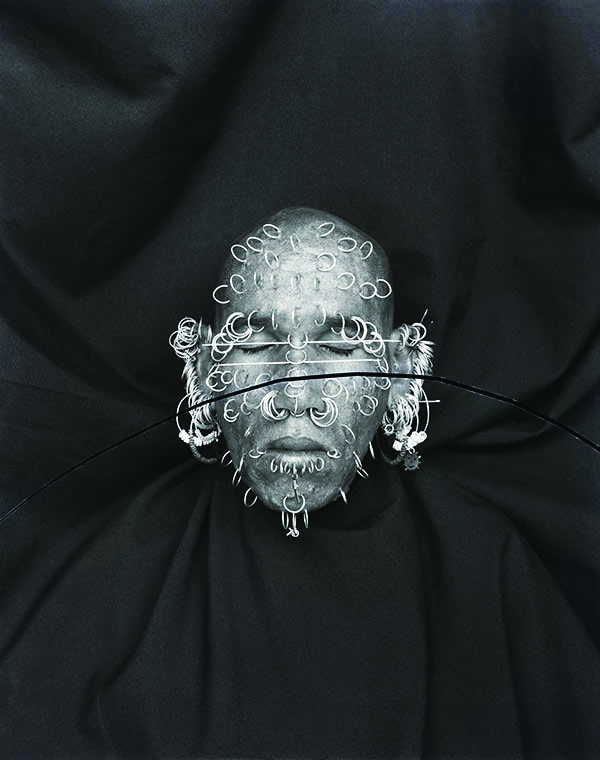
CMYK-MOA Without Masks


Racism isn’t always easy to identify. Dr. Nuno Porto, curatorial liaison for Without Masks, hopes that this exhibition at the Museum of Anthropology dealing with Afro-Cuban social issues such as racism and exclusion can shed light on our own society and help us reflect on our situation. 

“Racism is a universal issue in a sense,” he said, explaining that although there was a revolution in Cuba and many things changed, “racism is not over in contemporary Cuba.”  

When Cuba was a Spanish colony in the early 16th century, explained Porto,“the Spanish exterminated the indigenous population. The population is not recognized as being part of the nation in a sense. Afro-Cuban art practice reflects that.”

First shown in Johannesburg and taken from a large private collection, this exhibit includes over 80 artworks by a diverse set of artists. The artists have very different ways of approaching the social issues. Some pieces are humorous and ironic, and some are more serious and ethnographic or spiritual in their social commentary. 

“There is a tension between the different media and attitudes that makes for a diverse and enriching experience,” said Porto. “There is painting, photography, textile work, drawing, engraving, collage, installations, video, you name it. It’s very diverse in terms of media.”

One large work is done on a canvas made entirely of old coffee and sugar sacks to represent the slavery on the plantations. Written on the canvas are the words: “what is difficult is not to be a man, what is difficult is to be black.” 

Some of the works are very large and intense, including a series of lithograph prints by Belkis Ayón. Ayon works with the themes of her double exclusion as a black female. Porto described her works as highly poetic saying they are “like plunging into a different universe. They’re hypnotic.”

One unique thing about the exhibition is that it is organized by the principles of Afro-Cuban culture, not by specific idea or themes. “It is organized from eldest to youngest, so the ancestors are first.” Three prominent Afro-Cuban artists who are now deceased are placed at the front of the gallery, drawing the audience in to see the works by younger artists. Porto explained that the public gets acquainted progressively with the artworks, and the works demand that they face these issues.  

The setting for this exhibition is the Museum of Anthropology’s Audain Gallery, a large white cube. A gallery space is usually meant to be disconnected from the outside world, explained Porto. “The idea is that the outside world should not come in, but we have a series of artworks that are the outside world coming in.” With all their social commentary, Porto sees these works as a series of windows into other realities. “It’s food for thought both aesthetically and politically,” he said.

Porto said that there is a lot we can take away from this exhibition in terms of reflecting on social issues in our own region. As he read about the statistics of how much of the homeless population in Vancouver is First Nations, that resonated with him as relating to this show. “You can think it has nothing to do with racism,” he said, “or you can look at it without masks.” 

Sometimes it takes removing the mask of our own perspective and looking elsewhere to come back to our own world with a better understanding of how these issues relate to us, and maybe we realize that they aren’t so unfamiliar.

Without Masks: Contemporary Afro-Cuban Art is presented by UBC’s Museum of Anthropology (MOA) from May 2 to November 2, 2014. Visit moa.ubc.ca for more details about the exhibition and related events.

A short history of the 3D printer

0

912705631_a298bd250f_o

Guys, the future is here. And it prints houses.

Okay, okay, some context. Like many of you, I reacted to the first mention of 3D printers, or additive manufacturers, with confusion and bewilderment. After all, my main concept of what a printer is comes from the bulky behemoths in the SFU library — how could anything like that ever print something in three dimensions?

Turns out they aren’t really that similar to your average 2D printer. They’re really industrial robots that build 3D models from virtual prototypes through an additive process, where the machine builds layer upon layer in a given shape and material until an object is formed. It’s a little like layering a cake, but way cooler. Naturally, the possibilities are endless, and a little spooky.

Most recently, these machines have been in the news after a Chinese corporation used them to build 10 one-story homes in a single day. An eco-friendly mix of cement and construction waste was used to layer the walls of the tiny, industrial homes, saving labour and money. There’s no telling the future potential of 3D printers in the world of architecture — builders and architects can program in the exact proportions of the structures they want to build, and the machine will recreate the digital models. This could even ease the problem of homelessness, making housing easier and cheaper to build.

But it isn’t just the world of architecture that the 3D printer promises to turn inside out. These printers have already done wonders for the world of medicine, and they’re only getting more sophisticated.

One team of scientists at Philadelphia’s Drexel University is currently developing a system wherein the printers can be used to recreate cancerous tumours in a lab setting. The scientists can test possible treatments for these cancerous cells, which bear a much closer resemblance to actual tumours than their usual 2D petri dish counterparts and respond more closely to the way actual cancer patients’ bodies do. This process, called bioprinting, uses cells as building blocks to recreate organisms that behave just like the real thing. I know, right?

The possibilities of 3D printers are endless, and a little spooky.

Elsewhere, at the University of Louisville, a team of researchers is trying to create a functional human heart from synthetic materials in a 3D printer. This might sound too space age for you, but it’s not that farfetched: these printers have already been used extensively to create splints, valves, artificial bones, prosthetic hands and legs — even a functional human ear.

Apart from building homes and rebuilding human bodies, 3D printers also hold plenty of promise for the rest of the world. One lab in Togo, Africa has started a campaign to use the country’s excess of e-waste to print medical tools and other essentials for its population. Artists have also gotten on the 3D printing bandwagon: the printers can be used to build all manner of sculptures, jewelry, and other items, without the hassle of purchasing tools or using a workshop.

The printers are also a dream for the fashion world, as fabrics can be used to make clothing, shoes, scarves, hats — pretty much anything — without ever actually picking up a needle and thread. A printer designed at the Carnegie Mellon University was recently introduced that functions as a hybrid between an additive manufacturer and a sewing machine, simplifying the process that takes designs from the drawing board to dresses on the runway. Just imagine having one of these babies in your walk-in closet.

For now, consumer accessibility seems like the only big obstacle in the rise of 3D printers. They’re much cheaper and more efficient now than they’ve ever been, but a good quality one will still cost you upwards of $1,000; and that’s not counting the materials you’ll need to actually build anything. Not to mention, they’re not exactly the easiest things to use. Plenty of sites have downloadable templates for designs, for everything from dishware to dresswear, but in order to customize what you print, you’ll need to be at least a little tech savvy. You might even have to be a geek.

But hey, it’s not all bad! In the last few years, the prices of personal 3D printers have pretty much plummeted, while their practical uses — and consumer demand — have seemingly skyrocketed. Experts predict about a 200 per cent growth in the market within the next four years, which means it might not be too long before your wealthier, geekier friends start buying printers of their very own.

While 3D printers might not be a great investment for your apartment just yet, it’s hard to deny that they have a whole lot of potential, and not just for the average Joe or Jane. These futuristic contraptions have already made huge waves in the world of medicine, and saved more than a few lives in the process.

They also promise plenty of possibilities for safer, more environmentally conscious industrial growth, as well as helping developing nations to make food and shelter. You may have heard of the 3D printer designed to make pizza, brownies and other goods for astronauts. Who’s to say they can’t be used to help combat hunger in poorer areas of the world? These printers can also be used to print “smooth” food for the elderly, who may have trouble digesting most foods.

There’s no question that there are downsides to these printers (mostly do to with their ability to build military weapons and drones), but they’ve already proven their capacity to help make the world a better place. At the end of the day, it’s not just the tools themselves — it’s how we use them. Here’s hoping it’s for good.

Always look on the bright side of life

0

CMYK-Spamalot-David Cooper

The Arts Club’s upcoming show has the tagline, “lovingly ripped off” from Monty Python and the Holy Grail. For true Python fans, fret not, the book and lyrics for Spamalot were written by Eric Idle. However, if you don’t even know what or who this Monty Python person is, Spamalot also parodies well-known Broadway musical tropes. 

“We’re taking liberties with the movie and poking fun at the Broadway musical genre,” explains director Dean Paul Gibson. The premise of the play follows the movie where King Arthur travels the land to recruit Knights of the Round Table to Camelot. Silliness ensues as they meet the Knights Who Say Ni, lewd French soldiers, and evil rabbits. 

“I’m not going to mess around with a brand like Monty Python,” states Gibson, who grew up watching Monty Python’s Flying Circus. Even though the show has been off the air since 1974, and Monty Python and the Holy Grail came out in 1975, the Python influence and style continues to entice fans.

Monty Python has become part of global popular culture, spreading from Britain. “It is still popular and enduring,” says Gibson, “but we’ve put our own stamp on it while maintaining its Pythonesque appeal.”

Arts Club artistic manager Bill Millerd approached Gibson with a couple of options for the 50th anniversary season and he jumped at the chance to direct Spamalot. 

“It’s great because I get to work on all different types of productions,” said Gibson. He started choosing his creative team and they’re currently in rehearsals. The production crew includes musical director Kim Cormier and choreographer Lisa Stevens, who Gibson worked with on Xanadu in July 2012. 

“It’s a big show and the actors all have particular strengths,” says Gibson, noting that David Marr is an Arts Club veteran and leading lady Terra C. MacLeod made a big splash in the Arts Club production of West Side Story last year.

The title is taken from a line in the film: “We dine well here in Camelot / We eat ham and jam and Spam a lot / We’re Knights of the Round Table.” The 2005 Broadway production received 14 Tony Award nominations and won three, including Best Musical. It has been produced across the globe and pokes fun at well-known plays such as Fiddler on the Roof and Phantom of the Opera.

Spamalot will inevitably include the requisite amount of smut, sacrilege, and general silliness we expect from a Python show. So grab your coconuts and practice your “Ni!”

The Arts Club Theatre Company’s production of Monty Python’s Spamalot will run May 8 to June 29 at the Stanley Industrial Alliance Stage. Tickets and show times available at artsclub.com.