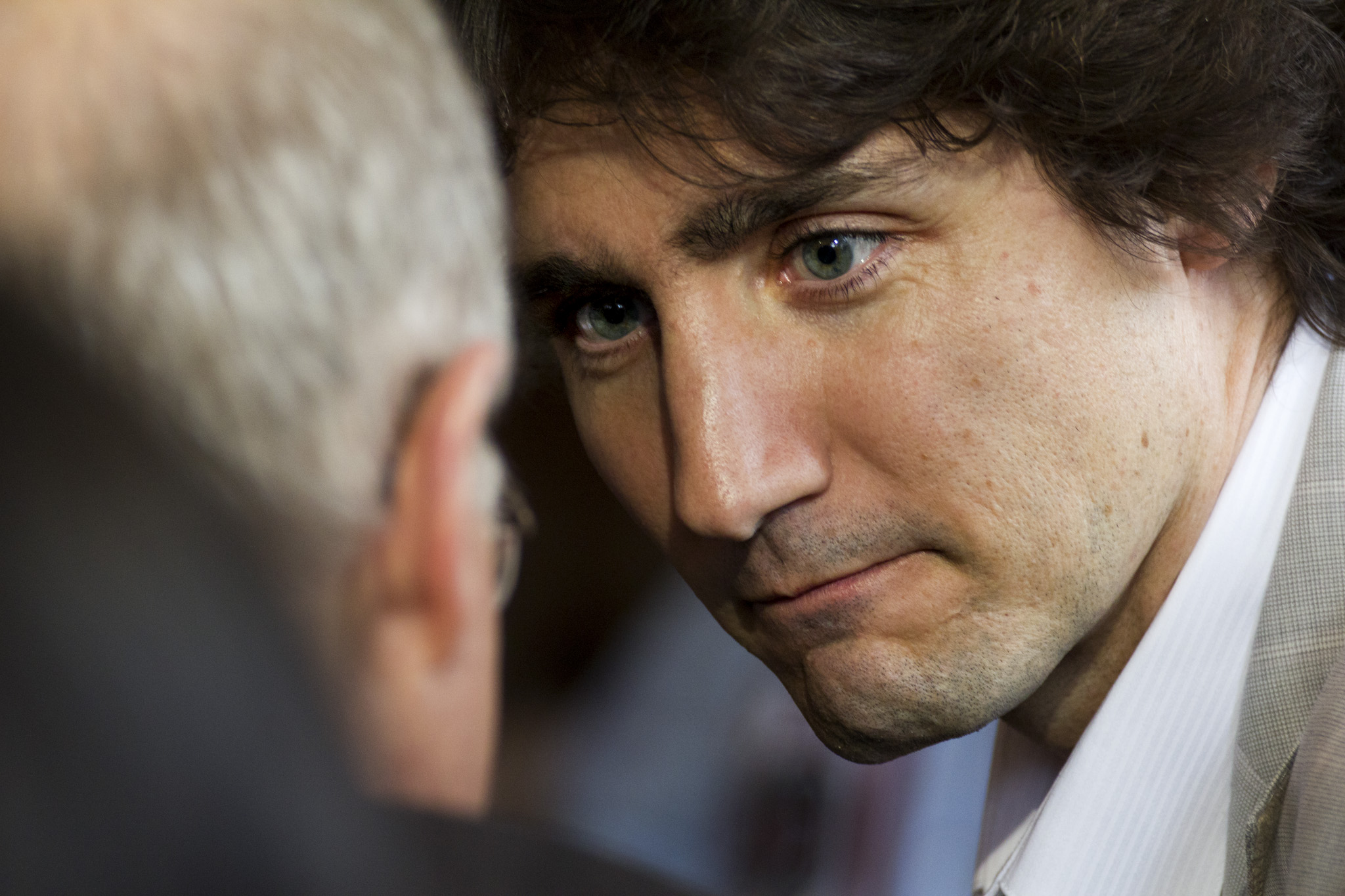

Wednesday mornings seem to be Justin Trudeau’s chosen time to drop his political bombshells. A few months ago, a Wednesday morning announcement signalled the end of Liberal senators remaining part of the party caucus, and May 7 heralded yet another announcement with ramifications for next year’s election. That morning, the Liberal Party leader announced that “future candidates [. . .] will be expected to vote pro-choice on any bills.”
Up until 2012, the Liberal Party did not have a position on the issue, regarding it as a matter of conscience for the individual. This leaves several party members, including some sitting MPs, in an odd situation. While incumbent MPs will be allowed to continue to run regardless of their stance, Trudeau struggled when asked if he would force them to vote against their conscience if an abortion bill did come up in the House. He would only say that their views “will be respected to a certain extent.”
This declaration bans several former members who only lost their seats in the 2011 decimation of the party from attempting a return. It also has the potential to alienate many voters, as polls show that Canadians are thoroughly divided on the issue, with most polls showing that legal abortion under any circumstances is supported by less than half of the population.
The stance on abortion is only part of a larger issue here. The real problem is the erosion of freedom. In making his pro-choice declaration, Trudeau has shown himself to be anti-choice when it comes to being a Liberal. In addition to the abortion stance, future candidates will be vetted and undergo what essentially amounts to an ideological checklist to ensure that those candidates are “consistent with the Liberal Party [. . .] as it stands under my [Trudeau’s] leadership.”
It sounds to me like the Liberal leader is attempting to set up a party full of clones who will blindly obey the dictums of their “Glorious Leader,” setting up an ideological dictatorship of the sort that both the Liberals and the NDP have accused Prime Minister Harper of enjoying the past several years.
It also seems to be a way for Mr. Trudeau to weasel his way around a promise not to use his power to appoint candidates and to allow open nomination contests in every riding. There is every expectation that the vetting process will be used to weed out candidates considered unsuitable by the party leader.
It would appear that the Conservative Party, contrary to what many would like to believe, is the party of free opinion, and one where MPs can disagree with the party line, including MP James Moore. In 2004, he was one of the few Conservative MPs to vote in favour of legalizing same-sex marriage despite the official party position on the issue. He continues to sit as a Conservative MP today, and has served in many important cabinet positions, including the Minister of Canadian Heritage and Minister of Industry.
In addition, the Conservative Party caucus features a wide range of opinion on several important issues, including abortion and the death penalty, but all are still allowed to both run for office and sit in the House as Conservatives.
It would appear that in Canadian politics, freedom of opinion is now a right wing ideal.