Home Blog Page 1172

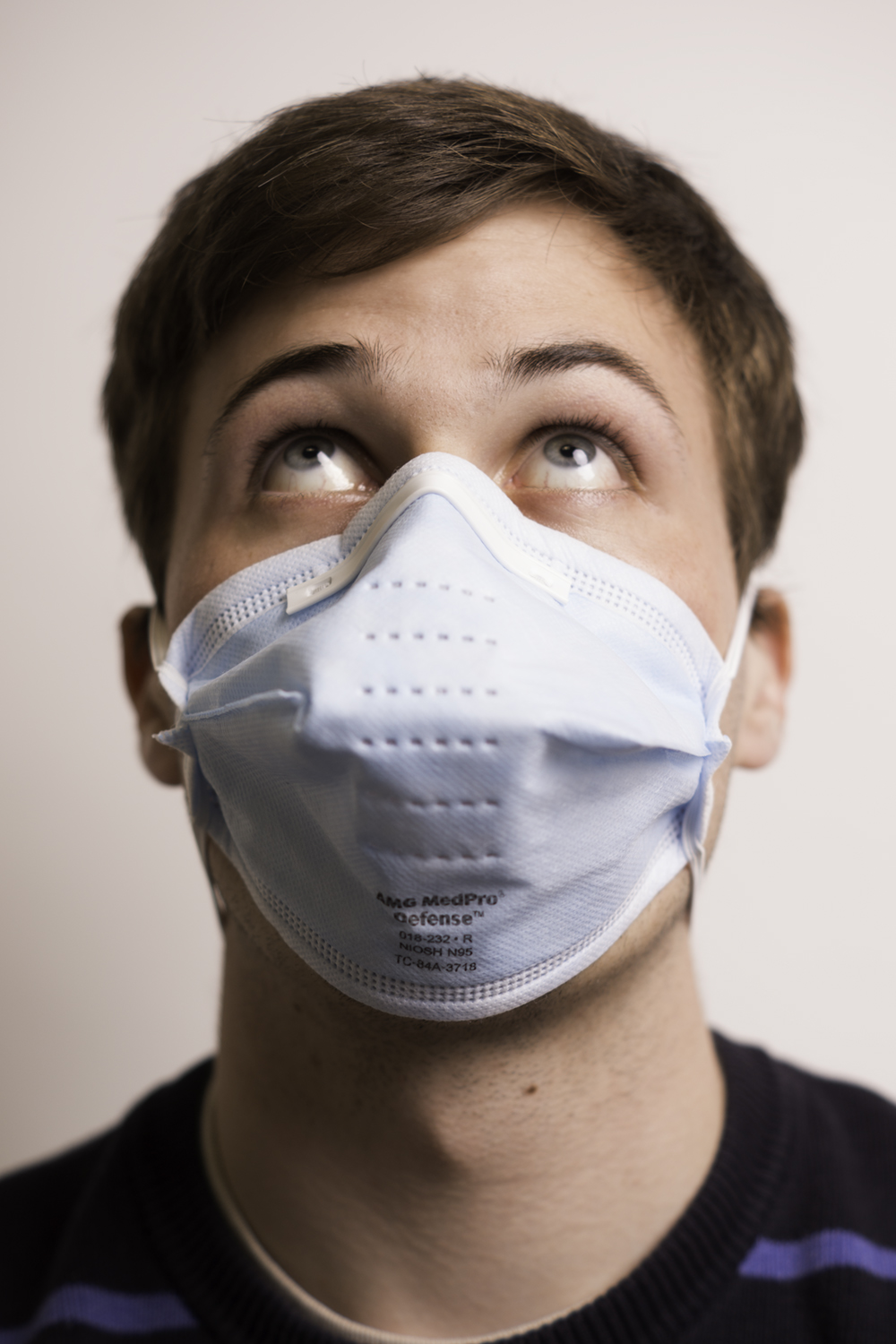
Tippy Top Ten: BlackShades Malware

0

Here are the Tippy Top Ten Signs Your Computer is Infected with BlackShades Malware…


10. Search history includes several variations of “blackshades cool guys”

9. Gut feeling it’s more than just a 24 hour computer virus

8. Every website you visit is reporting on Ellen Degeneres’ secrets

7. Facebook page says you like Nickelback

6. Webcam taking pictures without cool sepia filter

5. You use Internet Explorer

4. “Trojan Horse Simulator” you downloaded won’t open properly

3. Password reminder is now “what was your first social insurance number?”

2. Today’s Google doodle is just a blue screen

1. Over-heating and a sore disc-drive

University Briefs

0

WEB-briefs-Joseph Morris-Flickr
UBC dental program suspected of fraud

One of the University of British Columbia’s residency programs is under scrutiny for the possibility of fraud involving approximately $5 million. UBC administration was alerted of inconsistencies in the finances of UBC’s Faculty of Dentistry’s General Practice Residency.

Following this discovery, the university’s internal auditing system began an immediate investigation. Upon completion of the investigation, a report was submitted to the RCMP for further examination. As of yet, the police have not announced any updates to the further investigation.

With files from The Ubyssey


Controversy leads to resignation of
U of S provost

University of Saskatchewan provost Brett Fairbairn has resigned his position, following controversy over the dismissal of a professor speaking out against budget cuts. Professor and executive director of the School of Public Health, Robert Buckingham, was removed from his position and from the university campus after reaching out to government officials about financial restructuring at the school.

Fairburn mentioned in his resignation letter that he acted in the, “genuine interest in the well-being of the University of Saskatchewan.” Buckingham was subsequently offered back his tenure position, excluding his standing as executive director.

With files from The Star


Board Shorts

0

WEB-shorts-Jirka Matousek-Flickr

Residence Orientation and Dance

Stephanie Munez, SFU residence and orientation mentorship coordinator, approached the SFSS Board last week to explore a partnership around residence orientation in the fall. Munez suggested the SFSS sponsor an orientation dance, to be held on August 30. The dance would use SFSS speakers and equipment and would replace previous MuchMusic video dances.

VP Student Life Kayode Fatoba and residence liaison Katie Bell were tasked to meet with Munez and look into further options for collaboration.


Apology for GSS Space Usage

The SFSS Board of Directors is sending a letter of apology to the GSS after being banned from using GSS space until the end of August. The ban was issued after the GSS lounge was left in “extremely poor condition” on April 4.

SFSS board members had booked the space to use for volunteer storage during the Spring Sendoff Concert. When graduate students entered the room the next morning — where they had planned to host a family-friendly event — they found the room littered with leftover food, trays, plates, and empty cans. Among the empty beverages were alcoholic drinks, despite the GSS lounge being a non-liquor licensed space.

The apology letter read, “This type of behaviour is inexcusable and similar conduct will not happen again.”


Consolidation of IRO position

As a result of the division of the Internal Relations Officer position into VP Student Life and VP Student Services, the SFSS Board has had to replace the IRO position on society committees previously defined by the bylaws.

After discussion with executive members, the decision was made to eliminate the IRO seat on the Commercial Services Committee and replace the seat on the others.

As a result, business representative Shadnam Khan was appointed to Constitution and Policy Review Committee; VP Student Life Kayode Fatoba was appointed to Financial and Administrative Services Committee; and University Relations Officer Moe Kopahi was appointed to Labour Committee.

CFL drafts five Clan players

0

In 2013, there were no CFL draft picks out of SFU — this year, five SFU graduates will be taking the field for CFL teams in the fall.

Offensive lineman Matthias Goossen led the charge, drafted second overall by the Winnipeg Blue Bombers. He was followed by Casey Chin and Dylan Roper to the BC Lions in the third and sixth rounds. Accompanying Goossen to Winnipeg is defensive back Derek Jones. Rounding out the draft, was Tore Corrado, selected by the Toronto Argonauts in the sixth round; Corrado was the sole SFU draftee to be chosen in the Eastern Conference.

Only Laval and Montreal, two elite teams in terms of Canadian university football, produced more picks than SFU.

“It just speaks to how good our athletes are in this program,” stated SFU head coach and one-time fifth overall pick Jacques Chapdelaine. “SFU does have the ability to attract very, very skilled football players.”

Goossen is the first first-round draft pick to come out of SFU since Dean Valli in 2006. He is also SFU’s highest pick ever, since Obby Khan also went second overall in the 2004 draft to the now defunct Ottawa Renegades. Both Chin and Goossen were projected to be in the top 15 prospects in this year’s draft.

Chapdelaine also gave SFU’s NCAA status credit saying that “there’s benefits to being seen” and that the status puts SFU players in “a very favorable light in terms of competition, in terms of level of competition” with CFL scouts.

He pointed out that although a CIS team had the first overall pick, the player was on a championship team, Laval University, as compared to SFU, a team that has not yet had a winning record during its time in the NCAA.

“SFU does have the ability to attract very, very skilled football players.”

– Jacques Chapdelaine, SFU head football coach

Roper, who will be playing defensive linebacker for the Lions this fall, agreed, saying, “It proves that we play at a higher level here. SFU football is different than CIS and I think that CFL scouts see that as well and see that a lot of players are coming out well developed and ready to play in the pros.”

In addition to what the draft says about SFU’s current program, it also provides inspiration for new SFU players coming into the system, Roper said. He added, “It’s motivating for sure. When I came in as a freshman, I was sitting behind [Justin] Capicciotti and [Andrew] Marshall, they’re both with the Ottawa Redblacks now. It’s motivation for the younger guys, [it shows] they can do it as well.”

Future Lions teammate Chin stated, “I’d like to think it gives them a little more motivation, makes them want to work that much harder, maybe even get more guys drafted next year.”

With respect to being drafted by the BC Lions, the home team for the Greater Vancouver area, “It’s a dream come true [. . .] I would rather go in the third round — where I got picked — than in the first round to a different team,” said Chin, who was drafted 27th overall.

Roper added, “[When] it popped up on the TV that BC took me, words don’t describe [how I felt]. I’ve been a BC fan since I was born.”

The other three players will be travelling further: Jones and Goossen are off to Winnipeg, and Corrado to Toronto. Corrado mentioned that any “childhood allegiances” disappear after being drafted, as the Lions became just another team that decided not to pick him. Jones, on the other hand, is from Edmonton and was never a Lions fan.

Although Goossen was chosen second overall, others like Roper, had to play the “waiting game,” not being drafted until the sixth round, 50th overall. However, he sees this as more motivation. “I’ve always played with a chip on my shoulder, and I think waiting around and teams passing on me, I think it’s going to give me more of a chip on the shoulder and prove some people wrong,” said Roper.

Chapdelaine, who was both a player and coach in the CFL, believes his guys will adapt well to the CFL: “They’ve been prepared extremely well [. . .] I think they’ll be just great.”

He advises the draftees “to go into work, let the good days build and let the bad days be learning experiences.” He said, “There’s going to be some challenging days for these kids, it’s going to be extremely competitive, it’s going to be physically demanding [but] persevere through that. If you can do that, that’s all you can ask for.”

The Good, the Bad and the Mouldy

1

WEB-Cover

Every week, thousands of SFU students go to classes, office hours, and lectures in the Education Building, one of SFU’s oldest structures and the headquarters of several of its faculties. Beyond its reputation as one of the school’s more run down areas, the Education Building may be posing a significant health risk to students, as well as to faculty members and staff — many of whom remain unaware that any such issue even exists.

Last June, a building envelope assessment prepared by James Neill & Associates was issued to SFU which confirmed the presence of mould in multiple sites within the Education Building. These sites include, among other areas, the location of the Education and Archaeology faculty offices.

However, a copy of this report, which was obtained by The Peak, was not delivered to the Central  University and Local Joint Health and Safety Committees until almost a full year after its completion, nor was it forwarded to any of the on-campus unions and formal committees representing faculty, staff and students who use the building on a daily basis.

The report, dated June 19, 2013, identified mould in a number of offices on the 8000 level of the north zone of the Education Building, in addition to elevated mould spore counts in regions throughout the south zone on the 8000 and 7000 levels. Eight of the 50 rooms examined (from April 30 to May 7, 2013) were identified by SFU’s Environmental Health & Research Safety (EHRS) as requiring “immediate action.”

Furthermore, several locations within the Education Building were classified as having elevated moisture contents (over seven per cent), which is conducive to further mould growth and indicative of leakage in the building.

An informal survey indicated that undergraduates were mostly unaware that a mould problem existed.

The report pegged the total cost of repairs — exterior, interior, and roof work — at $1,241,540, allowing for engineering, contingency, and GST. Despite the significant potential for adverse health effects identified, large swaths of the building were not analyzed; the report identifies these areas as “wall obstructed or area inaccessible.” A number of these unexamined regions include offices and common areas, i.e. hallways, stairwells, and foyers.

It is unclear as to when SFU commissioned the assessment, as James Neill, the individual who prepared the report, was unavailable for comment.

In a sit-down interview with The Peak, Dr. Terry Waterhouse, SFU’s chief safety officer, indicated that the building envelope assessment was the first report in a series commissioned by SFU to determine the extent of mould infiltration. He noted that the successive analyses are to be compiled into a single report slated for release at the end of either May or June of this year, at which point, he said, they will become available for public viewing. 

Dr. Waterhouse further indicated that the Environmental Health and Research Safety Department is in the finishing stages of building a website designed to address frequently asked questions regarding indoor air quality and mould, on which the reports will be made available soon.

Despite the report’s findings, very little information was initially communicated to staff or supporting unions and committees; this omission included the Health and Safety Committees, which officially received the report in March and April (Central and Local, respectively) of this year, at least six months after the documents began to be unofficially circulated through union offices.

John Bannister, a representative of the Canadian Union of Public Employees (CUPE) Local 3338, first became aware of the report during a monthly human resources meeting between employee groups, the faculty association, Administrative and Professional Staff Association (APSA) and Poly Party in September of 2013. “It was raised there that this report was available, so I requested [it] and [EHRS] sent it to me.”

Concerned by the report’s contents, Bannister forwarded a copy to the Teaching and Support Staff Union (TSSU), which was, at that point, unaware of its existence. The TSSU also requested a copy of the report from EHRS, but as of yet have not received one.

Dr. Waterhouse addressed concerns regarding the lack of communication, attributing it to an evolution of his office’s distributive protocol “which quite frankly,” he said, “didn’t exist at the time.” He clarified: “We did not distribute it [the report] because it was not part of the process we had in place at the time. It is now.”

Waterhouse said that in the past, SFU had no distribution protocol in place for technical reports involving indoor air quality — reports were simply distributed to technical staff who acted upon them. He further stressed that SFU was spurred to act immediately, which included initiation of building renovations and relocation of the entire graduate studies wing in the Education Building to Discovery Park last year.

“Through this, we’re developing a process that ensures all those groups get the reports,” he said.

Melissa Roth, a spokesperson for the TSSU and a student in the Faculty of Archaeology, indicated that the union raised concerns regarding the building envelope assessment in November of 2013 during the Employee Council Meeting with the VP Administration, a group including President Andrew Petter and VPs Judith Osborne, Pat Hibbitts and Jon Driver and others who engage with resentatives from all unions and associations once a semester. “We brought [the document] up, in that we were not consulted about a serious hazard regarding the health of our members, and we were assured that we would be put into the loop from then on, but we have still not,” Roth claimed.

However, in an interview with Wanda Chow of the Burnaby NewsLeader, Dr. Waterhouse explained that [SFU] has “communicated broadly” with users of the Education Building, culminating in a town hall meeting conducted on March 17, the goal of which was “to be extremely proactive and transparent within the university community about these issues.”

As a TSSU representative and SFU student, Roth attended the town hall meeting, and said that it “quickly got away from [SFU].” The discussions rapidly devolved into an acrimonious standoff, she said, as a number of attendees alleged that the university failed to aptly communicate the true nature of building renovations that began last summer in the wake of the report from James Neill & Associates. 

“In my opinion, there were a lot of upset people in the audience,” Roth said. According to her, the attendees in question became aggravated when the university’s presentation focused on dust remediation, and repeatedly interrupted proceedings in protest. When concerns were raised regarding the presence of mould in the building, Roth said “[SFU’s] general consensus was ‘Don’t worry, it’s not a problem.’”

A number of attendees reportedly denounced the board’s claims of transparency, announcing that they had lost faith in the university. According to Roth, one individual charged that “our trust level is at zero,” continuing, “how do we believe you that it’s safe to return to the [Education Building]?” Another attendee reportedly stated that they could “taste gasoline on their tongue” upon entering their office.

Apart from Waterhouse, the powerpoint presentation featured at the town hall named several other individuals who comprised the EHRS body responsible for the initial report including Bohdan Kosteckyj (director of maintenance and operations), Ian Abercrombie (director of campus planning and development), Melinda Skura (advisor for occupational health and trades safety), and TJ Aujla (coordinator for occupational health and trades safety). The Peak has not yet reached these individuals for comment.

Long-time staffers working in the Education Building have raised concerns regarding symptoms associated with chronic mould exposure.

Roth, who also sits on the TSSU Local Joint Health and Safety Committee, stated that normal WorkSafeBC protocols dictate that SFU must work in conjunction with the Health and Safety Committee regarding matters of environmental hazards that may affect the health of employees and/or students. As aforementioned, the latter failed to receive any information whatsoever from the university regarding the presence, extent, or nature of the mould infestation until well after SFU’s own discovery. She voiced this concern at the town hall meeting.

“Terry [Waterhouse] answered that there was a specialized [. . .] committee that is dealing with the issue as the ‘local was for day to day things’,” Roth communicated in an email to The Peak on May 11, 2014.

“As a follow up,” she said, “I sent him an email a few days ago asking who was on that committee as all health and safety reps should be listed publicly so people know who to contact if they have concerns, but there is no word on SFU’s website about such a committee even existing. It is important to know who is on this committee, as all health and safety decisions in BC must have at least half workers and half administrators according to WorkSafeBC [guidelines].”

“[We] absolutely understand the feelings of those individuals [who spoke up at the town hall],” said Dr. Waterhouse. He stated that he subsequently spoke to all of those individuals in a more one-on-one manner to directly address their concerns. “We understand that this is a health issue, and it is our concern [regarding this] issue that is driving our efforts to address them.” He also stated that there was a working group, including members of the Faculty of Education, who dealt directly with the issue of the report when it was delivered. 

The perceived lack of notification provided by SFU regarding the town hall provoked further concern from some, despite Dr. Waterhouse’s publicized statement in the Burnaby NewsLeader. The Peak conducted an informal survey including over 20 instructors, graduates and undergraduates in the Education Building which indicated that, while some of the former groups were directly informed about the town hall, undergraduates were mostly unaware that a mould problem existed, much less that a meeting had been organized to address concerns.

Despite occupying a space in the Education Building, the Archaeology faculty was reportedly not invited to attend the town hall meeting, a fact Dr. Waterhouse described as an unintentional oversight.

This apparent exclusion was odd given that the university is currently conducting an additional assessment of the entire building, expanding beyond the Education Faculty to include the Teaching and Learning Commons and Archaeology areas. That report is scheduled for release at the end of May or June.

Dr. Waterhouse assured The Peak that this was not the result of any focused discounting of the faculty. He stated that SFU broadly advertised the town hall, with the support of the Faculty of Education, resulting in Dean Magnusson’s appearance on the panel. 

However, he stressed that future meetings held in response to the future reports delivered would specifically target those who were unaware of the previous meeting. 

So, how significant is mould exposure? A number of long-time staffers working in the Education Building have previously raised concerns regarding symptoms — such as headaches, nausea, and shortness of breath — which have been associated with chronic mould exposure. Despite logging their concerns over the years, staffers were repeatedly assured that there was no issue.

With mounting evidence regarding the presence of mould and the university’s existing knowledge, the same employees now feel betrayed.

Dr. Waterhouse, in his interview with the Burnaby NewsLeader, addressed concerns regarding mould exposure. “What we do know,” he said, “is that some people are more susceptible to indoor air quality problems [. . .] But the science is not at a stage where a direct correlation can be made to the presence of mould, for example, and a health impact for an individual.” He went on to note that direct correlation was not required for the university to take action. 

Waterhouse’s statement is not, however, entirely supported by information provided by Health Canada, which states on its website that it considers indoor mould to be a “potential health hazard” — with all moulds posing a potential risk to respiratory health — and advocates for immediate removal. According to Health Canada there is, however, insufficient evidence to ascertain whether black moulds (which are commonly referred to as toxic moulds, given their production of mycotoxins) have greater health effects than other moulds.

A study performed by the Center of Integrative Toxicology at Michigan State University relates the presence of black mould to the onset of ‘damp building related illness,’ and allergic sensitization, inflammation and cell toxicity in animal models. Other studies have linked high dose short-term exposure to lung hemorrhaging in humans.

When reached for comment Dr. Ryan Allen, an associate professor in the Faculty of Health Sciences who specializes in the effects of outdoor pollution on individuals, cautioned against alarm. “Dr. Waterhouse is correct [in] that it is very difficult to link an environmental exposure with the presence of illness or disease in an individual,” he wrote in an email to The Peak. “In other words, except in rare cases, it’s difficult to say that a specific person’s illness was definitely caused by a specific exposure.

“Mould has been linked with asthma irritation and respiratory problems, especially in children.” – Dr. Ryan Allen, Associate professor of Health Sciences

“Some exposures make it more likely that we’ll develop an illness, [but] not everyone who is exposed will develop the illness…[which] usually has many causes,” he continued. “Having said that, mould has been linked with asthma irritation and respiratory symptoms, especially in children. It may also be a risk factor for the development of asthma in those who don’t already have it.”

This is corroborated by WorkSafeBC’s Occupational Health and Safety Guidelines, which also warn that “For those individuals with compromised or sensitized immune systems, exposure to pathogenic moulds [. . .] may be associated with a variety of adverse health effects.”  

It should be noted that the position of senior director for Environmental Health & Research Safety — a position that provides Dr. Waterhouse with specialized information regarding potential mould related toxicity — has remained vacant for some time since the retirement of Apollonia Cifarelli in November 2013.

When asked for clarification, Dr. Waterhouse stated that he had assumed the office’s responsibilities in the interim, but that his office had compiled a shortlist of candidates for interview and that SFU hopes to hire someone to fill the position by the end of the summer semester.

Dr. Waterhouse stressed again that SFU’s response to the initial report and its findings was proactive, up to date, and attempted to minimize exposure to mould and air-borne allergens for users in the Education Building, but the lack of initial communications for several months has left a sour aftertaste for a number of individuals who continue to participate in regular classes, and have laboratories and office space there.

When asked to respond to the perceived lack of communication forthcoming from SFU, Roth expressed more frustration than anger. “As a student here who has taught multiple classes in the Faculty of Education, it upsets me greatly,” she said. “Not only are my friends and colleagues who are in there not [aware of] what hazards they were put through, but I didn’t know. And I can tell you that I’m very upset.”


Astronomy event considers our place in space

0

CMYK-SFU_Observatory

Staff, students, faculty, and community members considered our place in space last week when SFU and the Royal Astronomical Society of Canada (RASC) hosted two events — Science Rendezvous and International Astronomy Day — on May 10 at the Burnaby Campus.  

According to professor Howard Trottier from SFU’s Department of Physics, the event “had representation from all science departments and applied science, as well as the local astronomy group.”

The merged events occurred on the same day as 300 to 400 other space-related events across Canada. “The overall event today [. . .] is organized around something like the National Science Day, called Science Rendezvous,” explained Trottier. The event also offered SFU its first opportunity to partner with RASC, which was planning to host a similar event. “Coincidentally, we were going to do it on the same day and [at] the same place. So, we decided to team up! It’s packed!” Trottier commented.

The dual-hosted event had a wide range of activities, discussions, lectures, and displays of science. In one area of the event, attendees could look through telescopes of 30x to 100x magnification to see the moss growing on the edge of a campus building. In another section, they could peer down the hexagonal honeycomb patterns of material used in the siding of rockets. Visitors even learned about the dairy industry by milking a dummy-cow.  

Participants who wanted to come back down to Earth and public policy could talk to Mark Eburne, a man with a passion for the prevention and reduction of light pollution. Eburne works, along with organizations such as Lite Bright, to campaign on behalf of citizens concerned about light pollution. Attendees could also listen to a free lecture on a various science topics including Apollo space missions and the Aurora Borealis.

Trottier considers these events of high importance in two respects: community and outreach. The event occurred at the location of SFU’s new observatory called the Trottier Observatory and Courtyard, named for and funded by Trottier’s brother, which will be built later this year. According to Trottier, this observatory is meant to build both a passion for science and a greater community spirit; it is meant for students as a gathering place and as a place to learn about astronomy.

Concerning outreach, he stated, “The RASC is a national organization [. . .] They strongly support outreach at SFU. They bring their telescopes out here to show to the public. They also provide volunteers.” Trottier believes the RASC will help build outreach and community by encouraging families and their children to learn, ask questions, and build genuine interest in the operations and productions of science.

Many of these kinds of events come from an internal drive to educate the public on the importance of science through communication and community. Trottier concluded, “We’re living in a golden age of astronomy. And almost nobody knows about it.”

Insomnia? There’s an app for that

0

BW-SleepCounting-Chen

If counting sheep isn’t enough for busy university students looking to tuck in after a long day, a new app from SFU cognitive science professor Luc Beaudoin may be just the ticket to curing sleeplessness.

Beaudoin’s new app uses audio cues to interrupt the problem-solving and sense-making nature of our minds that keeps us awake. The app, mySleepButton, presents users with a variety of content which has been specifically chosen to induce sleep, shuffling the suggestions every five seconds.

Sleeplessness can be a big problem for university students, interrupting cognitive function the next day. Explained Beaudoin, many people before bed tend “to engage in problem solving, ruminating, imagining or thinking. One of the worst things is worrying that you’re not going to fall asleep.”

“The brain is in the business of making sense,” Beaudoin continued. “During sleep onset there is actually something special going on, and that is when you successfully fall asleep, you give up on controlling your mental processes.”

This understanding led Beaudoin to come up with the idea of a signalling mechanism within the brain which triggers sleep onset. “You can’t just say, ‘Let’s go to sleep.’ Your brain needs a signalling mechanism,” he said.

Beaudoin took it upon himself to develop such a trigger that would help users to suspend “sense-making, prediction, and thought-control” — all of which inhibit sleep.

The app is very simple. Users enter the launch screen, press the “put me to sleep button,” and the application reads words and phrases depending on one of the three available modes: Simple Things (single words or short phrases), Scenes (multi-word phrases, e.g. “Bird on a branch”), and Things to Draw. Explained Beaudoin, “Your job is to imagine each word or phrase that is spoken to you and let yourself fall asleep.”

The images included in the three mySleepButton packs were carefully selected by Beaudoin and his team based on the imaginability of images, the affective state, and common sense. “We didn’t always agree. Sometimes people thought, ‘Insect is ok, or ant.’ I personally said ‘No! It’s not good! People do not like ants or snakes when they’re going to sleep!’[. . .] Oh god. . .” exclaimed Beaudoin.

Recognizing the differences in peoples’ personalities, Beaudoin acknowledged the possibilities of creating personalized or specialized sleep packs in the future. “This opens the door to all kinds of cool things. We could tailor streams of content for particular concerns and types of users,” said Beaudoin.

Beaudoin admitted that with his busy schedule of interviews and marketing his new product, the app is coming in rather handy: “My mind is a very busy place, so I just reach for the thing, and it works.”

SFU grad launches Vancouver’s first affordable 3D printer

1

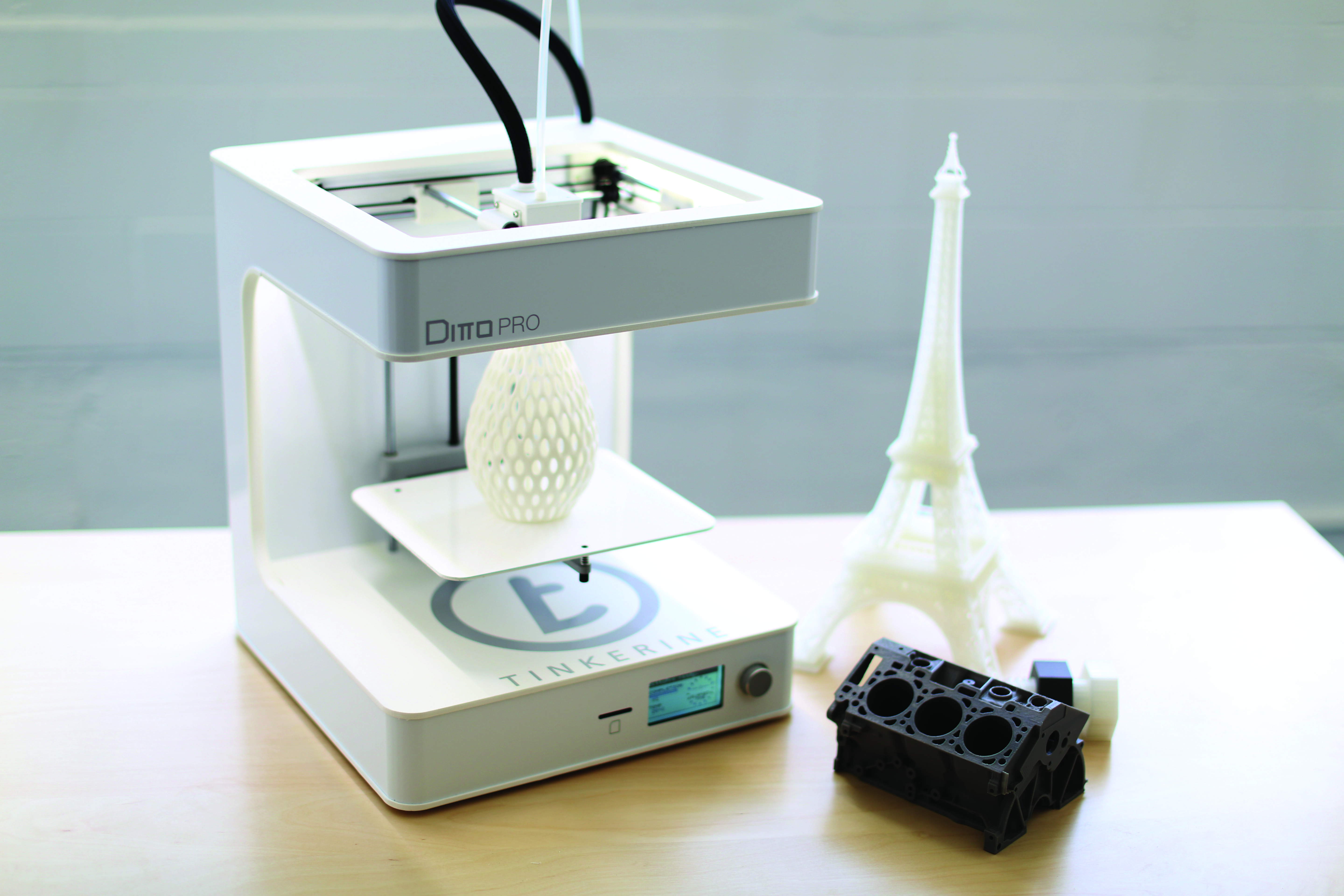
CMYK-3D PRINTERLego pieces, forks, guns, medical models, and makeup; with capabilities to create everyday items, 3D printers are poised to disrupt mass production and the manufacturing sector as a whole.

Leading the charge is SFU graduate Eugene Suyu, who recently put Vancouver on the map with the launch of his company, Tinkerine, and its revolutionary printer DittoPro. The DittoPro is a prosumer-level 3D printer that, according to Suyu, is meant to “sit in your office or home and not look like it’s out of place.” Suyu graduated two years ago from the SIAT program, where he encountered his first 3D printer in an industrial design course.

“Once you use a 3D printer [as an industrial designer], a lot of thoughts go through your head. It opens up the doors in terms of what you can create,” said Suyu, who decided to create a 3D printer geared toward individuals after being unable to find one on the market.

3D printing decentralizes the manufacturing process by allowing the average person to print an entire object in their own home by uploading a digital image to the machine. The range of objects that can be created is limited only by each machine’s size, and the types of materials it can handle.

Most 3D printers use a variation of plastic, although recently a Harvard student launched a printer that is able to create powdered eyeshadows and lipsticks through a process that is more similar to that of an inkjet printer. Tinkerine elected to use PLA, a biodegradable corn-sugar substrate, as the input version of the plastic; “[It] makes the room smell like a candy shop,” Suyu said.

While Tinkerine does not have facilities on-site to handle material recycling, they do manufacture most of their machines in-house. Despite using local labour, DittoPro’s price is about 30 per cent lower than a comparable model on the market right now. Suyu said that producing locally allowed for greater quality control and reliability of the machines.

SFU acquired its first 3D printers at upwards of $15,000 whereas the DittoPro costs just $1,999 — although the two models can print about the same size and resolution. However, it would take SFU’s printers up to two to three times longer than the DittoPro to print the exact same object. But back in 2007, when SFU purchased its printers, the slower model was the baseline for affordability and productivity.

Despite the political, social, and economic implications of a technology that can decentralize power and production, Suyu is more focused on the technical aspects of 3D printing — he sees the socio-political controversies as a “side effect” of what he is doing, rather than the driving force.

SFU has yet to place an order for the new DittoPros, which are set to ship in May, but Suyu is optimistic that there could be cross-collaboration between industrial design courses and Tinkerine’s education initiatives.


SFU’s RADIUS Lab releases report on combating homelessness

0

Exif_JPEG_PICTURE

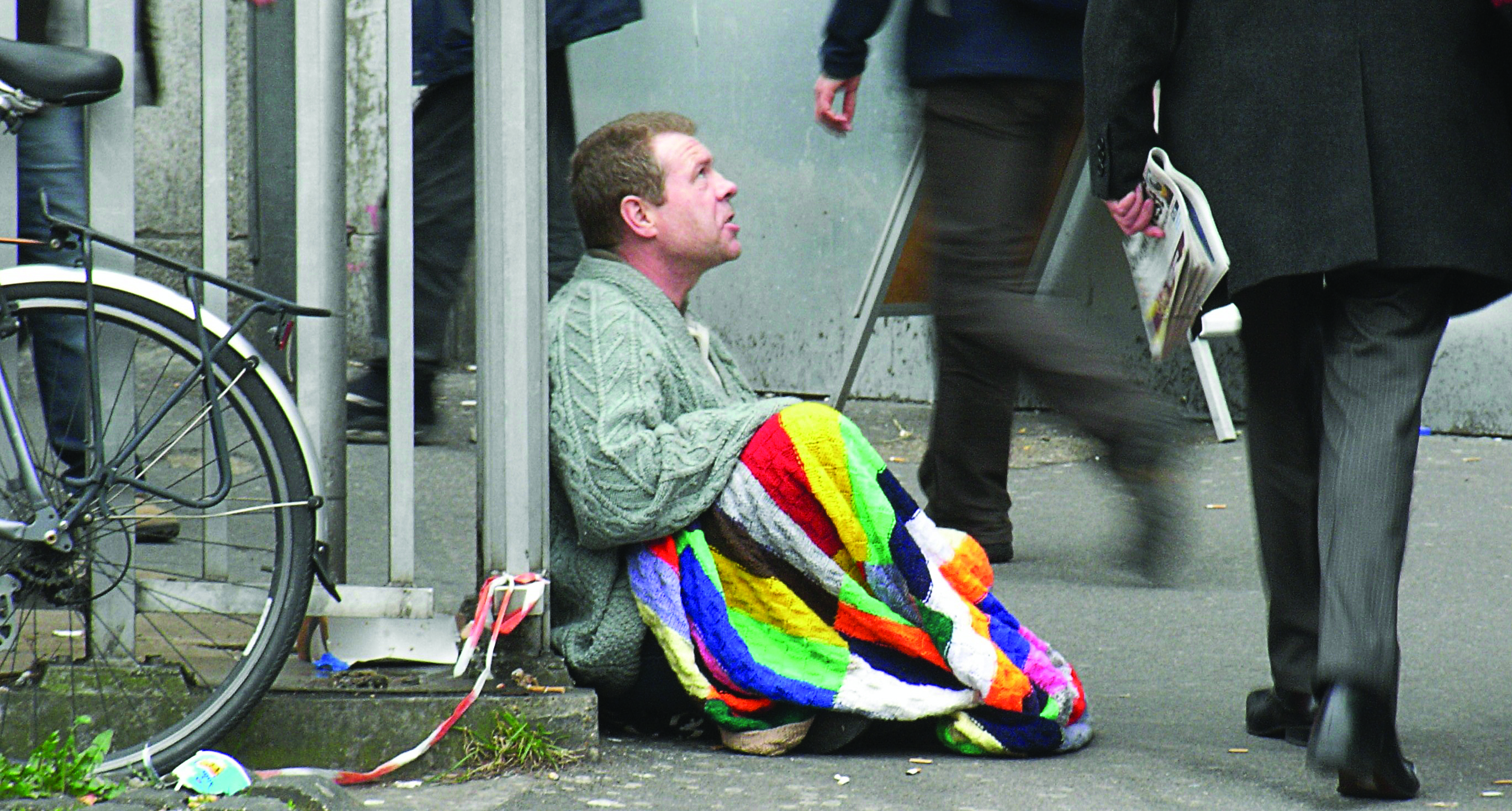
A new report out of SFU has validated innovative initiatives which aim to provide supportive housing for marginalized individuals in Vancouver.

SFU’s RADIUS Lab, in partnership with Ecotrust Canada, recently released a report called Pay-for-Performance Partnerships: A case study in funding for Supportive Housing. The report covers a feasibility study of the application of social impact bonds (SIBs) to the issue of individuals with severe addiction and or mental illness (SAMI) living on the streets of Vancouver.

The report suggests that SIB’s might be an important “jump-start” for providing people with SAMIs with affordable housing and supportive services.

The SIB model involves private investors who provide start-up funding to innovative social programs that aim to solve a persistent social welfare issue, and also save the public money long term. If the program is successful, investors are paid back out of public savings that result from the implementation of the program.

Normally, governments can’t afford to gamble on new social programs that have not been proven to work, explained Colin Stansfield, who co-prepared the report with Ecotrust Canada intern, Geordan Hankinson. The beauty of the SIB model, he says, is that it provides a non-philanthropic incentive for private companies to fund social projects. The report summarizes the SIB model as “privatizing risk and socializing benefits.”

The team’s research was based on evidence that came out of the At Home/Chez Soi study done by the Mental Health Commission of Canada, which provided proof that a “housing-first” approach to mental health and homelessness issues provides the most benefit for both the individuals it treats, and the public.

The benefit comes from a marked reduction in inappropriate use of social services, such as unnecessary time spent in hospital inpatient care, repeated encounters with police and the justice system, and frequent emergency room visits.

With a permanent place to live, marginalized individuals receive more consistent care, and can rely less on emergency services.

The first SIB ever implemented is an ongoing project in a men’s prison in the UK called the HMP Peterborough, which aims to reduce rates of reoffending among recently released prisoners. The project is slated to serve 3,000 individuals over a period of six years. If recidivism rates are reduced by 7.5 per cent or more by the end of the program, investors will be paid out of public savings at a maximum return rate of 13 per cent annually.

While SIBs have found success outside of Canada, the model has yet to be implemented here. This is where last week’s report comes into play: it provides academic evidence that the SIB model could offer a solution to Vancouver’s homelessness issue, by garnering enough funding to cover startup costs of supportive programs.

RADIUS Lab focused their study on Vancouver’s SAMI population in response to a declaration of a mental health crisis on city streets by the Vancouver municipal government in September, 2013. Due to a limited increase in funding available to deal with the crisis from the Ministry of Health and Vancouver Coastal Health, Stansfield says the benefits of having access to a large pool of private capital became even more apparent.

“The federal government has expressed an interest in innovative social funding, which includes SIBs,” Stansfield said in an interview with The Peak. “The point [of SIBs] is to attract new sources of capital, and to de-risk the uptake of these innovative service interventions into public policy.”

The report presents hope for homeless SAMI individuals in Vancouver, calling SIBs “a tool to model total system redesign, restructuring and redesigning how support systems are delivered to a target population.”

Partner abuse affects new mothers’ mental health

0

WEB-partner abuse-Bethany Brown-Flickr

A new study from SFU graduate student Ashley Pritchard suggests that partner abuse may have adverse effects on the mental health of new mothers.

Published in the journal, BMC Pregnancy and Childbirth, Pritchard said, “The study examined the associations of different types of intimate partner abuse and postpartum mental health problems.” The research brought to bear a few findings on the mental health of the women studied.

Pritchard, a master’s student in SFU’s clinical forensic psychology program, explained the research team’s findings: “Higher levels of postpartum mental health problems were reported by women who experienced intimate partner abuse either before or during pregnancy. In addition, the negative effects on postpartum mental health increased as a function of the number of types of intimate partner abuse — psychological, physical and sexual — experienced.”

Furthermore, the effects of different types of abuse were varied after pregnancy. “Psychological abuse [. . .] was associated with symptoms of PTSD and stress in the postpartum period. Physical abuse [. . .] was associated with symptoms of depression, OCD and PTSD in the postpartum period. Sexual abuse [. . .] was associated with symptoms of OCD in the postpartum period,” Pritchard said.

Of the 100 women who participated in the study, 61 per cent experienced mental health symptoms in the postpartum period. Forty-seven per cent had mental health symptoms at “clinical” levels.

The research also found that two thirds of the women “had a familial income of $60,000 or more, [suggesting] that intimate partner abuse is not constrained to households of lower socioeconomic status.”

The scope of trauma in these findings is significant; however, Pritchard suggests there are things women can do to help themselves in these situations. Pritchard recommends that “healthcare providers should conduct routine screenings for intimate partner abuse” and “foster strong rapport with their patients so that mothers-to-be feel comfortable enough to discuss such issues.” Additionally, she said that it is “important that healthcare providers are informed about the prevalence and consequences of intimate partner abuse.”

In the end, it all comes down to greater information. Said Pritchard, “Informing both women and their healthcare providers about findings like these will further help to open lines of communication, reduce stigma, and work to prevent harmful mental health problems.”