Home Blog Page 1167

The truth about angels

0

CMYK-The Shilohs

When I saw The Shilohs open for Real Estate this March at the Rickshaw Theatre, frontman Johnny Payne took the stage in boyish highwaters and a slim 70s-style trench coat. On their debut album, So Wild, the band inhabits the kind of well-worn rock postures that take the back cover of dusty rock LPs. 

If So Wild were a moment, it would be thumbing through the LP racks, sunlight filtering in, at Vancouver’s great green-carpeted music institution, Zulu Records, where Payne is a clerk. 

Those warm moments are mostly absent on The Shilohs’ self-titled second LP, The Shilohs, which strikes a decidedly darker tone. On “Ordinary People,” the Shilohs proclaim their status as regular joes without trust funds to assuage their financial worries. The Shilohs even sing about the most quotidian of musicians’ topics: band practice. 

It’s a cautious celebration of the ordinary moments that fill all our lives. Johnny and I met briefly at a Kitsilano coffee shop to talk about the new album. 

The Peak:Listening to The Shilohs it seems like there is a pretty broad variety of records you’ve listened to, perhaps coming from having worked at a record store. On the first record especially though, I get a 70s Brit vibe. Is that big in your collection?

Johnny Payne: I’ve definitely learned a lot about music working at a record store, and yeah 60s, 70s, the first record is a lot of that for sure. It’s big in my collection, but I like a lot of records, man. The Beatles have always been my favourite band since I was a little kid. From that, you go to the Zombies, then you figure out the Kinks, then you eventually get into the Stones, and then you get into way more obscure rock and roll bands from the 60s and 70s. You can go American; get into the Velvet Underground, the West Coast pop scene, the Beach Boys. When you mix it all together that’s kind of our thing on that first record.

P:I heard that you recorded your debut in the summer of 2010, and then took some time to release it. 

Payne: We just shelved it because we wanted it to come out and we wanted people to hear it. We had made an EP before that and we put it out ourselves, and it just sucked. The art looked bad, the way we pressed it out was lame, and we didn’t have any way to distribute it. That was a failure. We spent money on it, so we decided a label had to put the LP out. We tried and tried to get labels interested, and Light Organ were the first ones who took a chance on us. It took two years.

P:You guys toured with Real Estate, and opened for them at the Rickshaw. How did you connect with them?

Payne: We played a show at the Biltmore with them a couple years ago and they really liked our band! Something clicked. We had a great time. The next day Matt Mondanile emailed me and said he wanted to put out a 7” for us of the first two songs we played at the show. Strangely enough, they were “Private Lives” and “English Roads” and we hadn’t recorded them yet, so we thought it was a good idea. We went to JC/DC and did it

We did a couple of shows in New York after that, and we always hung around with those guys. Then we became friends with their friends and it became kind of a big thing, so they just called and asked us to go on tour.

P:Dave Carswell of JC/DC did the new record as well. He’s definitely on that classic pop thing you were talking about.

Payne: Dave is so cool. He’s the best around. We recorded a lot of it at Mushroom studios, which is, of course, this legendary place that is gone now. The equipment there was really, really nice so that could contribute somewhat to a slicker sound.

P:The Shilohs seems like a more mature record, kind of like Real Estate’s latest album. 

Payne: Well, I hope so! More juvenile would be bad. If I turned 30 and made an even more immature record, that would be bad.

The Shilohs will perform at Fortune Sound Club on June 19. For more information, visit theshilohs.com.

 

Please do check your privilege

0

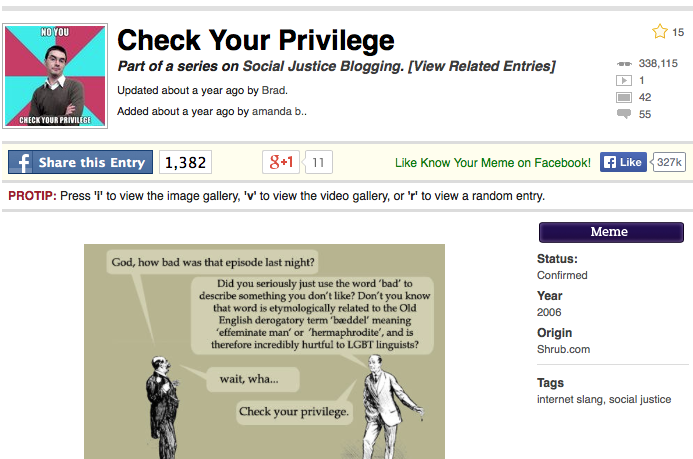
The idea of assessing privilege was not born on social media; it has existed since the mid-20th century and was popularised among academics in the mid-1980’s. However, it has been resurrected in recent years among the general population as a tool for mediating online discussions, usually those that center around oppression and the various ways for dealing with it.

The Internet is an amazing tool for sharing ideas, but it also removes all barriers between people. Anyone can effectively weigh in on any topic, which makes it difficult to establish safe spaces for discussion.

This is where the need for the phrase “check your privilege” comes in; while many, such as the author of last week’s article, “The meaning of privilege,” view it as a put down or brusque conversation-ender, in reality it is simply being told that the various privileges you experience have impacted you in such a way that you are unable to be a constructive participant.

The “check your privilege” movement is such an incendiary topic because it tells us that not everyone has something inherently valuable to add to every discussion. While this perhaps contradicts everything your parents, teachers, and Western society has ever taught you, it is painfully accurate.

Do not look to random online quizzes or memes for a legitimate application of the term “privilege.”

Many of us have grown up in the era of Twitter fights, ridiculous Youtube arguments, and hate speech under the guise of “dude, it’s a free country,” and are unfamiliar with the idea of simply listening and supporting those who are central to a discussion.

Becoming defensive and combative in response to being told to check your privilege derails all useful discussion, and means that people must waste time and resources reassuring privileged groups that they are not all horrible people, while simultaneously defending themselves from hate speech.

This can discourage many from discussing issues at all, let alone attempting to bridge the gap between minority groups and mainstream culture.

The idea that the movement would be used to “silence Caucasian students” or use white heterosexual cis men as scapegoats is unfounded; part of white privilege is enjoying a mainstream media culture that is incredibly sympathetic to any suffering at the hands of a cruel minority. A prime example of this would be Tal Fortgang, Princeton student and author of “Why I’ll Never Apologize for My White Male Privilege,” which was published by Time and went viral.

Obviously having privilege does not make you a horrible person, nor does it invalidate all of your efforts and successes. It can depend heavily on context, and the weight various privileges carry differs around the world.

However, it is not meant to be used as a pass/fail system; when used correctly, this movement is a lot more nuanced and impactful than many believe. Do not look to random online quizzes or memes for a legitimate application of the term.

While it is true that we all should take the time to examine our own privileges, the reality is that our society has had a rigid and complex hierarchical structure for hundreds of years, and the “obvious groups” that are “targeted” by the “check your privilege” movement are generally very well deserving of constructive criticism.

In a learning environment, where discussion is so heavily emphasized, it is important that participants realize the systematic and institutional benefits they experience, and how these may have shielded them from certain realities faced by others.

One of the most valuable parts of checking your privilege is realizing that not everything is about you. Once this is accepted there are infinite opportunities for learning, growth, and cooperation.

Bending the rules of music

0

DCIM100GOPRO

How many men does it take to deliver a full electro-rock show with guitar, vocals, and electronic effects? For Canzino (Jesus/Zeus Cancino), the answer is one. His solo production pushes our understanding of what music can be with its smooth fusion of electronica, alt-rock, DJ, and looping techniques and elements of basically any and every genre in the book.

His songs are packed with heavy guitar, unpredictably enchanting melodies, illustrative vocals, and are all-around full of energy and emotion.

Zeus has been playing music for half of his life. His father, after noting the uncontrollable energy he had when it came to playing instruments, put him in classical guitar lessons at the age of 12. Zeus noted, “Although it was a great experience, it was torture at first. I didn’t learn how to properly read music until much later, because I had a good ear so I could listen to something and then know how it was supposed to be played.”

When he was in high school, his teacher and mentor, David Mills, pushed him to branch out into different musical avenues: everything from choir to jazz band, percussion to base. “It forced me to peel apart the layers of music — it kind of blew my mind,” explained Zeus. 

The unique blend of instruments and influences has shaped Zeus’ sound. “[It] allows for way more possibilities of what I can do. It’s definitely good for me because I have so many ideas.”

All of these ideas began to grow and, after high school, Zeus branched out from his rock-heavy roots, “went to a few parties,” and became interested in DJing. He stumbled upon a korg kaossilator (a device he now often uses for looping). Having both guitar and DJ equipment at hand stimulated him to think about how he could incorporate both into his music, and figure out “how it was all going to work.” 

He didn’t really find an answer to that question until he saw Super Tall Paul (musician/MC/motivational speaker/magician etc.) at Shambhala festival. This was a game changer for Zeus, who admired Paul’s “fluid presence on stage and his ability to truly interact with the audience.” 

Zeus recalls, “He would be clicking buttons, playing the ukulele and beat boxing simultaneously and I was just thinking ‘this guy’s so nutty!’ It struck a chord in me.” This pushed Zeus further into figuring out how sound blending and performance could work. 

He added, “[Paul] raised the bar in terms of presentation, to enhance the experience we have with the technology.” This is what Zeus strives for in his live show, in which nothing is pre-recorded; the organic unraveling of the music is important in his work. 

Another importance Zeus has found as a musician is listening back to his old material. He explains that this act of reflection is “self-meditating because when you’re going through rough times, sometimes you get stuck in your own head. Going back to old songs — it’s like finding an old scroll written in the distant past and you can sort of figure out why you were writing that in the first place — creating is what you are feeling in that moment.” 

As for the future, Zeus is hopeful about “working with other DJs and moving forward with genre mixing.” He finds value in flexiblility and trying new things, because “you may not like that genre, but there’s certain aspects in every kind of music that you can pull from to create your unique sound.” 

It’s this go-with-the flow attitude that has opened up space for so much musical exploration. He notes that “because plans never work out the way you want them to,” he tries to “keep this ideal of planning for 60 per cent of whatever you are going to do and then just wing it for the remaining 40 per cent.”

Zeus is currently working on his catchy single, “In Real Life,” which he just finished writing a few weeks ago. He is recording it in studio as opposed to all of his previous recordings, which  have been at home. “I really want to make it shine,” explains Zeus. You can also see Zeus busking on Granville Street and Commercial Drive in the summer months, as well as playing gigs around the city. 

If you are interested in exploring and pushing the boundaries of genre, sound, and performance, Canzino is definitely someone to check out. He has a refreshing approach to music that is forward thinking and open to possibilities. He clearly follows his own wise words: “Learn the rules first, bend them, then play your own game.”

Canzino will be performing at Falconettis on June 7. For more information, visit canzino.com.


The abortion debate

37

pro anti abortion

Let’s talk about abortion. Wait. Before you turn the page, know that I am not going to advocate a position on the issue. I strongly believe that pro-life or pro-choice is a matter of conscience, but since the vast majority of the online comments I received after the previous column seemed to focus on this topic, I figured there was no better time than the present to write about it and open a dialogue.

To be clear, when I say I want to open dialogue on this topic, I am not advocating that a woman’s right to abortion be criminalized. Whatever my personal feelings on the matter, I do not believe that I have the right to tell another person how to live their own life, so long as their behaviour falls within the realm of the law. I simply mean that we need to talk about designing a better legal definition of what abortion is, and what it should be in this country.

Many Canadians are not aware that Canada currently does not have any abortion laws beyond the point of its decriminalization, and that there are no legal restrictions on when a woman can request and receive an abortion. Though it is rare for doctors to perform abortions past the 20-week mark without a compelling health or genetic reason, officially, an abortion in this country can happen anytime in the nine months between conception and birth.

Canada currently does not have any abortion laws beyond the point of its decriminalization.

Between 2000 and 2009, this lack of any sort of legal framework led to the delivery of close to 500 aborted fetuses that showed evidence of life. These fetuses fall into a strange no-man’s-land, as they must still be examined for vital signs, and if alive, must be treated as live births, even if they are only fated to survive for a few minutes.

Our nation’s lack of restrictions has also led to a practice known as sex-selective abortion. Some cultures value the life of a male child over a female, and have been known to terminate a pregnancy simply because the child would be born a girl.

A reporter from Sun News asked Liberal leader Justin Trudeau about his position on the issue, and he calmly stated that he did not believe in interfering with a woman’s right to choose on this issue, despite the Canadian Medical Journal, the NDP (long advocates of a woman’s right to choose), and public opinion, condemning the practice. Thus we can see the tragic results of an extreme pro-choice position, as this practice undermines the equality of women, even before they are born.

On the other side of the coin, the pro-life assembly is not without its faults. I have heard it argued that women should attempt to deliver a child to term even if there is a high likelihood of mortality for both mother and child. Likewise, I have heard members of this group taking such a hard stance that they would accuse rape victims who choose abortion of infanticide. In my mind, that has as much a place in Canadian society as does sex-selective abortion: none.

As much as I respect Prime Minister Harper for sticking to his pledge not to reopen the abortion debate, this is one vow I desperately wish he would break. With the Trudeau announcement pushing abortion back into the news, the time is ripe for this country to define exactly what abortion should be for Canadians.


Red/green mangos vs. champagne mangos

0

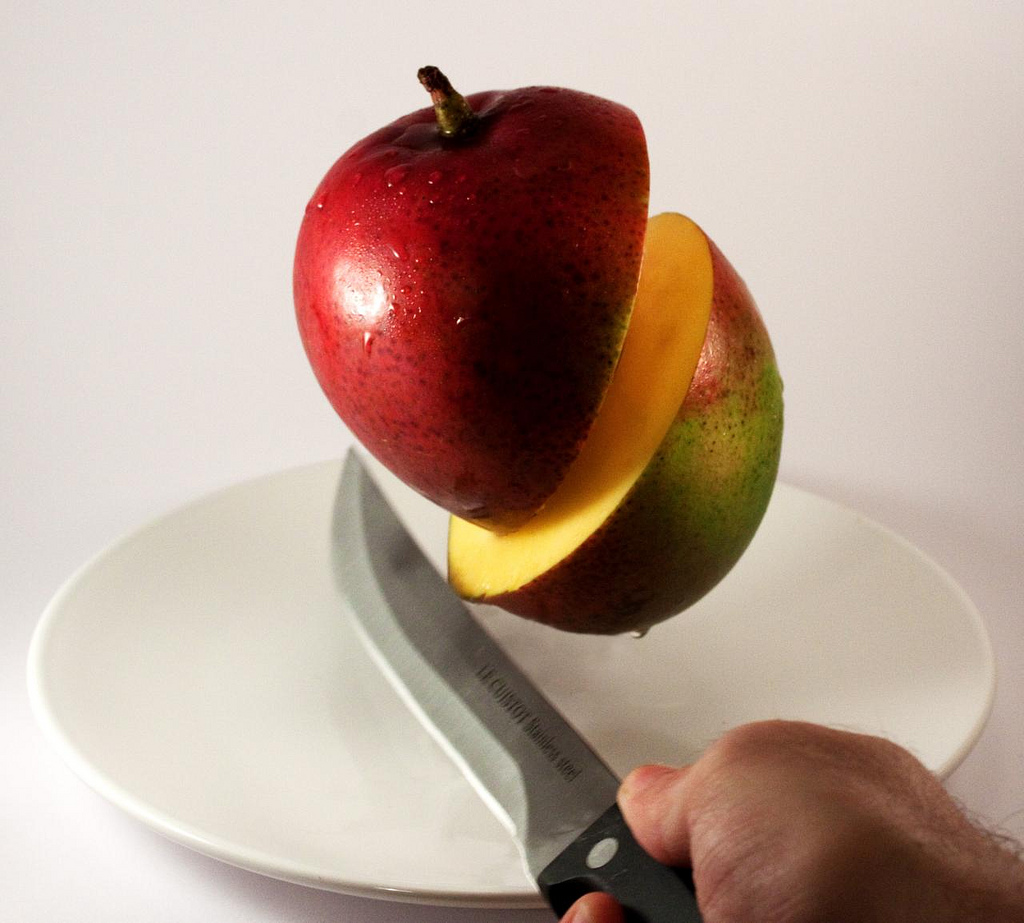
4661705735_ca219e16e2_b

Woohoo

It’s summer, and North Americans are once again collectively nodding their heads and wiping their mouths in agreement with one fact: mangos are wonderful.

The national fruit of India and the Philippines comes in dozens of varieties, each a different shade of green, red, yellow, and orange.

I’ve spent many a year avoiding any mangos with red or green colour. In our part of the world, they’re most often placed next to their golden counterparts, specifically champagne mangos. Red/green mangos are usually harder and stringier, and have bigger pits than the yellow ones.

If you lived your life like me, I tell you now, you’re living it half-heartedly.

Red/green mangos don’t melt in your mouth. They aren’t sweet as honey. You have to work for their secrets.

But unlocking them comes with loving the tango of sour and sweet, and loving the range of experiences that come from the different flavours, including variations of mild, rich, and woody. You get the satisfaction of not needing perfection, whatever that is. You get reality.

Boohoo

There’s something about champagne mangos that’s just a little too perfect. Too smooth. Too soothingly sweet.

I’m not suggesting we boycott these delicious freaks, at all; I’m suggesting we don’t settle for perfection. Especially not human-made perfection.

Champagne mangos came about from selective hybrid breeding among other mango varieties, the same selective hybrid growing that created the parapple and the limequat, and that led to the virtual annihilation of all but one variety of banana.

I’m not saying this fucking with nature will be a straw that will result in breaking the earth’s back. Not necessarily.

I’m just reminding you that nature has done a pretty good job of providing a slew of its own plants with their own delicate, mysterious, fulfilling, wonderful qualities, ones that create inspiring experiences by virtue of not being perfect. Just like the rest of life.

Don’t cut out champagne mangos completely. Just try to enjoy them along with as many other types as you can get your hands on. And don’t settle for “perfection.”


Variations on a gender

0

2683268941_4e0f579968_b

In early May this year, attention was drawn to one of the frequently overlooked areas of life where women still face injustice. Within biomedical research, as well as general health awareness, women across the globe have been receiving the short end of the stick.

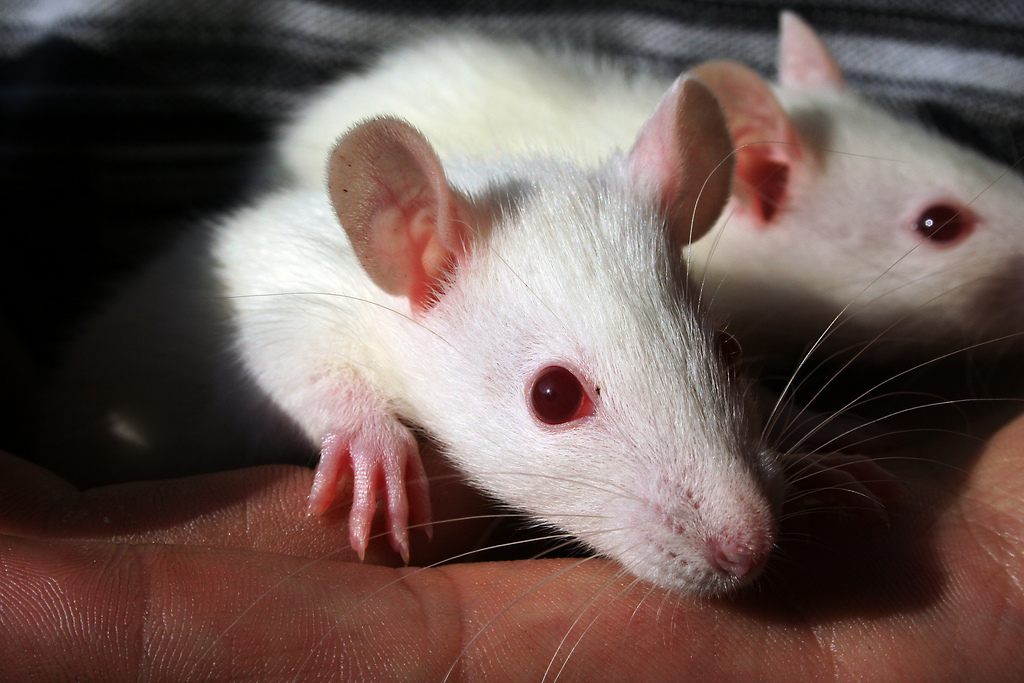
It recently broke that labs across North America have only been running tests on male rodents. The explanation for the discrepancy in gender representation was that researchers were worried that the reproductive cycles and hormones of female test subjects could cause differing results. According to the New York Times, clinical trials carried out by manufacturers still underrepresented women in their research.

I am fairly certain that for every female rat experiencing varying hormones from their male counterparts, there is a human woman experiencing differences as well. The contradictory logic tells us that women have not been receiving the care and attention they deserve, but are rather, as Jill Becker of the University of Michigan puts it, “simply a variation on a theme.”

Women also face frequent discrimination in terms of heart health: they are largely misdiagnosed when going into cardiac arrest, either by healthcare professionals or themselves. This is primarily due to a lack of knowledge about their different symptoms when having a heart attack.

Our society has come a long way in terms of equality, but there is still work to be done.

The classic Hollywood scene in which one drops a glass and grabs their chest before falling to the floor is a male-specific depiction of cardiac arrest. In fact, according to the American Heart Association, many women have a less dramatic experience, with little chest pressure, but often with nausea and shortness of breath instead.

Misconceptions in health should not be taken lightly. To protect women’s health there needs to be more recognition of the facts. According to the American Association of Retired Persons (AARP), heart disease kills five times as many women than breast cancer. Yet breast cancer research receives approximately $500 million more in funding, because breast cancer is depicted as a greater threat to women.

In today’s world, gender bias can be hard to identify because of how far our society has come in terms of equality. But the truth is there is still more work to be done. Misdiagnoses and unforeseen side effects are dangerous to the long term and immediate health of women.

Women are not simply a variation of men. Research needs to include all the variables, including gender.


The wrong guy

0

With Barry Trotz having just been hired by the Washington Capitals, some are likely to say that the Canucks missed out. Trotz coached the same team for 15 seasons, and was a seemingly good communicator, able to do so much with so little.

However, I am relieved by the hiring. I certainly cannot say he is a terrible coach, and if he did become Vancouver’s guy, I would certainly cheer for his (and the team’s) success. But on paper at least, he seemed like the wrong guy for the job.

Everyone knows the Nashville Predators, Trotz’ previous and only NHL team, are horrendously boring. Every time they played the Canucks, the Predators guaranteed a defensive snoozefest.

Many like to point out that Trotz did what he had to, playing such a boring game due to the talent he had. However, the Predators have had star players such as Shea Weber, and their GM, David Poile, was GM of Team USA for the 2014 Winter Olympics, a highly offensive team.

Unlike Tortorella, Trotz was probably a good communicator with a good repertoire with the team.

Although a lack of talent probably comes down to how much money (or lack thereof) the owners put into their team, the firing of Trotz and hiring of Peter Laviolette indicates that the owners saw a problem in Trotz’ offensive game.

It should be noted that Trotz’ Predators missed the playoffs more often than they made them (by a slim margin), and only once made it past the first round. And us Canucks fans should remember this, as it was the Canucks who knocked them off in their 2011 Cup run.

So I was skeptical when Trotz’ name was bandied about as the frontrunner to be Tortorella’s successor. A main reason for keeping Tortorella, after all, was his previous playoff success; his replacement should be a guy who is similarly offensively minded.

And again, that is not to say that Trotz didn’t have his advantages. He was the coach of a team for 15 years straight. Regardless of being a southern expansion city that probably doesn’t care too much about winning, a coach usually gets canned before 15 years. Usually before five.

Someone clearly thought he was getting the best out of that team, regardless of the system being played. His longevity also indicates that he is a good communicator and had a good repertoire with the team, unlike Tortorella, who many see as an inefficient communicator, and someone who loses a team after a relatively short period of time.

Concerning his offensive game, I’m sure Trotz can adapt his style to be more aggressive; with Washington he will have to. Most coaches coach the systems they have to, and with Ovechkin, maybe Trotz will be the one coach who can drill a system in that is defensively sound and accommodates Ovechkin’s skill (as opposed to Dale Hunter, who, if I recall correctly, stifled Ovechkin’s offense with a highly defensive system).

Who knows? Maybe the Capitals will become an elite team under Trotz’ leadership.

But for now, I am pretty happy that he is not the coach of the Canucks. I no longer have to remain cautiously optimistic about another defense-first coach.

Satellite Signals

0


WEB-woodward

Woodward’s

One of Canada’s most successful documentaries had an additional screening on May 26 at SFU Woodward’s. The Corporation is a 2003 Canadian documentary written by University of British Columbia law professor, Joel Bakan. The film, which was presented by SFU’s Vancity Office of Community Engagement, explores the corporate world and the tremendous pursuit of profit as the sole motive in business. 


Ssurreyurrey

Wednesday, May 28 saw the launch of a new group called SFU WordPress Community of Practice (CoP), based out of SFU’s Surrey campus. Led by the Teaching and Learning Centre’s interaction specialist and community administrator, Jason Toal, the CoP aims to be a voice for SFU’s WordPress user community. The event was a continuation of the Teaching with Technology series for faculty members, instructors, and TAs at the Surrey campus.

vancouver

Sheraton Wall Centre

Professionals and researchers alike put their heads together last week at the Canadian Radiation Protection Association’s annual conference, which focused on managing risks associated with radiation. Highlights of the conference included a talk on the risks of  exposure to radon, a radioactive gas, by SFU’s health sciences associate professor Anne-Marie Nicols, and a pair of discussion sessions related to the 2011 Fukushima disaster.


University Briefs

0

3953861947_fd87e2afe0_z

Self-folding paper created at UBC

UBC mechanical engineering master’s student Ata Sina has created a new kind of paper using a thermoplastic polymer that self-folds when exposed to heat; the idea came out of an interest in origami. This polymer is special because it will contract in the presence of heat, and fold itself along computer-cut origami designs. Along with its potential uses as a packing material, Sina is looking at the possibility of using the paper as pop-out art in children’s books.

With files from The Ubyssey


Enrolment numbers cause space issues at U of W

Students at the University of Waterloo have raised concerns about increasing enrolment rates and the resulting lack of space. The biggest issue is the loss of social space for students, which has been decreasing over the last 15 years.

Vice president, academic and provost Geoff McBoyle said that administration hopes to tackle this issue with initiatives like the new student residence and updates to UW Place, as well as efforts such as adding desks in the hallways.

With files from Imprint


Criticism for federally funded internships

The federal government is putting $40 million into 3,000 post-secondary internships centered around science, technology, engineering, and mathematics (STEM) fields, including skilled trade jobs. The core criticism against this funding is that it doesn’t address the problem of the 300,000 unpaid internships that currently exist, and do not provide adequate compensation.

Claire Seaborn, president of the Canadian Intern Association, said “If the federal government wanted to address the issue federally, they would have amended the federal labour code and have gotten Statistics Canada to start tracking internships.”


With files from The Varsity


Santa Barbara shootings expose the dangers of our societal misogyny

1

BN-CY196_0525sb_M_20140525161940

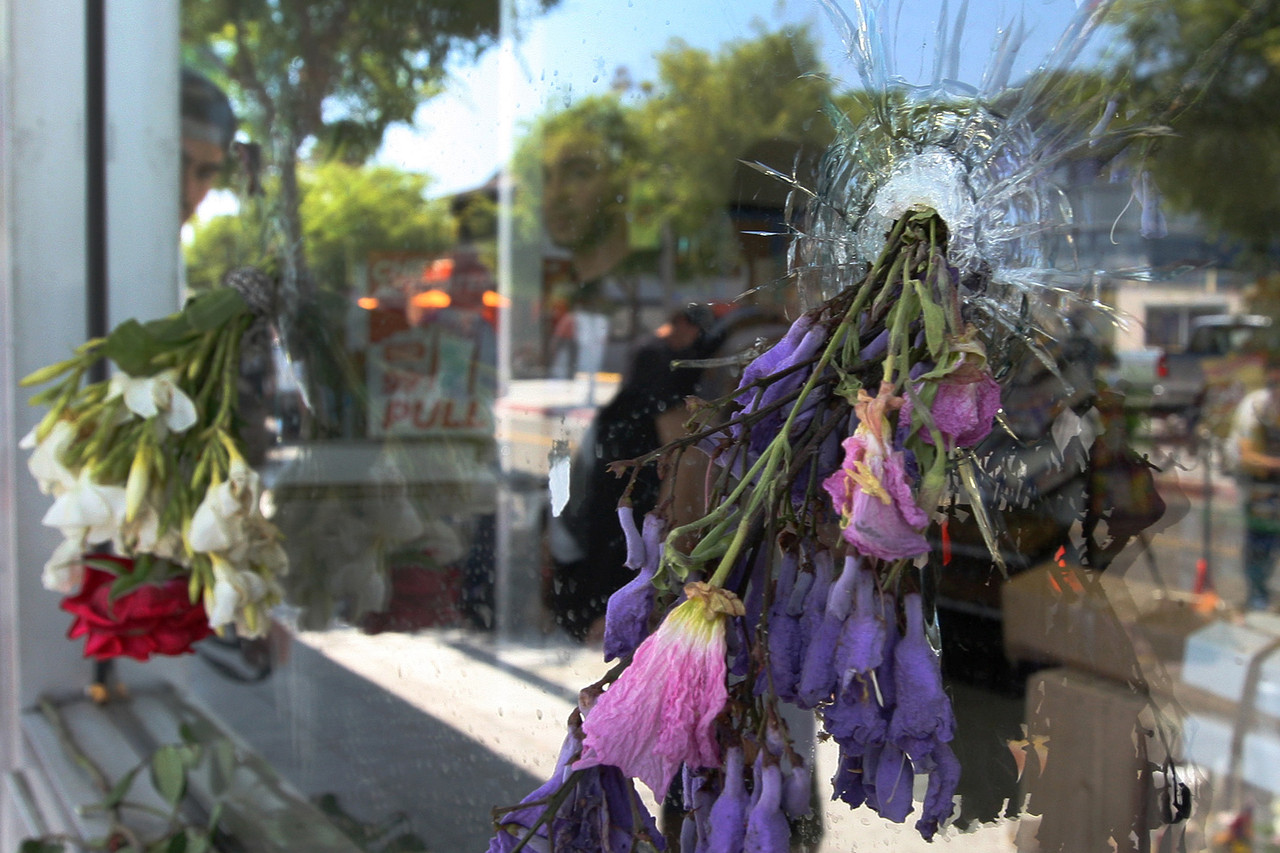
The lives of seven young people were taken in Isla Vista at Santa Barbara City College on May 23, and if you haven’t been paying attention, you should be. There is more to this incident than gunman Elliot Rodger’s personal struggles, which have been the main focus of the media reportage on the event. This tragedy was the result of multiple cultural and societal issues in the Western world, including gun control, mental illness, and, most troubling of all, violent misogyny.

If mental illness was the gun in this crime, misogyny was the bullet. We can’t focus solely on Rodger’s mental state as the cause of these deaths. Rodger’s extreme resentment towards women may have been worsened by his illness, but it was fueled by a culture that encouraged his attitude, and has encouraged the attitudes of countless other killers and abusers.

Examples of this sort of poisonous cultural trend are everywhere: the “friend-zone,” pickup artists, online stalking, and even catcalling from vehicles and bars. Though our society teaches us that this behaviour is normal, these are situations in which women are being treated as objects that men have a right to use, not as human beings who have the right to their own bodies.

If mental illness was the gun in this crime, misogyny was the bullet.

The idea that these sorts of actions are okay comes down to the feelings of entitlement based in deeply ingrained misogyny. I’m not saying that every man shares these views, but there are enough to justify misogyny as an issue of serious concern. This is evident in popular culture, social media, our language, and in the reality of how women are still treated every day when they walk down the street.

No one should ever feel afraid to turn a romantic overture down, and no one should ever feel entitled to another individual’s body because of their gender. Yet the reality is that I and countless other women have felt afraid when being pursued by pushy men because we know that violence can, and often does, occur. Harassment will never be a sign of appreciation or flattery, and being put on a pedestal for display is dehumanizing and scary.

Avoiding groups of men on the street when I am alone at night and pretending not to notice inebriated leers when I go out with my friends has become second nature for me, and I know I’m not the only one. I am afraid to stand my ground because I don’t want to be targeted; no woman should have this expectation put upon her. This isn’t the way that things should be, and both men and women need to play their part to change this norm.

Elliot Rodger felt like he was owed a woman’s affection. This isn’t only because of his mental illness; it’s also because he internalized the way our society portrays both femininity and masculinity, with dangerous results. Misogyny in our culture doesn’t only affect how men tend to view women — it also affects how men view themselves, and each other. Rodger resented women for rejecting him, and men because, in his eyes, they had been given something that he deserved as well.

The culture promoting this definition of masculinity is evident in the body building blogs and pick up artist sites that Rodger frequented. This alpha male culture — one he claimed to be a part of in his Youtube videos — is deeply intertwined with misogyny as it associates femininity with weakness, and masculinity with strength. In his videos, Rodger seems desperate to prove himself as manly by showing off his power and dominance, in an attempt to fulfil the expected gender role our society had presented him.

The hashtag campaign #YesAllWomen was created in response to the incident — it’s meant to allow women and men to share their thoughts on misogyny and the role it plays in their everyday lives. It has also allowed individuals to show support to the women killed and injured in the incident, and all those who’ve lived through violence and abuse. 

Some have claimed that feminists are using this tragedy to promote their cause, as if it’s a bad thing. It isn’t. This is an opportunity for our culture to reflect on the damage misogyny causes for all of us. Because this isn’t the first time this sort of thing has happened. And, sadly, it probably won’t be the last.

The most well known Canadian equivalent to the Santa Barbara attack is likely the 1989 attack at École Polytechnique in Montreal, when Marc Lépine murdered six female engineering students because he was denied acceptance into the school and resented women for occupying nontraditional roles that he felt entitled to. But it doesn’t stop there — violence against women in Canada is a huge issue, and Statistics Canada released data last year which indicated that Canadian women are 11 times more likely to be victims of sexual assault than men.

Something is obviously wrong here. Misogyny is still shaping the attitudes and actions of individuals, and women are being mistreated emotionally and physically as a result. If nothing else, we should respond to this tragedy by re-evaluating our societal and cultural norms, and asking ourselves: what can we do to make sure this never happens again?