Home Blog Page 1163

Undergrad accepts high-level international position

0

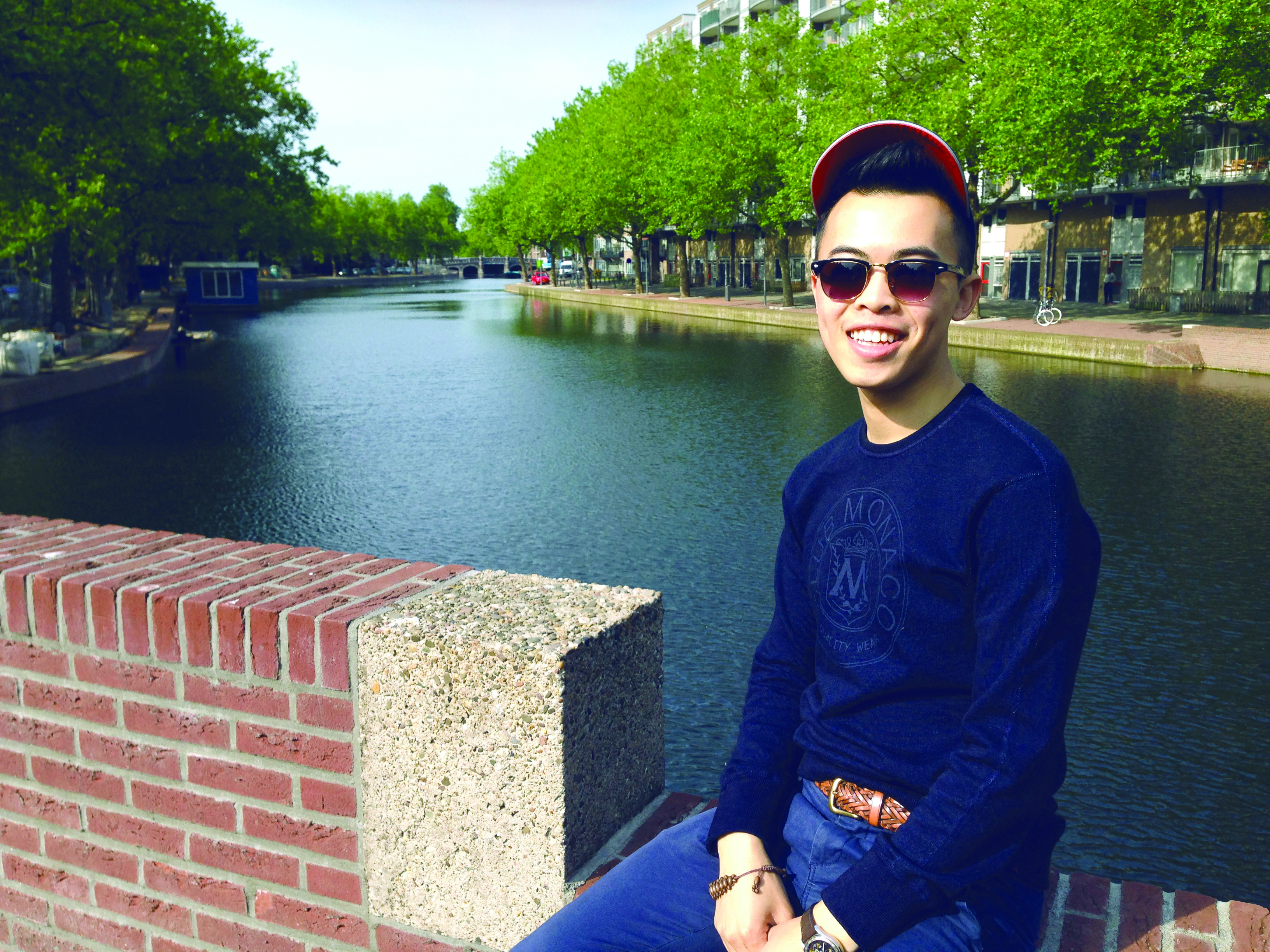
CMYK-Gordon in RotterdamNot many undergraduate students get the chance to hold an executive position at one of the world’s largest global organizations, but SFU’s Gordon Ching just landed such a position with AIESEC, a prominent not-for-profit organization dealing with youth leadership and positive social change.

Ching accepted a position as AIESEC’s chief digital officer and global vice-president of digital marketing. The year-long contract has taken him overseas to the Netherlands, where he is posted in the city of Rotterdam.

What began with a visit to AIESEC SFU’s clubs day table in 2010 has turned into a progressive career with the company for the 21-year old student. Ching made his way from being a lowly online media coordinator, to the Canadian national vice-president of marketing and communications, to now working on a global scale.

In his previous position, Ching worked with a network of 2000 people across Canada within a leadership team of 7 based in Toronto, Canada. He was responsible for country-wide marketing and communications for the organization, as well as the organization of 15 global conferences, including the Canada Youth to Business Forum, also leading AIESEC’s Canadian Youth Voice Survey.

This new position has him working with a team of 24 people, from 18 countries across the world. For him, the main difference from his previous position is the global aspect — something he believes aligns very well with SFU’s campaign to “engage the world.” “I’m not thinking about ‘how do I create change in Vancouver or in Toronto?’ now I’m thinking, ‘how do I create change across our 124 country network?’” said Ching.

Another challenge he faces in this new role is “[understanding] the intricate cultural differences, different communication styles, and how [he] can lead people across different areas.”

Despite being in a state of transition, Ching enjoys his new work. “I feel that with every new experience comes a brand new way to see the world and understand myself at the same time,” he said.

At the beginning of his undergraduate degree in human geography, Ching couldn’t have imagined the present turn of events. He had a passion for climate change, so he focused his energies on the environmental science aspects of the degree.

He explained that he later realized that if he wanted to effect real change, he would need a broader understanding of other things, such as economics, business, and politics: “I not only wanted to be an environmental scientist anymore but an entrepreneur or politician that can be a catalyst for massive and impactful change.”

This, in part, prompted him to get involved with AIESEC in the first place. He also said that, as a young person, he didn’t have much to lose in trying out something new. Ching emphasized that, “university is the best time to really develop yourself.”

Ching has been out of school for just over a year now, but he intends to pick up where he left off after his contract is up.

He stressed the importance of breaking out of one’s comfort zone, encouraging SFU students to “think beyond their local horizons, [. . .] reach out to an international audience,” and also to find deeper meaning in their degrees and “how they can bridge [them] into a greater social context to make a meaningful impact.”

“You need to understand the picture beyond your own discipline,” he concluded.

Don’t call me inspirational

0

By: Micaela Evans

You don’t get to be called “inspirational” for living your everyday life. Inspirational is climbing Mount Everest, building a school in Africa, writing a novel, earning a degree — not completing everyday tasks such as going to school, brushing your teeth, hanging out with friends, or taking the bus.

Unless, of course, you happen to be disabled.

People with physical and mental disabilities get called inspirational on an almost daily basis, by strangers and friends alike. It’s happened to me countless times. It’s not as though most of these people have done anything remarkable to deserve such high praise — most of the time, they’re just living their lives, doing things that no one would think of calling inspirational were they done by anyone else. The word inspirational, and other words like it, are handed down to people like me in an attempt to congratulate us on how supposedly difficult our lives are on a daily basis. 

What people don’t know when they use terms like this is that they aren’t compliments. People with disabilities don’t need to be congratulated for waking up in the morning or going to university. In fact, more often than not, these comments end up being more insulting than appreciative, because they imply that the disability is the defining factor in these people’s lives. It isn’t.

These comments are insulting, because they imply that the disability is the defining factor in these people’s lives.

Those in wheelchairs, or with other physical or mental disabilities, receive these sorts of “compliments” all the time. People will often pat you on the head and tell you what a wonderful job you’re doing, just for living your life. One time, a teary-eyed woman approached me saying that she “also knows someone in a wheelchair,” and asking, “do you know them too?” Like there’s some secret club we all belong to.

I’m used to being singled out in a crowd — seeing people’s eyes linger, feeling like an anomaly. Despite whatever good intentions people might have, it’s not okay to come up to someone with a disability and tell them how inspiring or courageous they are, especially if you don’t even know them. Though you may not realize it, doing this is just further objectifying people with disabilities, in order to make yourself feel better, not them.

One of the most prominent examples of this is a trend that comedian and disability activist Stella Young has termed “inspiration porn.” I’m referring to the countless photos across the Internet of so-called “inspiring” people with disabilities which end up garnering thousands of likes, comments, and shares. The captions are usually along the lines of: “What’s your excuse?” or my personal favourite: “The only disability in life is a bad attitude.” 

The subtext at play here is that a disability — someone in a wheelchair, with an amputated limb, with a mental illness — is something to overcome, and a means of inspiring people who simply don’t have to deal with these issues. Disabilities here are portrayed as negative, and used by able bodied people to make them feel better about their own lives.

When viewing these images, the message seems to be that, no matter how bad you may feel your life is, at least you aren’t that person. At least you don’t have that form of a disability. At least you’re not one of them.

These images objectify disabled people because they assume that a disability is such a bad thing that anyone living with one is deserving of praise, just for existing and continuing on. But, more often than not, the people in these photos lead regular, fully functional lives. Whether you like it or not, they don’t exist just to inspire you.

It’s almost an expectation at this point that a disabled person’s job is to inspire the people around them. It’s still uncommon for someone in a wheelchair to teach a university class or hold a high position in an office environment — instead, it’s become a stereotype that anyone in the spotlight or the media who’s in a wheelchair is there to inspire. As soon as we see their picture or hear them speak, we expect them to impart their own brand of powerful wisdom upon us.

I’m not saying you can’t admire someone in a wheelchair. Of course you can. Many of them go on to lead lives that impact others, and pave the way for those following in their footsteps, and they deserve all the praise they get. But we need to view these achievements like we would anyone else’s. Disabled people are just as likely to be inspiring as able bodied people; it’s the distinction we draw that shows just how tokenized those with disabilities have become.

You should never let this line of thinking define how you see the people in your life with disabilities. Disabled people are the same as anyone else in terms of our ability to accomplish daily tasks, make an impact, or inspire change; their disability is only one aspect of who they are.

After all, you wouldn’t approach a stranger, pat them on the head, and tell them that seeing them shop in the dollar store inspires you — so what’s the difference if that stranger happens to be on a pair of wheels?

SFU student humanizes translation troubles

0

translation-VickyYi

SFU alumna Rebecca Wolfe is calling for human assistance in machine-translation, among other improvements, after conducting research at both the United Nations and SFU regarding multilingualism at international institutions.

Wolfe suggests that, in addition to promoting multilingualism, international institutions such as the UN need to effectively use emerging technological tools while better incorporating the human aspect of translation.

During her undergraduate years, Wolfe took an interest in linguistics, which eventually led her to an internship in the UN editorial department during her Master’s of Publishing degree at SFU.

She explained, “For me, it was interesting see how they handle multilingualism in a multinational, multilingual organization. So I had some first-hand research I was able to do to actually observe what they do for publishing practices multilingually and then to gather information about the state of multilingual publishing today.”

Although the UN is committed to publishing materials in multiple languages, due to obstacles such as historical precedent and a lack of resources, they are not always able to do so. Wolfe argues that, while we do need to translate under-read works from other languages into English and bring them to an English-speaking audience, “English as an only option, or as a default, or as a source for most publication around the world, is problematic.

“The UN has an opportunity to promote multilingualism, and [. . .] they have a responsibility to protect linguistic diversity around the world,” said Wolfe.

In addition to discussing the issues of anglocentrism, her thesis contains insights on the modern fascination and mass-use of machine translation as well as its error rates and efficiency.

Wolfe explains that machine translation has improved drastically over time, and organizations such as the UN should take advantage of these advances to more readily incorporate multilingualism into their publishing practices.

Although Wolfe believes that improvement will likely continue to occur, she feels that human intervention is required alongside machine processing to enhance clarity of the translations.

“As anybody who’s tried to use google translate or any other online translators, there’s going to be mistakes. You will get some crazy results. It is good to get the right translator and have some human translating at the other end of it,” Wolfe explained.

Wolfe concluded: “I hope [my work] will be used by big organizations, universities, by academic publishers, because my main point is that multilingualism should not be an afterthought, and we shouldn’t lose linguistic diversity because it is a pain in the butt to translate things.

“A lot of languages are dying today,” she continued. “My main point is that I hope people will not be afraid to take the time to do translating and to pay attention to other languages besides English.”

Hollywood can’t handle feminism

4

Forewarning: the “F-word” is about to be used numerous times throughout this article. The one rhyming with duck? Not so much. We’re talking about the other “F-word,” feminism. It’s about time people stopped making the usual mistake of assuming feminism means putting women above men.

Recently, actress Shailene Woodley of the film Divergent was asked whether or not she considered herself a feminist. Her response was, “No, because I love men, and I think the idea of ‘raise women to power, take the men away from the power’ is never going to work out because you need balance.”

Oh good, yet another confused Hollywood star. Feminism at its core is about striving to ensure that women and men have equal rights and opportunities. Since when did it become such a dirty word that became synonymous with “man-hating” and “power-hungry”? Perhaps since people like Shailene Woodley continue to use and unintentionally spread this false definition of feminism.

With documentaries such as Miss Representation and movements by organizations such as the Geena Davis Institute on Gender in Media showcasing the lack of equality between men and women in the very industry that she is a part of, Woodley is far too ignorant. Her comments about taking “men away from the power” only continue to play into the Hollywood trap of vilifying feminism, and pushing aside the achievements of women.

Woodley’s character has helped transform her into Hollywood’s next “it girl.”

A two-minute montage played at this year’s Oscars ceremony depicting popular heroes in film showcased this vilification. The clip featured dozens of heroes, but most of them were male. Within the clip, women were featured for less than 20 seconds, putting the male to female ratio of representation at 6:1.

Why weren’t more female heroes included? One can’t say that more don’t exist. The clip could’ve featured famed “Tomb Raider” Lara Croft, our favourite witch, Hermione, or Terminator’s Sara Conner, among others.

Hollywood’s aversion to celebrating strong female characters is clear. Yet, with her role in Divergent, Woodley herself plays a character that is being hailed as one of the next great female heroes.

Tris Prior, her character, has been called a new hero for younger generations to look up to, and has subsequently helped transform Woodley into Hollywood’s next “it girl.” Woodley is being painted by the media as a role model for this younger generation.

It is thus even more critical that she understand the basis of feminism. Her dim-witted answer to whether or not she considers herself a feminist is now spreading a false notion of what feminism is to this younger generation.

You may argue that her publicist should have prepared her better for questions such as this, but this is on her. Misunderstanding the main principles of feminism in this day and age is just sad and unacceptable.

Crack open a dictionary, Shailene.

SUB architects discuss sustainable design features

0

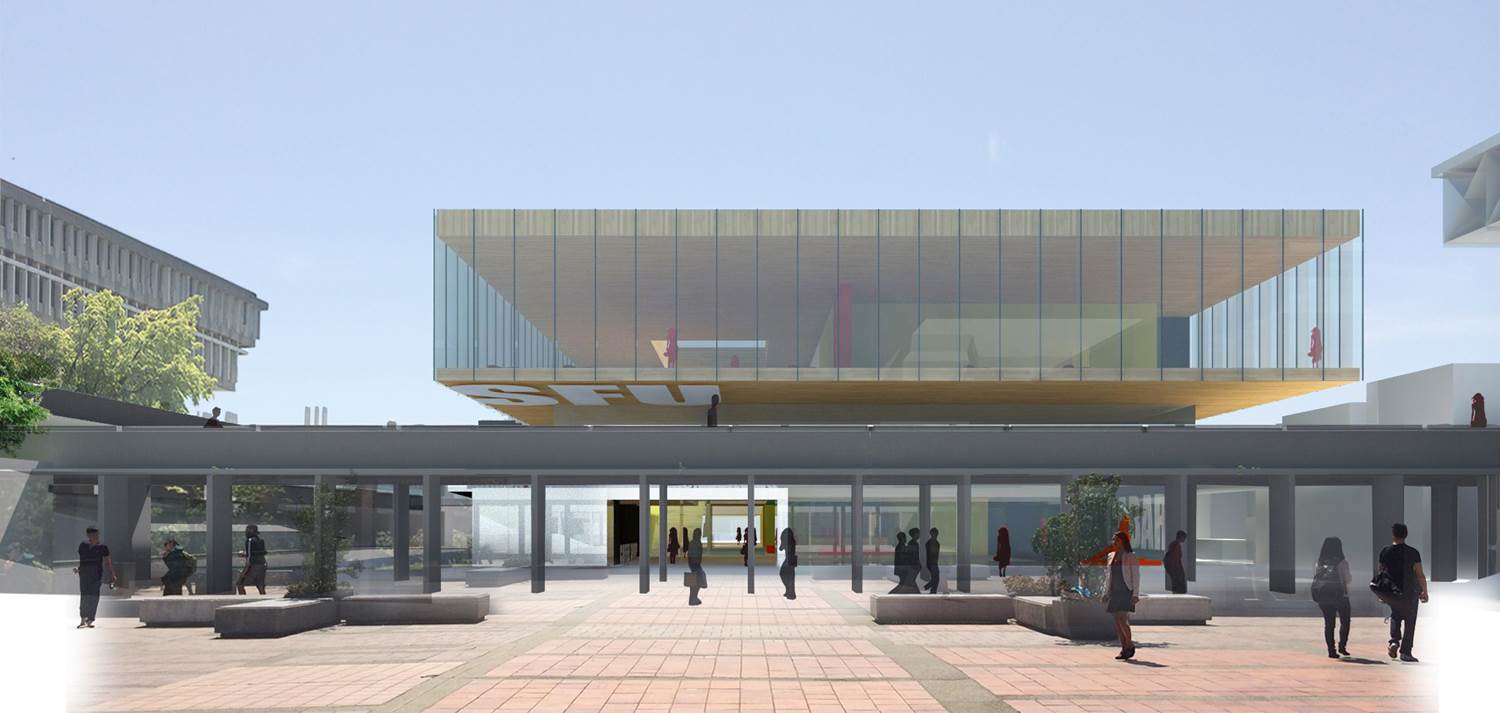
Build SFU hosted its second sustainability workshop last Thursday, during which project architects for the Student Union Building (SUB) discussed how they will incorporate feedback from students and staff concerning sustainability in the building’s design.

Architects from Perkins+Will presented feedback received during a previous consultation before outlining their goals for meeting students’ desires for an environmentally-friendly SUB.

After tallying the responses, Build SFU found that students were mainly concerned with energy reduction, followed by efforts at social and community engagement, and the inclusion of local and natural materials.

Jana Foit, lead architect on the project, spoke to the various goals outlined for the new building. These included promotion of social sustainability and a culture of environmental stewardship, the incorporation of sustainably sourced materials, and the reduction of greenhouse gas emissions — all while balancing cost, sustainability, and quality.

In order to maximize energy efficiency, the architects discussed various options, including LED lighting, occupancy sensors, and reduced plug loads for power bars. Foit acknowledged that although “some of these strategies [. . .] are contradictory to some of the desires to have electrical plugs everywhere to plug in your laptop,” the architects feel that these features are vital to conserving energy in the space.

The architects also stressed the need for occupant engagement with the SUB to minimize energy use. When discussing how opening and closing windows can be useful in reducing heating costs, Geoff McDonell, the project’s lead mechanical engineer, asked students to, “treat [the SUB] like your own house.” He continued, “Would you leave your own windows open on a cold winter night? Probably not.”

The exterior of the building is likely to be 40 per cent windows, with the rest constructed using natural and recycled materials. Another feature that excited students in attendance was the possible inclusion of a community kitchen.

Despite student interest in the installation of solar (pv) panels, the architects replied that Burnaby Mountain is a “solar-challenged neighbourhood,” which makes it difficult to install solar panels that would generate consistent energy.

In an exercise at the end of the meeting, those in attendance showed interest in features such as metering dashboards. Such meters would allow students to see the energy use of a space in real-time — for example, a bathroom’s water usage.

Although other large-scale ideas like an intensive green roof did not seem likely, McDonell told those in attendance that, “None of this is off the table. This is all stuff that we’re looking at in terms of what can fit and what can work.”

China proposes railroad to Vancouver

1

CMYK-CRH3_in_Changsha-Wikimedia CommonsAccording to Russian and Chinese state news, there may be plans to build a high-speed railway from China to Canada — a train ride of approximately two days when travelled at 350 kilometres an hour.

The route, which would stretch from Beijing to Vancouver, would foster trade and travel across several nations. It would span 13,000 kilometres, crossing Siberia before entering a tunnel to Alaska, through a 200 kilometre underwater tunnel in the Bering Strait. This area is considered one of the most dangerous bodies of water in the world.

According to China Daily, the project is being pushed by an Alaskan company called InterBering LLC. They predict the total cost of the endeavor would be upwards of $35 billion.

Aside from the concerns surrounding the cost, some are skeptical that Canada, the United States, Russia and China will be able to agree on the project in order to put it into motion. Even if the proposal were accepted, experts say it could take up to 25 years to complete.

Peter Hall, SFU urban studies professor, is doubtful of the plan’s immediate feasibility. “This is surely a long way in the future, more of a speculation about possibilities,” he told The Peak. “But there is a long history of humans proposing grand infrastructure, often going bankrupt on the first attempt — [think of the] Channel Tunnel, [the] Panama Canal — and once built it becomes a fact that does change travel and settlement patterns.”

Beyond fiscal and cooperative issues, Hall added that there could be a number of questions raised about the environmental aspect of the Beijing-Vancouver plan, were it to go through. “The environmental calculus would be quite complex,” he explained. “How is it actually constructed, what stops are en route, does it displace or reinforce carbon-intensive air travel, what fuel is used on the rail, and if electricity is used, what is the source, etcetera?”

Canada isn’t the only country China has its eye on — the Chinese have three other railroad proposals on the table, including one from London through Paris, Berlin, Warsaw and Kiev to Moscow; this route would split to end in either Kazakhstan or Siberia.

Another railroad, to start in China, would run through Kazakhstan, Uzbekistan, Turkmenistan, Iran, Turkey, and Germany. A third would start in southern China, running through Thailand, Cambodia, and Malaysia before ending in Singapore.

All of these plans would involve heavy infrastructure and international co-operation between the governments planning the railroads. China has already made statements saying that they would fund the projects internally.

In fact, recent agreements may mean China’s plans are not as far in the future as Hall might think. Laos has already signed on to borrow $7 billion from China to fund the railroad that will run through Southeast Asia, and China is building a railroad in Nigeria as a form of aid to Africa, providing jobs and infrastructure.

This railway will link Kenya’s Indian Ocean port of Mombasa and capital, Nairobi, and eventually link Uganda, Rwanda, Burundi, and South Sudan, and will cost $3.8 billion.

Aside from Laos and Nigeria, no other countries have made formal commitments to the new Chinese railways.

Co. Erasga presents the return of Colonial

0

CMYK-Colonial - creations_in_pocess


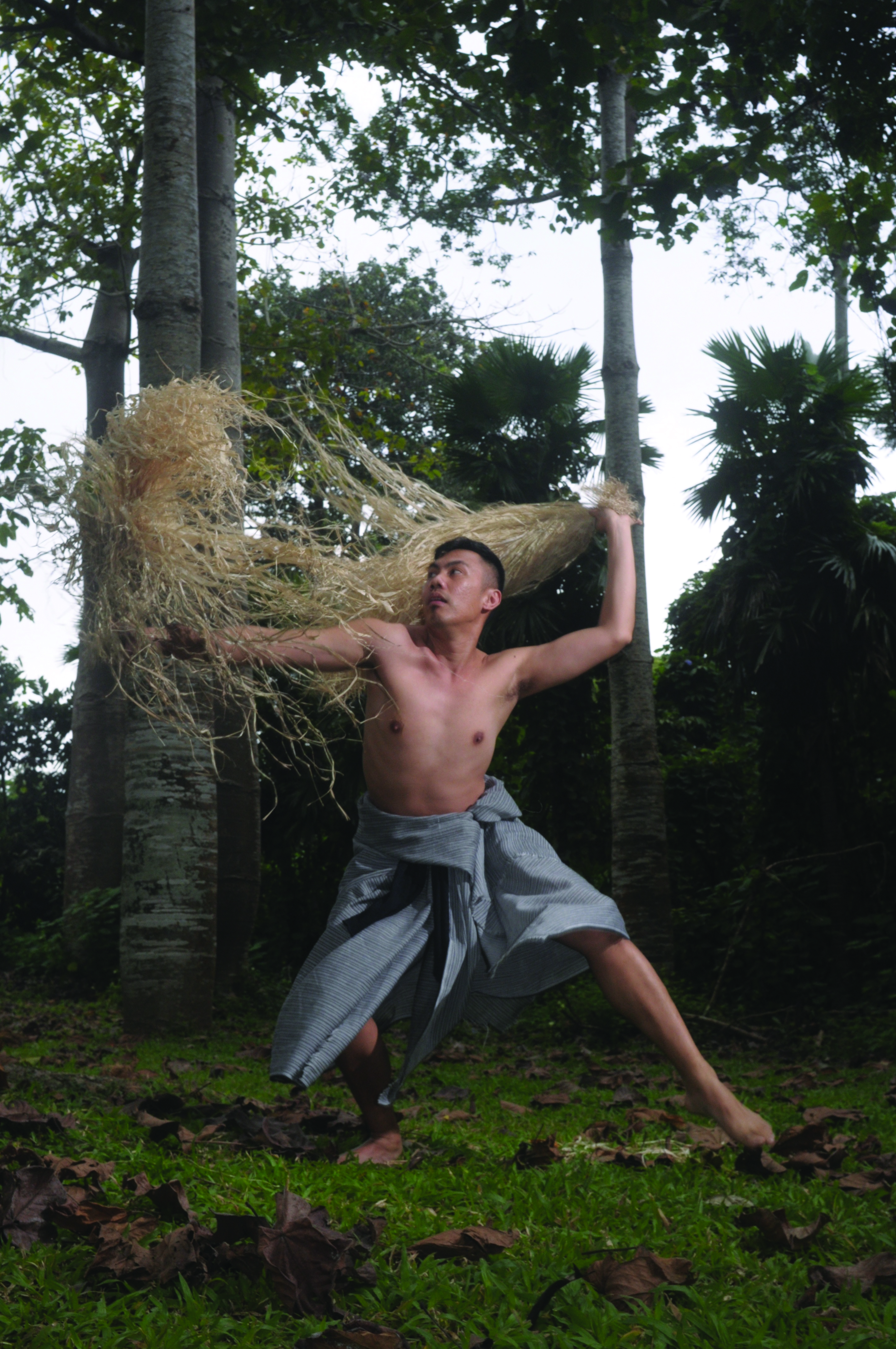
Dennis Gupa, theatre director behind Colonial, Co.ERASGA’s provocative exploration of the colonization of the Philippines, is sitting in a plastic chair, watching Alvin Erasga Tolentino reconstruct a section of the performance. A multi-media dance piece conceptualized by the two, Colonial premiered in Vancouver in 2012 and toured the Philippines in early 2013. 

The show was a hit on both sides of the Pacific, and Tolentino is currently preparing for a second tour. With an expected audience of over 3,000 people, Tolentino says he feels like Lady Gaga. “When does contemporary dance reach that many people?” he asks. 

Tolentino moved to Canada in 1983, but he keeps close ties to his birth country, the Philippines; he met Gupa in 2007 while touring there. When they began Colonial, Tolentino wanted a collaboration with Filipino artists. As Gupa puts it, “We were concerned with the honesty of the vision, and Alvin is a daring artist, strong enough to say no.” 

Gupa helped Tolentino bring four new generation Filipino artists to the project: Jon Lazam, videography; Angelica Dayao, musical composition; John Carlo Pagunaling, costume design; and Jonathan Tsang, lighting.

The project was not without controversy. Its Filipino audience challenged the artists’ politics, along with Tolentino’s empathy for the country’s post-colonial issues today. On one level, Colonial responds to Gupa’s questions about Filipino politics: “I wonder,” he muses, “why are we engaged in disputes between the US and China. Why don’t they just leave us alone to follow our course? In some way our government is still participating in colonialism.”

However, the question of the artists’ politics is a sensitive one. In the Philippines, politics is still dangerous if taken too far. “We still have desaparecido,” says Gupa, referring to the Filipinos who were allegedly kidnapped by authorities. “We are moving out of that era now, but art has a responsibility to challenge. Part of being an artist is to transcend the fear of death.”

In exploring colonialism as a dancer, Tolentino had to bring up forgotten memories and embody the pain experienced in those days past. “The process strips me,” he says. “I have to empty my body, like meditation, in a way. I give it as a physical offering, a prayer.” Similarly, for Gupa, the project revolves around what’s been lost and what’s been found. “We have debris from the past,” he says. “Can we do something with the debris? We can reclaim it. We have archives, but there are other ways to engage with the memories.” 

Gupa says he’s become sensitive to conversations that have arisen as a result of Colonial. “When the project is responded to, it gives us a chance to expand it and make it deeper. We’re going to an area that celebrates their Spanish ancestry. I am excited to bring an anti-colonial view to that audience.” 

Colonial’s opening falls on the Philippines’ celebration of independence from Spanish rule. This coincidence represents, for both Tolentino and Gupa, the tour’s essence: it was a long, episodic and communal process where the pieces came together in serendipitous ways. Through it, both had the feeling that this project was meant to be. 

Colonial will be presented at the Scotiabank Dance Centre June 11 and 12. For more information, visit companyerasgadance.ca. For tickets, visit ticketstonight.ticketforce.com.

Student assembles artists for day-long Buskathon

0

CMYK-Busking-Scott Jacobsen

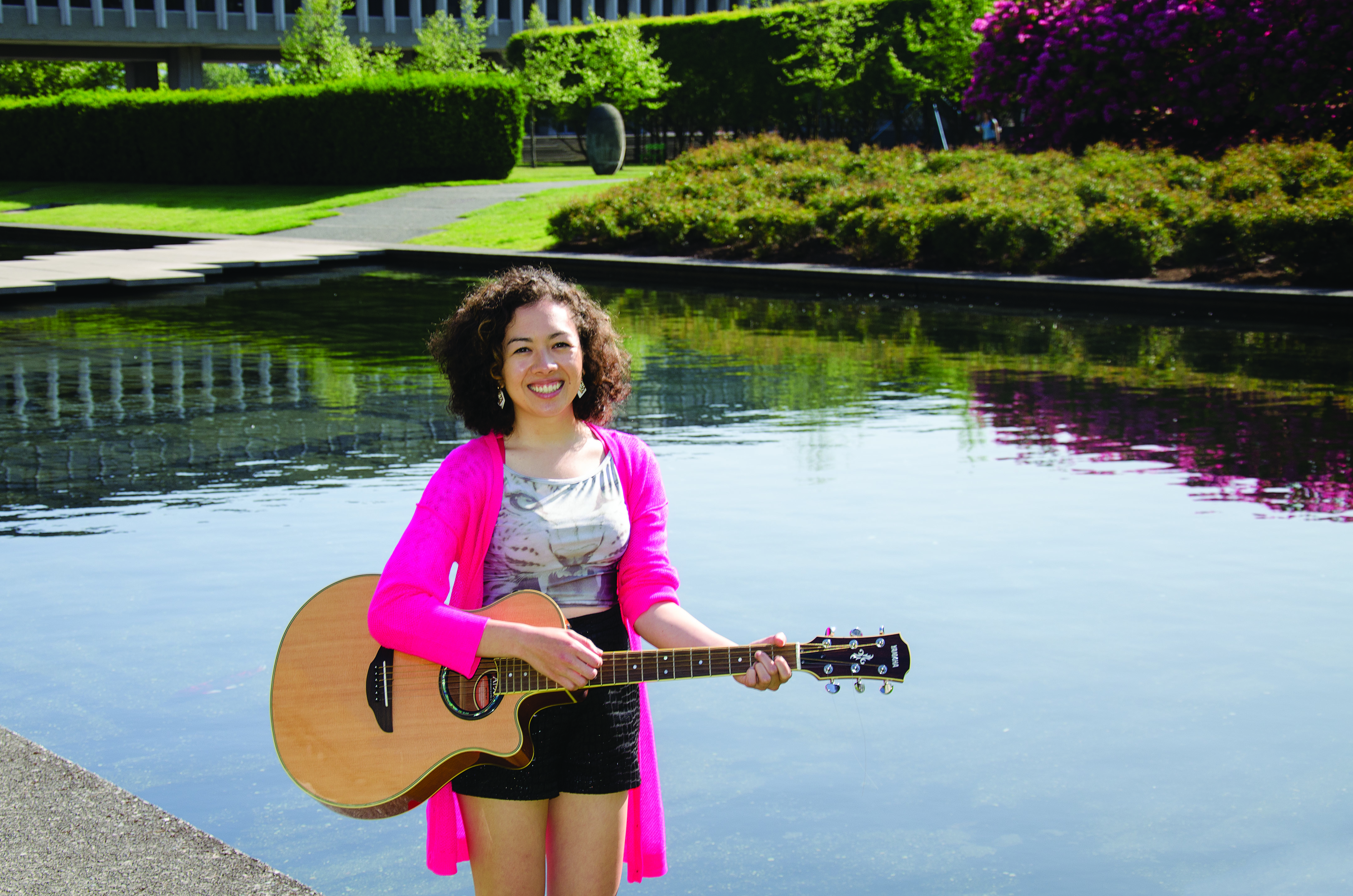
Performers busked, danced, and sang at the first annual Buskathon, founded and organized by SFU philosophy student Samantha Dowdell.

According to Dowdell, the idea arose from her prior musical interests and through her band Alluvium. As a result, the day-long Buskathon occurred on May 31 from 11:00 a.m. to 6:00 p.m. at Rocky Point Park in Port Moody.

Dowdell explained the nature of the event: “Busking is simply taking your talent out on the street, laying out some sort of spot where people can drop money for you, and sharing whatever with the world. If people like it, people will give you something.”

She described the event as a genuine “opportunity for the new and unknown artists to have a voice and present their work.” To make the event happen, Dowdell approached local artists, “seeking them out, [and] bringing them out into the open.” She continued, “Not a lot of people know this small community exists.”

Dowdell used her musical connections to put together a lineup: “I [asked] my musician friends, my band Alluvium, and another band called Blue Smoke.” Most of the bands in attendance were acoustic. “We [didn’t] want them to blow out the park,” Dowdell said, laughing.

She also reached out to local high school music programs, with which she was involved before coming to SFU. “I [had] been trying to contact them and have them and students do promotions,” she explained.

Many places in the Lower Mainland require a license to busk, and only allow musicians to perform in a spot for one hour before requiring them to move on. There are exceptions when iat comes to certain side streets, parks, and the sea wall. However, Port Moody supported Dowdell’s event by relaxing its restrictions.

To keep costs down, Dowdell decided to keep things simple. “It was funded by the city, really simple.” she said. She also reached out to many businesses such as COBS Bread and David’s Tea for sponsorship.

She explained, “[The community has been] printing posters for me, helping me out with contacts. [There’s been] a lot of email communication with people involved with the park — not much from the province, mostly from the city of Port Moody.”

Dowdell explained to The Peak that community building was her primary focus. “I plan to make [the Buskathon] an annual thing, building it up,” she said. In light of the support she received from the community, she feels this could be a reality.

Google claims the road

0

CMYK-Prototype Google Self-Driving Car Project- Google plus

Yet another ground-breaking technology is being covered by global news outlets: Google’s new self-driving car.

Yes, you read that correctly. Self-driving.

For the last week or so, the vehicle has incited both positive and negative speculation. Some analysts have argued that the car will flop due to potential errors in its computer system, while others have stated that the vehicle will be hugely beneficial to the automotive industry.

Although it resembles a giant piece of rice with a face, the benefits of the vehicle’s safety and convenience mightily outweigh its drawbacks.

The Globe and Mail recently announced that the current prototypes for the car are bereft of steering wheels, brakes, and gas pedals. Run by electricity and an Internet connection, and with a motion sensor on its top that scans for oncoming vehicles and irregular surroundings, the car will take the user on a magic-carpet ride to wherever their destination may be.

Notice I say “user,” as the concept of a “driver” does not apply anymore, which isn’t something to be upset about! While some may see it as beneficial that the “driver” of a vehicle exercise physical awareness and social acuity while driving, the “user” of Google’s car will experience the ultimate in vehicle safety.

The car would provide freedom of the road for elderly and disabled people.

The motion sensor will be able to detect and respond to surroundings instantly and far more accurately than a human driver would. This may also be due to the vehicle’s current 40 km per hour limit, which, as CBC reported, would end speeding and provide intoxicated drivers with a safe ride home.

While it’s clear to me that the car would only be restricted to residential and other congested urban areas (rather than the highway), it could undoubtedly revolutionize inner-city taxi services, and eliminate yet another title: the designated driver.

Soon, the “sober” one will be able to pound back a couple more drinks and have a little fun with the rest, as the Google Car is sure to precede the automated-cab. (And, no doubt, the automated pizza delivery service.)

More important than late-night partiers and automated pizza, the car would provide freedom of the road for elderly and disabled people. It was a very sad day for my grandmother when a doctor stated that she wouldn’t be able to drive anymore due to her health; her tearful, unbelieving reaction had quite an impact on all of us.

A piece of life is lost when one’s ability to drive is revoked; for many, driving is a profound sign of independence. Google’s car will mean the elderly can maintain their driving freedoms, as well as allowing many disabled people a new freedom.

Certainly, this vehicle will not be for everyone. Because of speed limitations and autonomy restrictions, there will be many who opt to remain fast and furious.

Regardless of preference, Google’s self-driving car will accomplish ground-breaking progress in vehicle safety. While there is small potential for computer error, the car has the potential to eliminate almost every unsafe aspect of the road.


“Literally” literally means nothing

0

Woohoo: English mutability

The word “mutability” comes from the word “mutation,” and refers to the way things change. When it comes to English, the ability to both absorb other languages and change over time has earned it the reputation of being mutable.

English comes from Romanic and Germanic backgrounds. It spits the harsh consonants of German, and guards the silent letters of French. The phrases, “gazuntite” or “ménage à trois,” sound almost English due to prevalence, but we’re still left to stop and think, if only momentarily, of these root languages.

English words also have the ability to change in meaning with regular use. When we hear a colloquial word taken from a different English culture, we are left to truly listen to the word and decide why that particular sound means what it does.

So, English doesn’t get stale. It stays dynamic, it arouses the ideas behind words, both where they come from and what they mean.

Boohoo: “literally”

“Literally” literally means nothing now.

No matter what, this sentence makes sense. The word is widely used as it has been for the majority of my life: meaning “exactly, actually, truly.” In Google Dictionary, under its definition reads, “used for emphasis [. . .] while not being literally true.” Literally can literally mean “actually” or “not actually.”

I recognize English changes, even for the worse sometimes. But I’m not one of those people who will start crying over text message language. “U” logically replaces “you.” “R” can replace “are.” These aren’t destroying the fundamentals of the language: they don’t make a word simultaneously mean something and its opposite!

Are we taking English too far? I’m not sure.

Maybe what worries me most about this is my reluctance to do anything other than complain about it.

I’m worried by my reaction to a word actually changing: how I want to stop and sit crossed-armed, inwardly scared of the blisteringly fast pace at which the world is changing.