Home Blog Page 1140

Underrated films of the summer

0

The summer blockbuster season has offered both good and bad escapist entertainment. Michael Bay gave us more of the same with his sexist, artless Transformers: Age of Extinction, but we also had smart and original genre fare like Jeff Gunn’s Guardians of the Galaxy.

While both of those notable movies grossed hundreds of millions of dollars at the box office, these five films snuck up on me offering quiet and thoughtful human stories amidst the chaotic explosions customary with this time of year. Here are my five favourites which were largely unseen from May to August.

The Immigrant

There is a powerfully ironic moment in The Immigrant where Ewa Cybulska (Marion Cotillard), a poor Polish immigrant, is introduced by her pimp, Bruno Weiss (Joaquin Phoenix), as the daughter of a millionaire to a group of lusting men. This is an achingly hard moment to process because we understand that Ewa came to the United States to flee war and search for the wealth that the American Dream promised but, instead, has become a lowly prostitute.

The credits rolled and I remained seated as the perplexing experience left me overwhelmed with somber emotions. I haven’t cried during a movie for a long time.

The F Word

Wallace wants to seek out Chantry for more than just sex; they are friends first and foremost. When her boyfriend moves far away for work, Chantry and Wallace try their best to remain ‘just friends’ even though Wallace is evidently enchanted by her.

The F Word is a beguiling romantic comedy that had me smiling, laughing, and sobbing at all the right moments because of the attention to the characters’ dimensions and integrity.

Frank

An enigmatic band, led by Frank, who perpetually wears a paper-mache head, arrives to do a concert. The keyboardist who is crazy and suicidal is replaced by a boring middle class man named Jon Burroughs. Jon wants to put himself through the ‘hell’ of recording an album with these messed up people to find his ‘abusive childhood’ — the thing he can use to inspire great music.

On the surface Frank looks like it has merely the pleasures of a bad American Idol audition but soon enough a dark storm of shocking issues emerge and this comedy becomes darker than I imagined.

The Zero Theorem

Christoph Waltz’s character, Qohen Leth is working on proving some arbitrary equation that will somehow show that everything in life is meaningless: the zero theorem. Qohen waits for a call from God — a literal phone call to give his life meaning and purpose. God never phones.

This is among the saddest films I have ever seen, not because it made me cry or moved me to the point of depression, but because its nihilistic worldview encompasses everyone’s life. You are worth zero, zilch, nada!

Life Itself

“The cinema is a machine for empathy,” Roger Ebert once proclaimed. I think he would have adored Life Itself — a moving and funny documentary that takes excerpts of his memoir and blends them together with interviews from people who knew him in different stages of his life. The film takes place at the end of Ebert’s life, with much of the focus on his cancer treatment and daily struggles in the hospital.

Life Itself is simultaneously accessible and subversive. Director Steve James could have easily idealized Ebert and held him up on a pedestal but instead he looks unflinchingly at the entire picture, including his faults and his struggles.
 

Making the Grade

1
Me learn Photoshop one day.
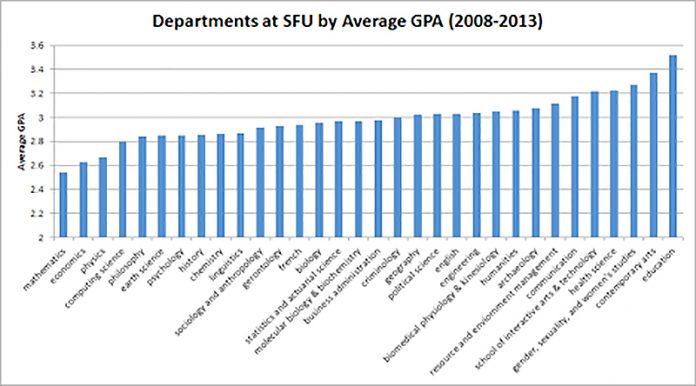
The average GPA of an SFU student varies widely by department.

What do you think the average GPA of a student in your department will be this fall?

The graph above displays the mean grades by department at SFU, averaged from 2008–2013 in 3rd and 4th year courses. As you can see, there’s a big difference between mathematics on the left side of the graph at around 2.5 GPA, and education on the right at approximately 3.5. Depending on the department at SFU, an average student will receive significantly higher or lower grades.

When funds for students, such as Undergraduate Open Scholarships, are allocated based on GPA, this difference could affect that distribution. So, where does this difference come from and how is it affecting students?

When asked for comment on why Education gives out the highest average GPA per student at SFU, the Dean of Education, Dr. Kris Magnusson, observed that it “should not be terribly surprising that the Faculty whose research and practices focuses on teaching and learning should lead the way in the attainment of measurable learning outcomes.” He also noted that the “vast majority” of upper division students in the Education Department are in the Professional Development Program (PDP), a structural factor that he argues raises the department’s overall average. It’s worth noting that PDP students are not eligible for SFU’s Open Scholarship.

If differences in GPA between departments are impacting the distribution of scholarships, are there fairer alternatives to consider?

However, the chairs of other departments were more concerned about the difference in average GPAs. The chair of the Department of Mathematics, Dr. Manfred Trummer, described the gap between departments as “worrying,” and Dr. David Jacks, chair of the Department of Economics, explained his department’s low grades as a result of “coordination across the department [which] reduces the ability of, and incentives for, any given instructor to engage in grade inflation.”

Dr. Stephen Easton, professor in the Department of Economics and faculty senator on the Senate Policy Committee on Scholarships, Awards and Bursaries was unequivocal in stating that “there are clearly different grading norms among departments [and] departments have autonomy in this [regard], within relatively wide bounds.” How might this autonomy impact the distribution of scholarships and awards?

The Undergraduate Open Scholarship is awarded to students whose SFU cumulative grade point average (CGPA) is above 3.67. As such, it currently does not take into account potential differences in grading standards between departments; the assessment criteria assumes that student merit alone accounts for GPA.

The case at UBC is somewhat similar to SFU. However, data obtained from their Office of Planning and Institutional Research was by subject area, not department, so it is difficult to make an exact comparison with SFU in terms of departmental discrepancies in average GPA. In 2012, the two subject areas with the highest average grades were Global Resource Systems and Education Psychology and Special Education; the subjects with the lowest averages were Psychology and Math, mirroring those subjects’ relatively low GPAs here at SFU.

Similar to the Open Scholarship is UBC’s Trek Excellence Scholarship, which is awarded based on academic merit and does not require an application. It is given to students in the top fifth percentile of their respective faculty or school. As such, it could potentially be affected by the differences in average GPAs between subject areas.

Dr. Jacks, notes that it is likely that “disparities in average grades would [lead to] disparities in the proportion of students holding [Undergraduate Open Scholarships] by department.”

When asked about grade disparities between departments, Manoj Bhakthan, director of SFU’s Financial Aid and Awards office, acknowledged that their office is “aware of grading differences across the faculties,” but added that these grading differences are strictly “academic decisions.” It is unclear how much these differences among departments affect the distribution of the Undergraduate Open Scholarship; when a by-department breakdown was requested, we were informed that these statistics are not publicly available.

So, if the differences in GPA between departments are impacting the distribution of Open Scholarships, are there fairer alternatives to consider?

Though Dr. Easton cautioned that there is no perfect model, he proposed a new formula to ensure that recipients of Open Scholarships are “as above the department mean in one department as another.” In Dr. Easton’s system, student GPA is subtracted from average departmental GPA, which is then divided by the standard deviation multiplied by average departmental GPA — the result

is therefore weighted to account for the difference in average GPAs by department.

In turn, Dr. Magnusson pointed out in an email that the high school admission averages to the Bachelor of General Studies are some of the highest in the university.

He noted that, “High performing students prior to admission tend to continue to do as well in their Education courses.” If student quality does differ significantly between departments as reflected in the difference between average GPAs, Dr. Easton’s system would not reflect this reality.

Of course, another issue with adopting a model that is not based on GPA alone is that it would essentially amount to a public admission by the university of the significance of grade differences between departments — potentially endangering SFU students’ chances of receiving external awards.

Whatever the feasibility of an alternative, it is impossible to know the extent of the effect of departmental GPA differences on the distribution of Open Scholarships as long as information on that distribution is kept from the student body. As a public university, Simon Fraser should make the by-department GPA breakdown available. Students need to be informed about the effects of the school’s current policy and make up their own minds as to its fairness.

The Fringes of SFU

0

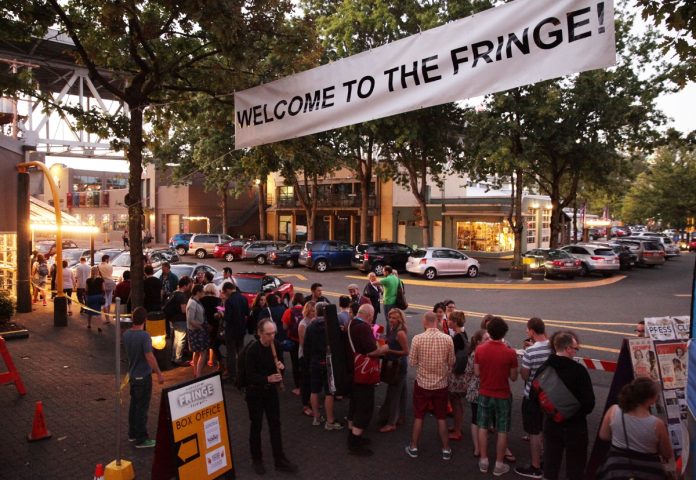
The Vancouver Fringe Festival is an annual event featuring over 700 performances, 80 shows, and 89 artists taking to stages in the Granville Island and downtown areas. Everything from poetry to improv and musicals to crime thrillers will be featured across the stages of Fringe. Below are the eight shows this year that feature either an SFU alumni or current student in some manner of performance or leadership role.

No Tweed Too Tight

Returning to Fringe this year, No Tweed Too Tight is enthusiastically described as offensive and “more belligerent than an orangutan at a monkey shaving contest,” according to press releases. This show takes place in 1976, following an inebriated insurance investigator on his wild and inappropriate adventures. Though not a show for those with a weak stomach or sensitive ears, the show sounds like it aims to make you laugh, as well as cringe.

Slumming

Slumming is an original play featuring two local actors, that, according to director Barbara Ellison, shows “two worlds collide as a mysterious shopping cart lady and a street sex worker fight over a piece of urban wasteland.” Beneath the dark humour of this piece lie important current and universal issues, such as the disappearance of Native women, and the resilience of people facing abject poverty, such as in the setting of this piece — the downtown Vancouver East Side.

El Centro

This play merges the stories of two men, and the country of Guatemala, on Fringe stages this year. The show blends aspects of a psychological thriller with tense drama, appealing to fans of darker crime based tv shows and movies.

Greenland

The winner of the 2013 Governor General Literary Award for Drama, Greenland takes place on the only wooden steam tugboat left in North America. It is a humourous yet heartbreaking journey into death and isolation that occurs on an old boat.

Stuffed

An unscripted show, STUFFED, features a diverse 20-person ensemble. This show will be especially unique due to the variations in each performance. “It will, quite literally, be a different show every night,” said writers/directors Susanna Uchatius and Adam Grant Warren. Through the use of stuff found, donated, or thrown away, the performers examine the things, and the ideas, they have discarded throughout their lives.  “STUFFED is [. . .] about a handful of things that matter, in the middle of a heap of junk that doesn’t,” said Warren.

Cannibal: The Musical

A “a singin’, dancin’, flesh eatin’ toe tapper” according to its press release, Cannibal: The Musical follows Alferd Packer as he leads a team in search of gold through the Colorado Rockies, and emerges as the only survivor. The show follows his journey through the court system, on trial for the cannibalistic acts that took place on his journey, flashbacks of the journey, and what really happened to his fellow travelers.

Macbeth

Shakespeare’s classic play, Macbeth, receives a startling revision this year at Fringe. The story takes place at the Dunsinane Institute for the Criminally Insane, though according to the director, “the whole play takes place in Macbeth’s mind.” Rather than a historical piece, it is set in a dystopian future, illustrating the struggle that prevails in all societies between ambition, guilt, and madness. The original language of Shakespeare’s time is one of few things still intact, making for a creative and unique perspective on a classic play.

The Shakuhachi Quest

Inspired by real events, The Shakuhachi Quest is a play alongside live musical accompaniment, performed as a one-man show by Jim Sands. The show follows the story of music fans, and their search for the legendary Shakuhachi flute. As Jim said, “If you love music you’ll love the show. If you don’t love music, you will by the end of the show.”

Definition of Time

Definition of Time presents an exploration of time through dance and theatre.

According to the press release, time is defined as “the container full of memories, fragrance, voice, thought and emotion.” The release continues, “When we’re going to define time, time will deviate from its definition.” The dance performed by SFU alumna Iris Lau will present time as fragmented, yet narrative.

The Vancouver Fringe Festival runs September 4 to 14 in and around Granville Island. For Information, visit vancouverfringe.com.

Meet the Clan: Justin and Jordan Herman

0
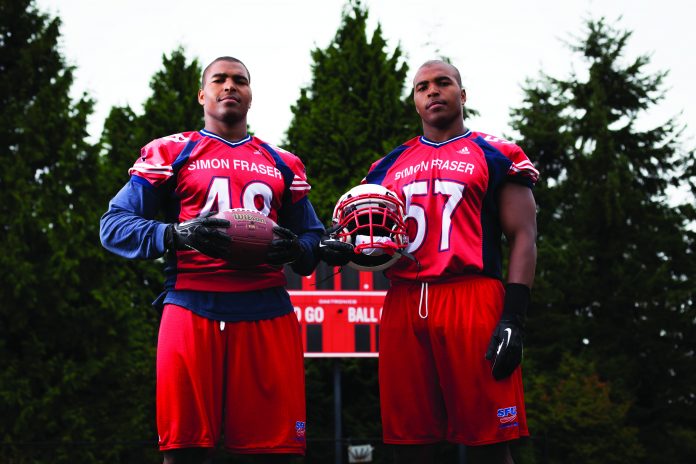
Although the 2014 CFL draft left holes in the Clan’s defensive line, it provides an excellent opportunity for third year linebackers Justin and Jordan Herdman.

Screen Shot 2014-11-26 at 1.02.50 PM Screen Shot 2014-11-26 at 1.03.06 PMThe 2014 CFL Draft was a massive success for the Clan, with five players drafted, three of whom are currently on their draft team’s roster.

However, this also means  plenty of turnover for the team, and many spots that need filling. For some young players, this is their chance to make their mark and shine.

Redshirt sophomores Jordan and Justin Herdman find themselves in this situation, as starting linebacker Casey Chin was drafted in the third round by the BC Lions. Prior to this season, Jordan played second string linebacker behind Chin, but now, he finds himself stepping in as the Clan’s starting middle linebacker.

With this change, Jordan must take on more of a leadership role: “[I need to] work on communication, because middle linebackers have got to be able to run the whole defence. You’ve got to know where everyone is, and you’ve got to block some people sometimes. They count on you a lot to be there to lead them.”

“[It was a] pretty big jump, I’d say, from high school to NCAA level, but I’ve enjoyed it.”

Although this is the brothers’ third year at SFU, they have been playing football for as long as they remember. When asked when they got truly into football, Jordan responded, “Probably when we were about three years old. Our dad would take us out to the field, and we would do different drills for football, just training, and he made it fun for us which was a big thing, and we really enjoyed it at a really young age.”

It may have helped growing up as the sons of a professional football player in Winnipeg, whose passion for the game the twins seem to have inherited.

“Our dad played football as well, he played professional football. He played in the NFL, the CFL, and even the USFL so we had a lot of talent passed down from our father,” explained Justin. “He always helped us with our footwork and other things like that. He always helped us when we needed it.”

Athletically, the two were not only limited to football; in high school, they both played basketball as well, with Justin playing power forward and Jordan playing shooting guard.

However, even in high school, their true passion was  football. Jordan explained, “We were much more serious about football while basketball was just more for fun, where we still competed but it was more just to stay in shape during the offseason.”

Once the time came for university, they decided to stick solely with football, but it took a bit of adapting from the pace of high school football to the fast pace of the NCAA.

“The first year we came here the biggest thing was the speed of the game, it was a lot faster, a lot of stuff going [on] but eventually you start to get more comfortable. Defence starts becoming easier because the game slows down for you,” Justin said.

Jordan elaborated, “Players are a lot bigger, more mature. You have to [do] steady training, make sure you’re at the top of your game, [watch] a lot more film and plays are a little more complicated, different formations. [It was a] pretty big jump, I’d say, from high school to NCAA level, but I’ve enjoyed it.”

“After practice, you’ve got to stay up late sometimes to get a lot of studying done.”

The other side of university athletics is that it is still university; in addition to games and practices, athletes have to manage the academic workload. Jordan and Justin are no exception, with Jordan receiving the GNAC Faculty Athletic Representative (FAR) award, an award that goes to athletes who are also exceptional students. Jordan received the award for achieving a 3.99 GPA in physics.

Jordan stressed the importance of time management and studying. Justin added, “After practice, you’ve got to stay up late sometimes to get a lot of studying done.”

Although they both dream of one day playing professionally, they also have plans for their SFU degrees in biomedical physiology, hoping to eventually become radiologists. “It would be great to play in the NFL or the CFL, that’s always been my dream to do. One of my goals is to play professional  [football] but I’m also doing very well in school so I would like to go to medical school to pursue radiology and become a radiologist,” Jordan stated.

For right now, though, the twins have a budding athletic career ahead of them and are focused on helping the Clan achieve a winning season.

Downward spiralling psyches in The Captive

0

Canadian writer-director Atom Egoyan customarily delivers powerful images, juxtaposing eerie shots of landscapes with restrained visuals which hint at dark deeds. Recently, however, his poor writing has unsuccessfully melded exploitative moviemaking with art-film milieu.

He’s at his best when, like a ventriloquist, we don’t see his lips move — the mannequin that is his artwork comes alive and seems to live independently. I saw flashes of this brilliance in The Captive.

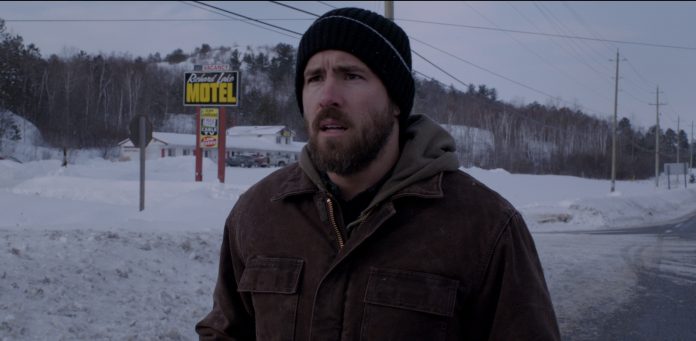
A father (Ryan Reynolds) leaves his tired daughter sleeping in the rear seat of his truck to go into a bakery on a cold, snowy day. The camera cuts to an eerie zooming shot of the store’s window from outside the store as flurries rapidly fly from one end of the frame to the other; we sense something amiss but we are unaware of the details.

The man returns. His truck is empty. His daughter is gone. We never see the act, only its effects: the parents are shattered as the wife blames the husband, and the abductor is composed yet on the verge of breaking.

Dissimilar to genre flicks such as Dennis Villeneuve’s child abduction thriller, Prisoners, this film is not a “who-dunit.” We know the abductor and his reasoning. The film does not focus on the plot, rather it is the characters’ downward spiralling psyches that intrigue us.

The opening shot is a pan across a Canadian landscape which establishes the snowy cold atmosphere for this slow-burning meditation on the profound and long-lasting effects of a child abduction on all the parties directly involved. The director uses long takes with wide compositions that sometimes break the traditional headroom rule to highlight the surroundings more than the characters.

Like the gimmicky 4D films at Disneyland, I could feel the sweeping cold giving me goose bumps; the chilling hand of the snowstorm on the screen extended across the two dimensional borders and gripped me without letting go.

The aesthetic becomes more than a theoretical intention; it is immersive and haunting in ways that make us forget that a man is behind the camera like a ventriloquist behind his puppet. The best movies are the ones where we forget we are watching something fabricated and contrived.

At times, I saw the ventriloquist’s lips move as Egoyan uses preposterous contrivances to converge various strands in the movie. For instance, the abductor is able to set up surveillance cameras in places that he would not have been able to access. That father, whose heart ached to see his daughter, and the wife, whose defense mechanism was to blame him, become insincere as the concluding cathartic moments bring everything together in an absurd manner without careful contemplation.

Just as when a ventriloquist moves his lips, the illusion was lost, so my goose bumps slowly receded. In the end Egoyan has made a movie, not a magical believable world. Seeing this mannequin walk and talk independently, now that would have been miraculous.

Engineering grad lights up the night with Tron-inspired helmets

0

Movie magic from the Tron franchise has moved from the mainframe into the mainstream. Thanks to the efforts of SFU engineering graduate Thomas Plywaczewski, everyone can ride their motorcycles while donning helmets that glow in the dark — just like the ones in the movie Tron.

Inspired by the movie and his passion for motorcycles, Plywaczewski designed and developed his first LightMode helmet in 2013 to increase his own visibility while riding his 2003 Honda CBR 600RR. Plywaczewski is now taking orders for anyone who wishes to own one of these helmets.

With the help of his good friend Amanda Lee, an SFU business graduate, the small company is optimizing motorcycle helmet visibility by affixing them with electroluminescent materials that do not compromise the structural integrity of the helmet.

Plywaczewski explained that there’s hardly any additional weight to the helmet from the technology, and a single charge can last for months, depending on how often you ride at night. The lights turn on with the push of a button, and improve rider safety in a way that, until now, has never been released in the market.

Plywaczewski told The Peak that in its current capacity, the company provides either pre-wired helmets or a kit for consumers. “In the kit, I provide all the materials and instructions in a DVD format so people can just go step by step and make this themselves.”

The kits come with electroluminescent material and a battery-powered controller. With simple step-by-step instructions, customers will have their helmet in minutes, illuminating the night streets of Vancouver much like the characters in the movie.

The company is optimizing motorcycle helmet visibility with electroluminescent materials.

Through a Kickstarter campaign, the startup hoped to achieve their funding goals by the end of August 2014. At time of press, the campaign has raised $15,002 — a number significantly higher than their original $2,400 goal, which was reached in just seven and a half hours. The team plans to put the money to good use, covering all the materials, shipping costs, and website fees, as well as marketing to satisfy the growing number of orders.

The product has already surpassed domestic demand, as suppliers in the United States, Australia, Japan, Russia and India have contacted Plywaczewski to order large quantities for their own customers looking to buy the helmets.

“I’m hoping [. . .] to ship everything out by the end of September,” he said. “All those hiccups and things like that, I going to try to minimize as best I can.”

In the next few years the company hopes to move away from the do-it-yourself kits and start manufacturing the helmets in the thousands.
CMYK-Tron-1-Anderson Wang

Third generation Italian-Canadians return to their roots

0
This research may provide insight into the relationships inside other diaspora groups.

Using an online survey entitled “Being Ethnic: Third Generation Italian Identity in Vancouver,” SFU research associate, Eva Sajoo, has moved one step closer to understanding the implications of being a third generation Italian immigrant in Canada.

Sponsored by the Institute for Diaspora Research & Engagement and the Centre for the Comparative Study of Muslim Societies and Cultures, the research project conducted various interviews with Italian-Canadians in order to better understand how they describe their identity and sense of community.

Sajoo’s preliminary results indicate that third generation immigrants may have an increased interest in their lineage than prior generations, who often distance themselves from what they see as their parents’ old country.

Sajoo initially observed her brothers showing an increased interest in personal roots, and after expanding into other ethnic groups, began to see a trend. When she spoke with Mauro Vescera, the director of the Italian Cultural Centre (Il Centro), he noted the same phenomenon in Italian immigrants, which sparked a collaboration on the study.

Sajoo told The Peak that the study involves a brief online survey. “We are asking third generation Italians — anyone whose grandparents came to Canada from Italy — what Italian identity means to them,” she said.

Sajoo continued, “The most important question is how they describe themselves. Do they think of themselves as primarily Italian, Italian-Canadian, Canadian, or something else?  We are trying to understand what factors affect how a person relates to their family history in constructing their own sense of identity.”

Prior generations often distance themselves from what they see as their parents’ old country.

She also noted the variety in immigrant communities across the country, saying that “this study attempts to provide some insight into how identity evolves over time in one community.”

The Italian Cultural Centre will use the research to adapt to the changing needs of their community. Sajoo said, “Ultimately, the results will not only tell us something about Italian-Canadian youth in Vancouver, but will be a point of comparison for future studies of other communities.”

She concluded, “The research is important because we live in an increasingly mobile, globalized world. Diaspora groups — communities which live in one country but retain some kind of connection to their country of origin — are going to be increasingly common.

“As a result, understanding how individuals preserve parts of one identity while also participating and belonging to their local community is going to be of ongoing interest.”

The online survey will be open until the end of September, with results likely published by the end of the year.

The Mariners are actually pretty good this year

0
Mariners pitcher Felix Hernandez.

For the first time since 2001, the Seattle Mariners could have a playoff run. It’s good to see our MLB home team do well after so many years of struggling and mediocrity.

In prior years, in every Mariners game that I watched, the hits were few. If they did win, it was likely because of pitching, with a maximum score of three runs. I even have a Mariners program from last year that admits to their mediocrity, and at least implies an unwillingness to spend money. When your own team-made program questions the team, you know that you’ve got problems.

This year, however, something’s different. The team can hit, as evidenced in games such as the Mariners’ thumping of the Toronto Blue Jays 11-1. They have also shown remarkable resilience in one game, the Boston Red Sox were up 3-0 in the ninth inning, yet the Mariners fought back scoring five runs, with the majority of them coming after two outs.

They probably have the best pitcher in the league with Felix Hernandez.

To be honest, I don’t know what it is. Truthfully, I don’t watch baseball to see what happens every single night, but I do know that the turnaround is amazing. Maybe it’s the fact that the Mariners did spend some big money with Robinson Cano, plying him from the Yankees, or perhaps it’s the new manager.

It should be noted, with pitching as one of the few bright spots of the Mariners of old, well, they have still got it. They have probably have the best pitcher in the league with Felix Hernandez, and the other pitchers are not slouches either.

This year looks like it could be a great year for the Mariners.Wouldn’t that be something,  a Super Bowl and a World Series in the same year?

But I shouldn’t get too ahead of myself. For one, they still have to make the playoffs, which is far from a given in the MLB where only ten of the teams make the playoffs. And two, I probably just jinxed them. Oh well, I guess.

(A)side jab: It is also nice to see the Toronto Blue Jays slumping. Initially when the Mariners met the Jays in early August they were neck and neck in the playoff race. However, now the Jays are a pretty significant six and a half games back (as of Tuesday, August 26).

It’s always nice to see a Toronto team fall, whether it be the Maple Leafs or the Blue Jays. And for those of you who want to say that the Jays are our home team, well, Seattle’s a lot closer than Toronto, and in my books, the real home team.

A new coach, a new hope

0
Chapdelaine’s praise of the players’ work ethic makes one optimistic for the new season.

SFU football has yet to post a winning season since joining the NCAA. However, with new head coach Jacques Chapdelaine, the team looks to change that this season.

Chapdelaine, who was most recently the offensive coordinator for the BC Lions, a position he held from 2010 to 2013, and previously 2005 to 2006, hopes to use his experience to make the Clan a stronger offensive team.

“Offensively, I think we’ll probably have more formations and probably a greater variety of patterns to associate with that using quite a bit of pocket movement so the quarterback is in the same spot, which should help also with the protection schemes,” said the coach.

However, Chapdelaine’s new systems are not just limited to offense. He also intends to bring in a safer, more reliable defense.

“I think we’re moving forward. They’ve [. . .] really turned it into a positive experience.”

“We’ll probably be relying more on the front four on defense to put pressure on the quarterback as opposed to having a pretty steady stream of blitz pressure like they did last year, leaving the coverage more vulnerable when they did that.”

SFU has good reason to put their trust in coach Chapdelaine. In his first head coaching job with Laval University, he won the team their first Vanier Cup, the CIS championship, in 1999. He has also won two Grey Cups as an offensive coordinator and has been on the coaching staff for three Grey Cup victories.

Ultimately, it comes down to the players, and although having five Clan members drafted by the CFL looks good on the program, it also means losing some key players. Despite this, Chapdelaine is convinced that the team is up to the challenge.

“The biggest change on our team from last year would be the veterans moving on, [. . . as there are] some spots we need to fill,” he added. “But at the same time, we’ve had some guys who have stepped up and really done a good job.”

In particular, he mentioned Quinn Courtney and Michael Couture as quality candidates to fill in the holes on the offensive line. The coach, however, wants to credit the whole team for their work ethic and ability to adapt to his new systems.

“I think we’re moving forward. They’ve picked up the challenges of having a new system and [they’ve] really turned it into a positive experience.”

For a winning season to occur, though, Chapdelaine says that the team needs to work on its consistency.  “At this point in time, because these are new schemes for them, they need to develop consistency through repetition. Repetition will be crucial in order to have a successful season.”

Chapdelaine’s praise of his team’s hard work indicates a bright future. The games have yet to be played, and until then it will be hard to judge the Clan, but for now it seems like this could be their season.

The Clan play their first home game against the Menlo College Oaks on Saturday, September 6 at 12:00 p.m.

SFSS club raises Greek life question

3
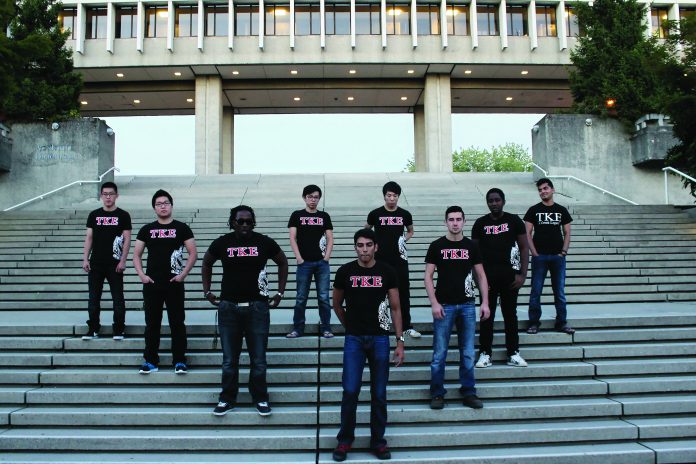
The SFU chapter of Tau Kappa Epsilon is working with the SFSS to get Greek life recognized on campus.

The status of Greek life at SFU has once again been called into question, as the SFSS board of directors recently brought the discussion to the table.

The issue concerns Grid Representation and Interest Development (GRID), the club through which fraternities and sororities are able to function on campus. While taking no official stance on Greek life as a society, the board moved last Tuesday to grant GRID temporary registration for one more year, during which they will assist GRID in approaching SFU for recognition.

While the group is a ‘friend’ of the SFSS, neither it nor its subsequent Greek societies have ever been recognized by the university.

GRID has expressed to the SFSS that they would like assistance in lifting the ban on fraternities and sororities.

The motion carried by board allows GRID to continue being registered until September 1, 2015, but only in accordance with a letter of agreement (LOA), which outlines some guidelines for operation. After this date, GRID will no longer operate as a club. The motion also tasked members of the board to assist the group in seeking recognition from the university.

SFSS president Chardaye Bueckert spoke to the purpose of the LOA, saying, “There were concerns about behaviours that the Greek societies were engaging in.” These behaviours could potentially pose a liability issue for the society.

In the past, fraternities and sororities on campus have violated various SFSS bylaws. At-large representative Rebecca Langmead explained, “Previously, our issues [have come up because] our bylaws clearly state that there should be no gender divisions [in clubs], that they’re all inclusive for all members, and this does not seem to be the way that these sororities and these fraternities are running.”

She continued, “[These policies ensure] that the SFSS is an LGBTQ+ space and our understanding is that GRID itself does not violate those concerns, but the fraternities and sororities that GRID represents do.”

Addressing the board, Bueckert said, “If we sign this, it’s a win-win-win with the understanding that the student society has not taken a position. We obviously can do so, if there is desire from the membership and from our board.”

“There were concerns about behaviours that the Greek societies were engaging in.”

Chardaye Bueckert, SFSS president

While the SFSS currently has no formal position on Greek life at SFU, the university administration has not changed its official stance since SFU opened its doors. The SFU council — a body whose activities now fall to senate — reported in 1966 that “fraternities and sororities are not desirable on this university campus. This is also the view of the majority of the Simon Fraser students who turned out to vote on a referendum concerning this issue on March 22, 1966.”

Since 1966, however, there has been a shift in attitude, with more student groups showing an interest in adopting Greek life at SFU. In 2008, the SFSS held a non-binding plebiscite purely to gauge student interest in having the ban on fraternities and sororities lifted. The SFSS reported that the referendum “passed in favour of fraternities and sororities by a narrow margin.”

SFU’s associate vice-president, students, Tim Rahilly, informed The Peak that, in recent years, SFU has not been approached by any Greek societies to form a formal relationship.

He expressed that if the university did receive such a request, it would warrant reopening the discussion: “[The year] 1966 was a long time ago, and I’d hazard to guess that there aren’t many people part of that dialogue today who were also part of it back then.”

He spoke to some of the potential merits of Greek societies, such as community building, though maintained that there are many alternate ways to achieve the same things: “Some of the goals that these organizations talk about in terms of student involvement are things that I personally agree with. I think that might be great.”

Nevertheless, Rahilly anticipates that there might be opposition to what some view as Greek life culture. “I think the concern that many people have is what comes along with this kind of traditional view of fraternities and sororities. There’s a lot of collateral damage that seems to come with it,” he said.

The SFSS will continue to work with GRID in pursuit of recognition from SFU, as long as they honour the statutes of the LOA. “We would like to work with the university to accomplish that,” stated Langmead.