Home Blog Page 1141

Volleyball team poised to take next step

0
With much of the team returning, there is no need to worry about chemistry.

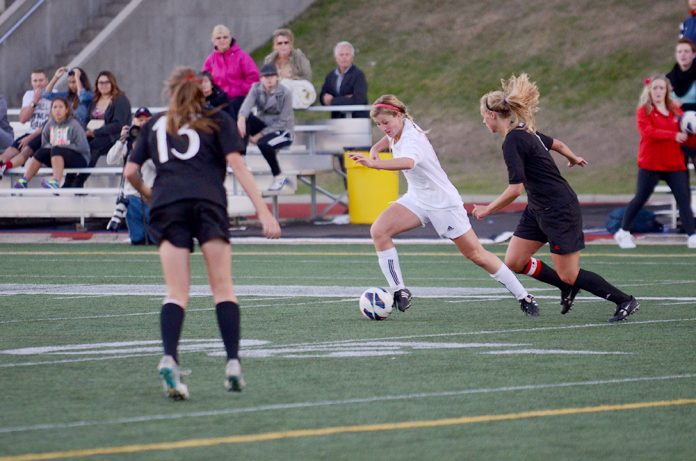
Last season, the Clan volleyball saw marked improvement, posting a 6-12 record in the GNAC. Although it wasn’t a winning record, it certainly beat the previous two seasons which had just one win each.

Now, they must look to improve on that record with the help of head coach Gina Schmidt, now in her second year. Schmidt was brought in to right the ship after three seasons with only six conference wins.

This task should be made easier by the fact that the majority of team is returning this season, as opposed to the high amount of turnover in some years.

“Being able to have a similar core group of players from one season to the next will be huge.”

“We do have a lot of returners, so that’s helped definitely in some respects as we have a lot of veterans on the team, [. . .] so we’re going to rely on their experience for sure,” Schmidt said.

She elaborated, explaining the significance of returners in certain positions, “Previous to this season, some of our older players have had a different setter every year. This is the first time they have had the same setter for two consecutive seasons and that’s kind of like having a quarterback that changes every year.

“That continuity, being able to have a similar core group of players from one season to the next will be huge. There’s a lot of team chemistry in volleyball, so the more you can get that team to be cohesive in the court, [. . .] that’s all going to definitely help.”

One of the areas that Schmidt believes the team needs to work on is offense. She explained, “We’ve spent a big part of our spring training increasing our offensive efficiency, so just creating more kills for ourselves, reducing our errors, and increasing our team hitting percentage.

“On the defensive side of the ball [we are working on] trying to control more digs which allow us to create more kills [. . .] out of our defense.”

In a GNAC coaches poll, the Clan were picked to finish seventh in the conference (out of ten), matching the place they achieved last season. For good or bad, this is by no means a given the Clan could certainly move in either direction, whether up or down.

The volleyball team has an opportunity to take that next step, continuing their progress from a struggling team to a true contender. Whether they take that next step has yet to be seen, but the ball is in their court.

The Clan play their first home game against the Columbia Bible College Bearcats on Thursday, September 4 at 7 p.m.

Clan set to continue domination

0
The Clan look for a fifth straight GNAC title.

When it comes to SFU men’s soccer, the question isn’t about if the team will have success, it’s about how much success.

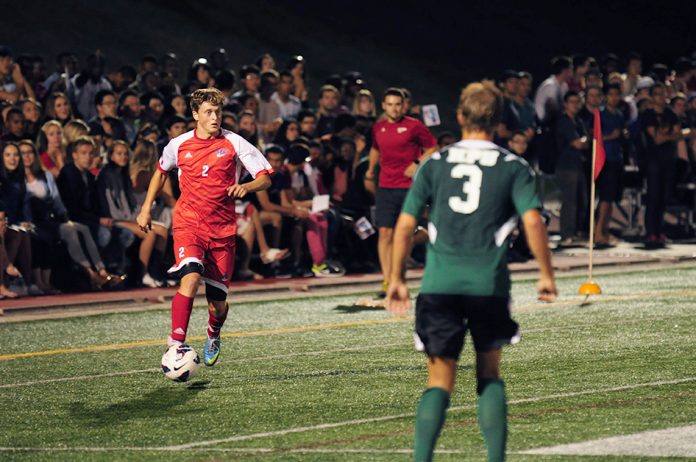
Even before they hit the pitch, the Clan succeeded in claiming the top spot of the Great Northwest Athletic Conference (GNAC) coaches’ poll for the fourth consecutive year. This is the fruit of what was a considerably staggering season of success last year, during when the team led the nation in points (211) and broke a GNAC goal scoring record with a tally of 77.

Now, after the first week of training, the squad has hit the ground running with wins in all three pre-season matches. After just their first day of training, the Clan battled well in their early test against Kwantlen the following day, notching five goals and successfully maintaining a shutout.

“We are always glad when we win, [. . .] but there are times that show we have work to do.”

The Clan continued on the right foot with two more victories against University of Saskatchewan, the first a 4-1 result at home before battling to a 1-0 result two days later versus the Huskies. For head coach Alan Koch, it remains business as usual, as he is both modest and hopeful for a repeat of seasons past.

“We are always glad when we win, but you can tell it’s still early days because we’ve showed some good glimpses of what we can do, but there are times that show we have work to do.”

The repeat Coach of the Year hopes to quickly gel together a new look squad, which will include the return of eight starters from last season. Returning are GNAC Defender of the Year Alex Rowley, GNAC Newcomer of the Year Magnus Kristensen, and a trio of captains in midfielder Jovan Blagojevic, defender Alex Kleefeldt, and goalkeeper Brandon Watson.

“This year we have less holes to fill, but more depth in the quality of the recruited class coming in,” said Koch. “All three of our captains played major minutes and major roles last year. All are different personas in separate positions so they compliment each other very well and it’s great to have leaders in different positions.”

A formidable set of newcomers will grace the field for SFU this season, and the competition for spots will be a great fuel for success. Pascal Schmidt joins the team after playing at home in Germany for the VFB Stuttgart youth team; fellow countryman Kleefeldt will surely be a great mentor as the two players take hold in defence.

The local talents of goalkeeper Christian Zimmerman (Delta) and striker Michael North (Coquitlam) will further reinforce the side. Both players come from Mountain United FC, where Zimmerman starred for the U-18 squad, and North scored 17 goals in 15 appearances for the U-17 team.

The Clan will aim for a third consecutive NCAA final four appearance and a fifth straight GNAC title this season, as they hope to continue their dominance in the NCAA.

The Clan play their first home game against the Sonoma State Seawolves on Thursday, September 4 at 7:30 p.m.

Mistreated Native women: the government must take action

0

As Canadians become increasingly aware of the disproportionate amount of violence that Aboriginal women and girls across the country face, support for a federal inquiry into the issue has gained momentum. However, the federal government’s inaction serves as a reminder that Aboriginal women continue to face various race-related hurdles when it comes to receiving both the respect and services they are entitled to.

While Aboriginal women make up just 4.3 per cent of the female population, they account for roughly 16 per cent of all female homicide victims. Over 1,000 Aboriginal women were confirmed missing or murdered between 1980 and 2012. As of 2006, 36 per cent of Aboriginal women were living in poverty, with many in isolated communities or communities with few relevant resources. They were also less likely than non-Aboriginal women to have completed high school or post-secondary education, making it more difficult to break the cycle.

Combine these factors with a political system and society that continues to discriminate against them, and their disproportionate victimization no longer seems like such a mystery.

Unfortunately, the federal government continues to pretend that the institutionalized factors contributing to this over-representation are not relevant. Stephen Harper made this very clear by stating, “We should not view this as a sociological phenomenon. We should view this as crime.”

This plays into the rosy Canadian belief that we are a harmonious, peaceful nation that was horribly racist — but only in the past! The attitude that people should just ‘get over’ traumatizing practices that persisted well into the 20th century (such as the residential schools), is unrealistic, unhealthy and incredibly insensitive.

Aboriginal women account for roughly 16 per cent of all female homicide victims.

Harper has apparently failed to realize that crime and sociological phenomena are not mutually exclusive. To approach these tragedies as isolated events may lead to justice for individual families, but will do nothing to prevent these tragedies from recurring.

To make matters worse, there are hundreds of authoritative examples that do not take suffering Native communities seriously. These range from mishandling domestic abuse cases to ignoring signs of a serial killer preying on the vulnerable.

Even when reported, missing Aboriginal women receive 27 times less media coverage than white women, a phenomenon called ‘Missing White Woman Syndrome.’ Along the now infamous Highway of Tears, Aboriginal women had been disappearing for almost 30 years before the disappearance of a young white woman brought serious media and law enforcement attention to the area.

While there are arguably more effective alternatives to a national inquiry, there is no excuse for doing nothing. Considering the range of factors that contribute to these tragedies, the question should be where to start, not whether anything should be done at all.

In his statement, Harper tried to justify this inaction saying, “We brought in laws across this country that I think are having more effect in terms of crimes of violence against not just Aboriginal women, but women and persons more generally.” This is inaccurate; while the number of female non-Aboriginal homicide victims has dropped, the percentage of female Aboriginal victims increased from nine per cent in 1980 to 23 per cent in 2012.

The federal government continues to send the message that Canada does not value young Aboriginal people and that they are not worthy of resources. Tina Fontaine, and all those who suffered before her, deserved more than to be filed away under ‘helpless Aboriginal victim,’ and the government must take appropriate action so that this ongoing tragedy comes to an end.

The United Players get Scandalous

0

Promising to be “a glimpse into a part of our history,” The United Players production of the classic School for Scandal will open on September 5. Written in 1777 by Richard Brinsley Sheridan, this play takes the intrigue of creating and avoiding gossip in London to the stage.

Director and set designer Matthew Bissett spoke of his excitement to be working with The United Players on their 55th anniversary. Bissett is known for his work with the Ensemble Theatre Company on their production of The Farmsworth Invention, an engrossing play that comments on the invention of the television. As an ex-opera director, his eye for classic works has lent itself splendidly to School for Scandal.

The play itself is a wonderful union of the past and present in a most unreal way. Bissett describes the work as an “artificial play, [where] people [. . .] pose like paintings. The language is complicated and beautiful.” The set, instead of focusing on realism, highlights the artistry of the language.

Consisting of a series of empty picture frames, according to Bissett, the set allows the actors to step out of the action and play with the audience. Elaborate costumes and acting add a sumptuous tone to the whole production.

The play follows various storylines, and explores many topics, such as those of greed and love. “There’s an old, rich man who has married a country girl,” Bissett says, explaining that the man thinks his wife will stay a country girl forever, but things quickly change when he brings her into the hustle and bustle of London. In another storyline, a man returns from his travels with great riches, and must decide to give his fortune to one of his two nephews. Drama and hilarity ensue.

Bissett describes the play as highly comedic, filled with misunderstandings and wild chaos, saying, “There is a reason it’s been done for so long.” School for Scandal was a huge hit in its time, and has been consistently revamped over the last 200 years. “It has never gone out of style,” says Bissett, “the writing is very clever, and it’s fun for everyone.”

In The United Players’ production, there is an attempt at modernity and uniqueness in how the play is performed. “This helps to express the universality of the message,” says Bissett, and it allows the audience to identify with the story. He says that people being recognizable is extremely important, as it allows the play to talk to a modern audience.

School for Scandal promises to be an enlightening work, full of large skirts, and larger laughs. The universal message, speaking on the human obsession over gossip “hints at [us] not having changed” as a society after all these years, says Bissett. Made for “people who love words,” this play entertains and teaches lessons about the marriage of media and gossip.

The United Player’s cast of 15 will soon take to the stage, asking the viewer to question the role and scope of media interaction in our lives. Truly a treat to see, The United Players will bring a sleek and modern twist to a timeless classic.

School for Scandal will be presented by The United Players at the Jericho Arts Centre from September 5 to 28. For more information, visit unitedplayers.com.


SUB project enters Working Drawings Phase

0
Unlike blueprints, the working drawings allow for more design elements in the plans.

Having translated the space program into physical drawings of the SFSS Student Union Building (SUB) and determined all design decisions for construction, the Build SFU SUB project will move into the final stage of the architectural design development phase this fall.

Beginning in September and set to finish by Spring 2015, Build SFU’s Working Drawings Phase will see the creation of documents that include the detailed requirements for construction. These will consist of all the architectural drawings and specifications necessary to complete the project.

“We’re about halfway through the design phase right now,” said Marc Fontaine, general manager of Build SFU. “So far the project is moving exactly as scheduled which is quite good for major projects like this.”

Fontaine explained exactly what the Working Drawings Phase entails: “Right now these are designs but they’re not blueprints [. . .] A lot of it is basically the architects taking these plans and refining them, planning out where absolutely everything will be for the SUB, such as wires for electricity, or plumbing [and] pipes, so they understand how to build the SUB.”

Feedback from the students during workshops and consultations has given the architects the information they need to begin designing the building on a more detailed level.  Fontaine suspects this is largely due to the project remaining consistent in its direction and sticking to decisions made based on student feedback. 

“I’m quite excited about the progress that’s happened over the summer,” said Fontaine.  “It seems to me that the architects have really captured what students have said [. . .] and they’ve been able to incorporate all of those requests into this building.”

The interior spaces of the building were finalized in February of this year, and aside from the addition of the respite room — also known as the ‘napping’ room — there haven’t been any significant changes to the program since.

The SUB project, which began in Spring 2012, aims to provide students with a space that is comfortable and inviting, essentially providing that “home away from home” feel, and hopefully becoming the “central hub of connectivity.”

According to Fontaine, the next six months will not be as visible or as active as the previous year due to the nature of this phase. However, Build SFU will continue to provide updates for students and there will be opportunities for more workshops and consultations in the future. 

“It seems to me that the architects have really captured what students have said.”

Marc Fontaine, Build SFU general manager

A street team is currently undergoing training to provide information about the building to students. Their duties will include showing a fly-through video with rendered images of the possible spaces in the SUB and essentially thanking the students for all the feedback they have given for this project. 

In addition, Build SFU will propose a special resolution in the upcoming SFSS Annual General Meeting (AGM) in October, asking undergraduate students whether they will allow the SFSS to take on a loan to pay for the project. More information will be provided closer to the date.

Build SFU continues to welcome feedback and encourages students to send their suggestions on what they see. Fontaine suggests submitting feedback through the feedback form found on the website, via social media, by heading to the Think Tank to talk to a Build SFU member, or even by leaving a comment on the whiteboard wall.

“At the moment, we still have time to make some adjustments to the furniture or to the colour scheme of the building,” says Fontaine.

Fontaine hopes that these finishing touches will foster a comfortable, homey environment on campus: “We’re building a building we hope will feel inviting and welcoming to students [coming] from many [different] angles and approaches on campus.”

Learning to win

0
The women’s soccer team has struggled the last few seasons.

Although the men’s soccer team has enjoyed its fair share of success recently, the same cannot be said of the women’s team, who have just one win in each of their last two seasons.

However, while first year coach Annie Hamel admits that they are probably not a championship team, she believes that they can be competitive and put up some wins.

“I mean, if you’re talking about winning a national championship — no, we’re not there yet,” stated Hamel, who worked the last five years as an assistant coach at St. Leo University in Florida. “I think that we can, even this year, create trouble and surprise teams in the GNAC.”

Furthermore, she added that the focus this year is not on winning championships, but on building and growing a championship winning team: “This year, I’m not worried about winning a national championship or anything like that. I’m worried about having the best success that we can with the team that we have, and build game-in and game-out on our successes and look forward to what the future holds. We’ve just got to be patient.”

Hamel also revealed that she intends to play a more defensive system this year, although ideally only this season. “This year we’re going to be in a bit more of a defensive shape, so we’re playing a 4-5-1,” she says, referring to a strategy that focuses on preventing scoring, rather than scoring goals, often resulting in draws. “But I don’t want to play that any longer than this year.”

The Clan adhered to this strategy well in its first two exhibition matches, achieving a score of 0-0 against Quest University and Douglas College. Coach Hamel was proud of the team’s defensive performance on August 21 and 24.

  “I was really pleased with the way we handled things. I mean we got clean sheets so defensively, it worked. Our focus, which was defence, worked because we didn’t allow any goals.”

She also stated that although the team’s focus is on defence that does not mean the team will neglect its offence. Hamel mentioned that the team was working on its attacking shapes and patterns in preparation for its last exhibition game.

Despite their issues now, Hamel believes that her team will be a contender, drawing a comparison to the men’s team, explaining, “If our men’s program is capable of being that successful and we share the same resources, I don’t see why we can’t be that successful.”

This year probably won’t be a winning season for the women’s soccer team, however, it should showcase a team learning to win, and perhaps a future contender.

The Clan play their first home game against the Hawaii Hilo Vulcans on Sunday, September 7 at 5 p.m.

Report finds no foul play in October 2013 SFSS incident

2
Monique Ataei alleged that Moe Kopahi struck her with his cell phone in October 2013.

A review of the incident that occurred between two SFSS board members on October 11, 2013, has found that the incident was accidental in nature and did not involve any violation of SFSS policies.

Last October, environmental representative Monique Ataei called for the resignation of member services officer Moe Kopahi after alleging that Kopahi unintentionally struck her with his cell phone in the SFSS offices after hours. Ataei also requested the remainder of her voluntary stipend for her year-long term, a sum totalling $6,125.

Following the incident, the SFSS engaged the firm Paula Boddie & Associates Ltd. to conduct a review of the incident as well as a workplace assessment. In an official statement, the SFSS said that the incident report, which is confidential, recommended that no further action be taken.

No criminal charges were sought or brought in relation to the incident. Nevertheless, SFU Campus Security was not at liberty to comment.

Although he is pleased that the incident finally has some closure, Kopahi told The Peak that he is not completely satisfied with the SFSS’ statement because “it’s not detailed.” He continued, “I’m happy it’s over, I’m happy that there’s something I have in hand to say it wasn’t intentional, whatever happened, but there’s really nothing else to do.

“The damage is already done, and there’s nothing they can fix. [. . .] It’s all over the internet and there’s no way to clean it up,” he stated.

Kopahi told The Peak last fall that Ataei had created “an unsafe space for male board members of the SFSS by sending a mass email [. . .] claiming false accusations.” He upheld his statement when he spoke to The Peak last week: “When I say unsafe, I don’t mean someone’s going to wait here with a gun for me, it’s not like that. But I didn’t feel safe in terms of, it’s not a pleasant safe space.”

In addition to receiving angry emails and hateful messages over social media, Kopahi said that the incident led to people approaching him in his office or in class to voice their opinions on what happened. “What I was afraid of was that people made judgement calls before any results came back,” said Kopahi.

Ataei did not respond to The Peak to comment, but Kopahi said that he holds no ill will towards her over the incident. “I just wish that she respected our friendship a bit more, but if that’s the way that she feels and if that’s the call that she made, then I respect it,” he said.

“The damage is already done, and there’s nothing they can fix.”

Moe Kopahi, VP university relations

As recommended by the workplace assessment conducted by Paula Boddie & Associates Ltd., the SFSS is in the process of developing a code of conduct that includes a clear complaint procedure to govern any further conflicts that might arise between board members.

External relations officer, Darwin Binesh, told The Peak that the decision to pursue the creation of such a code was actually made last fall, when a petition signed by 600 students calling for its creation was presented at the SFSS’ Annual General Meeting (AGM).

“The reason our board is taking the promises made by the previous board so seriously is because we have a goal. Our first goal for this year is to try to make the organization more transparent and accountable to the membership,” said Binesh.

With regards to creating a safe workplace environment, Binesh said that the current board members are working hard to resolve any problems through communication and collaboration. “Whenever there are disagreements, they’re not taken personally, they’re taken professionally,” he said.

He continued, “As a board, we agreed to focus on the issue instead of the person when we argue. Our arguments get heated, but are never personal. We have been trying to keep it professional so we can foster a better work environment.”

Current workplace conditions notwithstanding, Kopahi is pushing for the incident report to be published: “The student society spent money on this assessment. It’s students’ money, and people have the right to know what it was spent on.”

Satellite Signals

0

Vancouver

The Vancouver Queer Film Festival, which was co-presented by SFU and SFU Woodward’s Cultural Programs, wrapped up on August 24. The festival saw 80 films from 11 countries, as well as other events such as a panel with Sundance director Sydney Freeland, executive director of WIFTV Carolyn Combs, and Girls star Desiree Akhavan. The panel was moderated by associate professor of Gender, Sexuality and Women’s Studies at SFU Helen Hok-Sze Leung.

Surrey

SFU Surrey held New Student Orientation on August 27 to welcome students to the start of their university careers with a day of “fun-filled, informative and inspiring” events. Students were invited to meet other students in their faculty, listen to inspiring speakers, tour the campus, and connect with current students.

Woodward’s

The 12th Annual Vancouver Latin American Film Festival (VLAFF) kicked off last Friday at Goldcorp Centre for the Arts and will run until September 7. This year’s festival will feature 73 full-length and short films from over 15 countries that celebrate the distinct Latin American approach to cinema, while avoiding the genre’s cliches.

Agreement revives hope for the Shrum Bowl

0
The Shrum Bowl was last held at Thunderbird Stadium on October 8, 2010.

Although we won’t be seeing the Shrum Bowl this year, according to Milt Richards, SFU’s athletics director, there is a good chance that this time next year we will be seeing SFU and UBC face off for the first time since 2010.

The Shrum Bowl was once an annual meet-up between the two rival football teams, started in 1967, and held every year (except 1994) from 1987  to 2010. Throughout its history it has been plagued with scheduling difficulties  resulting in the recent hiatus.

Richards, however, states that there is an agreement — although not in writing — to hold the Shrum Bowl on Labour Day, provided that it is open. This depends on when the Vanier Cup is held: “The Vanier Cup, the CIS (Canadian Interuniversity Sport) championship is [currently] being held in the last week of November. That means Labour Day weekend is open [for UBC, so] we’ll play the Shrum Bowl.

“[At] one time this game could draw 20,000 people, [so] this is a big game.”

“For a lot of reasons, because of us being NCAA and them being CIS, the schedules just haven’t worked so I think that this is a good breakthrough.”

However, if the Vanier Cup is held earlier in the year, then the Labour Day weekend would not be available for UBC, and thus the Shrum Bowl could not be played.

Richards is confident, though, that the Vanier Cup will remain on the last weekend of November, and that the Labour Day weekend will be free: “We think we’ll be able to play next year because we think all of that stuff is going to happen.”

Before the decision to hold the Shrum Bowl over Labour Day weekend, there were two other possible dates. One possibility was during Thanksgiving weekend when UBC has a bye, while the other option would be at the end of the year.

However, UBC vetoed Thanksgiving because they wanted the bye week to rest their players, instead of playing what is really an exhibition game in the middle of the season. SFU vetoed the end of the year option, because it conflicts with the NCAA playoffs.

“I couldn’t [let SFU] play at the end of the year because that would mean that we would say we weren’t making the playoffs,” said the athletic director.

To Richards, though, the Shrum Bowl is a very important event. “Since the day I’ve gotten here, I’ve wanted [SFU] to play the Shrum Bowl. We’ve had conversations back and forth with UBC,” he said.

He also expressed his belief that the game is not simply good for the SFU and UBC athletic programs, or even students, but the community as a whole. “It goes beyond [the universities]. From what I’ve heard, in the three years that I’ve been here, is that the BC community wants to see this football game. [At] one time this game could draw 20,000 people, [so] this is a big game.”

The next Shrum Bowl would be held on SFU turf under American rules, as the last one was held at UBC, a game in which the Clan beat the Thunderbirds 27-20.

Student invents software to improve Tinder tactics

0
An experiment conducted by The Mirror revealed that approximately one third of men will swipe right on almost anything.

Joel Zhang, a second-year SFU software systems student, has coded a program to mass-like thousands of women on the widely used dating app Tinder.

When discussing how he came up with the idea to write the program, Zhang explained, “I was actually studying for finals, and I got bored, so I opened up the Tinder app. But once I started clicking ‘like,’ I thought, ‘There should be a faster way to do this.’”

In all, the program took him under half an hour to create. He coded the program on his computer and connected it to his phone so that it could analyze what data is sent and received from Tinder.

Information such as names, pictures, ages, and distances away are accompanied with a unique ID number in a list. By clicking ‘like,’ a signal goes through a URL and inputs the ID number to notify the Tinder servers that one person has liked another. Essentially, the program goes through the data in the list provided by Tinder, grabs the ID numbers, and sends these ‘like’ requests to the URL.

“To be honest, [the app was] not really about getting dates. I’m just the sort of person who likes to tinker around with things,” Zhang said when asked what he hoped to achieve by creating his program. “I was interested in seeing how Tinder works behind the scenes.”

Up to now, his program has liked over 4,000 people in a 23 km radius. His app first received notice when he posted a screenshot of it anonymously on SFU Confessions, but ultimately he thought it’d be a funny story to share.

Zhang is far from alone in his Tinder tendencies. An experiment conducted by The Mirror revealed that approximately one third of men will swipe right on almost anything. Journalists created a fake Tinder profile with a male name and a picture of the Cookie Monster from Sesame Street, and found that zero per cent of women clicked yes whereas 33 per cent of men clicked yes.

“Some guys feel like they can’t afford to not swipe right,” Zhang explained. This habit is likely related to the understanding that there tends to be more male users than female users on dating apps. Hence, men may feel like they have to play the numbers game to better their chances and get matches.

Overall, Zhang is rather skeptical of meaningful relationships being formed off of Tinder. He believes most people use Tinder for similar reasons: to either hook up or boost their ego from seeing how many matches they can get. He noted, “If you go out on dates from that, you’re not really connecting based on personality [. . .] You have to remember the reason why people are on there in the first place.”

Currently, Zhang doesn’t have any plans to create an app version of his program, as there are already a few apps that provide similar functions, but he’s always searching for new projects on which to work .