Home Blog Page 1088

The rise of the far right

6

Tea_Party_Protest,_Hartford,_Connecticut,_15_April_2009_-_031

Though most of us think of fascism as a relic of the past, right wing extremist movements in Europe and North America have seen a steady surge in popularity over the last few years. This may be due many current global conditions similar to those that gave birth to Hitler’s Third Reich, including unemployment, global financial crises, and massive government debt and inflation. The recent European Union elections illustrate just how much support these radical parties have gained in the face of these issues.

Though they may seem like fringe parties, it’s nonetheless crucial to recognize them and be aware of their ascent to power on the world stage. Here are five of the most prominent parties in the growing fascist movement.

National Front (France)

In the recent European Parliament elections, the National Front took over 25 per cent of the popular vote in the country, beating out both the ruling Socialists and the opposing Union for a Popular Movement. They also came in second in the 2002 presidential election, which became the first presidential run-off without a leftist candidate in the second round in French history.

The man who ran in that election, founder of the party and father of current leader Jean-Marie Le Pen, referred to the Nazi gas chambers as “a point of detail of the history of the Second World War,” hinting at the problematic views of the party.

Among the party’s other beliefs are support for harsher sentencing for criminals and the deportation of certain groups of immigrants, along with halting the migration of Muslim peoples. They are highly protectionist, and have criticized the European Union as a “puppet of the New World Order.”

United Kingdom Independence Party (United Kingdom)

Another shock to come out of the recent European Parliamentary election was the performance of Nigel Farage’s United Kingdom Independence Party, which took 27 per cent of the nation’s votes, marking the first time in over a hundred years that neither Labour nor the Conservatives won the most votes in a nationwide election.

Like the National Front, the UKIP are very strongly anti-EU, believing that money spent on EU membership would be better spent at home. Furthermore, they believe that the massive waves of immigrants from the Union — most recently from Bulgaria and Romania — are responsible for Britain’s debt, and have expressed an intention to reintroduce border controls which the EU forced the nation to abandon.

While they have distanced themselves from the far more extreme and openly fascist British National Party, the group’s far right views don’t exactly inspire confidence. It remains to be seen how they will fare in Britain’s upcoming general election next year.

Golden Dawn (Greece)

Of all the groups on this watchlist, Golden Dawn is likely the best known. The Greek nationalist party, known for its xenophobic and racist tendencies, has been making headlines in Europe for several years. Despite rejecting labels such as neo-Nazi and fascist, this group has made use of Nazi symbolism and praised the figures of Nazi Germany in the past.

The party has also been accused of carrying out acts of violence against immigrants, political opponents, and ethnic minorities. Clashes in the streets between anarchists and Golden Dawn members have become commonplace in Greece, and investigations proved that many police have aided the latter party by providing weapons and ammunition. Citizens have also joined in, as many native Greeks view the Golden Dawn party as heroes.

Unlike other parties on this list, Golden Dawn is also spreading outside of their native country. The party has now set out to establish cells wherever there are Greeks, opening offices in Germany, Australia, the United States, and even here in Canada.

National Democratic Party (Germany)

Though they only managed to win one per cent of the German vote in the European Parliamentary elections, that one per cent was enough to earn the National Democratic Party of Germany one seat in that assembly. Unlike Golden Dawn, which attempts to deny its neo-Nazi traits, this group is openly neo-Nazi, and were labelled by Chancellor Merkel as an “anti-democratic, xenophobic, anti-Semitic, anti-constitutional party.”

Given that the party is the spiritual successor to the actual Nazi Party, having been founded by former party members in 1964, their far right views should come as no surprise. They have announced their belief that “Europe is a continent of white people,” and that it should stay that way. They’ve backed up this belief by calling for the expulsion of Jews, Turks, and immigrants in general from Germany.

Udo Voigt, the party’s former leader, will represent them in their new European parliament seat. Voigt is well known within German political circles for inciting violence in 1998 after he called for voters to engage in “armed combat,” and was found guilty in 2004 of promoting Nazism after he referred to Hitler as “a great man.”

Tea Party (United States)

Potentially the most prominent party on this list, the Tea Party has managed to infiltrate and hijack the United States’ Republican Party, moving the already conservative group even further towards the right. They may not be as radical as Golden Dawn or the National Front, but trust me when I say they are just as dangerous.

The Tea Party has also managed to take control of the United States House of Representatives, which has given them an incredible amount of influence on American politics; after all, it was the Tea Party Republicans who were responsible for the shutdown of the United States government last year, in protest of the passage of Obama’s Affordable Healthcare Act — and of Obama in general.

Support for the party continues to grow as America’s debt continues to skyrocket, as the Tea Party promises cuts to spending and lowered taxes for citizens. These are noble goals, but the party’s tendency to blame America’s problems on immigrants (legal and illegal) and the social policies of liberal governments undermine their value as a political faction.
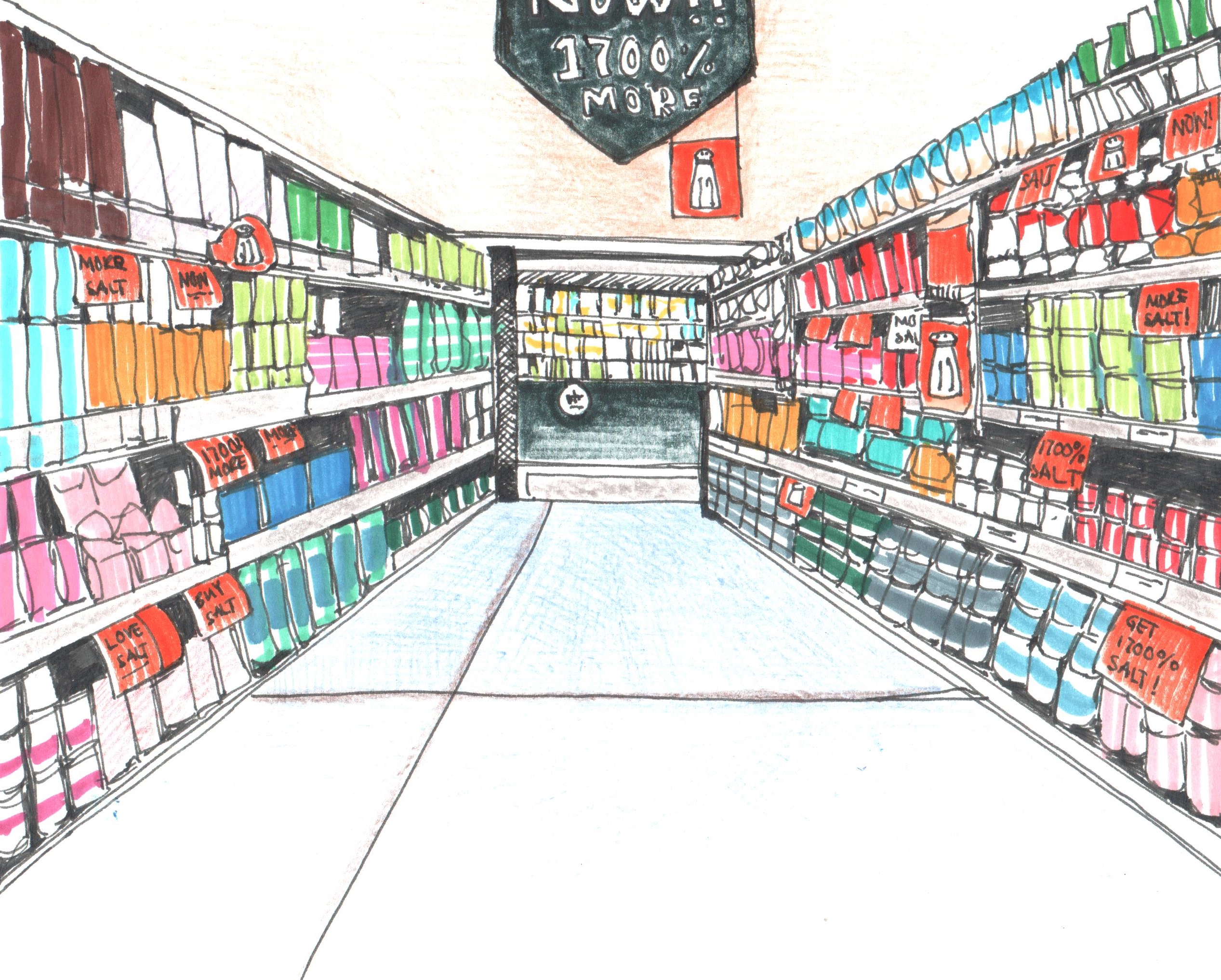
Reducing sodium is worth its salt

0

salt-LilyLiA joint consensus recently released by the New York Health Department (NYHD) and the American Heart Association (AHA) brought together SFU health science professor Michel Joffres along with 33 of the world’s leading scientists in the field to affirm the benefits and importance of reducing sodium intake to combat one of the world’s deadliest diseases.

Sodium is an important regulator for the body, necessary for proper nerve conduction, muscle activation, and control in blood pressure and blood volume. However, sodium is also a major contributor to heart disease, because it elevates blood pressure, which is the leading risk factor for cardiovascular disease and stroke.

The news release indicated that many studies and controlled trials have shown that a decrease in sodium intake levels has a positive impact on improving health, sustaining lives, and reducing healthcare costs.

The Centre for Disease Control and Prevention (CDC) reports heart disease as the leading cause of death in the US, while a Statistics Canada report had it down as the second leading cause of death in Canada, after cancer.

The CDC currently recommends that individuals under the age of 50 consume no more than 2,300 mg of sodium per day—for those over 50, that number drops to less than 1,500 mg.

Nevertheless, Joffres told The Peak that humans require as little as 200 mg of sodium per day for their basic physiological needs. However, he said, “We are consuming about 3,400 mg [of sodium] per day, and young people consume even more.”

Joffres explained that, “We have an appetite for sodium as we did not have high sources of sodium in our evolution. [. . .] Now this appetite has been exploited by industries that make low quality food and use salt to enhance taste.”

Sodium occurs naturally in most foods — milk, beets, celery, and even water, according to the National Institute of Health. Sodium chloride, or table salt, is the most common derivative of sodium and makes up a large percentage of sodium consumed.

However, “[about] 80 per cent of sodium we eat comes from processed food,” said Joffres. Examples include breads, cold meats cuts, pizza slices, and canned soups and vegetables. Other lesser known products that contain sodium are laxatives, aspirin, mouthwash, and toothpaste, according to the Household Products Database.

The best way to avoid unexpected sodium intake is to cook meals at home, emphasizing low sodium, and consuming more fruits and vegetables, advised Joffres. Care should also be taken when reading labels and choosing what is to be eaten.

While Joffres acknowledges that the reduction of sodium intake levels is important, he says that the regulation of sodium usage within food industries and distribution locations is just as integral to the health of the world’s populations.

For now, Joffres hopes to raise awareness of the deadliness of sodium. “You may see the negative effects of high sodium diets much later,” Joffres told The Peak. “It is like a very slow acting poison and is a silent killer.”

God publishes brand new Bible story on his website

0

Fans of the Bible rejoiced this week after God unexpectedly dropped a new story on his website featuring all their favourite characters revealing what they’ve been up to since “Revelations.”

The story, in which everyone from Jesus to Moses and even Judas reunite to watch a leg of the Tour de France in Montpellier, almost crashed God’s website due to the heavy traffic it caused.

Much like JK Rowling’s new Harry Potter story which was released last Tuesday, the new Bible update satisfies the thirst passionate readers had to find out what has become of the characters in the past 200 years.

According to the story, Jesus is still very much a famous figure in the world with cyclists who saw him apparently “falling off their bicycles in disbelief.” Although the writing suggests that Christ is “still the same old prankster,” his turning water into wine routine has been replaced with a “water into grape soda” miracle.

Many fans have interpreted this as a potential hint by God that his own son has had to deal with some problems with alcoholism in the years following his resurrection, although there is no actual evidence that this is really the case.

Moses also appears to not have changed much since his sea-parting days, but his beard is mentioned to be “even greyer than it once was.”

While the quality of writing of the new story has been questioned, as it does not seem to match the rest of God’s work in terms of its style, message, and language, hardcore Bible fans have eaten up the new entry in the series.

“I’ll read anything Bible-related so I was thrilled when this came out,” explained Rachel Henry, a young Canadian Bible fan. “It really gives me hope that maybe he’ll come out with a whole new book at some point. You know, I always thought that Jebediah could’ve used a spin-off, I have so many unanswered questions about that guy.”

Although God has neither confirmed nor denied that he is working on a new Bible adventure, sources close to him have said that he has no plans for a new book in the series and that he’s actually really interested in writing non-fiction for a change.

8 signs that you’re definitely making a list

0

1. You begin with an overall theme, no matter how vague it might be

Maybe it’s a theme about how to make a list or maybe it’s about coming up with bullshit examples that don’t make sense. Whatever it is, just run with it and see where you end up!

2. You have more than one thing to say, so you decide to use a second point 

Some people like to use bullets but I’d recommend using numbers so that way people know you’re really serious about making a list.

3. You start building momentum as you add the third example to your list 

This example is crucial so make sure you’re not slowing things down by redundantly explaining things as you go along. It’s all about the momentum.

4. You use your last legitimate example and then start to brainstorm more

Chances are you didn’t really think this list through and now you’re going to have to put some actual effort into it. That’s okay. I’m sure you’ll be able to come up with something.

5. You realize that you used your best examples first and regret not having some of the better ones saved for later in the list 

Just throw something in and hope people assume that it fits with everything else you’ve put so far. Got it? No matter how unrelated or lame the example might be, everyone will totally believe you unless you unknowingly draw attention to it.

6. You wonder how Buzzfeed makes lists look so easy but then you remember that they mostly rely on unrelated GIFs of pop culture references

Yup. I bet a GIF of Tina Fey and Amy Poehler hosting the Golden Globes would really spruce this list up right about now.

7. You realize you might actually hate Buzzfeed

That’s okay though. Everyone eventually does.

8. You run out of things to say, so you decide to arbitrarily end things on whatever number you’re at

Just go back to the top of the list and change the title to match however many points you made it to.

Easy as ABC

0

2014-07-08 222254

A Comic: Career Day

0

comic_lavpreet-cmyk

Satellite Signals

0

vancouverHarbour Centre

Communications student Caroline Brown and her team are researching youth political engagement for their CMNS 362: Qualitative Research Methods class, and invited participants out on Wednesday, July 9 to participate in a focus group.

Brown explained that the research seeks to understand the relationship between youth political engagement and social media, specifically in Canada. “Social media is undoubtedly a very powerful force in today’s society, yet it is questionable whether or not Canadian politics, politicians and parties use it to the best extent to engage with youths,” Brown said.

Segal

Vancouver Speaker Series presented David Andolfatto, SFU professor of economics, last Monday, July 7 in a talk entitled, “Cryptocurrencies – Bitcoin & Beyond.”

He discussed the nature of money, payments, and monetary policy and how they influence and are influenced by cryptocurrencies such as bitcoin. Following the lecture, Andolfatto joined cryptocurrency commentators Stephen Hui and Michael Yeung, founder of SFU Bitcoin Club, for a moderated discussion.

University Briefs

0

Beyonce course coming to UVIC

Starting in January, students at the University of Victoria will be able to study the pop singer Beyonce.

This new music department course will be taught by Melissa Avdeeff, a musicology researcher who has lectured at both the University of Alberta and the University of Edinburgh. Avdeeff has written on how women are portrayed in popular music, specifically focusing on Beyonce, for her MA thesis at Hamilton’s McMaster University.

For the course, Avdeef considered other singers such as Lady Gaga and Justin Bieber, but eventually picked Beyonce since a variety of pop-music studies could be included.

With files from The Globe and Mail


Five Alberta university-colleges now called universities

Five university-colleges in Alberta have received provincial permission to name themselves universities.

Recently renamed schools such as Concordia University and The King’s University have already started making plans to change billboards and letterhead. Concordia President Gerald Krispin noted that these post-secondary institutes have been pushing to get their names changed for years.

Bill Diepeveen, chair of King’s board of governors, believes this will help with campus recruitment: “You are coming to a university. Don’t have any doubt in your mind.”

With files from Edmonton Journal


Michael Ignatieff leaves U of T for Harvard

The former leader of the Liberal Party of Canada and a professor at University of Toronto’s Munk School of Global Affairs, Michael Ignatieff, is leaving the university to pursue another post at Harvard University.

At Harvard, he will teach a variety of topics ranging from human rights, to sovereignty and interventions, to political life, to responsibility and representation as the Edward R. Murrow Chair of Press, Politics, and Public Policy.

“[Harvard] is an exciting and dynamic place where our future leaders are engaged in the very real process of gaining a greater understanding of the challenges they will face and the tools they will need to confront them,” said Ignatieff.


With files from The Varsity


Concert number crunch

0

The SFSS has approved a budget of almost $80,000 for a 2014 Fall Kickoff event, causing us to reflect on the financial outcomes of concerts past.

Here is a brief breakdown of the numbers from the SFSS’ 2013 Fall Kickoff and their more recent 2014 Spring Sendoff.

WEB-inforgraph

Board Shorts

0

Turn down for naps

Build SFU general manager Marc Fontaine brought forward the option of including a napping room in the new Student Union Building (SUB). He said, “There are positive implications in terms of mental health and creating spaces that are comfortable for people.”

The change in the floor plan would result in a decrease in the number of student organization suites from eight to seven; the number of larger suites would remain the same, while the number of smaller suites would decrease from four to three.

At large representative Pearce spoke in favour of the motion, citing student responses to the Build SFU survey that ranked napping space 5th in student preferences.

The board approved the modification to the SUB space program.

Fall Kickoff budget approved

Board voted to approve the 2014 Fall Kickoff budget as recommended by Financial and Administrative Services Committee (FASC).

The motion moved to increase the large scale events line item by $25,000 in order to cover expenses such as artists, production, and marketing. The motion also allowed the disbursement of up to $80,000 for the 2014 Fall Kickoff Concert, which will act as a sort of price cap.

The budget provided $500 for child care funding, as well as $100 for the net loss of the event. VP finance Adam Potvin was also tasked with disbursement authority for requests under $500.


Interfund transfer – Space Expansion Fund

Board voted to transfer $1 million from the General Fund to the Space Expansion Fund as a partial repayment of the outstanding $2.44 million interfund loan. The money will later be transferred to Build SFU.

VP finance Adam Potvin explained that the decision would help Build SFU to obtain loans because having a larger amount of funds would strengthen their equity position.

Build SFU stadium investigation

At large representative Rebecca Langmead was tasked to work with Build SFU general manager on a preliminary stadium investigation. 

Fellow at large representative Jeremy Pearce was previously tasked to work on the same investigation. Both Langmead and Pearce have been involved with SFU athletics as varsity athletes.