Home Blog Page 1063

Tony Hawk officially announces his endorsement of the Kinder Morgan half-pipeline

1
Tony Hawk has reportedly changed his Facebook name to “Tony YesKinderMorgan Hawk.”

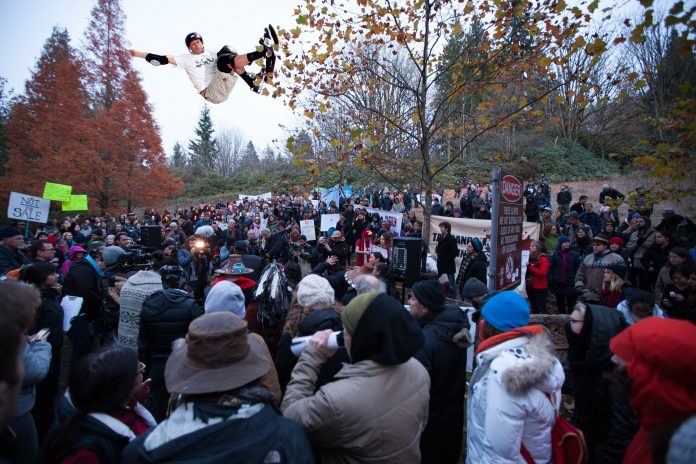
Amidst a sea of protesters and environmental activists this week, skateboarding icon Tony Hawk has publicly announced that he is in favour of the proposed half-pipeline extension through Burnaby Mountain.

If approved, the Kinder Morgan half-pipeline will be the largest outdoor skateboarding half-pipe in British Columbia and the third largest worldwide.

“I’m not supporting this half-pipeline just for me,” a teary-eyed Hawk told reporters this past Monday. “I’m supporting it for my children and for my children’s children. This half-pipeline is for future generations.”

A professional skateboarder from 1982 until his retirement in 1999, Hawk’s pro half-pipeline stance is hardly surprising, but could prove beneficial to energy giant Kinder Morgan, as opposition is ramping up and some take a neutral stance.

On November 7, SFU president Andrew Petter released a statement expressing neutrality on the issue, saying he was really “more of a rollerblades kind of guy.”

Last week the BC Supreme Court granted an injunction to Kinder Morgan to forcibly remove any skater haters or protesters who might prevent further survey work being conducted in preparation of the half-pipeline.

Strongly opposed to the half-pipeline are many environmentalist groups who worry about what impact the project will have on Burnaby Mountain’s ecosystem. Several moms have also expressed a disinterest in the project, wondering why their teenagers couldn’t find a nicer, less dangerous hobby.

“You know, his second cousin Jane broke her arm skateboarding when she was eight,” Travis Bell’s mom, who is against the half-pipeline, told reporters. “Why can’t you just read a nice book or play checkers with your sister instead of skateboarding all over the place?” she asked her son in exasperation.

While Kinder Morgan has yet to make an official statement on Hawk’s endorsement, a press release from earlier this year suggested that the half-pipeline backlash is largely unwarranted and “more of a knee-jerk reaction.”

“People see the world’s ‘half-pipeline’ and they immediately assume the worst,” said a representative from Kinder Morgan. “The reality is that they’re one of the safest means of carrying skateboarders across large distances. If you’re against half-pipelines then you’re against skateboarding. Can you live without your skateboarding? No? Then we have to invest in half-pipelines.”

“I won’t wake up tomorrow in a world completely independent from half-pipelines,” Bell’s mom retorted, “but it’s time we started investing in cleaner, safer hobbies for our children.”

2014 Fall Kickoff concert by the numbers

0

The numbers from the 2014 Fall Kickoff concert have been released, showing that the largest concert in Simon Fraser Student Society (SFSS) history also had a surplus of $10,992.

Zied Masmoudi, VP student services and project lead, presented his evaluation of the event to the SFSS board of directors on November 12.

“I can happily say that we have succeeded in fulfilling [our] goals [as outlined],” Masmoudi stated. He said those goals — diversity, accessibility, efficiency, and sustainability — were achieved by featuring diverse artists, accommodating students with disabilities, and reducing the amount of energy used in terms of production,

With regards to engagement, over 200 students collaborated to put on the concert. Masmoudi reported that stakeholders, including campus security, student services, and SFSS staff, were pleased with how the event went and how the volunteers conducted themselves.

Including staff and volunteers, over 1,800 people attended the concert on September 19. Of those in attendance, 30 per cent were between the ages of 16 and 18 and 65 per cent showed their SFU ID at the door.

Masmoudi explained the numbers: “Among the other 30 per cent, a lot of the attendees displayed that they are SFU students, but they did not bring their IDs. Unless students show their identification, we do not count them. [. . .] I’m pretty sure the ratio is much higher than that.”

In the past, administration has expressed concern over non-SFU students attending the concert events. However, Colleen Knox, executive director of the SFSS, lauded the high number of SFU students who attended: “The university has a sense that non-SFU students coming to our campus do not have the same loyalty and respect for the campus, and so they really do like to see that what we’re doing is on behalf of the members.”

In presenting the financial report, Masmoudi suggested that there may have been an error in counting ticket sales, as there was an extra $300 in sales combined with a number of tickets unaccounted for by the end of the night.

“[University administration] really do like to see that what we’re doing is on behalf of the members.”

Colleen Knox, executive director of the SFSS

Shadnam Khan, business representative added, “Some of the missing tickets weren’t actually missing tickets. I might not have accounted for them properly.”

Similar concerns around ticket sale disparities have been raised in light of the financial reports from previous SFSS concerts, but this is the first time that concern has related to a surplus, not a deficit.

In his recommendations for future events, Masmoudi suggested that the working group begin preparing for concerts sooner in order to book artists at lower expense. Furthermore, he suggested that they reduce the number of tiers at which tickets are priced and begin the actual concert at a later time in the evening.

At the end of the presentation, SFSS president Chardaye Bueckert brought up concerns about whether the board would continue to act as a working board — with members directly involved in event planning — or instead act as more of a governing body.

“It’s probably not the most sustainable thing to have the entire duty of organizing a huge concert fall on the shoulders of one or two individual board members,” she said.

Following Bueckert’s point, Khan recommended that Masmoudi formulate a proposal for a spring concert.  “Based on what Chardaye said, board can then choose through what avenue they want to host a concert. I just want this to continue,” he explained.

Board voted in favour of tasking Masmoudi to bring forward a proposal for a spring concert to board.

Zine Scene

0
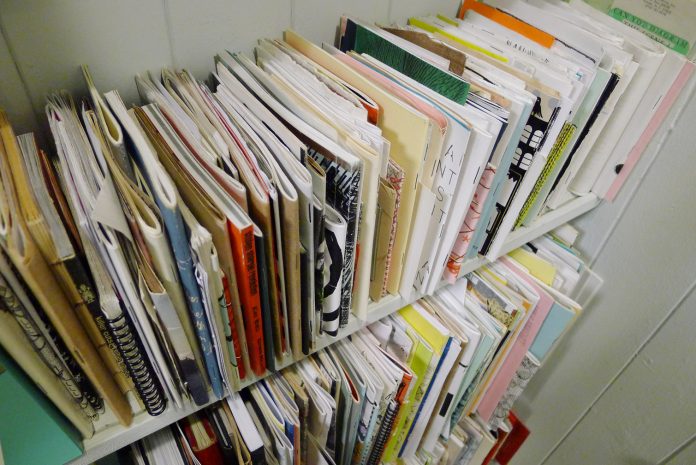
The zine library at the Regional Assembly of Text on Main St. is one of the best sources for zines in the city.

Two weeks ago, SFU Woodward’s hosted one of Canada’s greatest annual independent cultural events: Canzine. Organized by Broken Pencil magazine, Canzine West (along with Canzine Toronto and Canzine Central in Winnipeg) is a full-day event dedicated to zine culture, independent media, and small press. With the exception of two major Vancouver groups, Geist magazine and Lucky’s Comics, Canzine West featured table after table of independent zinesters, illustrators, artists, and other independent media-makers from near and far, exhibiting their handmade creations.

There were well-established artists such as Colin Upton, who’s been self-publishing mini-comics since 1985, along with first-time tables like the ladies of Pizza Cola, a collective of young Vancouverites making zines about teen girldom.

“You are your own editor. You can have control of what you want to say in the work.”

In addition to the zine and small press fair on two floors of SFU’s School for the Contemporary Arts, Canzine West hosted four awesome events, including an hour-long talk by New York Times bestselling cartoonist Mimi Pond. Pond’s most recent work, Over Easy, was published this year by Canada’s own Drawn & Quarterly. There was also the highly anticipated Punch Book Pitch, in which locals were given two minutes to pitch their book ideas to a panel of judges, which included Broken Pencil editor Alison Lang.

When I caught up with Lang during the final moments of the event, we discussed the defining features of zine culture in 2014. “It’s events like this where people come together,” Lang said. Broken Pencil, which has been reporting on independent creative action since 1995, is another hub for zine culture. According to their website, “From the hilarious to the perverse, Broken Pencil challenges conformity and demands attention.”

At this point, some of you may be asking yourselves: WTF is a zine, anyways?

A zine (pronounced “zeen,” short for magazine or fanzine) is, first and foremost, a labour of love. Zines are self-published, hand-crafted works which often resemble a magazine or chapbook, although they are never confined by conventions. They can be folded, stapled, sewn, photocopied, drawn, cut, pasted, posted online, mailed, sold, traded, or gifted.

As articulated in The Book of Zines, zines and the artists behind them are “obsessed with obsession” — often embodying the fangirl-esque mindset of those who live and breathe things like music, books, sex, movies, politics, food, and civil disobedience, zines are the product of fanaticism. Zines are not made to sell, although when people help you cover the oft minimal cost of production, big ups to them. They are intensely personal accounts of those who are bored by the glossy, ad-ridden print publications surrounding us, and an outright rejection of storytelling within a capitalist framework.

So here’s the story

I’ve divided the story of zines into three waves in order to accommodate some trends that I’ve noticed in my research and in conversations. I’ve chosen to address this timeline as a “story” rather than a “history,” because I think that in most cases, zines have always stood in opposition to the patriarchal narrative: they aim to redefine, reclaim, and reject an oppressive, colonial presentation of history.

The first wave is what I’ll call the “pre-punk” wave. Before punk, zines can be traced back to traditions from the 18th century and before in the Western world. Pamphleteers, as they were called, would distribute their self-published works during times of political unrest. During the 19th century in America, hundreds of African-American writers and illustrators published their own pamphlets containing personal accounts of colonization, slavery, emancipation, identity and more.

Most historical accounts tend to attribute the birth of the zine to the beginnings of science fiction writing in the early 1930s. However, many other traditions that began around this time shared the DIY ethos of zinesters: pamphlets, broadsides, Dadaist art, mail art, minicomics, manifestoes, poetry chapbooks, and of course, fanzines. Another example is Russian samizdat publications, which political activist Vladimir Bukovsky described thusly: “I myself create it, edit it, censor it, publish it, distribute it, and get imprisoned for it.”

Before the 1970s and the emergence of punk, zine culture was growing its roots as the centrepiece of the counter-culture establishment. According to writer Stephen Perkins, “Drugs, rock music, the war in Vietnam, and racial inequality were just part of the volatile mix that would alienate many from the dominant ‘establishment’ culture, into the search for and the construction of, a more authentic culture that reflected the concerns of this generation in revolt.” This culture gave way to a sort of pre-punk underground press.

In addition to the social-action ethics of many zinesters, 1960s-era counterculture saw the emergences of self-publishing art books (which challenged conventions of layout and design), and underground comix (which rejected the rigid censorship of mainstream comics).

“If you can’t find a zine that you want to read, write that zine. You can do that.”

And then punk happened.

This second wave of zine culture began in mid-1970s England, and saw an explosion of new zines, many of which became key anti-establishment resources. Zines had also become easier to reproduce, with newly cheap and accessible technology, such as photocopiers.

“The most basic ingredients of punk zines,” writes Perkins, “were the ubiquitous gig reviews, interviews with bands, record and tape reviews, personal rants, letters from readers and a healthy dose of undigested leftist/libertarian/anarchist tracts, manifestoes and pronouncements, all strewn together within a potpourri of collages, montages, ransom note lettering, and banal mass media images juxtaposed against assorted taboo imagery.”

The 1980s saw the first official zine-review publication Factsheet Five, as well as conferences on mail art and the amazing emergence of alternative comics publications such as Raw magazine.

This wave of zine culture is also characterized by the emergence of voices otherwise unheard: LGBTQ folks, women, and others who were sharing their experiences from a marginalized or minority group. The do-it-yourself ethos had, by this point, woven itself into the fabric of zine culture: mailing zines to friends, speaking out against violence and oppression within existing subcultures, and of course the pinnacle of zine culture’s second wave, riot grrrl.

Riot grrrl was born between Washington, DC and the Pacific Northwest (Vancouver included!), and is characterized as an underground third-wave-feminist punk movement — its very manifesto was published in a zine called Bikini Kill and was written by members of the band by the same name. The 1990s saw zines published with such titles as Conscious Clits, Hangnail, Sissy Butch, Hit It or Quit It, Bitch, Unskinny, Slut Magnet, Bust, and Alphabitch Afterbirth.

The third wave of zine culture is the one we’re living in now, and it began with the popularization of the internet. E-zines began to surface and gain steam at the turn of the millenium, and brought with them a whole new set of tools to play with. Those privileged enough to have access to computers were able to reach people in remote communities through the world wide web. This wave has also fostered many academic examinations and theses on zines and zine culture.

Vancouver and the rest of the Pacific Northwest have been integral to the ongoing story of zines. One of the earliest bonafide zines I could find from Vancouver dates back to 1957, and is dedicated to folk music. For nearly eight decades (!) local artists and authors have been publishing fanzines on science fiction. In 1973, the British Columbia Science Fiction Association began publishing zines, and has put out nearly 500 of them since.

Some have even attributed the birth of riot grrrl to the formation of a Vancouver two-piece rock band, Mecca Normal, in 1984 — the band’s lyrics, written by frontwoman Jean Smith, were riddled with feminist and DIY attitudes.

Where to find ’em

After all that, you’re probably wondering where you can find zines in Vancouver, Salish Territories! Here are some of my personal favourite spots.

Lucky’s Comics: Located at the corner of Main and King Edward, Lucky’s is a haven for zinesters and lovers of comics, graphic novels, and other print oddities. This is the place to buy zines for your own collection, but be prepared to spend a great deal of time shuffling through the shelves at the back corner of the store.

Regional Assembly of Text: A stone’s throw away from Lucky’s, the Regional Assembly of Text is the shop with the typewriters in the window, and is owned and operated by two Emily Carr grads. Here you’ll find the lowercase reading room: a storage closet-turned-library that is home to hundreds of zines and art books. Also, there’s a free letter writing club event at 7:00 p.m. on the first Thursday of every month (free cookies and tea, typewriters galore) to stretch your mail art muscles.

Vancouver Public Library: That’s right! The VPL boasts a (pretty impressive) collection of zines at both their Central and Mount Pleasant locations. You can browse by topic and if you get inspired, plop yourself down on a computer, print your zine and photocopy it, all under one roof!

Spartacus Books: In the first year at its new home near Trout Lake, Spartacus Books has survived its renoviction from the DTES. Here you can find anything and everything radical: zines, anarchist books, comics, music, patches, and awesome people. It is a hub for alt culture and runs on a steady foundation of amazing volunteers who are sure to know their way around the zine scene.

All this considered, zines have never been confined to one postal code, and there are simply too many great organizations to mention them all here. If you are reading this on or near a web browser, though, I highly encourage you to check out the Broken Pencil website for its wealth of information, archives, and resources. Also, theQueer Zine Archive Project (QZAP) and their website is an amazing example of the work being done to support and maintain the amazing world of underground queer communities.

Zines are self-published, hand-crafted works which often resemble a magazine or chapbook, although never confined by conventions.

I also highly recommend checking out local zine fairs like Canzine or Short Run Festival. Getting out there and seeing zines, meeting zinesters, trading, chatting, laughing, and learning is the best way to get involved. During my time at Canzine West, the founder of Vancouver’s own paper innards distro, Sarah Thompson, gave me some solid gold advice: “If you can’t find a zine that you want to read, write that zine. You can do that. You can be a part of that conversation.”

If you’re not already armed with scissors and glue, then here’s some more advice from some of the best and brightest in the Vancouver zine scene.

Stacey Bru (Queer Fudge): “I really love zines because they don’t have to be edited. It’s a really true representation of what I want to make and the things I like to write about. Zines should be unedited accounts of who the person who’s making the zine is and what they want to share with the world.”

Heather Joan Tam (Ballast Canting): “I choose a different type of paper or colour to be able to present the mood or the topic or what the story’s about. Some of it is nice, printmaking paper and sometimes it’s just office supplies, so just whatever I find and can run through my inkjet printer.”

Ho Tam (XXX Zine): “You are your own editor. You can have control of what you want to say in the work.”

Shane Lange (Skyscrapers. . . All on fire): “You’re connecting with people on the basis of not only the work that you’re putting out, but the fact that you’re putting it out in this format.”

So by now, you’re probably totally excited to get started making zines of your own — here are some basic tips on where to start.

Step 1: Find your voice. What matters to you? Are you telling fact or fiction (or a bit of both)? Some common starting points for zines are to write a story, start doodling, or brainstorm a topic and send out a call for submissions to your friends and circles.

Step 2: Find your tools. Is your zine going to be online or print? What do you want your zine to look and feel like? For print zines, I recommend starting off with some basics like scissors, writing instruments, images/stickers/colours to collage with, and paper. The first thing to do is map out how your zine will be assembled. Will it be bound by staples, thread, glue or consist of one sheet of paper? My first zine was a no-staple mini zine with eight pages out of one sheet of printer paper. This is an excellent place to start!

Step 3: Find your audience. You’ve completed your first zine — props! Now it’s time to get it out into the world (if that’s what you’re into). One way is to make bunch of copies at your local photocopier, then number the copies and give or mail them off to friends, strangers, distros, libraries, tuck them under doors, or host a table at a zine fair.

Gearing Up

0
wuh oh
Biking in the winter can be rewarding — just make sure you know how to keep your bike in good shape.

Yeah, that’s right. SFU has a bike tool co-op.

Located in TC319 Rotunda on the Burnaby campus, the Bike Tool Co-op (BTC) is stocked with a whole variety of new tools and parts to help you keep your bike healthy. They’ve got Burnaby bike maps and other information about the bike trails at SFU — and it’s all free to SFU staff, students, and anyone using our school’s bike trails. Pretty sweet, huh?

The story of how I came to be involved with the BTC is a long one. I was traveling around Europe after a field school in Prague this summer and, inspired by Scottish cyclist Mark Beaumont, I decided to spend 10 days in the Irish counties of Cork and Kerry, biking along 448 kilometres of amazing coastline.

Biking provides an honest-to-goodness beautiful way to see the world.

I’d gone biking plenty of times before, but I was hardly a serious cyclist. Now, I was attempting 10 straight days on the road. I’m the kind of person who is undeterred by a lack of preparation and experience — and the kind that doesn’t check the weather report. I undertook this journey in the only two weeks of the summer that it rained in Ireland, with little knowledge about how to fix a bike and without waterproof clothes. By the end of my journey, my brake pads were shot and my chains were so rusty they had practically disintegrated.

It was a miracle, or a testament to good Deutsch inner tubings, that I didn’t have a puncture on top of that. I survived by being careful within the confines of recklessness — which is to say, by sheer dumb luck.

I now want to bike across the great span of Canada, and the BTC has become a place for me to learn some necessary practical skills for such an odyssey. Whether you’re a seasoned pro or someone who can’t ride a bike without training wheels, the BTC is a great place to learn more about the ins and outs of serious cycling. As long as you’ve got a keen interest and a willingness to learn about bikes, you’ll be fine.

Biking provides an honest-to-goodness beautiful way to see the world. You move at a different pace from the rest of the walking and driving population; fast enough to feel your heart pounding, but slow enough to immerse yourself in the moment. You’re completely exposed to the elements, which is only something you can truly appreciate after experiencing it yourself.

The rain in Ireland pinched my skin a million times over. The wind passed through me like a ghost in a rage, and cycling along winding, narrow roads in the thick fog stirred a wicked disquiet within me. You’ll never realize how small you are in such a big, big world like you do in those hours on the seat of a bike in a hounding storm. Despite the obvious discomfort, I’d do it again in a heartbeat; it was the most alive I’d felt in a long time.

Cycling in the winter inspires those same feelings and experiences. If you’re willing to spend the time learning to fix and maintain your own bike, you’ll save money and time, and gain a serious amount of confidence as a cyclist to boot. So, without any more babbling on my part, here are a few tips on how to keep your bike in tip-top shape for the upcoming merry season.

Four easy things you can do to maintain your bike in the winter

I know what you’re thinking — why the macaroni and cheese would anyone want to bike in this weather, especially when we all have U-passes, or even the luxury of a heated car?

But winter is no reason to stop pedalling — especially in Vancouver. Whether you’re biking to school (which, if you are, I congratulate you because Burnaby Mountain ain’t no easy feat) or for recreation, you’ll save money, stay healthy, and bypass nasty traffic jams.

Dress appropriately: Don’t do what I did. I didn’t care enough to invest in waterproof clothes, and spent countless days looking like I’d just wandered out of a sewer. When riding in the winter, layer your clothing and wear a windbreaker. Because of how fast you’re moving, the wind around you will wick heat away from your body faster than you can say “bacon grease.” Your grandma will also appreciate you wearing earmuffs and a scarf.

Lube up your chains: Winters in Vancouver are very wet, and rusty chains make for a lot of pain. As the chains are one of the most expensive parts of a bike, regularly maintaining the chains and getting rid of rust will keep them working more efficiently and for much longer, and save you money in the long run.

Wash your bike (immediately after riding, whenever possible): Bikes accumulate a lot of dirt and muck, so it’s best to give yours a wash while it’s still wet, rather than after the muck dries and hardens. Salt-sprinkled roads lead to rust, which is the parasitic fiend of the bike. So wash your bike! It’s always more fun hosing it down with warm water than vigorously taking a rag to it.

Check your brake pads: In the winter, the roads are generally more slippery, which means that brake pads will likely wear out more quickly. Of the 10 days I spent cycling in Ireland, half of them were in the rain; by the eighth day, my brake pads were completely shot and it became very dangerous to go downhill. So make sure to keep an eye on those brake pads!

Sex and the Suburbs: Wonderful Winter Wines

0

At this time of year, as finals approach in tandem with a big slap in the face from below freezing wind chills, you may feel compelled to burrow inside a snuggie and your friend’s stolen Netflix account, ready for a marathon. This picture of course, isn’t complete without a beloved heart- and body- warming beverage — vino.

First up, etiquette. Think getting cozy under the covers with a bottle and your momma’s tacky mugs is going to cut it? Not today and not ever! Let’s get some basic wine etiquette down before setting off on our adventure of wonderful winter-ready wines.

For starters, the glasses. Red wine glasses should be full and round in the base of the bowl, and like a ripe large pear, the glass should gently taper to concentrate the sensual aromas of the wine. For white wines, the bowl will be a bit more shallow and the tapering will not be as drastic. Wine glasses should be used always when drinking good wines because they allow you to taste the wine fully.

Now, many of us have seen someone open a bottle of wine, only to let it ‘air out’ and have thought to ourselves “just drink the damn thing!” Well, this is a process called aerating, and it is key to enjoying young red wines. Opening a bottle up, pouring it into a decanter, and letting it take a big old breath loosens up the aromas and flavours. This is especially important for young wines, say under seven years old.

Now that we’ve dispensed with the pomp and circumstance, it’s time to drink! This winter, we are crushing on two excellent wine varietals: Riesling and Pinot Noir. Rieslings are a lighter-bodied wine (think a light snowstorm in the depth of winter covering your lawn in magic). It will cover your tongue in its refined structure — its ravishing delicacy made all the better with flavours of ripe melon, apricot, and peaches. This is a great pairing for your big family butterball dinner or for a nice secret santa with friends and copious amounts of baked goods!

Another lovely partner for a turkey-ham combination is the supple and silky Pinot Noir. This wine will entrance you with its flavours of baked cherries, warm plums, and chocolate. Pinot Noirs, like Rieslings, tend to have a lighter body, making them a good match for turkey and stuffing.

Wait a second…Cherries?… Plums?!…Chocolate?!? This sounds like the perfect wine for getting out of your snowsuit and getting warm with your special someone! Indeed, Pinot Noir is also a very sensual wine and provides a perfect transition from the cold to fogging up the windows.

Not in the mood for a cup of straight vino? No matter! Nothing says ‘exams are over’ quite like a pot of mulled wine. Mulled wine is wine that has been heated and reinvented with cinnamon, oranges, honey, Grand Marnier, and whatever else gets you going. It is a European tradition, and the best part is that whole snobbish thing about momma’s mugs doesn’t apply here. Bring out those tacky mugs you made for her in elementary school, or the ones your neighbour brought you back from Hawaii. Or just sip right from the pot! No judgement. We’ve all been there.

Get out your leopard print snuggie, sip from a friendly pot of mulled wine, and drift off into what winter break is all about. See you all back in the spring! (P.S. when we mentioned the tacky mugs your neighbour gave you, we were kidding. Throw those out. Like now.)

Save your disdain for eReaders!

0

How many times have you asked or been asked: “How can you read on that thing? I love the feel of a real book. I hate eReaders.”

Whether you’re the one hearing it or the one saying it, I understand — I am both a digital and ‘real book’ reader. I work as a bookseller and at my bookstore, we encourage those Fifty Shades and Fault in Our Stars buyers to keep reading after they finish this year’s blockbuster. So when I read about people like Shannon Rupp renouncing digital reading on eReaders as a habit that disrespects and rushes the reading process, I want to tell her to just be happy more people are reading.

Firstly, let me educate Rupp, who seems to think her iPad counts as an eReader. An iPad is not a dedicated eReader, but a tablet with internet access, an LCD screen, and an abundance of apps. Kobo and Kindle are dedicated eReaders, meaning they were made specifically for reading with their E-Ink screens that mimic the words on the page of an actual book. They don’t strain your eyes or give you a headache like a tablet will because they aren’t backlit; they’re ‘front-lit,’ meaning they project the light onto the screen from the sides.

New eReaders have a battery life of around two months, unlike an iPad, which will last for about 10 hours of use. The objective of an eReader is to replicate the paper-book reading experience as closely as possible, and I feel that it replicates it pretty well, if not improves it. When the actual-brick-weight fifth book of the A Song of Ice and Fire series was released, I said “no way” to the $40 hardcover and bought the $16 eBook. In some circumstances, eBooks are just the better alternative.

The objective of an eReader is to replicate the paper-book reading experience as closely as possible.

According to Rupp, eReaders “homogenize” art like literature, making the reading experience the same for everyone. I don’t understand where they’re coming from. It’s always been the plot that sets a book apart — not its form. Rupp insists that eBooks force the reader to read faster rather than lingering to think as they would with a paper book. When did people become so opinionated about how other people read?

When I’m not reading for class, I’m definitely reading for pleasure. I read the newest books that have the best reviews because all I need is a story to get lost in. I’m still thinking, but I’m not approaching a novel as a ‘learner’ because reading fiction for pleasure is one of my stress-relievers. It distracts me on the elliptical machine, on a boring public transit ride, and during the tedious 15 minutes I spend drying my hair in the morning.

The fact that half the time I choose to read those books digitally doesn’t affect my reading experience, or how much I’m thinking. Simply put, eBooks aren’t ruining our reading experience nor are they a hazard. If anything, they’re a more economical, portable, eye-friendly alternative for those of us who need slightly larger font or who pack five-too-many books on a camping trip.

People might assume I’m just another digital native in my generation defending the technology she’s grown up with. But let me tell you, I buy print books. I buy so many print books that I’m running out of shelf space and money for rent. I can read both print and digital, and I enjoy having the option. Reading is an extremely personal experience, so save your disdain about eBooks and quit bothering everyone with your print book elitism.

Who’s Kayode?

6
You can vote for me, or you can vote for me
The man, the myth, the legend: Kayode.

On a bitter Spring afternoon in the West Mall atrium, one lone candidate captivated students attending the election debates for the Simon Fraser Student Society (SFSS) VP Student Life position. Standing among his competitors, he rapped along with the rhythmic claps of an audience enraptured. “You can vote for this,” candidate Kayode Fatoba recited, pointing to himself. “Or you can vote for that,” he chanted, gesturing to his opponents. Students chose the former.

But still, eight months later, “Who’s Kayode, what’s the motive?” still lingers. Over the past few years, Fatoba has been involved with myriad initiatives and groups on campus — the SFSS, I Vision One World (iVow), SFU Athletics, and The Peak, among others. Nevertheless, how Kayode defines himself both within and outside of these groups remains unclear.

“I don’t necessarily care if people don’t like me, because I didn’t start out having people like me.”

The Peak sat down with Kayode Fatoba — the African, the entrepreneur, the animal, and the man — to attempt to peer into the mind of one of SFU’s most eccentric and outspoken figures.

The African

Fatoba was born in 1991 in Agege, a small suburb in the state of Lagos, Nigeria. Scanning through photos of the streets near his home, Fatoba commented, “It’s not a super high-end part of Nigeria.”

When he was six years old, Fatoba travelled with his mother and brother to Toronto, where they lived in a small apartment with several members of their extended family. After years of involvement with the local police department and a youth soccer program, Fatoba received the TD Scholarship for Community Leaders, which ultimately brought him to study at SFU.

A health sciences student, Fatoba explained that his father played a critical role in determining his academic career: “He picked what I would be doing at SFU, and culturally [. . .] I felt like I have to respect my elder. That’s how I grew up.”

He continues, “I’m in a degree not necessarily because I chose it, and I keep continuing in it not necessarily because I had a choice.”

As such, Fatoba was forced to explore his true passions through his extracurricular activities, inspiring him to pursue a balance between his academic demands and his entrepreneurial spirit.

The Entrepreneur

When asked to describe his career goals, Kayode says, “my goal is to build a brand that people can eat off of and believe in.”

He explains his skepticism towards non-government organizations, saying “I don’t necessarily believe that [they] really empower a group of people to cater to themselves, to develop businesses, to feed their families, to have a livelihood, to feel confident as members of the society.”

As such, Fatoba founded SkyNation with the intention of developing a brand that empowers people — specifically, Africans.

He tells me the story of how he and his friend stumbled upon an article explaining how the South African government had spent millions of dollars on a new website that was reportedly only worth $40.

“We realized that it was important for us to make web development and online presence affordable and attainable to Africans,” Kayode says. “That’s when we started SkyNation.”

SkyNation aims to develop unique hosting platforms which make web development easy and affordable for all African households. Unlike sitebuilders like WordPress, it will accept alternative forms of currency in an attempt to make personal and professional websites accessible to those without credit cards.

“Our mission was to put Africa online,” says Fatoba. “At the core of SkyNation, we’re trying to be a valuable African company that [is] made out of the need to provide affordable software to aid in African development.”

But although he may be an up-and-coming businessman by day, a different, wilder side of Fatoba emerges behind the microphone.

The Animal

Listing the organizations he has been involved with over the past few years, such as Alpha Kappa Psi, SFU Fashion Week, and African Students Association, Kayode mentioned An!mals, describing it as “like this random thing…” and trailing off.

But far from being just some random thing, the musical group An!mals is the brainchild of Fatoba and two of his friends, his chance to express himself the way he knows best — through rap. “I love music,” says Fatoba. “It’s part of everything that I do.”

A mix of EDM, hip-hop, and jungle fusion, An!mals, as Fatoba put it, “is just us making music and not giving a fuck.”

The group’s name originated from a discussion the three had about how everyone is, at their core, a political animal. Although the band is still in its nascent stages, Fatoba explained that the lyrics of their upcoming EP carry strong social and political messages.

The three also plan to wear masks while performing in order to provide audiences with the complete An!mals experience. Fatoba was hesitant to disclose more information about the group, including which mask he wears. Hopefully, he’ll let the cat out of the bag soon.

The Man

Despite his recent successes, Fatoba’s SFU career has not been without its challenges. In 2010, he came under fire after the Juno-winning performer K’Naan pulled out of performing as part of a World Peace Day celebration at SFU, mere hours before his scheduled appearance.

As president of iVow, the club that organized the concert, Fatoba took responsibility for the failure. He became the subject of much criticism, but he took it in stride — now he brushes off this past misstep, quipping that he’s “often hated, never replicated.”

While the scars of the past rest just beneath the surface, Fatoba has since emerged from the controversy with a fresh attitude, and a commitment to change SFU for the better.

“I don’t necessarily care if people don’t like me, because I didn’t start out having people like me,” Fatoba said. “I like doing things, and I do things. I fail, I keep doing things, and they’re slowly becoming successful. So I’ll keep doing it.”

Ultimately, Fatoba summed up his experience at SFU best: “It’s a long journey.” And while his journey is far from finished, one thing is for sure: few are able to guess just what Fatoba will do next.

Why we need to talk about income inequality

0

I like to think that all SFU students have at least one thing in common — that we all wish to build a life for ourselves that is better, if not equal to, the life our parents built for us. However, over the past 30 years, the income gap between the top one per cent of earners and the rest of Canada has been steadily widening and threatening our ability to move upwards on the class-scale.

What this means for us — the ones about to enter the world of full-time employment — is that we will have to work more to earn less. The Broadbent Institute reports that for every dollar increase in national earnings, 30 cents goes to the top one per cent, leaving 70 cents to be divided amongst the remaining 99 per cent of the population.

This gap, along with the list of reasons for it, has been growing over the past few decades. If we look at technological changes, the recent outsourcing of jobs, the decline in unionization, and the deterioration of societal equalizers such as public healthcare, it is understandable why the middle-class has been scrambling to hold on. We now live in a world where upward mobility is limited.

Statistics Canada has been tracking the wealth gap for over 30 years, but rarely is it mentioned by our nation’s leaders. We often hear references to the ‘middle-class squeeze,’ which occurs when rising prices are met with falling incomes, but the numbers surrounding the wage gap are not discussed nearly as often.

Ottawa doesn’t seem to care about how wealth is redistributed unevenly in Canada.

The absence of income inequality on the Canadian political agenda should bother us, as Ottawa doesn’t seem to care about how wealth has been redistributed unevenly in our country. We have the most at stake as Canada comes to a crossroads; if we don’t begin to take serious measures against the widening income gap, then Canada may no longer be a place of fair economic opportunity.

We must begin to ask more questions and put pressure on the government to address the issue. Before the gap begins to contract, public discussion on how to resolve the issue is essential. Canadians deserve a government that works with them to create a better and more stable economic future.

If the notion that our generation (and future generations) will have to work more for less is upsetting, I suggest we think about bringing fair wages, fair taxation and strong public services to the forefront of our own agendas. If we let these things slip through the cracks, the wage gap will undoubtedly continue to grow.

I want to live in a country where upward mobility is possible, but as long as we ignore income inequality, the chances of us living in that country grow smaller and smaller.

Peak Editors share their studying sounds

0

Alison Roach, Editor-In-Chief

Iggy Azalea — The New Classic

As an English major, the majority of my end-of-semester fervour is spent furiously writing papers rather than cramming for exams. In this well-refined process, I need jams that are going to fill me with fire instead of lulling me into a patient, memory-beneficial zone.

This semester, I’m channeling Iggy. Following the well-treaded ground of rapping celebratory songs about ‘making it,’ The New Classic is a lady-bible on how you CAN do it, girl! If your writing situation doesn’t call for any ramp-up, skip over the first three tracks, you don’t need them. Go directly to the stuff that’s going to make you type 5,000 fucking words per minute.

Listen, and believe, as Iggy and T .I. tell you how they’re going to change your life. Obligatorily jam to “Fancy” because even though you’ve heard it a hundred times, it still rings true. You are fancy, and they should already know. Transition into “Work,” a ‘getting shit done’ anthem if I’ve ever heard one. You are working on your shit. You are capable of writing 100 pages in the next hour. By the time you’ve hit “Goddess,” you will have literally transformed into an academic paper-writing deity. “Bow down, put your knee to your face,” you’ll triumphantly cry at your computer. Congratulations. You just won school. As Iggy put it, “Impossible is nothing.”

Leah Bjornson, News Editor

Pride and Prejudice Soundtrack

Being the kind of person who has 10 tabs open while studying, I need to listen to something that focuses my thinking while working instead of something that adds one further distraction to my life. As such, I tend to turn on instrumental music — movie scores, jazz, the soundtrack from the Legend of Zelda 25th Anniversary Orchestra — but my go-to study music has to be the soundtrack from the 2005 film Pride and Prejudice,composed by Dario Marianelli.

The soft piano which commands most of the tracks carries you along a soothing journey, yet at times swells with emotion, keeping the listener transfixed. Although the soundtrack is at times repetitive (which might actually be a boon when you’re studying), the fifth track “The Militia Marches In” jolts you into an upbeat rhythm and may even provide you with a much needed dance break. If you’re looking for something instrumental to keep you in the zone, this soundtrack may be the perfect study companion.

Jacey Gibb, Humour Editor

Much Less Normal — LNRDCROY

Everyone’s soundtrack to productivity sounds different. You want something with a consistent beat, sans overwhelming lyrics, something ambient enough to keep you from getting distracted, but not so ambient that you might fall asleep.

Might I suggest LNRDCROY’s 2014 release, Much Less Normal? The release from Vancouver label 1080p boasts 10 tracks to help carry you through any mundane task and keep your foot tapping along the way. Plus the runtime clocks in at just under an hour, so by the time you hit “play all” again, you’ll have gotten at least some work done . . . right? 

Adam Van der Zwan, Opinions Editor

Sonny Rollins — Colossus

There isn’t a better way to study than with Sonny Rollins playing. I have multiple favourite jazz albums, but Colossus tops my list while being one of the defining saxophone jazz albums of the 1950s. Rollins plays that tenor with an amazingly clean sound mingled with seductive staccatos and quick vibratos. The man has incredible control over his instrument, and the number of sounds he produces in this album seem infinite. His infamous standard, “St. Thomas,” gets me every time.

I’ve long had a strong appreciation for the unique, diverse, and intelligent nature of post-war jazz music — feelings amplified by the fact that I’m a saxophonist myself. Jazz puts me at ease and envelops me in nostalgia; I have a personal connection to what I hear, an understanding and appreciation for how difficult Rollins’ sound is to produce. Rollins is a musical genius, and Colossus helps to actually make my study time enjoyable.

Austin Cozicar, Sports Editor

Queen — Flash Gordon

When I need to do stuff, like homework or writing or whatever activities I normally engage in, there’s nothing better to have in the background than music that repeats, “He’ll save every one of us” and “He’s the saviour of the universe” — it makes whatever I’m doing feel really important. And that’s just the Flash theme.

There’s bad guy music, synthesiser music, love themes, epic celebration music, and even the wedding theme. I should note that the soundtrack is peppered with dialogue from one of the greatest films ever (ex. “Flash, I love you, but we only have 14 hours to save the earth!”). Now do yourself a favour, watch Flash Gordon, then listen to the brilliance that is this soundtrack, and put it on whenever you have something to get done — even if you have only 14 hours.

Tessa Perkins, Arts Editor

Once Soundtrack

A good album to study to should be calming, motivational, inspiring, and not too distracting. It should be the perfect sonic backdrop to let you get in the zone and focus on transferring knowledge from books to brain, or brain to page. My favourite album to put on while studying is the soundtrack from Once.

The harmonies of Marketa Irglova and Glen Hansard will lull you into the perfect mood to soak up information or pump out a term paper, and every so often your thoughts will be punctuated by a motivational guitar riff or stunning note that gives you a mental break and the strength to forge ahead.

If you get stuck mid-paragraph in frustration, cursing your professor, or trying to figure out what the hell Rimbaud actually meant in his poem, the soothing, uplifting sounds of songs like “Gold” will pull you right out of your angered state. If you have yet to discover this album, make sure you check it out this exam season.

Mark Tallman, Social Media Coordinator

Missy Elliott — Supa Dupa Fly

Some enjoy soaring orchestral scores to pen their prose. Others prefer the subtle sounds of swing to study for esoteric examinations. But those people are wrong. In early 2013, scientists discovered a rhythm they say stimulates academic performance and reduces stress among university-aged students. This particular rhythm is so far only found in 15th century Icelandic elf-inspired folk music, and select songs from Missy Elliot’s breakout album Supa Dupa Fly. Scientists are reportedly working tirelessly to isolate, patent and profit from this discovery alongside the pharmaceutical industry.

So, while the last remaining recordings of the 1453 classic “ríða kapítalisma” remain sealed in the frozen wastelands of Siberia, students across the world toil away unaided. Well, except for those whose aural cavities are graced with such gems as “Pass da Blunt” or “The Rain.” Seriously, it works, so check it out. Plus, there are some insightful interrogations into postmodern womanhood or whatever.

Natasha Wahid, Copy Editor

Childish Gambino — Kauai

I fucking love Childish Gambino. Our resident hip-hop expert and features editor, Max Hill, will probably vehemently disagree with me on this one, but Donald Glover’s newest EP Kauai is perfection, and it’s my current go-to study soundtrack. As the name would suggest, it’ll whisk you away to a productivity island surrounded by waves of sultry sounds.

This seven-track treat for the ears kicks off with “Sober” — a melange of Gambino’s soothing, high-pitched vocals, soft synth beats and addictive refrains, it’ll leave you bouncing lightly in your desk chair, but won’t distract you from whatever it is you’re workin’ on. My favourite track is “Retro [ROUGH],” which showcases Gambino’s always-impressive flow. Starkly different from his more aggressive, well-known songs (“Bonfire,” “Sunrise,” and “Heartbeat” to name a few), the raps featured in this tune are playful, low-toned, and enticing.

When I’m super focused, I need background noise that’ll stimulate that easily-distracted portion of my brain, and this EP does the trick. The beats are unobtrusive and *bonus* certain tracks feature the quiet, calming voice of Jaden Smith! P.S. If you dig this album, google “Bed Peace” by Jhene Aiko feat. Childish Gambino — it’s sexy and totally awesome.

The new era of Shopping for Votes

0

Are you a Tim Hortons voter or a Starbucks voter? Are you a Dougie, or a Jane, or a Zoe? Whether you have the answer or not, the nation’s major political parties are hard at work trying to place you into one of their micro-targeted categories of the voting market. Susan Delacourt is a senior political writer at the Toronto Star, and in Shopping for Votes she outlines the way marketing and consumerism has pervaded Canada’s political landscape.

When did ‘citizens’ get reduced to ‘taxpayers,’ and when did voting start to be seen as less of a civic duty and more of a consumer choice? As Canadians became 24/7 consumers, we began to demand similar things of our government as we do from businesses. Politics is no longer viewed as a public service where elected officials work to improve the overall well-being of society, but a business in which there are clearly defined deliverables and the target market is people who will potentially vote for you. 

Moving from the 1950s to present day, Delacourt guides the reader through the defining stages of political marketing in Canada and explains that in the current political climate of constant campaigning, parties must place their main focus on marketing and branding. They focus on swing voters, who essentially shop for their vote each election and cast their ballot to support the party that will save them more money at the cash register. There is an emphasis on simple language, emotional imagery, and memorable guarantees that will win over Tim Hortons voters.

Advertising has become a constant priority of the Harper Conservatives, and they have spent more than any other government on advertising for programs such as their Economic Action Plan, while aiming to paint their party in a favourable light. And let’s not forget the attack ads that would never work for a consumer product, but seem to be fair game in the world of politics. This difference has raised some important questions about advertising standards and whether they should be applied to political parties as well as businesses. 

It is very interesting the way Delacourt directly links marketing and data analysis to the Liberal Party’s dramatic defeat in the last federal election. Their vision of broad policies that apply to Canada’s middle class did not work in an age of targeted campaigning and boutique tax cuts that appeal to small segments of the population.

Anyone interested in politics will find this an enjoyable read, and it will leave you with plenty to ponder as we head into a federal election next year.