Home Blog Page 1056

Concerns with the quality of Build SFU’s outreach are unfounded

2

As a former outreach assistant for Build SFU and a political science student who holds firmly to the ideals of a just and fair democratic process in which all individuals’ voices should be heard, I believe that the Simon Fraser Student Society is proceeding in a fair manner by calling a revote on the passing of the debenture for the Student Union Building (SUB) and the Stadium, as well as the bylaw amendment. 

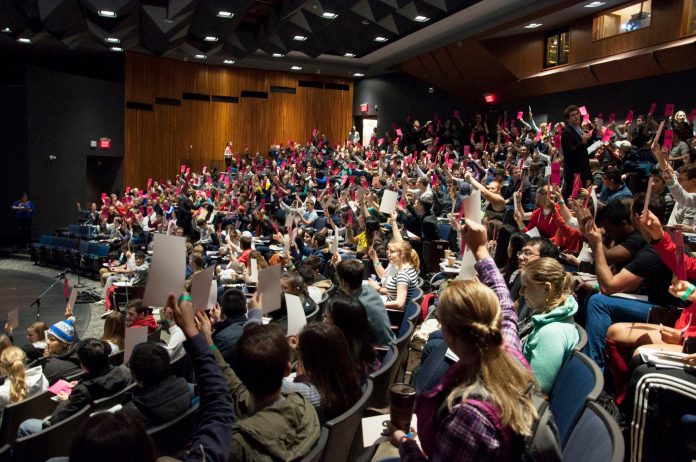
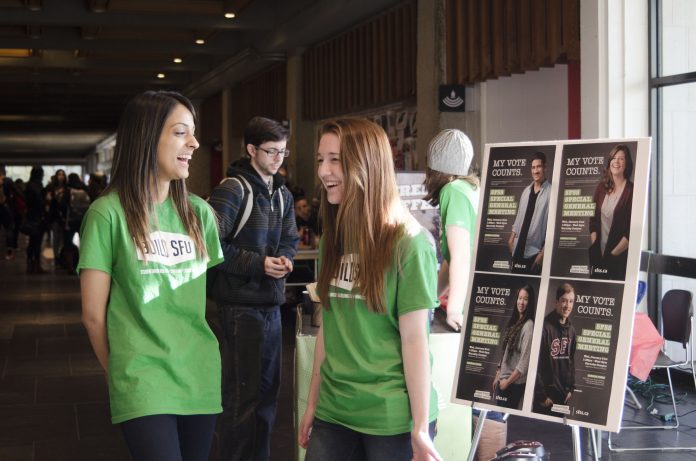
At the Annual General Meeting (AGM) on October 22, certain members of the Society were unable to exercise their right to vote due to safety issues in accommodating all students into the SFU Theatre where the meeting was held. This has led to questions about the merits of the outreach done by Build SFU workers, such as myself.

It is my belief that, now more than ever, students should hear both perspectives on what exactly occurred during and prior to the AGM, in order to make a sound judgement on a project that holds their best interest at hand at the newly dubbed Special General Meeting (SGM) on January 19.

Having formally done outreach with Build SFU, I can say without a doubt that the majority of students that I and my respective peers spoke to were thrilled to see the projects’ successes and the finalization of the SUB’s design, all of which were created through student-led discussion and feedback. The Build SFU initiative prides itself on engaging the student body with the project, and looks to positively promote the SUB and Stadium, each of which house components implemented following a student feedback survey which took place last year.

To say that Build SFU unfairly influenced the vote at the AGM is misguided at the least.

To say that Build SFU or any of its members unfairly influenced the vote on the day of the AGM is misguided at the least. Our outreach aimed to promote the communal benefits of the SUB and stadium, and not once did I or any of my members attempt to bias a student to vote in favour of the project.

In recognition of attending the meeting, students were entered into a draw to win prizes, and the first 300 students received a pound of chicken wings that were granted to both ‘yes’ or ‘no’ voters. These incentives were merely meant to thank everyone who came out to voice their opinions on the project as a whole, and were never meant to force or lead individuals to favour a certain ideal.

Build SFU ensured through its outreach assistants that all pertinent information was made available to students, including the student-paid levy which was showcased daily at the table and listed per-semester the costs of the building itself. It is my belief that the large voter turnout at the AGM was driven by a positive desire to see a success for the Build SFU project, which could only have been made possible by the majority of undergraduate students supporting the construction of the building itself.

Without this support, our outreach could not have been such a successful experience. I am thankful to have been given the opportunity to work with like-minded individuals towards the success of an initiative that I believe will only better our university, and help us provide future SFU students with a place of belonging.

With the upcoming SGM in mind, I urge all SFU undergraduate students to hear both sides of the issue and come out to voice their opinions on a matter that will crucially decide the future of a project that, for me, has been and will always be designed for the students, by the students.

A place of knowledge: SFU Galleries celebrates the university’s 50th anniversary

0

“Art tests things,” Melanie O’Brian, director of SFU Galleries and curator of its upcoming group exhibit, Geometry of Knowing, explained to The Peak. “It pushes on the unanswerable and unstable. It shifts, and it can make people uncomfortable with space.”

From January to May of this year, SFU Galleries will explore the ways in which more than 30 local and international artists have opened up or recovered spaces in time and knowledge via processes such as “witnessing, being with, querying, and generating,” according to the project’s description.

The exhibit’s theme of emerging and recovered knowledge also creates a space for SFU Galleries to explore its own engagement with the production, dissemination, and acquisition of knowledge while approaching an important milestone. Geometry of Knowing marks not only SFU Galleries’ celebration of the university’s 50th anniversary, but also the culmination of a project to rebrand the Audain, Teck and SFU Burnaby galleries in tandem as ‘SFU Galleries.’

“When we were thinking about the exhibit’s concept, we thought about the interstices that connect the SFU Galleries with the university and the community — how we create and spatialize knowledge,” said Amy Kazymerchyk, Audain curator and assistant curator for Geometry of Knowing.

When SFU was established as a space for knowledge production in 1965, the Burnaby campus’s ideas of knowledge were based around introspection and focus. In contrast, the school’s newer campuses in Surrey and Vancouver have developed a view of knowledge as something integrated into all aspects of life.

From of these early explorations, O’Brian and Kazymerchyk produced the first group exhibit of its kind at SFU. Their desire is to use SFU Galleries as a space in which to re-examine how the visual and material languages of contemporary art generate experiential, emotional, physical, environmental, and intuitive intelligence.

Geometry of Knowing presents diverse works, some new and others featured from SFU’s permanent collection. These pieces span multiple generations of artists who have engaged the tactics of fieldwork, embodiment, and materiality, in a manner that reveals or instigates a process of knowing.

“SFU’s collection of art, which now stands at 6,000 works, began roughly in 1965 and coincides with the advent of contemporary art,” O’Brian explained. “We have a lot of paper and print editions. We also have work from Vancouver artists like Carole Itter, who explored art as lived experience back in the ’60s and ’70s — how we understand our bodies and space in relation to it.”

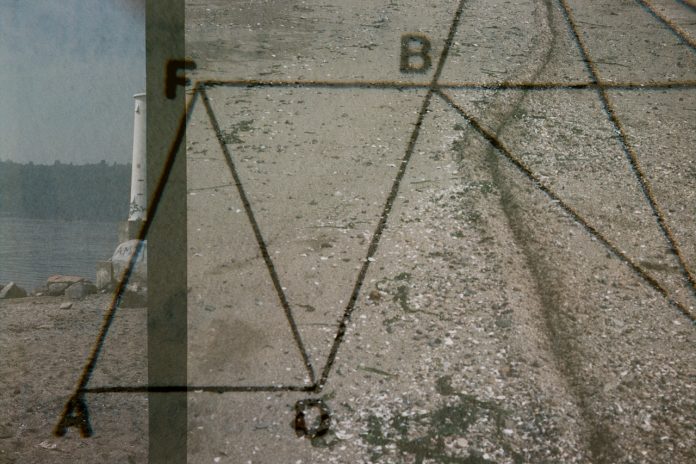
Itter’s 1979 photographic series, Euclid, is a good example of the diverse art on exhibit at Geometry of Knowing. It documents musician Al Neil tracing Euclidean geometric theorems in the sand at Cates Park in North Vancouver. These images were projected as part of a collaborative live performance with Al Neil on piano, and later used on the cover of Neil’s 1980 album Boot & Fog.

“Geometry is a convergence of lines in a free way,” O’Brian said, referencing the exhibit’s vision and title. “It creates a new context that allows things to happen at SFU Galleries that don’t take place elsewhere.”

Geometry of Knowing is a four part exhibition presented at the Audain Gallery and SFU Gallery from January 15 to May 15. There is a free opening reception at the Audain Gallery, January 14 at 7:00 pm. For more information, visit: sfu.ca/galleries.

Five cures for winter boredom

0

1. Discover Thug Notes

If you’re ever in need of a quick summary and analysis of a classic piece of literature, Thug Notes has your back. Hosted by character Sparky Sweets, PhD, watching this web series promises to turn you into one well-read balla. You can refresh yourself on why Hamlet is “cray cray,” why Holden Caulfield needs to “get his shit together,” and why 1984’s Winston should stop “talking smack about Big Brother.” With the tagline “classic literature, original gangster,” how can you go wrong? Visit thug-notes.com to educate yoself.

James_Bond_Spectre_3127893k

2. Prepare for the new James Bond film, Spectre

Daniel Craig is back as James Bond this November in the 24th installment of the popular spy series. Spectre was officially announced in a live broadcast from Pinewood Studios on December 3. Director Sam Mendes shared some details of the film and was joined by the principal cast: Christoph Waltz will play the villain, Léa Seydoux and Monica Bellucci will play the Bond girls, Ralph Fiennes will be M, Naomie Harris will play Eve Moneypenny, and Ben Whishaw will return as Q. Filming will take place in London, Rome, Mexico City, Tangiers, and the Alps. You’d better get started if you want to re-watch all the Bonds before November. Visit 007.com for more information.

Le-Grand-Continental_photo1-e1417337436644

3. Choose which shows you want to see at PuSh

The PuSh International Performing Arts Festival presents a diverse mix of shows each winter, and this year the festival is bigger than ever. It will include mainstage shows, Club PuSh with more intimate performances, a film series, and a workshop series, PuSh Assembly. Whether you’re interested in circus, theatre, dance, music, visual arts, or experimental art in general, you’ll surely find something to cure your winter blues. Artists come from all over the world to present their works at PuSh, and the festival is a great opportunity to see some highly acclaimed artists that would otherwise remain unknown to us. The festival runs from January 20 to February 8. Read our preview of the festival and visit pushfestival.ca to browse the program guide.

Jaime_PretenseOnCuration_screenshot2

4. Visit an on-campus gallery

Maybe you’ve never even thought to venture inside the SFU Gallery on the Burnaby campus, just off the south concourse of the AQ, or maybe you didn’t know that SFU has two other galleries — the Audain Gallery at Woodward’s and the Teck Gallery at Harbour Centre. All three galleries present dynamic exhibitions that are sure to inspire, or at least get you thinking about something other than the depressing weather. SFU Galleries has over 5,500 works in their permanent collection, including many significant regional and national artworks spanning the last century. So next time you have a break between classes, indulge in some artistic enlightenment to pass the time. Visit sfu.ca/galleries for more information.

Mommy

5. Watch a Canadian film

Didn’t get a chance to watch all the great Canadian films from 2014? Now’s your chance to catch up. The Pacific Cinematheque is presenting the Canada’s Top Ten Film Festival from January 8–18. The festival includes feature-length films, shorts, and student films, and the selection was chosen by a panel of filmmakers and industry professionals from across Canada. 2014 was a great year for Canadian film, including Xavier Dolan’s Mommy, David Cronenberg’s Maps to the Stars, and Stéphane Lafleur’s Tu dors Nicole (You’re Sleeping, Nicole). Visit thecinematheque.ca for more information.

Cinephilia: Existentialism in 2014 American cinema

3

Many movies of 2014 pondered the meaning of life and brought up explicit existential questions. Does it really matter whether you live nobly or criminally, whether you are full of pleasure or pain, whether you continue to live or die? These films seem to suggest that everything you do ultimately comes to nothing; you are not special, and you are not valuable. But can we live consistently and happily with such beliefs?

“This is the worst day of my life. I knew this day would come, except why is it happening now? First I get married, have kids, end up with two ex-husbands, go back to school, get my degree, get my master’s, and send both my kids off to college. What’s next? My own funeral?” These poignant comments from Boyhood come from Mason’s mother after he has grown up and is about to move out of her house.

Boyhood follows protagonist Mason over the course of 12 years and a series of milestones. The movie’s narrative is not based on the cause and effect of traditional storytelling, and often feels as though each individual sequence throughout the 12 years depicted is ultimately meaningless. The scene with Mason’s mother ends, and his life continues; he goes to college, meets a couple of new friends, and gets high.

Boyhood seems to propose that all we can do is live out the rest of our milestones. There is no way out except duping ourselves into believing in some overarching meaning.

What if you had cancer and only months to live? Augustus Waters in The Fault In Our Stars falls in love with a girl in his last days. At the beginning of the film he talks about how life is meaningless, but his character shifts when he finds meaning in love. Late in the film he says, “I am in love with you. And I know that love is just a shout into the void, and that oblivion is inevitable, and that we’re all doomed. And that one day all our labour will be returned to dust. And I know that the sun will swallow the only Earth we will ever have.” 

Augustus passes away near the end of the film, and his labour does indeed “turn to dust.” We’re left wondering if love can truly conquer nihilism.

But the boldest attempt at addressing the ultimate meaning of life of all films in 2014 was The Zero Theorem. Qohen Leth is a computer hacker who is called “a man of faith” and yet lacks whole-hearted faith in God. His name is an allusion to Koheleth, the preacher in Ecclesiastes who uttered “Everything is meaningless.”

Qohen is working on proving the ‘zero theorem,’ an equation to demonstrate the meaninglessness of life. Qohen unsuccessfully waits for a phone call from God to instruct him on his life’s meaning. Outwardly, he looks like an impressive fortress of faith, but inwardly he is depressed, broken, and unfulfilled, all because of one question: what is the meaning of life? Only after he falls in love with a blonde call girl, adopts an existentialist philosophy, and forgets about God’s call does he really begin to experience life to the fullest.

All three films agree that we cannot live happily without meaning. Their implicit or explicit assumption is that God does not exist and, by consequence, neither does any inherent meaningfulness. They suggest that we should create our own meaning, but this raises an even more pressing question: can we really make meaning in a meaningless world?

Woodward’s exhibition in the SCA office manipulates ‘then’ and ‘now’

0

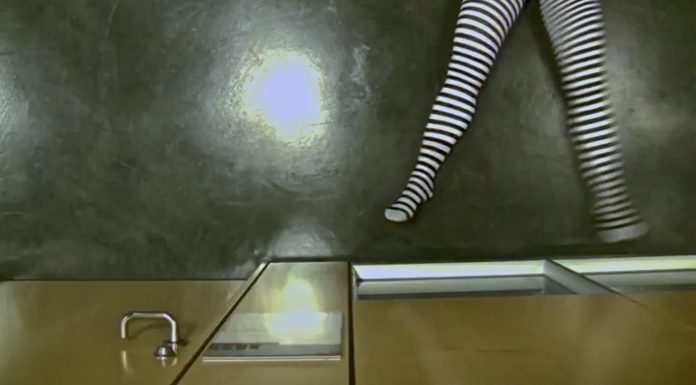
In the current exhibition at the School for the Contemporary Arts (SCA) office at SFU Woodward’s, Pretense on Curation, second year MFA candidate Jaime Williams uses the location as both the setting and the subject.

In her video installation, shot in the SCA office after hours and incorporating props and costumes that adorn her body, Williams enacts atypical movements within the space. Whether crawling over and under a desk or writhing around on the floor under an overhead shot, Williams’ actions within the six videos stimulate specific areas of the office. The movements are suggested by the props, as well as by directives from the curator, Curtis Grahauer. They activate areas of the space using a performative and humourous approach.

In this interview, Williams and Grahauer discuss the methodological framework used to execute Pretense on Curation and reveal the philosophical concerns of Williams’ working process.

Curtis Grahauer: Pretense on Curation uses the SCA office both as a location and a subject. What was your interest in using the office in this body of work?

Jaime Williams: I am interested in what is happening in the present, and working site-specifically allows me to respond immediately to energies and aspects of the space.

CG: The videos are playing on a screen above a filing cabinet, with another video hidden inside the drawer. It is discretely installed yet reflects the space back onto itself as the backdrop to your performances within the videos. Do you see this project as an intervention and commentary on the space?

JW: Results of my investigation indicate that manipulation of the office space in combination with the philosophical concerns of the artist and curator creates a loop in thought and action that folds back on itself and contradictorily leads to something new — something beyond the original combination of philosophical concerns and the immediacy of working in the site. It is through engaging in the space — consciously and with a sense of presence — that my philosophical concerns become new, which subsequently imprint themselves on the space, becoming a record of the past. The videos capture the process of imprinting.

CG: How do you see the props functioning within the video? Are they highlighting certain aspects of your body? Do they create differences as they change from video to video?

JW: Your questions relate to the body in space in the present, which carries the debris of philosophical concerns and also past traumas. The past becomes present through physical and psychological scars. I examine and then exploit these scars through body-mind stylings, i.e. costumes, props, states of consciousness, psychosocial ‘games,’ and experimentation. The stylings relate to these scars and allow for a deeper engagement with them.

CG: What was your interest in disturbing the boundaries between the artist and curator during the production of the videos?

JW: Your scars, similar to my own, become evident in our joint engagement with the space. The results of our work together manifest as a critique of space, but in reality scars are somewhat independent of the space — insofar as anything can actually be independent. Fortunately, spaces seem to critique themselves, and perhaps because of shared content, this critique exposes itself when juxtaposed next to the scars of the artist and curator.

Pretense on Curation is open to the public until January 16. The SCA Office (GCA 2860) is located on the second floor of SFU Woodward’s.

Standouts at the World Juniors

0
Defenceman Darnell Nurse celebrates with his Team Canada teammates, which includes forward Nic Petan.

With the annual World Junior Championship at a close — Canada having captured gold once again — it’s time to take a look at some of the standout performances of this year’s tournament. It is a great chance for young players to showcase their talents, and in some cases even to catch the attention of an NHL team (Denis Godla, anyone?). Here are the best players of the tournament in each position:

Forward:

Nic Petan, Canada

Nic Petan’s always been known as a scorer. In his draft year, he had 46 goals and 120 points, more than either Nathan MacKinnon or Jonathan Drouin. The knock against him is and has always been that he is too small, which was the reason the Winnipeg Jets were able to draft him in the second round, 43rd overall in 2013. I think those worries can be put to bed now, as he has — in my mind — been Canada’s best forward in the tournament, scoring 11 points in seven games. He also had a hat trick in the semi-final match against Slovakia, and could have had two or three more if not for the sensational goaltending of Denis Godla. The Winnipeg Jets have a good prospect in Petan, and I wouldn’t be surprised if he makes the team out of training camp next year.

Runners Up: Sam Reinhart, Max Domi

Defenceman:

Darnell Nurse, Canada

Before the tournament started, it was clear that Darnell Nurse, last year’s sixth overall pick (for the Edmonton Oilers), was going to be a big part of Team Canada. However, before the final, Swedish defenceman and Canuck fifth round pick Gustav Forsling was the probable standout, leading the tournament in scoring as a defenceman. But after the gold medal game against Russia, there’s no choice but Nurse. He was instrumental in holding the lead in the third with a couple of great shifts, and was very physical, not just during the final but the whole tournament. He was not on the ice for a single five-on-five goal against the whole tournament, an unbelievable achievement. While he didn’t put up many points in the tournament — finishing with only one assist — Nurse stood out with his solid defensive game.

Runners Up: Gustav Forsling, Josh Morrissey

Goalie:

Denis Godla, Slovakia

Denis Godla has been passed over the past two NHL drafts, but I think this is the year he will finally be drafted after his performance in this tournament. He was named both top goalie and MVP of the tournament, and was given a standing ovation after both the semi-final and bronze medal game by the crowd in Toronto. He finished with a .926 save percentage, and while that wasn’t the highest in the tournament, he made a total of 224 saves during the event, by far the most  of all the goalies. His performance against Canada in the semi-final was simply incredible, making numerous highlight reel saves throughout the game. While Canadian goaltender Zach Fucale had the better numbers, he had the benefit of having a much stronger defence playing in front of him.

Runners Up: Zach Fucale, Thatcher Demko

SFU Senate encourages professors to excuse students for SGM

0
The SGM will address some items from the 2014 SFSS AGM, which quickly met capacity and was unable to accommodate all voting members.

In light of a recent SFU Senate recommendation, students may have the opportunity to participate in the upcoming SFSS special general meeting (SGM) despite conflicting classes.

At the last meeting of the SFU Senate on January 5, the senate moved to recommend that instructors accommodate students who request in advance to attend the SGM next Wednesday, Jan. 21 at 1:30 pm without academic penalty.

The encouraged academic excusal (or amnesty) would be subject to the discretion of individual professors.

Due to issues with capacity and the loss of quorum partway through the recent SFSS annual general meeting (AGM) held on December 16, some students have raised concerns over the matters of approving the Build SFU debenture and a bylaw addition.

In response to those concerns, the SFSS resolved to hold the SGM in the new year to allow those students who were unable to attend the AGM the chance to make their voices heard.

Senator Peter Tingling noted his opposition to the motion and raised an issue regarding the accountability of students in their own academic careers, a concern that was echoed by other senators.

“We all make choices. We all deal with the repercussions,” he argued, “I think the best way to get people to continue to be engaged is to do so in a realistic environment.”

“I think it’s quite amazing that they’ve done this.”

Peter Ruben,

SFU Senator

SFSS VP University Relations Moe Kopahi responded by suggesting that the SFSS confirm the SGM attendance of students who express intent to participate in the meeting to their professors.

Senator Colin Percival pointed out that this sort of academic amnesty is typically granted for situations in which students are off-campus during classes for a protest regarding university affairs; however, president Andrew Petter interjected that it had been previously applied to an SFSS AGM in 2007, at which a board member was impeached.

Senators also raised the issue that the meeting time falls during peak instructional hours. Kopahi explained that the selected time was chosen for the amount of students expected to be on the Burnaby campus. He said, though unfortunate for people who have class, it was the time that made the most sense. “We’re trying to accommodate the need of those students as well,” he said.

Senator Tracey Leacock countered that if “this meeting is not important enough to students that they would be willing to attend at a time that they weren’t already on campus,” it perhaps “is not as important as the student society is making it out to be.”

However, Senator Peter Ruben commended the SFSS for the lengths to which they have gone to ensure funding to its Student Union Building project. “I think it’s quite amazing that they’ve done this,” he said. “The senate and the university should do all it can to ensure that every student has a voice in how this whole venture unfolds.”

In the vein of including as many students as possible in the meeting, senator Helen Wussow suggested that the proceedings be extended to an online environment, allowing those unable to physically attend to participate in voting and discussion.

Student senator and SFSS president Chardaye Bueckert cited the BC Society Act, explaining that the debenture must be passed by special resolution requiring an in-person vote. She went on to explain that the society lacks the technological resources to fully offer online participation, such as video conferencing, to all students who may require it.

The amnesty, given professors see fit to grant it, would not only promote the attendance of students on Burnaby Mountain, but would allow students who study at other campuses the opportunity to attend the SGM.

Many members of senate responded positively to the motion, arguing that it would help build community by reaching out and encouraging students to engage in student matters.

Senator Panayiotis Pappas explained that he was in favour of the motion on the grounds that the inaccessibility of SFU’s location must be taken into account.

“We have to face up to the limitations that our location puts on student community life,” he said. “If we have to make an adjustment now and then, it’s not the end of the world.”

Petter noted that it had been a good discussion on both sides, but in the end, the motion was passed with only a few oppositional votes.

Sports Briefs

0

Men’s Basketball

While the men’s basketball team has been struggling offensively in the new year, SFU’s women’s basketball just broke 100 points for the very first time since they joined the NCAA. The Clan beat the Northwest Nazarene Crusaders 103–86 in Nampa, ID. Seniors Erin Chambers and Katie Lowen led the team in scoring, with 28 points each.

Women’s Wrestling

The women’s wrestling team participated in two tournaments last weekend. The first of which, the Menlo College Open in Atherton, CA, featured SFU winning three weight classes. Wrestlers Laura Anderson, Francesca Giorgio, and Alyssa Wong all won in their respective classes. Freshman Abby Loy captured silver and bronze medals at the Nordhagen Classic in Calgary, AB on Sunday, January 4. Teammate Darby Huckle also participated — however, she lost to Loy.

With files from SFU Athletics

Crossing the Line

1

“The MBB seminar this afternoon is cancelled. The speaker has been arrested.”

It was an email that the biochemistry department at Simon Fraser University will likely never forget. The message explained the absence of Dr. Lynne Quarmby, which prevented her from giving a seminar on November 21, 2014.

Her arrest, along with those of over 100 others, was a part of a struggle against Trans Mountain, a Kinder Morgan-owned company conducting surveying work on Burnaby Mountain in preparation for the expansion of the Trans Mountain Pipeline.

To understand why Quarmby and the other protesters thought the cause was important enough to be arrested for, we must go back to the beginning of the process, starting with the pipeline itself, and understand the different organisations that have fought for or against the project.

Trans Mountain and Kinder Morgan


The Trans Mountain pipeline, in operation since 1953, transports crude oil, semi-refined, and refined products from Strathcona, Edmonton, through the interior of British Columbia to terminals in Burnaby, Westridge, and Puget Sound. The 1,150 km pipeline currently transports 300,000 barrels per day of product, 26 per cent of which are destined for the Burnaby terminal.

Although Trans Mountain states on their website that “no spill is acceptable,” they also list a fairly extensive history of spills. Their website details 81 spills of various oil products.

According to their website, the company’s spill reporting criteria has also grown less stringent over time — until 1988, any leak, break, fire, or explosion would be reported, whereas a threshold amount of hydrocarbon or gas is currently required order for the spill to be recorded.

A major spill occurred in July 2007 when construction crews working on the Barnett highway punctured the Kinder Morgan pipeline. Over 1,400 barrels of crude oil were spilled onto nearby properties and eventually into Burrard Inlet. The British Columbia Ministry of Environment website reports that 50 homes and properties were affected by the 30 metre “geyser” of oil that sprayed for about 25 minutes. The oil affected approximately 1.2 km of shoreline and cost $15 million to clean up.

Due to the spill and the risk of future incidents, the City of Burnaby is now officially opposed to any increase in oil transport. The city takes issue with the significant risks that moving more oil poses to the city and its communities, as well as the surrounding environment. The City of Burnaby was given intervenor status during the Public Hearing process that was a part of Kinder Morgan’s application last October.

The proposed expansion to the Trans Mountain Pipeline would nearly triple its capacity, enabling it to transport 890,000 barrels a day. It would cost $5.4 billion and involve the construction of 994 km of new pipeline and the reactivation of a further 193 km. However, concerns remain that the increased transport of oil and resulting traffic in the Burrard Inlet could lead to serious environmental damage, something the National Energy Board of Canada is required to consider before approving such projects on behalf of the federal government.

National Energy Board


The National Energy Board of Canada was established in 1959 by the Canadian government. Comprised of engineers, auditors, legal staff, and various other professions, the NEB acts as Canada’s energy and safety regulator.

The organisation received the application from Kinder Morgan to expand the Trans Mountain pipeline in December 2013. The project page on the NEB website lists 12 issues that it would consider in the hearing process, which included risks to the environment and economic benefit. However, the NEB also notes several issues that it would not consider.

It states that “the Board does not intend to consider the environmental and socio-economic effects associated with upstream activities, the development of oil sands, or the downstream use of the oil transported by the pipeline.” The NEB only considered the direct effects of the pipeline and its construction, rather than the increased tanker traffic, consumption of fossil fuels, and the development of the tar sands.

The City of Burnaby


The final stage of the project entails the construction of a pipeline that will traverse Burnaby Mountain. Trans Mountain requested permission from the National Energy Board to do surveying work on Burnaby Mountain in order to determine if it was feasible to build the pipeline directly through the mountain. However, municipal bylaws protected the proposed worksite as a conservation area.

In September 2014, the City of Burnaby filed civil action against Kinder Morgan, claiming that its operation in the conservation area would violate those civil bylaws. The city’s suit was eventually dismissed by the BC Supreme Court, although the city will appeal the court’s decision.

In response to the City of Burnaby’s opposition, Kinder Morgan delivered “dear neighbour” letters to Burnaby residents in October 2014. The letters explained that the surveying work was in preparation for  the expansion of the pipeline through Burnaby Mountain, rather than through the streets of the Westridge neighbourhood.

Later, Trans Mountain posted a video on its website in which the president of Kinder Morgan Canada, Ian Anderson, acknowledged the concerns of Burnaby citizens about the surveying work.

“We are being respectful to the environment, and when we are done, we will leave the mountain as healthy as we found it,” Anderson assured the community. He also explained in a post online that by routing the pipeline through the mountain, the project would cost $40 million more than previously expected.

In late October, Kinder Morgan filed a lawsuit against five important members of organisations opposing the pipeline project. 

Lynne Quarmby, Alan Dutton, Stephen Collis, Adam Gold, Mia Nissen, and Burnaby Residents Against Kinder Morgan Expansion (BROKE) were sued for $5.6 million in damages.

BROKE is an organisation of concerned citizens, founded in July 2012. The group is non-profit and run by over 200 volunteer members. Its goal, as stated on its website, is to “prevent the expansion of the Kinder Morgan pipeline, tank farms and tanker traffic through science, education, advocacy, and partnerships.” BROKE has held various events in Burnaby, including a Town Hall meeting, environmental movie screenings, and public talks.

BROKE and other defendants have decried the suit as a Strategic Lawsuit Against Public Participation (SLAPP), meant to intimidate the accused into silence and mire them in unexpected legal costs.

Burnaby mayor Derek Corrigan responded to Kinder Morgan directly, including delivering letters to Burnaby residents on October 13, and making a public statement on November 20. The statement details that the City of Burnaby is opposed to the proposed pipeline expansion project and is “determined to stop Kinder Morgan from carrying on destructive work in the Burnaby Mountain Conservation Area.”

Simon Fraser University also weighed in on the project. In early November, SFU’s Centre for Public Policy Research published a report on the economic benefits of the Kinder Morgan expansion project. The report found that “the employment, property tax and fiscal benefits of [the project] are very small in the context of the overall provincial economy and significantly overstated by [Kinder Morgan].”

Work Begins


On October 23, 2014, the National Energy Board of Canada issued an order that granted Trans Mountain access to sites on Burnaby Mountain, despite municipal bylaws otherwise preventing it. This was the first time the National Energy Board had issued such an order to a municipality, and it remains a contentious issue.

Later that month, work crews arrived on Burnaby Mountain, along with protesters. In a striking display of devotion to the cause, an 18-year-old demonstrator chained himself beneath the vehicle of a surveyor.

Many members of SFU became intimately involved in the protests, with two professors actively participating and one, Quarmby, eventually being arrested. Other faculty, staff, and students showed their support by signing various petitions and circulating them via email. One email-based open letter gathered 450 signatures, and a petition on Change.org currently has over 1,700 signatures.

On November 14, Kinder Morgan was granted an injunction by the BC Supreme Court, declaring that anti-pipeline protesters had three days to dismantle their encampment on Burnaby mountain. Over 100 protesters remaining at the work site were arrested and charged with civil contempt.

Dr. Lynne Quarmby


One of the first and most notable people arrested was Dr. Lynne Quarmby, a tenured professor at Simon Fraser University.

In an emotional speech to the media just before her arrest, Quarmby explained that she felt that the Harper government had made a “sham” of the National Energy Board Act. She went on to explain that civil disobedience is a recourse for engaged citizens, and a responsibility of being a Canadian citizen.

However, involving herself personally in protests was not new for Quarmby. In 2012, she was arrested for impeding the progress of a train transporting coal to Tsawwassen, along with 12 others.

Quarmby explained to The Peak that her motivations for being involved directly in the protests were fostered long ago. “I grew up in a very rural area and I spent my entire childhood out of doors,” Quarmby said, describing how being a biologist allowed her a deeper appreciation of humanity’s relationship with nature.

In particular, the controversy over the pipeline stirred her to action because she “felt very much betrayed by [her] federal government in the way that they’d rewritten the laws so strongly in favor of these oil companies and so much against the citizens of Canada.” She went on to explain that she had faith in Canadians, and believed they “were not going to let Kinder Morgan ruin [her] life.” All this contributed to her decision to cross the police line, which led to her arrest.

It may seem highly unusual for a tenured professor to be involved in civil disobedience. However, Quarmby explained while that being a professor and the molecular biology chair at SFU is her biggest time investment, every Canadian should feel that they have the freedom to make personal commitments to a cause like environmentalism.

Quarmby also explained that the events are a First Nations issue, arguing that Kinder Morgan has “totally disregarded [the] constitutional rights” of the First Nations involved. The survey site, as well as SFU, is on unceded Coast Salish territory. In particular, Burnaby Mountain is shared between the Tsleil-Waututh, Squamish, and Musqueam peoples. “Their culture carries a sacred responsibility to take care of the land,” said Quarmby. “We need to respect that.”

Aftermath


The injunction against protesters expired on December 1, and Kinder Morgan’s application to extend it was rejected.

Kinder Morgan’s charges against protesters were also thrown out due to the inaccuracy of the GPS data given as part of the injunction. The coordinates, it was proven, were up to 30 metres off.

Due to surveying data from the studies conducted on Burnaby mountain, Kinder Morgan has concluded that the pipeline must be routed through the mountain with a tunnel or redirected along the streets. Thirteen trees were cut down to clear ground for equipment, and Burnaby Parks Forestry Department’s report on the damage concluded “the impact of this action will be felt for many years to come, and will extend much further than the direct area of intrusion.”

Although Burnaby Mountain is now quiet, protesters have since set up a camp just outside the current Kinder Morgan Westridge Marine Terminal. Established at the end of December, the camp is currently occupied 24/7 by protesters who intend to continue promoting dialogue about the pipeline expansion project.

Moving Forward


Dr. Quarmby is emphatic that regular citizens’ opinions on the pipeline matter and are, in fact, critical. She believes that there are many ways people can get involved in stopping the pipeline on Burnaby Mountain.

Quarmby offered a few strategies to influence this particular issue in Burnaby, saying that “spreading the word” is the number one way people can get involved. She also stressed that citizens should “educate [themselves] and talk to people about it.”

Unfortunately, in this particular situation, Quarmby said that the information available on the National Energy Board website is not an honest depiction of the environmental risks.

She also suggested that those who are interested could speak with protesters to learn about grassroots protesting, or support them with donations of hot food or coffee.

At the policy level, Quarmby suggested that while “turning off the tap on fossil fuels” would be “absurd,” a moratorium on new fossil fuel projects would be reasonable and responsible. She also noted that there needed to be a better understanding on how continued use of fossil fuels is affecting the environment.

With the back and forth between the city, Kinder Morgan, and protesters, there doesn’t seem to be any guaranteed future for the pipeline.

Many NEB critics are calling attention to its ability to ignore municipal laws; this situation could prove to be a test case whose ultimate outcome will be the foundation of future legal battles.

The pipeline itself stands to transform the Lower Mainland if it progresses. Increased tanker traffic in the inlet and construction on Burnaby Mountain might well become part of the Burnaby’s scenery in the near future.

However, whatever the outcome, many parties have made it abundantly clear that this pipeline and what it represents is very important to them — perhaps important enough to continue to be arrested over.

Student entrepreneur launches swim gear site

4
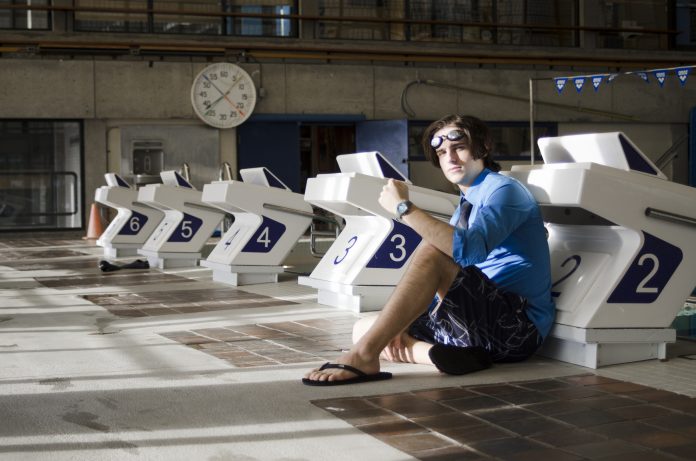
Viktor Holicek got his entrepreneurial feet wet late last year after a trip to Taiwan.

Fourth year SFU business student Viktor Holicek is making a splash with his startup distribution website for swimming sports watches.

The site, Swimovate Canada, connects students with unique fitness equipment, provides details as to how the equipment can be best utilized, and links users to blogs related to fitness and swimming.

Holicek’s website eventually emerged from an idea he had for a device that would help swimmers track their workouts. “During my exchange in China, some friends and I were brainstorming ideas for swimming products,” he explained. “I knew enough about swimming to see [. . .] a business opportunity here in Canada.”

A competitive swimmer himself, Holicek originally envisioned the device as a lap-counting system for the entire swimming pool, but quickly had to change his plans. He explained, “After realizing how complicated and slow to implement that would be (pools are publicly owned for the most part), I started thinking of how to make a personalized gadget that would serve the same purpose.”

Although he originally wanted to develop his own watches, Holicek discovered a small husband and wife operation in the United Kingdom which offered a similar product.

“I’d like to get into manufacturing my own products eventually.”

Viktor Holicek,

SFU business student

From there it was a matter of getting in touch with them and working out an agreement for distribution, trademarks, licensing, and so on.

Marketed as “the only watch that counts,” PoolMates tracks statistics such as stroke count, distance, speed, calories, times, and efficiency. It can also upload the statistics to a computer, where users can track their progress.

“Ideally, I would have liked the chance to build the gadget myself had it not already existed, but taking on the distribution was probably enough to start on,” Holicek explained. “I’d like to get into manufacturing my own products eventually.”

Holicek eventually created the site Swimovate, which connects swimmers of all ages with tools to help them set their goals and push themselves harder — without needing to have someone to time them.

As demonstrated by his jet-setting lifestyle, Holicek is the type of person who constantly challenges himself. “I’ll often get an uncomfortable feeling in my gut when I’m not somehow improving or trying new things,” he told The Peak. “I appreciate my time at SFU, but I have to keep in mind the sheer number of other business students graduating each year who have the same skills and experience as me, if not more.”

With that in mind, Holicek is currently looking to gain more practical experience to complement his academic education. He assured The Peak, however, that this doesn’t mean he’ll stop pushing the limits of innovation.

“It reminds me of that saying,” he said, “If you do what you’ve always done, you’ll get what you’ve always got.”