Home Blog Page 1055

Student recycling initiative turns old soap into new hope

1
Enactus SFU’s Soap for Hope hopes to become self-sustainable over the next years. - SFU Flickr
Enactus SFU’s Soap for Hope hopes to become self-sustainable over the next years. – SFU Flickr

An innovative new program in the Downtown Eastside has residents bubbling with excitement.

Enactus SFU, a student entrepreneurial group, hopes to make a difference for the residents of the area with their Soap for Hope program.

The initiative was founded in early 2013 and focuses on recycling lightly used soap bars from hotels and turning them into liquid soap, which can then be used at local businesses in the community.

Revenue generated from this exchange is then used to employ individuals in the Downtown Eastside.

“Soap for Hope will impact the Downtown Eastside community as it will provide marginalized individuals with employment opportunities,” said Dorothy Ng, Enactus SFU’s marketing director. “There is a negative stigma associated with the Downtown Eastside, and we want to work towards reducing this by working with restaurants and individuals from that area.”

Enactus SFU currently has a partnership with Mission Possible, an agency dedicated to improving the lives of those who are homeless and living in poverty. The group collects used soap bars from hotels, which they boil and sanitize in order to produce its liquid state.

A stipend generated from the revenue is paid to community volunteers who participate in the production of the liquid soap.

“We decided to implement this program because we found a need for jobs for people who do not have the opportunity to find one, and to find a solution to the vast amount of soap being discarded,” said Hangue Kim, Enactus SFU’s director of external relations. “We found a need for students at SFU to get involved in the community, to develop a program that benefits others and brings students together.”

Enactus SFU is a student-led organization that allows students to make an impact in their community through the use of entrepreneurial skills. It was established as a part of Enactus, a worldwide community of over 66,500 students in 36 countries working to address the social, economic, and environmental needs of their communities.

By connecting students with business leaders, the organisation’s projects are designed to create a long-lasting social change in local communities. SFU’s Enactus team currently has over 100 active members.

Looking forward, the team is working with SFU’s Chemistry Student Society to make their production process more efficient, and to improve the quality of their final product. They are also looking for more volunteers in order to develop the project’s production and distribution practices.

“Success [for the project is] dependent on the end goal, which is for Soap for Hope to become self-sustainable,” said Madhev Menon, the project’s Program Manager.

By bridging the gap between Downtown Eastside residents and students who wish to get involved in the community, Soap for Hope is looking to make a change for years to come.

Education Minister’s student debt comments ignite backlash

0
- CBC News

The BC Minister of Advanced Education, Andrew Wilkinson, made controversial comments about student debt on February 23 on CBC Radio’s The Early Edition.

The Minister said that “70 per cent of students go through their higher education with no debt whatsoever.” The comments garnered criticism from a number of groups, including the Canadian Federation of Students BC (CFSBC).

CFSBC chairperson Zachary Crispin told The Peak that Wilkinson had “misrepresented the fact that we have a student debt crisis in our province.”

Simon Fraser Student Society (SFSS) president Chardaye Bueckert also commented on Wilkinson’s statement: “That statistic isn’t in line with what the government’s own data says, but it also doesn’t necessarily look at all the factors that should be considered when one looks at student debt.”

Minister Wilkinson sat down with The Peak to clarify his comments, saying that his statistics referred to the number of people indebted through provincial loans only. He clarified, “We don’t know what student’s credit cards say. We don’t know what their relationship is with their parents financially. We only have the comprehensive datasets for provincial student aid.”

The 2013 BC Outcomes Survey indicated that 51 per cent of students leave post-secondary debt-free. In addition, Wilkinson pinned the median amount of student debt at $20,000 (for university programs). For comparison, the BC Outcomes survey indicated that 37 per cent of students owe more than $30,000.

Additionally, aw 2012 SFU survey of 15,000 graduating students found that the average amount of debt totalled $24,600.

Substantial increases in international student tuition have been the cause of much anxiety over student debt at SFU. Unlike domestic student tuition, which is capped at two per cent per year increases, there are no such caps for international fees, which have risen by 10 per cent each year since 2013.

According to the SFSS website, an international undergraduate student who began studies in 2012/2013 now pays $2,143 more in tuition per term than when they began.

“International students are a large international market in which we compete,” Wilkinson argued. “Universities and colleges have clearly found their niche in the international marketplace and the pricing of the product they are offering is up to them.”

Crispin disagreed. “It’s pretty clear in the government’s plan [that] the government sees international students as a revenue source more than students who are here to be educated,” he stated.

President Bueckert noted that while there are no further raises planned for international fees, the university has “respectfully declined” a proposal by the SFSS to freeze international undergraduate fees for five years.

When asked about methods to address student debt, Minister Wilkinson argued that interest-free loans and grants form part of a “pretty thorough program of student support.”

However, as Bueckert noted, BC has the highest student loan interest rates in the country. She also pointed out “only 39 per cent of assessed need for bursaries is met through the current [SFU] system.”

Manoj Bhakthan, director of SFU Financial Aids and Awards, explained, “We’ve looked at providing further opportunities in terms of bursary funding for international students.” He also added that more funding for financial aid could “increase the dollar value” of opportunities like scholarships, awards, and bursaries.

Bhakthan urges students to use the financial aid advising office to get more information on opportunities. “The more information a student has, the more they are empowered,” he said.

Meet the Clan: Lindsey Butterworth

0
Image Credit: Hamed Yaghoubi Shahir /The Peak
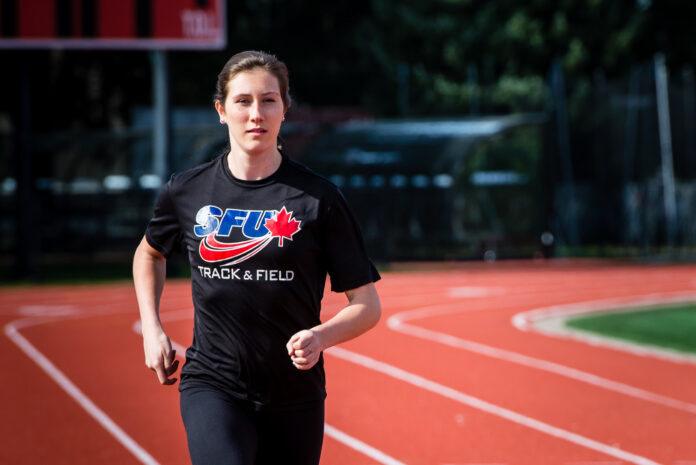
Though Lindsey Butterworth was initially unimpressed with SFU, she came around and has had tremendous success on the Clan track and field team. Image Credit: Hamed Yaghoubi Shahir /The Peak

Screen Shot 2015-03-06 at 8.43.34 PMTrack and field requires confidence, determination, and athletic ability — and unlike sports such as basketball or hockey, it is an individual sport. Competitors succeed or fail based on their own merit. Lindsey Butterworth, the star of SFU’s track and field team, counts this as one of the reasons she fell in love with the sport.

“I enjoy[ed] the individual level about it,” she says. “It’s really fun, soccer and field hockey and the team sports, but I really liked how [track and field] was all on you. I’m pretty competitive, so I really liked that part of it.”

Lindsey has always been active, playing multiple sports — field hockey, soccer, volleyball, and baseball — before she started focusing solely on track. “I did [track] in elementary school and high school, but I didn’t actually training until grade 10 when I joined a club. I also played a bunch of other sports, and then I took it seriously starting in grade 11 and 12.”

Coming out of high school, going to post-secondary for track wasn’t really on Lindsey’s mind. In fact, SFU wasn’t exactly her first choice: “I really didn’t look in depth into that many other schools. I was kind of waiting for people to talk to me, and I didn’t really take any initiative to research other schools, and [head coach] Brit [Townsend] just contacted me. I actually played soccer up here every Saturday in high school and I was like, ‘I’m never going to go to SFU,’ I hated it, it was so ugly.

“But then Brit contacted me and wanted me to come on a tour,” she remembers. “So I went, I really liked Brit, and I really liked it up here. I thought about it for a couple of months, I saw what the training group was like, and how successful all the other girls [were] at the same events as me, and decided to take advantage of a great program that was right in my backyard. But I’m really happy I came here, it turned out the best it could have possibly turned out.”

Adjusting to the academic workload of university was a big challenge. “When I came here I wasn’t really looking into the academic side,” Lindsey says. “I was just kind of like, ‘Oh, I’m just coming here to run.’ I probably wouldn’t have gone to university right after high school if I didn’t have any athletics, I would have taken time off and figure out what I wanted to do. But I’ve definitely figured out what I’m interested in, and that’s helped my grades out a lot.”

Lindsey’s events are the 800 and 1,500 metre runs. “I just naturally like the middle distance. Ever since elementary school, I’ve always liked cross country and those middle distances. So I kind of never really tried anything else. I never tried 100 or 200, I’ve just always liked those events.”

She’s also achieved a considerable amount of success, winning the Great Northwest Athletic Conference 1,500 m in 2012 and finishing runner-up in 2013, as well as being named one of the female performers of the meet this year.

Being a fifth year senior, Lindsey’s time here on the mountain is coming to an end, and when asked about her biggest achievement at SFU, she had to pause to reflect.

“I think making Division II nationals two years ago was a big accomplishment, and being all-American there. It was a really competitive field, and there was a lot of depth,” she says.

“We were the first ones to ever go to a national championship since we’ve been in the NCAA. That was a huge accomplishment because we also pretty much got to represent Canada because we were the only Canadian school. That was pretty huge.”

Once her time at SFU comes to a close, Lindsey’s goals are clear. “I think I want to continue running, and see where that takes me,” she says. “Then I’ll try and focus on a career, maybe more school. I’m interested in working with kids and nutrition, like health promotion. But I think I want to train for the next year and see where that takes me.”

FUN FACT:
Pre-game ritual:
“We [on the team] always have bagels with peanut butter and banana, and toast them with the hotel iron.”

Sports Briefs

0
Attacker Lyndon Knuttila, who shares the team lead in goals with 11, had scored against Boise State. Image Credit: Brandon Hillier /The Peak

Softball

Last Tuesday, the SFU softball team split a doubleheader against UBC at Beedie Field, losing the first game 9–2 but coming back to win the second match 6–3. In both games, the team that initially held the lead eventually lost — in the first, SFU held a 3–0 lead before allowing UBC two innings with four runs each. Second baser Taylor Lundrigan led the Clan in runs with three split over the two games.

Lacrosse

On the road, SFU Lacrosse put up wins against conference rivals Washington State and Idaho before dropping a matchup against the non-conference University of Arizona Wildcats 14–5. Attacker Lyndon Knutilla and midfielder Sam Clare both achieved five-goal games, spread between the two victories.

Track and field

Seven Clan athletes will travel to Birmingham, AL March 13–14 to compete in the NCAA Division II track and field indoor championships, a new high for SFU. Five women and two men qualified: Lindsey Butterworth, Jennifer Johnson, Rebecca Bassett, Paige Nock, Chantel Desch, Oliver Jorgensen, and Travis Vugteveen.

Wrestling

SFU wrestler Sean Molle fell short of qualifying for the national championship at the NCAA Division II Super Regional tournament in Pueblo, CA on February 28. He ended up placing sixth — the top four wrestlers go to nationals. “It was a disappointing end to a mostly-disappointing season,” coach Justin Abdou told SFU Athletics, as the team had sent wrestlers to nationals in the prior two years but none this year.

SFU Remembers: Ted Dobb

0

Newspaper articles.pdf-2

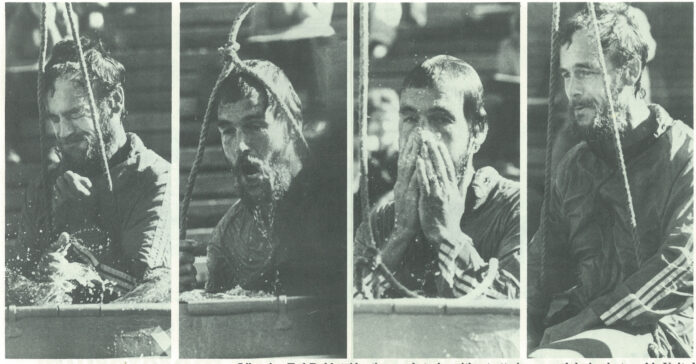
few weeks ago, SFU lost one of the most important and beloved people to ever grace our campus. Ted Dobb, the longest-serving head librarian in our school’s history, passed away in Vancouver on February 13th at the age of 79.

During his 20-year career (1978–1998), Dobb was responsible for a great deal of innovation at SFU, including overseeing the opening of the Belzberg Library at Harbour Centre and creating an online catalogue for the library that the Georgia Straight praised as “intricate and useful.”

He was more than just a brilliant librarian, however — Dobb was also a short story writer, a marathon runner, a gifted raconteur, a violinist, a generous soul, and a devoted and loving husband, father, and grandfather. He left a great impact wherever he went, and SFU was lucky enough to have been one of his favourite communities.

Born in Petrolia, Ontario, in 1935, Dobb moved to Quesnel, BC at the age of 12, where he grew up on a farm and helped run the family’s sawmill business. His early life clearly instilled a strong work ethic in Dobb, and by the time he became SFU’s librarian in 1978 he had already held 27 part-time jobs, including everything from amateur wrestler to logger to garbage collector.

Despite his hard-working rural upbringing, Dobb had a passion for academia and left Quesnel following his high school graduation to study English at the University of British Columbia.

“He was extremely well read,” his daughter Laura Dobb told The Peak. “He’d read all the classics at school at UBC but he also went way farther than that in all directions — science and esoteric reading. He was a Renaissance man, I think.”

After graduating from university and completing UBC’s Library Studies Program, Dobb began work for The Union Steamship Company on longboats travelling to and from Bowen Island and was also a lay preacher at the Bowen Island United Church. Although he briefly considered a life in the ministry, Dobb couldn’t stay away from the library world.

Following stints with the Vancouver and Victoria Public Libraries, Dobb joined SFU two month prior to the school’s opening in September of 1965. Starting as government publications librarian, he advanced through a number of positions before finally being named head librarian in 1978, a job to which he gave his heart and soul.

“He had ingenuity [and] was future-thinking,” Laura explained, referring to Dobb’s instrumental part in digitizing the library. “He donated lots of his own books to the library, lots of first editions. He was passionate about learning and libraries.”

In almost all respects, Dobb’s personality made him the perfect librarian. His daughter described him as not only intellectually superior, but also incredibly organized — key attributes for a man at the helm of a library.

“His desk and credenza were just immaculate, he was on top of everything,” she recalled. “He didn’t lose a strand.”

Perhaps Dobb’s most amazing trait, however, was his incredible loyalty. Even though SFU was a relatively young school with limited financial resources and the Bennett Library’s collection constantly suffered in comparison with the size of collections at other universities, he never once considered leaving the school.

“He was given offers. He’d go to an interview in Boston [for] Harvard. All the Ivy League colleges in the States were after him,” Laura explained. “[His wife] would ask him, ‘where are we going?’ And he’d say ‘no, I’m staying with SFU.’

“She was so pissed off,” she continued with a laugh. “He didn’t have wanderlust. He was really into mastery, really making what you do professional and beautiful and thorough. He was impeccable in his word and his work.”

And he certainly was a master. Under his leadership, SFU’s library system earned acclaim for its emphasis on providing a high quality collection rendered extraordinarily accessible through innovative technologies and service-oriented staff.

Although he was often confronted with difficulties in his position — budget cuts in particular were a constant struggle — Dobb always did what he believed was best for the school.

He even fought censorship in 1982 when he refused to pull Playboy from the library’s stands after receiving pressure from certain members of the student body to do so.

While this decision may have played into his popularity with a large number of students, Dobb’s demeanor as a whole earned him the respect of the entire SFU community long before he became head librarian.

“He’d go running after work, and then he’d go to the SFU pub and he’d be reading with his half glasses on and his pint, and students would come up to him,” Laura explained. “He’d have great debates with students, he wasn’t fond of going to the faculty club. He was a down-to-earth guy, and he knew all the people who worked everywhere.

“I used to go shopping with him at Woodward’s food farm, and he knew everyone’s name, every shop he went into,” she continued. “He was like the King of Kensington! Everywhere he went, he knew everyone.”

This attitude wasn’t limited to the SFU community, either; the incredible range of connections Dobb held across Vancouver is something his daughter is still discovering.

“I know there were people he talked to around Robson Street that were homeless,” Laura said. “[Since his passing] I’ve been getting Facebook messages from people around that area [. . .] he had many facets to his personality that way.”

While Dobb’s achievements at the SFU library could probably fill an entire book and his amazing list of hobbies could probably fill another one, above all else it was Dobb’s character that made him the man he was.

The SFU community is extremely fortunate to have had him as a part of our community. While students on campus today may never have had a chance to meet him, he touched a number of lives at our school and across the Greater Vancouver area.

Plus, how could you not love a guy who chose us over Harvard?

Canucks quietly improve at Trade Deadline

0
Cory Conacher, pictured here at the 2012 AHL All-Star game, was one of the Canucks' two pickups at this year's trade deadline. Image courtesy of TheAHL (Flickr).
Cory Conacher, pictured here at the 2012 AHL All-Star game, was one of the Canucks’ two pickups at this year’s trade deadline. Image courtesy of TheAHL (Flickr).

The Canucks had a quiet trade deadline, with the exception of two new acquisitions: Cory Conacher from the New York Islanders and Sven Baertschi from the Calgary Flames.

And that’s good. Though the two players they traded for are primarily filling needs for the Canucks’ AHL affiliate — the Utica Comets — they both have NHL potential.

Baertschi was initially a first-round pick by the Flames (13th overall), and many at the time thought he could become the team’s next superstar forward. Instead, his development stalled, and he fell out of favour with the Flames management — particularly with Brian Burke.

It’s still quite realistic that Baertschi could turn into a top six winger, which would be jackpot for the Canucks. Though the cost was relatively high — a 2015 second-round pick — he is as likely, if not more likely, than a second-rounder to turn into a key piece for the future Canucks.

Conacher, on the other hand, is more likely a career AHLer. However, it is important to note in his rookie season, he had 11 goals and 29 points in 47 games. Though his point totals were inflated by playing with Steven Stamkos, he still does have NHL potential.

Worst-case scenario, the price for the trade was Dustin Jeffries, another likely career AHLer. Low risk, decent reward. If all Conacher does is help the Comets, it’s not that bad. A good AHL team will help the other prospects who are NHL-bound.

The Canucks planned for the future, without giving up any of their current team — or more importantly, their playoff chances.

There had been rumblings that they would trade Zack Kassian or Shaun Matthias, or that they should trade veterans like Chris Higgins and Jannik Hansen. It’s good to see that GM Jim Benning kept the team together.

While the team may not be a bona fide cup contender, they should still make the playoffs, where anything can happen. I could see a healthy Canucks team (a big if, I admit), stepping up their game in the playoffs, and winning a few rounds.

There are problems with the team, no doubt: a snakebitten second line and an inconsistent blue line even when healthy. But with the Sedins once again looking like elite first-liners, and a hot third and fourth line, they could make a good run. Who knows? Maybe the second line will pick up their game as the team approaches the playoffs.

Benning helped build the team for the future, all the while keeping them competitive for this year’s playoffs. Not bad, I’d say.

SFU’s new football head coach is a man with a story to tell

0
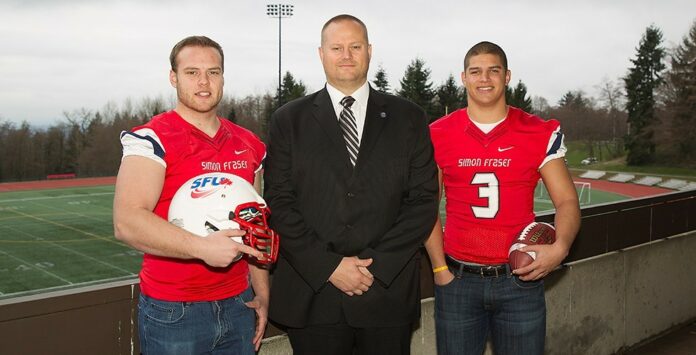
Before becoming a coach, Kelly Bates had a 10-year career as an offensive linesman in the CFL, spending time on the BC Lions, Winnipeg Blue Bombers, Saskatchewan Roughriders, and Edmonton Eskimos. Image courtesy of SFU Athletics.

After a two-month search for a replacement for Jacques Chapdelaine, SFU Athletics has announced former BC Lions running backs coach and draft coordinator Kelly Bates as the new head coach for the Clan football team.

It was a satisfying end to a shaky situation. Initially, the race was whittled down to three finalists; however, after negotiations broke down with the frontrunner of the three, SFU Athletics had to go back to the drawing board.

Already well into February, and with their recruiting process hindered, SFU Athletics went back to two candidates they had initially passed over: Bates and Khari Jones, both members of the 2014 BC Lions coaching staff. Only a week after SFU and its initial frontrunner had parted ways, athletics director Milt Richards officially named Bates as the 10th Clan head coach.

What sold Richards so quickly on the former offensive lineman who played on four teams in his 10-year CFL playing career?

“Kelly Bates is a fixture in BC football culture. He’s played and coached football at all levels, including the CFL [and] the CIS,” Richards told The Peak shortly after the announcement. “I believe he’s an excellent teacher. He can tell a story about football and what it means, and how it made him a better citizen, and what he’s going to try to do with our student athletes and make them better citizens.”

Bates was more than happy to share that story with The Peak.

“I come from the middle of nowhere in [. . .] Quill Lake, Saskatchewan. [I] was raised there, most of my family is from there. [It’s] a beautiful town in the prairies, I was very fortunate to have both sets of grandparents, a set of great-grandparents, uncles, aunts, and cousins — a little town of 500 people, a surrounding farming community that was tightly knit,” he said in his office.

“I lost that environment when I was 10, and moved away,” Bates explained. “From there I struggled as a kid, I wasn’t a great student, I didn’t really apply myself very well, I was really on a fast track to nowhere in high school when I had some people come along who really cared.

“They took the time to invest in me and show just tremendous patience,” he recalls. “The sport of football, combined with that, they saw a common denominator they could reach me. I had a great coach — Cal Hobbs — who had just finished his university career, and boy oh boy, he allowed me to grow within his team, and we started to have a little success, and you start to understand that the success you have on the field goes hand-in-hand with the success you have in the classroom.”

It took Bates an extra year to finish high school, and he had to come back to improve his grades for university. Eventually he was accepted into the University of Saskatchewan, where he won a Vanier Cup — the CIS trophy — and “everything clicked.”

A recurring theme in Bates’ story is that of being surrounded by “a ton of great people,” by caring staff. He admits he is still close to his university coaching staff.

“I was able to build those relationships with those coaches. They mentored me, they showed great patience, and helped me grow as a person, and sent me out as a much better person than when I went in, and as someone who is equipped with everyday life and hopefully have success at it,” he added.

“That’s what I wish to bring here to SFU. These poor kids haven’t had that over the last three years. It’s been a tough turnover for them, the amount of coaches they’ve gone through — not just the head coach, but there’s been 37 different coaches come through this program,” he explained. “We’re hoping to build a model of consistency. Really, it’s all about the kids, and trying to help them grow and become the people they want to be.”

With Spring Training beginning March 12, a coaching staff will be named in the coming days. Current recruiting coordinator Bryan Wyllie and director of football operations Michael Lionello will be retained on staff. Defensive coordinator Abe Elimimian, however, has left the program to join the University of Hawaii as a defensive backs coach.

“I like them. They care,” Bates said of the remaining coaching staff. “They love the game of football, and have personal relationships with all these guys. And they’ve done their best to hold it together.”

Bates admits that it’s not going to be easy to get SFU football to be competitive, but that it will be a “process.”

Be an Entrepreneur

0

Recently, I wrote the Law School Admission Test and applied to UBC Law. I’m trying to follow that ‘tried and true’ method of going to school, getting good grades, and then getting a good job with a secure benefits package. I feel like there are a few of us out there with this train of thought.

It’s not certain that I’ll be accepted. Even if I do, it’s just as uncertain that there will be a career opening with that ideal salary and all the benefits of which I dream. While I’ve been waiting for my results, I’ve been avidly reading, watching YouTube videos, and questioning my beliefs.

My eyes were opened after reading a few books by Robert Kiyosaki, an investor, businessman, and author. His advice slapped me square in the face and shattered my beliefs about money. He explains, among many things, that our ideas on achieving money and success lay in a distant age.

As Kiyosaki explains, during the Agrarian Age, when the monarch ruled, there wasn’t the ability to move between social strata that we have now. If you were born a peasant, you stayed a peasant, and your children became peasants.

Eventually, times changed, technology skyrocketed, and the Industrial Age began. In those days, if you were not born into wealth, you could struggle through school to become a physician, attorney, accountant, or engineer and be guaranteed a high salary and good benefits.

It’s from the Industrial Age where this ‘tried and true’ idea of going to school, doing well, and settling into a nice career orginates. However, we are no longer in this era, and many well-trained specialists now must struggle even harder to achieve the success they set out for.

Why? Because so many people have degrees now, and we’re all struggling for the same careers.

Welcome to the Information Age. Instead of having to go to school for 10 years of your life to receive a high-paying income, you’ll likely be paid more than specialists if you make a popular YouTube channel. The cost is, well, your laptop, your camera phone, an idea, and 20 to 30 hours of your time.

The cost of going to school and becoming a specialist? Years of your time, and tens of thousands of dollars.

Now, I’m not advocating that we all drop out of university to try to become YouTube stars. The world still needs specialists, and becoming a physician, attorney, or engineer is still a good choice for many. However, relying solely on becoming an employee of a company and trying to climb the corporate ladder doesn’t make sense anymore.

You’ll probably never own the company that you slave for, and if you’re a specialist, there are only so many hours in a day in which you can service clients. This is why I advocate that, in addition to whatever career path you’re following, you should become an entrepreneur.

Okay, but what is an entrepreneur? An entrepreneur is someone who takes the risk of starting or operating a business or businesses. Now this seems like a daunting task, and it can be, if you’re not educated in business and do not have anyone to teach you.

However, once you educate yourself, you’ll realize that building a business is possible. And, with a business, your potential for financial freedom is unlimited.

Look at businesses like Walmart, Amazon, Facebook, The Home Depot, etc. If you think that all the founders of these empires had a fortune to start out with, you’re mistaken. Some of the people behind these companies began as relatively poor university students.

Furthermore, your business doesn’t even have to be complicated. Starbucks, for example, makes a fortune selling us sugary, caffeinated water.

Now, I anticipate some of you are clenching your jaw and shaking your head as you read on. You probably believe that I am encouraging everyone to start a business so that we can all cash in and make a trillion, leaving the poor in the gutter as we drive by in our gold, diamond encrusted Mercedes.

But this is not my point. If you’re planning on starting a business to make millions and be in the spotlight, that’s the wrong attitude and you’ll probably fail because as soon as you make any money, you’ll blow it on a Porsche and a few gold chains.

The reason for starting a business, I believe, is to provide the world with a new or better version of a product or service. And if you do this, wealth will follow. Not only will you become financially free by building a business, you’ll also be creating new jobs and careers.

Building a good business is like setting down a nice, long word in Scrabble. Not only does this rack you up a ton of points, but it makes the game easier and more fun because everyone else now has the opportunity to build off your word.

You, too, can build off others’ success off of your initial long word. This is very similar to creating a good business; not only can you make a lot of money, but new career opportunities arise from your business.

Consider the opposite: one player lays down a medium-sized word and everyone else forms three-letter words off of it. The game drags on and there is less opportunity for substantial growth. If you’ve played any Scrabble in your time, you know games like this absolutely suck.

This is essentially what most of us are doing now: trying to leech off of the same professions, and not really contributing anything new to the same jobs that have been around for millennia.

While there is a lot to learn about creating a business and a high chance of failure, this doesn’t mean you shouldn’t try. Remember at one point, you couldn’t walk, but after plenty of trial and error, you eventually got it. Now your mobility is nearly limitless.

So if you’re struggling through school, working hard, and always getting the exact same result, why not change?

This week in comics

0

Agoraphobia Man copyThe Adventures of Agoraphobia Man: World Defender (Jacey Gibb)

Kitchen nightmare copyThe new host of Hell’s Kitchen (Paige Smith & Justin Stevens)

WEBseagullsquare (1)Seagull Square (Jill Mandrake)

Pun 2 3Pun 2 3 (Sarah Walker)

University Briefs

0
- Bernard Weil, Toronto Star
– Bernard Weil, Toronto Star


U of T TAs underpaid and overworked

On Monday, 6,000 University of Toronto teaching assistants (TAs) went on strike after having rejected a last-minute deal from administration with proposed wages still below inflation.

“Members are tired of living in poverty and precarity,” said Erin Black, CUPE 3902 chair. “The package has not increased since 2008 and, as costs of living have increased, this means a decline in real income.”

TA Lama Mourad added, “Under these conditions, where we have to work an excessive amount of hours to be able to live at the poverty line, we won’t be able to teach students well or dedicate time to our research.”

With files from The Varsity


U of M gets out in the snow, plays

Students in the Faculty of Kinesiology and Recreation Management at University of Manitoba organized an informal winter carnival as part of the Developmental Games and Activities course.

The event, called UMWinterFest, was meant to celebrate Manitoban culture. The event included snow-centric traditional indigenous games like snowshoeing, sloosh boarding, a snow snake toss, and snow sculpting. It also featured a high kick competition and a tag game called Métis wheel.

“It’s a bit of a break — when you’re playing these games you kind of forget everything going on around you. We live in Winnipeg. It’s a cold place, so let’s get out there and forget about winter and let’s just have some fun,” said U of M student Alex Park.

With files from The University of Manitoba News and Events


US university offers Harry Potter sex ed

Our neighbours to the south have figured out a way to make learning about safe sex a bit more magical, taking inspiration from J.K. Rowling’s popular Harry Potter series.

“At this event, half-bloods, house-elves, and muggles [sic] alike will learn the proper way to get consent to enter one’s chamber of secrets and how to snog without getting hogwarts,” so said the event description, offered at Boston University.

Graduate student and organizer Jamie Klufts explained that the theme was simultaneously a way to tap into a new audience, and to address issues that Klufts feels Rowling did not adequately cover in her novels.

With files from Huffington Post