Home Blog Page 1050

Frank Warren wants to know, what’s your secret?

0

Everyone has secrets, and millions have felt compelled to write one of their own on a homemade postcard and anonymously send it to Frank Warren. Warren is the founder of PostSecret, a hugely successful blog that began as a community art project.

What is the most common secret people have mailed to Warren? “I pee in the shower” is the winner. But not all of the secrets are funny or lighthearted — the show is a rollercoaster of emotions, as it shares hilarious secrets about farts, pranks, and guilty pleasures alongside tragic admissions about death, suicide, and depression.

The show’s tagline urges you to “Free your secrets and become who you are,” and it gives the audience plenty of opportunities to do just that. Everyone is given a blank postcard with the text from Warren’s original call for secrets, reading “Your secret can be a regret, fear, betrayal, desire, confession, or childhood humiliation.” The cards were placed in a mailbox, and in act two, a few of these were included in the show.

Some secrets that have been sent in and posted to the blog have begun larger movements, such as the Please Don’t Jump campaign that began as a response to a secret from someone who expressed wanting to jump off the Golden Gate Bridge. Others have elicited small acts of kindness among strangers, such as the single mother who wrote PostSecret to say that she was ashamed Santa wouldn’t be bringing her son the gift he desperately wanted.

Covering topics such as religion, death, love, childhood, abuse, and redemption, the show had a very hopeful tone as it shared these slices of humanity that make us all feel a bit more real. As Warren said after the show, “Secrets are the currency of intimacy.” So, if you want to get close to someone, spill your guts.

PostSecret: The Show is presented by the Firehall Arts Centre from January 20 to February 7. For more information, visit firehallartscentre.ca.

Racism is still a prominent issue in Vancouver

32

“Is today a black day or something?” asked a cashier at a downtown convenience store. The man directed the question to my girlfriend and I as we checked out our items one summer day. It was hard to hide the disbelief from our faces as he casually let the words flow freely.

Why would he ask such a question? Well, he mentioned that he had noticed a number of black people that day, so there had to be a reason why. Because black people don’t just walk around Vancouver unless it’s a special occasion, right?

As an African international student, racially charged interactions are not new to me, and only reinforce how far away I am from home. Vancouver is often celebrated as a universally inclusive place — however, in reality this is not always the case. After numerous other troubling encounters, I have accepted that it may not be the perfect bubble of unity many believe it to be.

I remember during my first year, I explained to a Canadian coworker of mine that I intended to transfer from college to university in Vancouver. His advice to me was that I should avoid certain schools, due to their high Chinese population. As a then-newcomer to Vancouver, I sobered up to the possibility of ethnic prejudice even in beautiful British Columbia.

Browsing web forums, the title of a certain thread jumped out at me: “Too many Asians in Vancouver!” Beneath it, various responses proceed, with prejudiced remarks such as “Canada should stop catering to foreigners (for what? for some foreign cash? for stupidity?)” Numerous other threads like this exist online, and add to the deadly fire that is unfounded prejudice. The issue may not seem prevalent, because it is usually not as overt as it was during the colonial era; however, I am here to tell you that it does exist.

After troubling encounters, I realize Vancouver is not the bubble of unity many believe it to be.

In a country built on colonial rule and the efforts of generations of immigrants, it is utterly asinine for people to denigrate others based on their ethnicity. It is highly regressive, especially in Canada, to hold these prejudices, yet many still do.

The diversity of Vancouver is often celebrated, but often this is used as a safety net that allows people to ignore the possibility of prejudice. Some may say, “Look at how many immigrants there are; we are so accepting of foreigners!”

Sorry to burst your bubble, but no. It means your government is open to the foreign investment, and you have to deal with the consequences. However, we can still work towards fostering a genuine community where we truly accept each other even if we are uncomfortable at first.

We need to face this issue head-on instead of hiding behind the notion of “tolerance” in an attempt to seem agreeable. I feel as though “tolerance” maintains that we don’t like the idea, but will put on a smile and fake it. In my view, all this does is provide an excuse to further dodge the problem.

It may be naive to believe we can do better as a society, but there is surely space for us to build a more inclusive community in Vancouver, rather than a complacent population full of hidden tensions.

Cinephilia: Leviathan is a philosophical critique of modern Russia

0

Andrey Zvyagintsev’s Leviathan is a harsh clandestine critique of modern Russia under the rule of Vladimir Putin and the influence of the Russian Orthodox Church. The covertness, in order to slip past Russian censors to acquire funding from the Russian Ministry of Culture, points to the very corruption the film attempts to bring to light.

The film, which is nominated for best foreign language film at the Oscars, is an allegory wherein characters represent facets of government in a town that epitomizes Russia. The mayor represents Putin, and the plot centers on a family that enters a legal battle with the government over expropriating their home and land. For all its depth, Zvyagintsev has managed to make his drama accessible to casual viewers.

Leviathan is a reference to Thomas Hobbes’ famous book of the same title, the Biblical book of Job, and a theological problem of evil. Job is described as a blameless man who quickly loses his wealth, children, and health. Despite all these bad things, he remains loyal to God. Why does a blameless man suffer such atrocities? 

Kolya, the film’s protagonist, sees his life collapse around him, but unlike Job, he is not blameless — bad things happen to him for obvious reasons. The irony is that the church facilitates the same evil that it strictly preaches against. They and everyone else in the culture are bringing it upon themselves; “the war of men against men” is the cause of evil for which Kolya blames God.

“The future is now,” says a poster hanging in Kolya’s son’s room, in contrast with the remainder of the house that is filled with pictures of ancestry and milestones. This generational home is now being threatened by the town’s mayor, who wants to develop prime real-estate near the water. Kolya hires an old army friend who is now a lawyer to take the mayor to court. Corruption is evident everywhere in this legal battle: judges, police, elected officials, the church, the hired lawyer, and even this seemingly moral family.

This is precisely Hobbes’ point. He argued that the natural condition of mankind is to fight to garner everything that one believes is necessary to preserve their life (“every man against every man”). This is a natural right and within the state of nature there is no definitive law or injustice. Hobbes asserted that it was only through the imposition of an absolute sovereign government that civil war and “the war of all against all” could be avoided.

For all its moments of harsh realism, Leviathan also indulges in grand moments of symbolic and metaphorical value. A portrait of Vladimir Putin hangs over the mayor’s head in his office (demonstrating the relation between the two), and the old burnt down church where the depressed go to drink vodka contrasts with the extravagant new church that is the building block for all of the new developments in the town (the entirety of Russia).

Everything in Leviathan feels lived in: rooted in a haunting past yet progressing towards an even more macabre future.

Alumnus Baba Brinkman goes wild

0

The Rap Guide to Wilderness is the latest album by SFU alumnus and hip-hop artist Baba Brinkman. Now residing in New York City, the multi-talented rapper, playwright, and environmental activist’s most recent work was commissioned by the WILD Foundation, with 50 per cent of net profits going towards wilderness conservation programs.

The album itself is an interesting exercise in the joining of environmental topics and music, which collide together to create a thought-provoking piece. Its artwork is eye-catching and features human and animal profiles laid overtop one another.

Much like his previous works, such as Religion Evolves and The Rap Guide to Evolution, Brinkman’s most recent album takes a complex academic topic and brings it into the public forum.

The subject matter of The Rap Guide to Wilderness is both a warning and a celebration. The songs are not meant for entertainment value alone, as the album explores the connection between humans and nature. Difficult, sometimes controversial topics, including human encroachment on wild land, mass extinctions caused by humans, and the interrelation of all life on earth are discussed throughout the album’s runtime. Brinkman’s clever lyrics and academic allusions bring a level of sophistication to the work, while still remaining accessible to listeners.

His songs are generally not ones to dance to; they are pieces to listen to and ponder. However, tracks like “Tranquility Bank” featuring Aaron Nazrul and “Party of Life” featuring Tia Brazda seem to break this trend. In “Tranquility Bank,” Nazrul’s voice lends a smooth edge to the track, while “Party of Life” has a more upbeat rhythm, enlightened by Brazda’s sweet vocal interludes.

The use of documentary-style voiceover in the introduction and conclusion to “Never Cry Wolf” lend a unique and interesting vibe to the song, while concluding track “Seed Pod” has an interesting rhythm, almost reminiscent of polka and other traditional folk music.

However, I did notice there were some problems with his references. For example, on the track “Bottleneck,” Brinkman addresses the extinction of megafauna in the Americas. His lyrics blame the extinction event on the Clovis peoples, a highly controversial and disputed theory in archaeology.

Overall, though, this is an interesting, thought-provoking album, whose proceeds will benefit a good cause. Brinkman’s accessible, clever lyrics help to make the discussion of environmental issues more accessible to the general public.

For more information about Baba Brinkman and his latest album, visit bababrinkman.com or wild.org.

A Motherload of a play

0

Tackling the extremely relatable topic of mother in the modern age with dark humour and wit, Motherload promises to be a smash hit. According to the show’s producer and star, Emelia Symington Fedy, the play “talks about all the dark stuff that moms go through that’s not very sexy to talk about. A lot of it is embarrassing.”

Inspired by the seminal play Mom’s the Word, which debuted in 1995, Motherload is a production for the next generation. “Mom’s the Word was a collective of female artists that, 20 years ago, got together and wrote a play about what it was like to be a mom,” said Fedy. “It was a great hit, and it toured the world.”

Fedy was inspired by the original production to create her own group called the Motherload Collective, based in Vancouver. For Fedy, the period after giving birth to her first child “was a very isolated, lonely time. So just for my own sake, I thought, ‘let’s get this group of women together, like a play group, except we can talk about it and turn it into art.’”

Motherload, was a collective creation with unorthodox beginnings. “We all had our hands in the script at all times,” Fedy said. This is likely because the play is based on the experience of its writers: “All the actresses on stage are moms. They are all moms to two or more kids.” Fedy explained that the play’s scenes began as improvisation, and were written down as a script afterwards.

The play is an exercise in brutal honesty, Fedy admitted. “We are really taking everything from our real personal lives. It shows all the intimacies of our lives.” However, for Fedy and the collective, “it’s a really fine line of making good art where you are being really honest, but there is this professionalism that makes the audience feel safe all the time.

“We are all actresses we are all comfortable being straight up with the truth, so that is what we do.”

Motherload deals with difficult topics, like death in the family and sleep deprivation. “It gets really dark really fast,” said Fedy. But, she was quick to note that the play is also about “laughing at the darkness [. . .] sitting in the show and thinking, ‘holy shit, I think the same thing, thank God, thank God I’m not a bad mom.’”

Ultimately, the play aims to open up the conversation about motherhood from within a feminist context. “Every single person in the [production] would identify as feminist,” Fedy said. “That’s the root of why we are doing the show. [It] lets us put our dark story, our fears and vulnerabilities, on stage so that the women in the audience can feel like they are not alone. That, to me, is a feminist act.”

Motherload runs from February 3 to 21 at The Cultch. For more information, visit thecultch.com.

French Canadian theatre for Anglophones

0

Diane Brown, artistic director of Ruby Slippers Theatre, has been producing French Canadian plays in English translation for Vancouver audiences for over 25 years. Making these plays accessible to English-speaking audiences allows them to learn from these stories and from the Quebecois way of creating theatre. Brown explained that French Canadians place great value in the arts, and theatre is a large part of their culture. “English Canadians don’t have the same relationship to art,” she said. 

Presenting new voices in Quebecois theatre, Ruby Slippers has commissioned English translations of Christian Bégin’s Après Moi and Jennifer Tremblay’s The List, and both plays will premiere later this month.

Translation is not a simple task, and it can be difficult to make sure the original meaning and subtlety of the writing is not lost, but Brown is confident in these adaptations. “The translator and playwright worked very hard to get the right nuances,” she said.

According to Brown, the way French Canadian plays are written and performed is very different from the way they’re done in English speaking Canada. “How things evolve is much different than here,” she said. “Rehearsals can go on for months and there can be new versions of the play and lots of changes. We rehearse for three weeks.”

While Vancouverites can see French Canadian theatre at Théâtre la Seizième, sometimes the subtitles above the stage are not enough to give Anglophones the full experience of the play. Théâtre la Seizième hosted a production of Après Moi last year, but this new iteration of the play will arguably be more accessible to English speaking audiences.

The two plays are very personal and emotionally engaging. Brown described them as “a spectacle of intimacy,” explaining that French Canadian plays are generally more character than plot driven. “They’re very emotionally evolved in their work, in their writing — they’re not beating you over the head,” she said.

French Canadian playwrights tend to take a more poetic, circuitous route through a narrative and their treatment of personal stories is more sophisticated and nuanced. While there is less action in the traditional sense, things are unfolding and evolving as the characters grow during the play.

“Both of these plays examine isolation and people disconnected from their community — they’re about connecting with ‘the other’ in a world that is increasingly alienating,” said Brown, referencing to the isolating effects of our increasingly digital world.

The plays have dark humour, concise dialogue, compassion, and offer a perspective into the rich personal lives of their characters. “We take these things for granted and we think the larger world is more important,” Brown said. “They deal with more personal issues.”

An alumna of the SFU Theatre program, Brown began Ruby Slippers soon after graduation. Her goal was to present a diversity of voices in the works that she put on stage, and the company continues to produce plays that allow different, often unheard, perspectives to be shared.

She emphasized the fact that less than 30 per cent of the artistic directors and less than 20 per cent of the playwrights in Canada are women. Brown is proud to note that the majority of the playwrights in Ruby Slippers’ season are women, and that they are playing complex roles instead of those typically assigned to them.

Brown also thinks it’s incredibly important to share French Canadian stories with Vancouver. “They [Vancouverites] get enough English Canadian plays,” she said. “We really need a revolution. We need to start telling different stories.” Vive la revolution.

Ruby Slippers Theatre presents Après Moi and The List at Studio 16 from January 27 to February 1. For more information, visit rubyslippers.ca.

Injectable weight loss medication will promote lazy, unhealthy lifestyles

0

With easily-accessed food sources, corn starch, and the rise of the fast food industry, it’s safe to say that humans are getting fatter. Before the 20th century, obesity was immensely rare. Nowadays, obesity has become so widespread that the World Health Organization formally recognized it as a global epidemic back in 1997.

This may all change however, in the future. Saxenda, a new injectable medication for obesity, is in the process of being reviewed by Health Canada for usage in our country. It has already won approval from the United States from the Food and Drug Administration, which means our southern neighbours can already use the drug legally. The chemicals in the drug are taken from the saliva of the Gila monster, a venomous lizard from the southwestern United States.

While the purpose of the drug is to help people who suffer from chronic cases of obesity, I can’t help but envision it becoming an easy ‘get slim’ medication if the drug is approved. Because people are always looking for easier ways to become thin without enduring the ‘hardships’ of exercising or eating healthy, the potential for such a drug will be easy to abuse. This, in turn, will promote unhealthy lifestyles; people will be tempted to take drugs to lose weight instead of actually improving their lifestyle.

People will simply take a drug to lose weight instead of actually improving their lifestyle.

As with any medication, side effects and health risks are always a possibility. Considering its recent approval, there could be undiscovered long-term negative effects, and there is no guarantee the intended effects of this particular miracle drug will work for everyone. These downsides could very much negate the whole purpose of using the drug, and may even make it dangerous to inject.

In spite of my cynical musings, such a drug does have the potential to change the world. The health risks caused by obesity could become much less prominent, and since the drug consumes sugar in the blood, the lives of diabetics and pre-diabetics could be saved — all with the power of lizard spit. In the hands of professional doctors who have researched and understand their patients’ conditions, this drug has potential as a life-saving tool.

But like any tool, it could also be as dangerous as a revved-up chainsaw in the hands of a toddler if not taken properly. Should people choose to use the drug as an excuse not to exercise or maintain a healthy diet, basements all the world over could flood with people.

All in all, between possible negative side effects and the unhealthy lifestyle a drug like this may promote, I’d rather work off those pounds than rely on a reptilian oral fluids.

Food Finds: dining in the dark

0

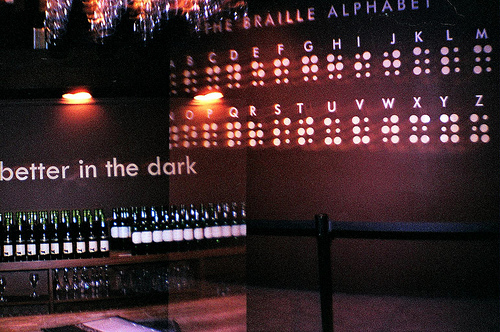
I’m sure that most of us have heard of the belief that the loss of one of the five senses can heighten the ability of the others. While this is an interesting concept, most of us will not get the chance to experience it — that is, unless you’re willing to visit Dark Table, a Kitsilano restaurant that offers a unique dining experience in complete and utter darkness.

Now, to be clear: when I say complete and utter darkness, I don’t mean that it’s just really dark. I mean that I took my glasses off because not only were they not helping me, I couldn’t even see them. Dark Table accomplishes this with a ban on light-producing technologies allowed in the dining room, including flashlights, cell phones, or luminous watches. Your order is taken outside in a heated and lit area before you are escorted to your table.

Some of you may panic about the idea of going without your cell phone for the length of a meal, but let me assure you that you will soon get over it. One of the first things I noticed upon entering the restaurant was its sense of calm; when the overwhelming bombardment of visual stimuli coming from everyone’s devices was taken away, I immediately felt more relaxed. In such a serene environment, one cannot help overhearing some of the conversations of the other diners, and it was amazing to hear how open and honest they became when they could no longer hide behind their technology.

On to the food. For $39, Dark Table offers a three-course meal, including a starter, entrée, and dessert. While there is an excellent selection of entrees, both starters and desserts are listed as surprise dishes, which is also an entrée option. Though the listed options all sounded excellent, I chose the surprise entrée, simply to add to the experience by trying to determine what I was eating.

Your servers reveal the meal to you once you emerge from a curtain to a dimly lit area to pay, but I forgot. To this day, I have no idea what my dinner was, but I do know that it was excellent. Don’t worry about trying to operate a fork and knife in total darkness: they pre-cut your meal in the kitchen for you so you don’t end up stabbing yourself.

Maybe the most interesting and inspiring thing about Dark Table is that they offer the blind and visually impaired — a group with a high unemployment rate  — the chance to share how they experience the world with the rest of us, as all the servers are visually impaired in some way or another. Dining here means not only an excellent dinner, but a taste of what it is like to be blind.

From being escorted to and from your table by one of the servers to feeling around for your drink and hoping you don’t spill it, Dark Table truly offers a dining experience like no other.

Life’s a Breeze is a story of family loyalty

0

Life’s a Breeze is a quirky glimpse into the lives of a family struggling through hard times in Ireland, where long lineups at the unemployment office reflect the nationwide recession. For Emma, a young girl living in Dublin, sitting in class during lunch with nothing but a piece of bread and a banana is not only embarrassing — it has become a daily occurrence. 

The film opens with Emma’s mother, Margaret, who orders the reluctant girl to check in on her grandmother, Nan, every day. At first, Emma is hesitant, saying that “she’s old and weird, and only ever wants to argue about things.” Eventually, through a series of events in which Emma becomes an observer, she begins to view her Nan in a new light.

Ultimately, the two end up understanding each other better than anyone else in the family, as Emma is considered a child, and Nan is often suspected of being senile and treated like a child as well.

Margaret seems to be the only one in the family with a relatively stable income, as her siblings continually ask her to cover their expenses. Emma’s aunt works as a dog groomer, but her hours are cut and she is left lining up for assistance, alongside her recently laid-off brother with two children and their live-at-home brother Colm.

The well-meaning family refurbishes Nan’s house and clears out their mother’s “junk,” as Colm calls it. The whole time Emma has acted as a decoy in order to her Nan on a day trip and get her out of the house. But Nan is not amused when she returns to find most of her possessions either dumped or sold without her knowledge. Their plan to help their mother dissolves when she reveals that the her old mattress contained her life savings: one million Euros. 

This causes the family to scramble about the streets of Dublin, trying to find the old mattress.  The chase leads them across town, to remote locations on the side of the road, and down into the dirtiest landfill sites. The situation forces the family to come together in a way they hadn’t done in years.

While the film is a mostly-realistic portrayal of family life, some moments verge on the ridiculous, and show how little Colm and his siblings seem to understand their mother, such as the scene during Nan’s birthday when they hire a firefighter stripper for entertainment. 

While everyone desperately deliberates on how to find the mattress, Emma works together with her Nan. As the film develops, Nan and Emma develop a strong bond. She warms up to Emma, and though the family may think that Emma is watching over Nan, their relationship works both ways.

During her day as a decoy, Nan gives Emma a knitted hat with two dog ears. At first she only wears it in the presence of her Nan, but takes it off when she gets to her school. By the end, she is seen wearing it all the time.

The words ‘life’s a breeze’ are found on deodorizers that were placed around Nan’s refurnished house. As Colm tells her, “life’s a breeze, to keep the stink away.”

The name says it all. A combination of simple storytelling with a fun and light-hearted score makes the film a beautiful portrait of a family experiencing daily life together, and working towards a common goal — in this case, finding a missing mattress.

Life’s a Breeze is funny and heartwarming, with a memorable cast of characters. If one enjoys watching a simple, light-hearted film about a family fumbling through life and doing their best with each other, then this charming film will live up to your expectations.

Life’s a Breeze is now available on VOD, iTunes, DVD, and Blu-ray. For more information, visit magpictures.com/lifesabreeze.

SFU’s Confession Obsession

5

Everybody has their secrets. It could be a little quirk that makes them tick, a guilty pleasure they’re obsessed with, or something more serious, like issues within their family or home. Secrets, for the longest time, have been kept under wraps at all costs, as those who know about it are also warned not to tell a soul.

But that mentality seems to be changing — for college students at least — with the rise of university confession pages. This is how they work: any person with a Facebook account can message the administrator of a confession page about what they wish to get off their chest, and the admin then posts that confession anonymously on the Facebook page. Now one’s secrets are online for people to read, but their identity and dignity remain intact.

SFU’s confession page in particular has recently gained popularity. With over 10,000 likes, the page has become the go-to way for SFU students to connect over the woes of SFU student life.

“SFU Burnaby is one of the most confusing places I’ve ever gone to,” one student writes. “I feel like a mouse running through a cold, rainy maze every time I go there, except there’s no cheese as a reward. . . just lectures.” Another student laments, “Today, when I finally found my lecture hall, the lecture ended.”

sfu_confessions

Confessions such as these get several ‘likes’ and comments, which range from empathetic exclamations to words of advice. There is no doubt that SFU Confessions is one of the most vibrant online communities out there for SFU students. Yet in the midst of all these posts, one element remains constant: anonymity on behalf of the posters. Even the page administrator’s own identity is concealed.

So Why Confess?


The word “confession” has two meanings. The first is “the act of telling people something that makes you embarrassed, ashamed, etc.,” which constitutes a majority of the confessions on the page. But the second definition, “the act of telling your sins to God or to a priest,” is also one that should be taken into consideration.

The Catholic sacrament of confession, or reconciliation, is one that ultimately focuses on renewal after acknowledging one’s sins. There is an anonymity and confidentiality aspect to the sacrament as well, as it takes place in a private booth where only the priest can hear the words of the penitent (the person confessing their sins) through a small window that obscures both of their faces from view.

The premise of confession is for one to feel sorry for their sins, and to resolve not to commit them again. In addition to confessing one’s sins to a priest, Catholic confession involves a careful examination of one’s conscience, contrition or repentance which should come from a love of God. Ultimately, the priest will offer advice for the penitent to repair the damage caused by their sins.

Father Fernando Mignone, a priest at the Interfaith Centre at SFU, defines the sacrament of confession as “an action by which a person confesses to Jesus Christ his or her sins and is forgiven through the mediation of a priest.”

“Like the confession booth in a church, the online confession offers the opportunity to get something off your chest.”

Richard Smith,  Associate Professor ‧ SFU Communications

According to Mignone, “the sacrament can never happen through the Internet or a phone. It has to be personal and individual, person-to-person with a priest. The one who is forgiving the sins is God and not man, and so they are not confessing their sins to a man.”

The SFU Confessions page certainly does not serve this specific purpose, and as Fr. Fernando pointed out, some confessions are not even truly confessions, but are more like accusations against somebody else. However, some parallels may be drawn between the Catholic sacrament and the SFU Confessions page.

“Like the confession booth in a church, the online confession offers the opportunity to get something off your chest without necessarily implicating you or generating a backlash,” says Richard Smith, an associate professor in SFU’s School of Communication. “The online version doesn’t offer the Catholic’s promise — God’s forgiveness — but perhaps we don’t need that as much as we just need to confess in the first place.”

So why, then, are people being drawn to this page and feel this need to confess online?

“If they are [truly] confessing their sins [on this page], there is a psychological need for people to be reconciled to God or to others. People also confess to inquire about whether a decision they have made or feeling that they have is right or wrong,” says Fr. Fernando. 

Some people have certainly done this on the page, asking for confirmation from other users about whether their actions or feelings were justified in a particular situation. On the flip side, others offer advice to people that they’ve learned from a particular situation or experience in their lives.

Indeed, being able to get something off of one’s chest does have a liberating quality to it. Yet much like a priest in a booth, the SFU Confessions page administrator has had to contend with the sensitive nature of the posts that get sent in.

“I think this site wouldn’t work if people knew who I was. People are more inclined to send in [confessions] if they don’t know who they are sending them to,” she says, “I have never revealed the identity of any confessors. I feel that people come to the page with complete trust of having their secrets kept safe, and I take my responsibility of keeping their secrets very seriously.”

Some of those secrets are tough reads, ranging from stories of relationships gone wrong to cases of depression or abuse. “It’s a lot of work being an admin,” she admits. “When people send in depressing posts, it does take an emotional toll on me, but then there are also a lot of funny posts to make up for them.”

Anonymous Fame


While the page is a place for people to send in their secrets, it is also an online page — and, as with any online page, SFU Confessions is subject to the best and worst parts of the Internet.

Some confessions engage in the art of trolling, looking to start arguments or discord about a particular topic. Others are short and witty, gathering likes because they are relatable and easy to read.

The comments section can occasionally steal the show, as an awesome comeback to a particularly upsetting confession can gain many ‘likes’ and replies as well. The confession pages can then ironically become a bit of a popularity contest within the guise of anonymity.

While people may be posting confessions to gain likes, nobody has the satisfaction of knowing that that particular person posted a popular confession except the original poster, or OP, themselves.

There are prolific commenters on university confession pages as well, and no person has a commentary with quite a distinctive flair as Andrew Lai’s.

Lai, a fourth year UBC student, is known for his eccentric yet hilarious pieces of advice on confession pages. “By no means was a comedic or eccentric element my intention,” he says. “I always believed in the ‘live, laugh and learn’ #deep philosophy, and some people may find this to be amusing.  Perhaps they have not found the path in understanding the beauty of these confession pages, but it is my self-guided journey to show them the way.”

“When people send in depressing posts, it does take an emotional toll on me.”

SFU Confessions Page Administrator

More and more people are discovering the “beauty” that Lai speaks of, as even the page’s administrator keeps tabs on how many likes or followers the page is getting. For many, the confessions page is an outlet where they can post something in order to gain brief online fame, even if they themselves are the only person who knows they posted something.

Lai sums this up well when he says, “These pages bring procrastinators, social media addicts, and attention whores together into one glorious union to waste time together.”

The confessions page has also become a setting for people to debate current events and social issues perspectives which, if voiced in real life, would like receive immediate backlash for going against the status quo.

For instance, Confession #6872 reads, “Looking at all those student political activities makes me sick. [. . .] Why do so many people care about stuff like “SFU living wage” or decreasing tuition for international students when obviously none of those changes are economically viable to implement[?]”

Other issues discussed on the page include the values of feminism, the terrorist attacks in Paris, and the Build SFU Special General Meeting.

The administrator of the page says she holds true to what the original posters have written, even if said post contains derogatory or discriminatory content, in order to remain neutral. However, many controversial posts have been challenged and criticized by commenters.

A Shared Community


So, what do people who frequent SFU Confessions have in common? Obviously, almost all of them go to SFU — except for a small percentage of non-student confessors, who are routinely met with a “She doesn’t even go here!” Mean Girls reference in the comments section.

Students often send in confessions having to do with the woes and grievances of going to SFU, whether it’s about somebody doing a bad parking job, the architectural capacities (or lack thereof) of certain buildings, a professor whose lectures are incomprehensible, or the panicked stresses of procrastination during finals.

The main point of these posts is to not only complain about personal peeves, but to hopefully find others who can relate to one’s experience and point of view, and most confessions gain plenty of comments from those who can relate. Some even implement a comedic element in their confession, such as the poster who wrote: “‘SFU custom edition’, ‘Canadian edition’, [sic] translation: please stop pirating we want more money.”

“Storytelling is an essential function of building a community, and these confessions provide stories of university life from a local perspective,” says Peter Chow-White, an associate professor of Communication at SFU. “You’re not going to find stories that help you understand university life from a newspaper. If you want to hear stories from everyday people on university life, you go to pages like this.”

Andrew Lai echoes this sentiment, saying, “these confession pages have grown in popularity because people realize they have been missing something their whole lives. They have been missing a community.”

“You’re not going to find stories that help you understand university life from a newspaper.”

Peter Chow-White,  Associate Professor ‧ SFU Communications

In fact, the university confession page trend is on the rise. Schools from UBC to the University of Victoria and the University of Alberta now have online pages set up for students to send in their confessions anonymously.

Many can relate to the struggles of student life, but having a page where people can come together and share their difficulties of making it to a certain place on campus, or even to remark on the peculiarities of certain campus structures, has become a valuable experience for SFU students.

“Social media is a part of our lives, and these pages are evidence of people wanting to share and connect with one another,” Chow-White explains. “These pages also give us a window to what students are doing on their phones or their laptops.”

As it turns out, the administrators of these pages themselves have formed their own little community. “Some of the other administrators of other confession pages across Canada have come in contact with each other over Facebook pages,” says the SFU Confessions admin. “We have all made different accounts and we have had a good share of anonymous conversations on there. They have definitely become my friends.”

SFU Confessions now has over 10,000 likes on Facebook, and is viewed by a huge variety of people on a regular basis. And it doesn’t show signs of slowing down anytime soon.

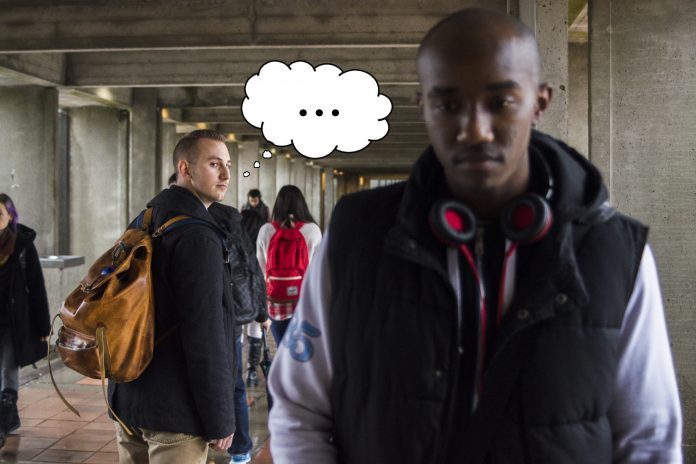
Whether you follow the page for its hilarious memes, witty criticisms, political debate, insightful advice, or heartbreaking stories, perhaps the best part of it all is knowing that these stories are sent in by real students that we pass by in the halls everyday. Everybody has a secret, and with pages like these, those secrets can finally be shared.