Home Blog Page 1040

Sports Briefs

0

Women’s Basketball

On Thursday night, the women’s basketball team suffered their lowest scoring game this season in a 68–45 loss to the Western Oregon Wolves on the road. Despite dominance on the three-point line at home, the Clan went an abysmal six for 29 shooting three-pointers. However, Erin Chambers still made progress towards the Great Northwest Athletic Conference (GNAC) scoring record, notching 19 points — the only player to hit double digits on the scoresheet for SFU. She now is only 30 points behind the GNAC record with 1801 points and four games to go.

Softball

Softball cruises to a 4–2 record with a sweep of Brigham Young University-Hawaii last Tuesday, winning the two matches 9–1 and 10–6. The sweep provided SFU its fourth straight win, after dropping the opening two matches — remarkable for a team that only had four wins over their entire last season.

Swimming

The women’s swim team defeated the University of Victoria (UVic) 143–113 on February 8. Senior sprinter Nicole Cossey led the Clan to victory with three individual wins of her own. In all, SFU won nine out of the 15 races. The men’s team, however, fell to UVic 139–100.

Hockey

SFU Hockey split the first weekend of February, winning in a shootout against Castlegar Friday night but falling to the Eastern Washington Eagles 5–2 the next night. Scoring was an issue for the Clan, as they only managed three goals in two games.

Lacrosse

SFU Lacrosse won a tight match against the Dominican Penguins, ending 17–16. Attacker Lyndon Knutilla scored the game-winning goal in double overtime. Knutilla led the team in scoring with six goals.

Football

According to Sportsnet’s James Dunk, SFU wide receivers Lemar Durant and Bobby Pospischil will be attending the NFL Regional Combine in Denver, CO on Saturday, February 21. The combine will give them a chance to be invited to the NFL Super Regionals held on March 21 at the Arizona Cardinals Training Facility, where they will be evaluated by NFL scouts.

Football Coaches

The football head coach race is down to three candidates: Jeff Reinebold, special teams coordinator at the Hamilton Tiger Cats (CFL); Joel Penner, offensive coordinator at Malone University (NCAA Division II); and Glen Fowles, head coach at Williamette College (NCAA Division III).

Shrum Bowl still up in the air

0
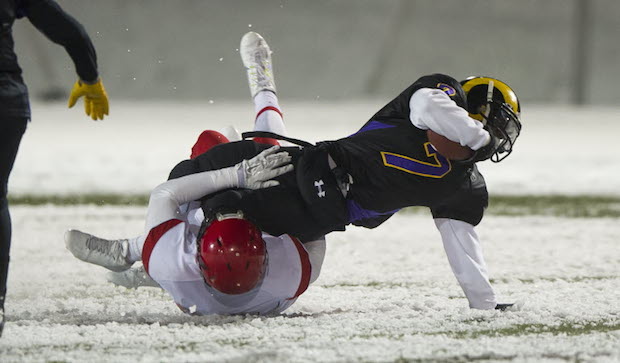
The Shrum Bowl was last held at Thunderbird Stadium on October 8, 2010. Image Credit: Bai Lin

If you search the schedule of events for SFU’s 50th Anniversary, you will notice that the Shrum Bowl is listed on September 3 of this year, over the Labour Day weekend.

The Shrum Bowl was an annual meetup between the SFU Clan and the UBC Thunderbirds’ football teams. Named for Dr. Gordon Shrum, SFU’s inaugural chancellor, the annual game has always brought out UBC’s and SFU’s rivalry — sometimes even in the form of riots.

Of the first game, held October 16, 1967, The Peak reported, “Dr. Gordon Shrum called it exuberant spirit — the Vancouver police no doubt had another name for it.”

During the game, UBC engineers kidnapped SFU’s student president, and a riot broke out. The game ended eight seconds early when fans rushed to the field and pulled down the field goal posts. Needless to say, the Clan — or the Clansmen as they were called — won 32–13.

However, due to SFU’s dominance and the usage of American rules, the games were alternatingly discontinued and revived throughout the ‘70s and ‘80s. However, between 1987 and 2010, the event was held every year except 1994 — with home advantage alternating, and rules depending on the home turf.

This year’s game, if it occurs, would mark the first time that SFU and UBC have faced each other in five years. The once-annual event ran into scheduling problems when SFU joined the NCAA in 2010. With an official announcement on SFU’s website, it would appear that SFU fans can once again watch the Clan beat the Thunderbirds in a game of pigskin.

However, it now looks like the game won’t be held — at least, not on September 3.

In September, athletics director Milt Richards told The Peak that there was an unwritten agreement that if the Labour Day weekend was free, there would be a Shrum Bowl. And the weekend was open.

Both universities agreed on the date; however, this time it was the NCAA who was not on board.

“We approached the NCAA for a waiver to play the game prior to the start of the Division II schedule during the September Labour Day weekend,” said sports information director Steve Frost. “This weekend is traditionally reserved for the opening of the Division I season. The NCAA denied our request.”

Richards elaborated, “The only time [UBC] have available is to play that early week, and Division II starts a week later.” He noted that “the thought is that, if the NCAA would allow us to start a week early, that would be a big advantage over other schools.”

Although SFU is appealing the NCAA’s decision, UBC has recently scheduled a game against Laval University on August 29, meaning that the Labour Day weekend is no longer available.

But Frost remains adamant that there could be a Shrum Bowl this year. An alternate plan would be to instead play during the Canada West bye week, which usually falls on the Thanksgiving weekend.

Last year, UBC vetoed the idea in order to give their players rest. This year, the problem is not that UBC doesn’t want to play that weekend, but the opposite — they already have a game scheduled that weekend.

Now the plan is to try and move that game to another week, allowing the Shrum Bowl to be played that weekend. According to Frost, this is the “only chance” for the game to happen.

“I’m not ready to give up on it,” said Frost. “If Blake Nill, their head coach, says ‘yep’ [to moving the game], we’re going to try and move heaven and earth to get that game open that weekend.”

Through negotiations, both Frost and Richards insist that both sides want to have a Shrum Bowl.

“UBC and Simon Fraser both want to play the game,” said Richards.

Should the game be played this year, it will be SFU’s turn to host, as UBC hosted the last one — a 27–20 victory for the Clan.

A look at SFU Football’s newest signings

0
Spencer Moore led high school Triple A football this season in tackles with 92, as well notching seven sacks. Photo courtesy of The Province

On February 4, athletic departments all across the NCAA were busy, as it was the first day that high school student athletes could sign a National Letter of Intent to play football in the NCAA.

Although it wasn’t quite as big deal here in the Lower Mainland as it is currently in the States — perhaps comparable to how we pay attention to the NHL Draft here — SFU still made some notable signings. We caught up with recruiting coordinator Bryan Willie to get a bit of intel on the four signings SFU’s made so far:

Ovie Odjegba, Vancouver College, RB, 5’9”, 180 lbs

“He’s a quick kid, he’s fast,” explained Wyllie. “He’s really good at the zone run game, so he finds the holes really well. He’s got good vision, he’s got a nice burst, he’s a really nice athlete.”

One necessary aspect of development would be bulking up: “He’s prone to develop a little bit just in the fact that he’s a little smaller kid in terms of body, just because he’s 180 lbs. So as he develops here, he’ll be able to put on a little bit more weight, get thicker.”

Objegba is an athlete that Wyllie could see potentially playing in the first year, partially because of his athletic ability, but also because of a lack of depth in the running back position, with key players Chris Tolbert, Cole Tudor, and Stephen Spagnuolo all having played their last game for the Clan.

“It’s a thinner position for us. He might get pressed into action earlier than we would want to,” explained Wyllie. “I think odds are that he will probably not have to play; we’ll figure out ways that he can take his time and progress into the role.

“But he’s the type of player that could force our hand just because of the kind of athletic ability he’s got.”

Shaquille Naicker, Pitt Meadows Secondary, OL, 6’2”, 260 lbs

“He’s got a little bit of a mean streak to him. He finishes his blocks, he runs his feet really well — which is not something all offensive linemen do at the high school level,” commented Wyllie.

“He’ll actually get his hands on people and run his feet to get guys out of the way. He opens some big holes.”

Naicker can play on both the offensive and defensive line, and achieved 36 tackles, three sacks, and two fumble recoveries in nine games for Pitt Meadows this season.

Will Kinnaird, Terry Fox Secondary, OL, 6’5”, 280 lbs

“Great big kid from Terry Fox [Secondary],” explained Wyllie. “He’ll probably be one of the biggest, if not the biggest, kid we bring in this year. Comes from a great program in Terry Fox. Moves well, but that will be something he will be able to work on at the next level as well.”

Although he mainly played tackle at Terry Fox Secondary, Wyllie projects that he will most likely suit up as a guard for the Clan.

Wyllie is already pleased with Kinnaird’s progress in becoming ready to play the university game: “He’s already in the gym, in our workout program, I’m excited to see where that takes him, where he parlays that into.

“I think he’s a guy who’ll take a huge step this year, because he’s already got the frame to do it, so it’s just a matter of putting it all together.”

Spencer Moore, St Thomas More Collegiate, LB, 6’2”, 255 lbs

“A guy I really liked as a linebacker, but at the same time he’s a bit heavier than that, as he’s up to 250 lbs, so we see him moving down to the defensive end for us,” said Wyllie. Moore led high school Triple A football this season in tackles with 92, as well notching seven sacks.

“The athletic ability and the brains for the game that he uses as a linebacker and natural abilities will really help him on the defensive end. It will be just a matter of teaching him the techniques [. . .] as a defensive end.”

As well, Wyllie sees him as being the most college-ready of the four.

“Spencer Moore’s probably the one closest to being able to play [at SFU]. His natural ability, his physical, just the size he’s got and everything, he’s probably the closest in terms of body maturity to being ready to play,” he said.

“I’m really excited about him, so hopefully he’s one of the guys that really turns out.”

A dragon in Dragon’s clothing

0
Illustration by Kenneth Uzodinma

Have we become too complacent when it comes to reality television? Does the slightest inkling of ingenuity and originality in these shows cause us to turn our backs and instead crave something more familiar? They’re all indications of a stagnant mind, petrified of change, but big change is coming to Dragons’ Den, whether we’re accepting of it or not: on February 6, David Chilton, one of the five “Dragons” on the CBC show Dragons’ Den, revealed that after three years he will be leaving the show to focus on other projects.

The studio will undoubtedly have big shoes to fill after the 53-year-old author’s departure, but I’ve already found the perfect solution for CBC. That’s right. I propose that Chilton’s successor for the show should be an actual, fire-breathing dragon.

I know, I know. Adding a legendary flying creature to the cut-throat business environment of Dragons’ Den might seem a little incongruous at first, but it makes sense the more you think about it. Where else are you going to find someone with skin as leathery as original Dragon Jim Treliving or someone with a personal style even wilder than Michael Wekerle’s? A mystical beast would fit in perfectly.

The new Dragon should be ruthless. They should take these aspiring entrepreneurs who file in week after week, pick apart their hopes and ideas, chew them up, and spit them out. Does this sort of behaviour sound familiar? The only way to have this happen literally is if there’s a real dragon sitting alongside the other four business tycoons.

After nine seasons, any show can start to show fatigue. While the seemingly revolving door of Dragons on the show has managed to keep things fresh to some extent, they’re not mythica creature-fresh.

Would adding a dragon to the mix bring with it a slew of complications? Perhaps. Is it possible that a dragon might kidnap young female contestants and whisk them away to his lair until a brave knight comes to her rescue? It seems fairly likely. Maybe it could launch a story arc that spans several episodes, with each subsequent business and product being pitched revolving around ways on how to rescue the captured contestant? I’m just spit-balling here, obviously, but you can see the potential this type of casting holds.

It’s time the show lived up to its name and added a dragon to the mix to help spice things up. Even just having the dragon guest star occasionally, without any significant screen time or contributing anything important to the plot, would be enough to attract viewers.

Hey, it worked with Game of Thrones.

Clint Schneider promoted to head coach of men’s soccer team

0
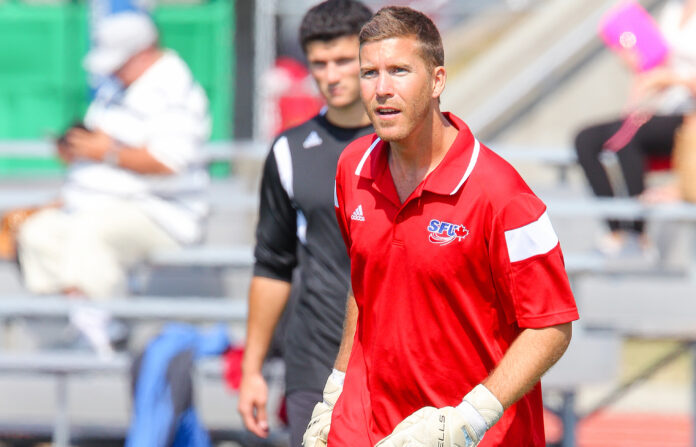
Image Courtesy of SFU Athletics

SFU Athletics announced last Tuesday that they have promoted associate head coach Clint Schneider to be head coach of the men’s soccer team, a position made vacant by Alan Koch’s departure for the Whitecaps FC 2.

Athletics director Milt Richards explained that with the success of the men’s soccer team under Alan Koch, that it made sense to keep the program going in the same direction: “I just felt that when the program is going really well, why not promote from within, and Clint has worked his whole life to do this, so I’m really excited.”

Schneider served as an assistant under Koch during the five years that SFU has been in the NCAA, starting in 2010. Unlike most of the Clan teams that suffered — and often are still suffering — growing pains in their transition to the NCAA, under Koch and Schneider the team bolted to success, going 85-12-6 and making two final four appearances over the first five years.

This wasn’t the first time the two coaches had worked together, either — the former goalkeeper from San Angelo, TX worked as an assistant under Koch at Brown University, an NAIA program.

“[Schneider] will bring stability, he’ll bring a proven methodology. He’s going to know exactly what we’ve been doing and what it takes to maintain the success that we’ve had,” said Koch. “He’s an accomplished coach and thoroughly deserving of this opportunity.”

For his part, Coach Schneider is excited with the potential of the team, and hopes to continue what Koch had started.

“The program’s set up for success,” he said. “Now it’s just putting my own personal spin on it, having players buy in, and establish a culture where we can get the most out of every player.”

Schneider’s main strength, according to Koch, is his ability to communicate and motivate.

“It’s my upbringing, my core values that I believe in: hard work and selflessness,” Schneider said, explaining what he hopes to impart to the team. “That the team is bigger than themselves and you sacrifice for each other on the field. And not just because the coach asks you; you do it for your teammates.”

Although he has previous experience being the head coach in the Pacific Coast Soccer League, a men’s league, this will be Schneider’s first crack at being a head coach in the university circuit.

It is an enviable position for a first-time head coach to take over — with the team built to compete, and win — and it will be up to him to continue that success.

Clan hold on to win first game of the season

0
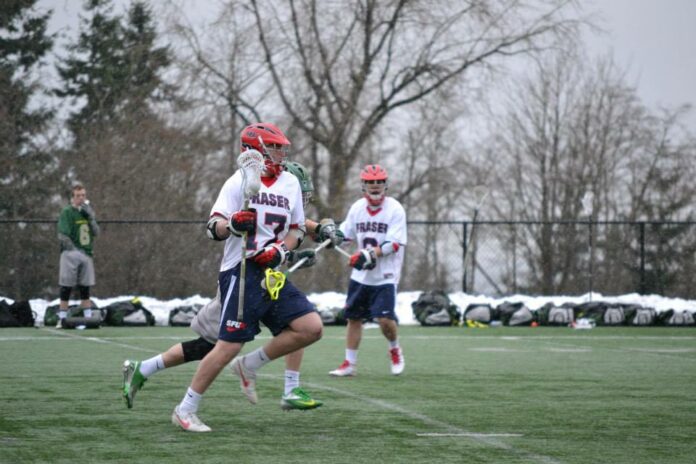
Image Courtesy of Simon Fraser Lacrosse

Lacrosse season is upon us again. The Clan squad opened their season on Sunday, February 8 against cross-border opponents, the Western Washington (WWU) Vikings.

The Clan enter the season ranked 12th in the Men’s Collegiate Lacrosse Association (MCLA) Division I after reclaiming the Pacific Northwest Collegiate Lacrosse League (PCNLL) title in 2014, while WWU starts off at 11th in Div. II — a tier under SFU — after claiming the Div. II conference title in 2014. 

The Clan wasted no time getting things moving. Senior midfielder and three-time MCLA All-American Sam Clare, who finished last season with a college-career high 44 goals, picked the ball off the face-off and sniped it home with his off-hand nine seconds into the game for his first of three. 

After this, however, SFU struggled. The team was unable to find the back of the net until midway through the second quarter, which started a five-goal run to finish the half at 6–1. 

The struggles continued in the second half for SFU, and the team gave up six goals while only putting up four. Luckily for the Clan, the first half lead insulated them for a 10-7 victory.

SFU were led by Clare and senior midfielder Casey Foster, both of whom had three goals to their name — though Clare had the edge with four points. 

Midfielder Matthew Bailey, as well as attackers Lyndon Knutilla, Greg Lunde, and Iain Vickars, each had one tally each.

Sophmore goaltender and newly minted starter Jeremy Lashar played an amazing game, managing 16 saves on 23 shots for a .696 save percentage.  Freshman Matt Sobey went .667 on the face-off dot, winning eight of 12 draws.

The Clan went on the road over reading break, taking on non-conference rivals Sonoma State and MCLA newcomer Dominican in California before returning home to take on PNCLL rival Boise State, Friday, February 20 at 7 p.m. on Terry Fox Field. 

Engineering students design self-automated greenhouse

0

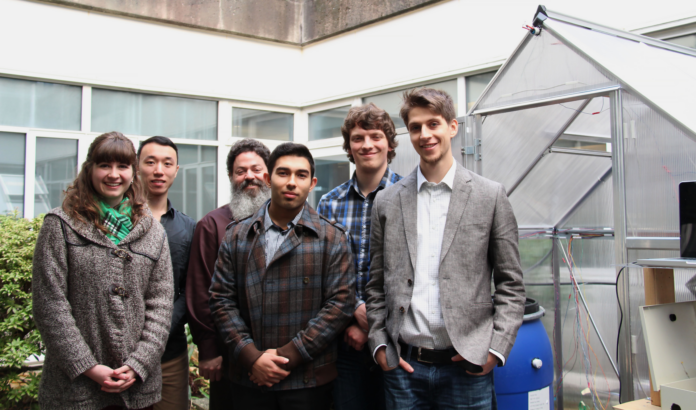
A team of six SFU engineering students has developed a highly automated greenhouse that could be used in research as well as disaster relief.

The revolutionary aspect of the greenhouse — called Plantosphere — is that it can automate humidity, temperature and light level. Plantosphere can also water the plants by using a rainwater collection system.

Beyond use by hobbyists or universities, Plantosphere could be used for more extreme settings where the condition and climate is too hostile for plants to grow.

The greenhouse is designed with a soil and air heating system that is meant to stabilize the surrounding environment. These functionalities will keep the surrounding environment above freezing temperature, so that the plants can still grow even if it’s very cold outside.

Using RGB LEDs, Plantosphere can also efficiently produce the particular wavelength that plants need to grow.

Although the greenhouse was a capstone project in a fourth-year undergraduate class, the initial idea of making Plantosphere was very unusual.

It all began when Terry Hannon, one of the engineering students who worked on the project, was asked to take care of his friend’s garden while his friend has gone to do co-op in Japan. Immediately, Hannon found that things were a bit out of place.

The plot wasn’t level, so the water was not distributed evenly, resulting in soil clays. When Hannon and his friends brought in topsoil to fix the problem, animals started to eat plants and damage the garden.

At this point, Hannon and his engineering friends thought that automating the process would make everything better. Hannon started to think, “What would it take to automate a greenhouse?”

The team collaborated to make the automated greenhouse the final project for their engineering class.

“We only had four months to build it [so] it was very exciting because we got to see it take shape right away,” explained Hannon.

Beyond the time crunch, the team faced challenges in building something that they had never encountered previously. He said, “There [still] were a lot of pieces that were very difficult for us to figure out since we’ve never done anything like this before.”

According to Hannon, Plantosphere could be used to serve different purposes: for hobbyists, academic institutions, and disaster relief areas.

The greenhouse’s 17,000 lines of code provide a strong support system for amateur gardeners looking to flex their green thumbs.

“It’s so simple that you don’t need any technical education or experience to operate it,” team member Jane Horton told SFU News.

For universities, Plantosphere would provide a controlled setting for scientists to study the effect of minute changes on individual components. Ultimately, this could allow them to distinguish the ideal environments for certain plants.

Hannon hypothesized that by using this greenhouse design in disaster relief areas, volunteers could grow their plants and vegetables quickly, instead of having to rely on trucked-in vegetables, which take longer to arrive. 

Currently, Hannon is planning to take Plantosphere further by getting the device patented. As well, Hannon is considering adding more functionalities, and streamlining those functionalities over the next year.

Nobody pays attention to your workout clothes

0
Photo by Brandon Hillier

In pursuit of that perfect sideways bathroom selfie, society today is told that simply exercising won’t cut it. We must also look the part as we strive towards a healthier lifestyle through exercise. Companies like Trimark and Lucas Hugh work to prove that a simple pair of sneakers, pants and a T-shirt are not enough if you are in the race for optimal health.

As the saying goes: “If you look good, you feel good.” Since ‘looking good’ often translates to what you wear, it makes sense to find ourselves through the acquisition of material things. As several cultural theorists explain, our identity and experiences today are inherently linked to a price tag. Validating our experiences via consumption is second nature in this wonderful world of capitalism. It is for this reason that the marriage between high fashion and fitness thrives — a marriage that I am firmly against.

With the fitness industry forming a large part of popular culture, it comes as no surprise that corporations are integrating high fashion with fitness clothing. According to these companies, it is not enough to simply get off the couch and exercise; showing real dedication means dishing out the dollars for the trendiest workout gear.

You can now fully achieve your New Year’s resolutions in a pair of $410 Lucas Hugh Leadlight printed stretch leggings and a $235 Rio printed stretch and mesh sports bra. Why? Because swag, that’s why!

I feel that to approach personal goals, like exercising from a consumerist perspective, is both problematic and unsustainable. Integrating high-end fashion with working out pressures us to focus on looking good while we excercise, which strikes me as a tad shallow.

Sometimes we do need that external push to work out, which may come in the form of new workout gear. However, we cannot rely on our killer outfits to keep us focused on our goals. Material possessions are fleeting, and this is one of the hardest things for anyone to truly understand in a world plagued with hyper-consumerism.

More often than not, modern-day goals are defined by someone selling us a profitable pipe dream. What makes this worse is that we are always looking to buy. In this never-ending game, we are often the losers. Consumers are usually left with an unfulfilled emptiness that the latest sportswear product cannot fill — that is, until the next line comes out. The need for a more holistic approach towards our life goals then arises, as we set out to better ourselves.

I probably should mention that I, too, am a victim of the pleasant feeling that new stuff gives me. However, this feelings is momentary, and doesn’t feed my motivation to work out. Goals should be centered on real values that sustain long-term growth. If those values can be bought, then I would reconsider calling them ‘values.’

Hopefully we can work towards not being so easily duped into ‘needing’ what we already have in ourselves to achieve greatness. You definitely have the right to look good while you use the gym, but try not to be too concerned about your looks while you sweat it out. Nobody really pays that much attention, anyway.

Peak back in time: SFU Ice Rink Voted Down

1

WEB_Ice Rink_Brandon Hillier

“The ice rink was defeated about 2–1; this was the climax, the cataclysm of the whole event. As students raised their hands to vote ‘no’ there was a short silence, heads bobbing each way, and then a spontaneous burst of applause,” Peak writer Don Scholl wrote 31 years ago this week.

About 900 students had gathered at the SFSS Annual General Meeting in the gym on February 19, 1974 — the majority of them to vote down a proposed ice rink up here on the mountain.

Wait a second. We almost had an ice rink? And we voted it down?

If it were up to the SFU administration at the time, SFU Hockey wouldn’t play at the Bill Copeland Arena — they would instead play in a rink within walking distance from the AQ.

On February 1, 1973, the then-vice president of administration, George Suart, requested a feasibility study to see if an ice rink could be done profitably. This set in motion a year-long saga that would end with as many ice rinks as they started with.

The plan was tentatively approved at a Board of Governors (BoG) meeting on April 17. However, the rink approved was significantly smaller.

The proposed location was the southeast corner of lot B. In a memorandum to Suart, William De Vries, of the Physical Plant and Planning department, noted that the building would be a “pre-engineered steel structure [as it] is the cheapest method of constructing a facility of this nature.”

In all, the project was estimated to cost about $925,000 (over $4 million in today’s dollars), with about $625,000 coming from the Board of Governors. It was reasoned that the venture could break even if 65 percent of the allocated time could be rented out — which, according to Sid Segal, the assistant director of ancillary services, was a “very high” probability. Heck, if all the time was rented out, a tidy profit could be made.

The notions of possible profit and not having to lease out at least $5,500 a year for ice activities in rinks that were “not meeting the demand that exists for winter activities” made it quite appealing to those on the athletics side. A personal ice rink would also have given way for a possibility of a varsity hockey team.

All systems go, right?

Not quite. Although the plan was moving forward, it was speculated that many in both faculty and the BoG weren’t too keen on the idea. One report on the feasibility mentioned that, “although the demand for an ice facility is very high and most desirable, there is some question as to the priority of this facility as compared with the artificial field turf,” another necessary athletic thing that needed a lot of money.

But the most important people turned off by the plan were the private business owners. The BoG had pledged over $600,000, but needed still about $300,000 more. It was proposed that they raise funds through public appeal.

In a survey of prominent BC businessmen, SFU found that most were overwhelmingly opposed to the idea, and thought it unlikely they would find willing donors. Jim Pattison, one of those surveyed,  was “not in the least interested,” and thought that there was no need at SFU with the surrounding ice rinks in the area. As well, he refused to tie his Vancouver Blazers — a short-lived member of the one-time competitor of the NHL, the WHA — with SFU.

Former Canucks owner Cyrus McLean also was found to be “generally very negative about the whole operation,” calling the project cheap and something few would want to invest in.

The project was cheap, had too few seats, and was planned to run all months long when most rinks shut down for the summer. McLean also noted that in previous attempts to build athletic facilities, they had “encountered resistance from the business community about funding a sports facility rather than concentrating on funding exclusively for academic facilities.”

So public funding no longer seemed like such a great idea. How else could they raise funds? The report had a simple idea: “Have students contribute a portion of the money to show their interest.” And thus began student involvement — and the end of the ice rink.

Initially Suart pushed for a referendum to be mailed out in October asking, “Do you or

do you not want an ice rink?” However, the council balked at the question, and instead tabled the referendum for February.

SFU Athletics came out in full force pushing the ice rink, promoting the yes vote with the slogan, “Ice is Nice.” In The Peak of the day, an anonymous writer wrote, “Hockey-playing mannequins are to be placed in the hallways with signs pleading for ice. Athletes have apparently been the recipients of propaganda spiels designed to insure a packed general meeting.”

That’s not to say that the anti-ice side wasn’t vocal, either. The Peak during this era had a habit of printing blatantly anti-ice articles like the one mentioning “propaganda spiels,” usually by anonymous writers.

Notably, a rally was held before the referendum, which brought together all the ‘no’ voters.

After the campaign, some even accused biased members of the SFSS of making the conditions favourable for a win for the ‘no’ side. According to a letter to the editor by Ian McGregor, “political maneuvering” by chairman JP Daem avoided a “promised 40 minutes of debate,” before “some idiot called the question” — resulting in the end of the debate.

In the end, the rink proposal probably didn’t fall apart because of overbearing campaign slogans or biased editorials ran in The Peak. The project was considered hackneyed from the start by many potential investors.

Students were paying a $5 tuition increase — a larger sum of money in the day — for the newly-built University Centre Building (now part of the Maggie Benston Centre). Many were under the belief that if they voted down the rink, their tuitions would decreased with the fee increase no longer needed — something that, according to The Peak, didn’t happen.

At the time, library budgets were being slashed, and dental insurance was a prevalent issue. Many students thought there were more important things to spend their money on.

This wasn’t the last time SFU nearly had an ice rink, though. When the 2010 Olympics were announced, SFU was initially awarded the Olympic Oval before it was instead put in Richmond.

However, the consequences still linger to this day: hockey was at the time considered for varsity status. Instead, SFU Hockey folded in the 1970s, until it was brought back as a club in 2004.

When McGregor concluded his letter to the editor: “It may be a long time, if ever, before SFU can have their own ice rink,” who knew how right he’d be?

SFU to offer second-year courses for Advanced Bitches

0
Illustration by Saida Saetgareeva

Due to high levels of enrollment in SFU’s pilot Basic Bitches courses, the university has revealed plans to add a tier of second-year Advanced Bitches courses to further build upon skills learned in the introductory classes.

“I am just, like, totally in love with everyone who’s taken part in and been supportive of the courses,” said Tiffany Brandy-Lynn, head coordinator for the pilot program and long-time basic bitch herself. “It’s just like Marilyn Monroe always said, ‘We are all of us stars, and we deserve to twinkle.’”

Launched in September 2013, the Basic Bitches program was developed in response to criticism from student groups about the lack of courses orientated around things like what outfits go cutest with Uggs, which Starbucks syrups are best added to which beverages, and tutorials on whether Bradley Cooper looks better with long or short hair.

“Before the pilot program was introduced in 2013, there were no courses at SFU that dealt with the rudimentary things so many young people are left to think about every day,” continued Brandy-Lynn. “Without these programs, basic bitches everywhere were being left uninformed of the Forever 21 nearest to where they live or what the best song on Taylor Swift’s album Red is.

“It’s “22,” be tee dubs,” she added.

Prerequisites for the second-year Advanced Bitches courses, PSL 233 and PSL 247, include having completed both first-year Basic Bitches courses and at least a three-to-one ratio of following to followers on Twitter. Before being accepted, students must also submit a 500-word essay on which Kardashian is totally their spirit animal and why.

“PSL 233 and 247 will build upon terms and lifestyles learned in Basic Bitches while exploring exciting new topics that have yet to be finalized,” stated an SFU press release emailed out to students last week. “Some of the already confirmed modules include wine night essentials, how to not feel bad about cultural appropriation while attending a music festival, and sub-text messaging, which focuses on the countless ways you can interpret any emoji that has a face.”

And while the Basic Bitches courses were originally only offered in the fall semester, as to coincide with the seasonal craze of pumpkin spice products, Brandy-Lynn says that student demand could mean that the courses will soon be offered year-round.

As for what the future holds, depending on how registration numbers are for the new courses, Brandy-Lynn would like to see more attention drawn to the topics and issues facing today’s young basic bitches, as well as maybe one day an entire faculty dedicated to the field, over which she would “literally die for.”