Home Blog Page 1026

Geek culture has never been stronger

1
Photo Credit: Sam Howzit (Flickr)

In a recent interview, Simon Pegg — star of Spaced and Shaun of the Dead, and honourary patron saint of nerds everywhere — became yet another voice in a chorus of those lamenting the supposed decline of our society.

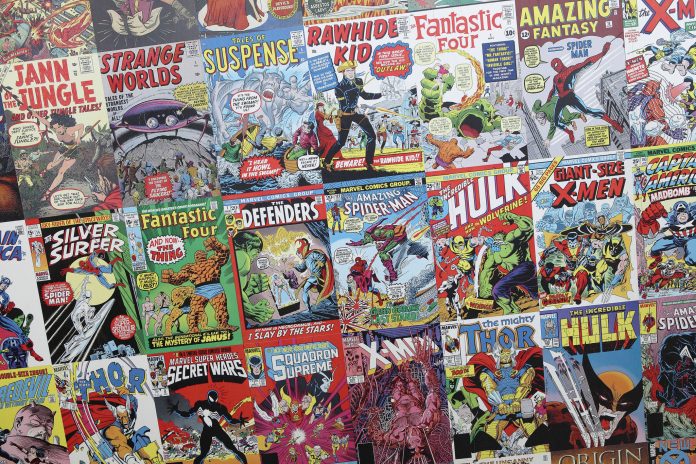
“Part of me looks at society as it is now and just thinks we’ve been infantilised [sic] by our own taste,” he told Radio Times in an interview last week. “Films used to be about challenging, emotional journeys [. . .] Now we’re walking out of the cinema really not thinking about anything, other than the fact that the Hulk just had a fight with a robot.”

It’s surprising that Pegg, someone who has sunk decades of his life into science fiction and general geekdom, has managed to miss the point of science fiction so entirely. His comments aren’t unprecedented — in fact, the complaint that science fiction and fantasy are somehow “childish” or regressive has about as long a history as the genres themselves.

It just hurts to hear it from someone I thought was on our side.

Admittedly, there’s a kernel of truth to Pegg’s complaints, which he further explained in a knee-jerk reactionary blog post on his unfortunately named website, Peggster. “The more spectacle becomes the driving creative priority, the less thoughtful or challenging the films can become,” he clarified, citing theory by the philosopher Jean Baudrillard which argues that we are compelled to retreat to the escapism of youthful passions to avoid the harsh realities of the world.

I get this. As a journalist, I spend a sizeable chunk of my time desperately trying to get people to care about complicated, sometimes depressing stuff, when I’d likely have an easier time writing listicles about what your favourite Avenger tells you about your love life. Most science fiction and fantasy is meant to make money, and it’s usually easier to get people to see your movie when it doesn’t remind you of ISIS, ebola, police brutality, or One Direction’s inevitable breakup.

These genres aren’t inherently limited in their capacity to tell stories that are morally, structurally, and ideologically complex.

But there’s a big difference between criticizing the shallowness of big-budget vehicles like Transformers, and criticizing entire genres. Though bad sci-fi and fantasy are certainly not unheard of, I’d argue that our growing fascination with stories about dungeons, dragons, space explorers, and time travel doesn’t signify any significant shift in our tastes. After all, we still pay to hear stories about people.

As the adage goes, great science fiction tells us more about our present than its future — look no further than films like Her or Eternal Sunshine of the Spotless Mind or Children of Men for examples of films that use fantastical premises to reflect our actual world, and to tell us more about it.

Even the film Avengers: Age of Ultron, which Pegg slyly references in his original interview as an example of Hollywood sci-fi excess, is deeper than it might seem. The film’s villain, a superintelligent cyborg, rises to power via the Internet and the surveillance it affords him, a commentary on our information-driven, NSA-dominated era. Its characters also boast arcs more complex than those of your average romantic comedy or thriller.

These genres aren’t inherently limited in their capacity to tell stories that are morally, structurally, and ideologically complex. Strip away the orcs and the supercomputers, and you’ll find that most sci-fi and fantasy are about what most fiction is generally about — namely, what it’s like to be alive, be it on Earth or in Middle-earth.

I don’t buy that the geekification of the Western world has somehow infantilized us or led us to avoid what’s really important. If anything, it’s a sign that we’ve become more willing to hear stories about the same key issues and ideas, but told in a new and unique way.
EMBA program engages Northwestern BC

0
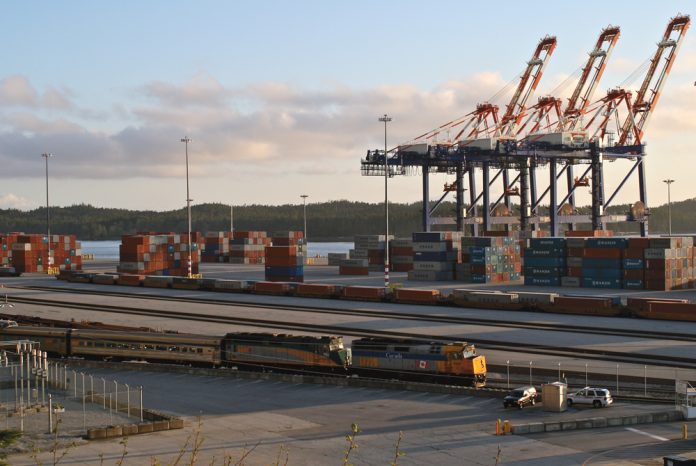
The program will be based out of Prince Rupert, BC. - Bruce Schwierske

Right in line with SFU’s mandate to engage the world, the Beedie School of Business is extending its reach by introducing a new program: the Executive MBA Northwestern BC.

The new program, which will commence this fall and take place in Prince Rupert, is specifically tailored to providing the business and management skills needed for industries such as extractive resources, engineering, liquefied natural gas, and other related industries.

Mark Selman, the program director, stated that there is a high demand for business and management skills in Northwestern BC.

“The Executive MBA Northwestern BC program will focus on giving students extraordinary skills in business, logistics, and management — skills that are required for today’s competitive market. We also want our students to gain the entrepreneurial skills required for expanding BC’s industries and to provide economic development for First Nations,” said Selman.

The three-year program will take place at specific training institutions, colleges, and other various locations in Prince Rupert, Terrace, and Kitimat. However, students will also be able to attend lectures through virtual classrooms.

Selman explained, “Prince Rupert is the ideal location because its economy is one of the central points in global trade networks. It is a fast growing economy, and this is due to Prince Rupert’s port and how low its shipping costs are.

“There are also a lot of communities in Northwestern BC that need training in business and management,” he continued. “Workers and management often have experience in different areas such as mining, forestry, or hydroelectric power, but they’re lacking graduate-level business knowledge. We want to be able to provide this knowledge to people working so that we can see these emerging economies succeed in competitive markets.”

“We also want our students to gain the entrepreneurial skills required for expanding BC’s industries.”

Mark Selman,

program director

SFU’s Beedie School of Business has offered an MBA similar to this one in the Northern BC in previous years. “In the past, we have offered programs in Terrace and Kitimat. We want individuals to not only have experience in these industries, but to have proper training in business and management so they can meet the demands of new projects,” said Selman.

The courses included in this program are similar to other MBA programs, involving topics on accounting, marketing, economics, leadership, finance, policy, and governance. However, this program is primarily focused on applying these topics to BC’s northwestern industries and course work will include traditional learning, case studies, and simulations.

Courses will be taught by a team of SFU’s distinguished professors who specialize in business, marketing, finance, resource management, organization, and strategy.

While the program has had many applicants with backgrounds in science and engineering, the entry qualifications are not restricted to people who have studied those disciplines.

“There are a number of students with science and engineering backgrounds who’ve applied, but this doesn’t mean that prospective applicants require a degree in science or engineering,” emphasized Selman.

“Ideally, students will have an undergraduate degree, some professional experience, and a desire to further their skills.”

Satellite Signals

0

WEB-woodwardWoodward’s

“Shaping Vancouver,” a panel discussion held on May 27, explored the meaning of neighbourhood character. The panelist included a local author, politician, businessman, community worker, and an architect. They addressed questions such as “What features give areas their distinctive character?” and “How can we ensure new development is responsive to the neighbourhood context?” The event was part of the City of Vancouver’s ongoing Heritage Action Plan.

surreySurrey

On Wednesday May 27, volunteers from SFU Surrey enjoyed a morning outdoors as they participated in Downtown Surrey Business Improvement Association’s annual community clean up, removing litter on the north end of 104 Avenue to 112 Street. The event ended with an appreciation barbeque luncheon for all the participants at Chuck Bailey Recreation Centre.

vancouverHarbour Centre

“Immigrant Seniors: What It Takes to Call Canada Home?” comprised of a screening and subsequent discussion on the documentary The Price of Reunion or Lessons in Happiness. The event, hosted on May 26, was based on the 35-minute film, which explored the successes and challenges faced by immigrant seniors in Canada. The discussion covered some of the latest policy changes and various ways to help new senior immigrants.   

Hansel and Gretel is updated In a Forest Dark and Deep

0

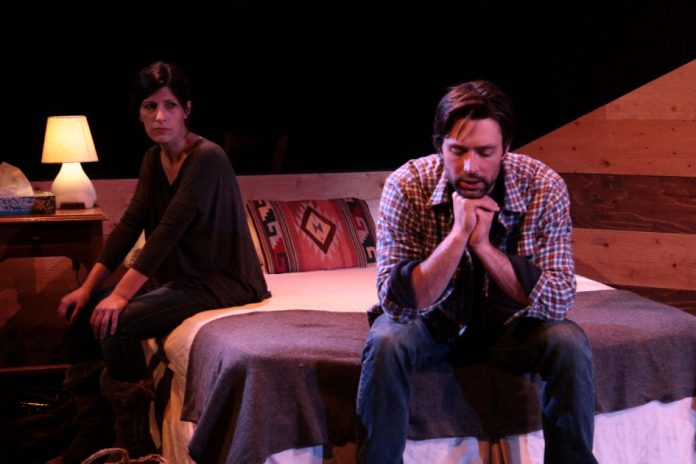
From May 20–30, In a Forest, Dark and Deep brought intrigue and mystery to the Havana Theatre. Presented by Naked Goddess Productions and directed by Tamara McCarthy, the Western Canadian premiere of this show provided an intimate glance into the intricacies of sibling relationships.

The play, written by Neil LaBute, takes its inspiration from the classic tale of Hansel and Gretel, but is told in a modern setting. The play itself has an overall dark tone, with a plot based around characters Betty and Bobby attempting to untangle one another’s secrets. There is a definite vilification of both characters throughout the piece, with a strong emphasis on the darkness within Betty, a dean at a college who is married with children. Her brother, Bobby, seems both hero and antagonist as secrets are revealed throughout the narrative.

With such intricate writing comes a great level of difficulty for the actors involved. Both Carlo Marks (Bobby) and Sandra Medeiros (Betty) managed the task well.

Marks delivered a breathtaking performance: each discovery was met with an intense, engaging reaction. His interpretation of the brutish blue-collar carpenter was at once relatable and infuriating in the best possible way. All at once, his portrayal made one want to both slap him, and give him a cup of tea and a warm blanket.

Medeiros counterbalanced Marks quite well. Her portrayal of Betty was very engaging. However, I felt the character was missing a basic humanity and relatability, which may have been the fault of the writing, or of interpretation. Despite this, Medeiros gave a strong performance of her deep and flawed character.

The lighting, done by Graham Ockley, worked extremely well on the beautiful, intricate set designed by Triane Tambay. Even in the blackbox theatre of the Havana, the stage looked amazing at all times, the set effortlessly transporting the audience into a cabin deep in the woods.

An interesting use of parallelism shown through costuming comes about as Bobby removes a flannel button up shirt to reveal a grey tee, jeans, and brown work boots, in contrast to Betty’s more chic grey long-sleeve, expensive denim jeans, and heeled brown boots. At once, the characters reflected the flaws in one another, while also showing their stark differences.

The play speaks to the intense nature of relationships, and provides a commentary on the practice of manipulation. Questioning morality and the connections of familial bonds, In a Forest, Dark and Deep keeps audiences interested with its constant revelations as the narrative twists and turns. An exercise in exploring the dynamics of pain, healing, truth, and lies in a patriarchal culture, the play is certainly dark, and extraordinarily deep.

Focus takes a stab at corporate culture

1

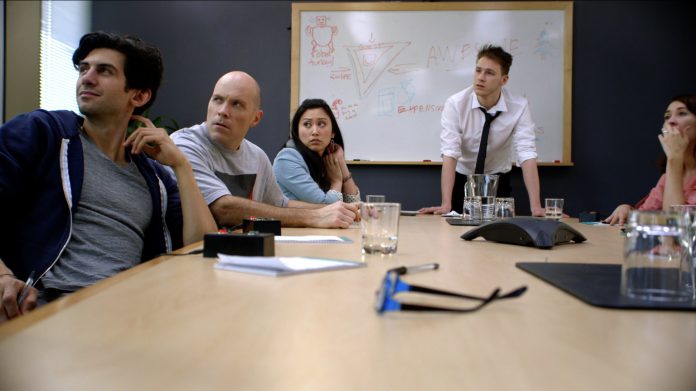
Corporate culture’s a drag. Or at least that’s what movies tell me, as I can’t say I have a lot of experience in the area of working nine to five, fixing up earnings reports, or subjecting my work to focus groups (hint: that’s this movie) while annoying co-workers conspire against me. Focus, a local Vancouver production — and not the Will Smith movie — is the latest comedy that looks to skewer the corporate workplace.

Josh Blacker (also credited with the story and as a producer) plays Troy, an executive at Grant Industries. Grant Industries is apparently the most versatile company in the world as they produce everything from juicers to kitty litter to backpacks, and Troy seems to be in charge of the ideas. His main job appears to developing pitches for focus groups.

However, Troy is in the hot seat after his latest invention — suntan lotion for dogs — gave the dogs skin cancer. He needs his latest product Roost, an automated kitchen device, to test well, or he’ll lose his job.

Up against him is Conlee (Ryan Beil), an unlikable coworker gunning for his job; the boss’ son-in-law (Writer and director Christopher Young), an incompetent presenter for his focus group; and a focus group that really doesn’t seem to like the product. It’s a complicated relationship I suppose.

The movie isn’t that funny. Most of the jokes fall flat. The dialogue tries to convince you these characters are wacky, but they are mostly forgettable. We’re told various times that Troy is a control freak and it’s chalked up to how intense he is, but the performance doesn’t really sell it. Blacker is not a particularly charismatic lead.

With that being said, the plot seems to work. By the end of the movie you are rooting for Troy — I suppose I wasn’t laughing too much, but I’d rather see the character succeed (in some bad movies I become so fed up with a character, I begin to root against them).

Beil gives the best performance of the movie as Conlee. He’s the one character that actually lives up to the hype created by the dialogue. He seems vile and unlikable, and the actor seems to be having some fun with the character. Young also has his moments as Will, playing the lovable idiot character.

William B. Davis — the Cigarette Smoking Man from the X-Files — has a fun cameo at the end as Mr. Grant, the boss of Grant Industries.

One problem with the plot is that the movie focuses more on Conlee plotting against Troy and Will messing up the presentation, when the movie might have been better off focusing on the focus group by itself. Focus groups aren’t the topic of many movies, and this movie had a chance to satirize something we don’t see too often in cinema. Instead it positions itself as a vehicle for a plot to do with a sabotaging idiot.

Overall, I didn’t find it too funny. But I don’t find Big Bang Theory funny either, and a lot of people seem to. I wouldn’t necessarily recommend this movie, but if I was flipping through channels and this film popped up, I’d probably keep it on.

Awolnation hit the ground running

0

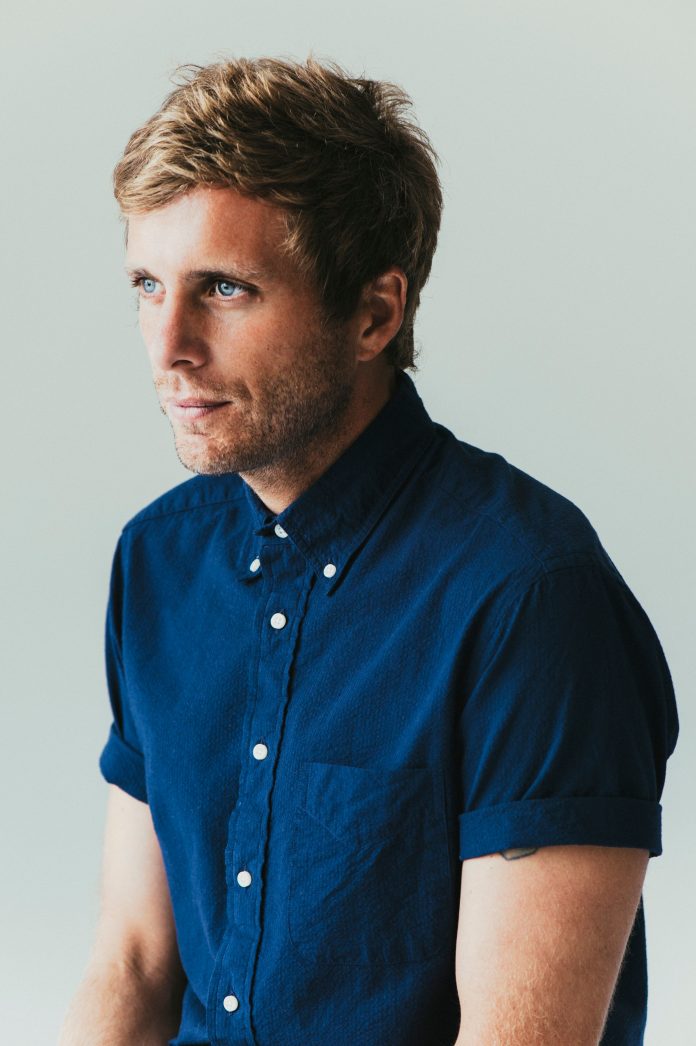
Fresh off the release of their second album Run on March 17, Awolnation is beginning its Run 2015 Tour, hitting locations all across the US and Canada before heading to Europe in August. As Vancouver is one of their first concert dates, The Peak got a chance to talk with Aaron Bruno, the songwriter and frontman of Awolnation, as he was preparing to leave the comforts of home for a summer on the road.

The Peak: What’s this period before the tour like? Is there a bit of anxiety?

Aaron Bruno: Yes. There’s a lot of anxiety, there’s a lot of strange feelings — it’s like purgatory. [. . .] I’m at home and I’m trying to have everything normal, and just enjoy home life and whatever, you know, get everything together, say goodbye to your family, and make sure you eat your last meal you like and all that kind of stuff. But it’s so abnormal and this whole thing is so strange.

I’m actually going through a bunch of last-minute things I need to do today [. . .] I have way less freedom than I’ve had for the last two years. It’s a strange thing. I’m kind of in between feelings, you know; I’ve got to get up early and leave, fly to Florida, and from there go to Seattle, and start the whole tour. It’s weird; it’s definitely strange [laughs]. But it’s exciting at the same time — I kind of just want to get on with it and start playing.

P: Going to a different city almost every day, do you get much of a feel for a city?

AB: Yes and no. It really depends on where I’m in and how much time I have. [. . .] If you have a day off in a city, you get more time to kind of search around, check out what is best about the city, or what the locals think is the best place to eat or check out, and the best nature to explore and whatnot. I bring a skateboard along so I’m constantly cruising around to see what the place has to offer. I definitely get a feel for the city, [but] it’s hard to get a feel for anything else because we’re usually parked in the middle of the most crowded area.

P: What’s your experience in Vancouver?

AB: We played a couple times in Vancouver, and [. . .] it was bonkers, it was just a really good crowd. I think the whole West Coast from where I live all the way up keeps getting better and better as you go north. You keep going up, it’s just more spectacular and beautiful. I feel at home on the West Coast, on the pacific coast for that matter, so that’s definitely something we always look forward to.

P: How would you describe an Awolnation concert?

AB: It’s a very bombastic, anthemic, emotional experience, you know, most people go away sweating. A lot. And hopefully want to come back for more.We definitely have a very interactive show, and you get a little bit of a sense where I came from in the punk rock/hardcore scene, but there’s also a sense of togetherness with sorts of different kinds of folks, all different shapes and sizes, male, female — we don’t appeal to one kind of person at all, it’s a little bit of everything. You may go to the show and see your next door neighbour’s mom for all you know, and at the same time see your ex-girlfriend from eighth grade.

P: How important do you see the live show being in comparison to recording in the studio?

AB: They’re equally important, but it really does start with the studio because you can’t play live unless you have songs to play.[. . .] I think in today’s day and age there’s a lot of technology and a lot of tracks going on, [. . .]we do our best to make sure that it is as real as possible[. . .] So it’s going to be a little bit more raw and a little dirtier of a sound, and a little bit heavier and louder of course.

[The live show is] extremely important to us, it really is. If  [I] go to a show [. . . and ] I’m let down, that will definitely damage my interpretation of the record in a lot of ways. I won’t be as inclined to listen to it more, because I won’t really believe in the artist as I wanted to. Where if I see a band that blows my mind, that’s even better live, then I’m more inclined to follow them forever and become a lifetime fan. You know, it’s really important, it’s kind of a celebration of all the hard work in the studio and all the rehearsals. That’s what the live show is to us, to celebrate and rejoice in live music together.

P: Can you give us an idea what the songwriting process is like? Do you just get an idea in your head and try and play on the guitar?

AB: No it’s not just that. It’s a little bit of everything. An idea can come in all different forms — just out of thin air, in my head — you know, and I apply it, and I already have the beat worked out in my mind, maybe the bassline, and the melody and the lyrics, if I’m in luck all those things will come together at the same time.

Maybe in other instances it will start with just a drumbeat or it could be a chord progression on guitar or piano. The possibilities are really endless. I mean, it could be just [. . .] sitting waiting to turn left at a stoplight, my turning signal is perfectly in sync with some sort of groove I have in my mind, so then I record on my voice memo on my phone. What ends up becoming the full song, it really just started with the pulse of my car’s turn signal.

You never know when it’s going to come, but I’m always open for ideas to hit me.

For tour dates and more information, visit awolnationmusic.com.

Summer Happenings at Woodward’s

0
Photo courtesy of CBC.

The summer heat is here in full blast, and so are SFU Woodward’s summer events. Among other things, this season promises innovation, a gospel choir, and free breakfast.

Photo courtesy of Creative Mornings.

On June 5, Woodward’s will be hosting a Creative Mornings session with Dr. Paul Tinari. Part of a movement that started in New York, the event includes a free breakfast and public lecture. Tinari is currently working on setting up a 3D printing department at SFU, and he has been has been called a “Renaissance Man” and professional creative thinker. Ticket lottery registration starts on May 22. Sign up for an innovative start to your day.

Photo courtesy of cityspaces.ca.

On Saturday June 6, Vancouver will be hosting 100 in 1 Day, an international festival for civic engagement. The event encourages participants to come together to create 100 interventions to improve life in the city. Anyone interested can submit their interventions online by June 5 or participate in workshops on the day of the event.

Photo courtesy of Secret Study.

On July 29, local service people will exchange their pots and pans for boxing gloves in this year’s Restaurant Rumble. The contenders — from restaurant owners to food truck chefs — will spend the summer doing both intense boxing training and fundraising. All proceeds go towards building a new boxing ring and community centre for East Vancouver youth. Finalists will be announced July 28, with the first fight on July 29. Support a good cause and your favorite restaurant, and find out who will be this year’s Restaurant Rumble Champion.

Photo courtesy of CBC.

Woodwards’ Community Singers will continue to meet Thursdays from 6 to 7:30 pm until July 23 “for a dose of collective joy.” Led by Vanessa Richards, the free drop-in community choir sings everything from gospel to folk to popular music, no audition necessary.

Watch for more upcoming Woodwards events on their website, sfu.ca/sfuwoodwards/events.

The latest Mad Max is a bizarre spectacle

0
Photo courtesy of Warner Bros. Pictures.

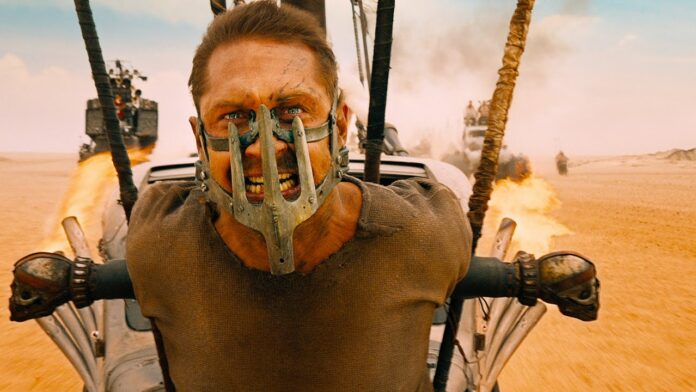
For the last decade, prolific film director George Miller has been synonymous with one blockbuster franchise. Yes, I’m talking about Happy Feet! It’s hard to believe that the same mastermind behind the original Mad Max trilogy brought us a story about an adorable tap-dancing CGI penguin. But rejoice, Max fans, for those whimsical penguins are but a distant memory in the rear-view mirror. After 30 long years, George Miller has returned to the franchise that put him on the map. The Road Warrior, Max Rockatansky, is back!

Mad Max: Fury Road is a reboot to the original trilogy of films. The film’s story takes place a year after the events of the first Mad Max, with the tragic loss of Max’s wife and daughter. While originally conceived to be a film bridging the gap between Mad Max and Road Warrior, Millar opted to start Max’s story from scratch without re-doing the origin a second time. By doing this, the original films become a spiritual canon of sorts, which can still co-exist with this new addition to the franchise.

George Miller takes the best elements of his previous films and attempts to go bigger and better this time around. Fortunately for audiences, he succeeds where many tend to fail. Miller strove to accomplish two goals in his latest installment: to make his post-apocalyptic story oversaturated with bright colours, and to design a distinct and beautiful world amidst a hellish landscape.

This story’s exposition is told through its richly designed and often terrifying settings. This is  a world that has descended into chaos; a world where madness is not just a state of mind, but a norm. This is due to the fact that 80 per cent of the effects, make-up, and stunts for this film were done practically without CGI. Not only is it refreshing to see, but it adds another level of awe to the frightening spectacle.

The film goes from zero to 100 from the moment Max’s foot hits the pedal. It should be noted, a 3,500 panel storyboard was conceived for this film before even one word hit the page for a screenplay. Plot, needless to say, takes second fiddle to this film’s engrossing action sequences. While this might be a turn off for some viewers, the plot and characters are still very serviceable to the film.

Imperator Furiosa (Charlize Theron) betrays her tyrannical despot Immortan Joe (Hugh Keays-Byrne) by stealing his prized sex slaves, or “breeders,” with the goal of reaching an elusive paradise known as “the green place.” Enraged by this act of betrayal, Joe unleashes his horde of War Boys to speed off across the tarnished Australian outback to intercept her. Recently captured, Max (Tom Hardy) is brought along to the rip-roaring fray as a “blood bag” for the sickly marauder, Nux (Nicholas Hoult), a man striving to make a name for himself amongst his fellow War Boys. From there a bloody and explosive spectacle of nonstop violence ensues.

Tom Hardy’s portrayal of Max strikes the right balance of paying homage to Mel Gibson’s rendition of the character while still making room for his own. Hardy, who has shown an amazing aptitude for bringing to life damaged characters, continues to showcase his talents. He succeeds in portraying a man pushed to the brink of madness, held only together by his compulsion to aid those around him.

The supporting cast of the film, not overburdened with an abundance of dialogue, serve the story well too. Each character brings a dimension to the maddened landscape and continues to build the mythology of this crazed world. While the main villain, Immortan Joe, does lack dimension, this is made up for by his horrific visage and unsettling voice.

Mad Max: Fury Road is the most viscerally terrifying piece of eye candy you might see this summer. While the story may leave something to be desired, this is a film that knows exactly what it is and doesn’t pretend to be anything else. It’s a mad spectacle of blood, guts, explosions, and one of the craziest chase scenes in the history of cinema.

Timbuktu’s Islamic fundamentalism is repetitive and disjointed

0
Photo courtesy of Cohen Media Group.

There’s a moment in Timbuktu where a woman handling fish in a market with her bare hands is violently threatened by a Jihadist soldier. He demands that she wear thick leather gloves despite the blatant impracticality; it is indecent for a woman’s hands to be visible.

The point of this scene, and Timbuktu at large, is that the strict rules of Sharia law leave little room for common sense or forgiveness. In one of the film’s more interesting instances, the leader of this self-appointed militia secretly smokes a cigarette despite punishing others for doing the same.

On an allegorical level, the soldiers represent the evil of implementing such stiff ideology, yet they themselves demonstrate an essential flaw to their methods — we live in a fluid and fallen world where ethics created by a computer manual can lead to evil no matter what the choice. But the problem here has to do with the manual they’re using.

Almost every scene is a reiteration of this same point: an unmarried couple are stoned to death, a shepherd kills a fisherman in a fist fight which unintentionally escalates, and a woman is given 40 lashes for singing and playing music. In this scary world there is no room for personal expression or mistakes, one must conform or be punished.

The film is structured as a slice of life that depicts this small town’s transition. Often characters will be in one scene and not appear in the rest of the film. Timbuktu is more about the small insignificant town (hence the title) and the allegorical implications than any of the individuals.

There are a handful of characters that get some screen time, but even they are not developed to where we can imagine their existence beyond the frame of the movie. Thus, each sequence plays out almost like a self-contained vignette where we already know the outcome because we’ve seen it in a previous instance. Even the main storyline — the quarrel between the cattle owner and the fisherman — is just a longer and more drawn out redundancy.

It also doesn’t help that better films like A Separation and The Patience Stone — both about how Islamic fundamentalism effects and affects individuals — have already tackled this subject matter with deeper pathos and profounder stories.

For me, this film was like not getting invited to an event all your friends won’t shut up about. This Oscar nominee for Best Foreign Language Film has gotten universal acclaim from critics and is currently sitting at 99 per cent on Rotten Tomatoes. Many are calling it a masterpiece. I think it is too simplistically superficial to merit such profound hyperbole.

Although Abderrahmane Sissako’s film has short instances of aesthetic poetry (one standout is where a group of kids play soccer without a ball because the game is forbidden) and a few powerful scenes, it is wildly uneven as a whole and far less than the sum of its parts.

Undoubtedly, the message is important and affecting, but the problem with Timbuktu’s articulation is the needless repetition and disjointed storytelling which only leads to the same thing we’ve seen before: more tragedy.

Tomorrowland is a lighthearted apocalyptic film

0
Photo courtesy of Walt Disney Studios.

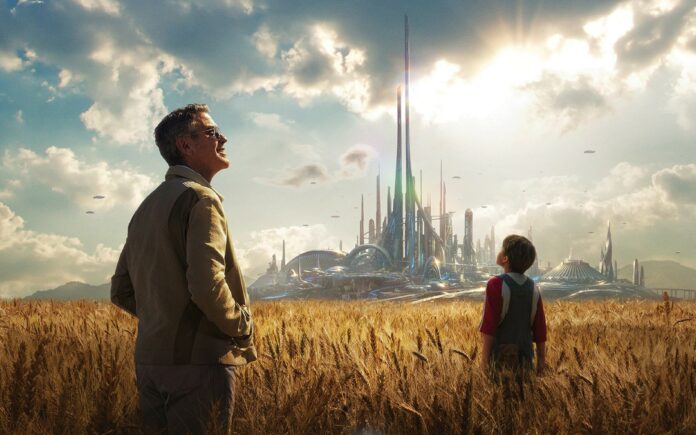
One thing I’ve never understood about people who love action movies is the thrill they get out of seeing skyscrapers, cities, and the world explode à la Michael Bay. Popular blockbusters like 2012, Godzilla, Man of Steel, and Avengers: Age of Ultron have played on our fears of environmental disaster, terrorism, and artificial intelligence. Even the fantastic post-apocalyptic Mad Max: Fury Road plainly tells us to just settle for the broken, insidious world we have.

We are more than comfortable with our inevitable demise: we have fully embraced it, to the point at which we get a thrill of seeing the world destroyed. Tomorrowland, a lighthearted and subversive but rather messy ordeal, proposes that the reason we can’t avert the apocalypse is because we are constantly feeding our cynicism through popular media. And heck, someone even made Teenage Mutant Ninja Turtles depressing — what is going to happen next, the end of the world? Well, yes.

In Tomorrowland, the catastrophe that will finally end humanity is not just one single thing like global warming in The Day After Tomorrow, nuclear weapons in Captain America: Winter Soldier, or a widespread infection in The Walking Dead. News reports reveal civil unrest in the Middle East, warming of glaciers in the arctic, and massive floods all over the world.

Tomorrowland borrows from all the previously mentioned films and mixes all the catastrophes into one mega-cynical apocalypse epic. We’re not just going to die off from environmental problems but also wars, terrorism, floods, and pretty much everything else imaginable. Somehow, this might still be the brightest-eyed movie of the year.

In the film, Casey, a teenager unaware of the close proximity of the impending end of the world, is fed up with hearing how screwed humanity is. School, which was once about discovery, teems with fear-mongering. Her science teacher exuberantly preaches about the threat of climate change and in social studies she learns about the MAD doctrine.

As if everything around her didn’t seem to be collapsing already, her father, an engineer for NASA — a symbol of human progress — is going to be out of a job because the launch pad he works at is being shut down.

After trespassing and sabotaging NASA’s attempts to close the plant, Casey is put in jail, and subsequently released on bail. When collecting her belongings from the prison guard, a pin from a 1960s experiment at Disneyland is put with her belongings. Turns out it magically transports certain people to a futuristic utopia with vibrant greenery, innovative transit systems, and countless other ground-breaking technology. Is this place another dimension, a product of Casey’s imagination, or just many years in the future?

For all its flaws as a coherent and comprehensible story, Brad Bird’s odd family movie has an inspiring message and an unflinching optimism that comes through crystal clear — if we become comfortable with the end of the world, we’re not going to do anything to fix it. What makes Tomorrowland so interesting is how it utilizes the tropes of cynical action films and puts them into a work that is not dark and gritty, but adventurous and spectacular. 

Although this is an unabashedly uneven film that does not pay off the initial intrigue unravelling the mystery (everything makes as much sense at the end as it did at the beginning), Bird’s film is infused with wonder, awe, and optimism in almost every nonsensical moment. Tomorrowland would much rather inspire with grand embellishments than supply distinct answers. As one character puts it, “can’t you just go with it?”

Despite this plot convolution, though, Tomorrowland’s theme is profoundly simple and accessible for children. This is a film about taking action and thinking outside the box that is itself inventive and subversive. Unlike any recent action movie I’ve seen, I left this one wanting to create, not destroy.