Home Blog Page 1027

CJSF secures nearly $50,000 in grant funding

0
CJSF plans to create five part-time positions and fund the production of 16 radio documentaries. - Phoebe Lim
CJSF plans to create five part-time positions and fund the production of 16 radio documentaries. – Phoebe Lim

SFU’s campus and community radio station has recently been awarded a grant of $49,820 by the Canadian Radio Fund of Canada (CRFC) for an upcoming project titled “Making Time for Radio.”

This is the largest grant to be awarded in the station’s history. CJSF station manager Magnus Thyvold explained that accessible grant funding opportunities for community and campus radio stations were unheard of until around seven years ago, when the CRFC was established.

CRFC will provide CJSF with 90 per cent of the funds upfront, and the remaining 10 per cent following the completion of a final report at the end of the one-year grant period.

Approximately $35,000 will go towards funding five part-time spoken word producer positions — a significant addition for an organization run by a small staff and over 150 volunteers. For the radio-illiterate, spoken word refers to any talk-oriented programing.

The remainder of the grant will go towards the production of over eight hours of radio documentaries, skill training sessions for the new hires, volunteers, and prospective contributors, and a contingency travel budget.

Thyvold explained, “The reason [the project] is targeted at spoken word or talk programing is because that kind of programing is a lot more challenging to do than, say, a music program where you’re playing music and talking about the artists. [. . .] Doing public affairs-type programming, interview-based programing, or even documentary programing is much more involved.”

The new positions will also help with the timeliness of the news programs produced by CJSF. “There’s a lot of things you can do on the radio — particularly in terms of talk-oriented programing — that is really difficult to achieve just with volunteers,” said Thyvold. “It would be nice to make things more immediate.”

Each part time position will average to seven hours of work per week, at a wage designed to accommodate students’ busy schedules. “The idea of the project is to create a situation where people can engage in some of those more ambitious types of programming in a way that’s practical and feasible within [their] other life commitments,” said Thyvold.

“Instead of having a job at a restaurant or a shop or something like that as your part-time position that you’re doing in addition to school, there would be this position at the radio station that could be your part-time job. You could commit that time to making radio and not [have to] squeeze it in amongst everything else you’ve got going on.”

Eight thousand dollars will be put towards funding 16 radio documentaries — time-consuming projects that the station isn’t able to produce often, due to a lack of resources. There will be four separate funding calls for documentary proposals of varying lengths.

The first two rounds, beginning in July, will select eight 15-minute documentaries, each of which will receive funding of $250. The third round will select four 30-minute documentaries to receive $500 each, and next spring four 60-minute segments will receive $1,000 each for production.

Thyvold noted that they may be looking into some additional fundraising to increase the funding for the individual documentaries.

Toward the end of the project, CJSF hopes to host a radio festival in partnership with some of the local campus and community radio stations, to showcase the 16 documentaries they produce over the next year.
Marvel presents a new “Age” of girls’ toys

0
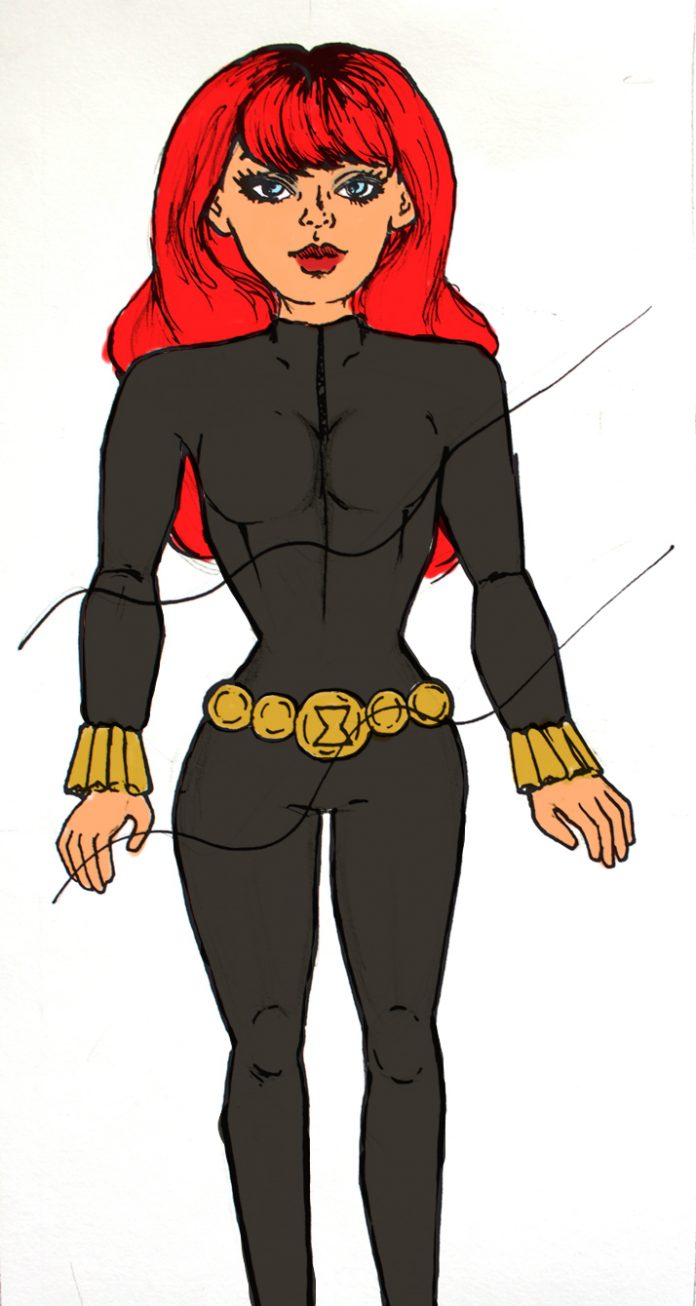
Illustration by Janis McMath

With diehard fans and casual moviegoers still marveling over The Avengers: Age of Ultron, critics are targeting the film in another capacity: the film’s merchandise, specifically children’s toys.

As originally reported by the blog io9, an action figure based on a pivotal scene involving Black Widow (played by Scarlett Johansson) replaced the action heroine with a male superhero Captain America (Chris Evans). The scene in question originally had Black Widow dropping from the Avengers’ Quinjet on a motorcycle, speeding off to aid, get this, Captain America. Yep; with the replacement, Captain America saves Captain America.

The switch has left many fans calling for a change in how female superheroes are marketed — a sore spot for Marvel, who have a history of filling their movies with predominantly male casts. But Marvel has good news for the critics: earlier this week, the studio announced plans to release more superhero merchandise aimed towards its female fans.

“After seeing our next wave of Avengers toys,” a spokesperson for Marvel said at a New York press conference, “you’ll see we value our female superheroes just as much as their male counterparts.”

The press conference also provided a sneak peek of some new toys expected to hit shelves next month, including a Black Widow Barbie doll, and several male teammates given the “Ken” treatment: to be released are Ken doll versions of Hawkeye, Captain America, Hulk, and Nick Fury. However, only the Black Widow doll will include a miniature comb for brushing her hair and will include a pre-recorded giggle response.

In the area of action figures, Marvel is also releasing a playset of Avengers Tower, featuring Black Widow being held captive by Hydra soldiers, and The Hulk present to save her. As well, Marvel announced that a series of colouring and sticker books would expand upon the romance between the crimson-haired assassin and the jaded green giant first introduced in Age of Ultron.

But Black Widow isn’t the only female Avenger getting the full Marvel treatment! A new fashion line (including clothings, make-up, and jewelry) for young adults will launch later this year, with items inspired by new Avenger Scarlet Witch.

When asked if fans could expect a separate clothing line inspired by SHIELD agent Maria Hill (played in the films by Canadian actress Cobie Smulders), the Marvel spokesperson was surprisingly coy, but said the possibility was “certainly on the table.

“We love taking money from our female fanbase just as much as we love taking money from our male fanbase,” Marvel said near the conclusion of the press conference. “We hope this new wave of Avengers merchandise demonstrates how committed we are to gender equality, both on- and off-screen.”

Competitor DC Entertainment, seemingly always two steps behind their rival, are also jumping at the chance to release their own line of female-centric merchandise, announcing a slate of female superhero dolls to coincide with next year’s Batman v Superman: Dawn of Justice. In particular, DC is planning to add interconnectivity between the male and female superhero dolls, where whenever one of each is close together, the male doll begins to explain to the female doll exactly how they’re supposed to be saving the world.

Ridiculous! A high school told a girl that her poncho made out of word puzzles and Sudokus was “too distracting” for male students

0
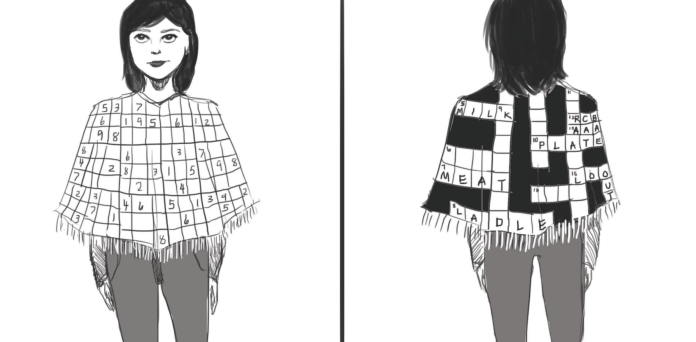
Illustration by Rachelle Tjahyana

A local teenager is fighting back after her school suspended her for wearing clothes made entirely out of crosswords, Sudokus, and other puzzles meant to stimulate a person’s cognitive thinking.

Beth Francis, a grade 11 student at Mount Pleasant Secondary School, was sent home early last Monday after her homeroom teacher deemed that Francis’ poncho was distracting the male students in her class. Francis says that the school’s administration staff, including the principal, became involved with the situation and gave Francis a week-long suspension when she tried to defend the article of clothing.

“I feel like I’m being unfairly targeted by the school,” Francis said in an interview with The Peak. “I mean, guys in my class wear shirts with Sudokus on them all of the time. I don’t see why my case is any different.”

Immediately following the notice of suspension, Francis penned an essay about her experience and posted it online to the social media website Facebook, calling the school’s punishment an overreaction and ultimately sexist. Francis is asking women who have faced similar discrimination to stand up to what she calls unreasonable expectations being forced onto members of her sex.

“Just because a female student wears an article of clothing with crosswords and little brain teasers on it isn’t an invitation for her male counterparts to pay attention to her,” Francis’ essay reads. “The school is blaming me for something I have no control over.”

With prom season approaching for high schools, cases similar to Francis’ have been popping up all over online and in the media. In Calgary, Alberta, a female student was denied entrance to her graduation ceremony because of a brain teaser she had sewn onto her graduation cap. A senior in Brandon, Manitoba was also barred from her prom dance because the strapless dress she was wearing had several word searches embroidered onto it. Both girls echo Francis’ struggle, saying they’ve worn similar clothing before and received nothing but compliments from fellow classmates.

“There’s absolutely no excuse for this kind of treatment,” Francis’ mother told The Peak, saying she has already contacted the school board and is demanding an apology, as well as an immediate lift on her daughter’s suspension. “Teenage boys are going to be distracted regardless of what Beth wears, whether it’s by a crossword puzzle or a one of those problems where you have all of the letters in a word but they’re jumbled up together. Quit shaming the students for something they’re not doing on purpose.”

However, the school has thus far stood by the principal’s decision to suspend Francis, citing the need to provide a productive and stimulating learning environment for students, free of unnecessary distractions.

“A teacher’s responsibility is to educate,” read an official statement from Mount Pleasant Secondary. “While we respect out students’ wishes to express themselves as individuals, both physically and mentally, the power is ultimately in the teacher’s hands to overrule that privilege if they think the learning environment is at risk, as was the case with Ms. Francis’ poncho.”

This week in comics

0


BW-Agoraphobia summer #3 1 copyThe Adventures of Agoraphobia Man (Jacey Gibb)

Elizabeth PauSingle-celled organisms just wanna have fun (Elizabeth Pau & Jacey Gibb)

Headphones (Serena Chan!)All the bells and whistles (Serena Chan)

Peers #3Peers (Leslie Lu)

Seagull Square #3Seagull Square (Jill Mandrake)

Micro housing is a novelty, not a solution

0
Photo courtesy of Mark Turnauckas (Flickr)

Throughout the last few days I’ve clicked through countless photos of stylish apartments barely the size of my bedroom. Put simply, I find them fascinating.

My interest isn’t solely because I think 200 square foot micro apartments look amazing, being designed in an incredibly utilitarian, sophisticated manner given the space. It’s also because I like to picture myself going about my day in them. Here is the inside of a living space that can be captured in its entirety with merely two or three photos. That’s how small it is.

Micro living is so chic. So different. So cool.

Picture yourself having to hang your kitchen table on the wall after you use it, or to fold your chairs into a floor-cupboard behind you. Micro dwellings are designed so that inhabitants can make as much use of the limited space as possible. Drawers pull out from the sides of stairs; a bed is nestled on the second floor just atop the stairwell; a bathroom the size of that on an airplane is tucked away in the corner.

These tiny dwellings are so unique that the novelty has us wondering how our lives would be different while residing in them. Would we be able to adapt to this living space? How long would this last?

Micro lofts are only a minimalist’s and an architect’s dream.

But before we indulge too much in the fantasies of urban affordable living, let’s take a moment to consider the realities of a cramped living space. Micro lofts are a minimalist’s and an architect’s dream. In other words, the health risks and housing obstacles vastly outweigh the benefits.

Sure, a miniscule apartment may suit a single, 20-something year old, who spends most time out of the house, but to a sloppy workaholic, or more importantly a family, these snapshot spaces would likely transform one’s life into an inconvenient, claustrophobic nightmare.

The act of reconfiguring one’s living space in order to meet the needs of daily tasks would soon become tedious and constricting. Lack of storage would bar me from purchasing goods and household items. The noise from other micro lofts would be incredible, thus preventing me from safeguarding my full privacy. And with no real freedom to move, all too soon I imagine the walls in my tiny space would feel as though they’re tightening around me.

However, more concrete research by InformeDesign now claims that claustrophobia caused by cramped living spaces can contribute to increased domestic violence and alcohol abuse — not a fantastic finding for those young families searching for affordable homes in the heart of of the city. Further findings from Social Science Research claim that lack of freedom contributes to a withdrawn child, one that has difficulty concentrating.

Small-scale homes would additionally prevent gatherings of more than a few individuals — a loss in identity claim for the home owner. I enjoy inviting people into my living space and showing them what is important or unique to me as an individual.

Real estate agents and housing developers in Vancouver may proclaim these homes as the solution to our city’s increasing housing unaffordability, though this solution merely pertains to select individuals with active lifestyles. Yes, the mayor of New York can hail micro housing as a “milestone for new housing models,” though I’d be interested to see how he fares living in an urban closet.

I think it’s time we looked past the novelty and realized these avant garde “solutions” as what they really are — a solution to increasing numbers in a living space, but not to actually living.

First Nations cultivated clam gardens to create food security

0
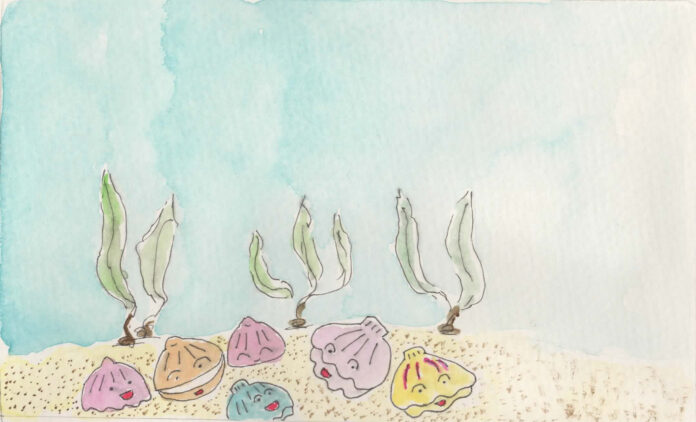
Clams are much more productive in clam gardens. - Momo Lin

A team of SFU researchers, working alongside coastal First Nations, has revealed that ancient clam gardens along the northwest coast were cultivated by coastal indigenous people — not naturally occurring, as previously thought.

By comparing clam growth rates in the stone terrace gardens and in other non-walled beaches, they determined that clams grow better and more densely within the altered environment than without.

Their findings show that the First Nations people along the coast — from Washington to Alaska — were not simply hunter-gatherers. They created food security by increasing clam productivity through creating ideal clam habitats.

“We think that many Indigenous peoples worldwide had some kind of sophisticated marine management, but the Pacific Northwest is likely one of the few places in the world where this can be documented,” said SFU archaeologist Dana Lepofsky in a media release.

Lepofsky has been working to accurately date these gardens by assessing the last time the deepest part of the rock was exposed to sunlight during the clam gardens’ construction. While the team can’t provide specific dating, the clam gardens are estimated to be 1,000 years old in the least.

It was local geomorphologist John Harper who first noticed that coastline didn’t look as it should, having undergone only natural processes. While flying over the coast approximately a decade ago, he saw that there were walled structures that didn’t fit in with the natural coastline — human-made clam gardens.

The team, working in conjunction with the Clam Garden Network and knowledge holders from the Tla’amin First Nation and Laich-kwil-tach Treaty Society, focused their research on two bays on Quadra Island.

In an experiment, the team placed baby clams in clam gardens and in non-walled beaches and then compared their growth rates, biomass, and densities over a season of growth.

Lead author of the three-year study and a graduate from SFU’s School of Resource and Environmental Management, marine ecologist Amy Groesbeck, joined the team and started her master’s thesis on clam gardens in 2010.

“We found that there were much higher densities of clams, especially culturally and economically important clams, butter clams and littleneck clams in clam gardens,” said Groesbeck. “They’re extremely innovative structures, very innovative engineered environments.”

She added that they are looking into many potential mechanisms that contribute to clam productivity, including tidal height, increased beach slope, and sediment composition.

When they dug up the sand from clam garden beaches, they found a significant amount of crushed shell. Coastal First Nations members revealed that these ground up shells were indeed added to the beaches to increase clam productivity.

The team is also looking into the possibility that the shell hash in the sediment, through releasing calcium carbonate into the water, “acts as a localized buffer against ocean acidification,” said Groesbeck.

Not only will their research have implications for ocean acidification research, but it could help in applying ancient techniques to increase food production and security.

Let schoolgirls bare their shoulders

0

Over the last week, the high school dress code issue has catapulted back into news headlines. While this is not a new issue, it is recurring, and has yet to be acted upon within our school systems.

Lauren Wiggins, a girl in New Brunswick, was recently sent to detention for attending her high school class in a maxi dress with halter straps. Her teachers were upset over the fact that she was disregarding their school’s dress code that — like many — has multiple restrictions on what girls can wear to their school. Wiggins claims she was told that these guidelines are in place to make sure that boys are not distracted by the girl’s appearance, and argued they discriminate against girls and not their male peers.

Rather than to simply take the detention and dress ‘more appropriately’ in the future, Wiggins decided to bring to the principal’s attention how today’s backwards dress codes only penalize girls, and how they perpetuate the rape culture mindset. She was suspended for a day for voicing her opinions.

Girls continue to be placed as the instigators of unwarranted glances, distraction, and in some cases, rape.

If we tell our young girls that they need to watch what they wear so as to keep from distract the young boys around them, what do we teach them? We instill within their minds from a young age that it is the girl’s fault when she is a victim of voyeurism, because she ‘asks for it’ by wearing something. No blame is placed on young boys for their lack of self-control, yet we still feel that we do not need to teach them anything different.

Wiggins pointed out to her principal that boys disregard the few dress code rules in place for their attire, and go without punishment. Yet girls are the ones who are reprimanded for their choice in clothing, and given further punishment when they try to speak out.

In perpetuating this cycle, girls continue to be placed as the instigators of unwarranted glances, distraction, and in some cases, rape. We need to teach our young students that they are responsible for their own actions, not the actions of those around them. They should not be blamed for others’ poor behaviour, especially at such an influential young age.

If we instill such beliefs in their minds at this age, it will only serve to follow them through the rest of their lives — a prospect that is simply discriminatory and unacceptable.

We must break our culture of sex shame

0
Photo Credit: Phoebe Lim

I was never given “the talk” while growing up. Not once did my parents even off-handedly bring the topic up, let alone sit me down and explain what sex and sexuality was. Looking back as an adult, the lack of sex education and openness about the subject is one of the only elements of my childhood that I wish had been drastically different.

While in school, I was given a fair share of sex education. During elementary school, we were shown age-suitable puppets that taught us about private parts and inappropriate touching. In contrast, while in high school I was assigned a shame-inducing project where we were given bonus marks for finding and showing the most grotesque pictures of STIs to the class.

So, I had a mix of both the good and bad in school.

Meanwhile, at home the conversation was nonexistent. No one ever explained to me what menstruation was, or how to deal with it. No one ever introduced any form of relationship other than the monogamous, heterosexual standard. No one ever told me that becoming sexual was okay. This all made me feel very alone and scared.

No one ever told me that becoming sexual was okay, and this all made me feel alone and scared.

Growing up, I was forced to navigate through these confusing questions and, propelled by my curiosity, taught myself some of the answers. It took a while to fill in the holes that were left by my patchy schooling, which even left me a little ashamed and embarrassed.

Sex education should be taught more thoroughly and efficiently in schools and by parents; it needs to be a constant conversation that evolves as a child matures. In order to break the culture of shame that surrounds sex, we need to be able to have open conversations where educators are well equipped and open to answering any and all types of questions.

We can’t keep using fear tactics, denial, shame, and even lies to continue to suppress school-aged sexualities. To discount people’s experiences and feelings will only lead to the spread of false information, and more unwarranted shame associated with sex.

Let’s break this culture of sex-shame by being honest, open, and above all, curious.

Woohoo, Boohoo

0
Photo courtesy of Chinguri (Flickr)

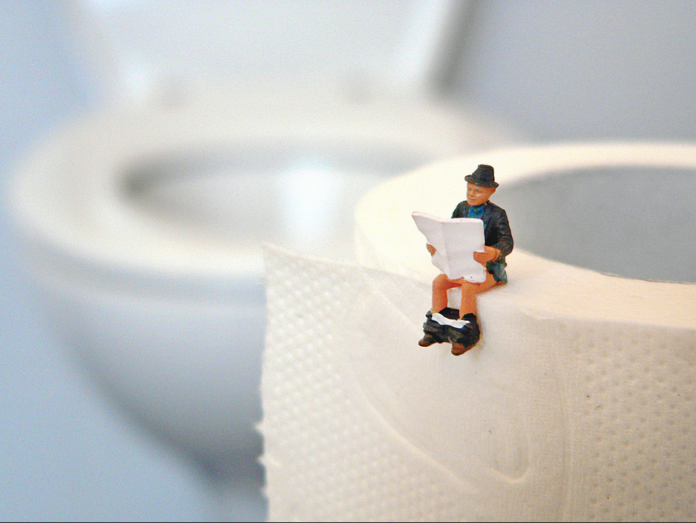
Woohoo: One-ply

I’m pulling a utilitarian stance and proclaiming that one-ply toilet paper is definitely the favourable tool with which to garnish our restrooms.

Put simply, when I’m gracing the loo, I’d like to use something that gets the quick and dirty done, you know?

One-ply makes sense in a pragmatic way: it’s literally (and simply) paper that one uses for bodily purposes. It costs less to produce and to buy, it’s kinder to the environment in that it doesn’t use up as many trees to produce, and it’s less likely to clog the toilet! What’s not to love?

Sure, it may a bit less comfortable than it’s layered counterpart, but let’s face it, Charmin costs a mint, and my pockets are borderline starving.

Unfortunately, it can be difficult to find household one-ply toilet paper at the supermarket. Why is it that I have to visit a restaurant or a shopping centre to access the best invention since the wheel? Oh this ironic world we live in.

Boohoo: Two-ply

That being said, my bathroom houses toilet paper that’s firm and thick. So thick, in fact, that when I tear off a sheet I feel like I’m wasting three quarters of it. And that’s probably because I am.

I don’t need the extra padding. Will I be able to actually feel those lovely, intricate floral patterns? Is that why they print them there? Cause I sure as heck ain’t stopping to gaze at the artwork before getting down to business.

Kudos to the toilet paper artists who’ve created masterpieces that will never again be witnessed after the flush. I feel like our creative talents could be put to something a little more noticeable.

Two-ply, three-ply, even four-ply (yes, it’s real!) waste not only my wallet, but also my neurons as I rack my brain for valid reasons why this product even exists.


Why can’t we celebrate ‘mombods?’

0
Photo Credit: Rachelle Tjahyana

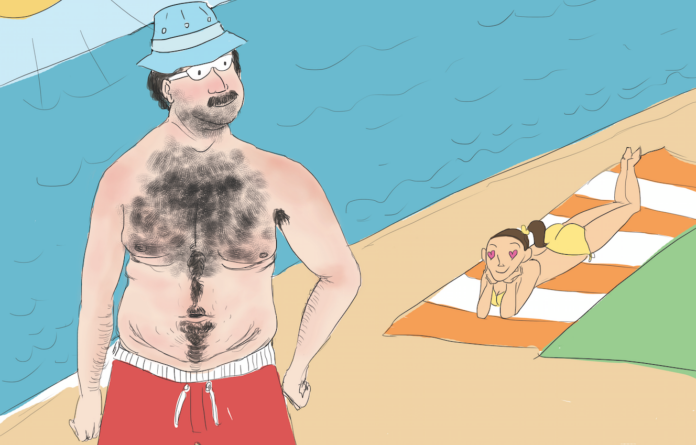
Social media has a bad habit of taking old misogynistic concepts, giving them new names, and perpetuating outdated ideas about men and women. The latest trend sparking international debate is “#Dadbod” — a term coined to describe middle-aged men who were formerly of an athletic build, but who now have a more round, less toned body type.

Though this trend may at first seem superficial, it actually says a lot more about our society’s gender expectations than we give it credit for.

I want to make my stance on body acceptance clear: people come in all sizes, and there is certainly no ‘cookie cutter’ shape that we should all stride to achieve. But this trend represents more than just a body acceptance movement for men — it’s a reminder that the society we live in holds different standards for men and women.

The real issue stems from the nature of this trend. Put simply, dadbod is male privilege disguised as empowerment. If we consider the reverse, the idea of ‘mombod,’ I don’t think any of us can say with certainty that it would generate the same response. Middle-aged women are slammed with advertisements for diet regiments and gym memberships; they are pressured into losing baby weight and maintaining their youthful shape.

Unfortunately, we live in a society where only men can celebrate their bodies whichever way they come.

Kristin Schaal, a comedian on The Daily Show, called out this hypocrisy last week by naming off famous “Momshells” — such as Beyoncé, Scarlett Johansson, and Jennifer Lopez — who were celebrated for how quickly they were able to lose the baby weight, instead of embracing their new shape. Schaal points out that women can never relax about the shape of their body, that for women it is never okay to accept anything less than a perfect figure.

Celebrating dadbod highlights the hypocrisy women face during conversations about body shape. Unfortunately, we live in a society where men can celebrate their bodies whichever way they come, while women are not so privileged. As Brian Moylan, pop culture columnist for Time magazine, puts it, “the problem with the Dad Bod isn’t what it says about men, but what it says about women and how we treat them.”

I will acknowledge that men can also feel insecure about their bodies, but I do not approve of the dadbod craze all the same. If we truly want to eradicate body image problems in our society, it has to be done with more respect by allowing women a similar privilege, and it certainly has to be more inclusive. Celebrating dadbod does not qualify as an empowerment movement for men, but rather a parade of male privilege.

Body appreciation is not a subject to shy away from and merits conversation, but before you jump on the ‘dadbod’ bandwagon, stop and think about what terms like this say about gender equality and body image.