Home Blog Page 1006

Keeping up with the Clan

0
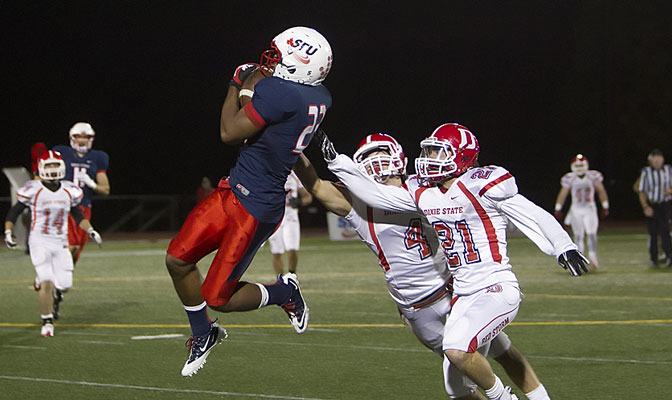
Image credit: GNAC Sports

The spring semester may have ended, but there was no such break in the world of SFU sports. Here are the highlights from between exams and the first day of classes:

Men’s basketball names new head coach

SFU Athletics announced on April 15 that Clan alumnus Virgil Hill will be the men’s basketball team’s seventh head coach.

Hill, who played forward for the Clan from the 1989–90 to 1992–93 seasons — nicknamed “Air Virgil” in a 1989 issue of The Peak — and graduated with a Bachelor of Science in kinesiology, replaces former head coach James Blake who resigned after going 38–90 over five seasons.

Hill is the first SFU alumnus to take the job in 20 years, since former Toronto Raptors head coach and current Portland Trail Blazers assistant coach Jay Triano coached the team from 1989 to 1995. It was under Triano that Hill started his coaching career as an assistant coach, a position he held for six years.

The Sarnia, ON native was previously the head coach of Laurentian University, a Canadian Interuniversity Sport (CIS) school, from 2000 to 2007, and most recently served as the head coach at Collingwood School, a private high school where he taught math as well as strength and conditioning.

“What I want to bring to the team is a sense of togetherness and community. When I [played] there, that was the overarching message from the coaches [that] we were part of a bigger family,” he told The Peak. “The first part of that is having an eye on local recruiting.

“When you have kids from the area — or close to the area — that gets people supporting you, because people want to support the local kids.”

Hill indicated that he will not bring back the full throttle offence that Blake had adopted for the team last season. The style gave the Clan an exciting game, with the team leading the NCAA Division II in scoring offence with 104.2 points per game and a record of never shooting below 75 points (the previous season’s lowest scoring game resulted in only 49 points for the Clan). But it only resulted in three more Great Northwest Athletic Conference (GNAC) wins than the season before, and a 6–12 record in the conference.

“I’m just not sure that was the right way to go,” Hill said. “That type of offence just puts too much pressure on your offence because you’re forced to score a lot of points, and it’s tough to score 100 points a game. So I think that playing a little bit slower, a little bit more deliberate [. . .] makes more sense.”

Football coaching staff set

SFU Athletics announced the hiring of Jaime Hill on April 10 as the new defensive coordinator of the Clan.

Hill previously spent two seasons as the defensive coordinator at Portland State University, an NCAA Division I team. He was also the defensive coordinator at Brigham Young University (2006–2010), another Division I team, Humboldt State University (2002–2003), and the University of Chicago.

He also coached alongside current Clan offensive coordinator Joe Paopao in a stint with the XFL’s San Francisco Demons, and as a co-defensive coordinator with the Ottawa Renegades in the CFL, where Paopao was head coach.

Hill is replacing Abe Elimimian, who was brought on by former Clan head coach Jacques Chapdelaine as defensive coordinator, but left after a year for a job with the University of Hawaii.

“Jaime [Hill] understands how to create defensive schemes that enable players to excel and succeed,” head coach Kelly Bates told SFU Athletics. “His knowledge and experience is going to be extremely beneficial for us.”

SFU Athletics also announced the hirings of Tom Kudaba and Dennis Kelly as defensive line coach and associate offensive coordinator, respectively. Kudaba and Kelly are both Clan alumni and were long time high school football coaches.

From the 2014 coaching staff, Travis Hayes, defensive backs coach and equipment manager; Bryan Wyllie, linebackers coach and recruiting co-coordinator; Michael Lionello, director of football operations and recruiting co-coordinator,; and Jon Klyne, receivers coach, will all be returning.

Keenan North, a senior defensive lineman for the 2014 season, was also named a graduate assistant.

Lemar Durant: movin’ on up

After going undrafted in the 2015 NFL Draft, former Clan wide receiver Lemar Durant accepted an invitation to the New York Giants mini camp on May 8 and 9, where he competed to make an impression on the team, and vied for a spot at the main camp.

“Getting drafted would have been nice, but I didn’t think about it too much,” Durant told Monarch of the Clan. “The main goal is to make an active roster spot and invite to the main camp. I’m really just going there to have some fun and not put too much pressure on myself.”

Durant led the 2014 Clan in receiving yards with 685 yards in eight games played.

While he tries to find a job in the NFL, Durant is also a hot name in the CFL — he was ranked eighth in the CFL Scouting Bureau’s final prospect ranking released on April 24. The 2015 CFL Draft will be held on Tuesday, May 12.

Softball improves upon 2014 season

Despite a promising start to last season, with the SFU softball team winning four of its first six games, it missed the GNAC playoffs for the second year in a row. The team ended the season with four straight losses and only one win in the last 13 games. Three out of those four losses to cap the season were shutouts.

However, the team did improve from their 2014 campaign in which they had only four wins in the entire season, achieving a 17–29 overall record.

“Looking back, we made significant strides over last year but still have a ways to go to return to the standard our program has been known for,” head coach Mike Renney told SFU Athletics.

The team particularly struggled against their GNAC rivals, only posting five wins in the conference.

One bright spot for the Clan was their 2–1 series victory over the UBC Thunderbirds. SFU notched the season series after 9–2 rout of the Thunderbirds in the Clan’s last home game on April 19. The Clan lost the first game of the series 9–4, but won the second game 6–3.

In the previous season, SFU lost its only game to UBC 4–0, while in 2013, SFU lost the season series 2–1.

Three seniors — shortstop Danielle Raison, pitcher Kelsie Hawkins, and catcher Kaitlyn Cameron — played their last game for the Clan this season. Junior Rachel Proctor held the team’s best batting average at .354, while freshman Taylor Lundrigan led the team in hits and runs with 48 and 28, respectively. Proctor was named to the GNAC all-conference first team, while Raison and Hawkins made the second team, and Lundrigan was an honourable mention.

Men’s golf headed to national championship amidst first conference title win

The SFU men’s golf team have made the cut for the NCAA Division II National Championship for the second year year in a row — their second-ever appearance. The Clan tied for third at the NCAA Division II West/South Central Regional at Hiddenbrooke Golf Club in Vallejo, CA, held from May 4 to 6 with the top five teams earning a spot at the national championship.

Coming into the tournament, the team was ranked ninth in NCAA Division II competition. The Clan played their best golf on the first day, shooting a combined 296, good enough for second place — only six strokes behind the lead. On days two and three, SFU shot 309 and 303, respectively. Sophomore Alan Tolusso missed the second game due to illness, and although only four of the five golfer’s scores count towards the final score, having one golfer missing meant that the team had to use everyone’s scores — not just the four best.

“It is not unusual to shoot a higher team score after a decent opening round,” head coach John Buchanan told SFU Athletics after the second round. “With Alan [Tolusso] out, I think having to play with just four counters [. . .] spooked them. It is like having no safety net to cover you if you shoot a bad round, and you start thinking about it.”

Freshman Chris Crisologo led the Clan with a +4 performance, and ended the tournament tied in sixth place individually.

Leading into regionals, SFU also won the GNAC Championship — their first-ever NCAA conference title — held in Coeur d’Alene, ID on April 20 and 21. SFU broke the tournament records for lowest score and widest margin of victory — shooting a total of 837 (-15) over three rounds and beat second place by 37 strokes. The Clan were also the only team to shoot under par.

The Clan also had the top four golfers of the tournament: Brett Thompson (205 strokes, -8), Crisologo (206, -7), John Mlikotic (212, -1), and Kevin Vigna (214, +1). Thompson and Crisologo soundly beat the previous record for the lowest score at the tournament — 212 strokes — which Mlikotic tied.

The Clan will travel to Conover, NC to compete in the NCAA Division II National Championship from Monday, May 18 to Friday, May 22.

With files from SFU Athletics and Monarch of the Clan

SFU makes switch to Compass Card

0
SFU students will be tapping in and out on transit starting this summer. - Phoebe Lim

“The Compass Card is your new way of travel,” Colleen Brennan, TransLink’s VP of Communications, told The Peak. This June, all SFU students will replace their monthly paper U-Passes with Compass Cards, before the general public has adopted the system.

Brennan explained the reasoning behind a gradual rollout: “It’s a very complicated undertaking to roll out a program like [this] under a very complex system like ours.” Taking into account already existing models from across North America, TransLink has decided that it is best to introduce transit users to the Compass Card in a “staged manner.”

Here are a few key pieces of information SFU students need to know about the transition:

1) Starting May 19, all U-Pass kiosks located on any of the three campuses will stop dispensing paper passes and instead dispense compass cards. The kiosks will be in place until September, after the incoming class has a chance to receive their card.

2) On June 1, the launch goes live and Compass Cards can be used to tap-in and tap-out.

3) All Compass Cards distributed through the U-Pass kiosks have waived the $6 deposit required for purchasing the card. However, after September, students will have to go to fare dealers such as Safeway and London Drugs where they will have to pay a deposit.

4) While students no longer need to visit the kiosk monthly, they must log on to the U-Pass TransLink portal to load a monthly U-Pass on to their card.

5) The process of applying for a U-Pass exemption will be the same as before. However, those applying for an exemption due to receiving a U-Pass from another institution no longer need to provide a copy of their U-Pass. They must instead provide SFU with their card’s serial number.

***

The environmental impact of the transition could be significant, explained Danielle Finney, TransLink’s Senior Communications Advisor for the Compass Project. Said Finney, “That would be 130,000 paper passes that are no longer being shipped by truck to the 10 campuses every month. So it’s not only about a reduction in paper and wood products, but also in greenhouse gas emissions.”

Brennan added that, as opposed to users flashing their passes, the Compass Card’s ability to track card usage could lead to improved transit service. She explained, “One of the beauties of this card and one of the reasons why transit organizations moved to this system is that it does allow us to plan better.

“So, when we are planning our routes [and] planning our system out, we are able to see what the travel patterns are for people. It allows us to optimize our service with respect to that.”

Rella Ng, SFU’s Associate Registrar for Information, Records and Registration Services, noted that, “Right now with flash pass, there is no data on what routes students (or anyone) is taking. Data is the tool to help us with functionality.”

Brennan spoke to the choice of rolling out the Compass Card to students before other groups, noting that students form a quarter of TransLink’s entire customer base. “Students are a really important customer group for us,” said Brennan. “They tend to be more heavy users of transit, they’re more likely to adopt early when it comes to new technology, and they are also are quite happy to give [us] feedback.”

Finney concluded, “We’ve worked really closely with all of the schools to make sure that students get the information they need to make this as seamless as possible.”

Avengers: The Age of Ultron is an entertaining blockbuster

0
Photo courtesy of Rolling Stone.

Too often, you will hear the term ‘popcorn movie’ thrown around in a negative context. Sometimes you will hear ‘blockbuster’ uttered as if it’s poison, as if the mere idea of a big budget movie with lots of explosions is harmful to the masses when they could be watching some independent film about people with severe emotional problems instead.

Well, the truth is, blockbuster movies can be a lot of fun — and that’s what Avengers: Age of Ultron is. There’s a good chance you could forget what happened in the movie the day after you watch it, but you will be entertained by this fun ride for the over two hour runtime.

The film jumps right into the action with the Avengers fighting some HYDRA base located in Sokovia — the obligatory fake Eastern European nation. Things are going pretty well for the Avengers — nameless henchmen just don’t stand a chance — until two new superpowered bad guys show up: Quicksilver (Aaron Taylor-Johnson) and Scarlet Witch (Elizabeth Olsen).

Quicksilver can run really fast, but it’s Scarlet Witch who is more of an inconvenience as she has telekinesis and hypnosis abilities, and the power to cause people to hallucinate their worst fears. (Did I mention they both have hilarious Eastern European accents that slip in and out throughout the movie and sound like Bela Lugosi’s Dracula voice?)

Naturally, the Avengers get their prize — Loki’s scepter from the first Avengers — but not before Tony Stark (Robert Downey Jr.) is blasted with seeing his fear of not doing enough to save the world, and sets out to build a robot, Ultron, to protect it. Unfortunately, Ultron (James Spader) turns out evil and that’s the plot, more or less.

To be fair, while I called this a ‘popcorn movie,’ Avengers: Age of Ultron has remarkably good characters and the relationships between them are certainly more interesting than in the average blockbuster. A good portion of that is probably due to director Joss Whedon (for those of you who aren’t already huge fans) cutting his teeth making TV shows with a foundation of strong characterization, and, of course, witty dialogue.

That wit is certainly in effect here. It does feel a bit more restrained in this than the first Avengers, though I think this works in the film’s favour. The wit certainly hasn’t disappeared, but it isn’t overdone this time around either.

The characterization work because of the actors. There are no weak performances in the film (even Olsen’s and Taylor-Johnson’s laughable accents didn’t really hinder their performances). Mark Ruffalo was probably the best of the bunch, with James Spader’s performance as Ultron as another highlight.

If there was one overt problem, it’s that the ‘wow’ factor from the first Avengers is gone — it’s no longer surprising to see all of these characters at once. But I guess that’s what happens when there’s a new comic book movie coming out every couple of months.

Overall, it’s not the best Marvel film, but it’s an entertaining movie, and that’s all that really matters.

SFU film students present short at DOXA

0
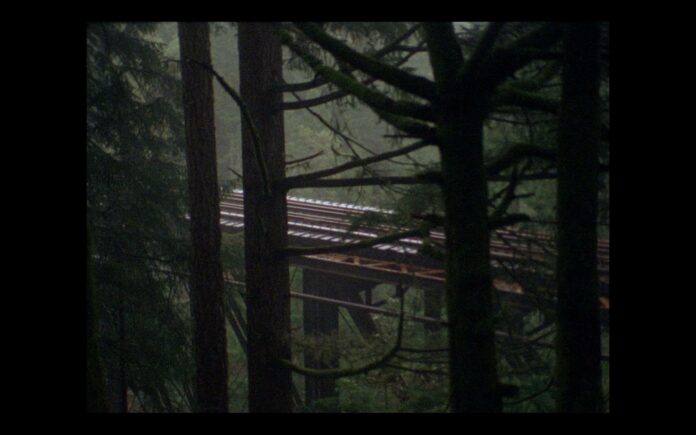
Photo courtesy of Jessica Johnson and Ryan Ermacora.

Many SFU students are strong, caring people who support each other’s success, so I wasn’t surprised to find plenty of folk from the School for Contemporary Arts on hand to celebrate the screening of Jessica Johnson and Ryan Ermacora’s documentary short E&N at the DOXA Film Festival.

E&N is a slow, haunting rumination on the invisible history beneath the E&N rail line that runs along southeastern Vancouver Island.

Not many people know of “the great land grab” of the 1870s, where this railway comes from, when the British Columbia and federal governments granted a railway belt of two million acres of land to the E&N Railway Company in exchange for the construction and operation of the rail line. About one third of that land belonged to the Hul’qumi’num. Much of the power of Johnson and Ermacora’s film comes from their experiments in rhythmic sound, the rain, the rail and the ferry, which, as Johnson said, “connect landscape without context and images that don’t necessarily connect visually. We wanted to put people in the moment.” The duo decided to submit to DOXA after Ermacora, who volunteers with the Cinemathéque, received a suggestion from an industry friend that they should show their films to the public.

E&N opened for DOXA’s premiere of Canadian filmmaker Cliff Caines’ first feature, A Rock and a Hard Place. Like Johnson and Ermacora, Caines displays a deep fascination with rhythm and sound. An eerie industrial-organic soundscape runs through his voyage 7,000 feet down into the Goldcorp mine at Red Lake Ontario, one of the richest gold mines in the world. Almost imperceptibly, it forces an intuition of the vast pressure sitting upon the rock at such depth, and the fragility of the people there.

In long takes of the machinery and people working in the mine, Caines traces the path of gold, from the rock pulled out of the wall to the production of gold brick, and exposes the audience to an otherworldly experience that few people get to see. Off-camera, miners and townspeople relate stories of disasters, deaths, strikes, the people and town, and uncertainties about their future. Caines, speaking of what it was like to film in the mine, said, “They cracked jokes with me about man being the softest thing down there.”

Both E&N and A Rock and a Hard Place use slow, observing shots of repetitive movement, and of stillness, to open up thoughtful, meditative relationships with their subjects. Their imagery breathes. Simple and soothing, and at times tinged with the cold unease that is a part of Canada’s hard country, both films are refreshingly different from the conventional documentary narrative built around dramatic conflict. 

Each film has its own distinct tone and subject matter, but when placed side by side, a dialogue over the aesthetic qualities of sound and imagery in film emerged between the two. I think these new, experimental Canadian filmmakers are on to something, and I look forward to seeing more of their work — Johnson and Ermacora’s especially. Not only because they represent SFU, but because the world they present is so fascinating.

Montage of Heck is an intimate look into Kurt Cobain’s short life

0
Photo courtesy of Rolling Stone.

At the centre of Kurt Cobain: Montage of Heck is not a mythical hero or a deplorable villain but a man and a young boy crying out for normality only to find more dysfunction. As a toddler, the frontman of one of the most influential rock bands of all time, Nirvana, was happily playing his toy guitar. Years later, after his parent’s divorce, numerous failed suicide attempts, and the birth of a daughter whom he loved, 27-year-old Kurt Cobain took his own life.

The masterstroke of Brett Morgen’s inventive documentary is how he takes the emotion of Cobain’s already existing home videos, audio recordings, diaries, drawings, and music, and curates them into a montage of this artist’s broken soul. Certainly this is among the most artistic and rousing uses of documentary form in recent memory.

While most docs are simply driven by talking heads intercut with animation, visual motifs, and some re-enactments to break up the monotony, Montage of Heck’s prodigious intertextuality gives the film an excitement and authenticity that would have been missing from a more conventional doc.

At first glance, the film is such an explosive expression that its radical inventiveness seems unimportant, but if you’re able to sit back and examine how the film subverts the ground rules of direct cinema and cinema verité, Montage of Heck becomes a film as inventive as Cobain himself — drawing from existing influences to craft something wholly unique and unifying. 

Near the beginning of the film, Kurt’s parents describe the increasing difficulty of his rebellious teenage years. His anger and embarrassment of his parent’s divorce led him to start using drugs and hanging around a rougher crowd, primarily  for the access they provided to dope and booze.

This is pretty standard stuff, cutting between different interviews and even laying over a thematically relevant Nirvana track like “Smells Like Teen Spirit,” but this approach remains purely objective, telling us what Kurt felt without  expressing his emotion for him.

Cobain narrates his own story (from an old audio-journal) describing this time in graphic detail: his escape to drugs and the events leading up to a failed suicide attempt — all with nihilistic poetry. We have exited the realm of objective documentary and entered into the mind of a tortured teenager as the world on the screen changes to hand-drawn animation with dark colours and murky images that visualize his battered memory.

In the background is a remix of “Smells Like Teen Spirit” done not with the angry, screechy vocals or blaring guitars but with gentle, melodious violins. Not only is Morgen intervening in Cobain’s world by showing the viewer where the pain in that song originates, but he also reconstructs Cobain’s world through animation. However, the authenticity really comes through the stripped down pain in Cobain’s diction amidst the images and sounds.

Morgen has melded together the abstract and the concrete, the objective and subjective, the facts and the emotion, all by uniting elements typically used in fiction (narration, animation, and non-diegetic sound of “Smells Like Teen Spirit”) with the authenticity and verisimilitude that comes with documentary conventions.

In interviews, Morgen has said Cobain had essentially made this film through his artwork, journals, and home videos, but one can see the director’s light hand in every moment,meticulously editing everything into this single vision.

Every poetic outcry Cobain wrote has a hint of depression — each scream a cry, every slow whimper a hurtful memory. It’s the subjective re-interpretation of guitars to violins that gives the film its power, but it’s the truth of the artefacts that Cobain left behind that gives the film its bracing truths.

Revolver Festival evolves into its third year

0
Photo courtesy of Vadge.

Produced by Upintheair Theatre, The Revolver Theatre Festival returns this May, and features “newly created works by emerging artists from recent university grads to people emerging on the national stage,” said managing artistic producer Daniel Martin.

Building on the successes of both the Walking Fish Festival and Neanderthal Festival, Martin explained the Revolver Festival brings together “people who are doing interesting, innovative work.” As Martin’s co-artistic producer Dave Mott stated, the festival is known for showing high quality art — the audiences that come out enjoy themselves. This year’s festival includes a mix of premiere shows, productions that are in progress, and one show, The Progressive Polygamists, that will be closing.

Hosted at The Cultch, a gorgeous playhouse in Vancouver with multiple theatres and a wonderful atmosphere, the festival will run from May 20 to 31. This year is unique for the festival, as Martin states there is a broader range of artists. “I think last year the artists were in the earlier stages of their careers,” he says; “this year there are some that are a bit more established.”

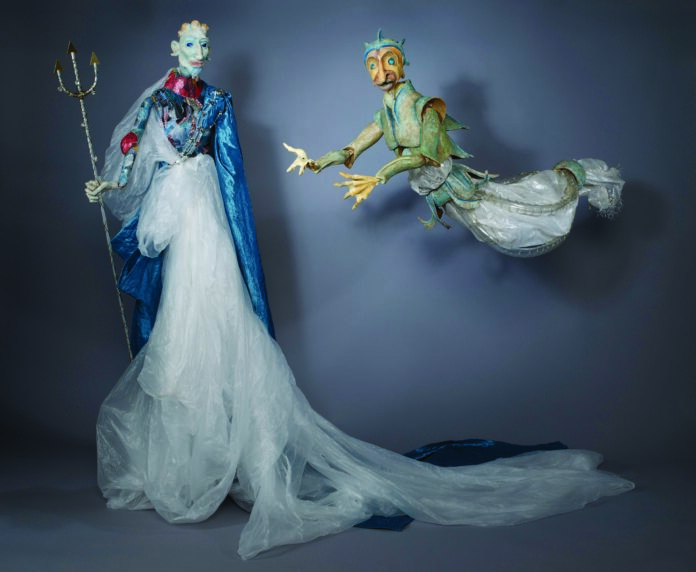
The shows range from shadow puppetry by Caws and Effect company to the “cowboy opera musical,” Hell of a Girl. As Mott explains, one very unique show called The Stranger is “a show for one audience member. It tours through the city of Vancouver on a walking trip while the artists lead each individual.

“There’s a great drag opera piece,” he added, called Cocktails with Maria, “based on verbatim sex stories from the queer communities across BC.”

One show featuring many local artists is Double Recessive — “a very funny show with serious themes” about the oppression of redheads, said Mott. The festival will also feature “a new experimental storytelling and physical movement performance by an SFU artist,” he continued. “It’s a really intriguing and interesting observation into the world of memory and storytelling.”

On top of these unique performances, the festival adds two new elements into the mix. A cabaret space will be set up in the Cultch’s Founders Lounge, where a storytelling event will occur. Also, the festival will feature the West Coast premier of the Demo Stage, a place where artists can “crowdsource solutions to their creative problems,” said Martin. In this free event, says Mott, “you come, you sit, and have a beer and have a chat with some artists.”

The Revolver Festival promises to once again bring entertaining and thought provoking theatrical works to Vancouver. With a diversity of performances, and many determined, talented artists to be featured, Mott promises that audiences will have a great time, and “see some excellent work that pushes the boundaries.”

The Revolver Theatre Festival will be presented by Upintheair Theatre from May 20 to 31 at The Cultch. For more information, visit upintheairtheatre.com.

Caught between salvation, damnation, land, and sea at the Museum of Anthropology

0
Photo courtesy of Anthony Book.

Dr. Anthony Shelton wants to change Canada’s sense of Europe. “We talk about things being Eurocentric,” Shelton said, “but it’s deceptive to treat Europe as the same. Each part has its own history, and intellectual and folkloric traditions.”

Shelton is the curator of the upcoming North American premiere of Heaven, Hell & Somewhere In Between: Portuguese Popular Art at UBC’s Museum of Anthropology. The exhibit offers a rare and theatrical mix of huge projections, urban graffiti, mural paintings, and rural folk art that includes ceramics, puppets, figurines, and carved metallic and wood carnival masques.

With regard to the masques, Shelton said, “When I talk about masquerade — people don’t think that Portugal has masquerade. It’s associated with the primitive, and Europe is seen as a colonizing power and quite modern. Well, no society is primitive, I say. It’s mixed in with regional identities and they are as complicated as everywhere else.”

As Director of the MOA, Shelton develops critical discourses around museology to break free of “the same thing over and over again,” and enable different genres of exhibits. In 2005, after Vancouver’s Portuguese community approached him about an exhibit on folk art, he began to pursue the topic and found that galleries did not collect it, nor did it fall easily into art history, archaeology, or ethnography. “The problem with folk art,” said Shelton, “is that when people see these polychromatic, bright creations, they develop certain prejudices.”

Shelton spent 2010 in Portugal conducting research among a generation of folk artists — roughly 50 families of craftspeople, illustrators, and painters — whose individualistic work engages with community, nation, and religion, and erupts with passionate emotion. Most of the artists are in their 70s and 80s and have never been widely acknowledged, so Shelton decided to embark on this major project to bring them international profile. “I wanted to pay homage to the artists I met directly and spoke with,” he said.

Both MOA’s curatorial and design departments worked closely together “in a long puzzling haul” to create something rough-hewn, and closer to an art installation than an exhibit. They wanted to bring “academic coherence,” as Shelton said, to the multi-dimensional, dramatic, playful, and often subversive art.

The group searched unsuccessfully for backdrops able to knit together a fantasia of colours until someone suggested the colour of Portuguese earth, which is brownish-red. As luck would have it, the planning room was hung with photos of Portugal’s cod fishing fleet docked in Halifax harbour in the 1980s, and the ships’ hulls were rusting.

“We got excited as a group,” said Shelton, “tested it out, and it worked.” They placed 20 sheets of iron outside to rust, and then used them to form the dividing walls between the exhibit’s three sections (Heaven, Hell, and In-Between), along with plinths and stanchions supporting the art. The exhibit as a whole has been softened with swathes of undyed natural linen.

“It’s haunted,” Shelton said about the exhibit. “For hell, we asked what is hell? We didn’t want to be corny and have flames, so we have carnival masques and masquerades, costumes, raining down in inverse.” Portugal was hit fiercely by recession, along with Spain and Greece, and in the villages where Shelton stayed, people still struggle to eat by growing vegetables and raising chickens.

“We’re working on a huge projection of the Portuguese stock exchange in 2009, when all the share prices fell. It will be a whole wall, with masked devils floating out in front of it,” explained Shelton. “We didn’t want to avoid that. We wanted to bring that sense of history. It tells the story of the impoverishment of the people.”

With 300 pieces on display, plus works from artists who have been never shown in public, Heaven, Hell & Somewhere In-Between: Portuguese Popular Art is the largest exhibit of its kind in North America. It also includes an opportunity to meet the artists during a cultural tour of Portugal.

Shelton’s book, which accompanies the exhibit, will be available in July. It includes 80 photographs of art, medieval frescoes, roadside icons, and graffiti, along with images of carnival performers and artisans at work in their studios.

The Museum of Anthropology’s Heaven, Hell & Somewhere in Between: Portuguese Popular Art opens May 12 with a party and preview from 7–9 pm, and runs until October 12. For more information, visit moa.ubc.ca.

Six films to see this summer

0
Photo courtesy of Universal Pictures.

Everyone lets themselves go in the summer. School is over, the sunshine is out, ice cream becomes a regular part of your daily diet. Maybe you don’t get as much work done, maybe you don’t use your time so efficiently, or maybe you go on vacation and gain a few pounds. Summer movies are no different — they’re big, fat, and lazy, but really good fun. For Hollywood, like university students, summer actually starts at the end of April; so although some of these films are not being released during mid-June to mid-September, they are still summer movies.

Mad Max: Fury Road (May 15)

Medical doctor turned cult filmmaker George Miller returns to his post-apocalyptic world with Tom Hardy replacing the iconic Mel Gibson in the title role. Although many details of the production and plotline have been kept secret, the promotional trailer for Mad Max: Fury Road looks excitingly old school yet totally fresh. While Hollywood studios have been giving us blockbusters with trite visual canvases, Mad Max’s trailer bursts with more exciting imagery than anything from the Marvel cinematic universe. 

Tomorrowland (May 22)

Brad Bird, the mastermind behind some of Pixar’s greatest, like Ratatouille and The Incredibles, continues his transition into live-action filmmaking (after 2011’s pulse-pounding Mission Impossible – Ghost Protocol) with another potentially thrilling film, Tomorrowland. George Clooney and Britt Robertson act opposite each other in a story about a teen girl and a former child prodigy who try to understand the whereabouts of a futuristic place that exists in their collective memory.

Photo courtesy of Universal Pictures.

Jurassic World (June 12)

After the mishap twenty years earlier in the original Jurassic Park, Isla Nublar now features the theme park that John Hammond had dreamed of. Things go sideways when a corporate mandate tries to respark attendance by genetically modifying dinosaur genes to make a beast that is no longer Jurassic but a new variation on the species. Will our heroes be able to fend off the monster? Perhaps a bigger question is if director Colin Trevorrow can pull off this mammoth project after his endearing yet hyper-indie sci-fi dramedy, Safety Not Guaranteed.

Me and Earl and the Dying Girl
(June 12)

After the success of small indies, like Boyhood which was released during the summer and not awards season, Fox Searchlight tries its hand at releasing award hopeful and Sundance smash-hit, Me and Earl and the Dying Girl (a film chronicling the times of a high school senior that befriends a girl when she is diagnosed with cancer), earlier in the year to offer some endearing counter programming to the usual soulless summer fare. With rave reviews like Peter Debruge from Variety prophesying it to “endure as a touchstone for its generation,” Me and Earl and the Dying Girl looks edgier and funnier than last year’s angsty cry-fest The Fault In Our Stars.

Terminator Genisys (July 1)

Before Terminator Salvation’s release in 2009, my friends and I watched every film in the franchise to gear up for the film. I won’t be doing that for Genisys. Unlike Salvation, which featured a CGI Schwarzenegger, Genisys has the governator in the flesh, but it will hardly matter if Thor: The Dark World director Alan Taylor can’t infuse the film with the heart and fun of James Cameron’s originals. When I was younger I cried at the end of T2 when the terminator kills himself to save John Connor and his mother while giving them the iconic thumbs up. Let’s just hope this can come up with anything remotely poignant and hokey.

Ant-Man (July 17)

A couple of weeks ago Joss Whedon called Edgar Wright’s (Hot Fuzz, World’s End, Shaun of the Dead) script for Ant-Man “The best Marvel ever had.” Unfortunately, after developing the project for close to ten years, Wright dropped out just before production citing “creative differences” as the issue. Wright has been given a writer’s credit on the project, but it is hard to know how much of the innovative director’s vision will make it on the screen this summer.

My most anticipated film by far is Me and Earl and the Dying Girl, which seems to be a nice break from the explosions of Avengers: Age Of Ultron and the triteness of Jurassic World and Terminator Genysis. But if you feel like letting yourself go, there’s still lots of fun trash to go with the other indulgences associated with this time of year.

A definitive ranking of every Starbucks near SFU’s Vancouver campus

0

When it comes to leading the student life, a good cup of coffee can mean the difference between life and death — or maybe it just feels that way sometimes. Regardless, your daily caffeine intake should never be something you compromise on. That’s why The Peak is providing you with this go-to guide for the best Starbucks within walking distance of SFU’s downtown Vancouver campus. Which location has the best music? The worst drinks? The tastiest generic oatmeal raisin cookies? Read our picks below!

Screen Shot 2015-05-08 at 3.31.22 PM

5. 700 W Pender Street: Coming in last place is the Starbucks at West Pender and Howe Street. Making a half-decent Americano isn’t rocket science, but somehow the staff here just can’t get my go-to drink right. I’m also pretty sure all of their pastries come frozen and they just thaw them out the day before. This one is definitely my least favourite Starbucks to frequent in-between classes.

Screen Shot 2015-05-08 at 3.31.40 PM

4. 433 Seymour Street: Barely making it out of last place, the Starbucks at Seymour and Hastings could be worse, but it could certainly be a lot better. Americanos are okay but I’ve yet to have a good cup of fresh-brewed coffee here. Plus the décor inside feels a bit inauthentic with all the nondescript artwork and furniture. Not a bad last resort — as long as it’s a last resort.

Screen Shot 2015-05-08 at 3.31.56 PM

3. 601 West Cordova: Finally, we’re getting to the good stuff. The iced drinks at the Starbucks inside of Waterfront Station are consistently great and their hot beverages are pretty good too. My main critique would have to be the music they play. If I wanted to listen to rudimentary coffee shop jazz and Michael Bublé albums, I’d spend more time at home with my family.

Screen Shot 2015-05-08 at 3.31.32 PM

2. 802 West Hastings Street: The Starbucks at West Hastings and Howe Street has got a winning combination: wide selection in freshly baked goods, damn good hot teas, and not one, not two, but three customer bathrooms. The tumblers and coffee mugs they sell are also miles ahead of the merchandise you’ll find at other Starbucks. Unfortunately the barista spelled my name wrong once so there was no way this location could be number one on our list.

Screen Shot 2015-05-08 at 3.31.50 PM

1. 600 Dunsmuir Street: You had to have known it was coming. Yes, the absolute best Starbucks within walking distance of SFU’s downtown campus is the one located on Seymour and Dunsmuir Street. Everything about this shop is so on point. The best hot chocolate I’ve ever had, the best reduced-fat banana chocolate chip coffee cake, and the best head office-approved playlist in town. Some people might tell you that this location’s tap water needs more classic syrup added to it, but they’re just being finicky. Five out of five stars!

What do you think of our ranking? Agree or disagree? Let us know by tweeting @PeakSFU!

Requirements for my ideal summer job

0
Photo courtesy of Nic Adler (Flickr)
  • Easy-going, not too strenuous

  • Fun, enjoyable

  • Somehow related to what I want to do for a career

  • Decent pay ó nothing outrageous, just a few dollars above minimum wage

  • Not too many hours, but still enough that I’m paying all of my bills, with lots of money to spend on fun things, and enough left over that I’m setting aside $100 each month for my savings

  • Preferably outdoors

  • But with the option to go inside if I get too hot or already have a sunburn

  • And I should be able to wear shorts while working, because sometimes my legs get sweaty when I wear pants in the summer

  • Evenings and weekends off to hang out with my friends

  • A few weekdays off too, for day trips/longer camping trips

  • Maybe something that has me near a pool or beach?

  • Nothing where I’ll smell like whatever I was selling afterwards

  • Co-workers around my age would be nice

  • But they also have to be cool. Cool enough that I could see myself socializing with these people outside of a work setting

  • Preferable if the job is within walking distance of my house

  • With shifts that start late enough that I don’t have to get up early (but end early enough that when I finish my shift, I still have most of the day left for the beach and stuff)

  • Something that exists in reality and not just in my dreams