


By: C Icart, Co-Editor-in-Chief
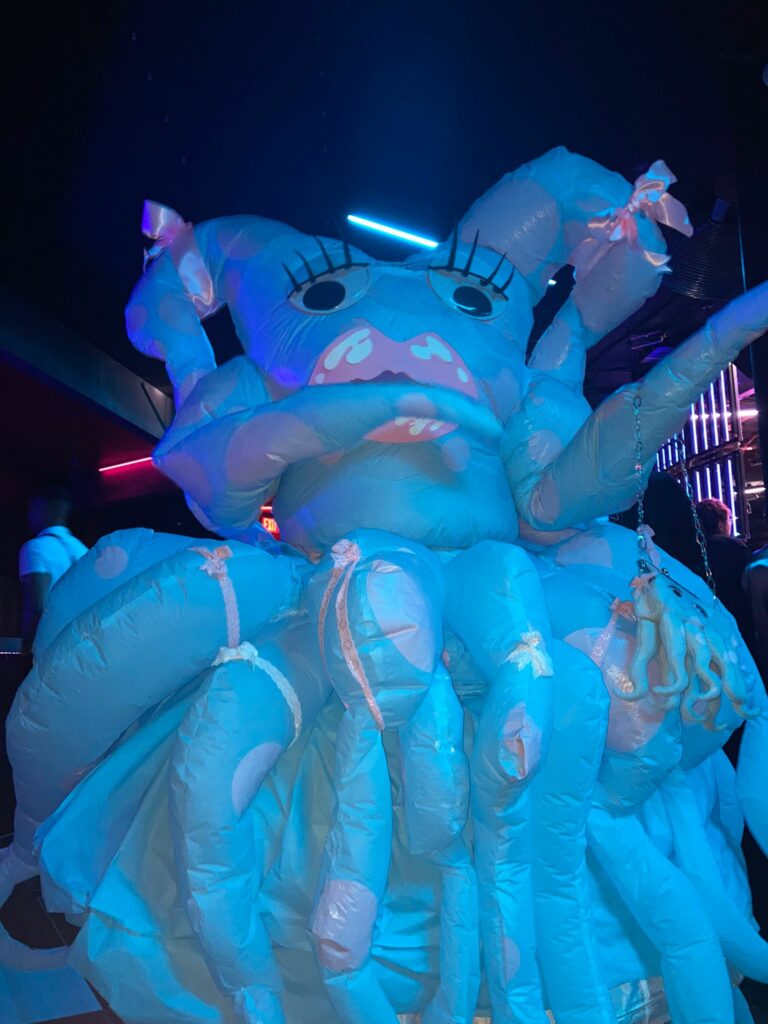
Ash Currie is a master’s student in the department of political science. When they’re not acing their coursework, they can be found getting their 10s at a local ball. Their costumes are elaborate and unique, and their passion for creating is infectious: they’ve embodied an ethereal red and white mushroom and a larger-than-life inflatable octopus inspired by Lady Gaga. I sat down with them to learn more about their work and the vibrant queer subculture that is Ballroom.
What is Ballroom?
Currie importantly points out that “you shouldn’t talk about Ballroom without going into the history of it.” House Ballroom culture emerged as a response to the racial bias against Black contestants in drag balls, which are pageant-style competitions where queer and trans contestants defied laws against wearing clothing associated with the opposite gender. In an effort to create a space where Black queens were celebrated, the House of LaBeija hosted the first “Black initiated ball which has now become the foundation for the Ballroom scene we are familiar with today.” In Ballroom culture, houses are essentially chosen families led by “mothers” and “fathers” and provide a safe space for 2SLGBTQIA+ individuals who, in some cases, have been estranged from their family. The House of LaBeija, for instance, was founded by Crystal LaBeija, a “pioneer of civil rights, equality, and integration of pageants.”
Currie and I first learned about the history of Ballroom through Paris is Burning, a documentary about queer, trans, Black, and Latinx people competing in balls in 1980s New York. It lets the viewer into a subculture which has shaped queer culture and mainstream pop culture. Words like “mother,” “reading,” and “shade” all originate from the Ballroom scene and are defined and explained in the film.
What do balls look like now?
“The way that I’ve heard it described is like a queer party with competition elements. There’s fashion categories, there’s vanity categories like ‘Face’ and ‘Body.’” Currie explained that marginalized people would often walk in these categories to see whether or not they could make it in the modelling industry. Participants first walk individually in front of the judges for approval. If they receive their 10s, they battle against each other until one person is left and wins the category.
“One other category as well is ‘Realness,’ which is a really interesting category because it’s really about safety. It’s about passing as a cishet person. And some people can have conflicted feelings about ‘Realness,’ especially nowadays when queerness has become more accepted in the general public. But ‘Realness’ really serves as a place for trans people, but also queer people of all backgrounds to come and be like, ‘Will I be safe if I’m going to present like this in front of cishet people? Am I going to be able to safely blend in?’ And for trans people, it may not just be about safety. It could also just be celebrating the progress you’ve made to actually pass as who you are.”
Which category do you walk in?
When it comes to fashion categories, “we have ‘Runway,’ which is more typical, like runway walking, and then we have a little bit more inventive categories, like the one that I do is ‘Bizarre,’ which is more of making really big, extravagant avant-garde costumes.”
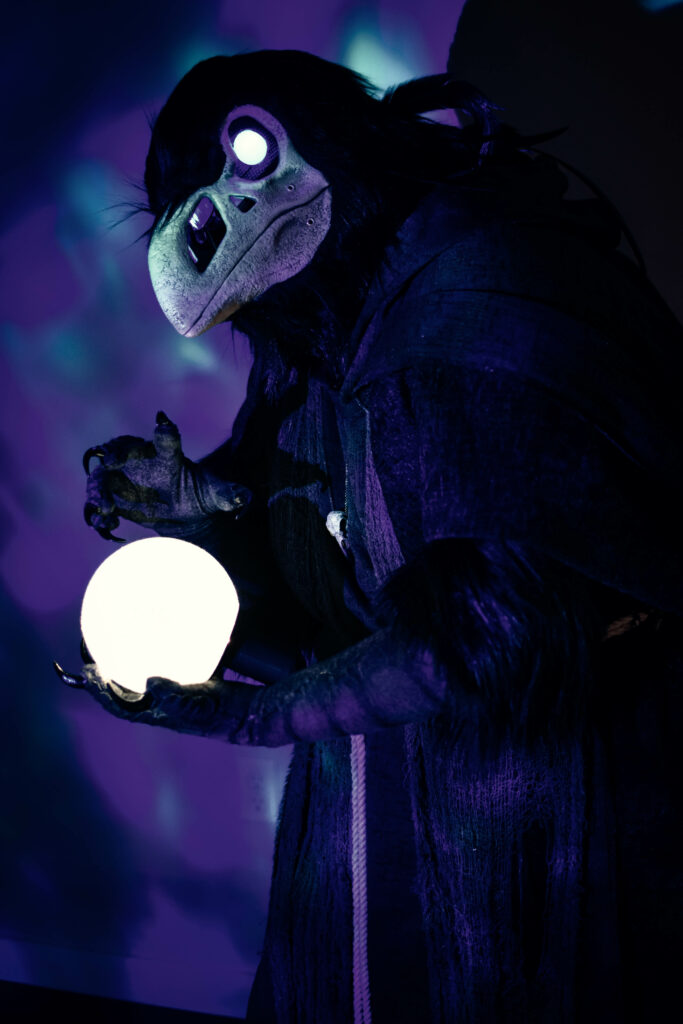
I knew this category would showcase their skills right away because in October 2022, Currie showed me a grim reaper raven costume they had made for Halloween, which happened to also fit the description of a ball that was happening at The Birdhouse. While I don’t remember this, Currie insists I was a person who had encouraged them to walk. Although they didn’t win the “Bizarre” category that night, Ivy Andromeda, a mother from a local house, took note of their talent and cheered them on to continue walking.
“It is such a fun, high energy . . . It’s just a great place to go to have fun, see local talent and to uplift the queer community.”
Currie then attended a “Bizarre” workshop taught by Mother Ivy Andromeda, and the rest is history.
Tell me about your house.
“I am in the house of Andromeda. It is run by Mother Ivy Andromeda.” They’re “a ‘Bizarre’ walker who’s been walking for at least seven years, like to the very start of the Ballroom scene in Vancouver, because the Ballroom scene is fairly young in Vancouver compared to a lot of other places.”
“We’re a very DIY punk house, and I think that a lot of that is because of Ivy. There’s not a lot of ‘Bizarre’ walkers, period. On an international scale, ‘Bizarre’ is one of the least-walked categories because of the amount of effort that goes into it. You’re expected to completely hide any element of humanity and make these very big, larger than life costumes, and sometimes balls are only announced with two weeks’ notice. So, you have very little time to put something together.”
What’s your process for designing a costume for a ball?
“When a ball is announced, they have an effect [costumes, appearance, theatrics, presentation] description. And so it’s kind of like what the judges are looking for for your effect.” Currie explained. “So I’ll just try and sit and think of a concept. Then, I will sketch it out as an aside.”
During this process Currie asks themselves, “What would make sense for my body to wear?” and “What could I make? What kind of materials do I have access to?” For materials, they typically turn to FABCYCLE, a social enterprise that prevents textile waste from getting sent to landfill by selling it to artists and designers to be reused. During the building process they turn to other members of the House of Andromeda for feedback.
Finishing with a day or two to spare can be incredibly beneficial because “‘Bizarre’ isn’t just about the costume itself, you will need to be able to perform in whatever you’re wearing” (remember the battles I mentioned earlier?). “There have been times where either I’ve lost a battle or other people have been chopped [disqualified, the opposite of receiving your 10s] because they weren’t performing. They were just there on the stage, or they didn’t look confident in it, or they weren’t embodying whatever it is. So, being able to get the look done in time to have at least a day before the ball, to actually put it on and try to embody whatever it is that you made is really important to actually doing well in the category as well.”
All this talk makes me want to go to more balls!
“Ballroom really, is this really vast culture that I want more people to [ . . . ] participate in, especially if they’re queer, Black, Latine. I want them to participate, and I want more people to come, spectate, and buy tickets and cheer for people that come.” Currie said. “It is such a fun, high energy . . . It’s just a great place to go to have fun, see local talent and to uplift the queer community.”
Want to be in the loop for the next ball? Check out:
Van Vogue Jam: vanvoguejam.com and @vanvoguejam on Instagram
Vancouver Kiki Ballroom Alliance: @vankikiballroomalliance on Instagram


