Home Blog Page 976

Indigenous Day celebrates Aboriginal culture at SFU

0
Photo by Alfred Zhang

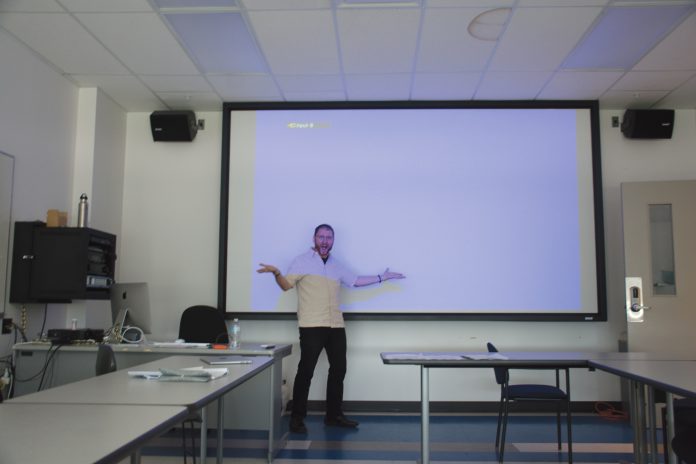
SFU’s second annual Indigenous Day was celebrated on September 24 by Aboriginal peoples from all over BC in a day filled with music, food, and culture.

The event was organized by the First Nations Student Association (FSNA), which began planning in May, and was sponsored by the FNSA, the Office for Aboriginal People, CJSF 90.1 FM, and the SFSS.

FNSA Treasurer and event organizer Laura Forsythe explained how the event almost didn’t go ahead: “Unfortunately, [the] SFSS had decided that they also wanted to have their kickoff party the day after our event, which almost ended the annual indigenous day.”

However, after negotiations the event went ahead as planned, and featured a six-hour program accompanied by 44 vendors selling items ranging from clothing and jewellery to salmon and artwork.

A highlight of the day was the 14 different performing groups from all over Canada, including hip-hop artists and dancing groups who performed in front a 32 foot longhouse set, specially constructed in Convocation Mall for the event.

Significant effort was made to engage educational institutions in the day’s festivities. Seven school districts and three universities and colleges were in attendance. In the morning a catcher workshop taught nearly 600 students and others how to make dreamcatchers.

Forsythe commended the fact that the day grew from last year, which saw 2,000 individuals in attendance. “We had twice as many vendors, we had two additional hours for the performers, and we had numerous schools [in attendance],” said Forsythe.

Planning of the event began through the FNSA Indigenous Day committee, composed of 15 students, including Forsythe herself. “We basically put together contacts and put a call out to the indigenous community and said, ‘This is something we want to do here on campus. Do you want to be [a] part of it?’” said Forsythe.

Special attention was paid to respecting indigenous culture. Forsythe noted that the planning committee in addition to all the performers and vendors were indigenous. She added, “We respected our own culture, by simply being ourselves and being proud of our culture.”

Forsythe remarked, “Four years ago, when I joined this university in 2011, we didn’t have this type of event. We had one teepee and one elder in the AQ for the afternoon and we sat there.” She further acknowledged that while a lot of work still needs to be done, “there has been a lot of work to reconcile and to be more respectful of the indigenous community here on campus.”

Forsythe succinctly broke down what the day’s celebrations added to the SFU community.

Said Forsythe, “for the non-indigenous community I think it gives them the opportunity to have a glimpse of [. . .] the diversity that there is in the indigenous community especially when you’re having Cree, and Mohawk, and Tlingit, and Kwakwaka’wakw performers and vendors.”

She elaborated on what this event did for SFU’s indigenous community: “It allows us to share our culture, but also to have pride in our culture and express that we’re still here and very much alive and very much thriving.”
Green candidates hold town hall with SFU students

0
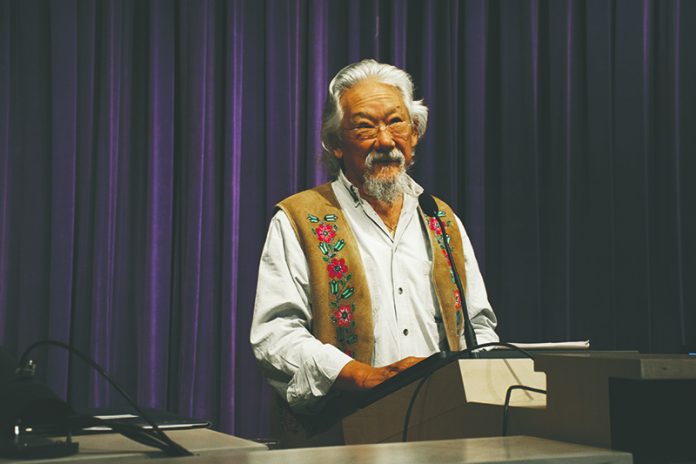
Speaker David Suzuki encouraged youth to vote in the upcoming election. - Photo by Alfred Zhang

Democratic reform, voter participation, and the environment took centre stage in a town hall with Green party candidates SFU professor Lynne Quarmby, Claire Martin, and environmentalist David Suzuki.

The meeting on Wednesday night, held in Images Theatre on Burnaby Campus, was organized to allow the crowd of about 150 students and voters to ask the candidates questions directly.

As part of the developing campaign story, the town hall sought to foster conversation between voters and the parliamentary hopefuls.

Quarmby is running in Burnaby North — Seymour, and Claire Martin is running in North Vancouver. The election is on October 19.

To begin the event, Suzuki offered a passionate call for young voters to act because “youth has everything at stake in this election.” Although he describes himself as nonpartisan, he plainly stated his opposition to the current government by telling the audience, “I just want Harper to get the hell out of office.”

As his speech went on, Suzuki grew more candid. While retelling a story of how he had met Harper in the late 1980s, he let slip that he told the politician, “Mr. Harper, you don’t know what the fuck you’re talking about.”

Martin jested later in the evening, “I didn’t know we could swear!”

Distrust of politicians and distaste for the current state of affairs in Ottawa was a common theme as the candidates described their thoughts and why they decided to run for the Green Party.

Quarmby expressed that if politicians were doing their job faithfully, she wouldn’t have to leave science and run. She continued to say that the Green Party was the only party she could run for, being “the only party that can freely represent their constituents.”

Quarmby’s decision to run has had an effect on the campus over the course of this election. Her campaign signs and buttons can be found all over campus, some even hanging from faculty office name-plates.

Michael Vegh, co-president of SFU Greens and Quarmby’s campus campaign organizer said that student support has been strong since the SFU Greens was founded in Spring 2015 and added, “Week by week [support] keeps growing.”

The town hall ended with a question and answer period. The topics ranged from tuition fees, unemployment, and the contentious subject of strategic voting. Several times, attendees also referred to the Green Party’s election platform.

The document, released on September 9, promises an end to tuition, the repealing of Bill C-51, and a bold action on climate. Quarmby expressed confidence in these promises: “I know what I offer is what people want.”

The recurring theme that overshadowed all others was voter participation. Martin explained that by not voting in the election, citizens were in effect casting a vote on the status quo.

She concluded that in acknowledgement of candidates’ effort to inform voters with events such as this, she asked that participants “[do] us the honour and vote.”

University Briefs

0

Capilano students shift the focus off labour disputes

[WEST VANCOUVER] — The Capilano Students’ Union (CSU) has established a new program called Change the Conversation. This program aims to focus on the more positive aspects, news, and successes of the campus.

The Capilano University’s student society started this program in order to move past issues between faculty, staff, and Capilano administration, which have been occupying the news’ mainstage. In addition, students will be able to participate in Change the Conversation by contributing their own content.

CSU Student Senate Representative Ben Glassen, who is spearheading the initiative, explained, “We realized that any effort to bring back positive news coverage to Cap should be a grassroots student led initiative.”

With files from Capilano Courier

BB guns terrorize Waterloo

[WATERLOO] — Waterloo Regional police are investigating cases involving pedestrians being shot at with pellets from a BB gun near the University of Waterloo campus, possibly for the fourth time.

On Sept 14, two pedestrians heard the sounds of a pellet gun but police were unable to find any pellets or a gun. The first reported attack, on September seventh, resulted in a student suffering a serious injury to the eye.

Further incidents were reported, though fortunately no one was injured. The police reminded the public to “be cautious in the area and to be aware of their surroundings.”

With files from The Imprint

Concert hall ownership under dispute

[CALGARY] — University of Calgary (U of C) is in dispute with the Students’ Union over who rightfully owns MacEwan Hall (“MacHall”), a concert hall on U of C campus.

Negotiations over the management started two and a half years ago, with the agreement expiring on December ninth. “We have a pretty strong set of facts on our side as far as ownership goes and we think it’s fair that students know about it,” said Students’ Union President Levi Nilson. U of C Provost Dru Marshall expressed disappointment with the union’s position, adding “The U of C will continue to negotiate with the SU in good faith, and is committed to achieving a fair and equitable agreement for the operation of MacHall.”

With files from The Gauntlet

Satellite Signals

0

Woodward’sWEB-woodward

SFU Woodward’s will play host to a town hall meeting on Sept. 30 on the topic of “The Legal System and Drug Users.” The event will be from 7 to 9 p.m. in the Djavad Mowafaghian World Art Centre.


There will be a panel of experts and attendees will hear the perspectives of community members from our own Downtown Eastside.

Surrey surrey

The Vancouver International Film Festival is coming to SFU Surrey. “Deepa Mehta and Indira Prahst in Conversation” will feature an interview of Toronto filmmaker
Deepa Mehta, who is known for “her rich, complex explorations of the cultural taboos and tensions at play in the society of her native India.”

The event will take place on Sept. 28 at 6:30 p.m. in the SFU Surrey Cinema.

Segal Building

As a part ofsegal_building-01 the SFU History Department’s “1965: Reflections on 50 Years of History” lecture series, SFU Vancouver is holding a talk by Tariq Ali, called “Critical Uprisings, Crucial Events: The Significance of 1965” at the Segal Building downtown.
Ali will discuss the cultural tumult of SFU’s birth year at 6:30 p.m., and will also be signing copies of his written work. Reserve your space to this free event online.

SFU upgrades to new printing system

0
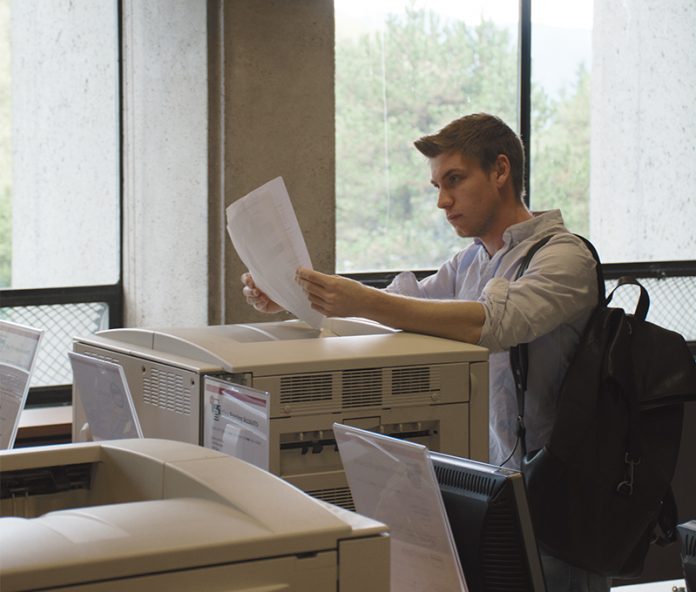
Students will need to change the way they print on campus. - Photo by Alfred Zhang

SFU IT Services (ITS) is currently working to implement PaperCut, a card-less system, to all of their printers in the libraries and computer labs.

This will replace the current print card system which has been in place for 20 years.

Desktop Services manager and PaperCut project manager Allen Murray explained that rather than constantly replacing and repairing the old card readers and dispensers — which can cost between $1,500 and $2,000 each — ITS made the decision to upgrade the entire system.

“PaperCut is used by many universities all over the world and it seemed to be [. . .] the best product out there at this time for an online type of system,” said Murray.

One of the main differences between the old system and PaperCut is the option to pay for printing using a credit card through an online account. This part of the system was “soft-launched” this month, and so far approximately 200 to 300 students have set up accounts.

Students will also have the option to add cash to their PaperCut printing accounts at a “loader” machine, which will function in a manner similar to the old card dispensers.

The printing process will be similar to the current one, as students will still enter their account credentials at a print terminal to release their documents. 

“It’s a pretty nice little system,” said Murray. “It shows you what you’ve printed. When you put money into your account there’s a transaction history and a print job history that lets you see exactly how much you’ve spent.”

ITS hoped to have everything set up by the start of the semester so that new students wouldn’t have to purchase print cards. However, the cash payment side of the system was not ready due to a last-minute decision to change the specific model of the loaders that will allow students to add cash to their accounts.

Murray explained that they are currently testing a new loader model manufactured by the Canadian company ITC Systems prior to installing them for student use. The goal is to have the cash loaders in place at all three campuses and in the libraries for the start of the Spring semester.

Murray noted, “One of the hassles of this [transition] is going to be phasing out the card, obviously.” ITS plans to stop selling print cards by January once all of the cash loaders are in place.

The library and ITS are working out a way to reimburse the $1 deposit for the cards — however, any additional funds on the card will not be transferable or refundable.

The card reader system will remain running parallel to PaperCut in the labs and libraries for at least two additional semesters to give students an opportunity to use up any remaining funds on their print cards.

“Two semesters should accommodate most people, but even at that point if we get feedback from students that [. . .] there’s still cards out there, we could leave one printer somewhere with a card [reader] on it, so that they could still use it until we know that it’s all cleaned up.”

Murray referred to the PaperCut FAQ webpage as a primary resource for students, which outlines the system in detail and is frequently being updated as they work out specifics and receive new questions and feedback.

All SFU’s computers have shortcut links on the desktop leading to the FAQ page, as well as to the Moneras page that allows students to add funds to their account using a credit card.

Regarding the transition process in general, Murray said, “There’s going to be a little bit of pain, just like starting anything new.”

This week in comics

0

fountain
SFU Burnaby’s new fountain (Justin Stevens & Eric Smith)
Week5(4)
Peers (Leslie Lu)

CMYK- Beerstein Bears
Pun 2 3 (Sarah Walker)

CP_008
Creator’s Pet (Destiny Hsu)

Agoraphobia
T
he Adventures of Agoraphobia Man: World Defender (Jacey Gibb)

Laugh Track: Sophie Buddle

0
Illustration by Phoebe Lim

Being an accomplished anything at 21 years old is a big deal, which makes the reputation that comedian Sophie Buddle has all the more impressive. A Vancouverite of three years — and a stand-up comedian of six — Buddle is a staple at several local comedy shows, even when she’s not the one performing the jokes. The Peak chatted with Buddle about the satisfaction of writing material for other people, her first foray into stand-up at 15, and what advice she has for anyone starting out in comedy.

How did you first get involved with comedy?

My mom won tickets to Absolute Comedy in Ottawa and we went and had a really good time, and then we started going every week as a mother-daughter date. I asked her, “Can I do that?” and she said “Sure.”

We went on amateur nights and I’d think, “It looks like people don’t really know what they’re doing, and I don’t know what I’m doing.” It wasn’t like I thought I was better than those people; it was more that I wanted to be part of the struggle.

Do you mostly perform stand-up, or have you done other forms of comedy?

Before I did stand-up, I was a child actor. I was in a couple of independent horror movies, no blockbusters. I did improv in high school, but I’m not that good at it.

When was the first time you performed at a comedy club?

I lied about my age for the first two years of doing stand-up, because I was really young, around 15. I wanted to do stand-up but there were laws basically preventing me from living my dream, so I would just sneak in. It’s not that I looked old, but if you say that you’re on a show, they assume you’re not 15. Sometimes they’d ask for my ID and I’d say, “No, I’m late! I’m on the show, I have to go onstage,” and they’d let me in.

Finish this dream quote: “Sophie Buddle, official spokesperson for blank.”

“Michelle Obama’s arms.”

What’s been your most humbling experience while on stage?

Performing anywhere in Vancouver is really humbling, because the scene here is so insane. The talent in this city always makes me feel bad, because I’ll be on a show with some of the best comedians in the country, and they’re doing the same amount of time as me.

Do you think there are any advantages or disadvantages to being a younger comedian?

I think there are both. When you’re not old enough to enter the clubs, that’s a disadvantage, but that problem solves itself eventually. Advantages. . . Really good comedians are always older because they have so much life experience and they know more references. It’s always easier to be a comic if you’re older. But if you start young, it’s a big advantage because you’ll have that age at some point, plus more years of experience.

You hear that it usually takes six to eight to 10+ years for someone to figure out their style or voice. . .

Totally. I’m at six years now, so people accept that I’m a comedian. For the first four or five years, you’re not a comedian. If you’ve been doing it for four years, people still think, “Oh, they’ll probably quit.” I think five is the point where people accept that you’ll be part of the community.

Do you have an ultimate goal in comedy that you’re working towards?

I don’t have a goal to have my own television show or anything. I’d like to write for a show at some point, but I’m always happy doing stand-up. I’d be happy to do stand-up until I die.

Do you have experience writing things outside of your stand-up?

I love doing roasts. I judge a roast show every month at the Little Mountain Gallery, so I get to write roast jokes. And then my ex-boyfriend has a Letterman-style talk showcase and I write all his monologue jokes. I like writing little jokes for other people.

What’s the most satisfying part of writing jokes for other people?

Just sending them off and then someone writing back, “Oh my god, this is so funny,” and people getting excited to tell your jokes because they know it’s going to go well. You get that feeling of saying something and then a group of people laughing, and you didn’t even have to say anything.

What’s something you’ve always wished someone would ask you in an interview that you haven’t been asked yet?

I don’t know, I don’t have a message that I want to get out there that no one’s asking me about. My advice for female comics: stand up for yourself if someone introduces you poorly or is sexist in any way. I’ve been introduced onstage so terribly, even recently.

There was twice in one week, and I won’t say any names because they’re both nice guys and they didn’t mean to do this, but I’d just gotten back from Just for Laughs and it’s the easiest credit to give. The two people before me had also just gotten back from Just For Laughs and he introduced them properly, and then for me he said, “Your next comedian is a female,” and that was it. Even saying I was new on the scene, which isn’t good, would’ve been better. Anything but that. For him to say nothing about comedy is so offensive.

This has happened a lot. That same week, someone introduced me by saying, “Your next comedian hasn’t been doing stand-up very long, give it up for Sophie Buddle.” It’s such an uphill right away. Everyone makes jokes and a lot of the jokes will be about you. Remember that everyone gets made fun of when they start, girl or guy, but after you’re part of the scene, you decide what jokes are being made of you.

My advice for newer people is to watch as much stand-up, live and online, as possible. Get on stage as much as possible too, and just be nice and fun to hang out with on shows. It’s easier to get stage time if people like you, and it encourages you to get out more if you want to hang out.

As far as writing goes: just be original, say what would make you laugh. It doesn’t make sense to write for anyone but yourself.

Your next chances to see the hilarious Sophie Buddle perform are October 8 to 10 at the Comedy Mix, or as part of Paul Anthony’s Talent Time on November 5.

HUMOUR: TSSU furthers job action by locking students in tutorial rooms until demands have been met

0

Starting last Monday, in a surprising move by the Teaching Support Staff Union (TSSU), teaching assistants began locking students inside of tutorial rooms in a way to further negotiations with the SFU Board of Governors.

The TSSU has been on strike since the start of summer semester, with many TAs withholding grades until an agreement is reached with the university. While students can apply to receive their grades under special circumstances, many have been left unable to graduate or apply for financial awards without their grades.

An apparent stalemate between the university and the TSSU is being viewed as the main reason behind the recent heightened, somewhat extreme job action.

“The students need to know we care about them, and that if they refuse our care they’ll need to be dealt with harshly,” stated TSSU head member Mike Shunt. “In order for our students to understand the unfairness we’re dealing with from the Board, we plan on locking all our students in their tutorials.”

All tutorials in session during the announcement were immediately locked in by their respective TAs, with students reportedly assuming it was all an elaborate prank; any such illusion has since worn off, after an undetermined number of students spent a whole night inside.

“I don’t even want my grades at this point,” a student pleaded behind closed doors after the first night. “We’re running out of food and water.”

The TSSU promised regular rations of bread, cheese, and water, however the rations seemed small in quantity.

During a press conference at the end of last week, SFU president Andrew Petter said he was shocked by the questionable bargaining tactics and was stymied at what to do. According to Petter, his first thoughts were to call on the Burnaby police forces, but opted not to: “They’ll label me a union-buster and I’ll look like a wage-stealing dick. My Admiral Ackbar senses tell me it’s a trap.”

With even the school’s governors refusing to act, the situation has only worsened for students trapped in their tutorial rooms. Reports from grainy cellphone footage show Lord of the Flies-style scenarios in which students are viciously fighting each other for food and water. Feces and blood smears windows with messages reading “First our grades, now this!?,” “How is this helping me?,” and “I don’t even know what TSSU stands for, leave me out of this!”

TSSU rep Hughe DuSchnozzle ignored the pleas, stating, “These complaints show the students still don’t understand how much our job actions are for their benefit. Sometimes you have to be cruel to be kind, I suppose.”

Remnants of the Simon Fraser Red Cross Club who weren’t trapped are preparing an aid-smuggling program into the tutorial rooms. This aid, while appreciated, still does not solve the lock-in which, much like the current strike, seems like an unending struggle.

The horrifying reality behind your pumpkin spice

0
Illustration by Ariel Mitchell

If an ethical crisis occurs at roughly the same time each year, and no one chooses to address it, does that crisis make a sound?

Close the other tabs on your Internet browser, put your phone on silent, and tell any strangers chatting nearby to shut up, because I’ve got a truth bomb armed and ready, and modern society is in my cross-hairs. It’s time we talked about the autumn delicacy of pumpkin spice and the glaringly questionable ethics involved in its mass production.

Pumpkin spice, that sweet seasonal scent currently infiltrating every product and surface in sight, is quite possibly the most problematic food product since McCain’s orphaned baby seal frozen nuggets. Propaganda would have you believe that pumpkins live in great sprawling, scenic patches and enjoy peaceful lives amongst their pumpkin kin, but this is far from the reality. What the pumpkin spice industry doesn’t want you to know is that it takes a special kind of pumpkin to create the flavour people know and love.

Once pumpkins have reached a particular stage in development, usually around the two-month mark, they are forcibly removed from their patch and brought to a nearby industrial pumpkin factory. You see, regularly healthy pumpkins have a bland and squash-like flavour to them — a flavour that’s not profitable to big corporations looking to exploit these playful, intelligent pumpkins for all they’re worth.

After the young pumpkins arrive at the factory, they’re stored in cramped, inhumane living conditions, often being forced to live on top of each other for the rest of their short lives. There is no natural light in these rooms, a deliberate condition because sunlight can reduce the spiciness of a pumpkin by up to 50 per cent.

Undercover video footage from activists posing as workers have also revealed a behind-closed-doors world of physical abuse, as pumpkin spice farmers toss pumpkins around without thinking twice. Just YouTube “pumpkin spice farming truth,” and you’ll know the inconvenient reality. Would you be able to pretend like everything’s normal after seeing a storage locker, filled nearly to the roof with young pumpkins awaiting spice extraction?

Biologically, humans aren’t even supposed to consume pumpkin spice other than during early the early stages of childhood development. Think about it: what other animal continues to drink pumpkin spice after that same animal has matured? The prolonged process that humans have adopted is unnatural and is a direct result of large-scale pumpkin spice production.

We were raised to think that pumpkin spice is good for us, and even part of a balanced diet. But what if I told you that there’s no evidence of correlation between healthy bone development and ingesting regular amount of pumpkin spice? It’s all a cog in the machine of misleading information.

So please, I beg of you: think twice before “treating” yourself to a decadent and flavourful pumpkin spice latte this season. You might think that you’re off the hook because you’re not directly harming the pumpkins, but you’re just as guilty for supporting the industry and enabling them to commit the atrocities. Sugar and pumpkin spice make everything nice, but denial and lies make an unpleasant surprise.

HUMOUR: Tech-challenged SFU professors to take mandatory workshop this spring semester

1
Photo by Albert Zhang

There are many whimsical constants in the academic microcosm that is SFU; little idiosyncrasies which help make our engaged university the scholastic paradise we have all come to love. Whether it is the watered-down Starbucks coffee atop Burnaby Mountain or the cacophonous laments of wayward mall folk reverberating into every classroom of Surrey Central, like any good lover, it’s their flaws that make us fall head over heels for them. Sadly, SFU administrators have it on their mind to fix a long-gestating kink that old and new students have come to affectionately expect in their lecture halls: classroom delays via tech-illiterate professors.

Starting in spring 2016, all SFU professors will be forced to attend a mandatory workshop designed by tech support staff on all three of the campuses. The workshop will consist of teaching professors the basics of turning on a computer, working lecture hall lighting, and how to work the volume on their microphones. Along with this, professors will also be taught strategies to help mask their struggle in front of students and will be given extensive flowcharts that might allow support staff some peace and quiet for a change.

The Peak caught up with the university’s administration in regards to the workshop and reasons for its implementation.

“Technological ineptitude contributes to on average five to 10 minute delay in lectures,” said a spokesperson for the university. “Students are losing close to 80 minutes of time in each of their classes. Now, normally we wouldn’t give a shit about this — but someone gossiped about us to UBC, so now we have to do something about it.”

Since the announcement last Friday, belligerency on the topic has only escalated. Many SFU staff have already cited the workshop as the highest form of condescension ever issued to a paid educator. A meeting between the two parties is said to move forward later this week, as soon as SFU professors work out how to use the email account.

“Pardon my Parisian discourse, but this is the highest form of Bolshevism I have ever regarded,” cited one world literature professor. “Just because I show some technological deficiency from time to time does not grant the university the right to treat me like an erudite muttonhead!”

While professors and admin continue to squabble over the controversial workshop, contention among the SFU student body has led to a surprising schism. The Peak asked for the thoughts of students across the three campuses’ regarding the upcoming workshop. Of those interviewed, a noticeable majority were in opposition to it.

“Look, man. I’m going to level with you,” said a first-year, who wished to remain anonymous. “I’m totally cool with lectures starting late and shit. Like honestly, I don’t want to even be in half my classes. Introduction to Egyptian Literature and Poetry? I’m on the basketball team. If prof wants to waste time flicking the lights, fine by me.”

With the new semester less than three months away, time will tell if this workshop does indeed move forward. The workshop is prepped to go ahead in the first week of January.