Home Blog Page 752

Don’t use age as an excuse to dismiss me

0

Last week, I was sitting in a French class outside of school. I was by far the youngest in the seven-person group: I stood out from the Yaletown yuppies and the third-agers. We were discussing something about having a better world whilst trying to improve our French-speaking skills.


Everyone was being very negative (a common attitude in today’s political climate). I, being the optimistic millennial I am, went on to explain how I still believe there are actions we as humans could do to help poverty, climate change, and constant war. A comment from one of my yuppie classmates soon followed: “Tu dit ça parce que tu es jeune.” Translation? “You are only saying that because you are young.”


I had no comeback. Growing up, we are shut down with similar variations of those words time after time: ‘You don’t understand,’ ‘you’re too young,’ and so many others. Yet here I was, having thought that at age 22, I’d have finally passed the finish line for ageist discrimination.


I went home wondering what exactly that woman meant. Yes, I’m certainly young, but this woman couldn’t have been more than 33. Did that make her much older than I am? Calling me young was just a way for her to position herself as the powerful one between us. The adult, a concept often linked to and confused with maturity and wisdom.


We see that all around social media, both lightheartedly and seriously: ‘adulting.’  What does that word even mean? Economic and social independence? Taking responsibility for your actions? Getting your life together?


Any of those answers would make some sense. What does not, however, is what this woman’s chosen definition of “becoming an adult” was to lose your ‘naive’ beliefs and to ‘understand’ that you can save neither the world nor the people in it.


Looking back, her comment wasn’t helpful so much as just cynical. I understand there is a thin line between ‘optimistic’ and ‘ridiculous,’ yet I refuse to admit that grasping how the world works and successfully ‘adulting’ simply leads to having a desk job, a good salary, a steady monotonous relationship, a mortgage, and a car.


If being an adult means being a pessimist, or a realist if that’s what you’d prefer to call yourself instead, call Peter Pan and fly me to Neverland, because I never want to be like you.

If it signifies that you’ve branded the world a lost cause, that you’ve accepted it as a ticking time bomb waiting to detonate, call me young as many times as you wish.


These past few days have been proof that youthful hope isn’t powerless. Look at Trump’s attempted immigration ban: a source of revulsion, despair, and wonder at how even in the 21st century, a man can cause such harm to thousands of people.


But despite the hopelessness, we saw hundreds of protests breaking out around US airports, lawyers working pro bono to help those affected by the ban, and solidarity from thousands around the world. The world might be dark and horrible, I’m very aware of that, but there are lightning bolts of action that can make it less gloomy.


I have no clue, and don’t think I can ever really expect to know, what being an adult actually means. However, I do know that if, 10 years from now, I’m sitting in a class telling a 22-year-old that she hasn’t grasped the real world because she still believes she could fulfill some of her dreams, slap me.

Dog meat: a matter of cultural dissonance, not cruelty

0

Dog videos make their way around Facebook faster than you can say ‘inspiration porn.’ One more serious story I’ve seen recently is the tale of dogs rescued from Korean meat farms and repatriated west for adoption.  Even as a ridiculously overbearing dog-owner, a longtime vegetarian, and a total nut about the animal trade, I consider this story a total joke.


Dozens of rescued pups were brought to North America, while six dogs made their way to the UK. According to the Canadian Federation of Humane Societies, Canadian shelters took in 35,000 dogs in 2015, and nearly twice as many cats. Why are we importing pets from abroad for the purpose of “rescue” when shelters already struggle to meet the needs of the neglected and abused animals in their care?


The initial outrage of the story the thing that makes it such a point of interest, and such a rallying point for drastic action comes from the shock we’re inclined to feel toward the idea of dogs being farmed for meat. But what seems ridiculous in the Western world of Lassie, Air Bud, and Paw Patrol is actually quite normalized elsewhere; our negative attitude toward eating dog meat is prejudice at its best.


Take China, for instance, a country where dog meat is just the tip of the culinary iceberg. When an estimated 134 million of your country’s people face hunger and 10% of your nation’s children suffer from stunted growth despite leaps and bounds in recent years, the cold-hearted truth is that dogs are easy and inexpensive to raise, and they offer nutrition to those who may have no other alternative.


Of course, the industrialization of animals’ lives, which places financial gain over animal well-being, is definitely an issue to discuss. Unethical farming practices, such as starving animals or cramming them in inhumane cages, are prevalent in the dog meat trade, and the health hazards of improperly handled meat (such as rabies) are undeniable.  


However, pointing out the cruelty of dog meat means pointing fingers at the meat industry as a whole, which includes beef, pork, and chicken and has its problems even on North American farms.  Shutting down inhumane dog farms in Asia and Africa does absolutely nothing to address the wider problem of unethical farming. Instead, it allows misinformed animal rights activists to point the finger away from home, rather than consider their own dinner plates more deeply.


The idea of consuming dog meat is so provoking because of our cultural links to dogs as companions, best friends, movie stars, service animals, and much more a link I understand and feel very deeply myself. But no matter how easy it is to apply our values abroad, it’s a risky and short-sighted practice especially if the conversation doesn’t start with asking ourselves how good we really are at taking care of animals.

Men’s basketball lose 90–76 to Central Washington

0
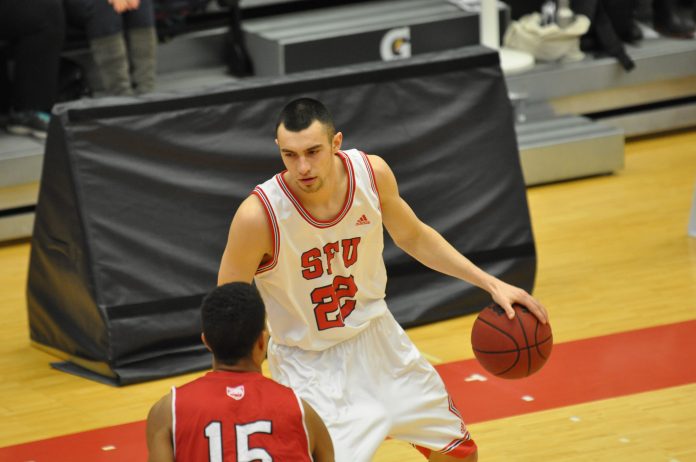
JJ Pankratz (#22) had 19 points, four rebounds and three steals in just 29 minutes of action.

The Simon Fraser Clan travelled to Central Washington University on Saturday night to face the struggling Central Washington Wildcats. Coming into the game, the Wildcats lost eight straight. After allowing Central Washington to score 97 points in the first game between the teams this season, the Simon Fraser defense had no answer once again for the Wildcats’ attack. Currently, the Wildcats’ attack is ranked second in the Great Northwest Athletic Conference (GNAC).

A JJ Pankratz three put the Clan up 32 to start the game, and marked the only lead that Simon Fraser had in this one. In the tenth minute, Pankratz’ second three of the half made the score a respectable 2017 for the opposition, before the Wildcats offense began to find its rhythm. A Fuquan Niles dunk with 1:40 to go in the half capped off a 216 run by Central Washington. By the end of the half, Central Washington extended their lead to 15, and the teams went into the break with a score of 5136.

The main issue was Simon Fraser’s inability to keep the other team from getting into the paint, as they scored multiple layups and open three-pointers. This was very similar to the last time these teams faced, where coach Steve Hanson believed that that was the main reason for the team’s defeat.

Michael Provenzano joined Pankratz with eight points to lead the Clan in the first half, while Wildcats player Dom Hunter led all scorers with 15 points in 14 minutes. Interestingly, Naim Ladd came off the bench in this one, after starting in the last meeting between these two teams and torching the Clan for 33 points. He was a non-factor in the first half, scoring only two points on one-for-two shooting.

The Clan played much better in the second half, although their first-half struggles proved to be too much to overturn. After getting down by as much as 18 the biggest deficit of the game Simon Fraser competed down the stretch, closing the margin to as little as eight after a Pankratz jumper. While they would eventually lose by a score of 9076, they actually outscored their opponents in the second half 4039.

The main contributor was the Clan’s ability to win extra possessions, as they got 11 offensive rebounds compared to Western Washington’s two, and won the turnover battle 83. The Clan needed these extra shots, however, as they shot only 40% from the field, compared to the Wildcats’ sizzling 64%.

Pankratz led the team with 19 points, including three three-pointers and three steals. Provenzano was the only teammate to join him in double-digit scoring, as he had a line of 11 points, five assists, and zero turnovers. Off the bench, backup point guard Othniel Spence contributed with nine points in 17 minutes. On the other side, Hunter added to his strong first half and finished the game with 27 points on 1015 shooting, including six three-pointers. Niles played big again for the Wildcats, finishing with a double-double that included five blocks.

With only two games to go, the Clan are now 117 in conference play and are dead last in the GNAC. As their remaining two games are home games, Simon Fraser will finish the season without an away victory and are now 010 in conference games where they were the visitor. They have a 323 overall record.

Next Game: Simon Fraser will host the Saint Martin’s University Saints on Thursday, February 23. The Saints are tied for fourth in the GNAC with a 99 conference record, and sport the third-best offense, averaging 81.3 points per game.

Tip-off is at 5:15 p.m.

SFU hockey cruise to victory over Eastern Washington

0
Adam Callegari (#36) had two goals and one assist in SFU’s 7-1 victory over Eastern Washington.

SFU hockey has had Eastern Washington’s number all season, and tonight was no different. The Clan beat up on the Eagles 71, going 60 against them in the season, and outscoring them 407 in the process.

“I thought it was a good game,” said head coach Mark Coletta afterwards. “I thought we played a decent first period, the second period was tremendous, and we really worked the cycle. [. . .] We protected the puck supporting the puck, keeping the puck away and then getting it to the point and getting it to the net.”

Eastern Washington got on the board first, though, as Taylor Bargar put one home on the powerplay early on. However, SFU was able to battle back with two goals, the first from Adam Callegari on the powerplay and the second by Robson Cramer on a beautiful move on the breakaway.

In the second, it was Spencer Unger’s turn to score, converting on a two-on-one with Callegari to make it 31. Just a few minutes later, Callegari was at it again with the playmaking, this time assisting on Mike Sandor’s goal. Graham Smerek potted his sixth of the season to cap off a dominant second period for the Clan.

The third featured two more goals as Mak Barden and Smerek scored on a rare short-handed penalty shot. However, on Barden’s goal, a seldom-used and obscure rule forced goaltender Jordan Liem to sit out for a few seconds. The rule states that if a goalie goes to the bench before a penalty shot he has to sit out for at least one shot. Thus, Lyndon Stanwood came in, promptly stopped one single shot, and Liem went back in.

“I couldn’t tell you if that’s a rule or not either,” said Liem after the game about the strange play. “I think that referee [maybe] still has it out for me after giving me that one-game suspension. I don’t think we’re buddies, but apparently I can’t come to the bench. Could have told me before I came to the bench for the penalty shot, but I just got waved off for one play and then Lyndon got to make his one save and I came back in.”

The win brings SFU’s record to 1732 and 36 points, and sit atop of the BC Intercollegiate Hockey League (BCIHL) standings. The Clan barring an unexpected collapse will finish the season in first, as the best second-place Trinity Western can do is tie SFU on points. With home ice advantage throughout the playoffs essentially confirmed, this season marks a terrific opportunity for SFU to win their first championship since 2011.

Next Game: SFU won’t play again until March 3, where they’ll take on the Trinity Western Spartans back to back. By then, first place could be clinched, so the key in these games will be for SFU to come out healthy and confident. SFU is 21 against Trinity Western this season, with their last game being a 20 victory back on February 2.

Both games start at 7 p.m.

Peak Sports Challenge: Three-Pointers with Ellen Kett

0

On this week’s Peak Sports Challenge, our Sports Editor, Nick Bondi goes up against Ellen Kett, who leads SFU in this season of women’s basketball in a host of categories including minutes played, assists, and rebounds, as well as free throw and three point percentage.

I Am Not Your Negro exposes the reality of being Black in America

0
I Am Not Your Negro doesn’t shy away from presenting what it’s like to be Black in America both during the civil rights movement of the 1960s and present day.

Martin Luther King Jr. Malcolm X. Medgar Evers.

These are the names of influential civil rights activists who fought to overcome racial segregation in the United States in the 1960s. These names are familiar, showing up in history books as prominent figures of the civil rights movement. Yet, James Baldwin knew each of these men personally, and chronicled his friendships with them for a book titled, Remember This House. He died before he could see the book published, but in the documentary I Am Not Your Negro, Baldwin’s manuscript is brought to life and delivers poignant and heartbreaking commentary on race relations in America.

Baldwin’s words are narrated by actor Samuel L. Jackson, and he describes how he met each activist in detail. He recalls his grief at each of their successive assassinations, and remembers each of them fondly, offering a glimpse of what these men were like as people. His accounts add realism to Malcolm X, King, and Evers, as their politics were fueled by their personality and values.

Baldwin also offers insight on his own frustrations and struggles as a black man in America, and how he had to fight for his right to personhood. One of his most resounding quotes was, “When you stand up and try to voice that you have a right to be here, you have attacked the entire power structure of the Western world.” What especially struck me was how, even in recounting the personal relationships he had with famous activists, Baldwin swiftly called attention to the bigger picture, and how a conversation about race was essential in the country.

Director Raoul Peck also tied Baldwin’s accounts to the present day by showing clips that connected his words to current events. One of the most notable ones is a tribute to the victims of police brutality pictures of young men and women filled the screen, many of whom had passed away in the past year. And you can’t help but notice that there were too many faces to show, the injustice throbbing and prominent for each tribute.

But there are hopeful moments in the film as well, as there is a clip where a white man tells Baldwin that there could possibly be a black president in forty years. Baldwin took that to be a condescending way of exercising power, and expressed that what he felt the man was saying was that, “In forty years, maybe, we would let a black man be president.” Yet, Peck puts in a clip of the Obamas after that quote as hopeful acknowledgement of how far we can move forward.

I am not African-American, and I acknowledge that I could never truly identify with the struggles that Baldwin wrote about. But this documentary was able to give a glimpse of what years of discrimination and pain looked like, and it provided a deeply personal voice on the civil rights movement of history books.

I Am Not Your Negro sheds light on issues of racism, oppression, and marginalization, and most importantly, how these issues affect all of us. For as Baldwin so aptly puts it, “The history of the Negro in America is the history of America.”

McConaughey can only do so much to carry Gold

0
Known for his good looks Matthew McConaughey (left) is almost unrecognizable in Gold especially when seated beside Edgar Ramirez (right).

By: Jennifer Russell

Warning: If you watch Matthew McConaughey movies for his stellar body, this is not the movie for you.

Gaining over forty pounds for the role, McConaughey transforms into balding, beer-bellied Kenny Wells — a man who craves gold more than life itself.

The movie begins with Kenny Wells inheriting his father’s mining company, but having neither patience nor skill, he finds himself in such a low position bankers refuse to invest in his operations. He then decides to partner with geologist Michael Acosta (Edgar Ramirez) and search for gold in Indonesia. Once the partners strike gold, the movie becomes more fast-paced and focused on the scandal and greed behind the American Dream.

Personally, I adored the strange relationship between Wells and Acosta. Besides their joyous moments, where they scream and embrace over their success, they also have many moments where Acosta rejects Wells’ sentimentality. Wells tells Acosta he “went looking for gold, [and] found a friend,” to which Acosta responds, “That is the single hokiest thing I’ve ever heard in my life.” Their unlikely friendship adds humour to some of the more serious aspects of the film.

Although there were moments of humour throughout the film, the movie’s main downfall was a lack of character development. Besides Kenny Wells, every character felt hollow, stereotypical, or just completely flat. In many scenes, McConaughey takes control of his character; he pounds on tables, lets out light groans in his car, laughs hysterically at touching a tiger, and makes inappropriate remarks. Even though his character is repulsive, he captures his craving for gold and truly embodies his character.

On the contrary, most other characters appear as objects for McConaughey to act around. Even though Wells and Acosta are a team, Acosta remains silent throughout almost every scene a presence reminding us of his importance, but not a character to care about. In no ways am I suggesting the other actors performed poorly, but rather that the director, Stephen Gaghan, relied too heavily on McConaughey to carry this movie on his sweat-stained back.

With that said, McConaughey’s performance alone made this movie entertaining. If you’re a McConaughey fan like me and want to admire his talent, definitely watch this movie. His character is so repulsive, you can’t look away. Beyond his character, the plot and exposition will still keep you entertained.

I refuse to be a spoiler, but I will say this: Gold has a twist that pulls you back into the story in case you start falling out.

Despite the harsh reviews, this movie is engaging and worth at least one watch if you’re a McConaughey fan. But don’t get your hopes up; it won’t make anyone’s top 10.

Ali Hassan is Muslim, Interrupted

0
Ali Hassan isn’t your typical Muslim, from having pork in the freezer to not going to the mosque, but despite this he still faces the same problems as other Muslims.

Comedian Ali Hassan has trouble explaining to his children why their Muslim family doesn’t go to the mosque and why he eats pork. The nuances between religion and culture are not always easy for many people to understand, let alone for a five year-old.

In his new one-man show, Muslim, Interrupted, coming to the Chutzpah! Festival February 24, Hassan grapples with these questions as his kids have forced him to examine his own identity as what he calls a “cultural Muslim.”

“This show was born out of the fact that my kids were asking me about Islam,” said Hassan. “Questions like, ‘Why do you have chorizo in the freezer?’” After using some of these stories in his stand up shows, he realized he had enough material for his second one-man show.

Being invited to participate in a Jewish performing arts festival on a double bill with Jewish comedy legend, Judy Gold, makes a lot of sense to Hassan. “Whenever Jews and Muslims work together, it’s a celebration of shared experience,” he said. Both groups struggle to reconcile religion and culture, and Hassan said he drew inspiration from his Jewish friends who refer to themselves as “cultural Jews.”

“I’m tied to the Muslim community,” explained Hassan, but that doesn’t mean he has to go to the mosque or pray all the time. His family celebrates Muslim holidays, but in much the same way as someone who isn’t Christian celebrates Christmas — it’s a cultural thing. Hassan said, “[his kids’] friends will ask them ‘Do you go to the mosque?’ and I wonder ‘Do I start going to the mosque just so my kids can answer questions at school?’” But as he said, he’s “more of a freelance Muslim.”

Last August, Hassan took Muslim, Interrupted to the Edinburgh Festival, and it received a different reaction that what he’s experienced in North America. “A few Muslims walked out once I started talking about pork,” he said, “and others during the part about Saudi Arabia.” He explained that he does make fun of Saudi Arabia, but only to describe his personal experience there and how he was treated. “I’m critical of the extreme element of Islam,” he explained, but at the same time he doesn’t want to portray Muslims in a negative way.

In this Trump era, his kids have some more difficult questions. When one of his daughters saw a protest against Muslims, she asked, “Are we weird?” Hassan replied, “Yeah, but everybody is weird.” And since Trump’s Muslim ban, there are even more things to explain. “I didn’t think I’d ever have to explain to my kids what a registry is,” he said.

Aside from touring the show across Canada this winter, Hassan has a couple of shows lined up south of the border in Austin, Texas and Kansas City, Kansas. In light of the recent Muslim ban, he’s not sure how he’ll be received. “I don’t know if I should tell them to get a back-up comedian,” he said. “I’m a little bit concerned about them asking ‘Why are you working in the US?’” He’s also worried about the unsettling experience his friend had during a layover from Haiti to Canada. She was taken into secondary screening, which is not unusual, but this time she was asked what religion she identified as. As Hassan said, “What’s the end goal of a question like that?”

Hassan is no stranger to being treated with suspicion, and he remembers one experience in particular when he was living in the United States. “I was there during 9/11 and everything just sort of changed immediately,” he said. “I was walking with two other brown friends on the night of 9/11, and someone said, ‘There go some of them right now.’ That affiliated me with something I found just as evil as they did.”

This is something Hassan explores in his show — the idea of being seen as a threat while having the same values, convictions, and interests as many of the people who make those assumptions about him. “That’s the plight of Muslims right now: you get racism from non-Muslims and you can equally be a victim of terror.”

Hassan’s hope through this show is that he can both entertain and inform while demonstrating the similarities between Muslims and their fellow citizens, “I want to challenge people’s notions of what they think Islam is,” he said.

Four films to put SFU’s snow crisis into perspective

0
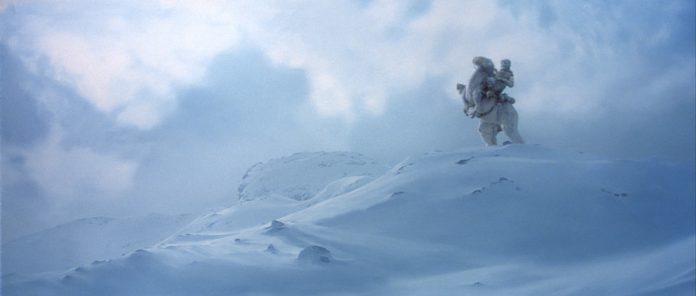
SFU might have been snow covered and students might have been stuck on campus, but at least nobody had to sleep in a tauntaun.

SFU Burnaby had suffered an endless onslaught of snow. Classes were cancelled and snow and ice blocked routes that students normally took to reach their destinations. Despite the hills of white, the slush that covered our every step, and the AQ pond being a frozen tundra of its previous self, we’re still way better off than some places (even if most of them are fictional). As proof, here are four films with snow or winter weather conditions far worse than what we could ever experience on campus.

The Day After Tomorrow

Nothing says doom in this film like big tornadoes and snow storms that devastate cities. Be glad that we’ve never experienced weather phenomena as dangerous as those in this film. Unlike what people had to do in The Day After Tomorrow, we won’t need to burn books to stay warm. Starbucks and Tim Hortons has us covered. We may have a frozen pond and piles of snow everywhere, but better that than a snowstorm that will freeze you (and most of the northern hemisphere) to death.

Star Wars: Episode V: The Empire Strikes Back

It gets cold on campus, but our snow conditions can never be as cold or hostile as what Luke Skywalker suffered on the planet Hoth. Unlike us, Luke didn’t have heated buildings for refuge. He not only had to spend time inside a tauntaun, but also hallucinated about a dead Jedi master during a snowstorm. Let’s be eternally grateful that we won’t ever experience what Luke went through on Hoth. It may be slightly chilly on campus, especially from past weeks due to the snow, but remember this: Luke had to keep warm using a freshly killed tauntaun as a sleeping bag.

The Huntsman: Winter’s War

If there’s one film from last year that demonstrated the power of ice in a fantasy world, it’s this one. Our campus was no stranger to ice and its slippery reputation. On the bright side, at least our ice wasn’t due to the sorcery of a snow queen. Slipping on ice is a pain, but it’s better to face the prospect of slipping on ice and slush around campus in our natural world than to face the dangers of magical ice in an enchanted realm.

Snowpiercer

This film proved there was no better way to protect humanity from the dangerous snowy conditions of the outside world than to have it cooped up inside a moving train while under an oppressive social class system. So, don’t fret too much over our snow. As frigid as it could get on campus, we could still go outside and get where we needed to go. SFU might have had its off days, given the snow’s unwelcomed visit and the annoying slush we’ve recently had, but at least we won’t be stuck in a dirty and confined dystopian society like the people in this film.

JFL NorthWest preview

0
Trevor Noah returns to Vancouver on February 23 as part of Just For Laughs NorthWest.

In the dead of winter, it’s important to keep your sense of humour and have a little fun. JFL NorthWest (a partnership between Just for Laughs and the NorthWest Comedy Fest) comes along at the perfect time; from February 16–25, the festival is back for a second year with a variety of performances at multiple venues in Vancouver. With so many comics and variety shows, there is a show for everyone’s sense of humour.  

Best show for political humour: Trevor Noah | February 23 | Queen Elizabeth Theatre

If you missed his show at last year’s festival, you don’t want to miss out again. Since Trump’s election to the White House, Noah is sure to have more political material to add to his cultural comparisons from a South African perspective. The Daily Show host knows how to tell it like it is and make his audience think globally.  

Best show for dad humour: Jim Gaffigan | February 24 | Queen Elizabeth Theatre

This father of five shares his observations on being a dad, the meaning of life, and food. With four comedy specials on Netflix, he’s easily accessible from the comfort of your couch, but nothing beats laughing simultaneously with hundreds of other people. Gaffigan can also be seen in TV shows such as Portlandia, Flight of the Conchords, and Law & Order.

Best show for sarcastic humour: Sarah Silverman | February 25 | Queen Elizabeth Theatre

You may have heard Sarah Silverman’s voice on Bob’s Burgers, and now you can hear her live as she shares personal stories and tackles subjects such as racism, sexism, and religion. The Saturday Night Live alumna has racked up a number of awards over the years including two Emmys, a Grammy, and a Webby. Silverman’s humour is always thought provoking and challenging.

Best show for bro humour: Chris D’Elia | February 24 | Vogue Theatre

Chris D’Elia’s comedy is like watching a guy try to impress his friends. If you’re into that style of boastful, self-important humour, then you’ll love D’Elia. He doesn’t pull any punches, and he isn’t afraid to play into stereotypes — especially of females or minorities. D’Elia enjoys impersonations and topics such as drunk girls, Cubans, and Drake.

Best show for a girls’ night out: Iliza | February 17 | Vogue Theatre

Grab your girlfriends and go have some laughs with Iliza (who, somewhere along the way, dropped her last name, Shlesinger). She got her start on the reality show Last Comic Standing, her stand-up can be seen on multiple Netflix specials, she has many television credits, and her first book, Girl Logic, is set to be released in April 2017. Iliza is a girl’s girl who touches on subjects such as girls at bars, girl GPS, girls’ night, and girls eating — you get the picture.

Best shows for local humour: Best of the West series

Sure, we’ve got international superstar comedians coming to Vancouver for this festival, but we also have some great homegrown comic talent. Support your local comedians in this series of shows that includes legendary troupe The Sunday Service; The Gentlemen Hecklers providing humorous commentary to the best bad movies; Vancouverite commenting on what it’s like to live here; All You Can Eat Laundry, a variety show hosted by Maddy Kelly; Cords Comedy; and Eight and a Half Inches of Comedy.

Best show for film lovers: Comedy Short Shorts | February 18 | Rio Theatre

This third annual showcase of local short films is judged live by a panel of industry experts, and the winner will go on to be screened at the Just For Laughs Festival in Montreal. You never know what you’re gonna get in this grab bag of short films and sketches, but it’s sure to fill the Rio with laughter.