Home Blog Page 672

New and hot eats coming to SFU

0
Illustrations by RESLUS

As a surprising breath of fresh air following years of mismanagement and incompetence that have led to the only bar on the SFU campus to shut down after years of . . . Where was I going with this? Right. The SFU administration has been surprisingly quick in releasing their new plan for the SFU-Not-SFSS-God-Oh-God-Not-Again Food and Beverage Services.      

The Highland Pub will be replaced by a liquor store, so you can take your alcohol, go home, and drink in bed. “The administration feels that this is what the students really want, anyways,” SFU Dining Services spokesperson Wendy McDonald commented.


Say goodbye to Higher Grounds Coffee Shop, and hello to T&A’s Organic Sustainable Microgrown Tea Garden. On your way in, a staff member dressed in their vintage-inspired uniform will hand you an ironic pair of glasses to remind you to “open your eyes to the world” while you sip your cup of tea. The shop provides herbal tea only because caffeine adds an artificial obstacle to the human psyche and hot chocolate is “too bougie.”

Also, T&A would like to add that the shop is actually a ‘garden’ not a ‘shop’ because all ingredients are grown in-store to reflect local flora, in hopes that “every cup of tea will remind students that their body is a garden, not a graveyard, and it is to be treasured and tended to.” T and A, the entrepreneurs behind this project, appear to have no other names. They added that, “We don’t want to define this space, but we’re here to provide SFU with an off-grid source and a place of nonconformity which nonetheless encourages creativity and connection with your true self.” The Peak was unable to gain further insight into what the shop (garden) will actually be serving — or the price.  

Since nothing can replace The Ladle and their delicious soups, SFU has opted to provide students with 50% off coupons for Campbell’s canned soups and call it quits. (Coupons may only be redeemed during the fall welcome week of your first year).  


Tim Hortons will continue to run uninterrupted, and will do so until the end of time as we know it so that the cockroaches may feast on leftover maple-dip donuts and bagel crumbs once the nuclear apocalypse has claimed us all.


A third Starbucks will come to Burnaby Mountain. This one will be conveniently placed in the Maggie Benston Centre, to make quick dashes from the library more convenient and to satisfy lazy walkers who don’t want to make their way to Cornerstone or to West Mall Centre. This particular location will be stocked with SFU-themed secret menu items like the “First-Year-Tears Frappuccino” which the first few reviewers have dubbed “. . . unique” while also asking, “How can whipped cream be so salty?” Try it with almond milk at no extra cost.

On-campus catering services will now be run by a small legion of house elves, led by the Petter house elf Doddy, who has been loyally serving SFU President Andrew Petter and his family for nine generations. Clad in a washed-out SFU T-shirt (first edition, 1965) that’s stained in multiple places, Doddy the house elf told The Peak that, “Doddy is excited to serve the SFU community on top of serving the SFU Master, Master Petter.” Negotiations are currently underway to confirm whether or not the house elves will be donning waiter uniforms while performing their duties.


Business internships aren’t an excuse for sexual violence

0

When it comes to justice, I try to firmly believe in mercy. I’ve never liked dealing punishment for punishment’s’ sake. Yet sometimes mercy is not what is best in a given situation. Sometimes, justice systems extend mercy in the wrong places.

Chance Macdonald — 22 years old, Queen’s University student, and originally charged with sexual assault and forcible confinement of a 16-year-old survivor  — had his sentencing delayed because, as his defence argued, it would tarnish his record too much for his four-month internship at professional services firm Deloitte Canada, and by extension, interfere with his business degree. Interestingly, Justice Letourneau, who presided over this case, was also a Queen’s jock.

When Macdonald was sentenced, it was under a plea deal for common assault. As VICE reports, the prosecutor, Gerard Laardhuis, stated that the deal went through “in part because [the survivor] didn’t want to face a trial and the possibility of being disbelieved in court.” Macdonald’s relatively light sentence is two years’ probation, with 88 days of “intermittent jail time” served on weekends.

Legal leniency has historically been unfairly afforded to criminals of privilege, particularly in sexual assault cases. Brock Turner, John Enochs, Austin Wilkerson: to go into all the nauseating examples would take much more space than I have available. Here, I’d like to focus on debunking one very specific prevalent notion: that academic or athletic achievement in youth is an excuse for crime.

Even under Canada and the USA’s punitive systems, which I personally deplore for placing punishment above rehabilitation, laws aren’t arbitrary: we decide them based on what we consider morally right and wrong, and what will be best for society. Of course, legal and moral are hardly synonymous.

Talent and achievement don’t come into modern notions of morality, nor does talent guarantee long-term positive productivity. You can be great at business and still a danger to society. If achievement is irrelevant to the foundations of our legal system, why are we excusing people from the full extent of that very legal system based on it?

Furthermore, going to upper-class schools and having time to get good at mainstream extracurriculars and take on time-intensive internships is a matter of, yes, privilege. It’s not realistic for everyone, and when it is, it’s significantly harder for some than others. Race, gender, and economic class all play a role in this.

When judges give byes to those who resemble their younger selves, it doesn’t just reinforce that systemic inequality, but makes me question the impartiality that the judge is supposed to be exerting. After all, if you can dismiss one person’s crime by calling it a “fork in the road” of their life, as Justice Letourneau put it, why can’t you do that for everyone? Why not for all youth offenders?

Even if the similarity and the empathy are not the reasons du jour, they will always be read by others as the reasons de facto. That de-legitimizes the justice system entirely and makes it clear that you can get away with anything just by being charming, attractive, or talented enough.

Once again, I would like to reiterate that mercy and sympathy don’t have to be alien to our courts. I 100% advocate for things like character witnesses and psych evaluations, and more leniency for mental health issues and other legitimate moral circumstances that actually affect a person’s judgment or actions, with consideration given to the crime and circumstances.

But in sexual violence cases, ‘he’s a promising business student’ and ‘he’s young’ alone cannot continue to be excuses. We cannot treat fancy internships as get-out-of-jail-free cards. We cannot relax sentences to the point where they’re no different than a particularly rough grounding.

If we’re doing that simply out of pity for the perpetrators, then there are plenty of people who deserve that clemency just as much. But a “bright future” doesn’t deserve to be just as bright following such heinous acts. Until our justices figure that out, the danger to the rest of society will only grow.

If TransLink wants double-decker buses, here’s what has to be considered

1

The hate for TransLink is so pronounced in SFU’s student body that I feel like a broken record even trying to allude to it. But for just that reason, potential changes to our transit system are always important to talk about.

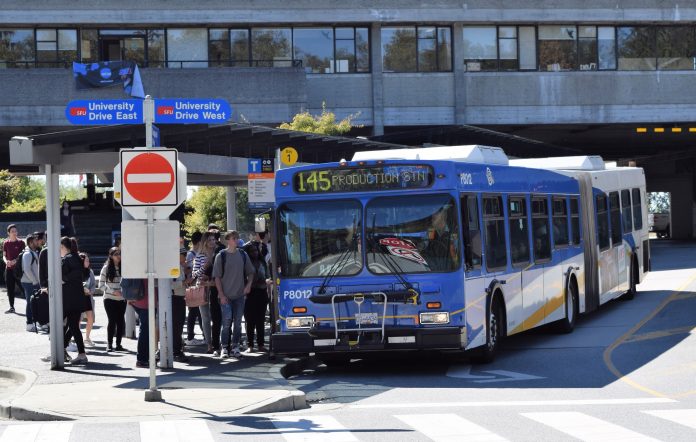
Vancouver recently announced its intention to test out two-decker buses, which currently run in nearby areas like Seattle and Victoria. Two Enviro 500 models will join TransLink’s other buses in October. This sounds like a blessing in theory; more seats means better travel, right? Depending on how it’s implemented, this could be great. But there are plenty of things we’ve got to consider before embracing the idea.

With the increased seat space, transit would also be an infinitely more relaxed endeavour. With everyone able to actually find a seat, things would be much less tense on the bus, and longer rides would be more likely to present an opportunity for students and workers to multitask and get some work done if they’re blessed with the appropriate portable technology.

However, there are some things that we’ve all got to think about before advocating too hard to turn this potential pilot project into a Vancouver mainstay. Is Vancouver in particular the right city for this?

Firstly, our articulated buses (the long ones with the connecting joint), according to Vancity Buzz, technically carry, on average, the same number of people as a double-decker bus would — though this might not be totally accurate now, as the Enviro 500s are said to fit 88 seated passengers or 121 total. However, assuming this is accurate, the only real difference would be a little less road space occupied, unless the double deckers were to replace only our smaller buses, but for a few reasons, that’s hardly feasible.

Another thing to consider is that Vancouver is full of low-hanging road signs on its highways, tunnels, and low-hanging elevated roads in general (just look at the area surrounding Stadium-Chinatown Station, for instance.) It’s also full of narrow roads. The city itself seems to be conscious of this; TransLink CEO Kevin Desmond mentioned last year that they would “want to put them on an express route . . . you don’t want to take people on and off in an urban setting.”

But if we get to the point where we want more of those buses, how many routes can really accommodate them properly? This is particularly glaring considering how famous Metro Vancouver already is for its crappy traffic. If an accident happens, I can’t see those buses having great maneuverability as far as minimizing damages is concerned.

Given the changed weight distribution, I’m also concerned about how well such buses would run in the winter months. Driving in winter conditions isn’t just down to the winter equipment I should hope those buses will get; it’s also dependent on the skill of the driver and the vehicle’s composition. That’s not to call TransLink’s drivers unskilled, but there will almost certainly be points in the transition process where the risk of a serious accident goes way up with the unfamiliar vehicles.

Money also plays a role here. With TransLink already upping fares and going ahead with various other ‘upgrades’ to its system, do we really want to risk having to pay even more fares for a system which, let’s face it, won’t affect enough routes to really matter to the majority of us?

As mentioned previously, TransLink will presumably also be paying extra costs for the hours needed to train up its employees for the new routes and new buses — which might not seem like it’ll be a ton if these buses end up servicing only a few routes, but presumably they’ll have to train at least more drivers than they have buses. It’ll still be a big chunk of change, and if that’s the case, I’d rather just spend that money on getting more frequent buses, if possible.

On that note, how would these buses affect the pre-existing schedule? I would hate to get these double-deckers if it led to fewer total buses running.

At the end of the day, double-decker buses might sound good, and they could be if done right. But there are plenty of road bumps to beat before you get too excited for a transit Renaissance.

SFU women’s soccer falls 2–1 against Seattle Pacific University

0
This loss brings the Clan's overall record to 2-3 this season (Photo courtesy of SFU athletics)

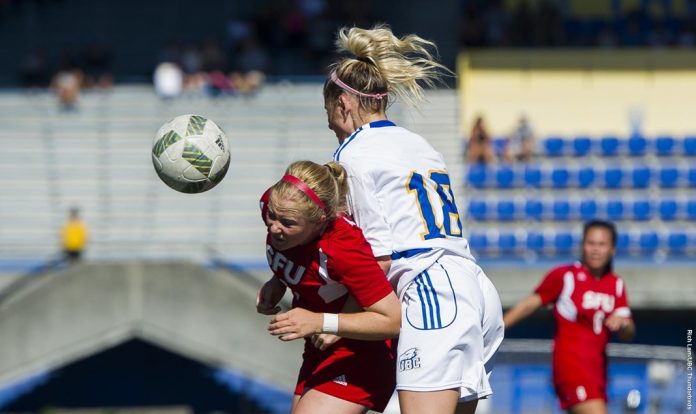
SFU got the first goal of the game during their last match on September 16. It was SFU sophomore Carmen Brown who scored for the Clan during the 13th minute of the game. Brown, a defender, was able to outplay the Seattle Pacific University (SPU) defenders and ended up stealing the ball from one of the players. She was able to make the shot from just within the box, getting the ball past SPU Falcons goalkeeper, Molly Stinson. This was Brown’s first goal of her career for SFU.

Brown had a second attempt on net in the 31st minute of the game. She shot from just inside the box, however Stinson prevented the ball from going in by deflecting it off of the crossbar and out.

Only minutes later, Seattle Pacific scored their first goal of the game, equalizing the score. Mickayla Mury scored off an assist from teammate Sophia Chilczuk. Chilczuk made an easy pass right through the SFU defence to Mury, who outplayed SFU goalkeeper Priya Sandhu and slid the ball into the net.

The tie was broken in the 71st minute when Kasey Reeve scored for the Falcons and brought the score to 2–1 for SPU. Reeve was able to pounce on the ball after a messy play sent the ball into the box right over the heads of Sandhu and her fellow defensive teammates, making it Reeve’s fourth goal of the season.

It was still a pretty decent game for the Clan, as it gave players the opportunity to hone their skills in front of a home crowd early on in the season. Brown had a total of six shots, three of which were on net. Midfielder Jenna-lee Baxter also had some good opportunities during the game, with a total of three attempts to score. As per usual, Emma Pringle had a strong presence on the field, making two very close attempts on the opposing team’s net.

Stinson did a good job defending her goal; she saved a total of six attempts made by the SFU players, and helped her team stay in the lead against the Clan.

This loss drops SFU’s women’s soccer to 2–3 for the season. They play their next game on September 21 in Bellingham, where they will be facing up against Western Washington University. Kickoff is at 7 p.m., and can be watched through SFU Athletics’ streaming service.

World News Beat

0

ICELAND – Coalition government collapses in the midst of child abuse scandal

Icelandic Prime Minister Bjarni Benediktsson has called a snap election following the loss of its one-seat majority in parliament. Last Friday, the Bright Future party walked out of the three-party coalition currently governing the country. This follows allegations that Benediktsson tried to conceal a letter written by his father recommending that his friend, Hjalti Sigurjón Hauksson, convicted for sexual abuse of his stepdaughter, have his “honour restored.” According to Icelandic law, this would change his civil status to allow him to apply for certain jobs. Bright Future called the government’s efforts to hide the letter a “breach of trust.” The government was formed nine months ago and this is Iceland’s second snap election in a year. Iceland’s previous government fell apart following another scandal regarding the leaked Panama Papers.    

With files from The Independent and Al Jazeera.

UNITED KINGDOM – Homemade explosive detonates on London train

A homemade explosive device detonated on a subway car during rush-hour on September 15 in London. 29 people were injured, though none of the injuries were life-threatening and authorities say that most of the damage was avoided, as the bomb failed to detonate properly. The country’s threat level was raised to ‘critical,’ the highest possible designation, and the so-called Islamic State has claimed responsibility. Authorities are still investigating the events of that morning and reviewing CCTV footage.  

With files from CBC News and BBC News.

MYANMAR  – Humanitarian crisis continues for Rohingya

Myanmar leader Aung San Suu Kyi announced that she will not be attending the United Nations General Assembly scheduled to take place later in September. This follows accusations from UN human rights chief Zeid Ra’ad Al Hussein that Myanmar’s army is waging a “systematic attack” on the Muslim Rohingya minority that is a “textbook example of ethnic cleansing.” The army denies these allegations. Suu Kyi is facing criticism from rights groups, and some critics are calling for her Nobel Peace Prize to be retracted. Nearly 400,000 Rohingya, especially women and children, have already fled to neighbouring Bangladesh, which is facing a humanitarian crisis as it attempts to provide for the incoming refugees.    

With files from The Telegraph and Al Jazeera.

OUTER SPACE – NASA crashes spacecraft into Saturn

NASA’s spacecraft Cassini has ended its journey by crashing into Saturn after 13 years of circling the planet, diving between its rings, and collecting temperature readings and other valuable images and data. Cassini was launched from Florida in 1997 and arrived to Saturn in 2004. After its mission was twice extended, Cassini met an unusual fate when NASA decided to run it into Saturn where it could burn up instead of letting the spacecraft run out of fuel, crash, and possibly contaminate one of Saturn’s moons.

With files from NASA and CBC News.

Senate Report

0

CORRECTION: A previous version of this article stated that senator Paul Percival was once a student at SFU. Percival came to the university as a professor in 1979, though he did not study here.

Senate discusses university revenue

Simon Fraser University senators reviewed the 2017 financial report at the SFU Senate meeting on September 11.

According to the report, the institution has earned $689 million in revenue with students making up the bulk of the contributions followed by the provincial government at 36% and 31% of the total amount, respectively.

Senator Paul Percival commented that when he first started as a professor at SFU, the percentage of revenue from tuition fees was much lower.

“It has gone up enormously,” he said.

In addition, what has gone down proportionately “is the fraction paid for by the province of British Columbia,” Percival continued. “The students are contributing more [in tuition] than [what] the provincial government is doing.”

In essence, “the provincial government pays less than a third of the costs for SFU,” noted Percival.

SFU President Andrew Petter added that international student tuition accounts for the majority of the increase in student contribution to the university’s revenue.

“The share of our revenue that comes from students’ tuition has risen significantly and our share of our [funding] from the government has not and therefore you see [these] results,” he explained.

Senate approves certificate in biological anthropology

Effective spring 2018, students in the department of archaeology can pursue a certificate in biological anthropology after a motion for adopt the program was passed by SFU Senate.

However, during a period of discussion, senator Daniel Leznoff, expressed his concerns with the certificate because it only requires students to take a first-year biology class and all other requirements can be completed within the department of archeology.  

The purpose of a certificate is to highlight a concentration within a discipline and encourage students to take classes outside of their department.

“I think it’s a serious issue that we are giving what is effectively two credentials for price of one” said Leznoff. “This is not a new issue. I think there’s a significant number of certificates in the university that [does] this.”

Senator Aoife Mac Namara spoke in support of the certificate citing the ability of students in other faculties to gain a substantive understanding of the field, even though it’s not a minor. “It is a mistake to underestimate the value of [a certificate because it] could change your direction and lead you into a different area,” said Mac Namara.

Where your SFU tuition dollars REALLY go

0
Illustration by Emma Wu


You know that you just emptied your wallet and your savings recently on tuition, but do you know where the money that would’ve allowed you to enjoy the many joys of proper nutrition went?  If you’d like to find out where the dollars that you wasted spent rationally went, read on!


SFU admins dive into the money

This is what we all imagine rich people do with copious amounts of dough — which the rest of us can only have wet dreams about. With all the money from tuition clearly not going back to the students, logically this must be what SFU’s ever-richer admins are up to. It’s a pity they’re all too uninventive to spend their money on anything actually interesting (like a dog water park with dog accessible waterslides. Or, you know, the school.)


Constant construction

You know how it seems like there’s always construction on campus? Well, that’s because SFU isn’t actually building anything, they’re just paying for perpetual construction (but not perpetual maintenance. RIP Louis Riel House.) It’s all part of an elaborate scheme to shake the brains of students so they just keep forgetting things and keep having to take the same stupid courses over and over again, even if it was just a geography credit they didn’t even want to take in the first place, but their stupid second-minor required it.


An emergency plan detailing what to do in the scenario when black bears overtake the Burnaby campus

SFU admins were inspired to draw up this emergency plan after seeing Rising Dawn of War of the Dawning on Rising War on the Planet of the Apes in theatres. The university deemed this to be the most important emergency situation to address. So the next time you’re trapped on the mountain, freezing in the winter snow, and waiting for SFU to figure its shit out, you can be comforted by the fact that you probably won’t have to witness the campus being overthrown by bears. Probably.

Building FEWER parking lots

You heard me right. While other universities might use your tuition to attempt to fix issues like the lack of parking spaces on campus, SFU actually spends your money scientifically decreasing the number of parking spaces on campus without actually reducing the physical space devoted to parking lots. The physics is hard, but SFU is clearly committed to the cause.

Student groups struggle to find space on campus

3
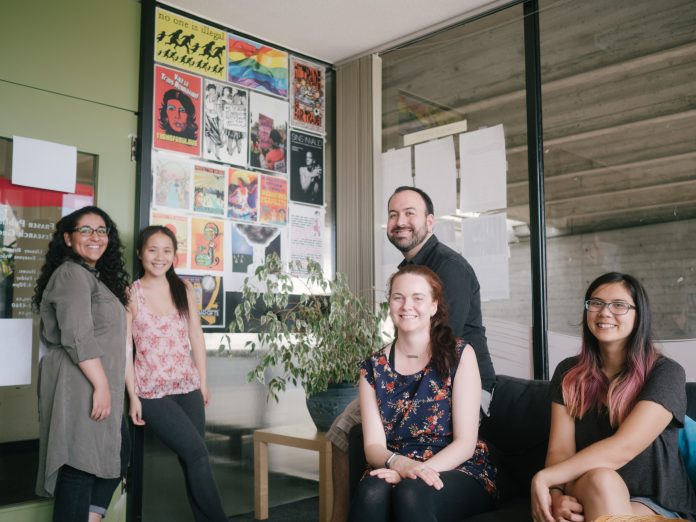
The Simon Fraser Public Interest Research Group, a student centre for social and environmental justice, has been located in the Rotunda for decades.

Two student groups are voicing concerns that they will be left homeless when they vacate their offices next year due to space constraints on the Burnaby campus.

The Simon Fraser Public Interest Research Group (SFPIRG), a student-run centre for social and environmental justice, and the campus radio station CJSF are currently renting space in the Transportation Centre above the lower bus loop — also known as the Rotunda. However, the groups said they must vacate the space when their leases run out in June 2018 and have not been able to find another location on campus.

The organizations, funded by student fees, told The Peak that they have approached the university and the Simon Fraser Student Society (SFSS) about their situation.

SFPIRG and CJSF are renting the space from the SFSS, the society heading the construction of a new Student Union Building (SUB) which is scheduled to open in fall of next year. The student society intends to return the Rotunda, including the suites currently occupied by SFPIRG and CJSF, to the university upon the completion of the new building.

This month, the student society put out a call for student organizations to state their interest in space in the new Student Union Building, but the move has not lessened the anxiety felt by the Rotunda groups.

“We’re incredibly concerned about the lack of space for student organizations on campus,” said SFPIRG director of communications Craig Pavelich. “The fact that it has taken until the year right before the SUB is slated to open [creates the concern] that it will leave [student groups] on campus out in the cold.”

CJSF station manager Magnus Thyvold said that he felt the process is “pretty last minute in terms of the issues involved.”

SFSS responds to concerns

The SFSS chief executive officer Martin Wyant told The Peak that the student society was hoping to have the submission period completed earlier, but it was delayed.

“I understand the circumstances that [SFPIRG and CJSF] have, we have met with representatives of both groups, trying to inform them along the way,” said Wyant. “This has been up in the air and we are aware of that. We’ve encouraged people along the way . . . that if they are concerned . . . they should take the opportunity to investigate other options.”

He said that the SFSS could not comment on the likelihood of SFPIRG and CJSF being able to secure space in the new building. “This is something that we will evaluate once we get the submissions,” he said.  

“We haven’t finalized anything with respect to the number of external spaces that we will be accommodating,” Wyant added. “We’ve got this building coming, and we are doing our best to try and identify groups that we think are the best fit.”

SFPIRG and CJSF are independent from the Simon Fraser Student Society while the other organizations currently housed in the Rotunda, including the Women’s Centre and Out on Campus, are under the umbrella of SFSS services and will be guaranteed space in the Student Union Building, according to Wyant.

“It is a student building so what we really want to focus on is making sure that the people that are in it are focused on student needs,” Wyant explained.

The SFSS was not willing to release information about the end dates of its lease agreements with SFPIRG and CJSF or the university.

University cites space restrictions

Thyvold and Pavelich said that they had approached SFU about the situation, but the university did not express interest in housing the student groups.

The Peak contacted the Office of the Vice-Provost, Students and International for an interview and was directed to university communications. SFU spokesperson Kurt Heinrich stated that SFPIRG and CJSF were primarily connected with the student society.

“We can only suggest they work with the SFSS with whom they have their current rental [r]elationship,” said Heinrich. “The university does not have any space available.”

He said that the options available to the groups are the Student Union Building and UniverCity, the community located adjacent to the campus at the top of Burnaby Mountain.

Pavelich said that SFPIRG has looked into the option of moving to UniverCity, but described the rental spaces there as being incredibly expensive, noting that it may amount to four times the group’s current operating costs.

“I don’t think for any of the student-funded non-profits on campus, space at [UniverCity] is a feasible option,” he said.

Pavelich said that SFPIRG had asked SFU if the groups could temporarily remain in the Rotunda once the space was returned to the university, but was told that was not a possibility.

Heinrich confirmed to The Peak that “[t]he university will fully utilize the Rotunda space once the Student Union Building is completed as there is a high demand and need for space at the Burnaby campus.”

“The [u]niversity has been very clear that once the lease with the SFSS for the Rotunda space is terminated, the university will be using the vacated space for its own priorities,” he added.

Groups face uncertain futures

SFPIRG and CJSF are still facing a lot of uncertainty about where they will be next year and want to remain accessible for the bulk of the student population

“It’s really important for us to be on this campus,” said Thyvold, adding that the radio station will likely need to commit to extensive renovations of their new location to make it suitable for working with sound. If the group was to be relocated to the Student Union Building, Thyvold added that renovations would likely still be necessary.

Both groups said they have been renting space from the SFSS in the Rotunda going back at least two decades. They are hopeful that the Student Union Building will bring all of the student groups together in one place.

“We’re excited about that possibility, but it would be a lot nicer to know that that was actually going to happen and not wondering if we are going to end up homeless,” Thyvold mentioned.

Wyant, the student society chief executive officer, stated: “I understand that people have concerns. We are going to have a good process and hopefully people will participate fully in that and we are looking forward to getting good submissions from a variety of groups.”

The optimistic sentiment was reflected in the comments by the representatives from SFPIRG and CJSF.

“We’re really hoping things turn out,” added Thyvold. “That we do get a space in the new building, I think that would be a great win-win for everybody.”

With files from Henry Tran.

TransLink bus services expansion leaves out SFU

1

The largest expansion of bus service in Metro Vancouver did not result in more service to Simon Fraser University.

TransLink introduced an additional 105,000 hours of bus service across the region earlier this month. In addition to the regular changes that come each fall to university routes, some received a permanent improvement in service.

However, these changes have not reached the SFU Burnaby or Surrey campuses.

“While there have been no changes this September to direct connections to SFU campuses in Surrey or Burnaby, there have been a lot of changes to the broader network which is likely used by SFU students,” said TransLink spokesperson Jill Drews.

Emily Carr University, Kwantlen Polytechnic, Langara College, Capilano University, and the British Columbia Institute of Technology have received increased service on at least one bus line running to campus.

The University of British Columbia has seen overcrowding improvements on a total of four routes directly to the campus.

Although changes have not been implemented directly on lines running to SFU, changes in the system overall may result in shorter wait times, as well as less crowding in many different areas. TransLink service from the North Shore to the SFU Vancouver campus downtown has seen a permanent improvement, Drews noted.

The decision to ramp up the public transit system comes at a time when the transit is experiencing a jump in ridership. TransLink is hoping to provide better service to those who already use transit, as well as introduce new neighbourhoods into the already existing transit system.

TransLink is also considering more improvements to lines that service SFU.

“We realize overcrowding on the 95 B-Line is a problem,” Drews stated. “Planners are looking at different ways to help alleviate it through increased frequency during the busiest times. This is a top priority for us.”

TransLink is also aware that crowding on the SkyTrain is a problem for students and has ordered additional cars that will start arriving in late 2018, according to Drews.

The last time a direct change to SFU transit took place was in December 2016. Transit changes coinciding with the construction of the Evergreen SkyTrain line resulted in increased service for the 143 from Burquitlam Station to SFU Burnaby and the introduction of the 95 B-Line which runs between the campus and downtown Vancouver.

However, these changes did not alleviate transit stress for some SFU students. Instead of taking students between SFU and Coquitlam Centre, the 143 bus line now terminates at Burquitlam Station.

Recent SFU alumnus Holly Steinson told The Peak that the change meant that her commute time doubled and she ended up taking her car to school. “I can’t justify spending so much more time on getting to school using public transit,” she said.  

TransLink ridership has still seen a significant increase — reaching a record 200 million boardings in the first six months of the year.

SFU men’s soccer defeat Slippery Rock University 1–0

0
The Clan had many chances, but Connor Glennon was the only one who capitalized (Photo courtesy of SFU athletics)

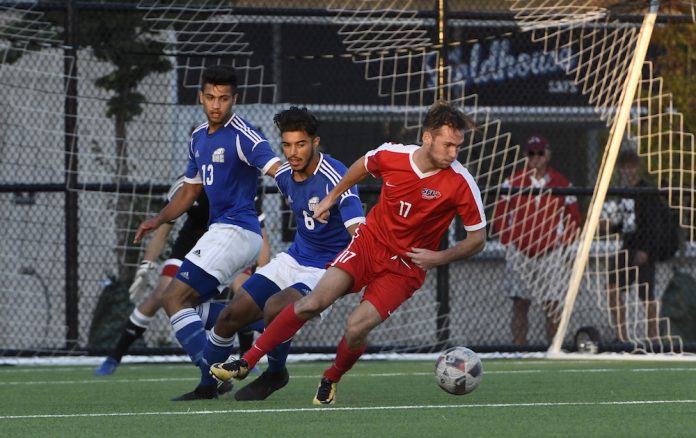
SFU men’s soccer took on Slippery Rock University on September 15 at Terry Fox Field. It was a game in which the Clan controlled the flow of play, and yet there were a couple instances in which the team was lucky to escape with the clean sheet victory. Although the game ended with a score of 1–0 for the home side, both teams — Simon Fraser especially — failed to capitalize on great scoring opportunities.

The first half saw SFU dominate possession, with midfielders Kyle Jones and Marcello Polisi playing an influential role in playing through balls and winning back the ball whenever it was lost. The Clan’s first chance came in the 14th minute, when Mateo Polisi was set up by Mamadi Camara, but just missed the outside of the post.

This was the story of the first 40 minutes, as the ball was continually in the opponent’s end early on, and SFU was unable to capitalize on any of the chances they created. This was evident in head coach Clint Schneider’s decision to sub on forwards Connor Glennon and Riley Pang, and midfielder Dzenan Bezdrob for Rahid Rahiem, Camara, and Matteo Polisi in the first half. This decision paid off, as Connor Glennon scored the game’s only goal by finishing off a beautiful cross by Michael North in the 43rd minute. The teams would go into the half with a score of 1–0, although the Clan certainly could’ve certainly had more.

While the score would remain the same in the second half, the game took a slight turn. While the Clan still had the majority of possession, they gave up a couple of chances that could have cost them the victory. One came when SFU goalkeeper Miguel Hof gave the ball away to a Slippery Rock University attacker, before making his only save of the game off of the opponent’s shot. The best chance of the game for the opponent, however, was when midfielder Kyle Boyer got the ball past the Clan defence and was off on a breakaway. When Hof charged out, Boyer chipped the ball over his head towards the empty net. The sure goal was missed by inches, as the ball hit the crossbar before being cleared by Simon Fraser.

Although it didn’t result in any goals, Camara had a dominant second half, consistently embarrassing defenders with his dribbling prowess. These efforts resulted in a group of SFU supporters chanting “come on, you Pogba” throughout the second half, comparing Camara to the Manchester United superstar. Head coach Schneider summed up Camara’s play and role to the team saying, “Hopefully he[…] starts to finish off his chances . . . because he will continue to create them for himself and others.” Camara would finish the game with four shots (three on goal), same as teammate Matteo Polisi.

Coach Schneider was happy with how the team played, but was “very disappointed in [the team’s] finishing.” This is partly due to opposing goalkeeper Jonathan Sharp, as he made 11 saves.

This 1–0 win extends the Clan’s win streak to four to start the season, and they are now ranked as the second best team in the NCAA. They play next on September 21 at Seattle Pacific University, with kickoff starting at 7:30 p.m.