Home Blog Page 659

De-stress before the test

0

Self-care is taking care of yourself the same way you take care of the important people in your life. It’s doing things that are good for you, whether it be physically, emotionally, mentally, spiritually, or anything else. When exams and essays start piling up, it’s important to take a little bit of time to look after yourself. Below are 10 suggestions of quick and easy self-care activities.

  1. Do a 15-minute meditation
    Meditation can be as simple as sitting down, taking a few deep breaths, and letting your mind wander. No candles, incense, or soft music needed (but encouraged, if you like that sort of thing!) You can also YouTube guided meditation if you feel that would help.
  2. Take yourself out for something enjoyable
    Sometimes we feel like we need other people to go out for food or do something fun with us, but spending quality time with yourself can be just as rewarding. Pick something you want to do — go to a restaurant, go shopping, go for a massage, go to a museum, etc. — and do it alone.
  3. Watch a show that makes you laugh out loud
    When was the last time you laughed until your sides actually hurt? (Note: laughing that turns into crying around this time of year doesn’t count.) Whether it’s The Office, Parks and Recreation, Family Guy, or whatever your cup of tea is, take a short break from those humourless assignments to indulge a little.  
  4. Get yourself a comforting meal
    Urban Dictionary defines comfort food as “food that is not only comforting to the taste buds, but all the other senses.” Suggestions: something that’s warm and chocolate-y, like fresh-baked chocolate chip cookies. If fresh fruit and veggies do it for you, though, make yourself a fruit salad or a stir fry. You could even try a recipe your mom always makes — whatever makes you feel like you’re getting a comforting hug.
  5. Take a hot shower or bath
    Tips for extra indulgence: lavender-scented products, a relaxing playlist, candles, bubbles, and bubbly (if you’re old enough, just stick to bubbles.)
  6. Book an appointment with a counsellor
    Now, before you think to yourself “I don’t need a counsellor, my issues aren’t that big,” allow me to make my case. All of us have things that bother us, or make us anxious or sad sometimes, and therapists can help you not only explore all those feelings, but give you useful tips to manage them. Talking in length about how you’re feeling can give you valuable self-knowledge. There are lots of free and low-cost counselling services in Vancouver and Burnaby which you can find through Vancouver Coastal Health or this government website. Of course, there’s always SFU Health and Counselling, too.
  7. Vent to somebody you trust
    If I haven’t convinced you of how beneficial therapists can be, find a friend, a sibling, a parent, or anybody you feel comfortable talking to and just let out all your thoughts.
  8. Take a nap
    Pretty self-explanatory, right?
  9. Make a list on a topic that makes you feel good
    It can be a list of your aspirations, a list of the people you care about, a list of things you’re grateful for today, etc. It may feel silly or juvenile, but focusing on positive things and visualizing them on paper can provide a surprising amount of comfort.
  10. Go for a walk in the fresh air
    Hopefully you don’t mind the rain or the cold (probably not, because you live in Vancouver). Bundle up, grab an umbrella, bring some earbuds, make a playlist, and get ready to breathe some non-library fresh air.

Be a little selfish this exam season and take good care of yourself, everyone!

SFU students mark Indian festival Diwali

1

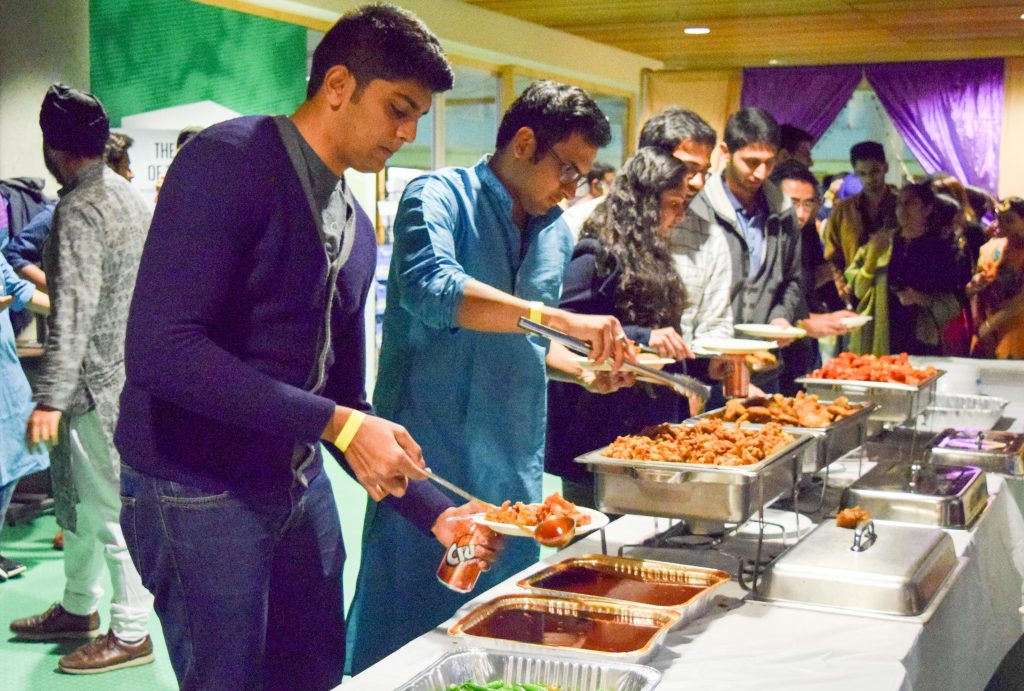
The SFU community experienced a taste of the festival of lights at the annual, student-hosted celebration of Diwali which took place on campus in the Maggie Benston Centre (MBC) this past October 14.

An occasion celebrated by millions of people across the world, Diwali or Deepawali is “the biggest festival in India,” according to Aayush Arora, president of the Indian Student Federation which organized the festivities. The student federation hosts the celebration annually to involve the many international students on campus in the major festival.

“With so many international students here, we give them a feeling of home away from home,” explained Arora.

The SFU Bollywood Dance Team was one of the groups to start off the night with performances.

The evening saw around 200 people come through its doors as well as dance and singing performances, Diwali games, henna, and a lot of Indian food. Arora noted the significance of having a Diwali celebration here at SFU was that the event was not exclusive to those in the Indian community, but open to everyone to connect with new people.

“I think it’s amazing. I didn’t expect them to turn this area of the school into this beautiful cultural place,” said Vandana Kurma, a fourth-year SFU student, referring to the elaborate decorations that transformed the MBC food court. “I’m actually quite stunned.”

As the celebration takes place each year between late October and early November, Diwali coincides with a new year in some regions and this is reflected in the elaborate decorations, food, and fireworks that are the hallmark of this festival.

Abhijit Kambalapally serves Indian food at the evening celebrations.

Jigyasa Kurma, who also attended the celebrations on campus, said that she missed the Diwali celebrations back home in India, but thought that this was a good way to celebrate Diwali.

“It’s good to engage Indian students to celebrate this festival,” said Jigyasa Kurma.

“We’ve got international students who are usually away from their families, [and] this is just another way for them to feel like [. . .] they don’t have to miss out on all the things that happen in India,” added Vandana Kurma. “Canadian culture is just as accepting and diverse.”

This sentiment was echoed by another student, Shina Kaur, who also turned out for the festivities hosted by the student federation.

“The [SFU] community is insanely diverse,” said Kaur. “Events like this [are important] so that people from all over the world can feel like they have something to be a part of here at SFU.”

SFU students Earl Dacanay and Kat Gill sitting just to the side of the dance floor at the event.

The Diwali festival has its origins in ancient India, though it is presently celebrated by many religious communities worldwide.  

“People across all religions celebrate it — it’s not a Hindu or a Sikh festival,” explained Arora. “Sikhs have their reasons for celebrating Diwali and Hindus have their own reasons for celebrating Diwali.”

For Hindus, the festival marks the win of good over evil in reference to the legend of Lord Rama defeating the demon king Ravanna in 15th century BC and returning to his northern kingdom.

The university intercultural engagement unit is also hosting a variety of events in light of the festival that will take place throughout the week.

SFU takes on calls to action towards reconciliation

1
The Aboriginal Reconciliation Council passed the report to each member before handing it over to President Andrew Petter.

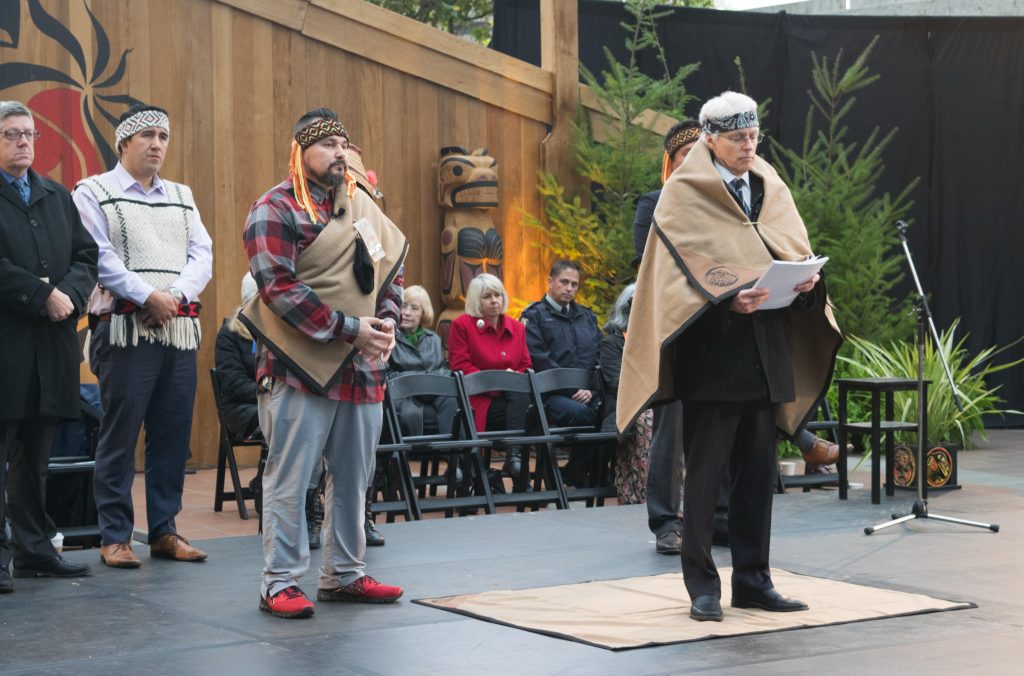
Simon Fraser University marked the start of a new journey towards reconciliation at a traditional witnessing ceremony led by members of the Coast Salish First Nations in Convocation Mall on Monday.

The SFU Aboriginal Reconciliation Council handed over its final report Walk this Path With Us consisting of 33 calls to action which will assist in the allocation of $9 million in reconciliation funds over the next three years.

The Coast Salish Kwis Ns7eyx̱, or witnessing ceremony, serves to hold Simon Fraser University accountable to its commitment towards the reconciliation process through oral tradition. The witnesses have the honour of recording and listening to the ceremony, after which they are responsible for sharing what they have seen.

The space in the center of campus was transformed into a long-house for the witnessing ceremony.

“The job of the witness is to take in and reflect and listen to the words and listen to the work that is going to take place and in that way they record this,” said co-host Gabriel George of the Tsleil-Waututh nation.

“It means many things when we do this work publicly,” he added. “It’s mindfulness and healing.”

SFU’s commitment to the calls to action will be achieved in part by indigenizing curriculum and providing support for Indigenous students, but will also establish community spaces where Indigenous students can feel connected to their culture during their studies.

The ceremony commenced with an opening prayer led by Tsleil-Waututh elder Margaret George. Following formal acknowledgments, witnesses comprised of elders, esteemed community members, and students of SFU were formally introduced.

SFU President Andrew Petter was led into the ceremony by Coast Salish drummers.

The space created for the witnessing ceremony emulated a long-house, with cedar branches adorning the sides of the podium, swaying lightly in the brusque air as if anticipating the drummers, whose music invited President Andrew Petter — representing SFU — into ceremonial proceedings.

“It’s wonderful to see the culture, the language, the songs have survived the face of adversity,” said co-host Ian Campbell of the Squamish Nation.

Campbell commended those who made the process at the university possible, and especially the students who “will continue to walk through this door to have a safe space, an inclusive space that honours that our history is your history.”

“It doesn’t just start with 150, but spans millennia and that is something that we can celebrate together — our collective future,” he said.  

The Aboriginal Reconciliation Council passed the report to each member before presenting it to the university.

The spirit of this collective ambition was carried through the ceremony. Representing the university, Andrew Petter accepted the responsibility of maintaining a steady course through inclusivity.

“This university cannot move forward in a way that does not include and respect Indigenous peoples,” said Petter. “‘Nothing about us without us’ is one of the underlying principles, indeed the first principle of this report.”

Witness Charlene Aleck said that the ceremony prompted her to think about her late father who went through the residential school system, but still kept these ceremonies and traditions intact.

“Here we are today practicing those [ceremonies] for future generations that walk through Simon Fraser University,” she said. “We’re laying something down, we’re putting that medicine forward in such a good way.”

President Petter received words of advice from the witnesses as the university moves forward with the recommendations of the report.

The co-chair of the reconciliation council Chris Syeta’xtn Lewis spoke to The Peak about his hopes for the future of this initiative.

“We need to create a better space for Indigenous students,” Lewis added. “Also for all our students in general, to start that education process on [talking about] reconciliation [and] then recognize those past traumas that happened to First Nations students.”

“We need to move forward from that.”

Bill C-365 is waste of valuable bureaucratic time

0

This summer, Canada hosted an insane number of wild blazes, up to and including the biggest one BC has ever seen. In some cases, the firefighting efforts were complicated when crucial equipment was damaged or stolen. So Mel Arnold, a Tory MP, just tabled a private member’s bill, Bill C-365, looking to make theft of firefighting equipment punishable by life in prison.

Of course, stealing that equipment — hoses, trucks, etc. — endangers lives, so I can understand the hypothetical logic of adding restrictions. But this bill is both unnecessary and a waste of time, motivated simply by topical frustration.

First and foremost: the punishment is excessive in the context of the Canadian punitive system. It’s true that stealing firefighting equipment can indirectly lead to harm beyond the scale of single homicide; it could lead to the fiery deaths of several people in one swoop. But we already have section 430 in place, which deals with mischief that endangers life and already has “life sentence” as a maximum penalty.

C-365 acknowledges the pre-existence of that law and suggests that, if a charge is made based on that section, the involvement of firefighting equipment should be an aggravating factor. But why?

I don’t mean “why is stealing firefighting equipment particularly bad,” but rather “why does this need to be passed into law?” We have judges for a reason. The Criminal Code gives us rules and the judge interprets them for the purposes of a given case. We cannot add things to the Code for every possible way a given offence might unfold, because we’d never be done.

As Huffington Post reports while interviewing defence lawyer Michael Spratt on the topic, the Code already has such strangely esoteric mentions as “stealing cattle [and] theft from clam beds.” Continuing this trend is a waste of time when, either way, the final decision is going to fall to the judge.

Rather than us wasting time on the bill, it’s the work of a moment for a judge to make the call on exactly how much danger a thief actually posed. This falls more in line with what the working relationship between the law and the courtroom is meant to be.

The only tangible purpose C-365 would have is if it sought to change the minimum or maximum penalty awardable for the theft, but it doesn’t. The wording on the bill is exactly the same as the one in section 430: “guilty of an indictable offence and liable to imprisonment for life.”


Ultimately, it’s just one bill: repetitive or not, who cares? Here’s the thing: C-365 isn’t just a waste of time. It’s a detrimental waste of time, because every second the government has is essential when bureaucracy is already a very slow process. It tells us that our MPs are not in tune with the priorities of the country right now.

Spratt mentions “bills tackling poverty or the overuse of jail as a solution to crime; or bills that might take steps to alleviate some of the serious problems that we have with the opioid epidemic” as more worthy projects, and I agree.

Logan Lucky is the best movie you didn’t know you wanted to see

0
Good actors abound in Logan Lucky, and who knew that Kylo Ren was from the south? (Image courtesy of Fingerprint Releasing and Bleecker Street)

I’m just going to come right out and say it: Logan Lucky is a fucking phenomenal movie. There was nobody more skeptical than me — the trailer was awful. I remember the first time I watched it, I got bored halfway through and didn’t even understand what kind of movie I would be walking into. I recall talking to my friend over the phone and saying, “This looks dumb, and it has too many admirable actors to be good . . . Fine, let’s watch it, I’ll pick you up in 10.”

     For those of you that are just as confused as I was as to what the crap this movie is even about, here’s a quick rundown: two brothers in a nothing-to-lose point in their lives decide to plan a heist and getaway during the NASCAR race in North Carolina. The verdict? YES. Hell yes. This movie deserves every little bit of that 93% rating on Rotten Tomatoes. Forget all the other comedies and crime movies that are on right now, this movie is the full package and is 100% worth the big screen glory. The critics’ insanely high reviews were what pulled my curious movie-addict self into the theatre — and WOW, do I ever agree.

“Forget all the other comedies and crime movies that are on right now, this movie is the full package . . .”

     I’m going to make a brave reference and say I got Coen brothers feels from this movie. The plot circles around a robbery at the Charlotte Motor Speedway in a way that is creative and cunning. The actual robbery takes up maybe 10% of the movie and the rest of the it is the hilarious and smart psychological breakdown of the planning, execution, and the actual getting away with such a large-scale crime.

     The characters and relationship building is absolutely fantastic, and the acting is great. I was horror-struck over fricken’ James Bond and Kylo Ren speaking in southern accents and playing non-iconic roles (because I’m a baby, apparently), but the acting was so well done that I was able to enjoy the movie despite . . . my inability to handle southern accents? God that sounds bad.

     No spoilers, but the ending was one of those that reveals all the secrets of what happened in the movie, that neither the audience nor the other characters realized were happening at the time of the event. It was such a beautiful ending — the movie came full circle and the character development and intertwining networks between the characters was awesome.

     Logan Lucky makes you simultaneously want to rob a bank and realize that you’d never be smart enough to do it. I think the best part of the movie was that it was smart but didn’t take itself too seriously — it was funny and ridiculous while still holding up a gold standard for character development and a sustainable plot line. I can’t give you a single reason why any of you should “just trust me” so instead I will encourage you to go watch the movie yourself for a wholly entertaining experience.

United Nations to recognize Vape Nation sovereignty

0
Illustration by Alice Zhang

The rapid expansion of the population of Vape Nation has been kept under close watch by the United Nations (UN) for a while now. Due to a steadily rising population, Vape Nation now signifies a large population of people, all with a common goal. Many nations viewed this as a sign of upcoming danger. In an attempt to appease any possible uprising of Vape Nation, the UN officially recognized them as a sovereign state back in 2015. Although, now that Vape Nation has a population of over 10 million, the UN is beginning to see it in a slightly different light. Due to its calm and relaxed nature, Vape Nation is no longer seen as a possible threat to be appeased, and is instead seen as a potentially powerful ally.

This change in perspective of Vape Nation has prompted the upcoming vote, whereby the assembly will award UN membership to it. Many member nations of the UN are thrilled by the possibility of an alliance with Vape Nation. Since it is currently unrestricted by any trade agreements or other alliances, many nations are excited at the prospect of it as a partner in trade or as a possible source of military backing. Other nations, however, are skeptical.

The main platforms for Vape Nation’s economic policies of ‘420 blaze it’ and ‘smoke weed every day,’ have made many member nations nervous. Although Nixon-era drug policy is undeniably falling to the wayside as a remnant of a bygone age, many still fear the consequences of such a pro-drug attitude.

Those concerned about Vape Nation’s stance on drug policy are not the only ones hesitant to provide membership. Canada, Argentina, Uruguay, and the Netherlands (all generally drug-positive nations) still plan to vote against Vape Nation’s membership. Some refuse to acknowledge Vape Nation as a sovereign state to begin with, while others think that Vape Nation is nothing more than “a bunch of fucking losers.” Many believe that being associated with this “bunch of fucking losers” would damage their country’s street cred.

Although all of this has been a heated and thoughtful debate, the UN has been unable to reach Vape Nation for any comment. In fact, Vape Nation seems to be entirely unaware of the ongoing debate. Due to a complete lack of leadership and organization, it is possible that Vape Nation will become a member of the UN without any official representation. In such a case, Chad from down the street of the UN will act as the official Vape Nation ambassador.


World News Beat

0


ISRAEL – Israel follows USA in withdrawing from UNESCO

Israel has withdrawn from the United Nations Education, Scientific and Cultural Organization (UNESCO) after the American government announced it would also forgo its membership with the heritage organization. The countries both cited an “anti-Israel bias” as the reason for the decision which will take effect at the end of 2018. The USA has asked to remain a non-member observer state, meaning that they will continue to participate in debates and activities after losing their voting rights. In a statement, Israeli Prime Minister Benjamin Netanyahu called the decision “courageous and ethical” and accused the heritage organization of distorting history.

The tension between the USA and UNESCO is not new. In 2011, the USA stopped financing UNESCO to protest full-member status being granted to Palestine. By the time the USA’s withdrawal is final, it will owe $550 million in unpaid dues to the organization.  

With files from The Washington Post and Al Jazeera.  

SOUTH AFRICA – Nearly 800 charges reinstated against President Zuma

Following a decision by South Africa’s Supreme Court of Appeal, 783 charges of corruption against President Jacob Zuma have been reinstated. The National Prosecuting Authority had originally dropped the charges which stem from controversial post-apartheid military contracts worth billions of dollars in 1999. Zuma’s opposition, the Democratic Alliance, have been trying to reinstate the charges since 2009 when they were dismissed, which allowed Zuma to become president. Though the charges have been reinstated, it is still unclear whether or not Zuma will be prosecuted. Zuma is serving his second and last term as president, which will end in 2019.    

With files from Al Jazeera and BBC News.

INDIA – Fireworks banned for environmental reasons as Diwali approaches

As the Hindu festival of lights Diwali approaches, India’s Supreme Court has banned the sale of fireworks until the start of next month which marks the end of the festival. Though fireworks are a traditional part of celebrating Diwali, the ban responds to concerns about air pollution in India’s national capital region. Delhi is considered the 11th most polluted city in the world, according to the World Health Organization. While the ban is welcome to some, others consider it an attack on Hinduism. Additionally, it severely impacts small, independent firework vendors who rely on Diwali sales. India purchases half-a-billion dollars worth of fireworks each year, most used during Diwali.      

With files from The New York Times, The Washington Post, and The Indian Express.

NIGERIA – Mass trial convicts 45 members of Boko Haram

Mass trials of suspected members of the Boko Haram terrorist organization began behind closed doors last week at a Nigerian military post. The process has led to concerns from human rights groups about arbitrary detention and of the living conditions endured while awaiting trial. Over 1,600 suspected members of Boko Haram are due to appear in military court. On Friday, 45 people were convicted and 468 suspects were released under the condition that they undergo deradicalization. Boko Haram was founded in 2002, and has been militarily active since 2009.

With files from The Globe and Mail and BBC News.

Kinder Morgan gears up for tank farm construction

2
BC government moves to block expansion until the environmental impact of a diluted bitumen spill can be assessed. (Photo Credits / Google)

The construction that will double the size of the Kinder Morgan tank farm located on the side of Burnaby Mountain is soon to be underway.

Trans Mountain, a subsidiary of Texas-based Kinder Morgan, has told The Peak that work to accommodate its pipeline expansion project at the nearby marine terminal has begun, though construction scheduled for last month has not yet started at the tank farm.

The expansion of the farm, which stretches to the intersection of Gaglardi Way and Burnaby Mountain Parkway, will see the number of existing oil-holding vessels increase to 26 tanks when construction is completed. A tunnel carrying a pipeline through Burnaby Mountain will connect the tank farm to the Westridge Marine terminal.

The construction in Burnaby will support the $7.4 billion Trans Mountain pipeline expansion project and the twinning of an existing pipeline carrying oil from Alberta to the port in Burnaby.

The increased capacity at the tank farm has raised alarm for Simon Fraser University and residents on Burnaby Mountain.

In November 2016, SFU President Andrew Petter issued a statement that the tank farm expansion posed “significant and deeply concerning” risks that would be viewed as “unacceptable to the university.”

A report released by the university found that the additional tanks would increase the risk of chemical exposure or a fire that could block access to the university and leave people stranded on Burnaby Mountain.  

In a statement provided to The Peak by SFU spokesperson Kurt Heinrich, the university said it maintains its position.

“SFU has played an active role as an intervenor on this issue. We have raised our concerns with the federal government and will continue to raise our safety concerns with Kinder Morgan,” said Heinrich.

“We are also trying to work with Kinder Morgan as well as Burnaby Fire, the RCMP, and the City of Burnaby to address many of the significant safety concerns related to the proposed tank farm expansion.”

Student groups have also expressed concern about the tank farm project and the Simon Fraser Student Society sent a letter to the federal government earlier this year.

“We have raised our concerns with the federal government and will continue to raise our safety concerns with Kinder Morgan.” – SFU spokesperson Kurt Heinrich

In a statement to The Peak, Trans Mountain spokesperson Ali Hounsell responded by emphasising that tank fires are “extremely rare” and a report commissioned by the company found that the risk of a fire is low. Trans Mountain has said that construction will include improved fire protection and warning systems on the new tanks.

The construction is not expected to interfere with roadways to SFU, which was a concern of the university in an earlier submission to the National Energy Board.

“At this time, our understanding is that planned construction will not interfere with any of the access roads to the Burnaby campus,” Heinrich confirmed.

“During construction, the traffic impact to SFU and for Burnaby Mountain residents should be minimal,” Hounsell said. The company said it intends to access the tank farm from the intersection of Underhill and Shellmont streets.

The company previously considered accessing the site via Gaglardi Way, but is now considering Greystone Drive as a secondary point of access, according to the statement.

The Trans Mountain project received final approval from the federal National Energy Board in August though the decision is now being challenged in the Federal Court of Appeal by First Nations, activists, and municipal governments including the City of Burnaby.

Boring through the mountain to make way for the pipeline is scheduled to start in February 2018 and will be completed come late 2019.

SFU wins in three straight sets against St. Martin’s Saints

0
Jayme Bratsberg lead the game with four serving aces. (Austin Cozicar / The Peak)

On Saturday night, SFU beat the St. Martin’s Saints in three straight sets, 26–24, 25–19, 25–20. The Clan has now won five of its last seven games.

St. Martin’s started the game strong, pulling ahead early with a 3–0 lead. The Clan caught up, and both teams were neck and neck throughout. When the teams were tied 24–24, Jayme Bratsberg finished the set for SFU with a service ace. Head coach Gina Schmidt commented that though she was happy with the team’s effort throughout the game, she was especially proud of the team’s first set. “It was a slow start, but they stayed composed. That was a pivotal point.”

After a close end to the first set, the Clan dominated in the second set and pulled ahead with an early lead. The team’s strong offence led in kills 16–5. Towards the end, St. Martin’s pushed through and a series of attack errors on SFU’s behalf leveled out the Clan’s lead from 24–14 to 24–19. Despite St. Martin’s comeback, the set came to a dramatic finish in SFU’s favour after a long exchange and an awesome kill by Nicole Chevrier.

Following intermission, the Clan clung to its lead and continued to play well in the third set. As the set was coming to an end in SFU’s favour, the Saints caught up and got within five points of SFU. A kill by Christine Howlett put the game away for the Clan. Tessa May performed especially well, leading the match with 14 kills, followed by Christine Howlett and Lauren Fridman (tied with nine) and Betsie de Beer (eight kills).

The Clan led SMU 49–30 in kills, 61.0 to 40.0 in points, 8–3 in aces, and 49–29 in assists. However, they did have more errors than St. Martin’s (22–14). SFU is tied for fifth place with Seattle Pacific in the Great Northwest Athletic Conference with five wins and five losses.

The team will play their next game at home on Tuesday, October 17 at 7:00 p.m. in the West Gym. The team will be facing Western Washington University, the second highest-ranked team in the conference. They have only lost one game this season. Fans are encouraged to wear red, and those in attendance over the age of 19 are invited to the Red Zone craft beer tasting area.

SFU aims to promote consent, prevent sexual violence on campus

0

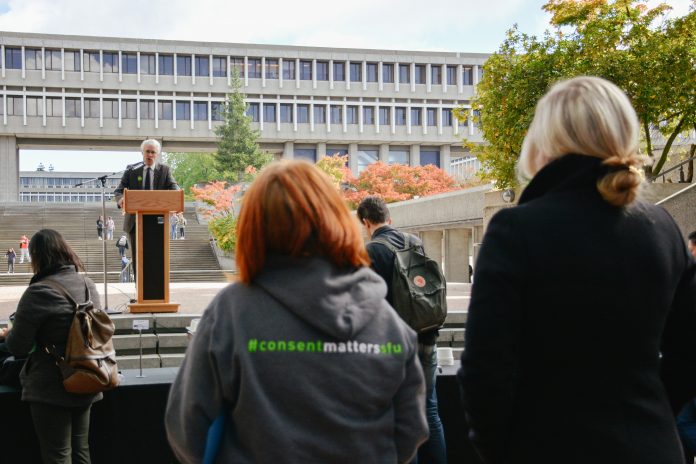
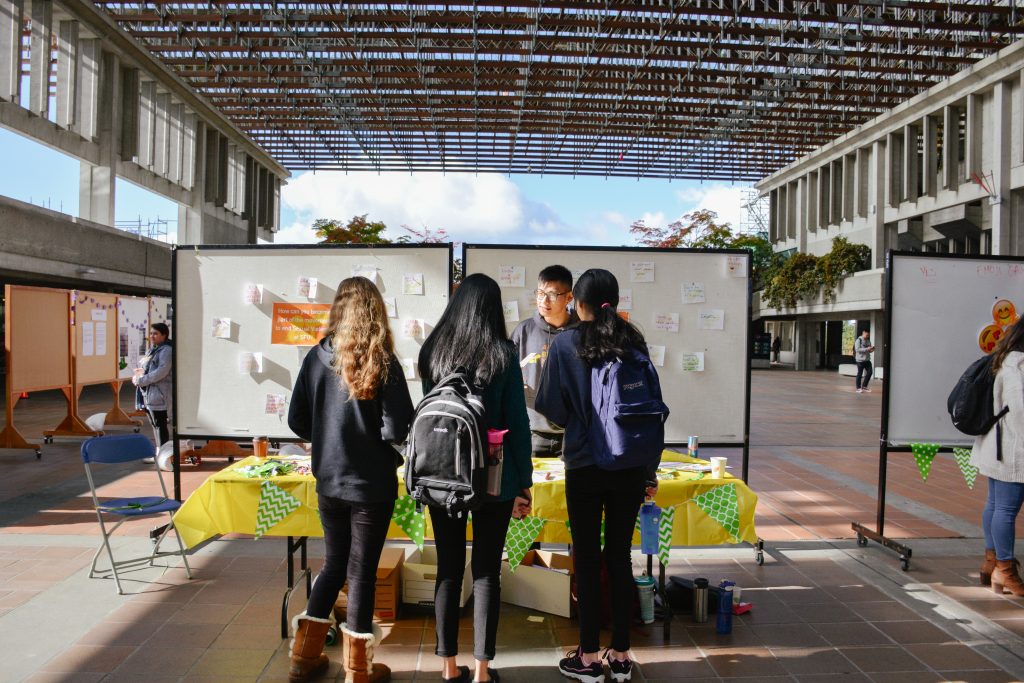
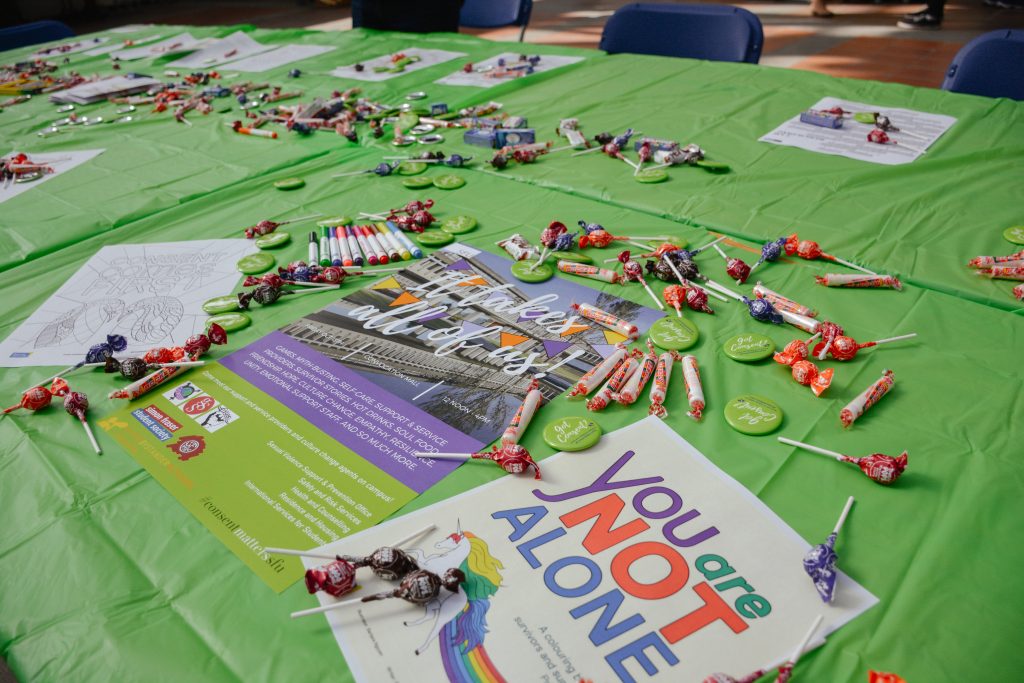
The university voiced a strong message about supporting survivors of sexual violence and building a culture of consent on campus at an event in Convocation Mall last Friday.

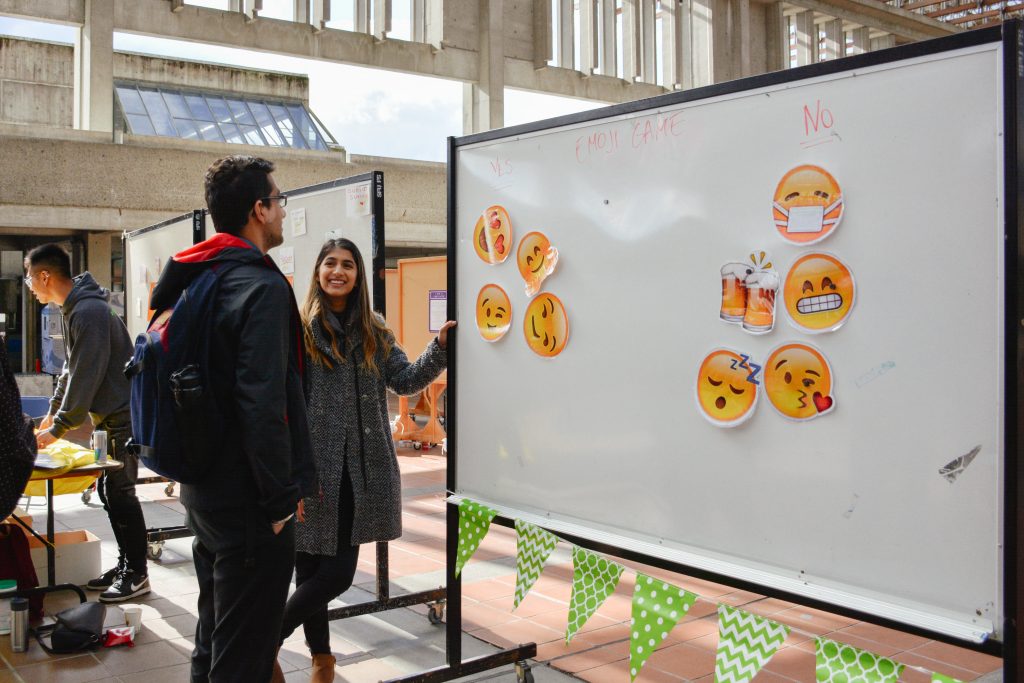
The event called It Takes All Of Us featured various organizations providing opportunities to learn about support around sexual violence intervention and prevention.

“It does truly take all of us to change the culture to one of care and consent and support,” said CJ Rowe, the new director of the Sexual Violence Support and Prevention Office that will provide prevention and support programs when it opens.

“This work is critical in building a supportive campus,” Rowe added.

The Sexual Violence Support and Prevention Office was originally scheduled to open at the start of the fall semester, but was delayed as the university waited for the hiring of the director. The university introduced its sexual violence and misconduct policy earlier this year ahead of provincial legislation coming into effect that required all post-secondary institutions to have a policy in place.

“I think we can bring a good policy to life and make it even better and create that culture of inclusion,” said SFU President Andrew Petter in an address to those who attended the awareness event. “It does take all of us to turn a policy into reality.”

The event was organized by the Active Bystander Network, a student group working on behalf of the university to increase student understanding of sexual violence prevention.  

“We’re encouraging folks to engage with sharing their stories,” said Kaitlyn Woodman who volunteers for the network.

A gallery featuring the stories of sexual violence survivors who are part of the campus community was set up in Convocation Mall with counsellors available to provide support for those witnessing it.

There were other booths and activities available to promote a change of culture on campus around sexual violence.

“Having all these people here shows that everybody wants to be invested in having this conversation,” said Charis Lippett, who works in the interim sexual violence support and prevention office.

Rebecca Langmead who leads sexual violence education and prevention efforts on campus added that the event also connected people with resources available to them. “This is an event that we may not have been able to have two and a half years ago because we didn’t have a [sexual violence] policy,” she noted.  

The event also held a lot of importance to those who helped facilitate it.

“To me it is about resistance, it is about courage,” added Lippett. “It makes me feel like my identity and my story as a survivor is important.”

With files from Alex Bloom and Simran Randhawa.