Home Blog Page 644

Local fashion company Afro.ditie Creative discusses their vision, celebration of culture, and their designs

1

Afro.ditie Creative is a Vancouver-based company that seeks to engage in a conversation about culture through fashion. It was started by Ayodeji and Anastasia Akintemi as a way of expressing and sharing both of their cultures. As stated on their website, Afro.ditie was “born from the desire to embrace and celebrate love, culture, beauty, and life.” It goes on to say that “[They] are on a mission to bridge cultural gaps through fashion.” The Peak spoke with Ayodeji and Anastasia about their vision, their brand, and culture.

     Anastasia began by explaining the significance of the name Afro.ditie Creative: “Culture is so many things . . . so for us, [Ayodeji] being from West Africa and me being European — I’m Greek and Portuguese [and] from [Canada] — living in this kind of western culture . . . [we] have these other experiences from our family origins. Afro.ditie is basically celebrating our cultures.” This is very clear in the name

     Ayodeji also added, “The reason we say ‘Creative’ is to not pigeonhole ourselves into just fashion. It’s just [that] fashion is the medium we’re using to engage that conversation . . . We have a lot of other passions as well. We wanted to leave the opportunity to bring things under the umbrella of what we do with Afro.ditie, but fashion is the main one, and a big part of what we’re doing right now. We’re passionate about food, we’re passionate about music, [and] we’re passionate about dance. There are a lot of artists that we collaborate with who [also] have those passions. We bring the fashion, [they] bring whatever it is they do, and we do something beautiful.” He also said, “We’re inspired by other people’s creativity as well.”

     In the past Afro.ditie has collaborated with dancers, models, DJs, and makeup artists to put on various visual presentations of their work. When they launched their clothing line at Gastown’s The Basement, Suyalife catered the event, bringing their delicious Nigerian street food to the venue.

     Afro.ditie’s designs are inspired by both Ayodeji and Anastasia’s cultural backgrounds. For example, they work with Nigerian prints and motifs, such as their “Wazobia Warrior” concept. As Ayodeji stated, “The word ‘Wazobia’ is made up of three different words from three of the main tribes in Nigeria. So in Wa-Zo-Bia, the ‘Wa’ means ‘come’ in Yoruba, ‘Zo’ means ‘come’ in Hausa, which is another tribe, and ‘Bia’ means ‘come’ in Igbo. Essentially it means ‘come, come, come’, so the idea behind that is these tribes coming together [in] unity, to make it work in the country called Nigeria. Then we took that, because symbolically the message resonates with us, ‘let’s come together in humanity’, we’re all here together . . . let’s celebrate our strengths, our diversity, and help one another, because if we know that we have a lot more in common than [we do] different, we’ll actually listen to each other, and spread love.” The warrior part was added as an expression of passion. “Fight for justice, fight for unity, fight for love . . . that’s why we added the warrior part, too.”

        As their designs draw inspiration from multiple cultures, they are mindful of cultural appropriation and take care to be respectful of all the cultures that influence their work. As Ayodeji noted, “Our pieces that we come up with flow through that [collaborative] creative process, so one look today might seem more African, but that doesn’t mean our entire look is going to be that way. The whole idea behind our brand is sharing culture, acknowledging culture, but giving room to share and learn from each other’s cultures.”

     Anastasia also added, “We have people wondering because we have white models wearing our clothes, but we’re not just making clothes for a certain ethnic group. We’re coming together in our creative energy to create this art form for everyone.”

     Ayodeji went on to say, “We live in a call-out culture . . . sometimes we just want to call people out to feel better about ourselves — sometimes it’s justified, absolutely [but] sometimes it swings a bit too far.” He said, “Going back to why we do what we do . . . we use [our designs] as an opportunity to educate people.” One of the main goals in regard to Afro.ditie’s vision is to bring people together and teach them something they didn’t know about another culture.

     On November 18, Afro.ditie participated in an event called The ART of ART: A Westcoast Formal, which was a fundraising gala for Youth Unlimited, an organization that works to help at-risk youth. At the event, Afro.ditie collaborated with professional dancers and makeup artists to create a performance showcasing their clothing.

     When asked why events like this are important to them Ayodeji said, “A lot of [at-risk youth] are people who just need a community around them essentially, and at Afro.ditie we do believe that we all need a community around us . . . Part of our message with Afro.ditie is sort of like ‘hey, we are actually part of this larger community called humanity so we actually have a lot in common. Lets come talk together, embrace each other, learn from each other, and not try to dominate each other. Let’s love each other . . . and just make ourselves stronger.’”

     “In the sense of this organization, Youth Unlimited, [there are] these kids who may not necessarily have this community around them, whatever their life circumstances are, and they provide that opportunity for them through mentorships, partnerships, programs, you name it. The heart of what they do is something that resonates with us, so it really made sense for us to be a part of that in whatever way we could.”

Afro.ditie will be participating in Vancouver’s inaugural African Fashion Week in February, which will coincide with the release of their new fashion line. You can purchase their clothing either through their website or at The Basement in Gastown.

Below are some photos, sent to us by Afro.ditie Creative, showcasing their designs:

Writing: consistently graded, rarely taught

0

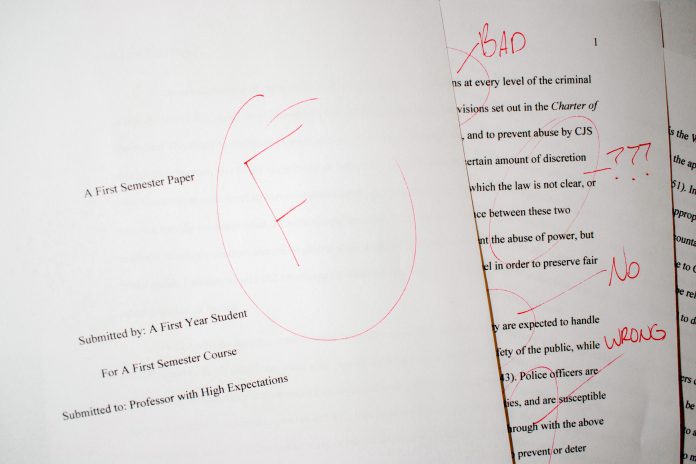
Writing has been an integral part of my experience at SFU. From 300-word responses to 20-page papers, my writing is a tool professors use to assess my understanding of a topic — and I’m sure the same can be said for many SFU students.

As I’ve progressed through my degree, and begun to take upper division classes, the expectations placed on the quality of my writing has increased. That increase in expectation is not a surprise by any means. However, what is surprising is how little writing instruction was present in classes.

At SFU, students are required to take six credits of classes designated as writing intensive (W). There are several criteria that a class must meet for it to be classified as writing intensive. Some of which include the presence of adequate feedback, revision, and a course where much of the content involves instruction on writing. According to SFU, “courses that require written assignments but do not provide explicit instruction on writing would not qualify as W courses.”

Although these might sound like effective methods for a writing course, in my experience, this does not directly translate in-class. Over the course of my degree, I have taken seven classes designated as writing intensive. In many classes, W designation or no, learning how to write is a secondary goal compared to learning what to write about: the primary subject matter of the class. Because of this, the prescribed feedback portion of the class takes the form of only scarce comments on papers.

In many of the supposedly writing intensive classes I’ve taken, the comments have nothing to do with writing, but are instead related to how well the student understood the topic of the paper. This is entirely understandable. But if a class is going to be labeled as writing intensive, then it needs to start spending more time on teaching us how to write.

The best way to improve writing is through a process of trial and error, with feedback and a series of revisions. When the classes that are intended to teach students writing fail to meet these criteria, it becomes a problem. This is especially true if writing is continually used as a grading tool, and if the expectations continually increase year after year.

One W class I took that did do the job right went through the process of writing an experimental paper. The assignments throughout were short versions of the sections of an experimental paper (introduction, methods, results, discussion), and a final project bringing them all together.

In another class, they divided writing instruction and the course content between the tutorials and the lecture. The lectures taught the content of the course, while the tutorials were primarily aimed at teaching us how to write and edit our work.

Teaching students how to write is certainly possible, and effective when done properly. The issue is that this is not typical for W classes, and classes that are not writing intensive have no obligation to teach writing in any form at all. While it would certainly be too much to enforce writing requirements on non-W courses, classes that are intended to teach writing should have the criteria enforced, or have further criteria placed on them. If this is not possible, more programs should have a solid portfolio of W options.

Either way, SFU’s writing education has a long way to go.

Don’t be so quick to condemn Aasia Bibi for poisoning her husband’s family

0

20-year-old Aasia Bibi of Pakistan was forced into an arranged marriage with Amjad Akram by her parents in early September. To get out of it, her boyfriend gave her some poison, which she put in Akram’s milk to kill him. Her plan went awry when Akram’s mother used the glass of poisoned milk in a batch of lassi (a common yogurt-based South Asian drink) after he failed to drink it.

As of November 2, 17 members of his family had died of the poison, and 10 remained hospitalized. Bibi initially made denials, but later admitted to having intended to kill her husband, though she regretted having caught his family in the situation. She defended her actions by explaining that she has the right to resist forced marriage, and that she had, as reported by the Associated Press, “warned her parents that she was capable of going to any length to get out of the marriage.”

It’s easy to condemn the woman for wanting to kill her husband, and for accidentally poisoning his entire family. But one has to consider the circumstances that led her to take such measures.

Many who have commented on the story have wondered why Bibi did not simply escape her situation, rather that attempt poison. For instance, one user who commented on the Washington Post article on the matter suggested that Bibi should have simply “walk[ed] away” from the marriage, and speculated that the poisoning was “a convenient way to keep both her lover and family status” rather than legitimate self-defence. They also opined that she was in no way “imprisoned or otherwise restrained.”

But as Human Rights Watch’s World Report 2017 outlines, forced marriage and child marriage in countries like Pakistan are not such simple matters. “Violence against women and girls . . . [remains] routine,” they noted, and roughly 1,000 ‘honour killings’ take place in Pakistan per year based on their recent estimates. Amnesty International’s numbers claim that approximately 512 women and girls were subjected to ‘honour killings’ in 2016.

Human Rights Watch also reported that several women have been burned to death by their own families for attempting to escape arranged marriages or pursue their own relationships. Furthermore, until 2016, because Pakistani law gave family the right to pardon their relatives’ killers, families who killed their daughters themselves used to face no consequences for doing so. Though that loophole has now been closed, this means the culture surrounding honour killings has had a long time to ossify.

So, no, Bibi couldn’t have just run away from having essentially been sold into sexual enslavement.

One might not think of the sexual activities in an arranged or forced marriage as rape, but they are. Sex is only consensual when both parties want it. In the case of Bibi and her arranged husband Akram, it was definitely rape. She did not love him, nor is there any possibility of consent with the power dynamic that would be present in such a relationship.

If Aasia Bibi had tried to run away from her husband to live with her boyfriend, or be a disobedient wife, she could have easily faced death. There are good odds that Bibi would just be another woman receiving no justice for her life.

Everything I’ve outlined above may or may not sway your viewpoint on the poisoned milk situation. You might sympathize with her, or think she’s a heinous criminal. There’s no right or wrong answer. But under the environment she had no choice but to live in, she might have only been trying to save her own life.

SFU hockey escapes Bill Copeland Centre with 3–2 overtime victory over Selkirk College

0
Berry-Lamontagna had a part in all three goals, with a goal and two assists. (Photo courtesy of SFU Hockey)

On “My First Hockey Game” night at the Bill Copeland Sports Centre, fans were treated to a great game between Simon Fraser University and Selkirk College on Saturday night. Simon Fraser won after a Mathew Berry-Lamontagna goal in overtime gave the Clan the 3–2 victory.

“I picked it up kind of funny on my backhand when I got it. I looked [to] pass first, I took a look at the net and I saw I had some space, and I took a shot,” said Berry-Lamontagna after the match. “I’ve never had an overtime winner before so that was pretty cool.”

The goal came in the overtime period, after Simon Fraser let in a goal from Selkirk College to tie the game 2–2 with less than four minutes to go in regulation. “You never want to lose a lead with three minutes left, but I don’t think we panicked too much,” said Berry-Lamontagna.

This was a big win for SFU considering the situation in which they played. Jayden Piattelli, Jaret Babych, Austin Adam, and Eric Callegari were all unavailable in this one, while captain Brandon Tidy (who usually plays forward) was forced to line up as a defenceman.

“I just told the boys, ‘Hey, sometimes in situations like that, opportunity arises. Certain guys are going to play different minutes, certain guys are going to be on the powerplay. If you do your job and rise to the occasion you’re going to get a lot of ice time,’” said head coach Mark Colletta.

The powerplay did not struggle due to these absences, as the Clan got two powerplay goals in the third period. The first came from Mac Colasimone, who was assisted by Daniell Lange and Berry-Lamontagna less than two minutes into the period. Two minutes later, Ian Mackey took advantage of his opportunity on the powerplay, netting his second goal of the season off of assists from Berry-Lamontagna and Mak Barden.

While Berry-Lamontagna had a fantastic game, the first star of the night was SFU goalkeeper Lyndon Stanwood who saved 31 shots for a .939 save percentage. “The team played really well in front of me, it was easy to see the pucks coming in,” said Stanwood after the game on his performance.


With the win, SFU hockey now sits at 6–3 on the season, good for third in the British Columbia Intercollegiate Hockey League. They will play their next game on Friday night as they host expansion team Vancouver Island University, who are fourth in the league with a 4–5 record. Puck drop is at 7 p.m. at the Bill Copeland Sports Centre.

A 25th-century analysis of 21st-century movies

0
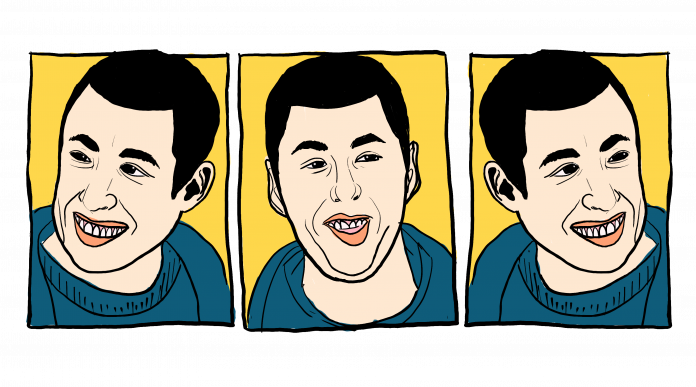
Illustrations by Emma Wu

Hello class of 2465, and welcome to Anthropology 233. As you all already know, most of the records of 21st-century culture and civilization were completely destroyed by the asteroid Bruce Willis failed to stop in 2018, and the nuclear war triggered by the US president’s tweets in 2017. Luckily, we will be analyzing material from a very rare flash drive from the distant year of 2020. The flash drive contains 30 university assignments, 3TB of porn (0.0000003 XB), and a collection of what people of the 21st century called “IMDb’s lowest-rated movies” — anthropologists still do not fully understand what this phrase means. But, now that we have access to movies which we believe were the masterpieces of that period, we can analyze them in hopes of understanding the people of that strange era.


50 Shades of Grey (2015)

The people of 2017 didn’t have sex clones, instant orgasm electrodes, or automatic reproduction. Unfortunately, their usage of coitus was for a combination of both pleasure AND reproduction.

This movie — an artistic feat — shows how the courtship rituals at the time worked. Additionally, we know this film must be amazing because pornographic content during that era was free and much more explicit than the movie . . . yet the movie still drew people in with its subtle yet ingenious take on coitus. If the movie was bad, why would it be so successful given the free competition? Logically, it only makes sense that this movie was considered a masterpiece of the time.

Fantastic 4 (2015)

At this time in history, the concept of superhero movies was just beginning to gain traction. We are unsure of the realism of the films as they seem to conflict with so many established timelines and knowledge of early humans. Regardless, this film gives us insight into how humans performed science and how they bonded with one another.

We are now aware that humans were apparently capable of building interdimensional travel and altering their DNA to perform unusual feats such as bonding despite having no personality to connect to other people. Truly, early humans were pioneers in working together.

The Emoji Movie (2017) 

Before humans made movies, there was an earlier civilization of them called ‘Egyptians’ who made a unique language consisting of symbols called “hieroglyphics.” With this in mind, we can understand how smart our 2017 humans must have been to create an advanced form of this symbol language — and turn that into a film for their viewing pleasure. Their lust for intelligent stimulation from their entertainment knows no bounds.
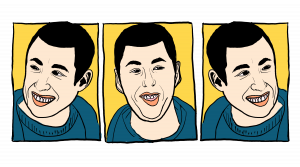
The film and its symbols are continued to be deciphered to this day. We are sure we have sequenced at least seven of the most common ones. Forget about the Egyptians and hieroglyphics, this is a language far more advanced than any we’ve ever seen.

Adam Sandler

This isn’t one movie, but is instead the life of the legendary performer people called “Adam Sandler.” This man was a legend for numerous reasons, the most significant being the consistency of his films. You see, all his films were very similar, yet he made SO many of them. He must’ve been a very amazing man to make over 75 films with such subtle differences which still kept audiences enamoured for so long.

Even after the apocalypse, Adam Sandler continued to make films. No other performer could ever top this. Other great directors were only able to make a few similar films — Sandler made more than we can comprehend.


New and improved appreciation days!

0
Illustrations by Hannah Zaitlin

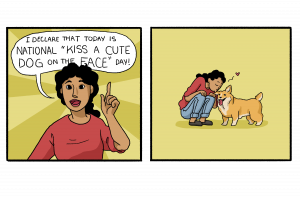
We used to only celebrate all the standard holidays – Halloween, Christmas, Valentine’s, etc. But now, we get national appreciation days for almost anything! From Cat Appreciation Day, Pancake Appreciation Day, and Eye Colour Appreciation Day (seriously??), everything is pretty much covered. However, we at The Peak scratched our heads and came up with four new awesome appreciation days for you to celebrate!


  • National Wooden Chair Day


I’m betting we’ve all sat on a wooden chair that used to be four-legged but now it’s three-legged and squeaks when your ass is even a millimetre away from it. It’s time we start appreciating these hardcore pieces of furniture because they are way more comfortable than those soft plushy cushions called ‘sofas’ or ‘armchairs.’ As a bonus, wooden chairs are great for training your ass to become more solid and better at enduring sitting in SFU’s chairs!


  • National Sanity Day

Let’s face it — life is hard. With its overwhelming number of obstacles and hardships we need to get through every day, minute, and second of our lives, so why not have a day where we can celebrate the fact that we’ve all come a long way?! And, hopefully, we can celebrate the fact that we’re all still somewhat sane.


  • National Hairclips Day

If there’s a National Paperclip Day, there’s got to be a day dedicated to hair clips because they’re just as important! Shower every inch of hair with ten or more clips! This way you’ll be able to showcase those wonderful mini tools to the world. But that’s not all — attach another dozen or more hair clips to your clothing, from the neckline of your shirt to the bottom of your shoes, and tell the world how important hairclips are!


  • National My Own Call Day

Who the fuck can keep count of all the appreciation days that get created every millisecond? Wouldn’t it be nice to have a day where you could celebrate a jumble of things that YOU appreciate the most? Totally flexible, totally you! Instead of following the same old shit, come up with your own day!

World News Beat

0

ZIMBABWE – Mugabe announced he will step down as president

The long-standing President of Zimbabwe, Robert Mugabe, announced his resignation in a letter to parliament yesterday, staying the impeachment process underway to end his rule which spanned nearly four decades. In a televised speech two days earlier, Mugabe made no mention of stepping down even after his ruling ZANU-PF party fired him on Sunday. The party had replaced Mugabe with Emmerson Mnangagwa, Mugabe’s former vice-president whom Mugabe had sacked earlier this month prompting the army to intervene. Mugabe’s wife Grace, who was thought to be a candidate to succeed her husband, was also expelled from the ZANU-PF. Meanwhile, crowds poured onto the streets yesterday to celebrate the end of an era. Mugabe has been the leader of Zimbabwe since its independence from Britain in 1980.

With files from Reuters and BBC News.

UNITED STATES – Scientists use gene editing to cure disease in medical first

A man with Hunter syndrome has become the first person to be treated for a disease using gene editing. Scientists in California used an intravenous to infuse copies of a corrective gene as well as a tool to separate the DNA in the right spot into the body. Gene editing is a form of genetic medicine that permanently alters DNA, though it also carries the risk of cancer. The treatment is irreversible and tests in the coming months will show if the therapy was successful.

With files from CBC News.

JAPAN – Japanese train departs 20 seconds early, prompts apology

A Tsukuba Express train which runs from Tokyo north to Tsukuba departed the Minami Nagareyama Station 20 seconds early last week leading the company’s management to issue an apology. The train was supposed to depart at 9:44:40 but instead left at 9:44:20 according to the rail company which stated it “sincerely apologise[d] for the inconvenience.” In a statement, the company explained the conductor did not correctly check the train’s timetable resulting in the train leaving early, though it also said there were no complaints received from riders. Train punctuality is important in Japan, once prompting a politician to forgo an election after causing delays on a bullet train.

With files from BBC News and National Post.

GERMANY – UN climate talks in Germany ends with unresolved issues

Delegates at climate talks in the German city of Bonn have made progress on “technical issues” around the operation of the Paris climate agreement, but the questions about reducing carbon emissions are still unresolved. This means that next year’s climate  conference in Poland will likely have the discussion on fossil fuels at the forefront. The conference next year is seen as critical to making the Paris Agreement work when it comes into force in 2020. The officials from countries most at risk were disappointed with the lack of consensus around funding to offset increasing losses. The Paris climate agreement aims to keep the global temperature rise under 1.5 degrees Celsius.

With files from BBC News and CBC News.

Must-see event: Reel Causes

0
(Linda Shu / The Peak)

Reel Causes is a series of film screenings thats deal with real-world issues. On Thursday, November 23 at 7 p.m. (just prior to the 16 Days of Activism Against Gender-Based Violence) Reel Causes will be showing the documentary A Better Man at the Djavad Mowafaghian Cinema at the Goldcorp Centre for the Arts. The documentary explores why women and girls face so much violence and abuse. The documentary focuses, specifically, on Attiya Khan and her efforts in getting her former abuser to own up to his actions and begin on the road towards reconciliation. As mentioned on the SFU Woodward’s website there is a content warning as the film features domestic abuse. The film screening aims to raise awareness for and to support We Can BC and Battered Women’s Support Services. After the screening the floor will open for a Q&A where local activists will discuss the issues presented in the film. Admission is $15.

Students win national award for their innovative STEM training program

0

Two Simon Fraser University PhD students are getting recognized locally and nationally for their innovative student training program, one that combines the fields of engineering, entrepreneurship, and science.

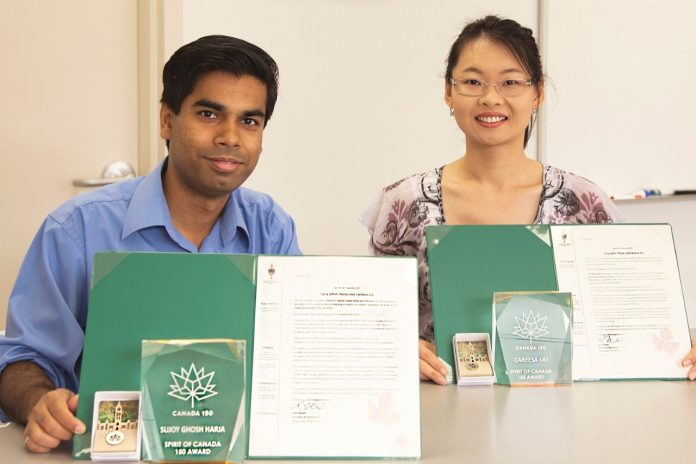
Sujoy Ghosh Hajra and Careesa Liu, PhD candidates in biomedical engineering, were awarded the Spirit of Canada 150 Awards earlier this fall, which recognizes individuals who have made a significant difference in their community.

The duo founded the Surrey Collaborative Outreach and Research Experience (SCORE) program in 2014, which is a multifaceted partnership between academic, business, healthcare, and research entities that trains students at high school to post-secondary levels with hands-on skills in cutting-edge technological research.

“By bringing together a diverse group of [stakeholders], SCORE is able to provide a multifaceted, holistic view of the world to our participants,” said Hajra. “The combination of technical hands-on training and translational skills development allows SCORE to provide its participants with a [unique learning experience].”

The program is based in Surrey, BC, situated within the growing health and technology initiative known as Innovation Boulevard, which comprises four universities, about 70 small and medium enterprises, and multinational corporations.

“Our vision was to concurrently develop the future generation of highly qualified personnel to be leaders in health technology innovations.” – Sujoy Ghosh Hajra, SCORE co-founder

The SCORE program was developed by Hajra and Liu because they felt that Surrey’s workforce was not experiencing much growth in comparison to its infrastructure.

“As team members who helped build the Surrey Innovation Boulevard from the ground up, our vision was to concurrently develop the future generation of highly qualified personnel to be leaders in health technology innovations. While there had been significant infrastructure development and capacity building, we wanted to also focus on people and the development of human capital,” explained Hajra.

The SCORE program operates during summer and successful applicants are enrolled for eight or 16 weeks depending on their level of education, according to Hajra. The program is also free of charge to its participants.

The types of research that are conducted include development of technologies in medical diagnostics and therapeutics, assisted living and home health care, and advancing knowledge in digital health.

Some of the program’s past projects include developing and testing software and hardware prototypes for breakthrough technologies in brain function assessment, creating software platforms that advance clinical assessment tools for diseases such as multiple sclerosis, and conducting market research for infant health monitoring technologies.

“SCORE trainees have worked on a variety of projects over the last four years, and the output from these efforts are in various stages of validation testing, clinical trials, and regulatory approvals. For example, five projects created by the SCORE trainees during this year’s program are currently in validation testing for future deployment,” stated Hajra.

Hajra also noted that the global healthcare industry is becoming increasingly dependent on technology-based solutions, with the primary example being healthcare apps. “The global healthcare industry is undergoing transformative changes fueled by technology-based solutions . . . This is increasingly creating opportunities for professionals trained in traditional medical technologies such as sensors and medical imaging, as well as in emerging areas such as big data health analytics and personalized medicine,” said Hajra.

Going forward, the SCORE program will provide more critical training and mentorship opportunities to students who are interested in these growing areas, Hajra concluded.

My Friend Dahmer is a chilling, honest, but relentlessly non-romanticized portrait of a serial killer

0
(Image courtesy of Film Rise)

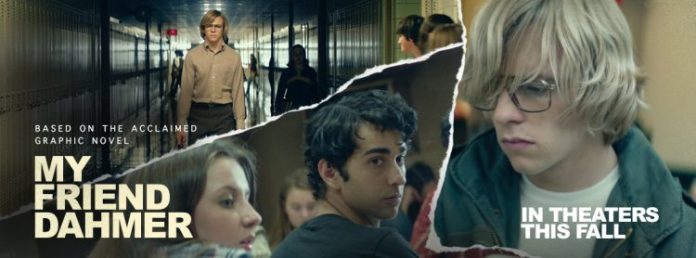
My Friend Dahmer is the adaptation of the same-titled graphic novel by Derf Backderf. The film depicts the true events of the high school years of notorious serial killer Jeffrey Dahmer.

     It begins when a lone, blonde teen comes across a rotting cat carcass on the road, pauses, carefully places it in a plastic bag and continues home. Dahmer is played by former Disney star Ross Lynch who lives at home with negligent parents on the verge of divorce (Anne Heche and Dallas Roberts). Aside from the half-friend, half-fan club Dahmer gains from peer Derf Backderf (Alex Wolff) and his friends, Dahmer spends the majority of the film struggling with his loneliness, and violent compulsions, by himself.

     Lynch provides a borderline hypnotic performance as Dahmer. Lynch’s choices as an actor are subtle and distinct as he invites the audience to soak in that isolation Dahmer faced and his inevitable unravelling that came with it. He doesn’t play Dahmer as a sadistic, demented young man but rather honestly, as a sullen, socially-awkward outcast with a distinctive gait.

     The powerful screenwriting and direction of this film helps to supplement the lead actors’ performances. The camera work lingers and fixates when showing Dahmer’s perspective, while the lighting does a wonderful job of creating visual metaphors as they progressively show us Dahmer’s darkening nature.

     One of the most notable aspects of this film is the unrelenting realism and honesty given to Dahmer’s story. Writers Marc Meyers and Derf Backderf don’t just tell the story of the young man as some misunderstood teen or simplify him to into a monster: they tell a fair story of how Dahmer changed from lonely teen into sadistic killer.

     That, and they show the failure of an apathetic crowd of parents, teachers, and peers that left Dahmer on the outskirts of society. But make no mistake that while Dahmer’s circumstances were terrible, his actions are not permissible. On the topic of Dahmer himself, Derf Backderf advises in the preface of his comic to “pity him, but do not empathize with him.” My Friend Dahmer ultimately peels back the layers of a serial killer not so as to re-write his reputation, but so that we truly see the whole horrifying portrait.