Home Blog Page 583

Album Reviews

0

God’s Favorite Customer by Father John Misty

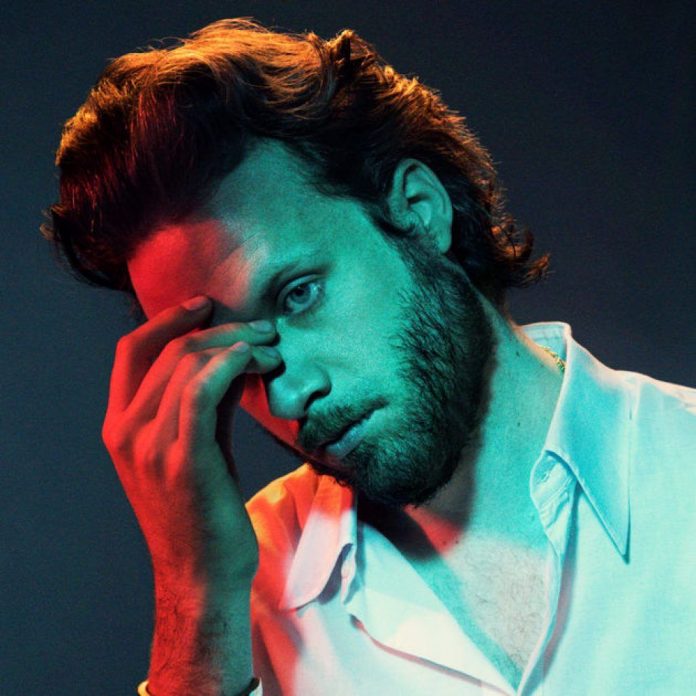
According to Josh Tillman, the man behind the Father John Misty moniker, God’s Favorite Customer is his first album since 2012’s Fear Fun that isn’t a concept album. Arguably, however, this new album is very much built around a cohesive concept: Tillman himself. Such self-indulgence makes sense, coming from an artist often deemed the most self-absorbed man in indie rock, and perhaps that’s why God’s Favorite Customer feels like such a perfect addition to the Father John Misty canon.

     The album was reportedly conceived after Tillman secluded himself in a hotel for two months in order to work through issues of depression and mental health, and these struggles find themselves addressed throughout the album, depicted with either wry humour (“Mr. Tillman”) or tender eloquence (“Please Don’t Die”).

     It’s the most personal Misty album since his opus I Love You, Honeybear, but where that album dealt specifically with Tillman’s struggles with intimacy, God’s Favorite Customer instead offers short snapshots into various aspects of his current life, from his romantic and artistic relationship with his wife on “The Songwriter” to his upbringing and his drift from religion on the title track. It’s an album that grows on you with time, offering a brief sojourn into the self-centred yet brilliant mind of one of indie rock’s most enigmatic voices. – NM

Kids See Ghosts by Kids See Ghosts (Kanye West and Kid Cudi)

It’s fairly remarkable that West can really go three-for-three with weekly albums, but he may have outdone himself with Kids See Ghosts. Unlike ye — his rambling, troubled solo album concocted in just a few weeks — West’s joint album with Kid Cudi has been in the works since late last year, and the time spent is palpable.

     Kids See Ghosts is a carefully constructed, immaculately written exploration of depression and perseverance that’s immediately reminiscent of Cudi’s career-defining debut album. With the same seven-track runtime as the rest of the Wyoming Sessions, Kids See Ghosts is a brief yet dynamic exploration of persistence in the face of overwhelming darkness, soundtracked beautifully by everyone from Bon Iver to André 3000.

     In October 2016, Kid Cudi checked himself into rehab for “suicidal urges,” but promised to return “stronger, better. Reborn.” This statement proved prophetic for his and West’s new album: the standout track, fittingly titled “Reborn,” combats dark thoughts with hopeful energy.

     The final track, “Cudi Montage,” features Ye and Cudi addressing their darkest thoughts over a Kurt Cobain guitar sample, accompanied by cries to “stay strong” and closed out by West’s repeated prayer “lord shine your light on me, save me, please.” This is pure inspiration music, and a true return to form by two remarkable artists in need of such a comeback. – NM

Die Lit by Playboi Carti

Since the summer of 2017, Playboi Carti has attained considerable success. He created one of that summer’s biggest anthems with the release of his single “Magnolia.” Even queen Beyoncé posted a video of herself dancing to his record on Instagram. However, with the recent release of his debut studio album Die Lit, it looks like Carti will be having another successful, exciting year.

     The album offers what Carti is known for: fun, party-bumping tracks that everyone can Milly Rock to.

     It opens with the track “Long Time (Intro),” which finds Carti rapping about the long road he travelled in order to reach the place of success and financial comfort he now enjoys. Die Lit also dons big features from the likes of Travis Scott (“Love Hurts”), Lil Uzi Vert (“Shoota”), and in particular, Nicki Minaj (“Poke It Out”), who spits the most dexterous guest feature on the entire album.

     Although some state that hip hop is in a place where newer rappers all sound the same, there’s a distinct element in the persona and art of Playboi Carti. It’s difficult to label what this defining element is, but it will be great to see what his bright future and career will bring us next. – YA

Tranquility Base Hotel & Casino by Arctic Monkeys

There’s something intriguing about Arctic Monkeys, as well as the art that they make. Their work seems to bring listeners on a nuanced, mystifying journey that is different from what you’ll find elsewhere. With their latest release, Tranquility Base Hotel & Casino, such is still the case.

     The album opens with the track “Star Treatment,” and the combination of the band’s calming instrumentals with the serenading, distinctive voice of Alex Turner works to relax the listeners into bliss.

     Some bands allow their lyricism to take a back seat to their instrumentals, but as proven with this record, it’s the lyrics of the Arctic Monkeys that paint the picture for listeners.

     From “One Point Perspective” to “Four out of Five” to “The Ultracheese,” I can confidently say that this latest release from Arctic Monkeys is best appreciated with a clear state of consciousness.

     Perhaps one of the best decisions I’ve made this year is choosing to listen to Tranquility Base Hotel & Casino on a warm, late spring day, sprawled out in the backyard without a care in the world. – YA

30 pictures in 30 days challenge

0
June 13
May 11

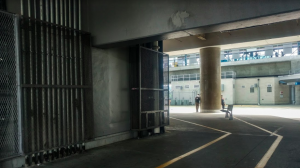
May 11 – Renaissance frappes keeping me alive, pictured against the classic concrete hallways of SFU.

May 12

May 12 – Dogs, robe, PJs, and slippers. That’s all you need to get work done.

May 13

May 13 – Fuelling up for the week, and definitely not forgetting the Skittles.

May 14

May 14 – Tapping my card, not my wallet!

May 15

May 15 – Construction in the Education building.

May 16

May 16 – An SFU student’s second home: the library.

May 17

May 17 – The gloomy 145 bus line-ups

May 18

May 18 – Trying to get my readings done on the way to some much needed May long-weekend camping.

May 19

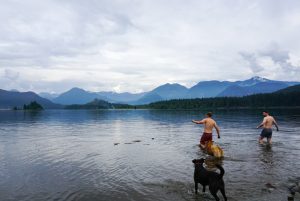
May 19 – Going for a dip at Stave Lake!

May 20

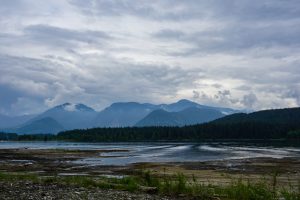
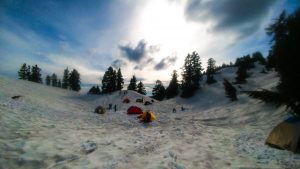
May 20 – Beautiful view from right in front of the campsite.

May 21

May 21 – When you need a caffeine boost but find rice in your frappe. Back at it on a Monday after a weekend of camping.

May 22

May 22 – One 15-hour day of studying paid off!

May 23

May 23 – A meeting with The Educational Review, a student-run journal here on campus.

May 24

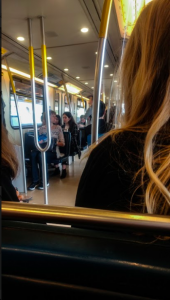
May 24 – A view of the SkyTrain on the way to campus.

May 25

May 25 – Ugh.

May 26

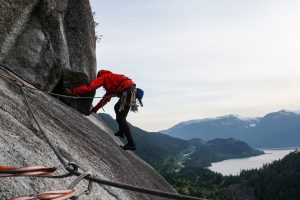
May 26 – Weekends are for climbing in Squamish!

May 27

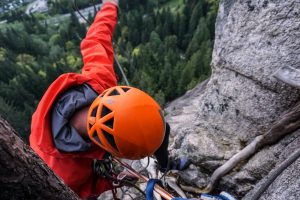
May 27 – Climbing on a route called Skypilot (and ignoring all my readings for the week to come).

May 28

May 28 – My companion, the robe.

May 29

May 29 – Picked up some study snacks for today.

May 30

May 30 – Dominic’s practice defense for his PhD!

May 31

May 31 – The line-up for the 145 bus at Production Station.

June 1

June 1 – A surprise party in the lab for Dominic after his defense, and for his supervisor, who just had a baby!

June 2

June 2 – Ignoring my readings again by taking an alpine skills course.

June 3

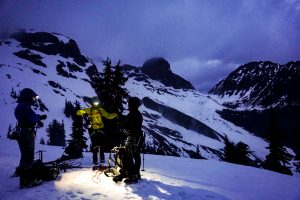
June 3 – Setting up our rope team for glacier travel at 4 a.m. in the Pemberton backcountry!

June 4

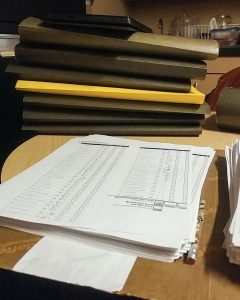
June 4 – Back to stacks of paperwork for my Research Assistant gig.

June 5

June 5 – Never-ending construction in the Education building.

June 6

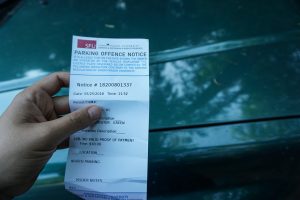
June 6 – An angry Snapchat sent to my friends . . . I should start paying for parking.

June 7

June 7 – Study session: yes, the wine is necessary. Also, please note the parking tickets on the wall.

June 12

June 12 – Convocation week!

June 13

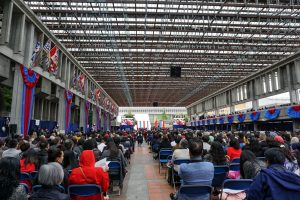
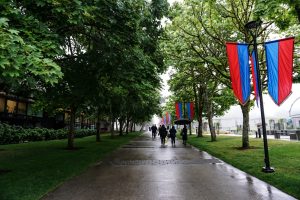
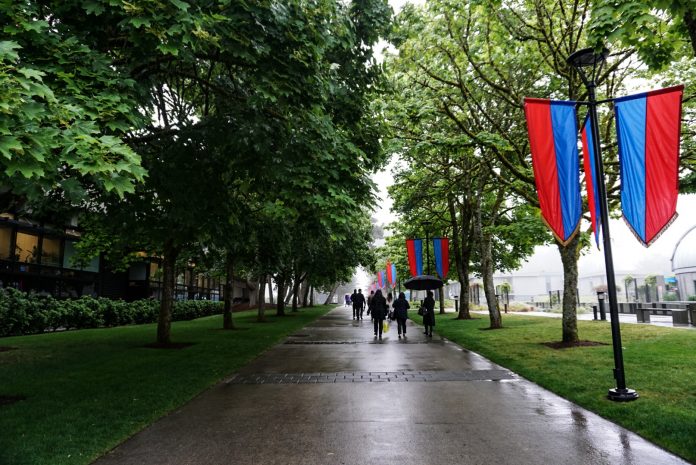
June 13 – A classic rainy SFU convocation.


EnregistrerEnregistrer

EnregistrerEnregistrer

EnregistrerEnregistrer

EnregistrerEnregistrer

World News Beat

0

Pope introduces plans for reform in the Vatican

Pope Francis informed Reuters during an interview of his plans to reform the Catholic Church. These plans include having a cardinal take charge of the Office of Papal Charities. This change will raise awareness for the organization which takes care of the poor, as the Pope believed that a big part of his job was in charitable works. The Pope is also looking at reforming the ranks of cardinal advisors and the Catholic Church’s accounting and human resource department in Italy, taking measures to make the departments more transparent. He hopes that these reforms will draw new ideas into the Church. – NT

With files from Reuters.


Chinese government places an upper limit on the pay of film and TV stars

In an official announcement, the Chinese government introduced a new pay cap for Chinese actors and actresses. According to the new regulation, no more than 40% of production costs can be allocated towards cast salaries and lead actors cannot obtain over 70% of that subset. The purpose of the pay cap is reportedly to reduce tax evasion, which occurs due to a convention known as “yin yang contracts”: actors and actresses sign two contracts, and then only submit the lower-paying contract for tax purposes. In addition to combating tax evasion, reducing “money worship” and “youth blindly chasing celebrities” were other justifications put forth for this new regulation. – AM

With files from BBC News.


South Sudan government in talks with rebel leader

The leader of South Sudan met with his counterpart of the rebel faction, according to the Ethiopian government. Ethiopian prime minister Abiy Ahmed brought President Salva Kiir and rebel leader Dr. Rieck Machar together for a dinner, allowing the leaders to meet for the first time since 2016. Ethiopia plays a vital regional role in the South Sudan peace talks. A 2015 peace deal and a ceasefire in December — both past attempts from the two entities at reaching a mutual understanding — had previously fallen apart. According to their government, Ethiopia has taken it upon itself to be the mediator of these talks in the face of the South Sudanese civil war, which has continued for five years and has seen tens of thousands dead and more than 3 million refugees. – NT

With files from Reuters.


Violence in Nicaragua sees more dead

Two months of protests have seen nearly 200 casualties, the most recent of which occurred a few days ago as the government fought protestors to regain control of Masaya. Following failed talks between the government and the opposition, forces loyal to president Daniel Ortega then fought for control of the city. Throughout the protests, the city of Masaya has been characterized by protestors as a symbol of resistance against the government. The protests originally began after the government reduced pensions and social security, and the opposition is now also calling for the end of Ortega’s government. – NT

With files from BBC News.


Incredibles 2 makes for an incredible sequel

0
Image courtesy of Walt Disney Pictures and Pixar Animation Studios

In 2004, Walt Disney Pictures released a superhero family film that had an impact on the animation world, but it wasn’t the characters’ abnormalities that garnered the film such astounding critical and commercial success. Rather, it was the way the family showed they were just like us that catapulted The Incredibles into being a global phenomenon.

     Fast forward 14 years (yes, you read that correctly), and the Incredibles have jumped back onto the big screen in the new summer blockbuster Incredibles 2. In Pixar’s latest instalment, we watch as Mr. Incredible, Elastigirl, Violet, Dash, and Jack-Jack continue to search for new ways to balance their superpowers with the everyday perils of life as a family.

     The film starts off where we left the Incredibles back in ’04, fighting the Underminer. As the film progresses, Elastigirl gets recruited by two individuals working to sway the general public to once again perceive superheroes in a positive light. Meanwhile, Mr. Incredible is just as busy at home, tending to his three children. Mr. Incredible soon realizes that helping Violet with her first date, assisting Dash with his math homework, and discovering that Jack-Jack has an array of superpowers is way more difficult than he anticipated. Towards the end of the movie, however, the children take the spotlight when they have to help their parents out of a tight spot, just like in the first movie.

     Admittedly, Incredibles 2 exceeds its already amazing predecessor, and I believe this can be attributed to three things.

     Firstly, Jack-Jack is hilarious. Whether it’s with his one-on-one duel with the neighbourhood raccoon or his interesting play-date with Edna, Jack-Jack manages to steal the entire show.

     Secondly, the writing of the film is impeccable. The nuances of each character’s personality in combination with the outlandish scenarios they’re all placed within provide the film with a unique humour that sets it apart from other Walt Disney/Pixar films.

     Lastly, the Incredibles once again show us that it doesn’t matter if an entire family is blessed with awesome, nature-defying abilities — every family experiences the same trials and tribulations. Kids grow up, thus making it more difficult for parents to connect with them. First dates are awkward, first heartbreaks are almost unbearable, and math is difficult, especially when they keep changing it! However, in spite of these vexations, if a family sticks together then any problem is conquerable — with or without superpowers. It’s this theme that makes the Incredibles’ family so relatable to audiences, and in turn makes it such a hit.

     Whether you see Incredibles 2 with your family, significant other, friends, or even just by yourself, you’ll be sure to have an incredible time. Although, as a warning for those who watched the first film as a child, you may be overwhelmed by a profound sense of nostalgia.

Canada finally entering its early 20s

0
Illustrated by Cora Fu

Many modern Canadian historians have been spending time critically analyzing the country’s behaviour over the last couple of years. Their work has helped develop the theory that Canada has finally left her teenage years, and is now entering her early 20s.

“We’re looking forward to some exciting times ahead,” said Gilbert Otta, one of the leading historians behind this controversial theory. “This is the time when a country will really come into its own and find itself. Until now, Canada has been subsisting on a pretty scarce personality, with hockey, maple syrup, and not being American making up the majority of Canada’s personality.”

Canada had a rough time in her teenage years, making her fair share of mistakes. Among the most prominent was the tragedy of residential schools. But now she’s at an age where she can start to put all that behind her. She plans to do everything she can to ignore the continuing repercussions that her past self’s actions have on our society, and pretend like they never even happened. If there is one thing she’s good at, it’s pretending racism doesn’t exist.

Historians first began speculating about this theory when Canada began her relationship with local Hot Dude, Justin Trudeau. After a long-term relationship with the human equivalent of an old wrinkly hot water bottle, Stephen Harper, Canada went on the rebound with the hottest dude she could find.

Since that time, the theory has received even greater support. The NDP finally electing the first non-white dude, Jagmeet Singh, shows that Canada is finally ready to try new things.

“The legalization of marijuana was a dead giveaway,” said Otta. “There’s nothing like experimenting with drugs to show that [the country has] reached college age.”

As expected with any rebound boyfriend, the country’s relationship with Trudeau has recently fallen on some hard times. While at first Trudeau made it seem like he would work towards giving Canada her fair say in their relationship, he quickly decided that he and his staff knew what was best. But the breaking point between Canada and Trudeau came when he decided to build a pipeline in her backyard. “It’s not that he plans to build it that bothers me,” said Canada. “It’s that he didn’t care what I had to say. It seems like he just doesn’t listen sometimes, you know? All I want is enough respect for him to consult me. Is that too much to ask?” This was the last straw for Canada, and it has made her question the long-term potential of this relationship.

Experts are still unsure what kind of relationship Canada will pursue next. Some believe that Canada will return to the safety she felt with Harper by dating the human equivalent of a younger and less wrinkly hot water bottle, Andrew Sheer. Others believe that Trudeau deserves a second chance. Regardless, the coming times seem to be very promising, and experts are keeping their eye open for behaviour that may indicate that Canada is finally developing a personality of her own.

What’d I Miss?: The Kinder Morgan Pipeline

Image courtesy of The National.

1951

On December 13, after three days of deliberation, the Board of Transportation Commissioners approved the application for a pipeline to be built, connecting Burnaby to Edmonton.

It was established because of the discovery of a large deposit of oil in Alberta in 1947, to open new foreign and domestic markets. The proposition was filed and supported by four parties: the Dominion of Canada, Trans Mountain Oil Pipeline Company, and the provinces of Alberta and B.C. alike.


1952

The Trans Mountain Canada Pipeline Company began constructing the Trans Mountain Canada Pipeline, more widely known as the Kinder Morgan Pipeline to connect Burnaby to Edmonton. It ran for 1,152 km and involved two tank farms — one at each end.

The pipeline is owned by Kinder Morgan, a Texas-based company. Its construction came at a time of unprecedented oil consumption in Canada.


1953

The pipeline began operating — the metaphorical fruit of a $93 million construction project.

The first spill in the pipeline’s history occurs on October 15, the day the pipeline was supposed to open.


1959

The National Energy Board (NEB) is created. They become responsible for: “the construction, operation, and abandonment of pipelines that cross international borders or provincial boundaries, as well as the related pipeline tolls and tariffs,” along with imports and exports of oil and energy.  

Kinder Morgan must legally report any spill that is over 1.5 cubic meters, or that could affect a body of water regardless of size, to the NEB. 82 spills have been reported since 1961. 69.5% of them have taken place at terminals or gas pumping stations.  

The most environmentally disastrous oil spills in the history of the pipeline were caused by faulty welds and other construction defects, human error, and forces of nature.


2013

Kinder Morgan applied for further expansion and establishment of a second pipeline of almost 980 km, most of which would parallel the existing pipeline. The pipeline’s capacity would nearly triple, from 300 000 barrels of oil daily to 890 000. This would also require at least 12 new pumping stations. The pipeline would also potentially be used to transport diluted bitumen.

Bitumen is the heaviest crude oil currently in use, and watchdog groups claim that it is particularly difficult to clean up and dangerous to transport.

According to Kinder Morgan, the project comes as a response to oil shippers, who wanted to reach new markets and exploit Western Canadian oil. Their website states: “With oilsands production expanding in Alberta in the years ahead, new markets and opportunities are emerging. As countries in Asia Pacific begin to develop the same quality of life we enjoy in Canada, they need to secure sources of energy. Canada is a natural trading partner for these countries, and with an expanded Trans Mountain Pipeline system will be in a position to meet their growing needs for years to come . . .”


2014

November 10: A study conducted by Simon Fraser University’s Centre for Public Research Policy claims that the projected economic benefits put forth by Kinder Morgan are grossly overestimated and that the impact would affect the domestic market as well as foreign export.


2015

The Burnaby Fire Department released a report outlining the potential dangers of a tank farm on Burnaby Mountain and the dangers relating to the expansion: earthquakes, flammable crude oil leaks, toxic gases, fires burning for days, exploding tanks causing a chain reaction, or forest fires. . .

For SFU in particular, this would mean that firefighters would be in the dangerous situation of fighting the flames uphill. Those living, working, and studying on the mountain would effectively be trapped.

SFU Safety and Risk Services’ Emergency Preparedness Plan can be found online.


2016

November 28 : SFU Safety and Risk Services release a Trans Mountain Pipeline Update. In the official statement from the president and vice-chancellor of the university, Andrew Petter, he says that the potential health and safety risks are unacceptable to the community and that SFU fully intends to raise these concerns with the Federal Government and Kinder Morgan. The Peak reported that the proposed doubling of the tank farm’s capacity would situate SFU Burnaby in the midst of potential forest fires, toxic fumes, and other health hazards.


November 29: The Canadian Federal Government approved the expansion adding 157 long conditions on the application to address socioeconomic and environmental issues, as well as concerns brought up by Indigenous communities and other communities that deal with the threat of potential spills (as well as issues of Indigenous land rights). Construction is expected to be completed by December 2020, and would be in service thereafter.

Days later, B.C. Premier Christy Clark gave British Columbia’s support for the expansion in 2017 as she believed the new amendments to the conditions proposed by the Federal Government were in line with her conditions.


2017

May: The pipeline becomes a hot-button issue in the provincial election. Clarke’s Liberal government is defeated and replaced by an NDP-Green coalition led by Premier John Horgan, who is firmly anti-pipeline. This will cause friction between BC and Alberta (under Premier Rachel Notley’s leadership), the only two NDP governments in Canada.


October: Despite the Governmental support for this expansion, various court cases have been filed over the years in provincial and federal courts by the City of Burnaby, the City of Vancouver, the Tsleil-Waututh Nation, the Squamish, Kwantlen and Coldwater First Nations as this pipeline and any potential spills threatens their ancestral land and homes.

Chief Ian Campbell of the Squamish First Nation is among many Indigenous leaders who point out that the federal government did not consult First Nations before agreeing to support the pipeline’s expansion. He says: “Sixty years ago when this project was established, we had no legal recourse. That era has come and gone in this country,” he said.


December 7: The NEB allows Kinder Morgan to begin building the pipeline, despite their failure to secure a construction permit from the City of Burnaby.


2018

January

Protests ramp up as construction on the pipeline is set to begin, including protestors blocking worksites.


February 6: Alberta’s NDP Premier Rachel Notley announces that Alberta will no longer import British Columbian wine, as part of the provinces’ ongoing dispute. According to her estimates, Alberta exports 70 million dollars a year to B.C. On February 22, the provinces agree to somewhat of a truce and wine exports resume.


March 15: BC’s Supreme Court grants an injecture to Kinder Morgan, meaning that protesters cannot get within five meters of Kinder Morgan’s construction sites. On June 3rd, this zone will grow and the ten-minute warning period for protestors before police can make arrests is removed.


March 23: Federal Green Party leader Elizabeth May is arrested for protesting against the pipeline. Five days later, she will plead guilty to criminal contempt in court and be charged a 1500$ fine.


April 10 : After over a year of various sanctions being placed on the pipeline, Kinder Morgan suspended “non-essential” actions and activities related to the pipeline, in order to avoid further losses for its stakeholders. Kinder Morgan’s CEO stated that: “While we have succeeded in all legal challenges to date, a company cannot litigate its way to an in-service pipeline amidst jurisdictional differences between governments.”


May 29: Adamment on seeing the pipeline through, the Government of Canada announced its plan to buy the Trans Mountain Pipeline for 4.5 billion dollars in order to ensure its completion.


June 4: ChangeSFU, a non-profit at SFU, had a meeting outside federal MP Terry Beech’s office in North Burnaby to create awareness for the environmental impact of the expansion, and its impact on Indigenous communities and their land rights.

This is not ChangeSFU’s first intervention regarding the pipeline, given the high stakes for SFU students (see above). At another event, Aaron Siebenga, a member of ChangeSFU, has described the Burnaby campus as “ground zero” for Kinder Morgan, and has stressed the importance of student knowledge in regards to the pipeline.

POLITICAL CORNER: Progressive drug legislation is the future

0
Image courtesy of the Toronto Star

Last week, Canada became the second country in the world and the first G7 country to fully legalize marijuana for commercial sale and personal use. As someone who’s never smoked a joint in his life, even I have to say: It’s about damn time.

From Reefer Madness in the 30s, to Ronald Reagan’s infamous statement that, “marijuana . . . is probably the most dangerous drug,” the war on marijuana has a long history. Politicians, teachers, and parents have long preached the dangers of “the devil’s herb.” Never mind the fact that the Centers for Disease Control and Prevention (CDC) found alcohol (which is very much legal) to cause an estimated 88,000 deaths annually in the US, whereas the Society for the Study of Addiction (SSA) found marijuana to cause an estimate of zero deaths.

Thankfully, it looks like the times might finally be changing. With legalization, marijuana will soon be much more accessible in Canada and people will no longer be arrested for possessing small amounts of it. The government is hoping to take billions of dollars out of the black market and give it back to provinces and the federal government. The industry looks set to flourish, with even Snoop Dogg signing on to support the emerging Canadian marijuana market.

It seems that the perspective on drugs and drug users is progressing to a much kinder state within the government and our society. Whether it’s the strong support and positive research surrounding projects such as Insite, or BC’s latest ad campaign which aims to show that people who use drugs are average people that we are around every day, our society’s view of drug users is becoming much more empathetic. If you ask me, the world could use a little more empathy and unity these days.

An east to west and north to south look at Canadian books

0
Image courtesy of Dancing Cat Books

In school, we had to read Canadian books all the time for English and French class. I’m not going to lie: most of them were bad and made me want to scratch my eyes out. No more of that! CanLit isn’t just cool because Margaret Atwood’s books got on TV: as it turns out, every region of the country has had some cool books to offer all along.

Newfoundland

  • A Newfoundlander in Canada: Always Going Somewhere, Always Coming Home by Alan Doyle — Great Big Sea was the soundtrack of my family’s road trips, so my parents bounced on their lead singer’s autobiography. As it turns out, Doyle is also a really fun writer who will regale you with stories, the contents of which range from selling cod tongue to learning how to play music.

Prince Edward Island

  • Anne of Green Gables et al by Lucy Maud Montgomery — This one seems nearly too obvious, since Montgomery’s fiery ginger orphan is famous across the world, but as one of the first pieces of children’s literature in Canada, it earns its place. You can alternatively check out Montgomery’s other series Emily of New Moon or read Maud, a young adult (YA) fiction adaptation of Montgomery’s life that highlights just how alike Maud and her protagonist really were.

Nova Scotia

  • The Birth House by Ami McKay — This book, set in the era of the Great War, follows Dora Rare. The first daughter of her family in five generations, Dora grows up with boisterous brothers and forges an unlikely friendship with Madame Babineau, an Acadian midwife. The book is very much a coming-of-age story, although it also deals with women’s issues and a look into the early health-care system in Nova Scotia.

New Brunswick

  • Pelagie: The Return to Acadie by Antonine Maillet — This one’s an oldie but a goody, showered with prizes in the 1970s when it first came out. Pélagie is a widow and a survivor of the Great Disruption, when Acadian farmers were deported from Acadia by British troops. A few Acadians hid from the British, a few were sent back to France, and many others were deported to the Thirteen Colonies or tried making their way to Louisiana. Many spent their whole lives searching for family. Pélagie is one of those who decided to make the trip back home, and that is the story Maillet is telling.

Québec

  • Everything they won’t tell you, Mongo by Dany Laferrière — This book reads like a guide from a Haitian immigrant to a young man arriving from Cameroun, explaining how to understand and fit into Québécois society. While there’s a slew of Québécois fiction out there to read, Laferrière is a cool figure of the French-Canadian literary scene, since he is actually the first Haitian or Canadian member of l’Académie française, the council that regulates the French language.

Ontario

  • The Marrow Thieves by Cherie Dimaline — Don’t let its YA classification fool you: The Marrow Thieves follows a group of Indigenous peoples on the run in a dystopian Canada where they are being hunted down by the government for their bone marrow in a world where nobody can dream. Yeah: it’s that dark, that impactful, and that brutally honest.

Manitoba

  • The Tin Flute by Gabrielle Roy — Originally written in French, The Tin Flute is about the strength of familial love, before anything else. It follows a family struggling to make ends meet in the slums of Montreal, as well as abroad during the Second World War. Gabrielle Roy’s former house in Winnipeg is now a museum.

Saskatchewan

  • The High Mountains of Portugal by Yann Martel — Bet you didn’t know that the guy who wrote Life of Pi lived in Saskatoon, of all places. His other novels haven’t been made into fancy CGI movies with cool tigers (yet), so you might not know this book either. The High Mountains of Portugal combines fantastical elements like hunting for treasure with all-too-real pain like grief. It’s whimsical, quirky, and has that untouchable quality that I loved about Life of Pi.

Alberta

  • Green Grass, Running Water by Thomas King — OK, so King isn’t actually Albertan, he’s from California. But he is an amazing author and he did teach at the University of Lethbridge. This book in particular follows the lives of various Blackfoot characters in a timey-wimey, wibbly-wobbly narrative that winds between past and present, myth and world.

British Columbia

  • Do Not Say we Have Nothing by (SFU alumna!) Madeleine Thien — Here’s a book set in Vancouver, and also China, as our protagonist Marie tries to put together the story of her family’s passage through various tight spots of history. When I passed this book to my mom, she could only read it bit by bit because she found it rough and dark.

Yukon

  • The Klondike by Zach Worton — My brother’s teacher recommended this book to him when he said he hated history. For starters, it’s a graphic novel — hurray! His book is part-history lesson, part-biography of the key players of the Klondike Gold Rush (which helped to move along the process of Yukon becoming its own territory), and part-gorgeous illustrations of the kind of natural environment all of this took place in. If you’re more of a novel person, you’ll find descriptions of these very landscapes in Jack London’s work as well.

Northwest Territories

  • A Promise is a Promise by Michael Kusugak and Robert Munsch — Munsch heard the story from Michael Kusugak, an Inuit friend he was staying with during a book tour in the Northwest Territories. The two collaborated on penning Kusugak’s childhood encounter with a monster living under the ice.  
Nunavut

  • Fatty Legs by Christy Jordan-Fenton, Margaret Pokiak-Fenton, and Liz Amini-Holmes — Fatty Legs follows Margaret, a young Inuit girl who begs to go to residential school to learn how to read. Residential school stories are some of the most horrifying in Canada’s history, and the simultaneously gentle but honest format of children’s literature has given a home to many over the years. Fatty Legs uses text, illustrations, and archival photos to bring this very real story to life. You can also check out Shi-shi-etko, When We Were Alone, or Wenjack to read more.

Non-fiction books

The current SFU gym dress code isn’t working (part two)

0
Image courtesy of Simon Fraser University

In my previous article on the topic of dress codes, I spoke about my thoughts on the SFU Fitness Center’s current dress code, and gathered the opinions of regular student gym-goers as well.

A word from SFU Fitness Centre Representatives

I decided to take my questions straight to the people who create and enforce the code. I contacted Nick Sirski, the fitness coordinator at the SFU Fitness Center. I had quite a few unanswered questions: why are crop tops and cut-off shirts prohibited? Can students not be trusted to use common sense and make their own choices? Why do some students get away with breaking the dress code and not others?

“We require all of our members to adhere to a dress code policy for personal hygiene, health, and safety,” said Sirski. “Research indicates that diseases, such as MRSA infections, are spread by bodily fluids, such as sweat, saliva, etc. Requiring users wear shirts during workouts prevents excessive sweat from being spread to the equipment and then to another user. Even though we request users clean the machines after use, not everyone does.”

Sirski added that, when the dress code is explained to members, they often “understand and appreciate” the gym’s efforts to minimize the spread of infectious diseases and promote safety.

Admittedly, this interview left me feeling unsatisfied, and some of my questions unanswered. In speaking with staff members in the gym, similar vague answers of “safety and health” were echoed.

Agha Ali Shamyle, a staff member who has been volunteering at the gym for one month also raised the issue of sweat: “Firstly, let me begin by saying that my views are my own and are in no way associated with SFU Rec. Now, the dress code policy . . . is for hygienic reasons. Different people sweat differently, and one cannot mandate that a gym member cleans up after themselves.”

When asked why he thinks many students have negative opinions on the dress code, he said, “My opinion on the reason why that is would be, and it’s a generalization, that young people are generally uncomfortable with the notion of rules. Same reason why they aren’t a fan of the speed limit on highways, or why students living on residence are not big on the anti-drug, anti-weed, anti-public drinking rules.”

My opinion on this issue

Personally, I’m not against the dress code simply because I am “uncomfortable with the notion of the rules.” In fact, I have no problem with following speed limits on highways and refraining from public drinking. I do, however, have a problem with overly-restrictive and somewhat unnecessary dress codes.

To summarize last week’s coverage, when I first saw the dress code posted, I was confused as to why it would be such a big issue for students to show a few inches of skin on their backs, stomachs or around their armpits. When I discovered that schools like UBC do not have such restrictive dress codes, I was further confused. I am not the only one: most SFU students I spoke to also had negative views on the dress code.

On top of that, many students claim that the dress code is not uniformly upheld, and that staff members seem to have discretion when it comes to who gets dress coded. This could potentially leave room for unfair discrimination against certain students.

If sweating and bacteria is the issue, the SFU Fitness Center should enforce a stricter clean-up policy. Students should be openly informed of the hazards and be encouraged to clean the equipment and mats before and after use. If every student does so, they look out for their own health and learn to be more diligent, creating a safer and healthier environment.

Instead, the SFU Fitness Center simply tells students they can’t wear certain clothes with no explanation. Honestly, the current dress code seems ineffective and overly restrictive. It should either be drastically changed — by making it clear why the rules are in place, or by enforcing one similar to UBC’s — or gotten rid of completely.

SFU grad student writes comic book thesis

1
(Photo courtesy of Meghan Parker)

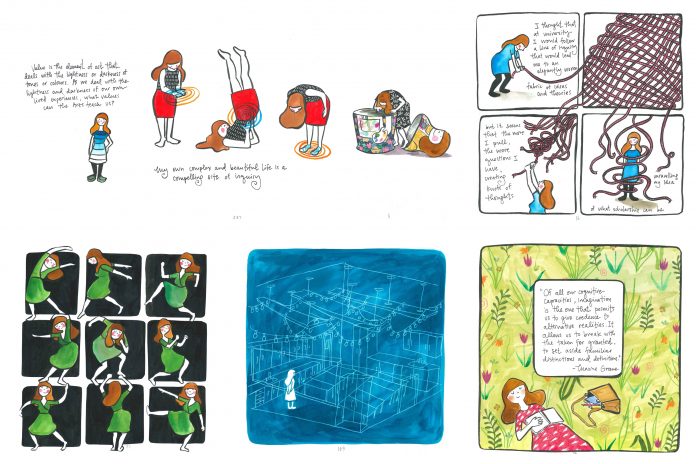
After writing a 236-page comic book for her thesis, high school arts teacher Meghan Parker crosses the stage this month to receive her master’s degree in education.

    According to SFU, Parker is reportedly Canada’s first student to complete a master’s thesis in this medium. Her thesis is titled Art Teacher in Process: An Illustrated Exploration of Art, Education and What Matters.

    “My thesis is an autobiographical comic and it’s about myself and my own experiences as a new a high school visual arts teacher,” Parker explained as she sat down in an interview with The Peak.

    Parker’s thesis aimed to explain the significance of art education, and how the arts can benefit communities and societies. She began writing it two years into her career as an arts teacher in North Vancouver. Her thesis encompasses many experiences, such as her response to readings, problems she’s encountered, classroom experiences, and more.

    Created on 11-by-11-inch paper, her comic book is a combination of watercolour, crayon, and pencil, employing different methods of colouring depending on the content of the page.

“[My choice] came from the question in the beginning, ‘Why am I typing about art instead of making art about art?’” – Meghan Parker

Parker’s inspiration for writing a comic book thesis started with an assignment given to her during her undergrad by SFU associate professor Lynn Fels. Parker thought the assignment gave her an opportunity to try a different form of thesis, with the encouragement from her supervisors.

    Parker felt that the medium of her thesis needed to be visual, given its huge emphasis of visual arts education.

“Form and the content are inextricably linked,” she said. “So I don’t think that the things I’m talking about could have been in a solely text form.”

    Parker’s creative process was anything but chronological.

    “It was like writing an essay with all the paragraphs separate then putting them together in a cohesive order,” she explained. For her, writing comics served as a reflection tool.

    Parker has released her thesis online and received a great deal of feedback, both positive and negative.

    “I’ve been getting beautiful emails from people all over the world saying ‘thank you’. . . but there’s also been a bit of conflict with people thinking that scholarship doesn’t look like comic books,” she said.

    But Parker remains optimistic. She believes such conversation is worthwhile, and will open up thinking about the various forms scholarship could take.

    Overall, Parker has learned much about herself, as both an artist and an art teacher after writing her thesis.

    “I gained a confidence ability [sic] to communicate through the comic book form,” she said.

    “A big thing I take away as a teacher is that you enlarge the space of possible, and you allow students achieve what they’re capable of. That’s really what we’re here for.”

     Parker’s thesis is still available to read online on Summit SFU.


With files from CBC.