Home Blog Page 559

Staying In: Lilyhammer

0

Best For: Fans of “problem characters”; Gangster sympathizers; Comedic drama-philes


      Lilyhammer is your next best binge. The story centres around Frank Tagliano, an infamous New York mobster turned confidential informant. Tagliano enters witness protection and begins a new life in the small town of Lillehammer, Norway. However, he finds it difficult to turn over a new leaf and leave his gangster tendencies behind, so he starts corrupting the pleasant town.

        With three fantastic seasons of 40–50-minute episodes, the show has enough content to make it worth your while, but is short enough to finish in a weekend or two. Starring Steven Van Zandt, Lilyhammer almost felt like an unofficial sequel to The Sopranos.

      Lilyhammer employs a balance of humour and dark storytelling. This balance makes it easy to consume quickly; it isn’t heavy enough to bring you down, nor light enough to get boring or repetitive. It has plenty of twists that keep you thinking, but it isn’t so action-packed that you can’t relax while watching it. The characters are loveable, hate-able, and sometimes both. The writing and direction are stellar — it feels like you’re there with Tagliano, in the biting cold of Norway. It’s the perfect show to binge, but you’ll definitely want to grab a blanket, and maybe some cocoa.

       Lilyhammer is available on Netflix and Prime Video.

Food Fantasy is fantastic but frustrating

0
Photo courtesy of IGN


     With stunning graphics and anthropomorphized food items, Food Fantasy is a mobile game that is both fun and engaging. It combines aspects of two common gaming genres, RPG and restaurant management, into one game, making for a unique experience.

     The player begins as an entrepreneur looking to start their own restaurant. However, the player also doubles as a Cooking Attendant, a protector of the world who uses “Food Souls” — the anthropomorphized versions of various dishes — in order to battle monsters.

     It is unexpectedly pretty amusing sending out Peking Duck to do my bidding in battle, aided by fellow Food Souls, Black Tea and Milk. The characters are where the game really shines. Each Food Soul is voiced by a different voice actor (whose credits are given right on the character page). The voice acting brings these personalities to life, and the player can switch between English and Japanese voices.

     The gameplay isn’t tough, and involves more grinding than any real strategy, but it has an addicting quality all the same. The day I downloaded Food Fantasy, I spent five straight hours on it in one sitting. At any given moment, you can clear four separate dungeons, collect tips, fight PVP battles, and train familiars. Other features include joinings guilds, cleaning up disasters (read: monsters), and even more. All of this magic mischief is going on while you’re trying to manage a steady flow of food for the customers of your restaurant, by the way.

     However, Food Fantasy’s major shortcoming is that its navigation is tough and non-intuitive. All the controls are clustered on the main page along the top and bottom of the screen in tiny little boxes. The game also doesn’t bother explaining how to use many of the functions in the game — their so-called “guides” are next to useless. In a game where there are half a million things to do, knowing what to do and how to do it is pretty important, but ultimately, this game has no explanation on how to accomplish any of those tasks. If I hadn’t had a friend beside me who was explaining how to play, I might’ve just given up halfway through.

     But if you can get over that hump, then Food Fantasy becomes a great way to kill time. It’s not the most challenging of games, but it doesn’t need to be in order for you to have fun.

     Food Fantasy is available for download on both iOS and Android.


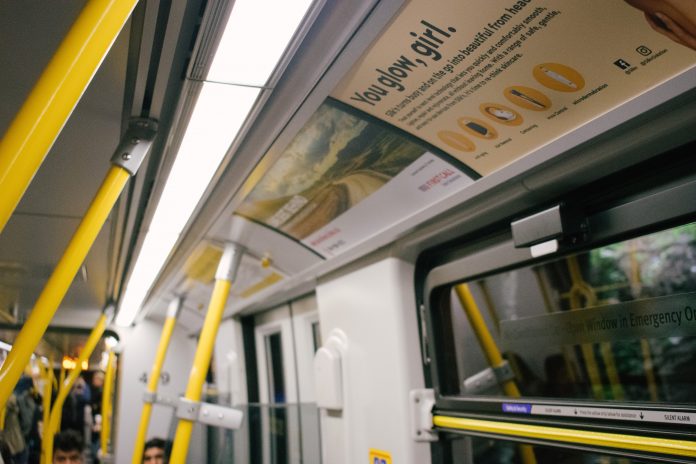
TransLink should be able to keep offensive ads off their vehicles

0
Photo by Maxwell Gawlick / The Peak

Unquestionably, the ongoing debate on the morality and legality of abortions has been controversial throughout its history. But most recently, news of a B.C. court overturning TransLink’s decision to deny advertising space to an anti-abortion group opens a door a discussion on free speech.

The originally-rejected advertisement came from the Canadian Centre for Bio-Ethical Reform, an Alberta-based anti-abortion advocacy group. According to Global News, “the proposed ad contained images of a growing fetus at seven weeks and at 16 weeks, and then a red circle on a white background containing the word ‘gone’ along with text that read: ‘Abortion Kills Children.’”

When TransLink refused to display the ad last year, theier decision was upheld in the British Columbia Supreme Court. However just this week, judges from the BC Court of Appeal overturned this, stating that “TransLink didn’t provide any meaningful reasons for its decision to reject the ads.”

To put this issue in context, Canada is one of the rare countries with no restrictions on abortion. In 1969, Pierre Trudeau’s government decriminalized abortion under the condition that “a committee of doctors decides that continuing the pregnancy may endanger the mother’s life or health.” After the legal case of R v Morganteler in 1988, Canada removed all laws restricting abortion. Since then, it is treated like any other medical procedure.

Going back to TransLink though, keep in mind that the court’s decision was not about whether abortion is moral or not — it was about whether TransLink has the right to deny advertising space to certain groups based on their beliefs. Rather than a matter of abortion, it is a matter of freedom of speech.

Before anything else, it should be acknowledged that there is at least some legitimacy behind the court’s decision. If public service companies like TransLink were able to pick and chose their advertisements according to their beliefs, then a large amount of power would be in the hands of those who control these enterprises.

That being said, TransLink should have control over what they advertise on their vehicles. Reading through TransLink’s advertising policy, I noticed two points of interest.

“No advertisement will be accepted which TransLink, in the exercise of its sole discretion, considers to be of questionable taste or in any way offensive in the style, content or method of presentation.”

Whether you approve of abortion or not, it is safe to say that an anti-abortion ad on a public transit vehicle is of questionable taste and could certainly be considered offensive. Furthermore, this article points out that these matters are decided “in the exercise of [TransLink’s] sole discretion,” simply meaning that TransLink gets to decide what goes and what stays.

“All advertisements shall be of a moral and reputable character.”

Legislation that permits abortion generally does nothing but benefit women’s health, and Translink should be free to reject ads that would argue against them.  Our abortion legislation is a long-standing decision in Canadian law, and ads like this just discourage women from exercising their rights regarding safety and independence. An ad that aims to make people question this could be reasonably viewed as having questionable moral character.

With these things in mind, an ad like this is nothing but disturbing and distasteful. More than that, it discourages and may distress women who need or have had an abortion, despite them exercising their legal right. TransLink’s initial refusal to accept this ad is an acknowledgement of these things, and their discretion can ensure that public transit is a safe space for everyone. The court’s demand for TransLink to accept this is unfair, and antithetical to our legal system’s current stance.

Clubbing at SFU

0
Illustrated by Marissa Ouyang

With Clubs Days having just ended, the newly minted SFU Student Amusement Department (SAD) has worked with the equally new SFSS (Simon Fraser Student Shenanigans) to come up with a list of new clubs based on the feedback from a survey of the SFU student population.

Inaugural Director of SFU SAD, Alan Furfundzies, said “We created ads for the newly developed clubs with recently SFU anointed club exclusives and we think that students will be very receptive.” The ads are listed below.

SFU Snow Shoveling Club

Looking to make a real difference to the SFU community but have a busy schedule? If you’ve been at SFU for the last couple of years, then you know that “Winter is Coming” are not just the Stark words; they’re SFU’s words as well. The Snow Shoveling Club will help clear roads and sidewalks so that students can continue coming for class in the deep of winter no matter how much they wish not to. The best part is that you get to be with a club and do nothing until the snowstorm hits! Talk about minimal commitment.  

Coffee Appreciation Club

Love coffee but too lazy to brew it at home and can’t afford anything more than the smallest size at your local cafe? The Coffee Appreciation Club has got you covered! For a small fee of all the money you have in your bank account at the time you join, the Coffee Appreciative Club will provide you one cup of coffee every year for a semester! You can be certain the coffee is ethically sourced since we’ll be using incoming secondary school kids to find the beans, and getting first-years to grind the beans and brew the coffee. Come join today!

Raccoon Therapy Club

After the wild success of puppy therapy at SFU campuses, we can see that the limited amount of days for puppy therapy is not enough. At the Raccoon Therapy Club we believe we can use local SFU raccoons to provide similar levels of de-stressing for students because like dogs, raccoons are inquisitive, furry, cute and have big eyes and personalities! The best part is that they’ll be available whenever you want, not just on days leading up to exam week.  So join today if you want to work with and study these wonderful creatures and help SFU students relax!

SFU Boredom Club

Bored between midterms and finals or just want to participate in organized procrastinating? The SFU Boredom Club will head over to UBC every Friday after “midterm season” to crash club and social events there and take up study space at their libraries to show our dominance because we’re just so bored. Why head home to rest when you can show UBC kids their true place in the world?  

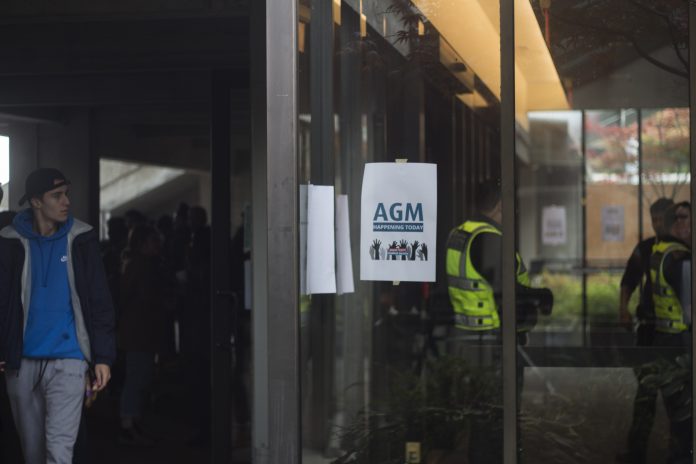
SFSS AGM delayed by smoke bomb

0
(Adam Madojemu / The Peak)


The Leslie and Gordon Diamond Family Auditorium was reported to be filled with smoke 10 minutes before the SFSS annual general meeting (AGM) was scheduled to begin there today.

According to vice-president student services Samer Rihani, the SFSS directors were informed by campus security that someone had dropped a smoke bomb inside of the auditorium.

Campus security and the fire department had been called to the scene to help clear the smoke.

Rihani noted that the SFSS had reached out to SFU’s Meetings, Events and Conference Services and had alternate spaces booked for the event.

“Our main mode is just to let people know that regardless of this, regardless of if we can get into there or not, we’re still going to have the meeting happen,” said Rihani.

SFSS president Jas Randhawa commented that he didn’t know what was going on or how the event would proceed. “I walked up and someone told me there’s smoke,” he said.

As of 12:35pm, vice-president university relations Jackson Freedman announced that the fire department was currently attempting to air out the auditorium and that the AGM was expected to begin in 15 to 20 minutes.

“We’re hoping that by the time it hits 1 p.m. we can still be ready on time,” said Rihani.

The Peak will follow up with more information as the story develops.

SFSS president impeached

7
(Azat Bayandin / The Peak)


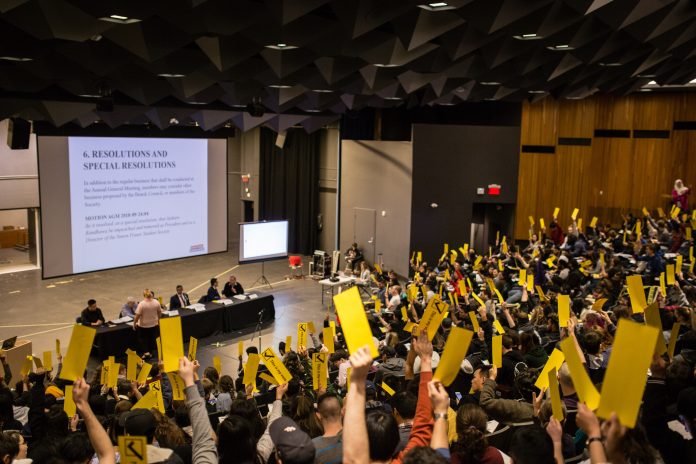
Jas Randhawa has been impeached from his position as president of the Simon Fraser Student Society (SFSS) after the membership voted on the matter in this year’s annual general meeting (AGM).

As a special resolution in this year’s AGM, the students voted on the motion to impeach by raising voting cards, with a two-thirds majority in favour of impeaching Randhawa as president. The chairperson determined the majority decision by eye, and the number of votes for or against the motion were not counted. The adoption of the motion was met with applause from the attendees of the meeting.

According to SFSS vice-president university relations Jackson Freedman, a decision regarding a by-election following the impeachment has not yet been made by the board of directors, as there are still enough executive members on board for quorum. If the board decides that there are enough members remaining on board to complete the year, the next election will be held on schedule in March.

As per SFSS by-law 4(2), the president’s impeachment has deferred his “rights, duties, and obligations” to SFSS vice-president student services Samer Rihani.

Preceding the vote on the special resolution, 109 attendees voted in favour of using anonymous ballot cards during the special resolution motion and 276 voted in favour of using voting cards.

Leading up to the voting, students stepped up to the microphones stationed at the front of the auditorium to speak for or against the motion.

“We’re here to vote on something that I never wanted to to participate in during my time at the SFSS,” said Freedman. He referred to the unanimous endorsement of Randhawa’s impeachment “a historical event in the SFSS.”

A student who introduced herself to the audience as Jaspreet spoke against the motion, stating that there was a lack of information available to voters. “[Randhawa] is the only one who bothered to reach out to students. [ . . . ] I strongly disagree with that motion [sic] because I feel like there’s a lot we are unaware of,” she said.

SFSS business representative Jessica Nguyen spoke about her perspective on how Randhawa handled the sexual misconduct allegations made by her, SFSS vice-president external relations Jasdeep Gill, and a third board member against former at-large representative Wareez Ola Giwa.

“[Randhawa] completely disregarded my safety, my feelings, and the sensitivity about this case,” said Nguyen. Directing her comments towards Randhawa, Nguyen spoke: “You did not do your due diligence in ensuring our safety and respecting our wishes.”

Randhawa was the last to speak before students voted to call the question on the motion. “With myself being gone, I can assure you that you’ll continue to have a CEO who neglects student groups on campus, have directors who continue making decisions such as having SFU students pay almost $20,000 to send empty busses to UBC events after cancelled Fall Kick-off,” he said.

Randhawa claimed that there “[were] no real grounds for impeachment.”

The veritable vexations of Mark Knight’s cartoon

0
You decide for yourself if you think it has to do with gender or race. (Photo courtesy of @theheraldsun via Twitter)

On Saturday, September 8, the tennis world was in awe of Serena Williams during her epic match against Naomi Osaka at the 2018 US Open. Although she lost, Serena lent inspiration to all when, after losing to her opponent, she told the 23,771-member crowd to stop booing Osaka, and proceeded to embrace the new winner. For those who know Serena, and the incomparable legacy she has built for herself, these actions of grace and honorability should come as no surprise.

However, what was a surprise was the racist image that Mark Knight, cartoonist for the Herald Sun, created and shared with the world on his Twitter account. Days after the match, Knight tweeted an image of Serena who, drawn with exaggerated lips and other racist features, is shown stomping on her tennis racket.

In addition to the baby pacifier flung on the court near Serena, the cartoon depicts Osaka asking the chair umpire, “Can you just let her win?”

What’s even more aggravating about Knight’s sectarian image is how it represents Osaka. The cartoonist drew Osaka, who is of Haitian and Hawaiian descent, as a skinny, blonde white woman. In contrast, Williams, who is of African-American heritage, was drawn as a large, angry, and menacing individual.

The racism strewn within Knight’s image is quite apparent. Serena, a darker-toned Black woman, is depicted as the villain. While Williams stood up for herself in the US Open match, Knight’s concocted image panders to the problematic fallacy that Black women are overly aggressive, loud-mouthed individuals who are unable to control their emotions.

Knight’s portrayal of Osaka is equally damaging. Osaka, although light-skinned, is still Afrocentric due to her Haitian roots. Nevertheless, Knight’s cartoon presents Osaka as a white woman, an innocent being victimized by the “aggressive” behavior of the big, bad Serena. Even in the absence of critical analysis, Knight’s image clearly reinforces the old narrative that lighter-skinned women are generally more diplomatic and feminine, whereas women with darker complexions are uncivilized, lacking the propensity to act graciously.

Mark Knight’s cartoon is inarguably problematic, both for Williams’ racist portrayal and the agent of colorism present in his illustration of Osaka. However, it’s also unfortunate that Williams and Osaka, both talented athletes who can attribute their success to hard work and great skill, now have their legendary US Open match tainted with this disgusting cartoon.

This match is significant for Osaka and Williams, albeit for very different reasons. For Osaka, this US Open Match serves as the day where she was able to play and win against her childhood hero. For Williams, this was a match where her courage and tenacity inspired women from all around the world as she stood up for herself against the chair umpire’s questionable calls.

Sure, Williams may have won if the chair umpire had refrained from making these calls: however, through the sportsmanship and solidarity she expressed towards Osaka, Williams was still a champion when the match ended.

What people tend to forget is that when artists draw and distribute such racist images online, portraying people’s likenesses without their knowledge or permission, it drags the individuals involved into an interminable negative experience.

It’s a terrible shame that because of Mark Knight, Williams and Osaka, after their legendary tennis match, have unwillingly become part of a racist illustration that will live on the internet forever. Just like Knight’s racism, the robbing of Williams’ and Osaka’s agency, through the drawing of this cartoon, is truly disheartening.

SFU works to finalize its cannabis policy

0
(Shutterstock)


With one month remaining until B.C. legalizes cannabis, its universities are working to put together their own policies on marijuana.

Kwantlen Polytechnic University (KPU) has already indicated that their campuses are unlikely to allow the use of cannabis. Although the institution’s policy is yet to be finalized, KPU vice provost for students Jane Fee has commented to CBC News that “the idea will be that you shouldn’t be in class or you shouldn’t be at work if you are impaired in some way, either by alcohol or by cannabis or some other illegal drug.”

SFU’s communications associate Justin Wong wrote to The Peak that SFU is also still working to finalize its policy on cannabis use in its campuses.

“Like other post-secondary education institutions in British Columbia, we are currently awaiting direction from the provincial government on legislative changes regarding cannabis for the province,” wrote Wong.

He echoed the same sentiment as Fee, stressing that SFU is concerned about the use of any substance that may impair the ability of members of the SFU community to learn, study, teach, conduct research, or work.

“The safety of all members of the university community as well as visitors to our campuses is a major priority for SFU when developing any policies related to cannabis,” he commented.

Currently, GP 16 and GP 17 are SFU’s official policies regarding tobacco and university-wide safety. Wong told The Peak that SFU is currently considering how cannabis could or should be integrated with both policies.

Giving an indication of what SFU’s policy will be focused on, Wong wrote that “the university is particularly focused on considering how recreational cannabis has the potential to create unsafe conditions and occupational hazards. Any policy developed will not only comply with the new legislative changes on cannabis but will also prioritize a safe working environment and university experience for students, staff and faculty members.”

According to Wong, SFU has been involved in discussions with other universities across the province, sharing issues, concerns, and ideas as they work on drafting their policies. He mentioned that SFU is confident that its cannabis policy would be similar to those of the other post-secondary institutions in B.C.


With files from CBC News.

Hunt for the best: Bubble Tea

0


Bubble 88

Location: 10209 King George Boulevard

Walking time from SFU Surrey campus: Three minutes

Hours: Sunday–Thursday 10:30 a.m. – 12 a.m. / Friday–Saturday 10:30 a.m. – 1 a.m.

Price: $2.95–5.45 depending on flavour and topping choice


I definitely didn’t expect a restaurant atmosphere. However, once my friend and I were seated with water and extensive menus in front of us, I started to appreciate how laidback it was. Bubble 88 was quite empty when we went around 3:30 p.m., and a nearby board told me that they have a happy hour from Monday to Thursday, 2:30 p.m.–5:30 p.m. and 9 p.m. – 11 p.m. for buy one, get one 50% off bubble tea.

       The restaurant is simply cool, and has tasteful decor. From 100+ drink options, we decided on a large taro “smoothie” with pearls (smoothie here meaning milk was added to a slush) that totaled to $5. It was served in a tall glass, and the flavour itself was very light and sweet. The pearls were small but there were enough to fill half the glass, soft and slightly sour. The straw was way too short and didn’t reach the bottom of the glass, so if you’re feeling dangerous, feel free to take the leftover pearls like a shot.

      Overall, it’s a solid bang for your buck, but if you want to grab something and go, this isn’t your scene. Also, this restaurant is cash-only.

Writer’s note: there’s also a boba place nearby called Tutti Frutti, but unfortunately I didn’t have the time, funds, or space to review it.

Rating: 4/5 bobas


T&T Supermarket

Location: Within Central City Shopping Centre, attached to the SFU Surrey Campus

Walking time from SFU Surrey campus: One minute

Hours: 9 a.m. – 9 p.m.

Price: $3.15


      It made my heart smile to encounter bubble tea at such a beautiful, low price. If you haven’t been in a T&T before, think grocery store centred around Asian foods. The bubble tea is located close to the entrance in a cooling fridge.

      My friend and I arrived at around 4 p.m., so there weren’t many choices left. We settled for a regular-sized half-sugar original milk tea with pearls, and lined up in the express lane. Service was fast and friendly, and you get your straw at check-out. The tea was very milky without much flavour depth, but the taste lingered in your mouth. I found half-sugar to be the perfect amount of sweetness for this one, and the pearls were mid-sized, soft, and bland.

     This is a good place for a cheap, refreshing, and mediocre boba. But beware: trying to find T&T in this maze-mall is a struggle. Hint: it’s on the mall’s lower level by Maxim’s.

Rating: 3/5 bobas


Big Orange

Location: Within Central City Shopping Centre, attached to the SFU Surrey Campus

Walking time from SFU Surrey campus: One minute

Hours: 10 a.m. – 7 p.m.

Price: $4.75 for a liquid drink, $5.25 for a slush drink (but I paid $4.90 for a taro slush with pearls, so I’m not sure what’s going on there.)


       I was excited about this stop on my bubble tea tour because Big Orange’s mascots (an orange and mango) are adorable. They also offer bobas with some interesting flavours like almond coffee. I was tempted to get one of their ice cream bubble teas, but for the sake of consistency, I ordered a taro slush with pearls. The service was quick and friendly, and the pearls are shaken throughout the drink for you.

       Unfortunately, other than the pearls being perfect, that’s where the good stuff ends. My first sip brought with it a huge chunk of ice, one of many I was to encounter. The drink itself was way, way too sweet. It tasted like milk and icing sugar, the flavour of taro completely drowned out. There was a thin layer of slush at the top of the drink, but the rest was a watery, saccharine mess. It was probably the worst bubble tea I’ve ever had. Do yourself a favour, and go to the T&T that’s just a few steps away for your boba.

Rating: 1.5/5 bobas

Writer’s note: Coco will soon be opening in the Central City Shopping Centre, providing yet another bubble tea option.


Chatime

Location: 10255 King George Boulevard

Walking time from SFU Surrey campus: Six minutes

Hours: Sunday – Thursday 12 p.m. – 11 p.m. / Friday – Saturday 12 p.m. – 12 a.m.

Price: $4.80 and up with a $0.50 add-on for pearls


      I hated Chatime the first time I went, and I was unimpressed the second time, but third time’s the charm. I hope you’ll forgive this weary writer for moving away from the beaten milk tea/taro slush path, but I was getting sick of the flavours. Chatime was quiet and comfortable, and service was fast but slightly awkward. The menu is extensive and you get to choose the amount of ice and sweetness in your drink.

      I dropped $5.55 on a regular lemon yoghurt smoothie with half-sugar, less ice, and pearls. It was delicious and near-perfect. It was on the sweet side, but the lemon flavour shone through. The slush was thick, and while there was a bit too many pearls for the (admittedly small) regular boba, they were sweet and frosted. My biggest complaint would be the price, though the quality is mostly worth the splurge.

Rating: 4.5/5 bobas

ICBC is unfairly milking young drivers with their high insurance rates

0
Photo courtesy of Auto Trader

With living expenses at an all-time high, it’s always frustrating to see necessities increase in price. The most recent candidate for this is car insurance: the Insurance Corporation of British Columbia (ICBC)  announced last month that they will add themselves to that list of budget stresses by raising their insurance prices yet again. But this time around, they’re making sure that young drivers pay the heavier price.

If approved by the British Columbia Utilities Commission, car insurance rates for some B.C. residents will rise again in September 2019. ICBC claims that their reasoning is that the current system is not adequately balanced between those drivers who pose greater risk on the road and those who don’t .

Under the proposed model, a combination of crash history and driving experience will play a major role in determining whether a driver is high-risk or not, which will affect the cost of their insurance premiums. ICBC estimates that insurance will decrease for low-risk drivers and increase for high-risk drivers.

ICBC claims that young, inexperienced drivers are the highest risk, and that right now our premiums are “significantly discounted” compared to the risk we pose. I recently paid just over $3,000 to re-insure my car for another year; I find it hilarious that ICBC regards that as a “significant discount” when I haven’t had an accident – or even a driving citation – in the three years I’ve owned my car.

While ICBC claims that this proposal is meant to ensure fairness among drivers, they also admit on their website that “more crashes, more claims, and higher costs are putting significant external pressure on ICBC’s insurance rates.” The company has released several startling statistics on their website about young drivers that support their case, such as “one in six young drivers could get in a crash”. Yeah, and it could also hail tomorrow.

Besides that vague statistic, ICBC released a report detailing the kinds of accidents that occurred in 2016. In that year, 37,000 out of the 330,000 accidents that occurred involved youth between the age of 16 and 21. Young drivers in this age group currently account for an average of seven percent of drivers on the road.  ICBC also admits that the rates of “youth injuries and deaths from vehicle crashes” are dropping, though they claim they are still “unacceptably high.”

I’ll admit that young drivers can present a risk on the road. Inexperience, driving without due care, overestimation of ability, thrill-seeking and risk-taking attitudes, and distracted driving are all factors specific to teens that can lead them to drive dangerously. But this is not representative of all young drivers, and the statistics certainly don’t defend a right for ICBC to be gouging our wallets.

What’s causing ICBC to go broke is not us, but rather their own poor spending habits. In an article ICBC published titled Why we need changes to insurance, ICBC reveals that “injury claims payouts are a main cause of [their] soaring costs”. The average settlement for minor injury costs has increased by 265% since 2000, rising from $8220 to $30,038 (2016). $16,500 of that new average is estimated for pain and suffering.

This is a ludicrous amount of money for minor injuries. Sure, if you’re hurt, you should get something for sure, but this seems exorbitant.

I also believe that the payout system makes people way too keen to exploit it. Just a couple of months ago, a pedestrian jumped onto the car of a family friend of mine, claimed that the driver — who was stopped at a light — had hit him, and ICBC gave him money for it. People have every reason to find creative ways to abuse a system like this, as it’s both too easy and too lucrative not to.

We also see this in vehicle repairs. It used to be that ICBC would either provide or require estimates that assess the damages of cars involved in an accident and determine what it should cost to fix the vehicles, restricting the amount that mechanics could charge.  Now, damage assessment is generally unregulated. Although ICBC says that they may require an estimate before getting the car fixed, I have never seen this enforced amongst my friends and family who have been in accidents. In many cases ICBC is simply reimbursing bills sent directly in to them from mechanics. This allows mechanics to charge a mint, because insurance payouts are not accurately limited. While ICBC is increasing premiums for young drivers, mechanics are laughing their way to the bank.

There are several options that ICBC could explore that don’t involve unfairly punishing a full demographic of drivers. They could bring back in-person adjusters and estimators who can assess the damage on the vehicle before sending it to a repair shop, rather than having employees just look over the case from a distance like they do now. They could cap payouts for pain and suffering on minor injury claims. They could even just investigate incidents more thoroughly in order to reduce the number of fake claims that are reported. This could be made easier by offering an insurance discount to drivers who have an active dashcam in their vehicles so to capture more incidents on film to help determine fault.

If ICBC still wants to claim that incidents involving young drivers are costing the company a lot of money, they should punish those who really pose the risk. They can take accidents and driving violations into consideration when determining premiums if need be, but they shouldn’t just generalize and punish the good young drivers who drive diligently on the road. It’s not fair to the young drivers who pose less of a threat than dangerous drivers from other age demographics.

Our accidents are not what’re causing ICBC’s bank to crash. Their ticket out of debt is to revisit their own management and practices, not to harm innocent and good drivers just beginning to pay them.