Home Blog Page 558

Fashion trends from the 70s that will be sure to come back in style

0
Image courtesy of shellypalmer.com

Platform shoes:

The legal equivalent to stilts and one of the most popular trends of the 70s!  These could definitely make a huge comeback. If everyone were to wear platforms again, it’ll be for dual purposes – to appear taller, and to compete over who can walk around without wobbling or making those annoyingly loud “clomping” noises.

The latter will be tricky, especially for us SFU students. We already hold way more than our fair share of noise pollution with all the construction going on at the Burnaby campus. The workers operating jackhammers while building a structure that’s going to cost every student’s tuition money for the next thousand years have already caused partial damage to my ears. But the shoes seem fun. I guess we’ll see.

The-ever-so-colourful wonders of tie-dye:

The pieces of clothing we always need to be extra careful with when throwing into the wash! Though, I must admit, tie-dye can be cool . . . when done properly. But, I must warn you. If you plan on making a DIY tie-dye shirt, make sure to do it properly. “Why are you stating the obvious?” you might ask.

Well, I’ll tell you a story: When I was six years of age, I went to a summer camp, where one of the activities was tie-dying our own shirts. One of the staff members helped me and I thought: “Mine is going to turn out great!”

But lo and behold, it looked like everyone at camp spilled grape juice, lemonade, and limeade in random places all over my shirt. The colours were in small blotches and it looked absolutely horrible. I can’t stress this enough.

Feeling slightly unsure? Please re-watch a YouTube tutorial or ask someone who’s done this before. Or just stick to buying one. Yeah.

Funky bell-bottom pants: Probably the coolest trend. If these aren’t going to be one of the next trends to come back, then there’s a serious issue. Whether they’re a simple denim or shiny polyester, bell-bottoms are, without a doubt, the bomb! Plus, one of the greatest things that could happen, which and might even make up for the fact that the Fall Kick-off was cancelled, is having a school disco!

Seven-Minute Majors: Find out what SFU students like about their majors (Part Two)

0
Image courtesy of Youth Change

By: Melanie Hiepler, Nicky Magas, Aaron Richardson (Humour Editor), Nicky Magas, Zach Siddiqui (Copy Editor), Henry Tran (Peak Associate), and Hillary Ta

Behavioural neurosciences

Behavioural neuroscience (BNS) is a unique combination of psychology and biomedical physiology courses. You learn about human physiology and anatomy at an advanced level, whilst developing the ability to communicate with others.

One of my favourite classes is PSYC 381, Behavioural Endocrinology, because prior to taking this course, I didn’t know that hormones played such an important role in your life. As it turns out, hormones regulate how much urine you secrete, how fast your heart beats, and even your immune system’s performance.

One of the benefits that I have gained from this major is lab experience; I got to work with mice over the summer and conduct some behavioural tests on them. It was cool being able to perform the experiments that I read about in my textbook — thanks Dr. Watson! (Read more about behavioural neurosciences online.)

One of the things that I dislike about this major is that some courses are only offered once a year, so if you miss one course, it can really delay your graduation date. For example, BPK 426, Functional Human Neuroanatomy, is only offered once a year and it’s a required course for BNS majors. Another thing that I dislike about BNS is that there aren’t too many “neuroscience” courses offered at SFU per se, which is a tad disappointing. – Henry T

Communication

When I first considered communication (which boils down to studying how people communicate with one another), I thought it sounded completely boring, but it turned out to be so much more accessible and engaging than predicted. Semiotics, media, culture, policy . . . all of these concepts, packed to the max, are things you’ll study in this major, but you’ll often be doing so in ways that connect directly to your day-to-day life.

Sometimes you’re looking at Marshall McLuhan and how his soul cried “THE MEDIUM IS THE MESSAGE” out into the sad content-focused, form-ignorant universe. Other times you’re looking at an advertisement showcasing a couple going on vacation only to learn about the secret implications that they’re about to have an orgy with their dalmations in the basement of another family’s summer home. It really just depends.

Oh, and also? The communication professors are some of the best. It pays to be taught by people whose entire careers are based around the communication of information . . . I’ve also never had a communication course where I’ve found the course policies to be unreasonable. The learning environment is consistently optimal. Take it from me, you won’t regret checking out some of the classes from this subject. – Zach S


Environmental sciences

If you are looking for a science degree that allows you to explore a little bit of everything while learning about our world, environmental science (EVSC) sounds like the place for you!

The true beauty of this program is its variety. With four concentrations to choose from (applied biology, environmental earth systems, envirometrics, and water science), you have the flexibility to enter a stream that offers you your preferred mix of courses. In fact, there are only five designated environmental science (EVSC) courses for students in the program, which are unique opportunities for environmental science students to meet, collaborate, and problem-solve while drawing from their diverse course backgrounds.

Think that this program is just about trees or only for established environmentalists? Think again! The EVSC program is about understanding our world and its natural processes as they relate to each other and us. Whether you care about the availability of clean water and air, the future of sustainable cities, or the question of how to better communicate science to the public, you are bound to be exposed to plenty of interesting topics throughout your studies. (Read more about environmental sciences online!)

Finally, there are a host of potential careers paths that are available to graduates with our unique educational background. Co-op opportunities are a fantastic way to make connections and gain experience. On top of that, EVSC students are a friendly bunch, so if this program sounds like it may appeal to you, what could you possibly have to lose by giving it a try? – Hillary T


Cognitive science

Cognitive science is an interdisciplinary study of the brain and the mind. Besides the core cognitive science classes, you take classes in psychology, philosophy, computer science, and linguistics. Each of these fields offers a unique and insightful perspective on how the brain works, and the fascinating different ways to think about it.

With cognitive science at SFU, you are free to design your own way through the program. You take the first introductory classes in all of the streams, and then focus on three streams in the higher level classes. It’s a flexible degree with fascinating content, with many streams to choose from depending on what you’re interested in: artificially intelligent machines, how humans and animals communicate meaning and information through language, human behaviour, the philosophical underpinnings of intelligence and consciousness . . . (Read more about cognitive science online.)

The cognitive science classes take all of these different perspectives and put them together into a coherent picture of the brain and the mind. It’s a degree that challenges you and makes you think at every turn. Because of how broad it is, you learn a wide variety of skills.

Whether you’re reading and writing philosophical essays, dissecting empirical papers, or working with problem sets of foreign languages to writing code, this degree helps you develop a wide variety of important skills from start to finish. – Aaron R


Sociology

The thing that fascinates me the most about being a student of sociology is that everybody already has a decent understanding of how society operates. Coming together and challenging those built-in assumptions and biases (and even being made to recognize that we have them) is an eye opening experience.

What’s more, when an incorrect assumption is identified, uncovering why and how it formed historically, politically, culturally, et cetera really begins to show you how little we are the unique, free-thinking individuals we perceive ourselves to be. Becoming a student of sociology gives you the theoretical tools to understand not only how society affects you and vice versa, but how it pushes and pulls other people with experiences different from your own. It’s a world-expanding field of study, as we tend to get so wrapped up in our own lives and ways of living that we can easily forget that other people are affected by different socio-historical circumstances.

But by far the best thing about being a sociology major is that there is almost nothing you cannot study. If it has a social component at any level, it’s fair game. Sports, graffiti, video games, memes, medicine, you name it. Any personal interest can be transformed into an object of sociological study. This department even has a bunch of interesting courses that allow students to examine elements of pop culture. It’s hard not to be engaged in your studies when the things you’re studying are intrinsically fun. – Nicky M


World Literature

World literature (WL) is all about reading and cross-cultural connections. We read stuff of all peoples, all places, and all times: expect everything from ancient Persian and Chinese epics to 20th century Argentinian short stories and contemporary Japanese manga.

I love that world lit is interdisciplinary: depending on what you’re reading and how you’re analyzing it, there’s a lot of room for creativity and bringing in history, sociology, translation studies, gender studies, geography, and even biology. Literary analysis isn’t a pointless exercise in labelling metaphors and highlighting symbols, like we all did in high school English; it’s about asking questions of a text to puzzle out what makes that text tick in a particular culture.

Expect to write a lot in WL. Also expect to be challenged in your thinking. WL teaches me to think critically about my world, making me more self-aware and helping me question things I take for granted. Bonus: employers look for critical-thinking skills. (Don’t ever let anyone tell you that an Arts degree is a waste of time.)

As for the faculty: they’re great. WL is a small program, so you’re guaranteed small classes and profs will actually know your name. These profs have high expectations of their students, but they are committed to helping you meet those expectations. (Read more about world literature online.)

I strongly advise going to their office hours. WL 200 is the gateway to all upper-division classes, as this is where you’ll begin to learn some of the theoretical frameworks that will help you down the road. WL 300 builds off WL 200, so don’t take them at the same time! Finally, for the theatre-lovers among us, I highly recommend WL 320 with Dr. Mark Deggan – this class is about how literature overlaps with performance, so expect lots of theatre talk! – Melanie H


Men’s soccer’s Kyle Jones talks season-ending ACL tear injury

0
Kyle Jones played a key role in two GNAC championships for SFU men's soccer. (Azat Bay / The Peak)

Year: Senior

Hometown: Port Moody, British Columbia

Major: General Studies (Education), Minor in Curriculum and Instruction

Favourite soccer player of all time: Ryan Giggs

Kyle Jones has been a prominent player for the men’s soccer team over the last three seasons, and ever since he arrived at Burnaby Mountain, he has made the centre of the pitch his. His role as a central midfielder is crucial to the Clan, as it allows him to serve as the link between the defence and the attackers.

During the off-season, Kyle played for the Calgary Foothills in the Professional Development League (PDL), a North American league for developing young players between their university seasons and pushing them toward professional leagues. The Foothills team are always competitive, visiting the national final just two seasons prior. This last summer saw Calgary go one step further and win the PDL Championship!

The upcoming 2018 season with SFU would have been Jones’ last year of eligibility for the Clan team, and a year he would have wanted to make as memorable as possible, perhaps by winning a national title, this time in the NCAA. Unfortunately, things won’t go according to plan for Jones.

Before the end of the PDL regular season, Jones tore his ACL, forcing him out of contention for the eventual title-winning Foothills lineup. Of course, an ACL injury means a long spell on the sidelines and therefore Kyle will not be playing for SFU in what would be his senior year.

The Peak: How was your PDL season playing out prior to the injury?

Kyle Jones: It was going pretty well. We had a strong team so training was competitive and professional. I was actually playing quite well [during] the game I [hurt] my knee so that was unlucky.

P: Were you looking forward to the SFU season after the PDL season?

K: Of course. Starting the year with a trip to Norway would have anyone buzzing for the season, but a few weeks before I was meant to come back home to train, I did it [the injury] and I didn’t actually get to go.

P: How did the injury happen?

K: Just an unfortunate turn chasing back and it was gone.

P: What were the first few days like following the injury?

K: Because I was able to walk and swelling was minimal, I was hopeful that it would just be a bad hyperextension, but I kind of knew it was worse than that. I mean, I’m allowed to dream, aren’t I?

P: Why did you have to leave, or how did you come to the decision to leave the Foothills before the end of the season?

K: In June, I had spoken with Schneids [Clint Schneider, SFU Men’s Soccer Head Coach] about the Norway trip. Since we [Calgary Foothills] were projected to go far from the beginning of the season, originally the plan was to meet SFU in Norway right from where we’d end up in the playoffs. However far we made it in the playoffs, I’d meet [the SFU team] in Norway right from where the finals were. That plan didn’t pan out, and he wanted me back to train before we went. So a couple of days later I booked a flight back for the end of July where I’d have missed at least the semifinals of the PDL. I spent about two to three weeks post-injury in Calgary getting my MRI, getting physio, working out, etc. It wasn’t really my choice since I never want to leave a team early, but I understand why I needed to be back. However, since nothing could be done for me after my injury, I’m glad I could have come home early.

P: How did you feel before the surgery?

K: I was at a standstill for about two months, so I was excited that I could start getting better. Surgery was just step one in my long process of recovering.

P: How did you feel after the surgery?

K: Even [now] after my surgery, I’m still excited. I may be looking too far forward at this point, but I want to get back and play.

P: What is your timeline to come back and what’re you doing to get there?

K: On average, it takes seven to nine months to fully recover, but there [are] a lot of little goals to reach like getting back to jogging, then sport-specific training, then training with the team again, then slowly getting back into playing games.

P: How do you feel about how the team has started the season, and what are your expectations for the guys for the rest of the season?

K: It’s an unreal start. I hope this momentum keeps going forward as the semester goes forward. It’s hard to be as focussed on the sports aspect so much come midterm season, but the team looks much more mature this season, and hopefully we can handle it and not let the high standard we’ve set dip.

Political Corner: Doug Ford’s Better Local Government Act harms Toronto’s upcoming election

0
Photo by Alex Tétreault / National Observer

This past week, Prime Minister Justin Trudeau disagreed and distanced himself from Ontario premier Doug Ford’s use of the notwithstanding clause of the Charter of Rights and Freedoms to proceed in his campaign to pass the Better Local Government Act (BLGA). The goal of this act is to shrink the city council significantly, from 44 members to just 25, in order to cut government costs and increase the speed of legislation.

By using the notwithstanding clause, Ford is able to override a judge’s ruling that his act goes against the Charter. He is also going against public opinion and 25 members of parliament as he pursues said act.

Ford’s reasoning for this change is inherently flawed. Passing legislation is based on a city’s priorities, the available funding, the council’s autonomy, and more. Of these, the council’s autonomy is most affected, as there are fewer voices and advocates to vote in. The primary benefit of this new act is faster voting and greater process efficiency, but that may come at a severe cost of poorer legislation quality.

Furthermore, not only would Ford’s act undermine judicial independence, it also could undermine Toronto’s upcoming elections. The act could undermine the candidates’ freedom of expression but more importantly, by cutting the size of the city council, it will increase the remaining seats’ constituencies and redraw electoral lines in the middle of a major election.

This change would likely catch voters off-guard when they reach the polls, and could seriously damage the effectiveness of Toronto’s city council. Both of these could be incredibly damaging to the process and public perceptions of democracy.

Summaries for classic books I’ve totally read and completely understand

0
Illustrated by Emma Wu

As an English major, I’ve definitely read tons of “literary classics,” also known as “shitty old books written by racist dead guys.” Since you’ll all be forced to read them one day, or pretend you’ve read them to look competent, I’ve compiled a nifty list of summaries for all the big ones. You’re welcome.

The Catcher in the Rye by J. D. Salinger
A really angsty kid stomps around New York for three days and then gets pneumonia.

A Tale of Two Cities by Charles Dickens
A long-distance relationship in England between a woman with a large forehead (thanks, Queen Elizabeth I) and a man with ten-inch sideburns. Since texting doesn’t exist, the lovers use plague-carrying rats to deliver their letters. This kills almost everyone, but don’t worry, a fire later kills everyone else.

The Road by Cormac McCarthy
I never finished this book, unfortunately. I took a shot every time the sentence “they walked down the road” came up, and got alcohol poisoning after the first chapter.

The Prince by Niccolò Machiavelli
God, is this one depressing. Long story short: people don’t actually drop out of classes the first few weeks into a new semester. Your professor is 100% slaughtering them to maintain social control.

Les Misérables by Victor Hugo
Don’t worry about this one, it’s in French so no one can read it anyway.

Moby Dick by Herman Melville
The title should explain itself. A ship captain with Small Penis Syndrome puts all his energy and desire into killing a whale and taking its genitals as his own.

Zen and the Art of Motorcycle Maintenance by Robert M. Pirsig
A cautionary tale to people who meditate at the wheel.

Jane Eyre by Charlotte Brontë
700 out of the book’s 800 pages are detailed descriptions of curtains. The rest is about a narcissist who locks his wife in the attic and hits on a girl who is 20 years younger than him. Spoiler alert: a burning house falls on him so he ends up looking like Mad-Eye Moody.

Pride and Prejudice by Jane Austen
A bunch of sisters try to get laid to please their mother.

The Scarlet Letter by Nathaniel Hawthorne
Someone fucks a random guy, and the townspeople get a little too feisty with a paintbrush.

Skinny Legs and All by Tom Robbins
A bean can receives a life-threatening injury on its way to Jerusalem, so a stick and seashell try to save its life. There’s a part where a French vibrator talks to panties. Humans are involved in this story, but they’re secondary characters.

Beowulf by unknown oral storyteller
After a king builds his castle in monster territory, a glorified pest control guy must put down a young man-eating monster. And then the monster’s angry mother. And then a dragon. Then he dies.

Waiting for Godot by Samuel Beckett
Two guys wait for Godot.

The Secret Garden by Frances Hodgson Burnett
This one’s definitely anti-vaxxer propaganda. Two sick kids become friends, and through the power of Fresh Air™, they make a full recovery.

Animal Farm by George Orwell
A bunch of animals decide to become communists, E-I-E-I-O.

Lord of the Flies by William Golding
Ms. Baker let the kindergartens eat too much sugar at lunchtime, so they murdered each other and burned other kids alive in a forest without remorse.

SFU students and faculty targeted by email scams

0
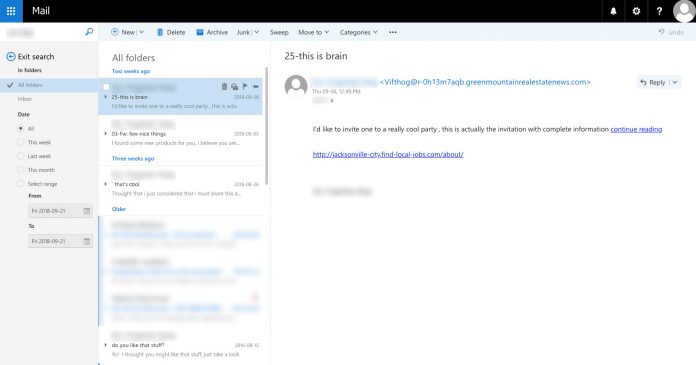
(Screenshot from SFU Mail)


SFU students and faculty have expressed concern over a variety of scam emails received in the past few months, sent from what appear to be SFU email accounts. The emails range from promoting weight loss plans to linking users to “interesting” articles.

The Peak asked Steve Hillman, an IT architect at SFU IT department, about these emails and about what SFU students can do to better protect themselves.


How do these scams work?

Hillman explained that email messages that may target SFU accounts can be grouped into categories based on the information they contain and ask for from users.

Spam emails are messages that contain unwanted advertisements, while scams are emails that either offer or ask for money. Phishing emails aim to trick users into disclosing information or credentials. They often mimic websites to convince users to enter private information, such as banking information, usernames, and passwords.

Malware or viruses can be transmitted via messages that “either contain a malicious payload (an attachment that contains a virus) or, more commonly now, contain a URL that points to a website that is infected with malware.”


How do scammers obtain my email address?

Scammers have many ways of obtaining students’ email addresses, including breaking into vulnerable third-party websites and extracting email addresses, infecting computers with malware to collect the emails stored there, or guessing by using common names and noting which ones result in valid email addresses.


What is SFU IT Services doing to prevent this?

Hillman explained that SFU IT Services takes a number of steps in order to protect students and faculty against the detrimental scams. “[We run] commercial anti-spam/virus firewall servers on the perimeter of our network that help to block most of this unwanted email,” he wrote.

While IT Services ensure that these servers are as up to date as possible, it is often difficult to keep up with the attackers that “are continually looking for ways to circumvent the firewalls.” Despite these difficulties, Hillman noted that the department blocks as many as a million messages a day using this technique.

In cases where some messages get past these firewall systems, Hillman explained that the last defence is the user. For this, IT Services aims to educate the university community on cybersecurity.

He explained that October is Cybersecurity Awareness month, during which IT Services will be advertising good computer security habits around campus.


How can students recognize these emails as spam and protect themselves?

Hillman advised that users should be suspicious in cases where they don’t recognize the sender, weren’t expecting the email, are asked to click on a link to an unfamiliar site, or are asked to enter in any credentials.

Users should ensure that their computers’ operating systems are up-to-date. Hillman also noted that is important to backup one’s computer often or keep a copy of important documents so they can be backed up if the computer needs to be wiped due to an attack.

Because it is difficult to detect malware when it has infected a computer, Hillman noted that there should be an emphasis on preventative rather than curative measures. If a user suspect that they have already entered a username or password into an illegitimate website, IT Services recommends they change your password and watch their account for suspicious activity. You can also run virus or malware scanners that can better detect malicious software on your computer.


More information about cybersecurity can be found on SFU IT Service’s website.

What If: The Tim Hortons Express returned

0
Photo courtesy of the Peak archives

I have 10 minutes between two classes, and the chances that I will collapse into a pile of limbs, loose-leaf papers, and textbooks are worryingly high. I need a familiarly branded coffee as I run from West Mall Centre to the far side of the AQ. There should be no problem, because the Tim Hortons is there. But this campus is so full of people who need their caffeinated bean-juice and cream-cheese-via-bagels to feel joy and keep going that all three line-ups are snaking across the cafeteria.

But wait, I don’t want a bagel, sandwich, or a blissfully delicious all-day breakfast menu item! I just want my coffee, and maybe a muffin if I’m feeling it, and then I’ll be on my way. And since everybody else wants potato wedges and iced lemonades and BLTs, the line for the express is blissfully short. I stumble down the stairs, fill my own cup of coffee like a grown-up, bag my muffin because that’s right, I deserve it, go chat with the lovely older employee who always runs the Tim Hortons Express (and who I genuinely hope is doing well), tap my debit card, and prance off to class fully reinvigorated.

There are dreams that cannot be, and there are storms we cannot weather. So what actually happens now that the express is closed is that I see the lines, gasp, and walk to class disappointed, uncaffeinated, and as incomplete as the Student Union Building. Because fuck no, I won’t be patronizing West Mall Express or whatever the sad little not-Tim-Hortons-Express stand in WMC is called.

Women’s volleyball fall just shy of No. 7 ranked Western Washington University

0
The Clan are now 3–4 in the GNAC. (Photo courtesy of SFU Athletics)

On Tuesday night, the Clan hosted the No. 7 ranked team in the nation: Western Washington University. The Vikings came into Burnaby as the only undefeated team in the GNAC. While they left still undefeated, the Clan put up quite the fight against such a strong team. Certainly, the support from the “Red Night” crowd helped the team as they almost pulled off a major upset.  

Things didn’t start off so well, however, as Western Washington won the first set by a score of 25–19. While the Clan played well in the set, the Vikings showed off why they are such a highly touted team, rarely making mistakes and playing a very efficient brand of volleyball. Given that SFU have typically started off strong and struggled in later sets in their recent home games, this did not bode well for the team.

Things changed in the second set though, as SFU came back to play some of their best volleyball so far this season. With the crowd in full support of the team, they were able to pull off a huge 25–19 set win. One fifth of the points came from kills from Tessa May, who dominated in the middle for the entirety of the set.

The Clan kept the momentum going into the third set, and set the crowd into a frenzy in their 25–23 set win. This time it was Kirsten Pinkney who came up big in the set, leading the team with eight kills. Things were neck-to-neck for the entirety of the set, but Pinkney and May came up huge to close out the set win with kills for points 24 and 25.

As the teams headed into the fourth set, however, adjustments made by Western Washington allowed the visiting time to slow down SFU and eventually win the set — and the match. This is what head coach Gina Schmidt told The Peak via email about the matter:

“WWU made some changes in the fourth and fifth sets and I think we could have done a better job of adjusting a bit quicker. They brought in their other middle in the fourth set and she got some timely kills for them.”  

With the adjustments, the Vikings would dominate the rest of the way, winning the fourth set 25–14 and the fifth set 15–8.

Despite this, there were a lot of positives to take away from the game, as said Schmidt.

“I think there are a lot of positives to take away from the game. Overall, we out-hit and out-dug WWU statistically. They are currently ranked #7 in the country and we showed we can hang right with them.”

With the loss, the Clan are now 3–4 in GNAC play this season, and 6–7 overall. Although this is not the ideal start, the team will still surely be in playoff contention by the end of the season. “We’ve been playing a lot of good volleyball this season and I think if we continue to work on our consistency we’ll get the results we’re looking for,” said Schmidt.

Peak player of the game: Kirsten Pinkney

Pinkney was vital in the Clan’s attack in this one, and the team was at its best when she was on. She led SFU with 20 kills and 21 total points.

What’s next:

The Clan will wrap up their home stand when they play Montana State University Billings on Friday night. The game starts at 7 p.m.

The allegations are true! SFU has a student government

0
Image courtesy of sfss.ca

The SFSS exposes itself to the student body, and no one is enjoying the sight

Burnaby, B.C. — A trembling first-year clings to the embrace of their second-year friend, the sleeve of their freshly purchased SFU crewneck soaked in tears. The semblance of comfort is chilled by the daunting revelations that Simon Fraser University has what it claims to be, a well-established Student Society.

“It’s a lot to take in all at once, you know?” The second-year confided to reporters that afternoon. “Sixteen directors,” they mused, denying themselves terror. “I can’t even name sixteen other people enrolled here. Like, I totally knew that student governments out there, but to think my own university had an entire policy-crafting sect rife with incomprehensible administrative turmoil, lording over $750 of my tuition each semester, is unimaginable.”  

When the news broke across multiple reputable meme pages that SFU’s student-led system of governance was crumbling due to disorganized infighting and alleged real fighting, SFU immediately launched its most formidable counter-attack: disinterest.

One student revealed how many initially attempted to deal with the shocking meme-formatted reports. “I guess I just thought, ‘Hey, if I treat this like the knockoff Game of Thrones bullshit it is, maybe it’ll go away?’” A forlorn expression weighed down a nonchalant shrug. “I guess I was wrong.”

Holding back enraged screams was no simple task for an unnamed third-year criminology student as she accepted the reality that not only does SFU have a student president, but he might actually be impeached.

“Those quasi-political freaks better keep their mundane feuds to themselves!” Forgoing diplomacy, she embarked upon the “anger” stage in the cycle of grief while sitting at the lower bus loop, awaiting the 144. “Do those lukewarm Machiavellians even care I’m now burdened with the knowledge that I, personally, am partially responsible for this current debacle because I never paid attention to their weird little board meetings in the past?” She proceeded to jam her headphones into her ears and watch a full episode of Netflix’s, Nailed It, on their Samsung Galaxy to diffuse any residual guilt.

“SFU students are surprisingly resilient,” commented a suburban trauma counsellor who was called in to assess the situation. “In fact, it took a whole team of Vancouver Apathy specialists to even realize the unprecedented level of shellshock the student body was experiencing. Half-hidden anxiety, despondent fatigue, and general confusion are so naturally ingrained in SFU’s everyday culture, the plethora of telltale signs of suffering were completely masked.”

Despite specialists, counsellors, and dank memes, it’s uncertain what the lasting effect of SFSS’s emergence into the conscious awareness of the student body will be. “One thing is clear,” the counsellor noted at press time, “these poor kids are not ready to learn the SFSS has a budget of over two million dollars. Can you believe it? Holy fuck, two million! But no, seriously, god, it would literally destroy them.”


Adulting 101: Managing your Moola

0
Illustration credit, Tiffany Chan

The school year has restarted, and we’re back to being broke. Managing money can be a tough step into adulthood, and the difficult learning curve combined with the importance of getting it right can put enormous pressure on students. In this edition of Adulting 101, we’ll discuss the pros and cons of different lifestyles you can lead that’ll affect your bank account, and some tips and tricks on how to manage your money as a poor, broke, or near-broke student.

Means of Income

There are three top means of income for students. It’s important to assess and perhaps even reassess every so often which type of lifestyle has worked best for you in the past, and which you think might be a more attractive option to try out if you have the financial freedom to do so. Understanding your means of income is the first step to managing your money.

  1. Part-time work: If you have a part-time job while in school full-time, you’re consistently receiving smaller amounts of money over a longer period of time.
    1. Pros: Your revenue is more consistent. Additionally, you also have smaller amounts of money that you’re spending as you earn, so you can’t be tempted to use up all your savings at once.
    2. Cons: Working with school is time-consuming. It can be hard to balance your job with other aspects of your life, such as your coursework, social life, volunteering, etc…
  2. Saved money: This means you have a larger amount of money saved up in your account, whether it be from summer earnings, scholarships, grants, or money from your parents.
    1. Pros: More time to focus on school and other things you enjoy doing.
    2. Cons: You have a limited amount, so you need to budget well to make sure it’s being allocated in the right places
  3. Loaned money: You’ve taken a student loan either from a bank or the government, and you will need to pay it off after you graduate.
    1. Pros: You don’t have to work for this income and can focus on other things
    2. Cons: Paying it all back, along with the interest rate, after graduating is . . . well, we all know how rough it can be.

Some universal tips apply to all struggling students that I’ve learned over the years. These are for those of us who don’t have as much disposable income as we’d like; we’re still trying to figure out ways to spend well on our bigger expenses so we have enough to spend on things we enjoy.

  1. Budget all your expenses. Everything should have an allocated budget, from the expenses required for survival (such as groceries, transportation, tuition, books, and rent) to lighter things (like your social life and eating out). Make sure you’re sticking to it, even when it’s hard to do. Writing things out by hand, on an Excel spreadsheet, or with a budgeting app can be really helpful. Keeping track of your expenses can also help you be more mindful about spending. On a similar note, be aware of how much money you have and how much you’ll be spending, and plan ahead of time. If you see that you’ve already used up half of your paycheque and you have a while until your next one, or the money you’ve saved up from your summer job might be running low soon, start looking for ways to patch up holes in your bank account early. This can mean taking on part-time work, applying for more bursaries next term, or anything else.
  2. Save ahead for hidden expenses. If your car breaks down or your phone cracks and you need replacements, you should have a sufficient amount put aside to carry you through.
  3. Try looking out for things on sale. If you can find something that you need that’s worth $25 for a $5 price, that’s a great deal. Take the chance while you have it, and buy it! At the same time, don’t get carried away when you see sales. If you see a useless, albeit cool, contraption on the internet for $200 from $500, then you haven’t saved $300, you’ve wasted $200.
  4. If you find something on sale that you buy and use repeatedly, like toothpaste, then buy it in bulk. It’ll last you a while, and you’ll have saved money in the long run. This is true of most things: try buying the bigger packaged items. Often, they cost comparatively less to the smaller packages because they have a greater quantity for an overall lower price. You’ll be paying more upfront, but you’ll also be getting more product for less.
  5. Try looking for cheaper alternatives that might be a little less convenient, but will serve the purpose just as well. For example, when grocery shopping, don’t buy already-cut fruit from the fridges, buy whole fruits from the produce section, which you can take home and cut up yourself. It’s a little more work, but if you’re struggling to save money, it’ll help in the long run. Ditch the brand-name food, and price-shop between stores.
  6. Remember, the small things add up. You may think that maybe $10 here or $15 there isn’t a lot, but you’d be surprised to see how much they add up to when you spend these seemingly small amounts consistently.
  7. I learned a tip about impulsive spending, which is when you really want to buy something, but you don’t need it: if you’re at the mall and you pick up something you really think you need and cannot live without, tell yourself you’ll buy it, but in a day or two. If, after a couple of days when that immediate hot impulse has died down and you still feel strongly about buying it, then go back and get it. At that point, you know that it’ll be a worthy purchase that’ll make you happy, and not just something you saw and bought on impulse.  
  8. When you get your paycheque, it can be tempting to go on a shopping spree, or spend it all on a night out, but you need to resist the temptation. The saying “don’t spend what you don’t have” applies to your future self as well. If going on a spending spree, ask yourself if you’re doing it at the expense of a broke you eating straight out of a pot of ramen noodles tomorrow.

Remember, it’s all about creating a healthy financial lifestyle for yourself that you enjoy living. You want to save on the bigger things so that you have enough money to spend on things you enjoy. If you spend impulsively outside your budget on sprees, partying, and eating out when you really don’t have the money for it, then you need to reevaluate your financial habits.

When You’re Running Short On Cash