Home Blog Page 548

Sustainability-focused student-led program launches on SFU Burnaby campus

1
(Photo courtesy of Tumblershare)


A group of SFU students are working to make SFU more sustainable through a new program called TumblerShare.

TumblerShare is a student-led sustainability program at SFU’s Burnaby campus, encouraging students and staff “to lead a more ecologically friendly lifestyle by reducing the number of disposable beverage cups used on campus,” as stated on the TumblerShare registration form.

The initiative is based on a membership system, and it is currently available only at the Renaissance Coffee in the applied science building. Those who apply for TumblerShare will be given a membership card after they make a deposit of $15.

Whenever a cardholder wants a coffee or tea, they can submit their membership card at the Renaissance café, and in exchange, they receive a reusable container for their hot beverages. Once done, the user can bring the reusable mug back to Renaissance to get it washed and collect back their membership card. Members also get 15 cents off their coffee purchase when using the card, and earn a free coffee for every nine coffees bought.

The card may be returned to get the deposit back at the end of the term. The cost of the beverages are not included in the price of the membership card.

According to the TumblerShare registration form, 2.6 million single-use beverage containers end up in Vancouver landfills every week.

“Most disposable coffee cups are recyclable, but they still cost energy. TumblerShare would help cut down on that energy consumption,” explained Corrina Tang, the marketing coordinator of the program in an interview with The Peak.

“We are already reducing the use of straws all over the city. This is the next step forward,” she added.

According to the registration form, the program is presently supported by the Women’s Centre and Embark, while Renaissance has offered to help them with the initiative free of charge. When asked why Renaissance was chosen, Tang mentioned that not only does Renaissance support local growers and suppliers, but that they also seemed really enthusiastic about the initiative.

Discussing student response, Tang stated that so far, the feedback has been encouraging; they have received approximately 45 sign-ups during Club Days at the beginning of this term alone. The only people who seem disinterested in the program are those who already bring their own tumblers, laughed Tang.

Tang noted that she and her teammates would like to reach out to other outlets of Renaissance on campus provided the program does well, so that the program can be more frequently accessible by members.

Tang and her team can be reached every Tuesday by the Renaissance Coffee in the applied science department, from 11 a.m. to 4 p.m.

The Secret Lizard Love Affair

0
Illustrated by Marissa Ouyang

Rose Blossom is no ordinary girl. By day, she works at her local stuffed animal hospital. By night, her body transforms into a fully functioning rocket ship and she travels the galaxies.

When her engine gets rusty on a trip around the Chocolate-Milky Way, Rose Blossom crashes on the dangerous planet of Squeesh and must fight for her life. With her trusty sidekick, Fred, a cowardly vampire-bear by her side, Rose Blossom is captured by a local gang of lizard people, and she must try to trick them into fixing her engine so she can escape Squeesh . . . but she never expected one of the lizard men to fix her heart along the way.

With Rose Blossom’s choice of her heart or her engine ahead of her, she sets off across the planet to find the psychic mole-rats to aid in her decision and accidently lands herself in a political conspiracy. Thank goodness for her specialized training in throwing bowler hats! Using her FBI summer camp training, Rose Blossom helps the psychic mole-rats bring down their evil overlord, who curses her as he dies so that she may never leave planet Squeesh.

With her hopes of getting home dashed, Rose Blossom sneaks back into the lizard lair to free Fred and finally confront her feelings for her captor only to find the entire population turned into vampire lizards. The new king, Fred, still upset with Rose Blossom for leaving him in captivity to go on a soul journey, curses her to never set foot on Squeesh again. With her engine repaired, Rose Blossom takes to the skies with a broken heart, forced to fly in the atmosphere, never leaving and never returning, for eternity.

The book the critics are calling “the most confusing piece of ‘literature’ I have ever read”  and “the reason I can no longer take commercial flights,” The Secret Lizard Love Affair is a tale of space adventures, love, and lizards in an action-packed 666 pages.

Seattle Pacific University snaps SFU’s unbeaten run in 3–2 OT heartbreaker

0
Six seniors played their last game on Terry Fox Field on Thursday. (Photo courtesy of SFU Athletics)

Thursday night at Terry Fox Field saw the SFU women’s soccer team take on Seattle Pacific University. Thursday also marked Senior Day, where SFU celebrated their senior athletes’ final home game. Senior team members Jenna-Lee Baxter, Allyson Dickson, Christina Dickson, Tanis Cuthbert, Katelyn Erhardsen, and captain Samantha Donald will say goodbye after the conclusion of this campaign.

Perhaps the emotion of the pre-game ceremony affected SFU’s concentration, as the team unusually conceded an early goal. The SPU falcons launched a ball over the top of SFU’s defensive line, and Julia Devere latched onto the ball and fired it into the net before Nicole Anderson or her defenders could react.

SPU continued to pile on pressure, pinning SFU in their defensive third for large chunks of the opening 30 minutes. SPU’s pressure paid off just before the 30-minute mark when they doubled their advantage, as Makena Reitz picked up the ball on the left wing and sent a piledriver across the face of the goal. Anderson leapt athletically, but the ball spun beyond her and nestled into the top corner.

“We had been standing for 20 minutes and [there are] always high emotions and it’s hard to regain focus right away,” coach Hamel commented post-game on her team’s slow start. “Obviously, that is something your opponent knows. They come out ready to go and they pounced, and we were in shambles a bit here. Emotions of senior day are very tough, and it took a bit of time, but they got into the rhythm, we knew once we got into our rhythm we could play with them.”

That is exactly what her squad did; Hamel’s team settled and began pushing play up the pitch. Now on the front foot, SFU were applying pressure and creating the chances. A loose clearance came to freshman Kayla Goncalves at the top of the penalty box in the 38th minute. Instead of trying her luck from distance, Goncalves picked out a perfect pass to fellow freshman Katie MacEwan, who used the pace on the ball to guide her shot past the keeper. MacEwan’s first tally of the season was the catalyst for SFU to snatch a second.

Goncalves added a second assist from left back in the final seconds of the first half as she swung a cross into the box. Claire Barielles caused chaos as she challenged the keeper and rose for the ball. Barielles tipped the ball past the keeper and into the path of Jenna-Lee Baxter who nudged the ball beyond the line with three seconds to spare. The crowd rose into hectic cheers as SFU pulled level just seconds before the half.

Coach Hamel discussed her team’s resilient performance, stating, “I’m really proud of the effort. This is their fourth game in eight days, for our fourth game in eight days they did an exceptional job and to go 2-0 down like they did and have to grind was amazing.”

Back on level terms, SFU began the second half with wind in their sails as they dominated possession and field position. However, they were unable to find the important go-ahead goal. Shifting gears down the field, SFU were unlucky enough not to score, even with numerous shots on target and a scramble on SPU’s goal line.

SFU defenders Emma Lobo and Allyson Dickson put hard defensive shifts in throughout the evening. Both shone in the second half with expertly timed sliding challenges and important interventions stifling SPU’s attacks.

After 90 minutes, the score line remained 2–2 as the squads prepared for overtime. Unfortunately for SFU, a well-taken strike by SPU striker Kasey Reeve flew in beyond Nicole Anderson only two minutes into the extra frame.

“This is a heartbreaker, but there are a lot of positives here tonight. I thought they didn’t have a lot of opportunities in the second half; we came out well. One break and that’s the way it goes sometimes,” said Hamel.

“There is still a lot of soccer left to play, and if the girls play like this, they see that they can stay with everybody and their confidence grows.”

The Clan are now 9–4–1 overall and 7–2–1 in conference play.

What’s next:

Coach Hamel’s squad will travel to Idaho and then Montana to dust off their conference games before heading to Concordia University to take part in the GNAC Championships.

Peak Player of the Game: Allyson Dickson

Dickson had an impressive evening. Energetically driving down the left flank and defending well, Dickson stood out from her teammates. One sublime sliding challenge in front of the home support capped off her evening.


Queer students deserve better than what the SFSS is providing

0
Photo by Chris Ho / The Peak

When I left high school, every breath felt fresher and every step felt stronger. Most students experience this power, but to queer students this can be even more valued. For us, coming to university can mean finding ourselves in an open, inclusive environment for the first time, depending on your home situation and just how spectacularly high school has failed you. Universities have historically been sites of queer activism and pride, and this was known to us in high school. It gets better, in its glorious simplicity, translated to “here is how.”

Out on Campus (OOC) is SFU’s pride centre. It provides LGBTQ2+ students with services like peer support, crisis referrals, safe-sex supplies, a queer-oriented library, and a safe space where queer students can socialize and feel supported.

OOC is managed by the SFSS, and running such services on campus is a typical responsibility for Canadian student societies to take on. Judging by OOC’s common and ongoing closures, though, the SFSS clearly hasn’t made the department’s well-being a priority.

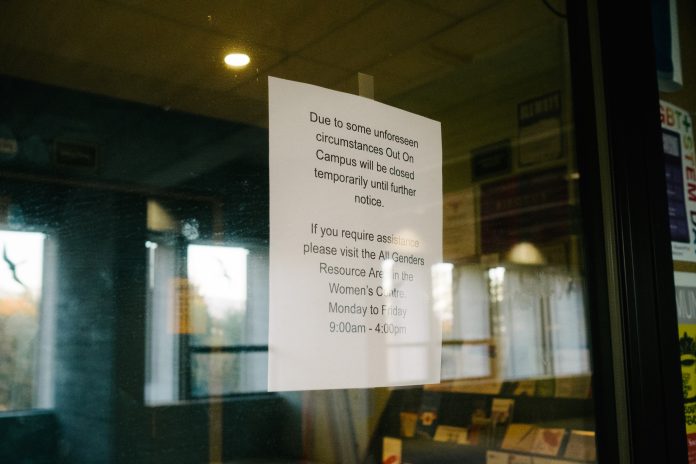
Since the start of the fall term, a sign on OOC’s door has informed students that the service is “temporarily out of business” on account of “unforeseen circumstances,” and directed all queries (pun intended) to the Women’s Centre’s all-genders resource area. At the SFSS’s annual general meeting (AGM), students were told that the OOC coordinator was on temporary leave.

But on October 4, everybody on the OOC mailing list learned that the SFSS is looking to hire a new coordinator. Posters have since cropped up across campus to advertise the vacancy.

Before anything else, I want to thank OOC’s last coordinator, Dani, for the time they spent at SFU, and the initiatives and energy they brought with them up the mountain. I wish them well on their next adventure. Their reasons for leaving are private, and they aren’t obligated to share.

What concerns me is that Dani is the second OOC coordinator to part ways with the SFSS this year, and their departure is most likely a sign of a systemic issue. When Dani’s predecessor, Kyle, left in February, OOC closed for a month before Dani was hired. Combined with the past few weeks of inactivity, OOC was essentially closed for three of the last 10 months.

Despite this, the SFSS board of directors seems to feel that the SFSS has enabled great success from OOC, going as far as to call both it and the Women’s Centre “incredibly vital resources” at the AGM. But do you really get to call a service you’re supposed to offer “vital” when your students have had to go without it time and time again?

If, as the SFSS continues to say, OOC serves to make sure that “the campus as a whole is committed to honouring the needs of our most marginalized students,” then closing the centre for nearly three months sends one clear message about how committed the SFSS actually is to the community, advocacy, education, and support that OOC is meant to give queer students.

I understand that keeping OOC running has logistical issues, as The Peak has reported in the past after interviews with SFSS CEO Martin Wyant. It takes time to fill vacant positions, and keeping up services can be hard during vacation leaves, sick leaves, and so on. But when the SFSS commits to providing a service to its membership, they have to have a contingency plan to make that service reliable.

There are several approaches the SFSS could take to keep it actively open. Things like a temp pool that can take leadership roles through while in-between coordinators, or maintaining more volunteers that can be mobilized to keep the space open while the job is open. At the very least, the SFSS could be more transparent with the student body about the space’s fate. But the SFSS is doing nothing close to any of these; they’re just quietly searching for a new coordinator, and delegating its specialized support to the Women’s Centre.

With services like Out on Campus where students go for emotional support, community, acceptance, and validation, they might not be getting elsewhere. The fact that the SFSS is treating Out on Campus like a bonus (rather than a vital service that needs to be highly prioritized) demonstrates their complete lack of understanding of what Out on Campus really is and really does. It shows a complete disregard for its importance, and for the queer students who need it.

As for the SFSS’ suggestion that queer students should direct themselves to the Women’s Centre, it’s as if they think all issues regarding “gender stuff” fit in one convenient basket. There’s certainly much support that the Women’s Centre is able to provide to queer students in this time during OOC’s closure. But I’m still disappointed that they have to when it’s not their primary purpose, and I’m curious as to what additional support their coordinator receives so that they can better assist queer students.

Regardless of their effectiveness as a replacement, the implication that self-identified women and queer students have the same needs is insulting to us all. Each of those has different needs, and so of course they require different respective support services. While mine and some other queer students’ identities intersect with both the Women’s Centre and OOC, this is certainly not the case for much of Out on Campus’ collective. Many of them will still feel they don’t have a support service where they feel welcome.

Allyship with the queer community takes many forms, but whatever they do, the SFSS must be active. This isn’t a question of whether the SFSS says they support queer students: it’s a question of whether they’re actually doing it.

Considering how quickly it seems OOC has gone through coordinators lately, I have to wonder why it is that enthusiastic coordinators with big plans and experience inevitably leave. There is no shortage of folks who want to work in advocacy, education and support within the LGBTQ2+ community, so I can’t help but question the SFSS’s commitment and effort.

I spent so much of my first semester at SFU sunk in a soft couch in OOC. I hammered out shitty first-year papers, learned about my world and community, and even discussed what a trans retelling of Romeo and Juliet would look like (answer: badass). Most importantly though, I knew that this was a comfortable, safe, and welcoming place on campus whenever I needed it. It pains me beyond belief that there are first-years at SFU who haven’t had that experience.

Join the club: Sign away with SFU ASL

0
Image courtesy of Lifeprint

I don’t think a lot of clubs on campus can credit Switched at Birth for their genesis, but SFU ASL can.

That’s how club founder Bianca Verjee got interested in the world, culture, and language of American Sign Language (ASL), as she told The Peak. Switched at Birth features a Deaf protagonist and a cast of Deaf actors, all of whom sign on screen. Afte she got into the show, Verjee was inspired to start taking ASL classes through UBC’ Extended Learning program, and has since moved on to more advanced classes with Vancouver Community College’s ASL and Deaf Studies.

ASL was first adapted from Old French Sign Language by American educators to better serve the needs of local Deaf communities. Over time, ASL speakers from those communities have further adapted the language to make it more natural, resulting in the ASL of today.

There are five parameters for a sign in ASL: handshape, orientation, location, movement and non-manual expression (for example, the shape of your eyebrow changes to indicate that you are asking a question). It’s as different from English as French or Japanese, and comes with its own unique cultural context, etiquette, and history. Verjee had brought a few books on ASL with her to the club meeting that I could flip through before we began.

“The SFU ASL Club started because I wanted people to practice ASL with, but it has become so much more than that,” Werjee writes. “In addition to being a place for those interested, learning, or fluent in ASL to practice and socialize, the club has become a vessel for fostering a love of American Sign Language, and educating our community about Deaf culture, the Deaf community, and Deaf issues,”

This is the club’s sixth term since Verjee founded it in 2016, and the club currently boasts a whopping 200 members on their mailing list. She thinks that students are drawn to ASL because it is so unlike any other language, or because they recognize the importance of communicating with Deaf acquaintances, community members, customers at work.

As for Verjee herself? “I like how it makes me see things differently, how it provides an instant connection with other signers, and most of all, the intrinsic enjoyment of it— signing is really fun!”

The latest SFU ASL meeting that I attended centred around a unique theme: “See the Music.”

Students filtered into our room in West Mall Center as their classes ended, and the meeting kicked off with a series of videos on how ASL interpreters go about interpreting music for the Deaf community. As it turns out: really well. Interpreter Amber Galloway Gallego, whose work you can sample on her YouTube channel, uses height and elements of her facial expression like the shape of her mouth to evoke the pitch and speed of music. Interpreting music in ASL even applies to beatboxing (definitely worth a watch).  

Following the videos, we went through a round of introductions to break the ice. Then we learned how to say our majors in ASL, thanks to Verjee’s previous knowledge, some crowdsourcing in the class, and an online sign dictionary.

Every SFU ASL meeting I’ve been to has featured some thematic vocabulary lesson, and today we focused on activities — swimming, biking, knitting, listening to music . . . After our lesson, we had a quick recap, and then out came the bingo sheets! Verjee would sign words in front of the class, and if the written form was on your sheet, you checked away until you had an X.

On the line was the winner’s choice between a Starbucks gift card, an SFU Bookstore gift card, and an adorable pocket-sized ASL dictionary. I’m not going to lie; I was a bit salty to find myself two squares short of victory — although watching the two runner-ups, who yelled “bingo!” simultaneously, duel for the win was entertaining too.

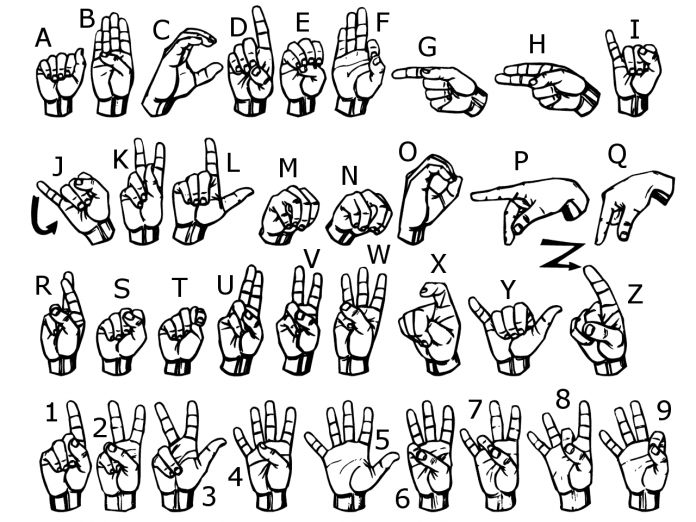
Next, there was a classic SFU ASL game: everybody stands in a circle, and a pack of index cards with four-letter words circulates around. You don’t see the word that you’re holding up, and club members have to make you guess it through gestures and related signs, without giving away the word itself. When you’ve guessed it right, you pass the pack along after fingerspelling the word. Fingerspelling, in ASL, is essentially spelling out a word by using the signs for the letters of the alphabet.

While gesturing and inventing actions is inherently different from ASL, the game trains your brain to think of handshapes, movements, and facial expressions as words and concepts. Occasionally, once we guess a word, we learn the sign for it. And rest assured: during the game, a few handouts picturing the alphabet are circulating to make sure everybody’s on the same page.

This has always been my takeaway from SFU ASL: some club members like Verjee have been learning ASL for years, some are taking night classes concurrently, and others joined the club without any prior experience or knowledge about ASL. And that’s okay. It’s actually one of the things that Verjee likes about ASL: “It’s a great way to make friends because of that instant connection when you both sign.”

If you’re interested in signing up, the club’s next event will be on October 25, when they will screen A Quiet Place for their Halloween event.

“The date will be posted in the FB group, but the specific time and location will be emailed to members. Anyone can become a member by signing up on the SFSS’ website,” Verjee said.

While SFU ASL is wonderful, it’s important to keep in mind that formal training with a certified ASL instructor has no match — just like how wouldn’t learn Dutch from Google Translate or your friend Dave. Even so, I would still recommend joining the club. It’s fun and relaxed, and you walk away every week with a better perspective on the Deaf community, and with practical language skills.

Additionally: the club is always evolving and growing under Verjee’s leadership.

“I have yet to meet any Deaf students at SFU,” Verjee said. “I would love to chat with them, get their input, and, if they’re interested, I’d love for them to participate in the club as an executive, or even just as a member.”

SFU announces plans for new pub

0
Chris Ho / The Peak


October 23, 2018 correction: The original version of this article stated that the committee organized to choose a pub operator, which included representatives from the SFSS, the GSS, and a student from residence, was organized and consulted in the fall 2018 term. This has been corrected to the fall 2017 term.


As early as late November, SFU could be opening a new campus pub.

Set to open in the space that Highland Pub used to occupy, the pub, titled The Study Public House, will be operated by Joseph Richard Group (JRG), a hospitality organization comprised 25 restaurants and pubs in B.C. and Alberta.

In an interview with The Peak, Mark McLaughlin, chief commercial services officer at SFU, described the new pub as a mash-up of a bar and an arcade space.

The Study Public House is part of a larger partnership between SFU and JRG. JRG will also be providing another catering service option, named Blank Canvas Catering, under Meeting Events, and Conference Services (MECS), according to a press release published by the university. Currently, Sodexo is the sole food-service operator available under MECS.

McLaughlin noted that appointing JRG to be the operator of the new pub was a unanimous decision by the search committee.

“They’re very community-minded, professional operators, they have good experience with liquor licensing, they have a good track record,” he said.

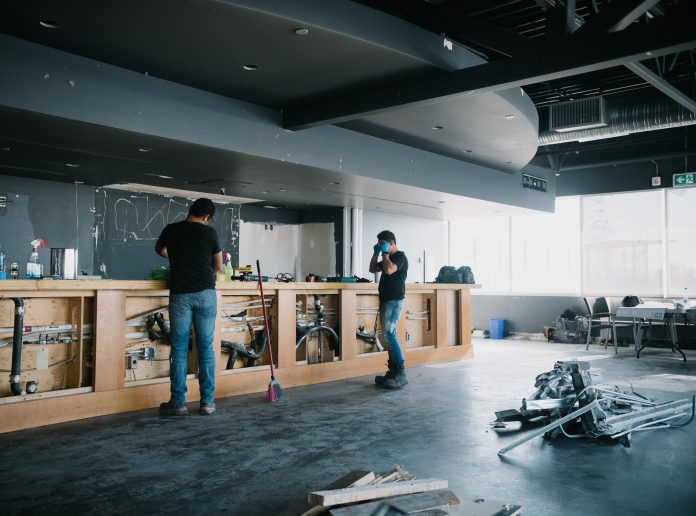
The space is currently undergoing extensive renovations. The bar area, booths, tables, and washrooms are being remodelled. The lower area of the pub space is being outfitted as an arcade which will include vintage pinball machines, shuffle board games, and ping-pong tables.

“It’s an old building — part of the pub has been here since 50 years,” said McLaughlin. “It’s been a lot of work to bring things up to standard.”

Recruitment is underway for The Study Public House — job postings for front-of-house and back-of-house positions have been posted on the job posting website Indeed. Full-time and part-time positions open to SFU students include management positions, sous chefs, line cooks, dishwashers, bartenders and servers with salaries ranging from $11.40 to $18.00 per hour. SFU is planning to release further details regarding future hiring fairs shortly via social media channels.

The new pub’s capacity will be higher than the previous Highland Pub’s capacity. Currently, the capacity stands at 330 individuals indoor and 82 on the patio. The capacity of the patio is expected to increase once the Student Union Building (SUB) opens, as it will add an additional fire exit to the patio.  

The patio will have an area where smoking — excluding cannabis smoking — is permitted.

The pub is projected to be open from 11 a.m. to 1 a.m. seven days a week, although McLaughlin noted that this is dependent on how well the establishment fares. Due to the liquor license, access to the pub will be restricted to students who are at least 19 years old.

“The university feels it’s important that the students and community have a good place to socialize, so this is really what we’re trying to do here — create a great space right in the heart of our campus.” – Mark McLaughlin, SFU chief commercial services officer

Student groups will be able to book pub nights in The Study Public House as was previously done in The Highland Pub. McLaughlin requested that groups hold off requesting pub nights until closer to the opening date of the establishment, and that SFU will be posting more information regarding this closer to that time.

The Highland Pub was closed in April 2017 by the Simon Fraser Student Society (SFSS) citing financial difficulties. In September 2017, SFU took over the former Highland Pub space, the former Higher Grounds Coffee Shop space, and the Maggie Benston Food Court from the SFSS.

The coffee shop was reopened in January 2018 as a hybrid between Higher Grounds and Renaissance Coffee.

“We promised the SFSS we’d get that coffee shop up and running [. . .] that was the easiest option, the fastest way to get it open,” said McLaughlin. “We wanted to keep our options open in case we needed that space as an extension to the pub,” he added.

As the new pub design will not require the coffee shop space, McLaughlin noted that SFU is planning to explore a more permanent concept for the coffee shop space after The Study Public House is opened.

“For sure we want to renovate it and see where we are at that time,” said McLaughlin.

McLaughlin noted that the university is also working on plans to renovate the area ranging from the Junction 65 on campus to the Global Student Center.  The renovations are designed around the core of the SUB set to open in the summer 2019 term.

According to McLaughlin, SFU organized a committee consisting of university administration, SFSS representatives, Graduate Student Society (GSS) representatives, and a student from residence to choose a pub operator for the Highland Pub space in the fall 2017 term.

The committee began by reaching out to current and past partners of the university but “realized they didn’t have the marketing savvy to really make it a big success and create that vibe and energy,” said McLaughlin.

After deciding upon JRG as the pub operator, the process of creating designs for the space, obtaining permits, sourcing new equipment, and now renovations pushed the opening date of the pub to late 2018.


SFU men’s soccer clinch their third consecutive GNAC title with win over SMU

0
The Clan are still undefeated with a perfect 13–0–0 record this season. (Photo courtesy of SFU Athletics)

For the SFU men’s soccer team, the 2018 season has been one to remember so far. They have begun the season 13–0–0 and are the #1 ranked team in the entire NCAA DII. Their winning streak continued on Saturday as they handled Saint Martin’s University on Terry Fox Field.

The game began slow and nervy, with both teams misplacing passes and failing to find a groove. It didn’t last long, however, as the Clan broke the tie in the 14th minute when senior Mamadi Camara scored his 8th goal of the season. A run down the left flank by SFU junior Rahid Rahiem was capped by a beautiful cross in for Camara, who powered a header past the outstretched Saints goalkeeper.

Just over a minute later, the floodgates opened for SFU as sophomore Matteo Polisi blasted in a rocket from 25 yards out, which skipped by the goalkeeper. The pressure from SFU was too much for SMU to handle as in the 20th minute Matteo Polisi notched his second of the game and conference leading 17th goal of the season. The SMU goalkeeper made a nice save off of an initial shot, then after a mad scramble, the ball popped out to Matteo Polisi, who got a shot through the scrum and found the back of the net.

In less than seven minutes, the Clan opened up a 3–0 lead halfway through the first half — a lead that ultimately put the game out of reach for Saint Martin’s.

Tempers rose near the end of the half, as SFU captain Marcello Polisi received his second yellow on a questionable decision by the referee. As a result, SFU was forced to see out the entire second half down a man.

The second half continued with high tempers, as the game consisted of several late challenges and nine yellow cards being handed out. The game was a more even match in the second half while SFU was short-handed, yet the Clan were still able to muster the better chances. The Saints created a late surge in an attempt to grab a consolation goal, but only managed three shot attempts, with a single free kick from 25 yards out as their lone shot on target. SFU goalkeeper Luciano Trasolini earned his 10th clean sheet of the season while only being forced to make one save throughout the contest.

The victory on Saturday night saw SFU clinch their third straight GNAC title. The clan sit on top of the conference standings with 24 points, while Montana State Billings are in second place on 13 points. The clan are happy to repeat as GNAC champions, but still have their eyes set on the grand prize of National Champions.

What’s next:

The Clan’s season continues next week as SFU will host Seattle Pacific and Northwest Nazarene in their last two home games of the season, both kicking off at 7 p.m. on Terry Fox Field, before finishing the regular season on the road with two matches at Western Washington and Montana State.

Peak player of the game: Mamadi Camara

With a goal and an assist, Camara played a crucial role in the win for the Clan. He leads the GNAC with 12 assists in 14 games played.

Hunt for the best: Sushi edition

1
Photo courtesy of Michelle Chiang


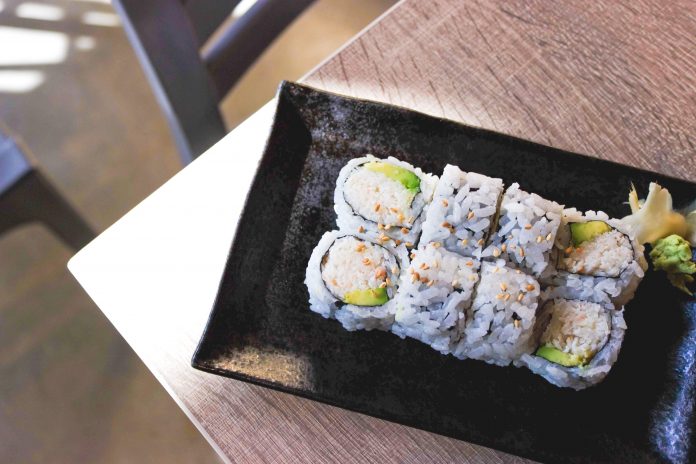
Good food is notoriously hard to find on the SFU Burnaby campus, and given the limited selection of restaurants available on campus, my friends and I decided to go on a journey to find the best sushi place here. To keep the playing field even, we bought the most basic of basic rolls in each location — the California Roll. We looked at price, distance, ambiance, but most importantly, the taste and quality of the sushi itself. So without further ado, let the battle begin.


Spicy Stone

Price: $2.86/roll

Location: 8915 Cornerstone Mews, Burnaby

Walking time from Convocation Mall: Five minutes

Hours: Monday–Friday, 10 a.m.–5 p.m., closed on weekends


My friends and I arrived around 10 a.m. Needless to say, we were delighted at the prices. Coming in at $2.86 per roll, you won’t be able to find a cheaper California Roll on campus.

       The atmosphere was a little muted and quiet, but that may have been because it was still morning. From past experience, I know this location typically plays K-pop throughout the day.

       Spicy Stone doesn’t actually specialize in sushi, so the only rolls they carry are the California Roll and the Dynamite Roll. After we ordered our California Roll, we were all quite disappointed.

        The imitation crab meat was quite dry, tasteless, and oddly textured. What was even worse was that the avocado in the California Roll had been replaced with cucumber. Also their sushi is cut into six pieces rather than the standard 8 pieces which meant that each piece was a little thicker than it should have been and a little bit harder to chew.

         Altogether, Spicy Stone wasn’t bad, but the only plus from this place is how cheap it was.

Rating: 2.5/5 rolls


Togo Sushi

Price: $3.75/roll

Location: 107-9055 University High Street, Burnaby

Walking time from Convocation Mall: Five to seven minute walk

Hours: Monday–Saturday 11 a.m.–8 p.m., closed Sundays


The moment my friends and I stepped into this restaurant, we were greeted with smooth jazz and a well-lit room. While the store itself may not be big, it makes up for it in ambiance and a friendly wait staff.

          The store specializes in sushi, so their selection is vast and covers a wide range of rolls. We ordered the California Roll at $3.75 per roll — not super cheap, but not crazy expensive either — and received it in record time, likely due to the early hour.

       The sushi itself was delightful and chewy! In terms of the rice-to-filling ratio, the rice was a little sparse, but the filling was wonderfully moist and the avocado gave it perfect creaminess.

         Customers also receive complementary tea, making for a wonderful location to just sit and chat with friends. This place is the farthest from the centre of campus, but if you’re willing to make the trek, it’s absolutely worth it.

Rating: 4.5/5 rolls


Mackenzie Café Sushi

Price: $7.19

Location: Mackenzie Café

Walking time from Convocation Mall: One to three minutes

Hours: Monday–Friday 7:30 a.m.–8 p.m., closed on weekends


Mackenzie Café is located smack dab in the middle of the Academic Quadrangle and the atmosphere inside it reflects the outside. It’s usually crowded and noisy, especially at 11:30 a.m., which was when my friends and I bought our food.

          Mackenzie had the most expensive roll to date, coming in at a whopping $7.19 for a single roll. The variety at the sushi bar wasn’t great as well — there was only one other sushi roll available at the time.

          After opening the lid, my friends and I immediately spotted two of the eight pieces contained avocado with prominent brown spots. Immediately, this turned my stomach and I found myself losing my appetite.

          The sushi itself wasn’t bad. It had very good rice-to-filling ratio and just enough chew. However, the taste does not justify the price or the quality. Do yourself a favour and get two rolls at a different location with the money you spent here.

Rating: 2/5 rolls

SFU Grappling Club is back and as strong as ever

0
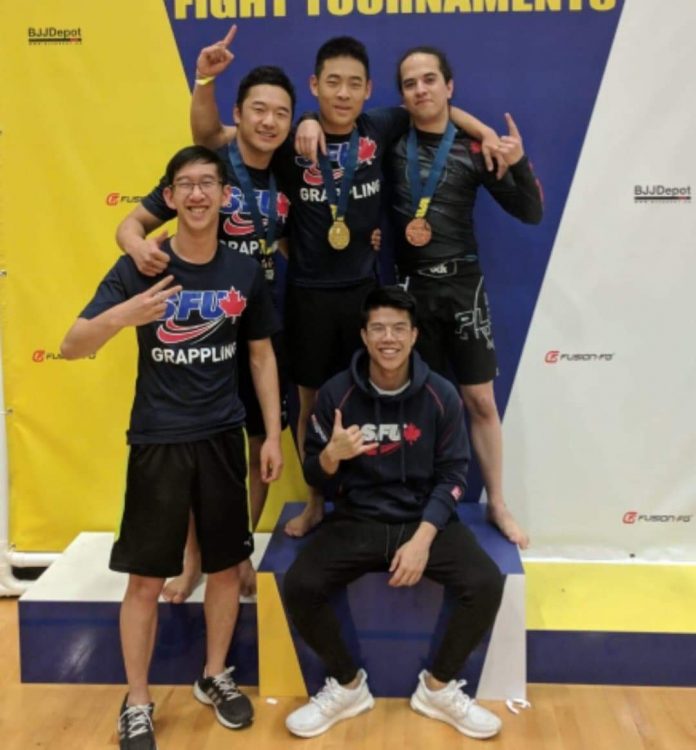
SFU Grappling Club now offers opportunities to compete. (Photo courtesy of SFU Grappling Club)

Ever wanted to be a pro UFC fighter? You can get started with the SFU Grappling Club. The club was resurrected a few years ago by co-presidents Jonathan Ha, Emmanuel Hung, and Solomon Yu after years of inactivity. Determined to raise interest in the sport at SFU, the Grappling Club offers practices, group workouts, and as of last week, chances to compete.

Jonathan Ha explained in an interview with The Peak that this time around, they’re focusing on recruitment and social media. They want to get the word out and get people to try it. Furthermore, their practices are more structured than they used to be, often with a specific focus – though still relaxed, Ha notes. They have also started to compete, attending their first competition on Sunday, October 14.

But what exactly is grappling? According to SFU Recreation, “grappling refers to techniques, manoeuvres, and counters applied to an opponent in order to gain a physical advantage.” It is a general umbrella term that refers to many different disciplines, including “Judo, Brazilian Jiu Jitsu, Sambo, Wrestling and Catch-Wrestling.”

Ha explained that the SFU Grappling Club focuses on styles that do not involve striking or hitting. All of the grappling techniques they practice are low-risk and low-injury, and participants can tap out whenever they want. Ha explained that since striking is not allowed, their practices mostly involve positional techniques, arm locks, leg locks, and chokes.

The Grappling Club holds two one-hour practices twice a week. They host classes with different focuses, including both sport-based and self-defence-based grappling, with the goal of teaching members a wide range of the sport. Students can sign up to join the club at the recreational office to, and can attend as many or as few classes as they wish.

Ha also noted that classes are completely open to SFU students of all levels, and that “most of our students are completely new to the sport, and more often than not they end up really liking it and going to other gyms outside of SFU.” They also host viewing parties for big UFC fights, as well as group workouts.

The competition they attended last weekend was the AVA Combat Classic competition. While participants must enter as individuals, the Grappling Club goes together and supports each other as if they were on a team.

Ha noted that aside from being a fun sport, grappling is a useful skill that can be applied to real life.

“We want to show people it doesn’t matter how big or strong you are… it’s all about technique,” he said. “It can be really practical in real life situations where self-defence is needed. A lot of people have come up to me afterward telling me how much more confident they feel after learning the sport.” In other words, you don’t necessarily have to have the body type that is commonly associated with wrestlers to excel at grappling.

For the future of the club, Ha wants to spread the word and get as many people to try it as possible. He says “anyone who is slightly interested should check out videos or just give it a shot for one semester.” He noted that he has seen a lot of people who have never done anything like it before but get hooked after a few lessons.

You can find out more information about the grappling club on their website, or email them at [email protected].

The beauty standard for fairer and lighter skin in India has grown deep and unfair

1
Illustration and photo by Waseka Nahar and Zainab Anwar, images compiled/edited by Sanya Jain / NDTV

I grew up watching light-skinned Indian actresses and models on television, believing that my darker skin made me subordinate. Comments I received throughout those years — don’t play outside in the sun too much; lather up with sunscreen so you don’t get a tan — seemed harmless. However, I see now that many of these comments were deeply rooted in the cultural norm of colour shaming.

The preference for light skin is one that numerous women internalize, especially in India. There, skin-lightening products such as Fair and Lovely, designed to whiten one’s skin, form the make-up of a thriving industry worth over 400 million dollars.

The fruits of this industry teach us to desire fair skin, to treat it as superior, and we learn these underlying lessons at a young age. It’s hard for us to do otherwise when the advertisements play continuously, writing a narrative of successful light-skinned women who navigate and succeed in a harsh, Indian society.

I was neither born nor raised in India. But I’ve felt the impacts of this colourism thousands of miles away, and I’m frustrated at how it continues to be enforced. It’s become an obsession, and India considers success to be unattainable without a pale complexion.

These false notions of beauty are not just a marketing ploy; they tie into India’s colonial legacy and British imperial rule. Historically, lighter-skinned Indians were viewed as closer to the white elite and therefore more valuable. Over the years, this notion became an evident, lasting trend in Indian society, and now, lighter-skinned women dominate the socio-economic sphere while those with darker skin are shamed as inferior.

This issue is often unnervingly subtle, and it’s encouraged by the childhood comments, the advertising campaigns, and the endless light skin on television. It pushes the myth of light-skinned superiority as reality, while pushing consumerism as the solution. It’s nothing short of disheartening.

Recently though, a wave of body-positive messages and activism has spread across the globe. A Bangladesh-based artist, Waseka Nahar, recently released a piece of artwork depicting a darker-skinned woman with a tube of face cream that read Dark and Lovely, a play on Fair and Lovely. The digital art was a reinterpretation of an Instagram photo taken by Pakistani-Canadian artist Zainab Anwar. This illustration, a captivating and empowering commentary on colourism in India, went viral.

Anwar and Nahar have both described their negative experience with this skin-lightening industry, stating how their relatives would push fairness creams onto them continuously. They hope that their work pushes back against the obsession with light skin. The new generation is, as Zainab puts it, “fed up of illogical beauty standards.”

The narrative that fair skin is more desirable needs to be eradicated, and establishing this is part of the ongoing process of decolonization. Throughout history, colonization has programmed societal structures to assimilate groups of people and remove any sense of individuality one may have. Now, we need to fight and erase oppressive Eurocentric ideals of beauty.

Do not conform. Honour your skin. Celebrate it with every fibre of your being. I plan to do this through unapologetically hitting the beach to enjoy the sun soon as summer rolls around, and disregarding any person or company people who want me to feel guilty