Home Blog Page 545

Political Corner: Journalist Jamal Khashoggi’s death should have been the tipping point for relations with Saudi Arabia

1
Photo courtesy of Getty Images

After the weeks following his disappearance, the Saudi Arabian government confirmed that journalist Jamal Khashoggi was killed on October 2 after entering the Saudi consulate in Istanbul. Now, Saudi Arabia’ leadership is in the spotlight.

Since becoming crown prince, Mohammed bin Salman bin Abdulaziz Al-Saud has introduced a cultural reform campaign called Saudi Vision 2030. This effort has attempted to establish faith in the Saudi government and change Saudi culture’s global reputation. So far, it has been credited with removing the ban on women driving and investing in businesses to lessen Saudi Arabia’s dependence on oil.

But beneath this campaign, Saudi Arabia’s leadership is still far from improved or trustworthy. Saudi has already shown its true colours by severing diplomatic relations with Canada over our questions regarding a detained human rights activist. In fact, detention has been Saudi’s constant response to critics. News and disagreements with the country seem to be something they’re disturbingly willing to silence.

The murder of Khashoggi could cast permanent doubt on the public image Salman is trying to create. However, despite this recent example of a persistent problem, international relationships with Saudi Arabia don’t appear to be changing significantly any time soon.

Saudi still has one of the largest oil reserves, oil reserves to which tons of countries are financially connected. Canada has considered freezing armoured vehicle exports, but aren’t distancing themselves much further. America especially is failing to take action, and while they’re directly discouraging Saudi Arabia’s actions, they aren’t cancelling any America-Saudi contracts.

Saudi Arabia’s recent and historic actions ought to be enough for countries to cut ties immediately, regardless of the costs. It’s worrisome that many countries are still waiting for a bigger crisis before taking action.

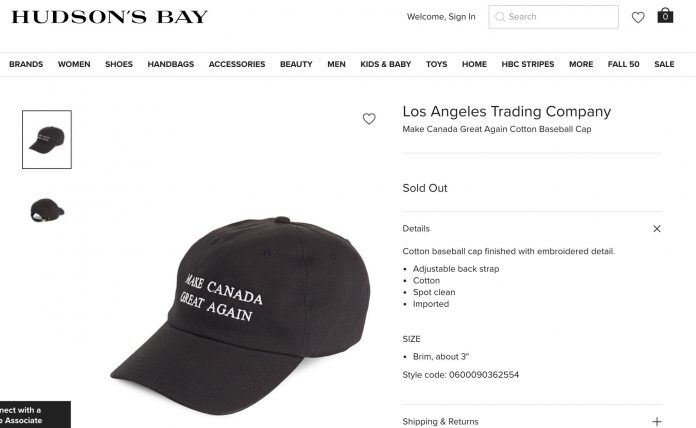
Hudson Bay’s cancelled “Make Canada Great Again” hats disrespect Canadian consumers

0
Image from thebay.com

Make America Great Again (MAGA) has become a meme of uncomfortable proportions. Made popular as a slogan in President Trump’s 2015 election campaign, it continues to be worn by celebrities and Trump rally attendants to show their passion for Trump. Even in Canada, it’s been seen as a symbol of the more hostile attitudes of the right-winged, some individuals going as far as to deny restaurant service to those wearing clothing that bears the slogan.

With this context, it astonishes me that Hudson’s Bay very briefly sold a “Make Canada Great Again” hat on their online store. This hat, manufactured by the Los Angeles Trading Company, was available to purchase online at the Hudson’s Bay website for an incredibly short time. Within this time, there were several tweets requesting removal of the item or boycotts of Hudson’s Bay before it being listed as “sold out” to prevent sales.

While it’s good to see this hat not lasting more than a day, the fact that it existed in the first place is concerning. At worst, it’s a horrible example of these companies being blatant with their political attitudes towards this particular right-wing group. Regardless of Hudson’s Bay and Los Angeles Trading Company’s political leanings, putting a variation of MAGA in a public store shows a willingness to support this political identity. They very well could be showing interest in giving this group a stronger presence in Canada.  

Although the best-case scenario may be just as disappointing — that these companies genuinely didn’t expect such a response from selling a product embroidered with the slogan.

This is something that both of these companies are implying with their statements about the hat. In an email statement from Hudson’s Bay (reported by Huffington Post) they claimed it “was never their intention to offend” and avoided making further comments.

This very well may be true, but this lack of oversight is immensely bizarre. This slogan is strongly associated with an extreme political stance — one that involves a large amount of blatant discrimination. In a company as large as Hudson’s Bay, it should be fully embarrassing that nobody said, “Hey, this might not be a great idea,” at any point in the process.

The Los Angeles Trading Company that actually manufactured the hat may be more astounding in its lack of foresight. Owner Jonny Tucker claimed the hat wasn’t a political statement, and just a pop culture reference. He goes further to say “it seems that it’s a sensitive subject, from what I’m learning,” as if he had no recognition of the effect or reputation this hat has.

Especially for someone running a company in the US, not foreseeing a negative reaction to this is baffling to say the least. The attitudes held by those wearing MAGA clothing are far from subtle and secretive. Tucker may genuinely not have known how people would, but it’s a definite failure for him to have not seen this coming.

MAGA is a horrid symbol that I’m thankful not to see in Canada often. It represents an identity of discrimination and discomfort to countless people, and it’s wonderful to see such a public outcry towards the Hudson’s Bay’s hat. To see this show up on a massive Canadian storefront for even just a brief moment is massively concerning. It’s a painful reminder that these companies are either unaware of the world they’re in, or just as hateful as we’d expect a corporation to be.

Don’t dismiss ADHD as an excuse to get drugs

0
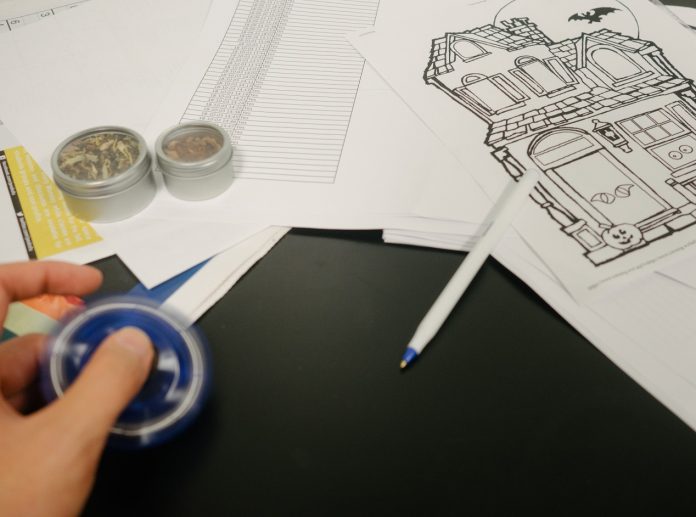
Photo by Chris Ho / The Peak

Attention Deficit Hyperactivity Disorder (ADHD) is a disorder that causes difficulty in brain function and development. Two common symptoms are hyperactive-impulsive thought and difficulty maintaining attention — symptoms with which I am all too familiar.

I could be listening to a professor speaking two feet away from me, or working on an Excel spreadsheet at work, only to literally fall asleep in disinterest. Sometimes I forget chunks of my day, month, or even year. Sometimes I might not even remember what I was doing five minutes ago.

ADHD has been acknowledged in the Diagnosis and Statistical Manual, the primary guideline for mental illnesses in America, since its third edition in 1980. The disorder itself is found in at least 4% of adults and 5% of children. But this hasn’t stopped people from doubting its existence, even in professional neurology and psychology. We may be much better at treating ADHD than we used to be, but people still don’t take it seriously, and that’s a problem.

This is something disputed even in the professional psychological setting. Dr. Richard Saul is one of these individuals, writing a book in 2014 called ADHD Doesn’t Exist. Elsewhere, he’s further claimed that ADHD is merely an excuse for individuals to obtain stimulants. This has been echoed by Harvard psychologist Jerome Kagan, and has created a questionable debate out of many identified symptoms.   

If I could live my life without needing medication that temporarily rewires my brain, I would. My meds are expensive, they come with awful side effects, and they take time to start working. It’s far from something to take lightly, and these professional arguments frame this disorder as an excuse to get drugs, rather than an actual disorder. In reality, meds assist in a way that other methods (such as therapy) simply can’t always accomplish.

This perception of ADHD is determined by more than just professionals though. Much of the skepticism also comes from its use and reputation in post-secondary specifically. This is because many post secondary students use stimulants used to treat ADHD, such as Adderall or Ritalin, just to study longer and more effectively. It’s resulted in becoming known as a “study drug” rather than a prescription medication.

Recreational use is horrible enough by being a serious health risk, but it has also made it harder for college students who actually have ADHD to be diagnosed by adding to this reputation. After all, it’s fully reasonable for doctors to doubt people who claim these symptoms if those claims are a common ploy to get drugs. It’s unfair to have this additional challenge of skepticism for those with ADHD who need treatment.

What this all leads to is a perception of ADHD as just being an excuse for being fidgety or lazy, and want drugs for quick fix. In reality, they typically have a million ideas in their head at once, but are more easily distracted. This distraction makes it hard to start or continue tasks, and this medication helps maintain focus.

The relationship that students have with drugs, and the perspectives it causes in professionals, make it difficult for people to take ADHD seriously in so many respect. I should feel open to talk about it without feeling that someone is going to doubt my problems, or view them as an excuse. ADHD is real, and its drugs are more than a student trend.

Provincial government launches two-pronged probe on money laundering

0
(Maxwell Gawlick / The Peak)

September 27 marked the start of Attorney General David Eby’s early-June promise of a second phase of investigation into money laundering in B.C.

Based on a recent provincial news release, Eby is fulfilling that promise with a “two-pronged review aimed at shutting down avenues for money laundering in real estate and other sectors.”

The first part is to be led by the Ministry of Finance, and it aims to recognize “systemic risks” which increase the sectoral vulnerability of real estate and financial services to money laundering.

As a part of the first phase, the Ministry of Finance has brought in criminal law expert and SFU professor Maureen Maloney as the chair of an advisory panel called the Expert Panel on Money Laundering in Real Estate. This panel is in charge of making recommendations to the government by March 2019.

Maloney expressed enthusiasm for her new appointment and highlighted the need to address money laundering immediately.

“I am looking forward to reviewing the systemic laundering risks in the real estate market,” Maloney said. “The panel hopes to provide solutions to curbing these disturbing issues and providing recommendations that work.”

“Our examination of money laundering in casinos uncovered troubling evidence suggesting strongly that dirty money is circulating in other places in our communities.” – David Eby, acting Attorney General, B.C.

“Our examination of money laundering in casinos uncovered troubling evidence suggesting strongly that dirty money is circulating in other places in our communities,” said Eby.

The investigations come in the wake of an inquiry into money laundering in B.C.’s casinos by Dr. Peter German. German is a lawyer and former RCMP executive, hired by Eby in late 2017 to probe B.C. Lottery casinos. German’s probe had led to big regulatory changes in the province’s casinos in June.

“Our overheated housing market has attracted speculators, criminals, and others that are abusing the system. This needs to end,” Maloney stressed

During the announcement made at the end of September, the provincial government reported the start of the second part of the investigation, which aims to tackle province-wide money laundering in real estate, luxury cars, and horse racing, specifically. The second phase will be headed by Eby.

The B.C. government announced that the multi-pronged strategy is meant to quickly capture and close down new paths for money laundering in the province.

With files from Business Vancouver and Global News

Long story short: When life gives you strangers, make puns

0
Image credit Tiffany Chan

Making friends takes effort — that’s one of the first life lessons I learned on exchange a few summers ago. I was in Prague, the capital city of the Czech Republic, for Charles University’s Central and Eastern European Studies program. It was to be four weeks of cultural immersion, quality European beer, and endless inaccurate attempts at pronouncing the Czech letter “ř.”

But I digress. The second life lesson I learned that summer is that puns are a great way to sift through the crowd and find your people. Yes, puns. The worse the pun, the better.

Acquiring this wisdom went something like this.

On the second day of orientation, our program coordinators gathered our jet-lagged, culture-shocked cohort together and took us on a tour of Prague’s castle (side note: if you’re travelling to Prague soon, a tour of the castle is well worth your pennies). The tour included St. Vitus Cathedral, the massive gothic structure that dominates the castle grounds and that is arguably one of the most beautiful churches in all Europe.

Who was St. Vitus? I have to confess that I don’t know much about him, but at some point in antiquity, his arm bones became a highly prized relic in the Catholic Church. In 925 CE, Wenceslas I, Duke of Bohemia, acquired the saint’s appendage from Henry I of Germany. The arrival of Vitus’ arm in Prague was evidently a big deal, because it later featured in one of the bas-relief panels that decorates the doors to the cathedral’s west entrance. The panel in question shows Vitas’ arm resting on top of a large wooden chest, on either side of which stand Wenceslas I and Henry I.

Now, you have to remember that at this point, my soon-to-be friends and I are jet-lagged out of our minds. Hailing from Vancouver, Singapore, and all over the USA, we’re adjusting to Central European Time at different rates. Factor in Europe’s general disdain towards takeout coffee, and some folks are in really rough shape.

So we’re standing in front of St. Vitus Cathedral, listening as our tour guide shares the story behind these ornate doors, clumped together. The awkward, new-kid-in-the-room feeling persists, but though we fear each other, we are each other’s safeguard against getting lost or left behind, so we throw personal space out the wind and cozy up.

It’s at this point that I am seized by the sudden urge to crack a pun.

“These relics sure cost an arm and a leg,” I said. I whispered it just under my breath, just loud enough for the people around me to hear. I wait a beat, then go in for round two.

“Look, they’re handing over Vitus’ arm.”

The girl to my left stifles a snicker.

“That’s what you call ‘extending the hand of friendship,’” I continue.

In front of me, a guy’s shoulders are twitching in suppressed laughter.

“It must have been handy to have friends in high places.”

Several nearby mouths twist upwards in wry smiles.

Aha! I think to myself, I see you. My fellow punsters, I have found you at last! I am on a roll, and the sotto voce puns keep coming.

“Anybody need a hand?”

“Relics were quite rare, so I bet you couldn’t find one in a second-hand store.”

By now, I have the full attention of the people around me. They continue to face our tour guide politely, but I can tell by the slight smiles and tilts of heads that I have a rapt audience.

As the tour guide wraps up his story about St. Vitus and we move on to the next site, the girl next to me turns and introduces herself, still laughing. Within 10 minutes, I’ve met every person who cracked up at my puns, and I can tell we’re going to get along just fine. Anyone who can handle my rapid-fire tirade of puns must be a kindred spirit.

Indeed, for the next four weeks, these pun-loving people would be my community. Together, we slogged through culture shock and language barriers. We banded together for late-night study sessions and last-minute group presentations. We were bound by our mutual and shameless love of bad puns and dad jokes. The awkwardness of the first few days was gone; I had found my tribe.

A little piece of life wisdom: never underestimate the power of a good pun. It might just come in handy someday.


Students encounter a zombie on campus

0
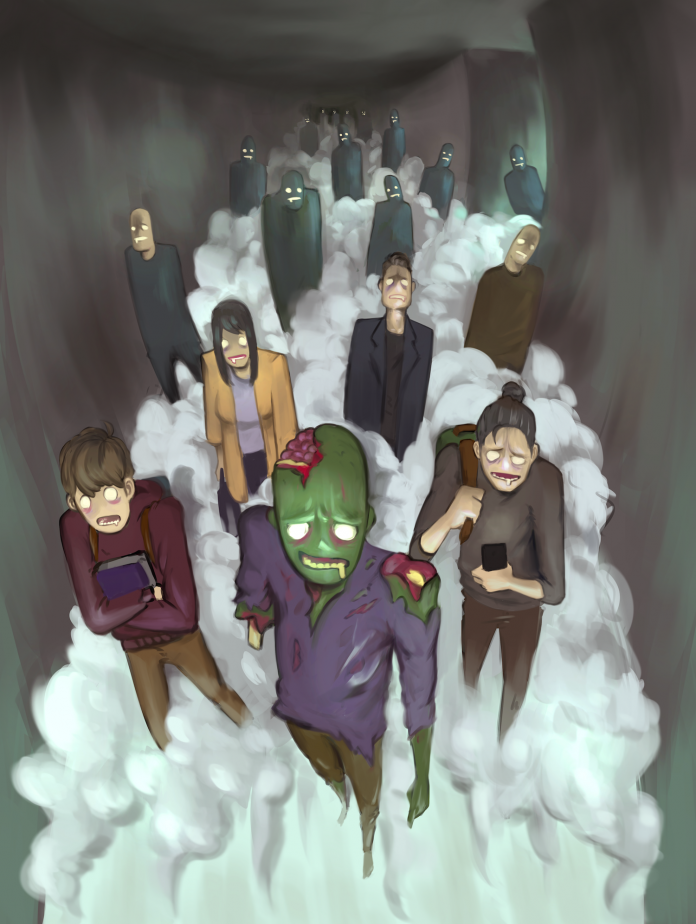
Illustrated by Siloam Yeung

SFU students were stunned on Wednesday after realizing that what seemed to be a new transfer student was actually a zombie, an SFU representative confirms.

The intrusion happened sometime during the early hours of the morning, police say, when the first fleet of 145 buses started coming up the mountain for 8:30 a.m. classes. However, it is uncertain how long the zombie was on campus due to its unique ability to blend in with SFU students.

“Well they all shuffle along like that, making grunting sounds about how much their brains hurt!” a bus driver stated to the press.  

With its poor posture, its milky-white eyes that are clouded over as if suffering from cataracts and its pale, greyish complexion that looks as if it hasn’t seen the sun in days, police are baffled by how many professors have come forward claiming they have seen the monster seated within their class.

“We’ve seen many reports,” the SFU representative stated, “but we can neither confirm nor deny that these claims are accurate, as it appears professors may be having difficulty identifying the zombie among the sleep-deprived and weary faces of their regular students.”

The unknown zombie was discovered near SFU’s reflecting pond seemingly admiring the koi fish. It was only when a student accidentally decapitated the zombie with her backpack that she realized anything was amiss.

“He just looked like some dude who was leaning over the edge, so I thought he was feeding the fish or something,” an SFU student witness states, “I didn’t realize he was feasting on the koi fish until she took his head off!”

The student responsible for the accidental decapitation is still receiving aid from SFU’s health and counselling services and has declined to comment.

The origins of the zombie are still unknown; however, there is much speculation. Leading theories include the belief that the creature may have been bred within the depths of SFU’s science labs, or perhaps may be the reanimated corpse of a student whose soul can’t rest until it raises its GPA.

“Makes sense it would stay here,” A fourth year student comments, “dying is expensive! Do you know how much funerals cost?”

As there have been no student attacks, students have advocated for authorities to do nothing to remove the zombie from campus, suggesting that it makes a cool new mascot.

“I think I’m speak for the whole student body when I say the zombie basically represents the epitome of the student existence!” a witness states, “It’s not hurting anyone so I say we just let it finish its degree! It’s probably just as useful as any other student when it comes to group projects anyway, so why not?”

Zombie sightings can be reported directly to SFU Security or an up and coming social media page titled “Zombies of SFU.” However, the page was taken down after many students reported feeling insulted when their peers snapped a photo of them for the social media site on a day they felt they looked less than their best.

King James starts his Los Angeles Lakers career

0
Many NBA fans are still getting used to seeing LeBron James in a Lakers jersey. (Photo courtesy of LeBron James Lakers Wallpapers)

This past summer, LeBron James announced that he was switching teams. In sharing that he would be leaving the Cleveland Cavaliers to join the Los Angeles Lakers, the NBA expressed a number of ardent responses, as did its passionate fans.

Some Lakers fans were thrilled that the greatest player in the league would be joining their beloved team, after a number of disappointing Lakers seasons in recent years. On the other hand, many Cleveland fans were left disappointed that their star player was once again leaving the Cavaliers.

Nevertheless, through focusing on LeBron and the idiosyncratic player that he has become, it’s imperative to answer the fundamental question with regards to his decision: what does this mean for Lebron’s career?

LeBron James, like the greats who have come before him (Michael Jordan, Kobe Bryant), has reached a plateau in his athletic career that puts him in an extremely advantageous position. Like the G.O.A.T.S before him, LeBron’s success, attained through an impeccable work ethic and superior skill, allows him the rare agency to position himself however he pleases in the NBA.

LeBron’s decision to play on the West Coast appears to have been mostly unforeseen, and it may have allowed his greatest skeptics and haters to spill more Hatorade on his name. With the right amount of shade, it’s easy to perpetuate the notion that LeBron is ring-hungry, and that he abandoned his hometown just to add another championship to his title. In the same breath, it could be easy to claim that the power LeBron has in navigating the NBA, as though it’s his empire, is unfair, and that the NBA places him on a higher pedestal than the league’s other players.

However, have we seriously forgotten who LeBron is and what he’s done to reach this position of athletic and navigational freedom?

LeBron James is a four-time NBA MVP winner, and he also has three NBA Final MVP’s to his name. He has three championship titles. LeBron propelled the Cavaliers to their first-ever championship win in 2016. Not only did the Cavaliers win this championship series, but with the help of LeBron (and Kyrie Irving), the Cavaliers became the first team in NBA history to come back from a 3–1 deficit in the finals. LeBron has played in eight consecutive final series. He has 14 All-Star appearances. In 2017, LeBron made history through his performance with the Cavaliers.

Adam Pearce and Joe Ward, in their New York Times piece “LeBron James is Carrying the Cavaliers in a Historic Way,” spoke on LeBron’s undeniable ability to carry a team during the finals.

“[N]ever before in the playoffs has a player’s supporting cast depended so much on its star to carry them,” Pearce and Ward write. “During this season’s playoffs, James has accounted for nearly a third of his team’s box-score statistics: points, rebounds, assists, steals and blocked shots [ . . . ] Over all, James has contributed 32 percent of the Cavaliers’ stats.”

Although Jordan will be widely referred to as the greatest player in NBA history, LeBron has even managed to surpass some of his stats. By 2017, LeBron James had beat Michael Jordan’s record of all-time playoff points (becoming the player in the NBA with the most).

Looking at his impressive statistics, it is impossible to refute that LeBron James is both an NBA icon and hero. That being said, through signing a four-year deal with the Los Angeles Lakers, LeBron’s career can go nowhere but up.

After losing the first three games in his first season with the legendary sports franchise, LeBron secured his first game win with the Lakers. Again, the early-season struggles have made it ridiculously convenient for LeBron haters to poke fun and belittle his decision to switch teams.

Moreover, with everything LeBron has accomplished in his immensely venerable career, this decision is nothing more than an exciting change for King James. Say what you want about LeBron, or his vehemently loyal fans. At this stage of his career, there’s nothing left for LeBron James to prove.


SFU survey suggests Vancouverites’ commitment to democracy is dropping

0
(Alice Zhang / The Peak)

While Metro Vancouverites value democracy, many of them have become disengaged with it, according to a recent public opinion survey.

This survey was done in August 2018 by SFU’s Morris J. Wosk Centre for Dialogue, and it polled 1,506 participants. As part of its mandate of understanding and engaging in key Canadian issues, the dialogue centre has embarked on a two-year initiative titled Strengthening Canadian Democracy. The initiative tests public intervention strategies in the hopes of encouraging Canadians to be more engaged in the democratic process. As a first step, the dialogue centre used this survey study to gauge how Canadian citizens perceived democracy and to measure how deeply they participate.

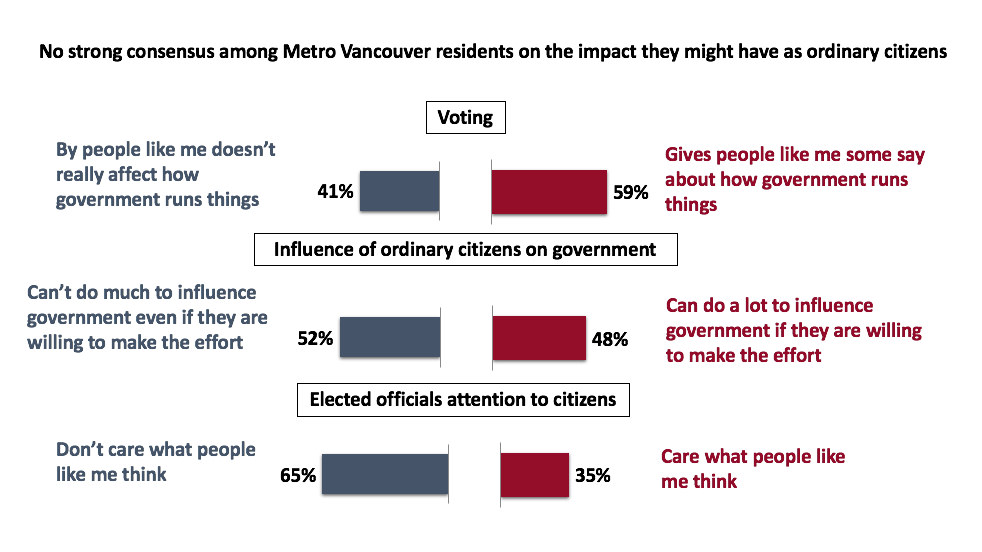
The survey found that although most Vancouverites (73%) believe in the importance of democracy in Canada, 41% did not feel that voting in elections gave them a voice in government, and 65% do not believe that elected officials listen to the people.

Survey results show that 65% of respondents did not feel that their elected officials cared about their constituent’s opinions on local issues. (Photo courtesy of SFU University Communications)

In an email interview with The Peak, Dr. Daniel Savas, a visiting professor at SFU School of Public Policy and one of the figures behind the survey, noted that citizens with such perspectives are less likely to vote, follow the news, attend consultation events, contact elected officials, or get involved in their community. Trust is also falling in many types of institutions such as businesses, universities, and governmental bodies such as Parliament.

“This research hints at an underlying sense of unease and frustration with the way government works in Canada,” says Robin Prest, the dialogue centre’s acting executive director, in a SFU Communications and Marketing press release.

“Metro Vancouver residents believe strongly in democratic values, but feel their democratic institutions and processes are not living up to the core set of values and principles they feel are so important to a healthy and functioning civil society.” – Robin Prest, acting executive director of Morris J. Wosk Centre for Dialogue

The second phase of this initiative is a two-year-long democracy demonstration project. This project builds off of the survey by tackling some of the problems the survey brings to light, such as anti-democratic trends, loss of faith in the government, lack of civic education, and polarization of Canadian issues.

Phase two will comprise various approaches. Community building will be carried out through neighbourhood projects and the use of community civic engagement hubs such as libraries to reduce barriers to community discussions. Research projects will also be conducted by other SFU professors to look at ways to “promote tolerance and combat misinformation” to strengthen democracy. The National Communications, Network Building and Knowledge Exchange Project will replicate “proven” civic programs across Canada to create “broader, deeper and longer-term effects” on Canadian democracy.

Savas sees the project as a way to “reinforce Canadians’ commitment to democracy.” He hopes the project and initiative will bring “increased awareness and commitment to democratic values and principles” among not just Vancouverites, but Canadians in general, and help Morris J. Wosk researchers understand what types of interventions can strengthen citizen commitment to democracy to address issues related to disengagement in the democratic process.

A detailed breakdown of the survey’s results is available on the Morris J. Wosk Centre for Dialogue’s website.

Staying In: Dark Tourist

1
Image courtesy of travelandleisureindia.in


Best for: Buzzfeed Unsolved addicts, horror seekers, conspiracy theorists


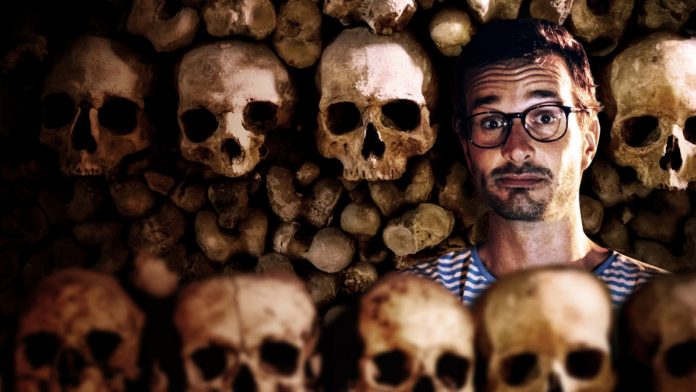
Dark Tourist is perfect for viewers who can be morbidly curious about all things horrific and macabre. The host, David Farrier, visits wildly taboo places, ranging from Mexican cities tied to organized crime all the way to Japan’s famous “suicide forest,” Aokigahara.

Farrier takes a wide look at a different region every episode, hitting up three destinations each episode, each with their own distinct attraction. With each episode roughly an hour long, viewers can easily skip a section if they’re not particularly interested. However, what’s more engaging than the attractions visited is Farrier’s unexpected hunger of adventure, no matter how dangerous.

Farrier may come across as a gangly, mild-mannered nerd, but he surprises the audience by daring to cross restricted territories and face danger and death in the face, all while documenting it with his film crew. This might be surprising to documentary nerds who know Farrier mostly from his equally bizarre documentary, Tickled, which dives into his investigation on “competitive tickling.” (Yes, it’s as weird as it sounds . . . even more so, actually.)

I should warn viewers that if you’re looking for a sensationalized news Vice-type video or an outrageous host, you may be disappointed. One of the show’s best qualities is that Dark Tourist takes a genuinely balanced, non-judgmental look at our world’s bizarre oddities, making for a fascinatingly creepy and engaging show.

Halloween costumes to get you laid

0
Illustrated by Reslus

What’s the sexiest holiday of the year? That’s right, Easter. But second to that is, you guessed it, Groundhog Day. A close third is, you know it, the spookiest and creepiest time of year, Halloween. So hang onto your witch hats, my little craftsters, because I’m about to blow you away with these sweet, salty, and spicy DIY costume ideas to help get you laid this Halloween season.

Disease

Diseases! You’ve heard of ‘em. Have you ever had one? Probably! If you dress up as a disease this October, I guarantee that you will be getting freaky by the end of your Halloween night.

What do you think about when you think of diseases? That’s right: STIs. And what do you inevitably think about when you think of sexually transmitted infections? Correct: full-on, regular, unprotected sex. In this costume, you will be so devastatingly, destructively irresistible that everyone at the party will be infected by your charm.

Salami

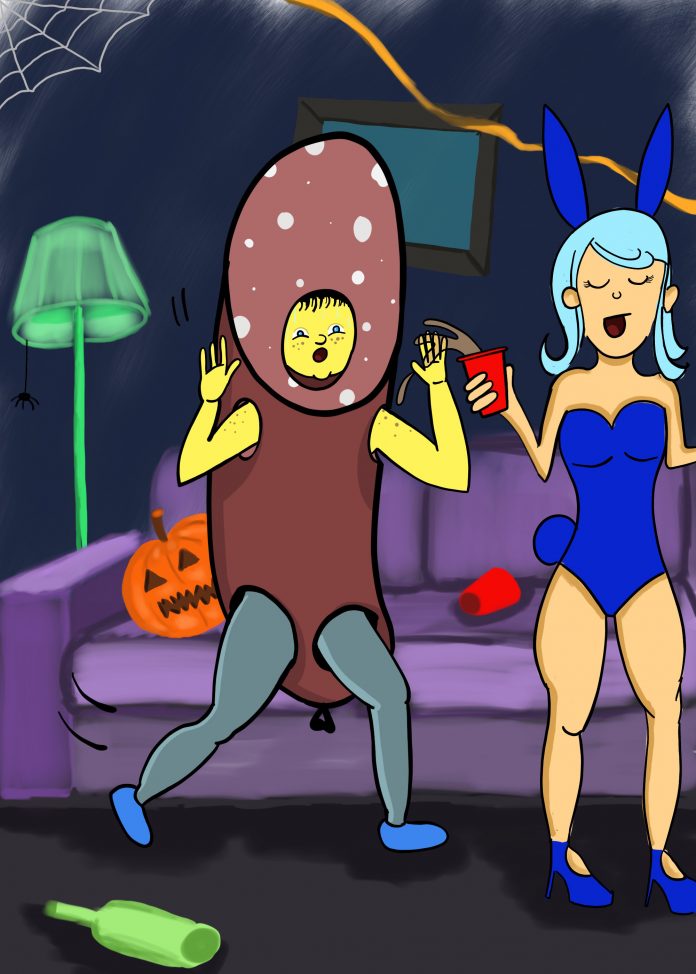
It’s well-known that everyone loves deli meat. Scientists recently discovered that deli meat is actually an aphrodisiac due to its sweaty texture, ham-like aroma, and phallic shape.

“Our research has shown that salami is the sexiest kind of meat, and I can easily understand why,” said an SFU Meat Studies scientist in a Peak-exclusive interview. “I mean, have you tasted it before? It’s getting me hot just thinking about it.

“But in retrospect, we probably did not need to spend millions of dollars on this project, especially since it seems to contribute nothing to society. Ten years ago, I wanted to be a cancer researcher, but look where I am now.”

So suit up in an off-pink morphsuit and hide some slices of deli meat in your armpits. You’ll be all set for a night of freaky passion.

A Mummy who just went swimming

Amp up the traditional toilet paper mummy costume with this sexy new twist — water. Have you heard the news? Soggy is the new sexy. For this costume, you’ll need water, flour and a whole bunch of newspapers. If you have ever made papier maché anything, you’ve felt the cold, slimy texture of newspapers dipped in flour and water. Now imagine this feeling, but all over your body.

To get some ass this Halloween, dress up as a mummy who just went swimming and you’ll be fighting off all the people trying to get in your pants, driving them crazy when they start wondering what’s under that slippery, wet, newspapery mess. They’ll be thinking about what it would be like to peel away each sticky strip to reveal the equally sticky skin underneath.

Make-up remover

All you need for this costume is a bottle of make-up remover and some cotton pads. Walk around the party and remove everyone’s make-up, so you feel like the most beautiful person at the party. This costume won’t make anyone else around you less attractive, but will instead boost your self-esteem tenfold. Your confidence is what will attract potential lovers to your side.

At the end of the night, after some decently sexy sex, you’ll hopefully realize that you were beautiful all along, and that you didn’t need to aggressively scrub down other peoples’ faces in order to feel fly.

Most of all, folks, remember to have fun this Halloween, get some ass with my $ick Halloween Costume tips, and as always, check your candy for razor blades.