Home Blog Page 524

Live On Campus FREE

0
Photo curtesy of Pexels

Lose the landlord and live for free on the Burnaby campus

According to my cranky neighbour Terrie (who’s a totally reliable source because he shouts when he talks), Vancouver is “one billion times more expensive than anywhere else in the world!” Terrie inspired me to share this list of places to live at SFU — places that are beautiful, chic, and most importantly, FREE.

Amongst the construction

Half-constructed buildings are a beautiful place to call home. The new SUB building will make a great abode for any student who wants to live on campus, conveniently close to gorgeous amenities, and a mere stone’s throw away from a butt-ton of construction.

Another amazing feature of the potential home is the missing walls. You will always be reminded of the great outdoors, as well as constantly bullied by some nasty winter winds.

Terrie’s Take: Being COLD and BROKE is a really good way to build character, a GREAT AND IMPORTANT thing that you millennials seem to care NOTHING ABOUT!

In the library pretending to be a ghost

Everyone wants an at-home library, but no one gets to say their entire house is a library! Book nerds will reach climax when they hear about your living situation!

Every evening, when the library is supposed to be closing, throw on a white sheet and begin your bedtime routine by lurking in the upper floors in the library. If you come across any security guards, you’ll spook them into evacuating the premises. Use your ghost sheet and your backpack as a pillow for a lumpy yet much-deserved sleep.

Voila! You’re now living in the library, thanks to baby boomers who graciously wrecked the economy for us.

Terrie’s Take: I AM A GHOST. I DON’T have to pretend. And HOW DARE you call me a baby boomer!

In the pond like a swamp monster

The pond is luxuriously spacious, with a gorgeous open floor layout and no ceiling which is incredibly modern and chic. If you’re worried about privacy, don’t fret; one will not notice you lurking in the shallow waters because the koi fish will block you from unwanted eyes. The only thing you will have to worry about is people rudely intruding on your home when they fall into the pond during convocation.

Terrie’s Take: “You can also eat the koi fish! FREE SASHIMI.”

Inside any of the sculptures at SFU

Anyone who has ever set foot on the SFU campus knows how obsessed it is with abstract sculptures. These sculptures actually provide some prime real estate for students. Live inside an abstract sculpture by fashioning an invisible door which you can seamlessly enter and exit without scrutiny.

Alternatively, become an abstract sculpture. Simply pitch a beautiful tent next to some random art on campus and voila! You can live freely under the guise of your living conditions being art.

Terrie’s take: I am a work of ART! My body is a MASTERPIECE. When I walk down the street people mistake ME for an ANIMATED Greek sculpture! My living conditions are always art—

*The rest of Terrie’s take is omitted for explicit descriptions of Terrie’s “gorgeous muscular body”*
What grinds our gears: Escalator etiquette-breakers

0
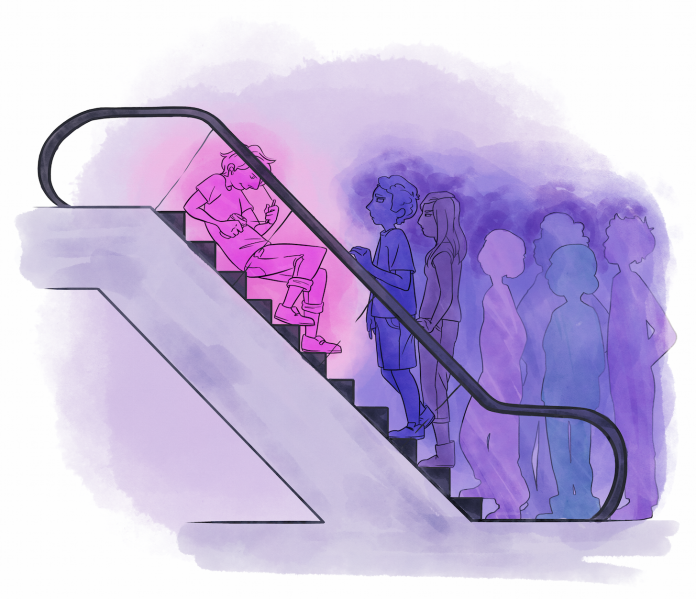
Illustration by Hannah Zaitlin

Escalators. They’re loud, they’re expensive, and if they’re in a SkyTrain station they break down all the time. But they’re not that hard to use. There is one rule to using an escalator: stand on the right, walk on the left.

As simple as this should be, I’m stuck behind too many people each day who think they’re “exceptions.” Apparently, people need some clarity about how this fairly intuitive rule always applies.

First, stay to the right if you really want to stand. If you’re choosing to take up an entire escalator step when you don’t actually need to, then you should’ve taken the stairs so that you wouldn’t hold up the rest of us.

Second, If you are walking with a friend, or God forbid a group, line up along the right if you want to stand. Whenever I see a couple standing side by side on the escalator at Waterfront Station, I secretly make a wish that they have to go through a messy breakup and can never inconvenience anyone ever again.

Last, and most importantly, under no circumstance should you ever stand with a bag or suitcase on the same step as you. We know you’re some fancy, jet-setting VIP with a lot of important things at hand, but please keep out of the way. People have places to go.

Most of this should be just common courtesy. Our ancestors had no choice but the stairs for literally thousands of years, so don’t just take escalators for granted. Use them with respect for those around you, and I’m sure we’ll all get along just fine.

Long story short: I’m too exhausted to be a workaholic anymore

0
Image credit Tiffany Chan

In my first year of university, I developed my first addiction: coffee.

It wasn’t so much that I liked the taste. What I really latched onto was more the wide-eyed, jittery energy. If I scheduled my cups just right, I could avoid getting too sick from the seven cups a day that pushed me through a full day of class followed by a six-hour work shift (topped off with a study session ending at 4 a.m. of course) only to begin it all again the next morning with a fresh cup of joe.

I chose this vicious cycle, and so many other students choose negative cycles of their own. It might be like mine, a caffeinated cycle in which students knowingly degrade their own health, desperate to keep up the ever-fleeting “work-life balance.” Or it can be a cycle of loans, stealing money from their future in an effort to graduate and find a decent-paying post-grad job.

Over and over, adults remind me that my unlimited energy as a young person will help me persevere, saying things like “ahhh, I remember those days, you’ll get through it” or “this is just what you do in university.” So I duck my head and drink some more coffee as I open my laptop and continue the cycle of trading my health for grades.

When people first learn about my schedule, one of the most frequent responses is praise: “Wow, you’re such a hard worker!” or the joking “Wow, you’re basically Superwoman!” In first and second year, these comments helped me justify my workaholism. That’s what got me hospitalized for two days, pumped full of fluids after passing out in an evening tutorial.

Since then, while hoping to see change, I’ve noticed that the glorification of overworking is only worsening, particularly in universities. The idea that students have unlimited energy thanks to their youth is an terrible myth. Superficially, it seems accurate; many of us can and do pull all-nighters on a regular basis. But to exhibit the energy needed for that, we trade away our physical and mental health.

There’s another response I hear often: it goes along the lines of, “Just don’t work so much! Have you tried getting a bursary?”

Of course I’ve tried! Bursaries are given to those who have “demonstrated financial need” as assessed by SFU. What does that mean?

“Level of need” is based on a few factors, including how much your parents make (but not whether they help you or not). Additionally, when filling out a bursary application, they determine how much money you make based on your tax return from the year prior. So if, like me, someone decides to overwork themselves in their first year of university, their tax return will reflect this, meaning they won’t be seen as “demonstrating financial need” and will be denied a bursary. Therefore, they will need to keep working an unsustainable amount or take out a loan.

My frustrating experience has taught me many things. For starters, it has taught me that those Instagram health gurus are right when they say that stress directly influences your health. I have learned that coffee should not be treated as a main food group (no matter how much I think I need the caffeine).

My experience has also formed my opinion that the bursary process needs to be revised. Overworking needs to stop being glorified and seen as an ideal. No student should have to work themselves to the bone, or to the point of hospitalization, to be able to have money to attend school.

Between maintaining competitive grades and funding their own tuition or housing, the pressure placed on students creates inequity. This is particularly true in courses where grades are given on a bell curve, pitting students with vastly different levels of funding, and therefore different amounts of time they can allot to studying, against each other.

Is it too much to ask to not have to overwork myself to the detriment of my health and be told that it is “all part of the university experience?” I’m too exhausted to be a workaholic anymore.

Changing my workaholic tendencies hasn’t been easy and I still have moments (or weeks) where I fall back into old habits. Sometimes, I have trouble making sure I don’t take on too much, but I have realized that I don’t have to take on everything by myself. If you are like me, just remember that there are always people around you who want you to succeed and who are there for you if you need help. I am lucky enough to have a wonderful partner who cooks for me when I am too busy to remember to feed myself, and I have an awesome manager at work who helps me prioritize school by giving me flexible hours.

If you find yourself getting overwhelmed or overworked, reach out to those around you and never be afraid to ask for help. Just always remember to pay it forward.

Which Movie Villain Are You Based On Your Study Habits?

0
Photo curtesy of Prepscolar

Studying truly brings out the darkness in all of us. All those intense nights of isolation, despair and desperation — you know who else goes through all this? Classic Villains. Who are we kidding? We all go through enough stress, anger and mental breakdowns to turn us all to the dark side. There’s no doubt that desperate times can drive someone to villainy.

Darth Vader

If you’re a Darth Vader studier, you spend exam season isolating yourself from the outside world. Storming down the hallway, cloaked in a fuzzy (and highly intimidating) blanket you bought in first year; every appearance outside of your bedroom is fraught with drama and angst. You might as well have the imperial march playing whenever you enter the room.

Thanos

If you study like Thanos, you’ve got one solid goal that no one can sway you from. You may be efficient, but you lack the motivation to actually get up off your chair and get started. Your ideas are crazy…but it just might be crazy enough to get you an “A.”

You don’t care how many nights of Red Bull-fueled work you’ll have to do or how many friends and loved ones you have to sacrifice to get to that perfect GPA. (Neglecting to go to your Grandma’s 98th birthday in order to work on a presentation is no biggie, right?)

You always put in 110% and your “Fine. I’ll do it myself.” attitude ensures that even in those dreaded group projects you’ll do well. You’ll do anything for that grade.

Voldemort

If you study like the Dark Lord, you can always be counted on to rise from the dead at the end of every school year. No matter how low your GPA is, you always come back with an academic vengeance.

Unfortunately, you believe that everyone is out to get you — particularly that bespectacled golden-boy in class who always seems to do well no matter how much they slack off. You swear the rest of the class is in some secret study group to practice beating you in every test, ensuring the curve will never be in your favor. Everyone knows you’re in the class but just like He Who Must Not Be Named, you don’t show up until the last second . . . to write the final exam.

Scar

If you’re a fourth year student and can’t stand the idea of some upstart little first year beating you on the midterm, you study like this Disney villain. If you study like Scar, you know the grade you deserve and you won’t take anything less.

Spending hours in your dark cavernous bedroom, plotting away, you are going to make the bell curve work your favour… even if it means screwing over some peers. Your work mantra? “Be Prepared.”

Joker

Are people always asking, how do you manage to study, stay on top of your assignments and still have fun at the same time? Maybe they even call you a little insane?

If you study like the Joker, your genius-level intellect is only rivaled by your crazy sense of humor. While all the other students are dwelling in melancholy in their rooms every night finishing assignments, you don’t worry, you know you’ll get it all done…

Even if you don’t finish on time, you’re way more creative than those other unimaginative “my dog ate my homework” and “My printer broke” liars. Your excuses involve a bit more pizzazz. Sure, blackmailing a prof or swapping identities with a first year is illegal, but it’s way more likely to get you out of that Calculus final than their excuses.

A warning letter from the future

0
Photo curtesy Wikimedia

What would you warn yourself about from the end of the semester?

Dear four-month-younger Nathaniel,

Hi there, bud! It’s been four awesome months at school. The buses reach the station just in time for you to catch the SkyTrain, your code compiles on the first try, your paper comes back from your prof with no red ink, and we all live happily ever after…

Oh, god. Of course I’m joking.  

Listen very closely: if you want to get through this without mentally crapping yourself, you’ll do a real close reading of this letter. It’s going to be one arduous, terrible semester.

I would tell you to run, but at SFU, where could you run to? You’re literally on top of a mountain surrounded by forests.

First of all, just as the semester begins, a massive snowstorm is going to hit. How hard, you ask? Well, bloody Whistler is going to tweet out a shut off its chairlifts because of “unforeseeable severe inclement snowy weather.” Guess where you’re going to be when that happens? At the end of a 145 lineup longer than the reading list for HUM 113: Appreciation of France, the elective everyone called a GPA booster. Seriously, how can a country have 246 varieties of cheese? Make sure you bring your skis to class if you want a guarantee of getting home this term.

That’s not all. Remember your favourite study spot at the basement of the library? Haha, well, the first-years who have survived their first semester have grown up, and they have annexed your study spot! They fell upon it as you took a definitely well-deserved coffee break and rudely swept aside your stuff, exactly the same way CHEM 282 swept aside your med-school dreams. You could organize a decisive counterattack to seize it back, but let’s face it, you can check Facebook anywhere in the library.

And for the love of the free stuff from Career Fair Day, print out your readings! Not so you can do better in your courses — that’s hopeless — but so you can sleep better. What do you get when you print out and assemble hundreds of pages of papers, articles, and random literature? A textbook. And we all know that in a pinch, reading a book is a great technique for sleeping. In fact, after this semester ends, you should work on a way to soften hardcovers so that university students can double their massive textbooks for use as pillows in between classes and in transit.

Also, having readings around your person makes it easier to pretend you’re studying and shoo your family away so you won’t have to attend the anniversary of the death of your great-aunt’s goldfish.

With love from a very concerned friend,

Your future self.

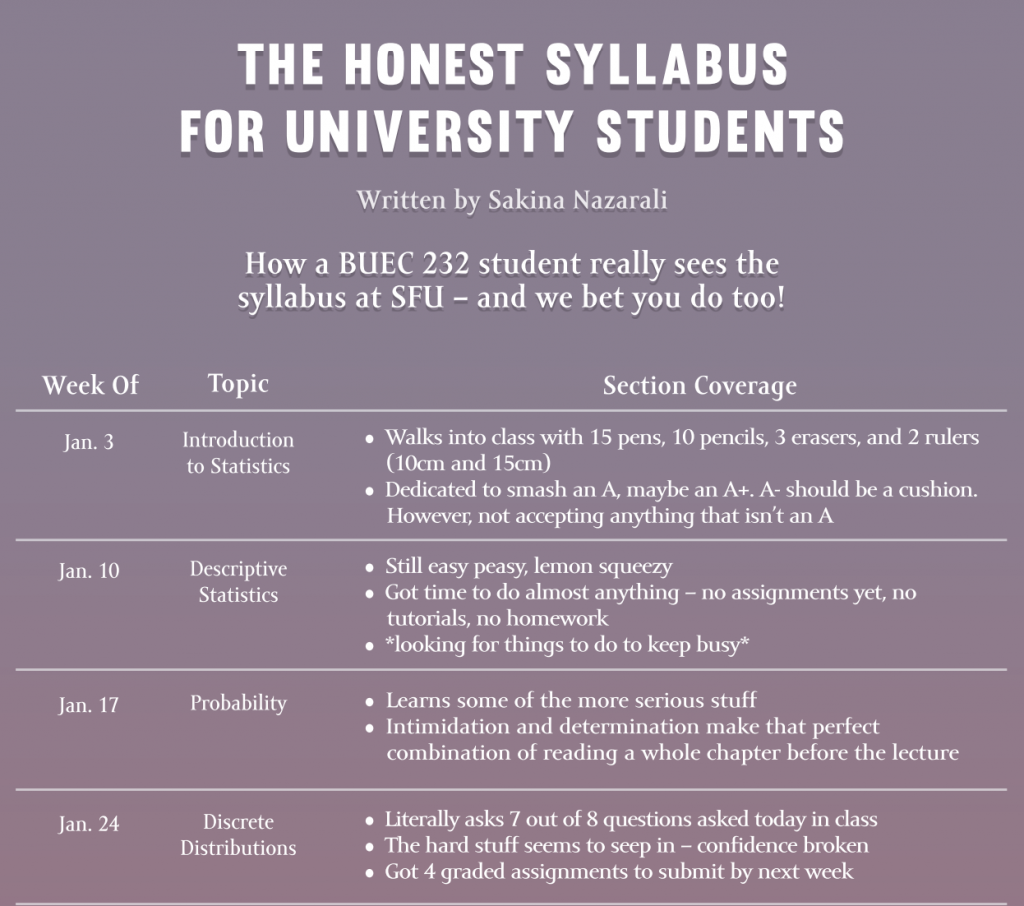
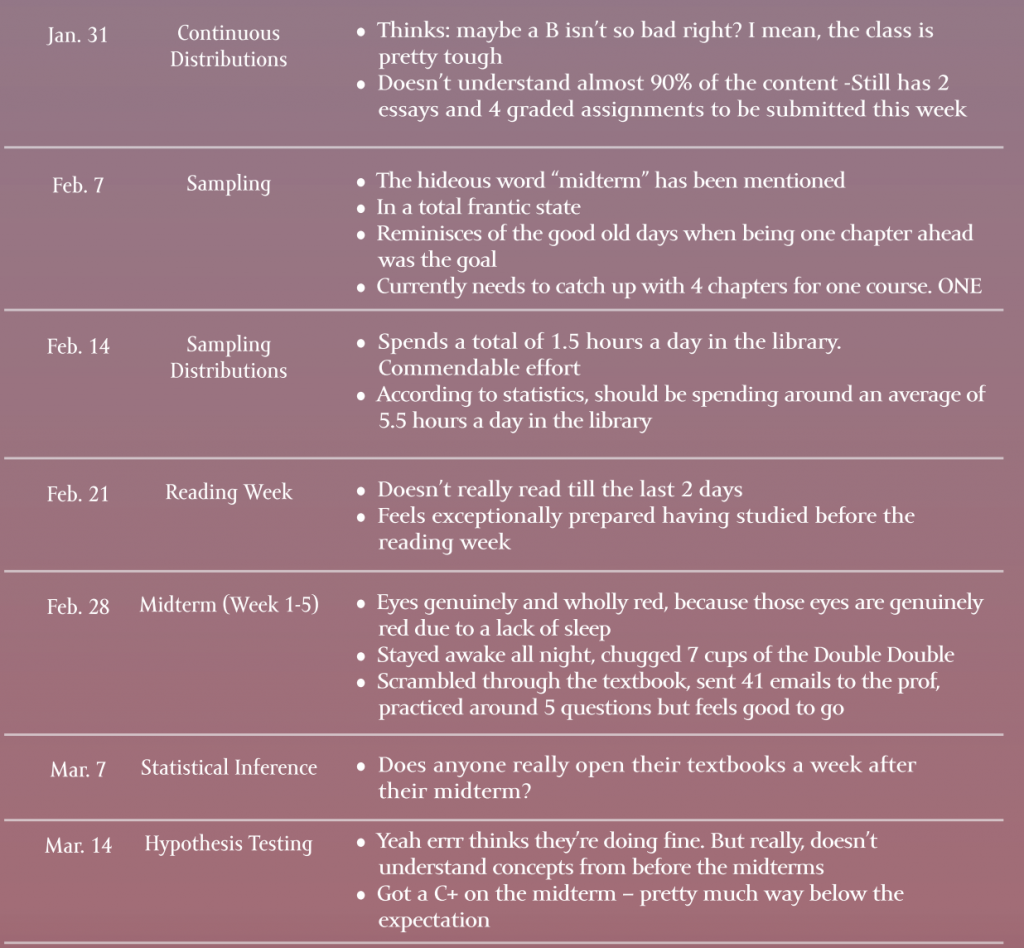
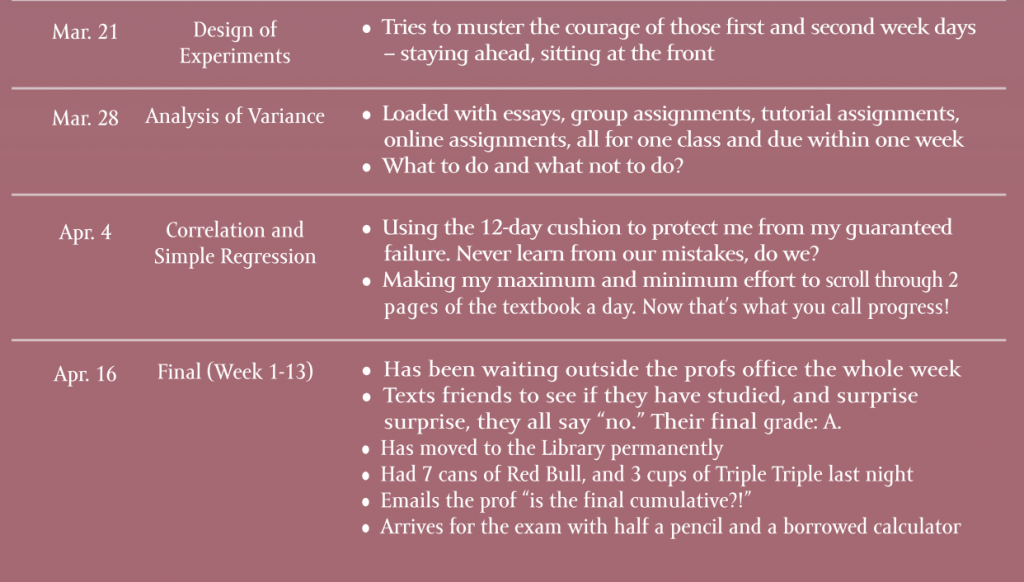
The Honest Syllabus

0
Photo curtsey of Wikimedia Commons

How a BUEC 232 student really sees the syllabus at SFU – and we bet you do too!

Super-resolution microscope to advance biomedical research at SFU

0

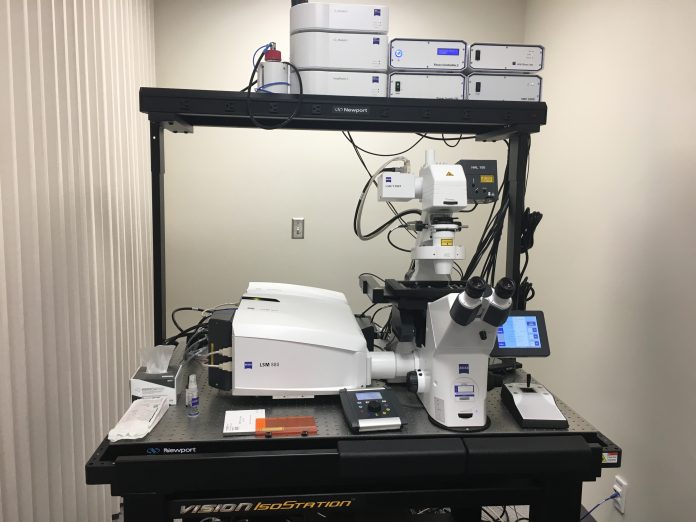
After buying the right microscope, SFU scientists can now get a much closer look at what’s happening inside a live cell.

In Fall 2018, scientists from SFU’s Centre for Cell Biology, Development and Disease (C2D2) gained access to a novel $750,000 super-resolution microscope, the Zeiss AiryScan. This system lets them visualize the complex processes that occur within living cells. C2D2 is a network of researchers at SFU who are performing cutting-edge biomedical research.

Ever since the 2014 Nobel Prize in Chemistry was awarded to a group of researchers who invented the “super-resolution fluorescence microscopy,” super-resolution microscopes are becoming more common at Canadian institutions that conduct biomedical, molecular, and cell biology-related research, according to Dr. Christopher Beh, a professor in the department of molecular biology and biochemistry and one of the 11 co-applicants who acquired the new gadget.

This new microscope is one of the best instruments for live cell imaging, offering users the ability to observe “the true dynamics of the cell,” said Beh in an email interview with The Peak. The new microscope is currently housed in the microscopy facility at SFU, which is located at the South Science Building, room 7145.

The new microscope was funded by the Natural Sciences and Engineering Research Council (NSERC) Research Tools and Instruments Grants Program, as well as the combined efforts of SFU’s office of the vice-president research, the Faculty of Health Sciences, the Faculty of Science, and several other departments, according to Beh.

“This type of microscopy permits visualization of large macromolecular complexes that reside within living cells. These are in essence the machines of life,” explained Beh. “Because we can see these very small things in living cells, we can also watch in 3 dimensions where within a cells these cellular machines move and how they move in response to stimuli.”

Symmetry of protein complexes in fly muscle cell membranes. Image courtesy of Simon Wang from Dr. Nicholas Harden’s lab.

Gathering the resources to obtain the novel microscope took a couple of years and a room in the microscopy facility had to be renovated, said Beh. Air conditioners also had to be installed to negate the heat generated by the super microscope.

The room also had to be “vibration dampened,” he added, as even a bus driving by on an outside street can vibrate enough to distort the microscope’s imaging.

Currently, properly trained personnel from SFU research labs as well as local biotech companies can use the Zeiss AiryScan through the microscopy facility for a fee. Beh did not disclose the exact amount, but he stated that the fee will be different for SFU research personnel compared to researchers from external organizations. Undergraduates working in research labs can also have access to it depending on completion of required training, explained Beh.

The super-resolution microscope can discern between two objects at a distance of less than 100 nm apart (a nanometer is 109 times smaller than a meter). The wavelength of green light is approximately 300 nm and this microscope has the capacity to capture objects much smaller than the wavelength of light, said Beh.

Traditional microscopes only discern objects around 150 nm apart, a visual limitation set by the Abbe diffraction limit in optical physics. Super-resolution microscopes can overcome this barrier, allowing researchers a greater visualization of the cell’s interior processes, explained Beh.

“We can see molecular motors moving up and down cytoskeletal ‘tracks,’ we can see membrane vesicles move lipids and proteins from where they are made in one internal membrane to another . . . In essence, we can see biological machines within the cell assemble and disassemble in a way we could never before,” he stated.

The new microscope will help Beh advance his research on membrane transport within cells and how pathologies like cancer and amyotrophic lateral sclerosis can develop when these intracellular mechanisms are disrupted.

The new microscope will also be used by multiple researchers across SFU, including but not limited to molecular cardiac physiologists, cellular neuroscientists, and virologists.

With files from SFU News

SFU hockey defeat league-leading Spartans for second time in a row

0
The Clan also beat the Spartans earlier this year. (Photo courtesy of SFU Hockey)

In a game with a variety of implications for the BCIHL playoff picture, SFU produced one of their most complete 16 minutes of hockey of the season. At the Bill Copeland Sports Centre, they cut down the Trinity Western University Spartans in a 4–2 victory. The win sets up a potential playoff spot clinching game next Friday in Victoria against the team the Clan would be eliminating from playoff contention, the University of Victoria Vikes.

Other than one early hiccup, the first period was all SFU. Though the Clan fell behind 1–0 less than a minute into the game, they immediately recouped it when forward Mitch Newsome scored two power-play goals within two minutes. In the dying seconds of the period, forward Graham Smerek made a heroic short-handed shot, securing a two-goal lead for the Clan heading into the second.

While the Spartans responded in the second period, coming within a one-goal margin on a tally by Logan Casavant, the Clan cemented their win in the third period with an insurance marker from forward Mitch Ledyard. While SFU was dominated on the shot clock by an energized, restless Spartan team, the Clan netminder’s stellar performance allowed the team’s offensive attack to end in a huge two-point lead; the team’s forwards played with a killer instinct sharp enough to score four goals on just 18 shots.

Between the pipes, Ryan Sandrin was a major factor in the win. Stopping 36 of 38 shots, Sandrin saw his record climb to 4–1 on the season. As the team continues its battle for playoff positioning, they will need this type of performance from its goaltenders if they want to climb above the last playoff seed.

After the game, we asked Sandrin what this win meant for the team in terms of confidence heading into the final stretch of the regular season. Sandrin didn’t mince words: “It was a huge game and a huge win,” he said simply.

With the win over TWU, the Clan now look ahead to a Vancouver Island road trip with games in Victoria and Nanaimo. As mentioned, the Clan can formally clinch a playoff spot and eliminate the UVIC Vikes from playoff contention if they can win on Friday in Victoria.

Admittedly, this is something of a formality at this point. It would be hard for SFU to lose their spot to the Vikes; not only would UVIC have to earn a perfect 6–0 record in their final regular-season games, but SFU would have to lose seven of their last eight games. Even so, there is no doubt the Clan would like to formally punch their ticket to the first round of BCIHL playoffs so they can start focusing on positioning and potential first-round opponents.

When asked about the impending clinch possibility and the enormous implications for playoff positioning on the horizon, coach Mark Coletta said that he has a lot of confidence in his team in their ability to execute and increase their intensity levels to match the importance of the next half-dozen games.

Following the Vancouver Island road trip this coming weekend, the Clan returns to Nanaimo once more the following weekend before coming back to Vancouver for their next home game: another matchup with the TWU Saints, on Monday, February 18 at the Bill Copeland Sports Centre. Puck drop is 3 p.m on Monday — the Family Day holiday.

Annihilation is a beautiful ordeal

0
Image courtesy of HarperCollins Publishers

Jeff Vandermeer’s Annihilation is the first book in the Southern Reach Trilogy, and it will pull you in immediately with its rich and insidious atmosphere. Lovers of science fiction and horror are sure to find themselves gripped by a compulsion to learn more about the mystery at the center of the story, much like the characters in the book. Readers may find themselves transfixed by Vandermeer’s prose from the very start. One might even call the book abrupt, throwing the reader into the increasingly strange and intriguing world of “Area X” from the top of page one.

The story follows four women — a biologist, a psychologist, an anthropologist, and a surveyor — who are sent on an expedition into the aforementioned “Area X” by a shadowy organization known only as The Southern Reach. Their mission is to find, document, and understand the source of the inexplicable events reported in the area.

None of the characters in Annihilation have names, and it is told in the first person from the perspective of a woman identified only as “The Biologist.” All of the other characters are simply referred to by their roles. This is emblematic of the story itself, which calls into question the nature of all that the explorers know, with ever more chilling implications as the expedition goes on.  

Even though her name is never revealed, the first-person narration provided by The Biologist gives the reader an intimate insight into her psyche and the way she approaches life through the lens of her work. She sees natural phenomena, not morality, as she navigates nightmarish scenarios in the pursuit of understanding the mysterious Area X. In Annihilation, moral ambiguity abounds, and everything is grey, despite The Biologist’s colourful surroundings.

Annihilation is existential horror at its finest. It is rife with metaphors and musings about mortality, pain, personal growth, isolation, as well as the nature of reality itself and how we perceive it. This book is a must for anyone who enjoys speculative fiction and, despite its short length, is not a short read as it takes multiple readings to unpack all the hidden meaning it holds.

If you’re still left wanting more, however, Annihilation has also been made into (a very different) but still fascinating feature film. The film is directed by Alex Garland and features stars like Natalie Portman, Jennifer Leigh, Gina Rodriguez, Tessa Thompson, Tuva Novotny, and Oscar Isaac. The film is well worth watching despite diverging from the book in several ways, and it’s sure to keep you up at night.

SFU changes its emergency protocol in light of previous campus incidents

0

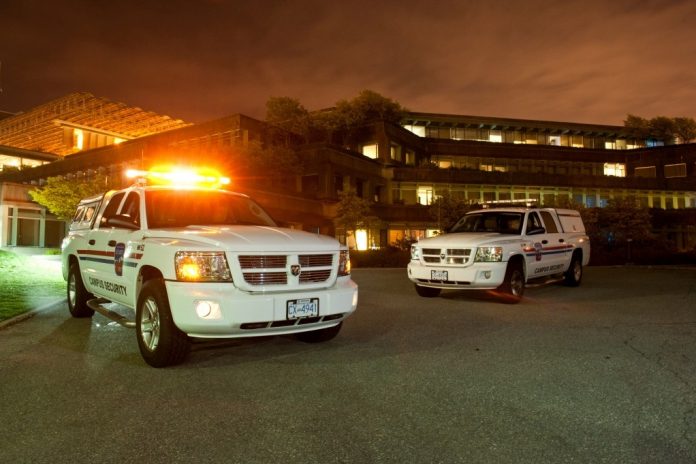
On January 23, Simon Fraser University Safety and Risks Services (SRS) announced that it has changed its emergency protocol and added new safety services for the SFU community.

The new emergency protocol states that in urgent situations, SFU students, faculty, and staff should call 911 directly instead of contacting Campus Public Safety and they can make the call on any phone. However, the SRS recommends that the call should be made through a campus phone if possible because Campus Security is able to locate where the call was made to potentially help resolve the situation, according to its website. Every classroom at SFU is equipped with a phone, the website further adds.

Previously, the university’s recommendation to its students and staff in emergency situations was to contact Campus Public Safety first before reaching out to external emergency services because the layout of SFU can be difficult for emergency responders to navigate, according to Tim Rahilly, SFU vice-provost and associate vice-president, students and international, in a previous Peak article.

However, many students voiced their concerns about this protocol following the two campus incidents that took place in Fall 2018. One involved a student entering a classroom and behaving violently toward their peers. In another, a student passed away due to medical complications during an on-campus exam. Among other concerns, students expressed that campus safety personnel were slow to respond and did not have the same level of training as paramedics.

SEE MORE: “SFU student alleges university did not provide adequate aid following campus violence incident”

SEE MORE: “SFU talks safety protocols after student passes away on Burnaby campus”

As a result of the feedback from the SFU community, SFU held an internal meeting in October 2018 to review its emergency protocols messaging and it took the university approximately three months to implement this new change, according to Mark LaLonde, SFU chief security officer.

“We heard from students, faculty and staff on their experience with our messaging, and also from our health and safety committees. After consulting with BC Ambulance, fire, police and E Comm, the regional 911 communications hub for the Lower Mainland, we determined a new approach to simplify the messaging,” said LaLonde in an email interview with The Peak.

According to a press release by the university, all three campuses at SFU now share the same phone numbers for its emergency line (for urgent and medical-related purposes) and non-emergency line (for assistance with Safe Walk and security). The numbers are 778-782-4500 and 778-782-7911, respectively.

In the past, the numbers for the emergency line and non-emergency line were different for each SFU campus, and those numbers will continue to work, stated LaLonde.

“The new protocol is meant to simplify messaging of what to do in event of an emergency, and remind our community of how they can access information relating to safety, emergencies and security,” stated LaLonde.

When asked how this new protocol is more effective compared to the one SFU previously had, LaLonde replied, “The new protocol is simpler and easier for everyone to remember and activate in event of an emergency.” The SFU community will continue to have access to Campus Security on a 24/7 basis despite the changes made to SFU’s emergency protocol, according to a media release by the university.

In addition to the new emergency protocol, the university will display new emergency posters at all SFU classrooms, provide updated “emergency contact key-tags and safety information postcards” to faculty and staff, as outlined by a press release by the university. The university also hired a new security vendor to increase security resources and dispatch at SFU, the press release further adds.

“Our intention is to enhance community understanding of how to increase their safety and how SFU can best support them in an emergency,” LaLonde concluded.

With files from SFU News